Assignment 1: Your zine

“An intimacy derives from the fact that fanzines remain amateur, ‘handmade’ productions operating outside mainstream publishing conventions and mass-production processes. The hand – the imprint – of the individual producer or maker is readily evident in the fanzine itself. This suggests, then, that the history of the object is bound up not only with the history of fanzines more generally, but also with the history of the individual maker.”

Teal Triggs, Fanzines, 2010. London: Thames & Hudson. Page 206.

Your first assignment asks you to create a small publication or fanzine based on your interest in books and their design. It allows you to introduce yourself, and your interests in book design, so that your tutor can get to know you and your work better.

Your fanzine can be digitally printed, photocopied or handmade. Aim to design a sixteen-page simple folded and stapled A5 fanzine, though you can add more pages, or change the scale, if you want to. You can use any medium or materials to generate your artwork and make your publication. You may want to work much larger and reduce your artwork for the fanzine. While visually it doesn’t have to look like a punk fanzine, try and embrace the lo-fi ‘cut and paste’ attitude, so you’re making the work relatively quickly and not too preciously. Be creative with this task both in terms of the content and how you choose to present it, this could extend to challenging some of the assumptions about what a fanzine should look like, or how it’s made.

Use the work you have produced so far, in the earlier exercises, as a starting point for your content. Not all of this material needs to be included in your fanzine. You may want to develop new visual ideas, or add to the work you have already produced.

As a guide, your fanzine should contain the following elements:

● Introduce yourself – say something about your relationship with books. Why are they important to you? Communicate this through writing and images.

● Your creative process – how do you like to work creatively, what sort of process do you follow to research and generate ideas, and what are your preferred mediums to work in. Say something about you as a creative practitioner and your approach. Show your approach to book design through your design decisions and the hands-on sense of immediacy and energy that is an attribute of fanzine design.

● Looking at books – present the most interesting books you’ve looked at, or those you find influential as a reader, designer or both? Present a selection of books, or focus on one particular example to present in more depth.

Think about how you can present these books, and your reflections, in visually engaging ways.

● Global influences – which books with a wide-reaching scientific, artistic, historical, political, geographic, fictional, poetic, religious or other impact have you chosen. Present them along with a brief rationale as to why, or how these books have affected you personally. Again, can your designs echo the ideas in these books in anyway?

● The future of the book – where do you see the book heading? Show and tell. Try and summarise your thinking into a series of short statements, quotations, images or ideas. Be creative in how you approach this.

● How can you creatively respond to one or more of following book related sayings – Bookworms, A closed/open book, The oldest trick in the book, You can’t judge a book by its cover, In someone’s good/bad books, or, by the book. Use your fanzine to present your ideas. Can any of your images, text or ideas also feed into your cover designs?

Using your learning log

Keep notes to accompany the making of the publication in your learning log. These notes could cover why you decided to portray what you did, what you included and what you omitted. See it as a way to document and reflect on your creative design process.

Remember that this is an opportunity to experiment with your ideas, so document your creative process, the various stages of your work, and any ideas you rejected along the way. Aim to do this visually by photographing, scanning or taking screenshots of your work in progress and sharing them in your learning log.

As your first book, there’s room to make mistakes, take creative risks and enjoy the creative process, so don’t worry too much about getting it ‘right’. If your visual research takes you away from the above categories, that’s fine, afterall they are just prompts to start the dialogue about your interest in book design.

Researches

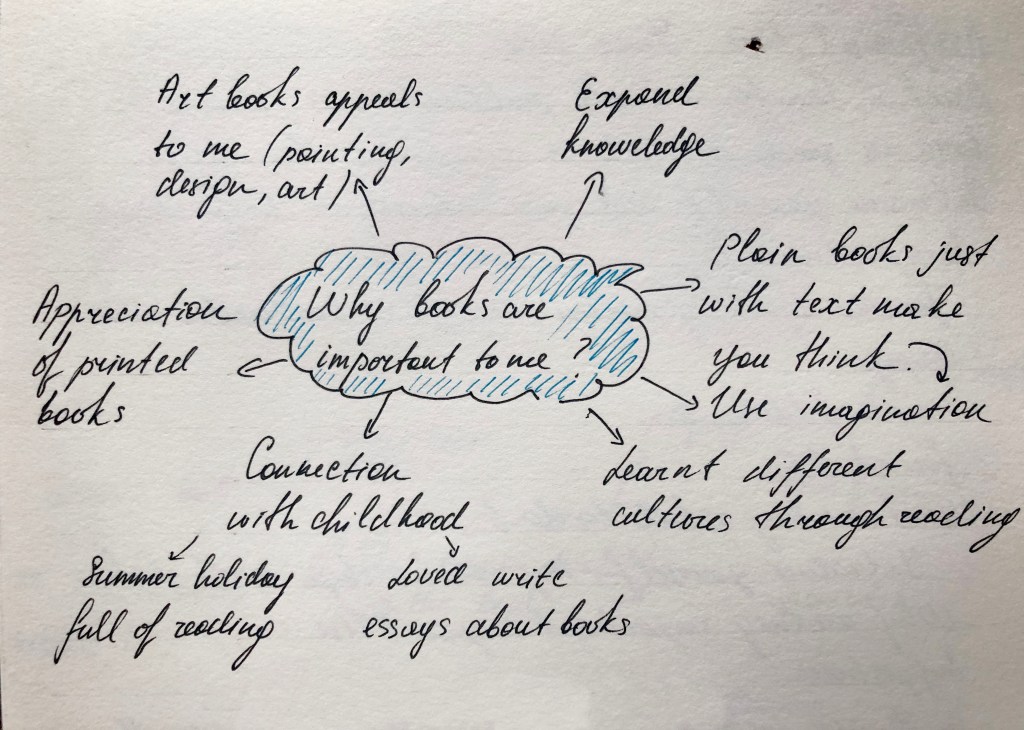
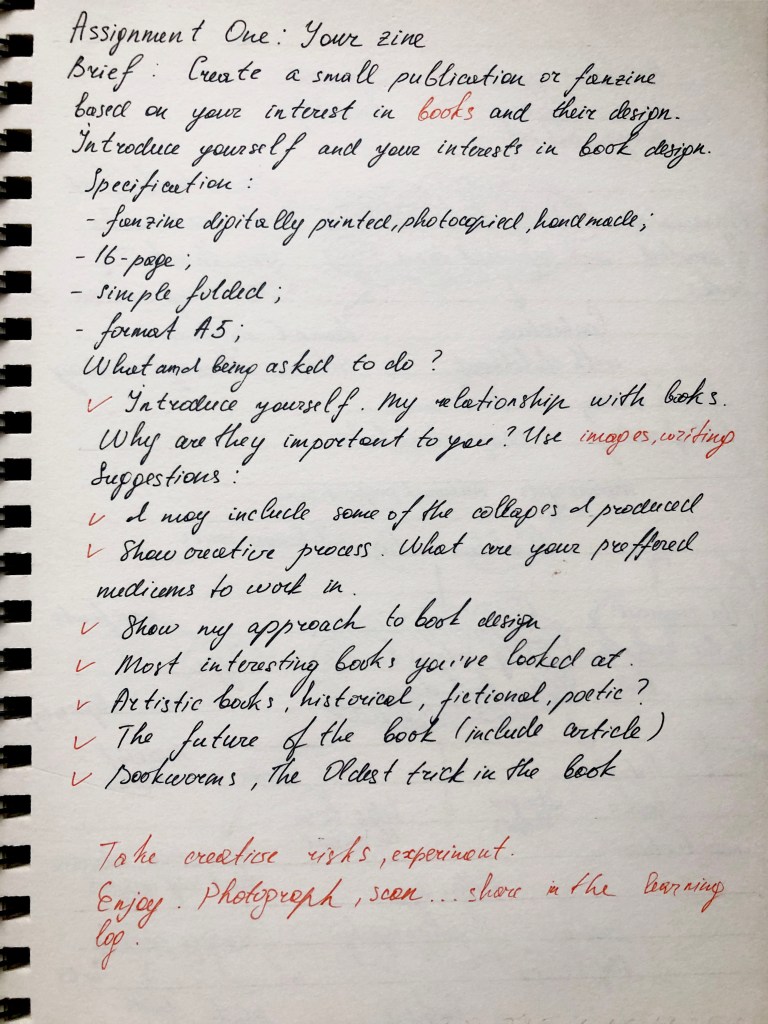
Finally, I come to the main task of the first introductory part of Creative Book Cover. After running my eyes over the basic requirements of Assignment 1, I was glad that I could apply some of my best practices from the previous exercises and collage, and document the finest works that I’ve done in this part. It seemed to me that I was able to create some remarkable work that can be combined into one material. Since the brief consists of sub-points, I realised that it is vital for me to write essential points in my learning log. Below I have attached notes with a brief and some mind maps.
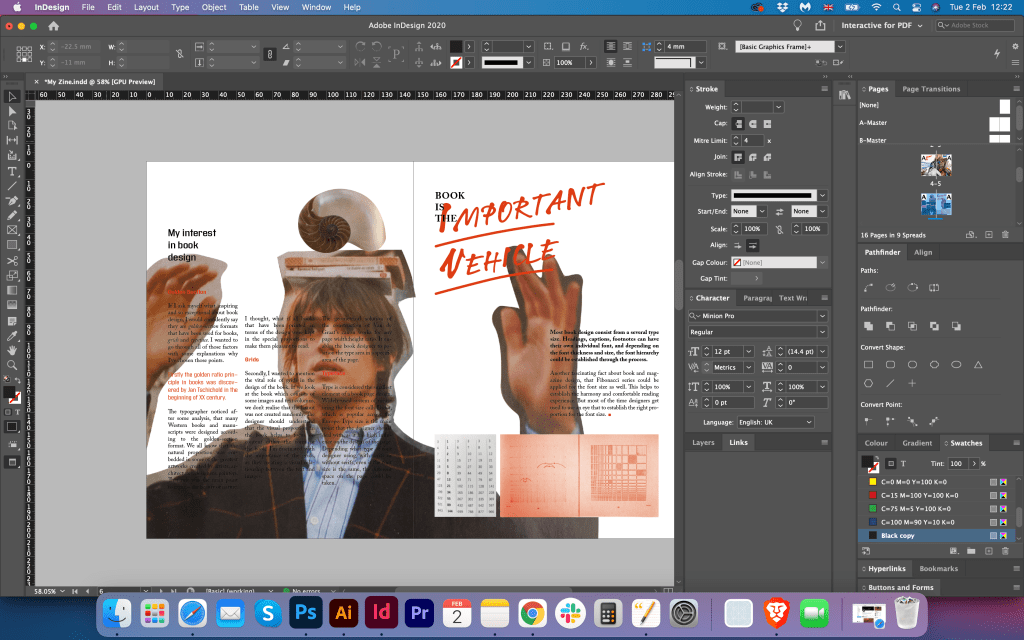
My interest in book design

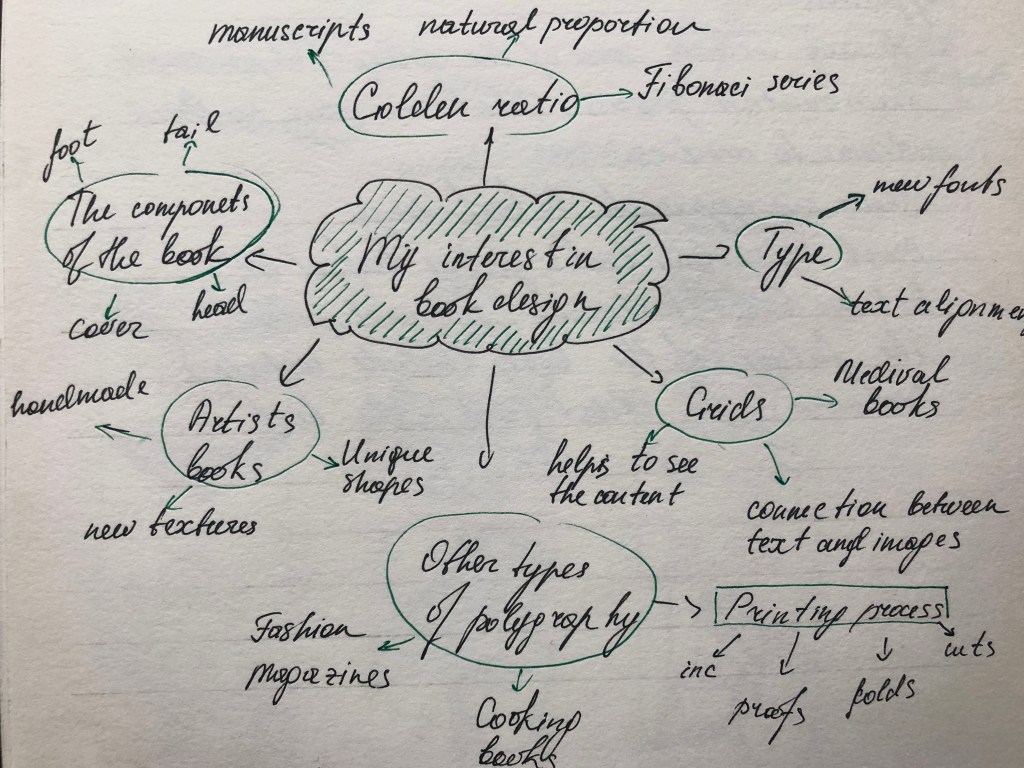
If I ask myself what inspiring and so exceptional about book design, I would confidently say they are golden-section formats that have been used for books, grids and typefaces. I wanted to go through all of those factors with some explanations for why I’ve chosen those points.

Originally the golden ratio principle in books was discovered by Jan Tschichold at the beginning of the XX century. The typographer noticed after some analysis, that many Western books and manuscripts were designed according to the golden-section format. We all know that the natural proportion was embedded in some of the greatest artworks created by artists, architects, designers, and painters. That rule was the main point to express the beauty of nature. I thought, what if all books have been printed according to the special proportions to make them pleasant to read. 
Secondly, I wanted to mention the vital role of grids in the design of the book. If we look at the book which consists of some images and text columns, we don’t realise that the layout was not created randomly. The designer should understand that the visual proportion in the book helps to focus on content rather than the form of the book. I’m fascinated with the importance of the grids, as they create a visual relationship between the text and images.

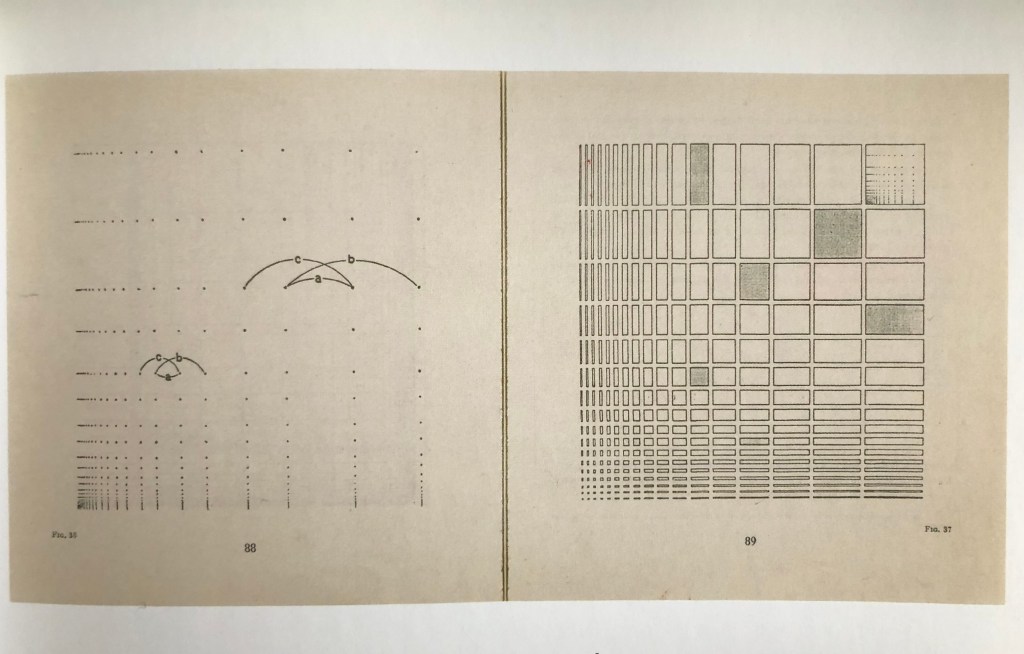
The Van de Graaf canon is a historical reconstruction of a method that may have been used in book design to divide a page in pleasing proportions. The geometrical solution of the construction of Van de Graaf’s canon works for any page width:height ratio. It enables the book designer to position the type area in a specific area of the page.

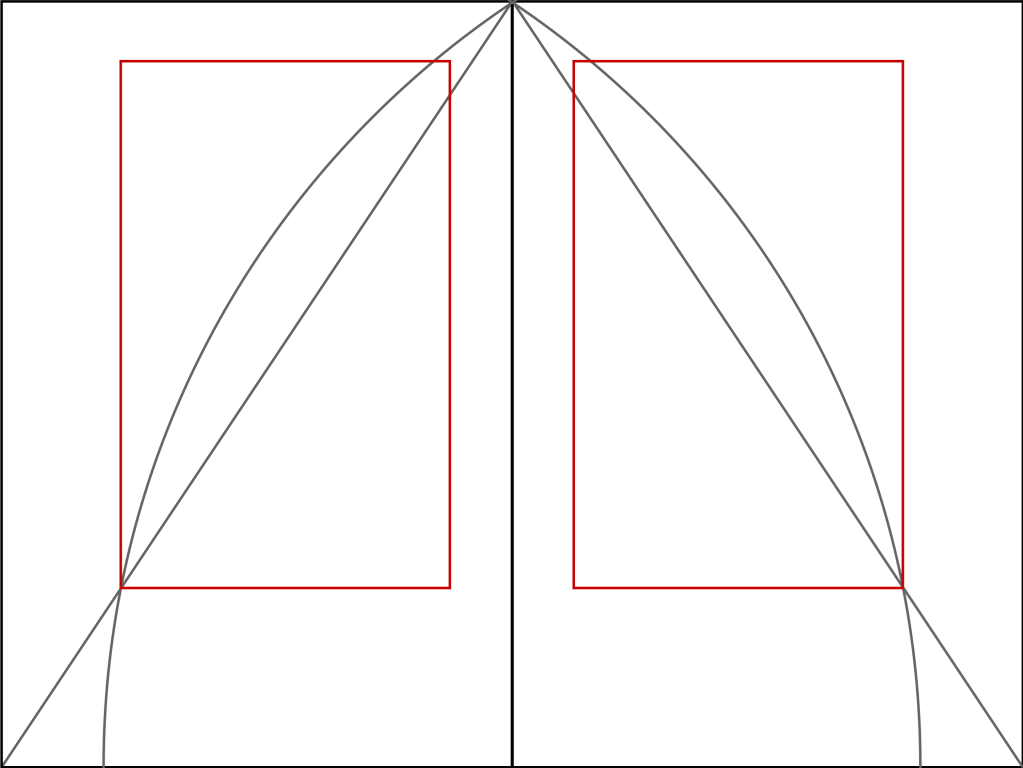
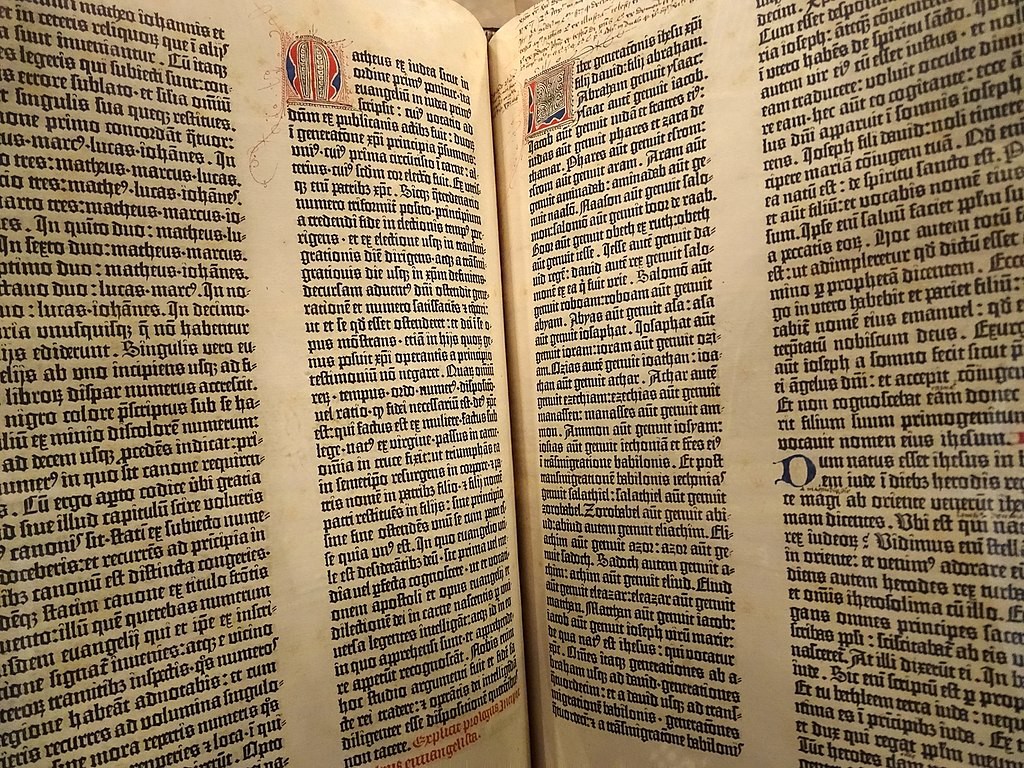
The grids can be symmetrical or asymmetric. Most medieval books have a symmetrical grid, as natural symmetry was the main aspect of art at those times. For example, The Book of Kells, a ninth-century book containing the gospels of the New Testament, shows careful attention to the arrangement of elements on guidelines to create symmetry between hand-written text and visual decoration. Over time, the style for book design has changed, and in the example of the layout of this Gutenberg Bible, we see a new arrangement of the text, split into two columns with wide spacing between them.

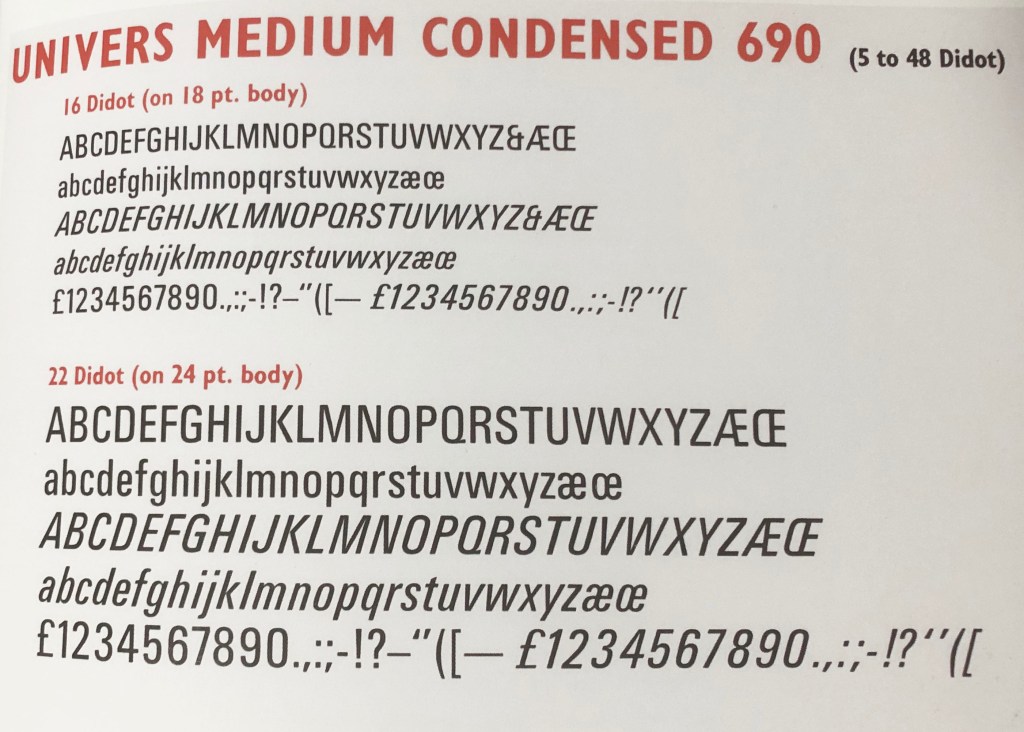
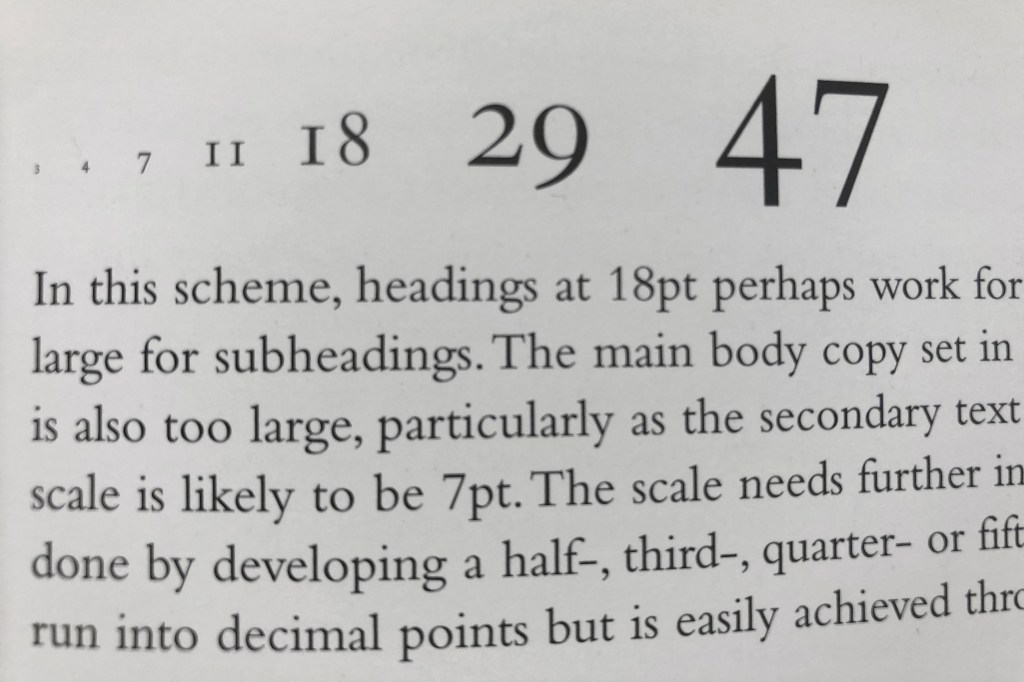
Type is considered the smallest element of a book page design. Widely-used system of measuring the font size calls Didot, which is popular across Europe. Type size is the main point that the designer should deal with, as it has a high influence on the design of the page. Depending on on what type of font the designer uses, with serifs or without serifs, even if the font size is the same, the different spaces on the page could be taken.

Most book designs consist of several types and sizes. For example, headings, captions, and footnotes can have their own individual font and depending on the font thickness and size, the font hierarchy could be established through the process.

Another fascinating fact about book and magazine design is that the Fibonacci series could be applied for the font size as well. This helps to establish a harmonious and comfortable reading experience. But most of the time designers get used to using an eye that to establish the right proportion for the font size.

Looking at books

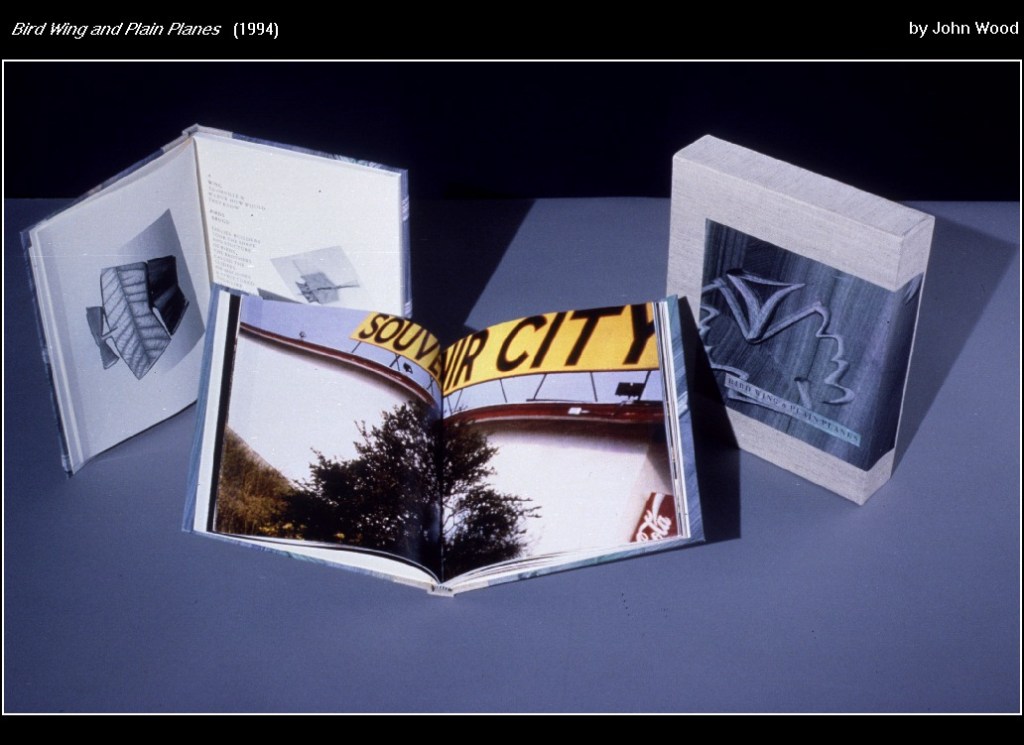
I’ve read lots of books throughout my earlier life and recently. There were lots of books about different cultures from all over the world, also in my selection of books were various times, it could be the fallen in love protagonist at the beginning of XIX century, some modern stories based on the true-life. So, before this course, I was treating a book just like an object to learn something more, but now I see the book as an art masterpiece, that could be shaped and designed uniquely and creatively. I thought if on this part I’m discovering the book like an art object would be a great idea to go through examples of creative books in Smithsonian Libraries.

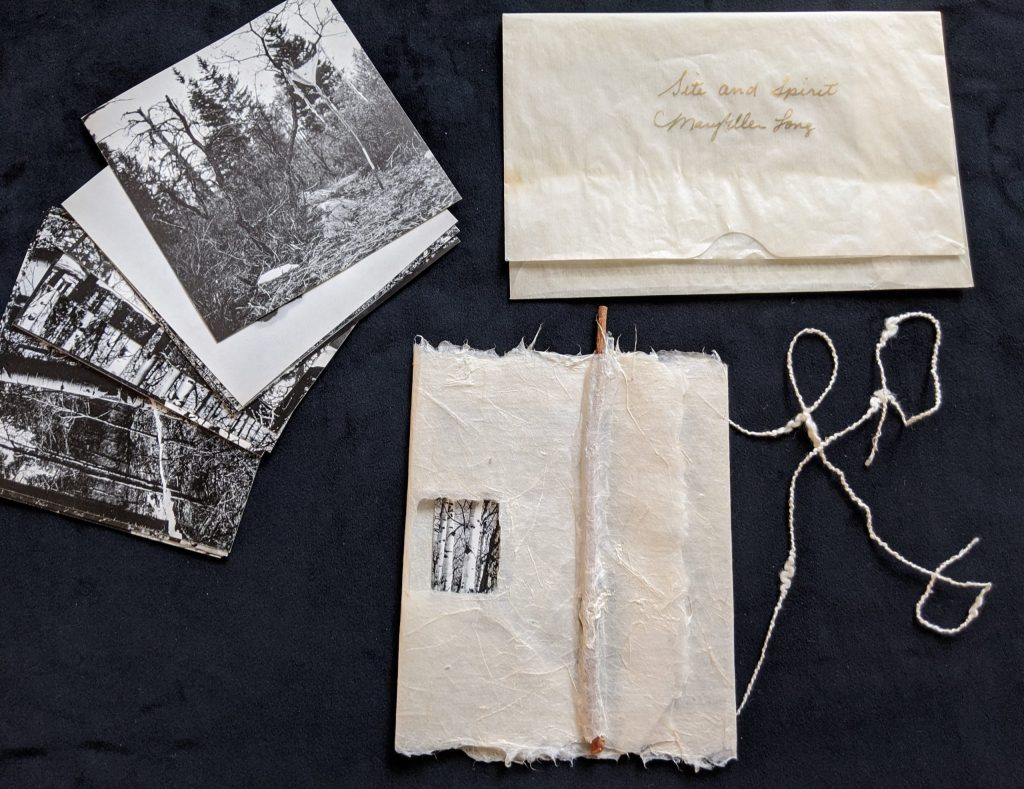
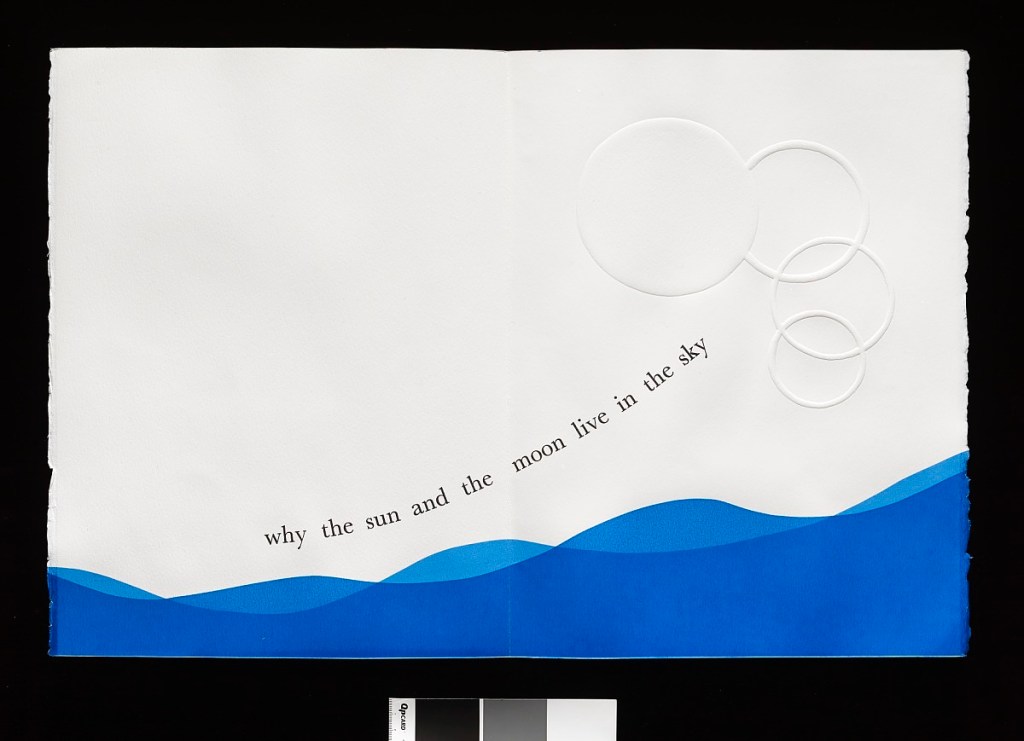
These particular books are not just objected to reading, they are artworks combined with photography, design, printing and poetry. ‘Site and Spirit.’ book attracted me, as it has a strong connection with nature, and used some environment-friendly materials. From that book can be seen that art could be inspired by nature, water and mountains around.

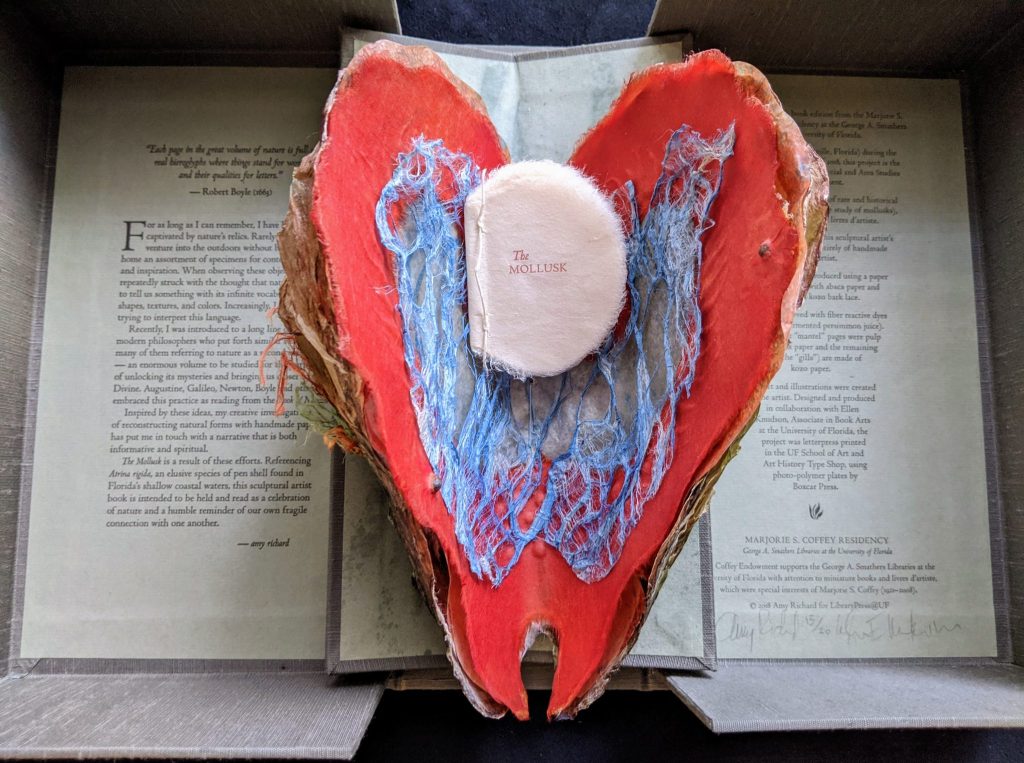
Another example of a book connected with nature is this red textured heart. This artist’s book is a reminder of the fragility of the planet and the challenge to preserve the Earth.

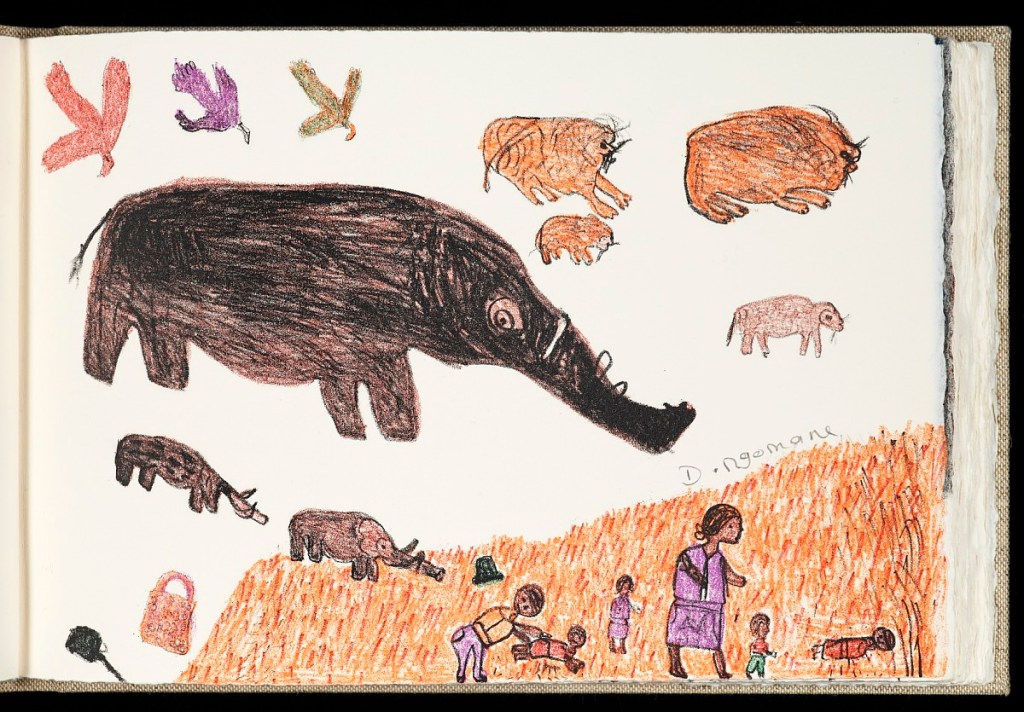
Artist’s Books and Africa

The forms and structures of these artists’ books blend with a stunning range of African themes explored by both African and international artists. This book attracted me as it had a copy-paste approach. In particular, I liked how different styles of sketches, pencil drawings, collages and fanzine liked designs were combined in one edition. I could refer to that style in My Zine design when the main object is in the centre and some words are around it. 

Science and the Artist’s Book

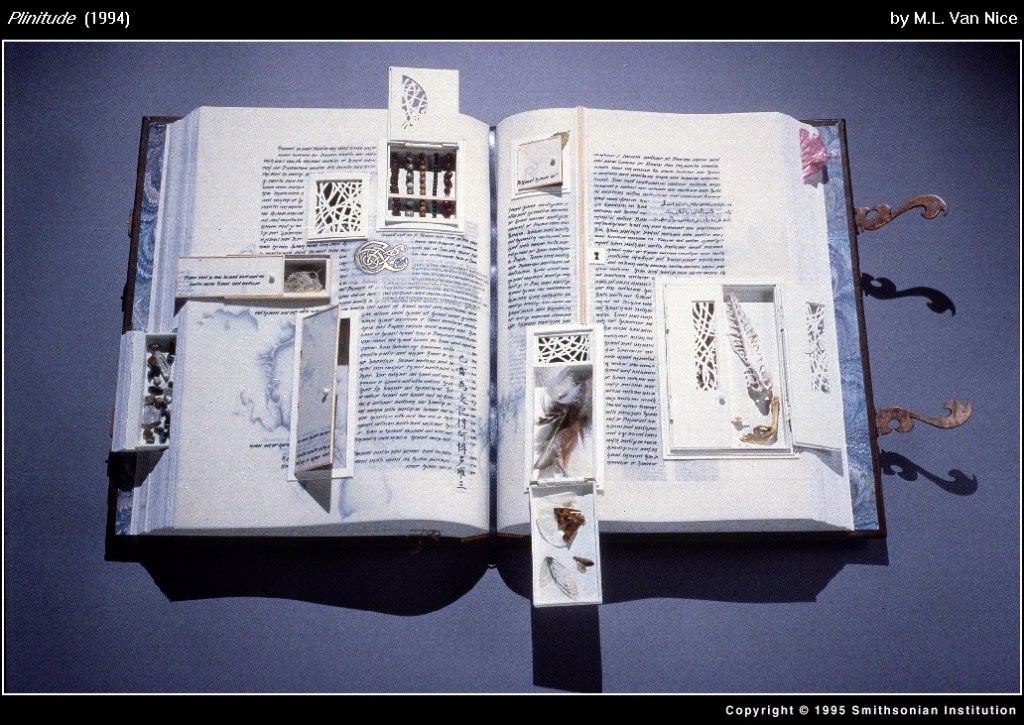
I loved how some of the pages in that Artists Books approached the placing of the text. Some lists were made like little doors that could be opened, so this is not just reading through the book, the tactile connection with this printed material also can be seen. Also, I noticed that calligraphic font was used, which creates an imaginative but unreadable script, drawing elements from the natural world into the artist’s book.

The exploring of Artists Books gave me some inspiration and ideas I could implement in My Zine design. I really was looking forward to some experiments with objects, I wanted to use some materials around me, some cut and paste objects, glue them together, try to make objects fly around and be floating, have some unusual paths for the wording and phrases. Let’s tackle My Zine booklet design.

My Zine Design

The first part of the research has been completed. I was quite happy with ideas I could discover, some research about book design and artist’s books gave me a good package and feel for my future booklet. This assignment was quite complicated for me to start with, I had many ideas but I didn’t know how to join them together. I had complete freedom to express myself, which could be tricky as well. Also, I had to write some essays, and implement all images, phrases and wordings into the one piece.

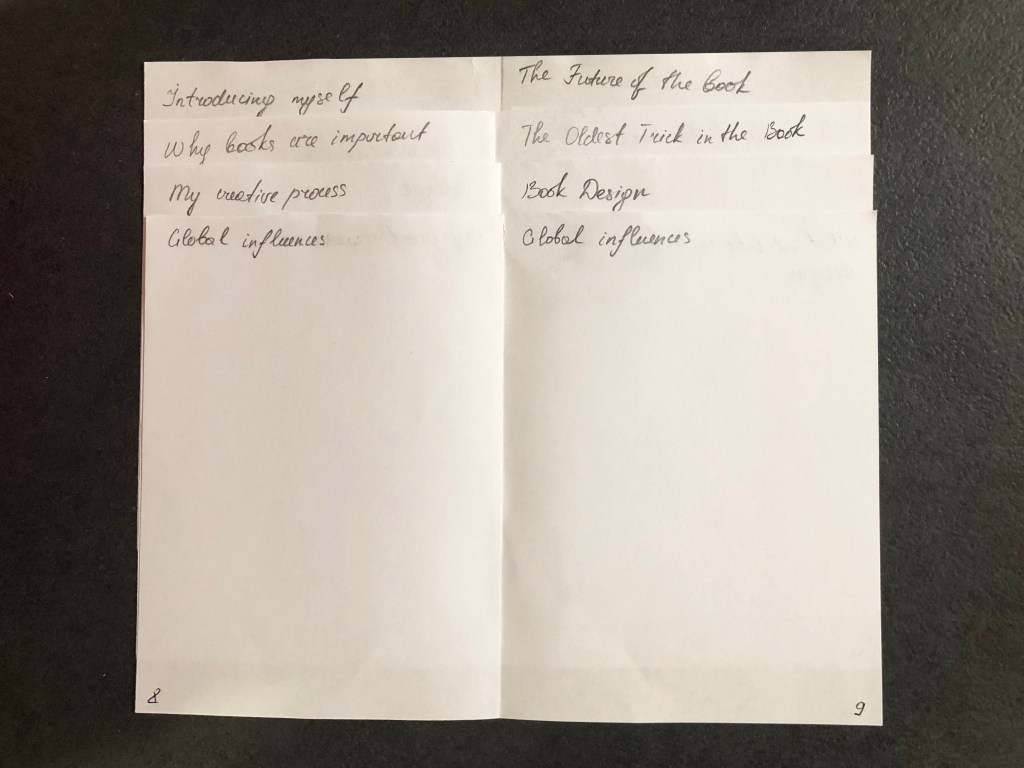
But before the first designs, I needed to create a ‘spine’ of the future booklet. To do so I used technic from the previous exercise by dividing A4 pages into spreads numbering them from 1 to 16 page. Also, I used the guidance from the brief to know what topics I needed to cover inside. For each, I was going to use the spread, so altogether I was going to have 7 topics plus front and back cover, which included:

  1. Introducing myself. My relationship with books
  2. Why books are important to me (collage design)
  3. My creative process (mind maps, steps that I’m taking for each task)
  4. Global influences (central spread)
  5. What I like in book design
  6. The oldest trick in the book (book cover design mockup)
  7. The future of the book article

I thought that this path I can briefly use for my booklet, by adjusting some of them if they need moving around, but approximately they were the main topics I wanted to describe.

The Future of the book (amended design)

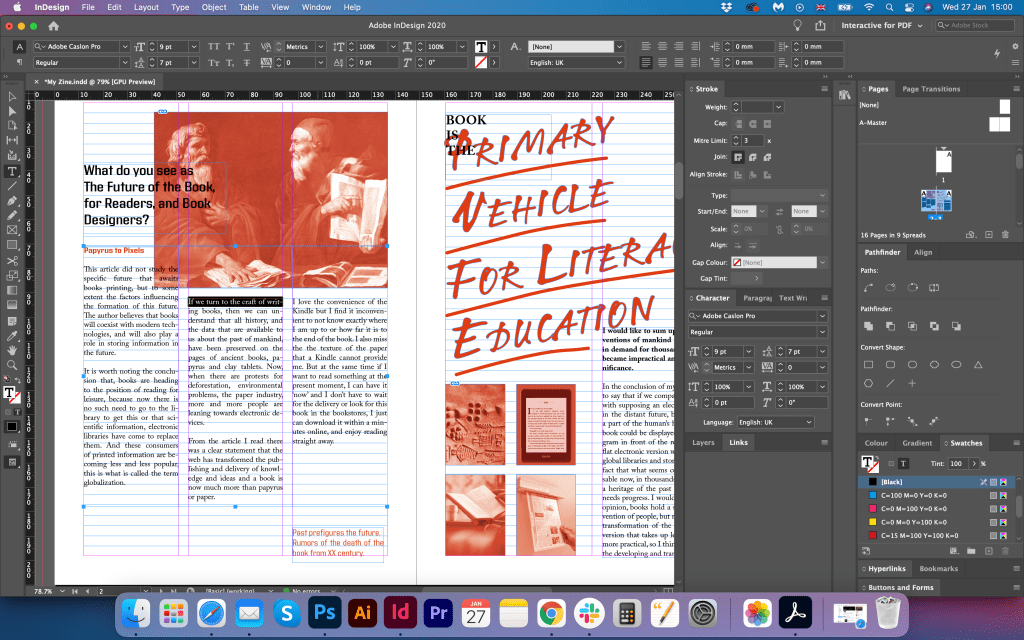
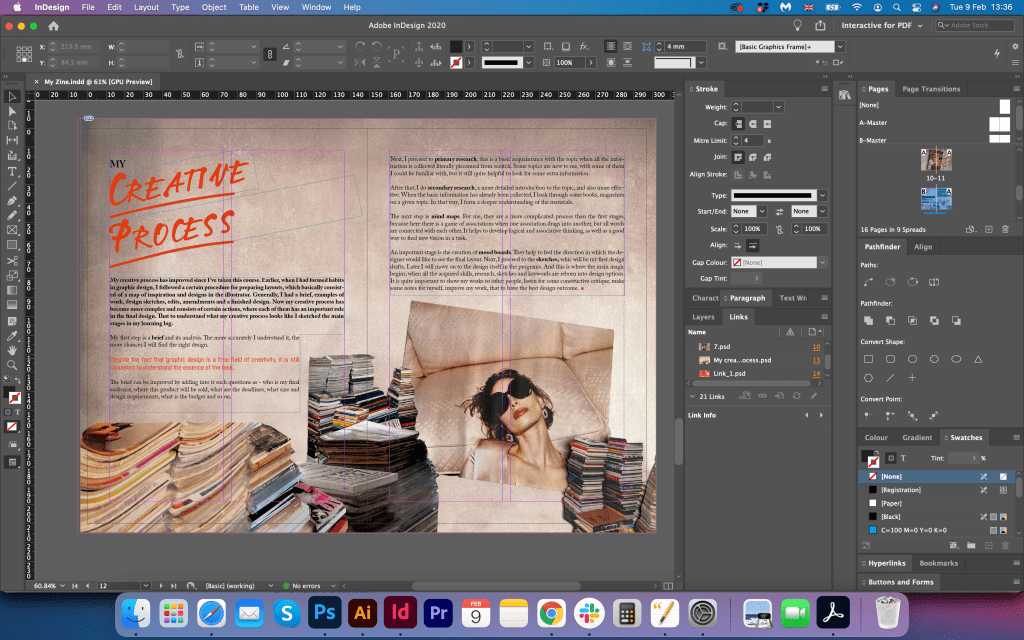
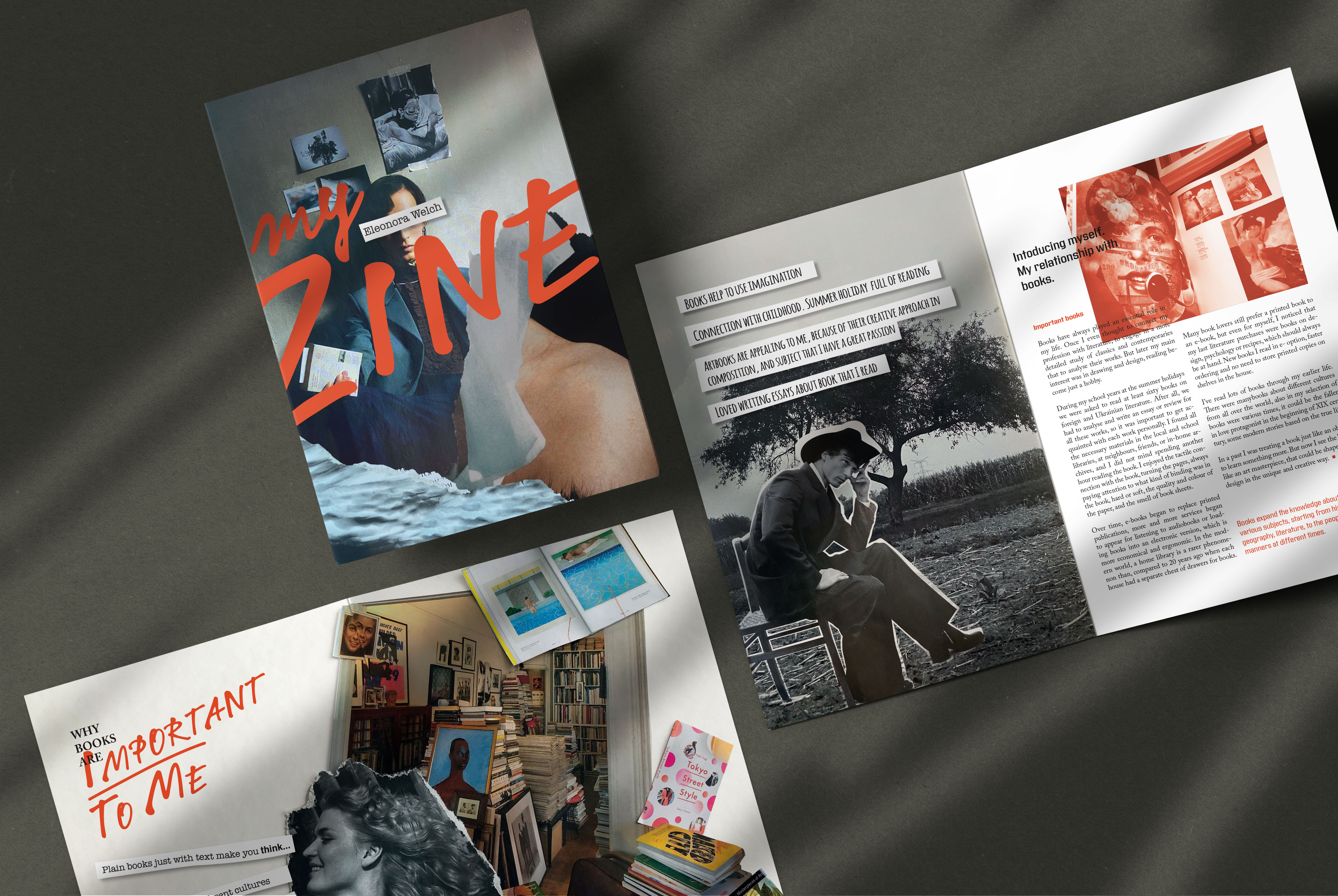
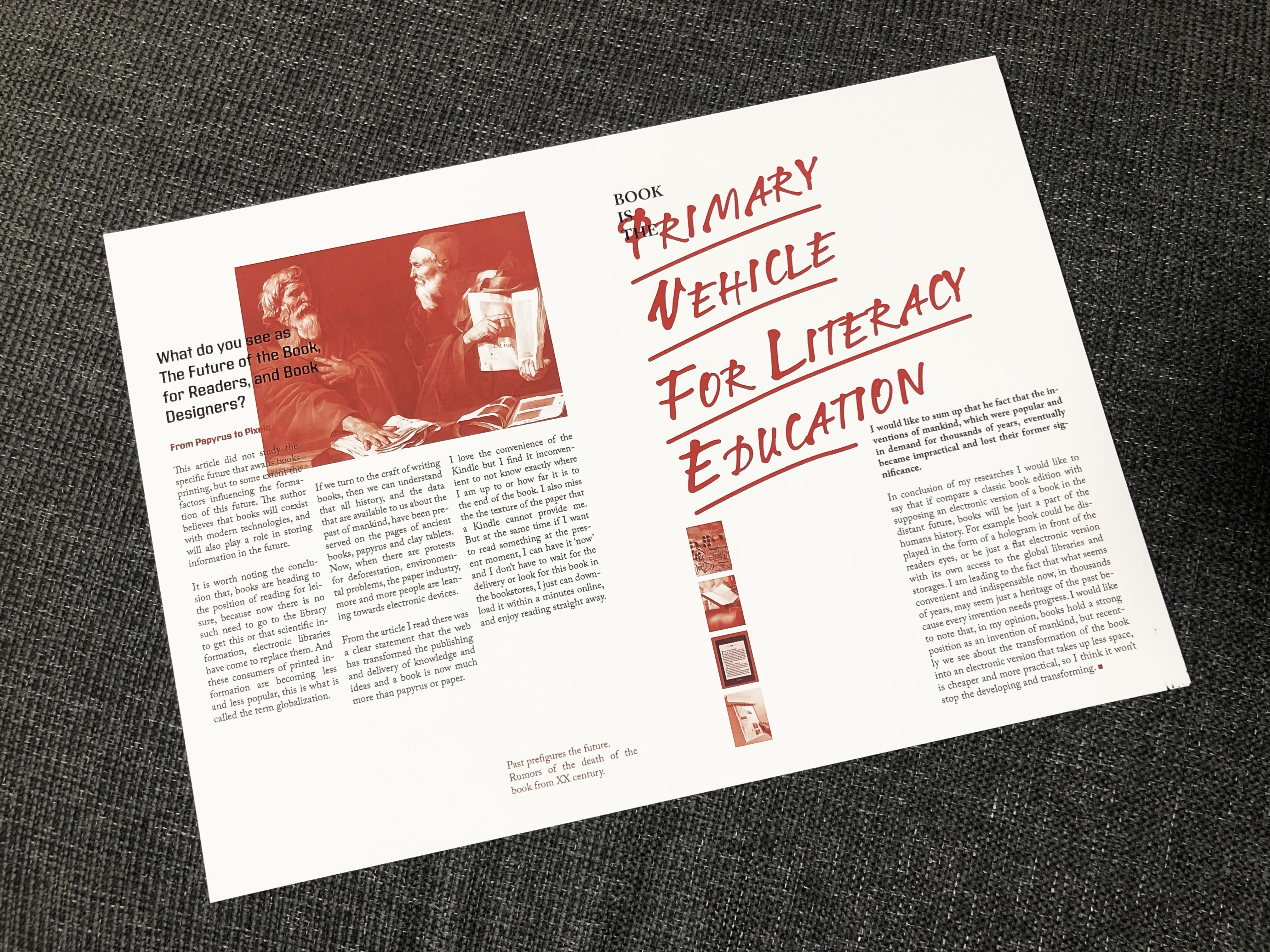
That to establish the direction for My Zine booklet I decided to go from the magazine spread that was designed earlier by me for one of the first exercises. I thought that the idea of that layout could give me some inspiration for fonts, and placement of the wording and images. I loved the combination of red images with handwritten style red headers. It looked creative and neat at the same time. I thought why not try to combine a few styles in this booklet design, experiment with vintage collages, juxtaposition and magazine layout, where text is divided into columns. At the same time, I wanted to have a presence of a cut and paste approach for phrases and quotes. My plan was to combine two different styles in one booklet, to create a union of two styles into a solid piece.

As I printed this spread for my previous exercise, I saw some disadvantages in it, and some improvements that it needed doing. For example, the images on the right side were too small, and they didn’t make much sense to be placed if they were not visible. Also, I corrected slightly the text blocks. For that page, I created a Baseline Grid to attach images and text to it. That helped me to establish the right spacing between texts and images. I knew that that grid will be useful only for the magazine-style layout. I had an idea to implement some freestyle pages, but at the same time keep fonts for the headers, so I have the running theme throughout the booklet.

Test Designs

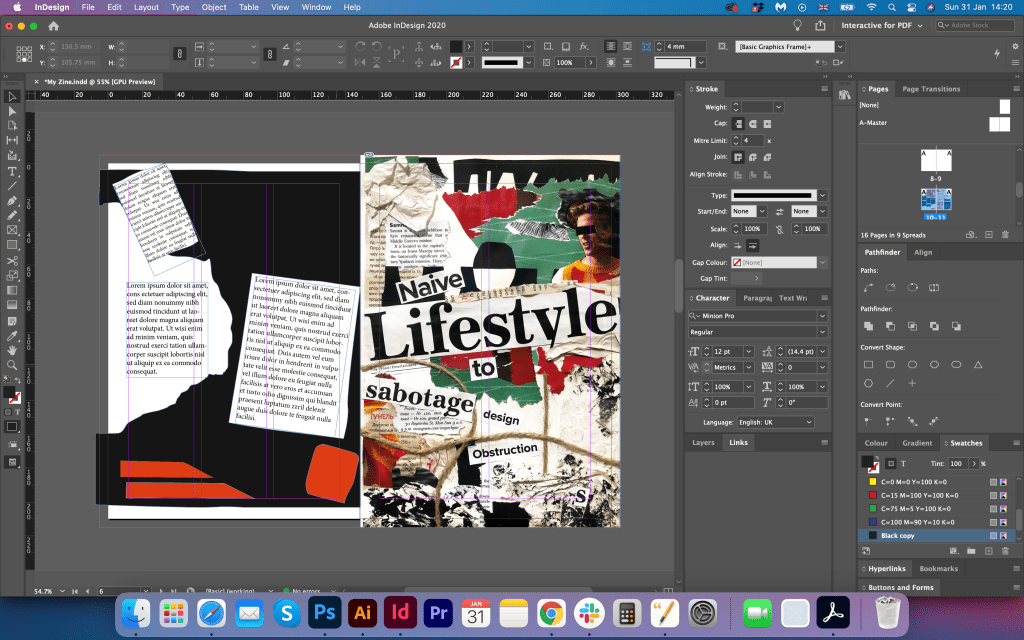
The direction of the booklet I found, but I still was trying to experiment with some collages and casually scattered text blocks around. I was thinking to make use of previously designed fanzine collages, but I thought that some of them looked too messy and punk-like for the style that I was looking for. I liked the idea of collage pages, but they probably needed to be more relatable to the book design, I wanted them to evolve around book, magazine and devotion of reading. Also, sharp ages around blocks didn’t look right. My conclusion was to try to use magazine cuts but look for some more inspiring ideas.

Why books are important to me

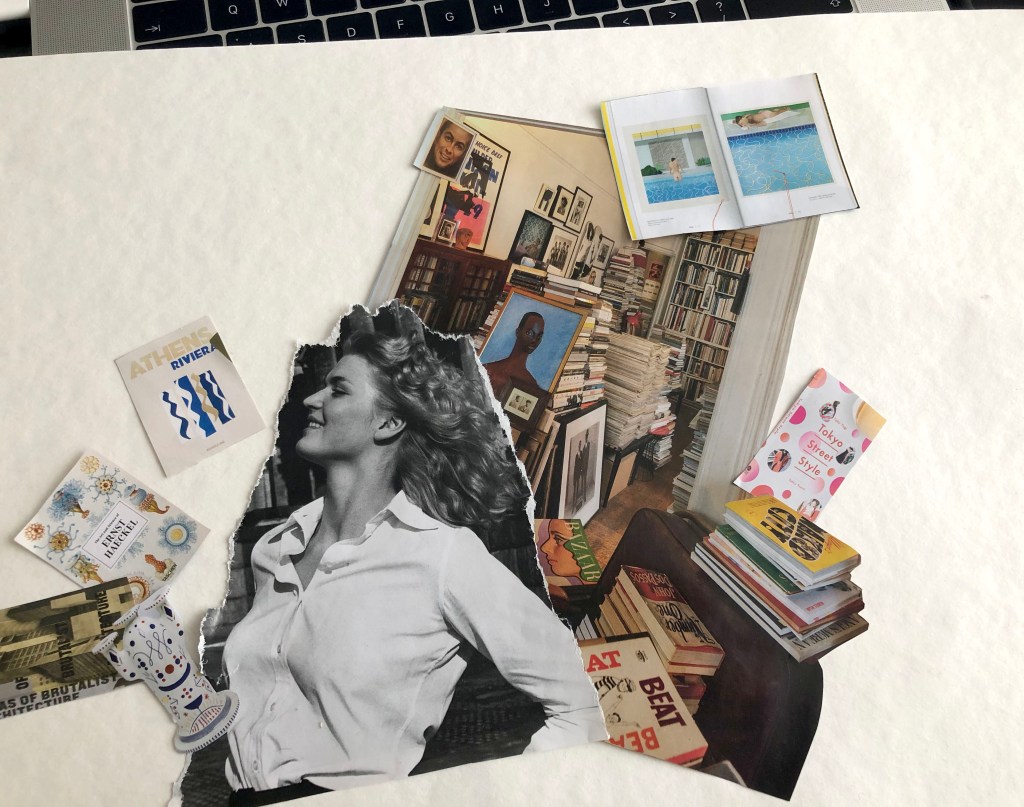
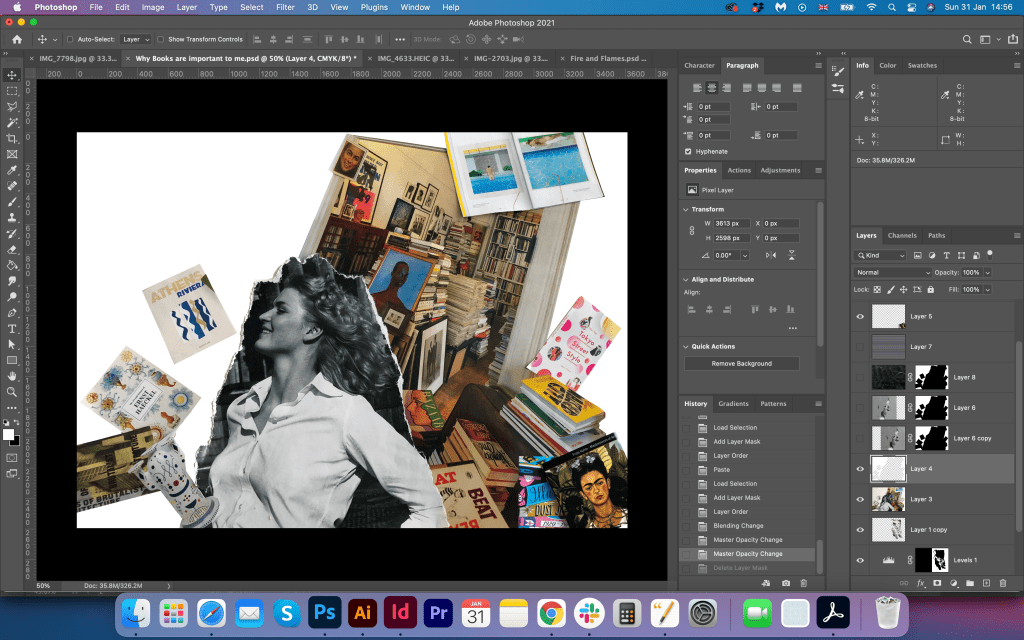
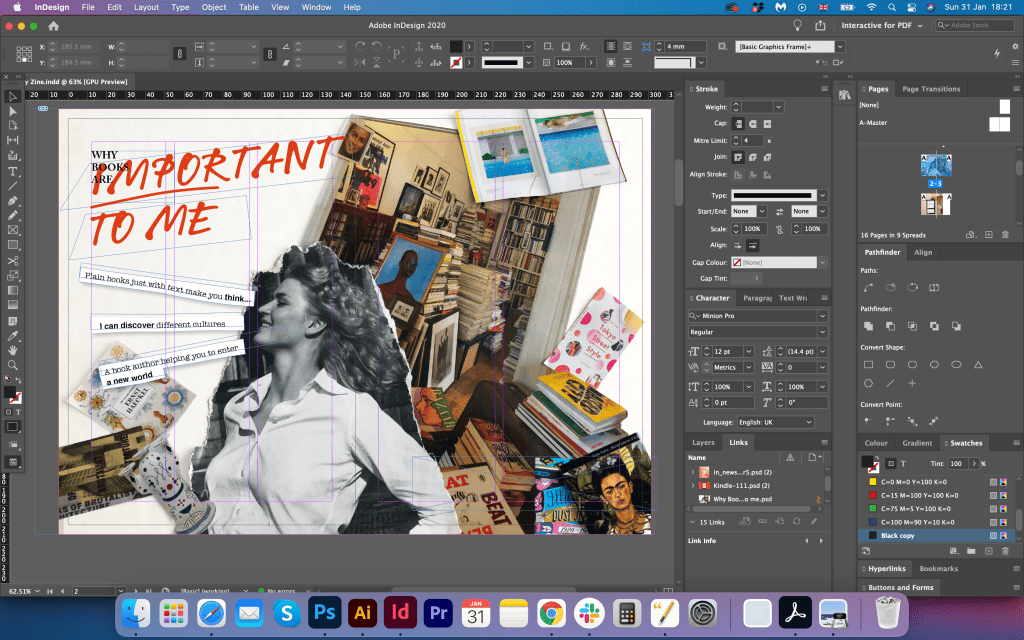
I know that I was not going in the page order, so I decided to go from the path “Where the inspiration is coming from”, as it was quite a creative task, I tried to catch a mood from the objects I had around. I was looking through some magazines I had, like Vogue and Elle, and some of them had articles and images about books, I thought they could be useful for my collages. I found that black and white picture of the smiley and happy girl, so I had an idea to put some books around her like they are flying in a circle around her thoughts. I placed around the cut images of books and library room on the sheet of paper format A3, didn’t glue them, so I could move them for the better placement, and here I received the first outcome.

I really loved that collage. I thought that it could give me another direction for design. It is dynamic, had a fanzine feel, and had some nice spacing around to place a text.

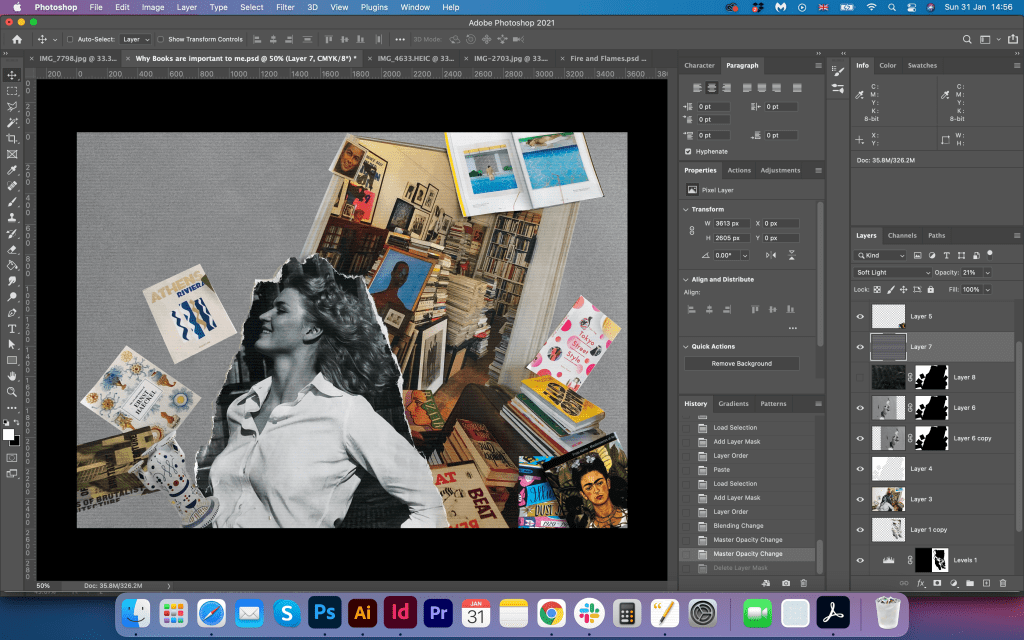
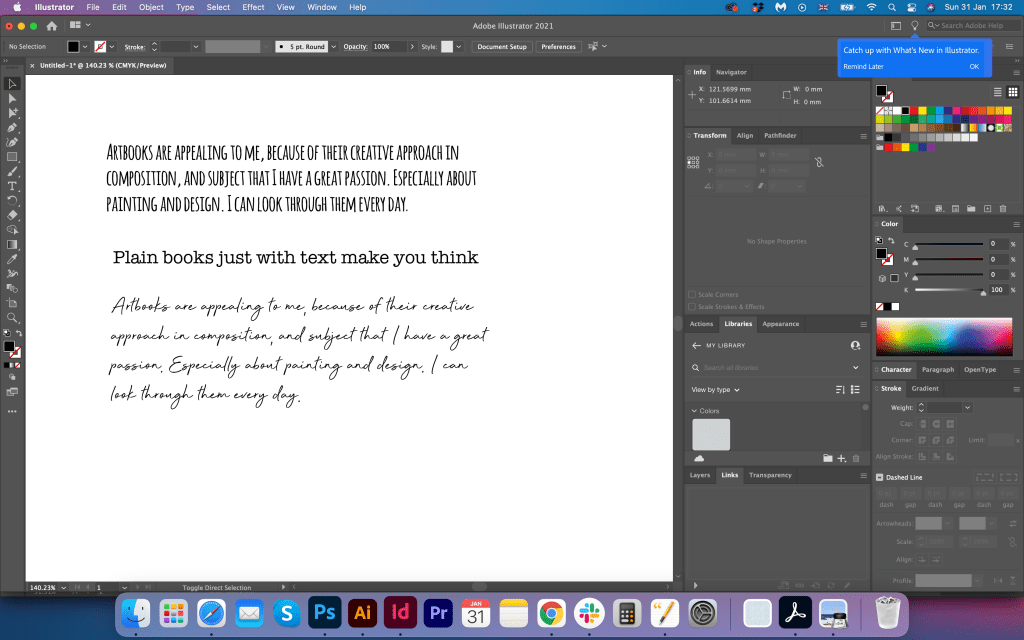
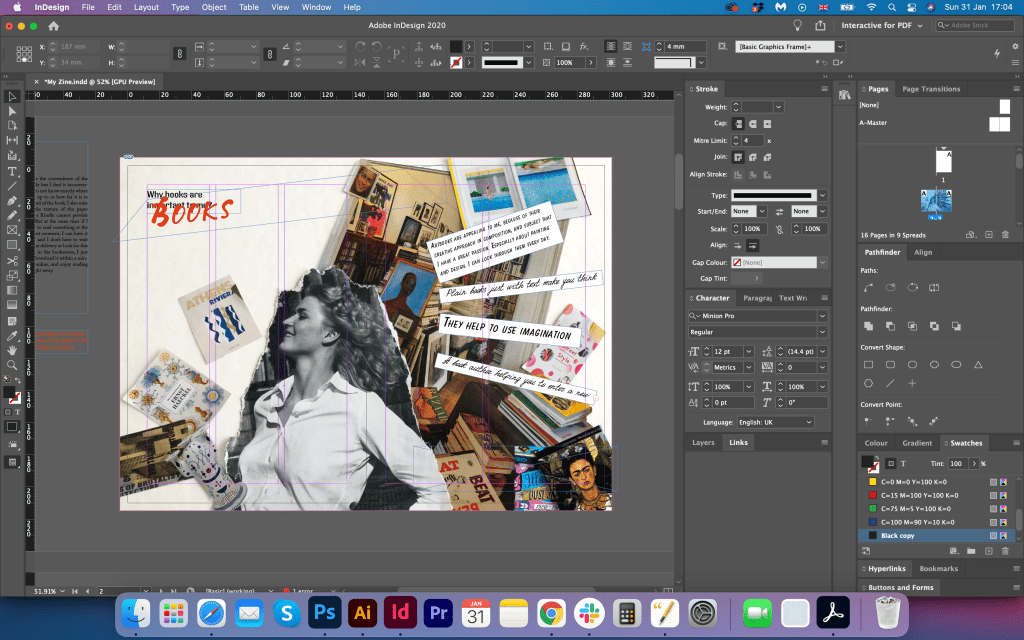
I moved the design into Adobe Photoshop, corrected the paper colour and tried to play around with the background. I decided to leave light space around the girl, as I didn’t want to overload it with dark patterns. The idea was to see the girl as the main point of the composition, then the library and books. In addition, I placed some of my favourite books in the right corner of the spread. I thought that would be great to place some phrases coming from girls head. I prepared some personal through on the separated piece of paper, chose the selection of fonts in Adobe Illustrator, and after played with them in the fanzine layout. For each phrase, I created hand-painted pieces of paper. It was quite tricky to find the right position for the wording, as I didn’t want to make it look too busy and overloaded. But the result that I got made me very happy, I really enjoyed the final piece. I had dynamic, creative, airy, cut and paste collage. All objects were collected from different magazines, but all together they made a good composition, something I was looking forward to achieving.

My relationship with books

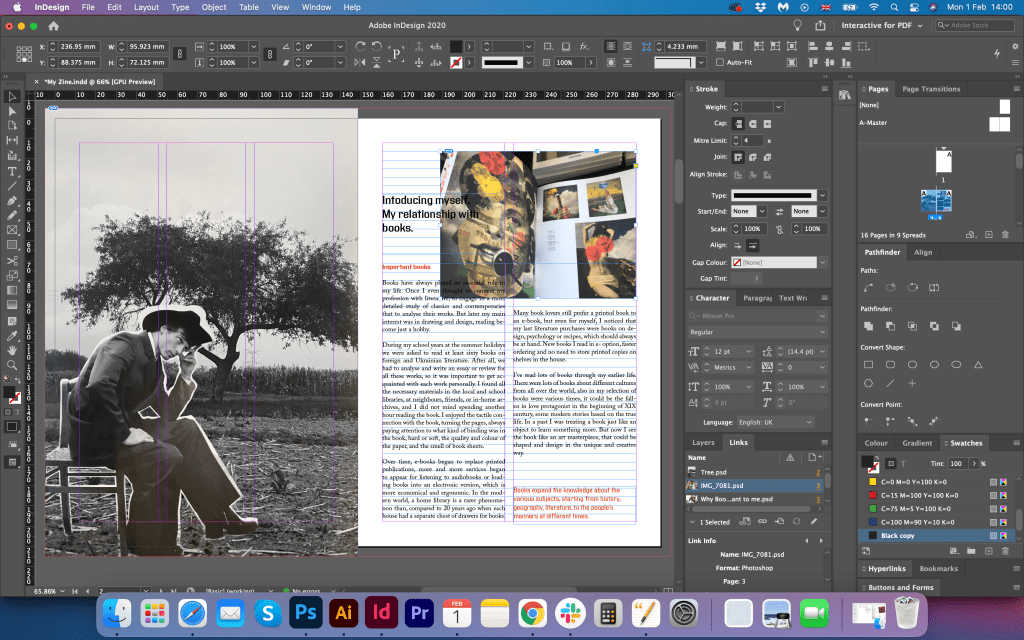
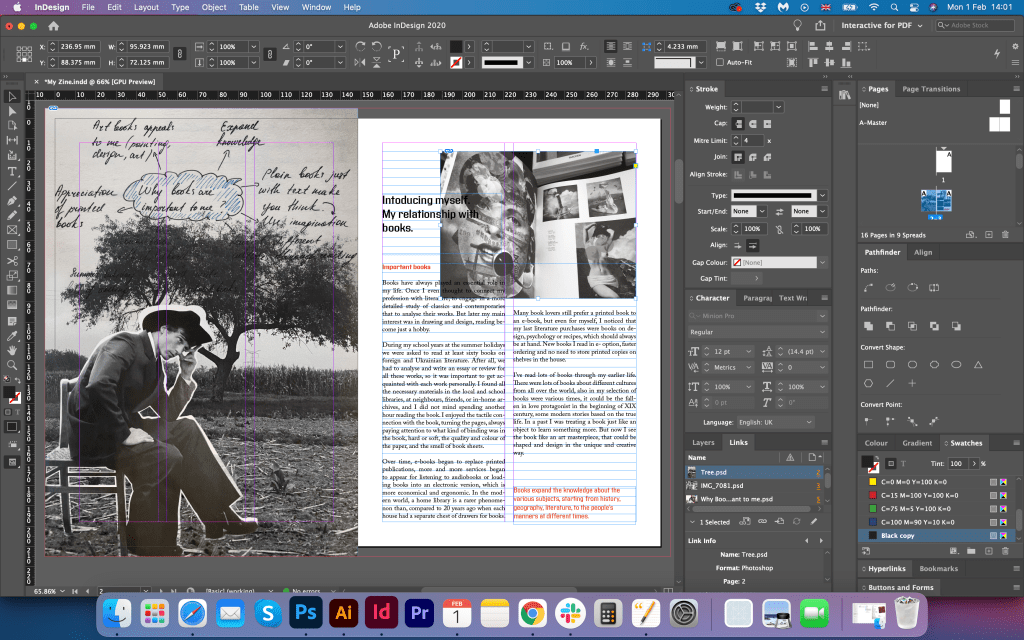
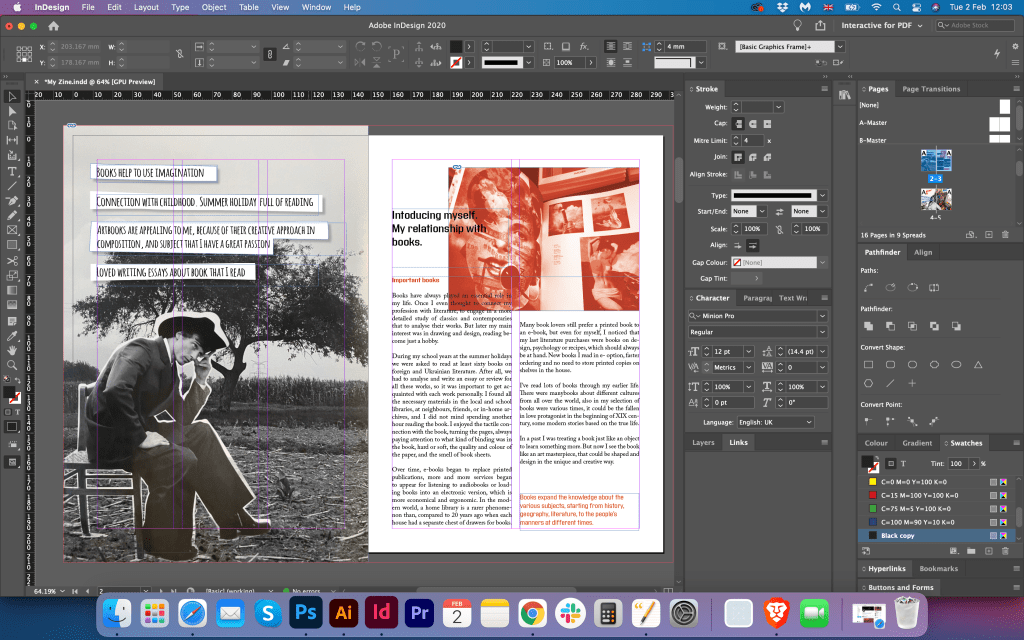
Later my thinking path brought me to the idea of creating the page Introducing Myself. I wrote an essay about my relationship with books, how it all began, and where my passion for the book is coming from. That was quite exciting processes for me to write, as I remembered myself in earlier life, and I’m glad I could tie together my experience in graphic design and my enthusiasm for the reading and books. I found the image of the tree in the magazine, and I wanted to place on the top of it the person ‘thinker’, in the cut and paste manner. That image symbolises me in the thinking process. I tried to put some of the mind maps on the top of the image, but they looked slightly messy, so I decided to place some phrases on it, a similar way I used for the “Why books are important to me” page, but with different decorative font Amatic Bold. I tested a few options with a black and white version for the images. For the right page, I used the picture from my collage book with some red effect on the top of it.

I liked that page I got in the result. It looked something like the melting part between the magazine layout I designed for the “Future of the book page”, and at the same time, it had a feel of “Why Books are important” to me collage type. I was thinking to place this page straight after the cover page, I think this page has a good introductory feel for the booklet.

My Interest in Book Design

The next stage was the creating page about My interest in book design. I have never asked myself what I like in books from the design point of view. Because books attracted me not only from perspective of having illustrations or images on them, I liked books even with just a simple text and vintage paper. I went down the line of a deeper analysis of the book design, as there would be a new world to learn about. I described below my point of view on books from the composition and proportions point. There are some new discoveries for me, and it was important to find the right design for them.

Golden Section

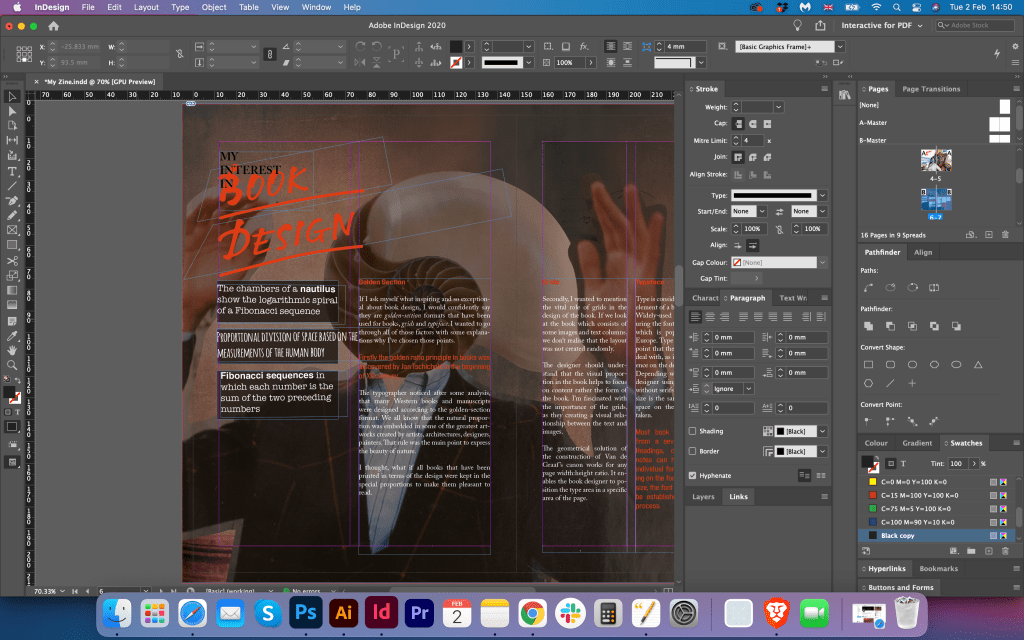
If I ask myself what inspiring and so exceptional about book design, I would confidently say they are golden-section formats that have been used for books, grids and typefaces. I wanted to go through all of those factors with some explanations for why I’ve chosen those points.

Firstly, the golden ratio principle in books was discovered by Jan Tschichold at the beginning of the XX century. The typographer noticed after some analysis, that many Western books and manuscripts were designed according to the golden-section format. Moreover, the natural proportion was embedded in some of the greatest artworks created by artists, architects, designers, and painters. That rule was the main point to express the beauty of nature.

I thought, what if all books that have been printed in terms of the design were kept in the special proportions to make them pleasant to read? That could be the answer to most book designs. 

Grids

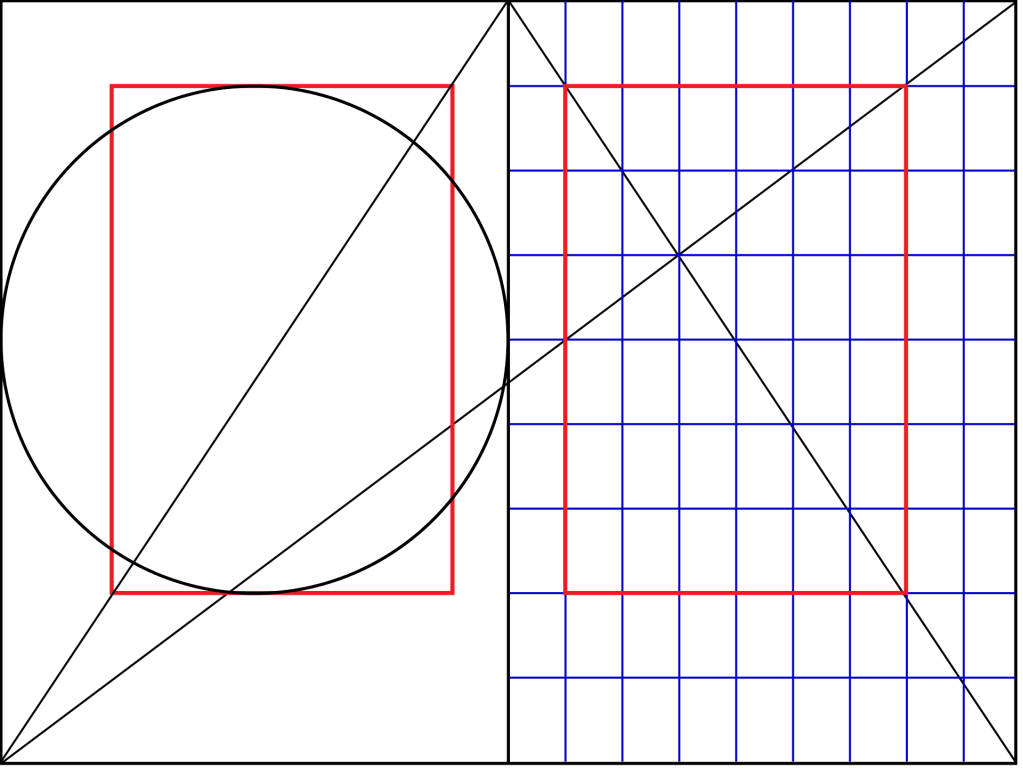
Secondly, I wanted to mention the vital role of grids in the design of the book. If we look at the book which consists of some images and text columns, we don’t realise that the layout was not created randomly. 

The designer should understand that the visual proportion in the book helps to focus on content rather than the form of the book. I’m fascinated with the importance of the grids, as they creating a visual relationship between the text and images.

The geometrical solution of the construction of Van de Graaf’s canon works for any page width: height ratio. It enables the book designer to position the type area in a specific area of the page.
Typeface

Type is considered the smallest element of a book page design. Widely-used system of measuring the font size calls Didot, which is popular across Europe. Type size is the main point that the designer should deal with, as it has a high influence on the design of the page. Depending what type of font designer using, with serifs or without serifs, even if the font size is the same, the different space on the page could be taken.

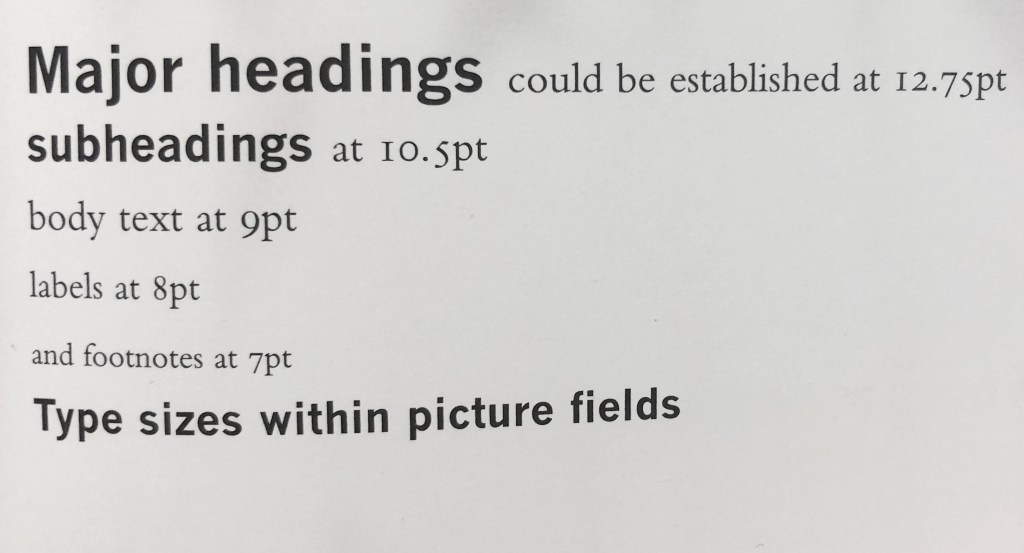
Most book designs consist of several types and sizes. Headings, captions, and footnotes can have their own individual font, and depending on the font thickness and size, the font hierarchy could be established through the process. 

Another fascinating fact about book and magazine design is that the Fibonacci series could be applied for the font size as well. This helps to establish a harmonious and comfortable reading experience. But most of the time designers get used to using an eye to establish the right proportion for the font size.
Design Process

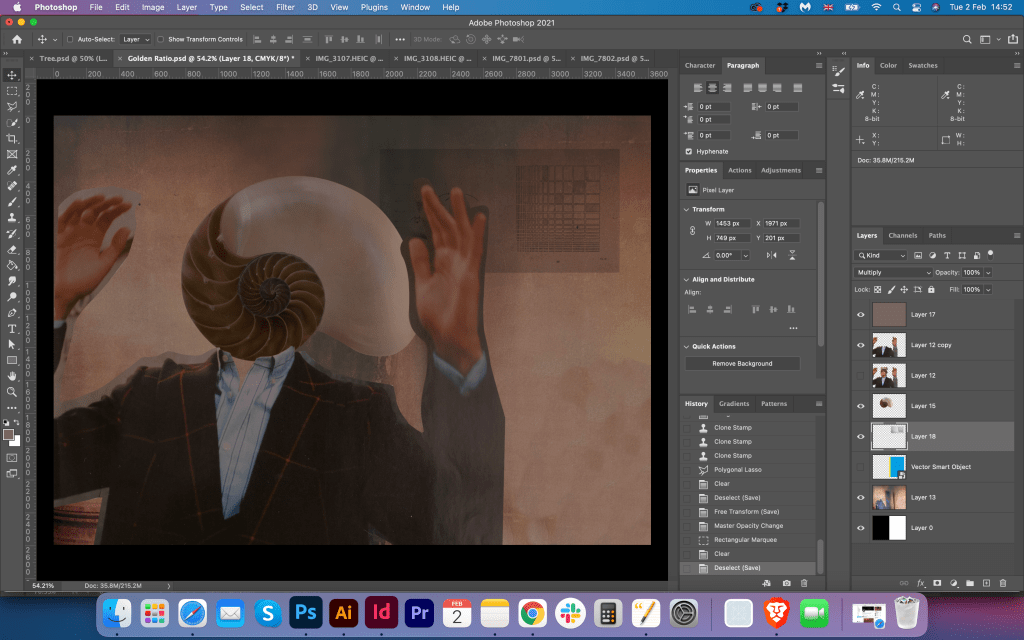
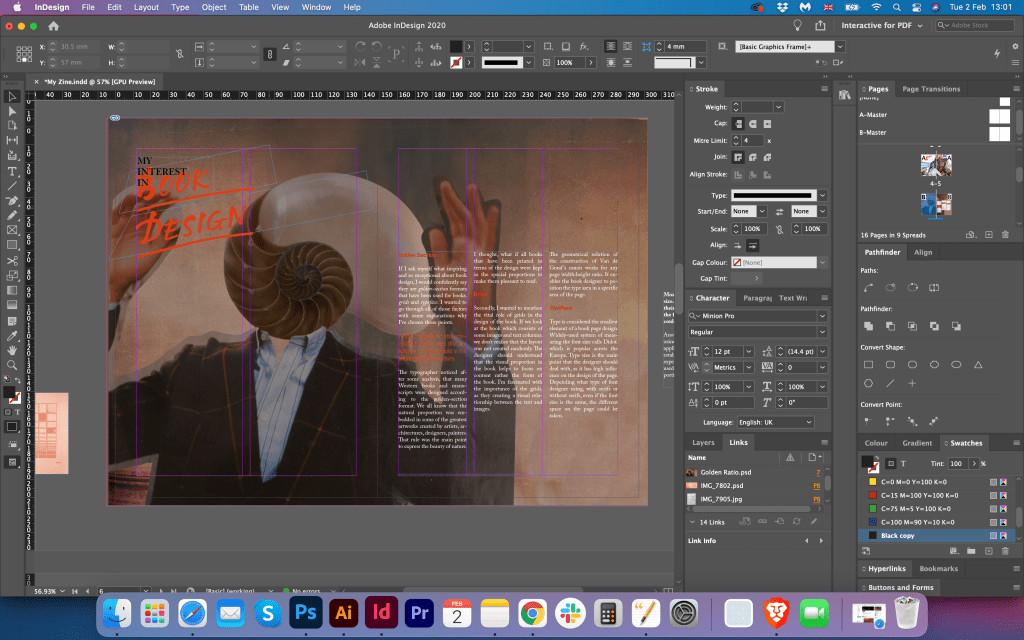
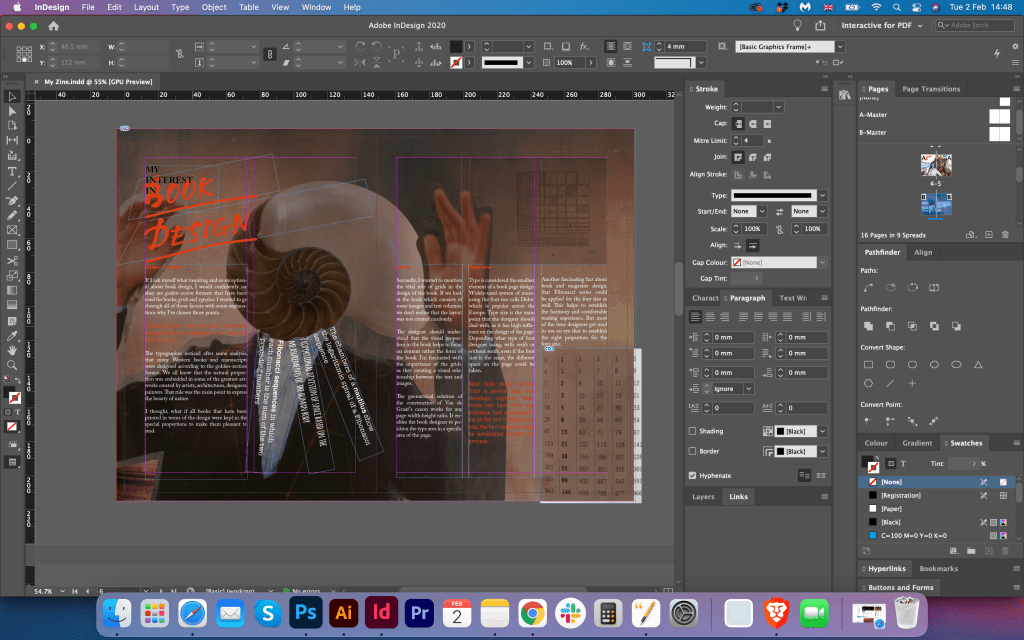
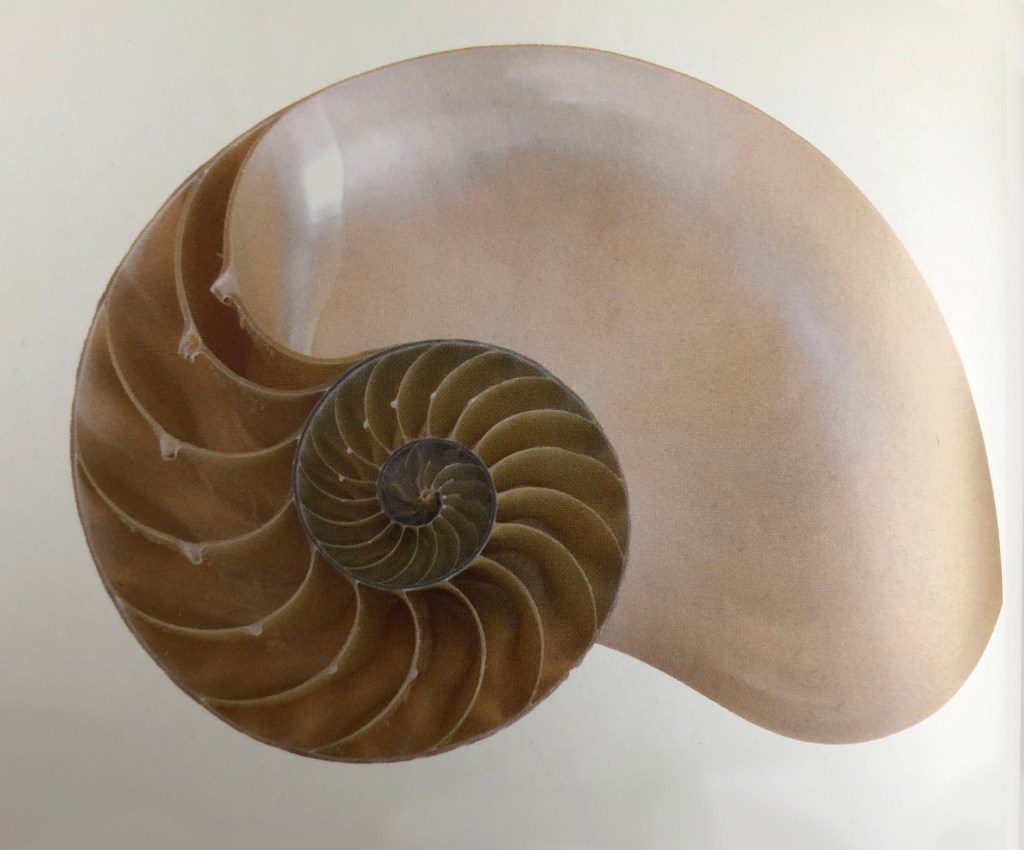
After writing the article I needed to place the wording into the booklet. I was going to use a white background for it with a template I used for the Future of the Book page, as I had some text to make it look like for the magazine spread. I placed the image of the shell, which is the symbol of the golden ratio, also I wanted to place some square images around the layout. But I thought that that page need still to have a feel of collage design, I wanted to bring that juxtaposition mood into it. That’s where the idea with a book headed boy came from. In Adobe Photoshop I made some manipulations with the image, by swapping guys with the shell image, the idea of juxtaposition is seen in that design with some vintage like the background in it. Later I had a little issue with text visibility, so I needed to make sure that the image is contrasting enough for the white or black fonts. I made the page darker and used same grid which I had in my page template. To bring the dynamic into the page I used some phrases about the Fibonacci series and the golden ratio around the shell-head.

I was quite pleased with the result. This cut and paste approach works quite well for my booklet. It has a modern feel and at the same time vintage style. I liked how this spread supported the concept of the magazine, and I was looking forward to design some more pages.

The Oldest Trick in the Book

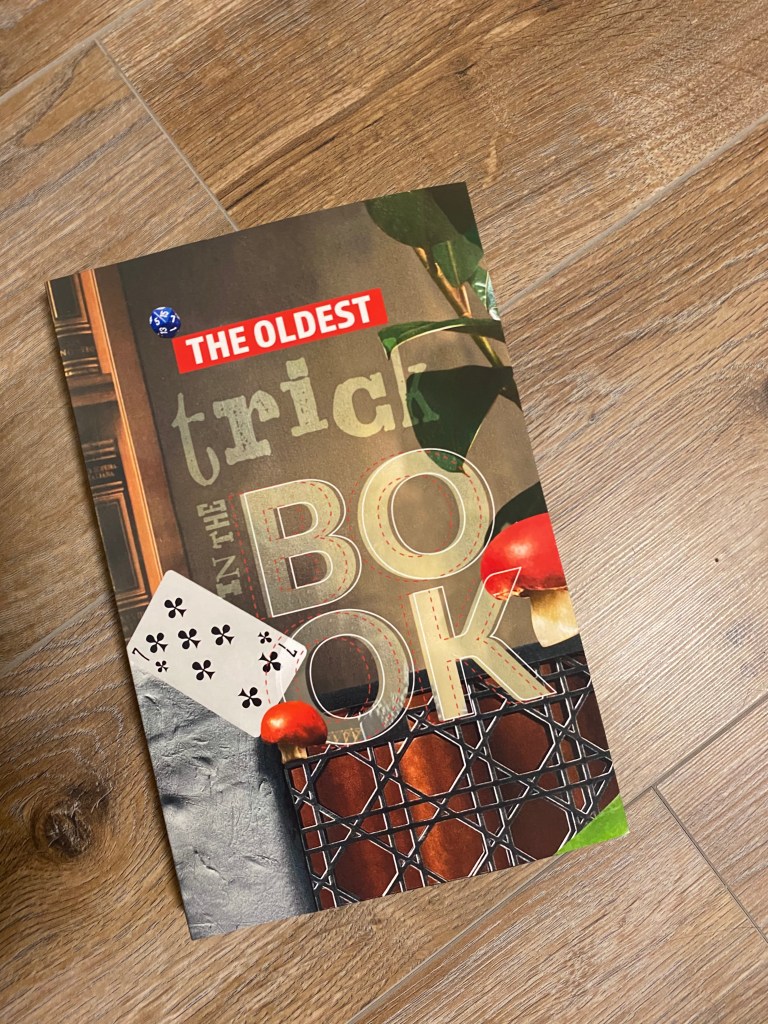
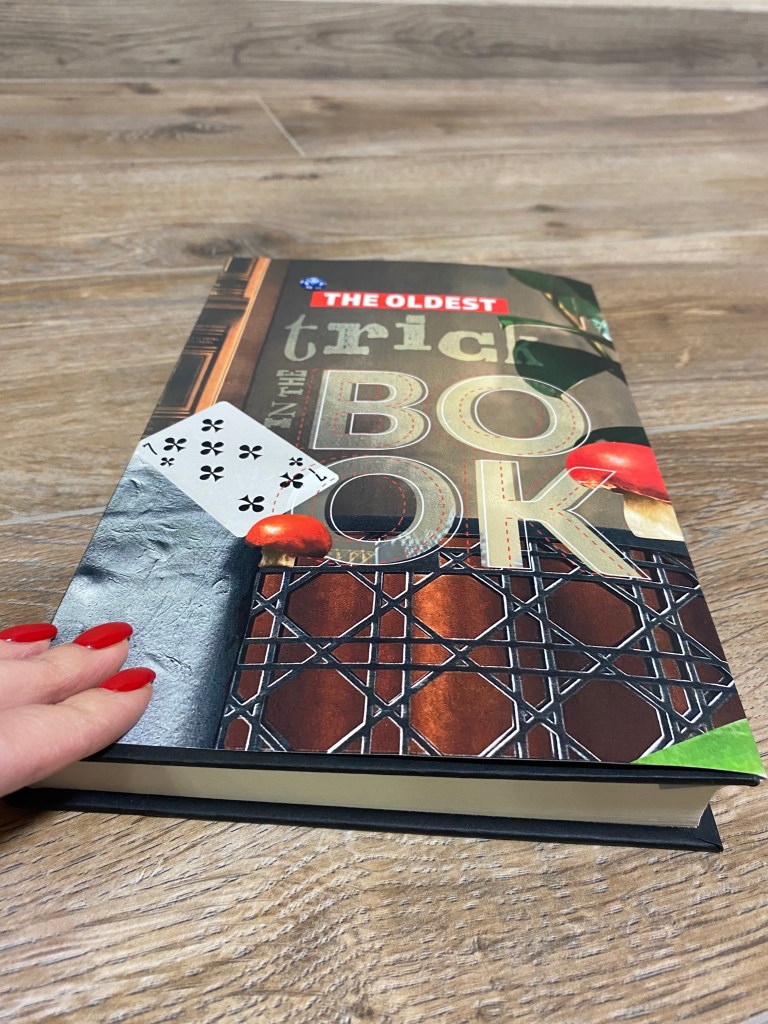
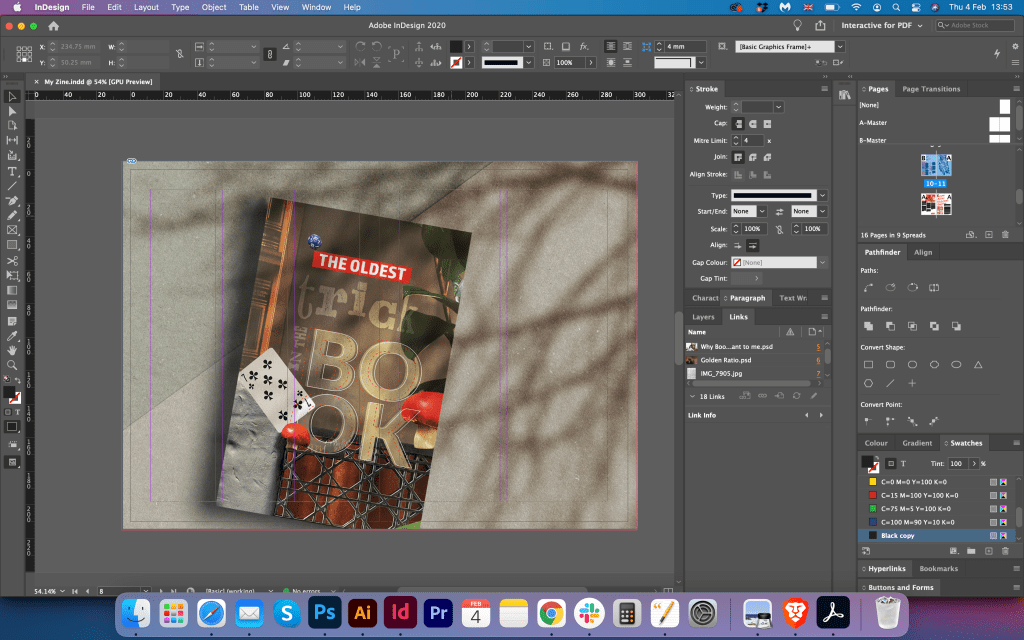
For this spread I used the cover I designed in earlier exercise. The design of that “Oldest Trick in the Book” cover has the same feel as I implemented into my booklet, like brown shades, juxtaposition, objects around, and some bright elements into it. I downloaded a mockup for the book cover and placed it in the centre of the spread slightly to the left. I tried to place some wordings into it, but it didn’t look right. Also I wanted to keep this page different to other pages, with just book being the main point. But colourwise this page looked in harmony with the booklet concept.
Global Influencers

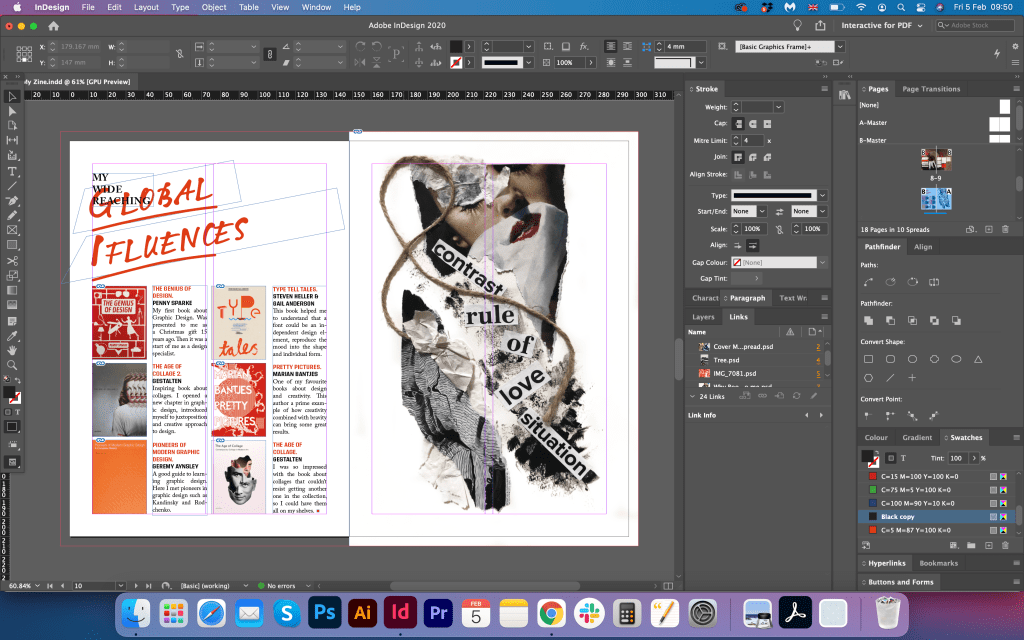
For the Global Influences page, I decided to make a white clean page, with some books related to design highlighted on it.

When I ask myself which books influenced the formation of me as a person, the works of classics and contemporaries, mostly classical literature, come to my mind. Nevertheless, here I would like to highlight the books that are important to me as a specialist in the field of graphic design. Previously, I always read what I came across, be it a novel or a detective story of the 19th century. But after I started my training in graphic design, I began to pay more attention to books on my professional activities.

My first book on graphic design was a Christmas present from my family, The Genius of Design, which kicked off my passion for design. I had a long lag between buying my first design book and the books I got as I went through college. Each of these books generated more and more interest and helped develop my creative imagination. The Age of Collage series of books became special for me, they were a kind of navigator in my work for a music label, and also helped to form a creative approach to design.

Also, I always wanted to find a clue to how to make a font an independent art object. For many, fonts are an everyday way of conveying information, but for me as a designer, I understood that a font can be an independent design element, convey a person’s mood and have an individual form. Therefore, on this list, I have attached the book Type Tells Tales. Also, I attached the book Marian Bantjes Pretty Pictures, as it has lots of inspiration for me from a creative point of view, she uses lots of different textures and objects for her designs, and I loved her experiments with samples in words with writing pen.

Design-wise I used juxtaposition collage on the right side of the spread, and four columns of text and books on the left side. Another page was created for my booklet, and it has combined styles from the magazine pages and collage, but with lots of white space around.

My Creative Process

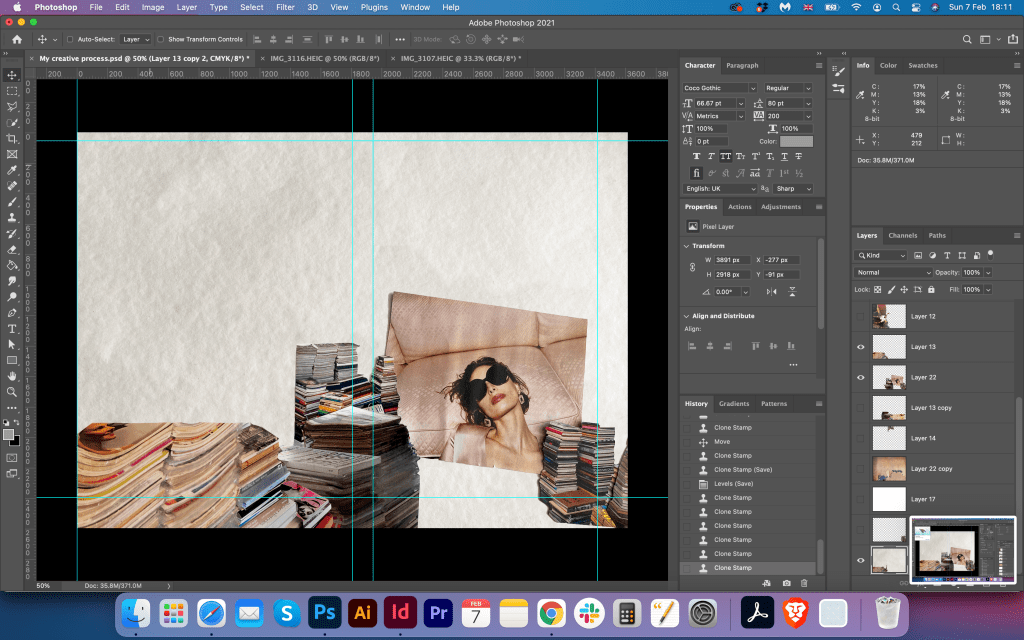
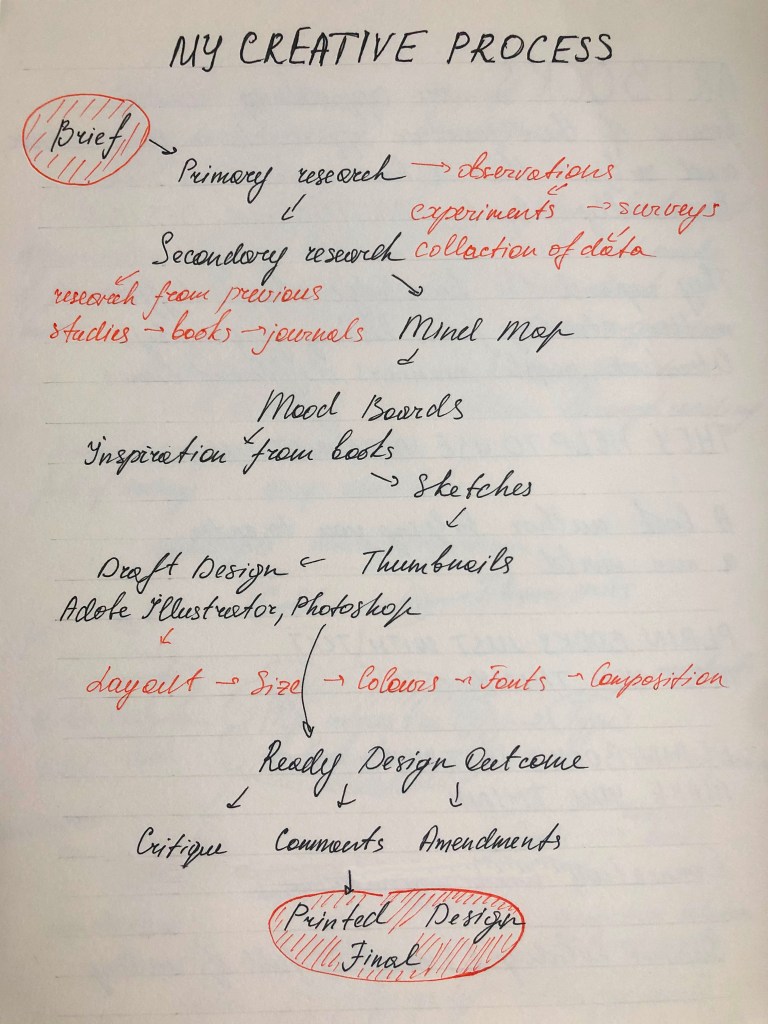
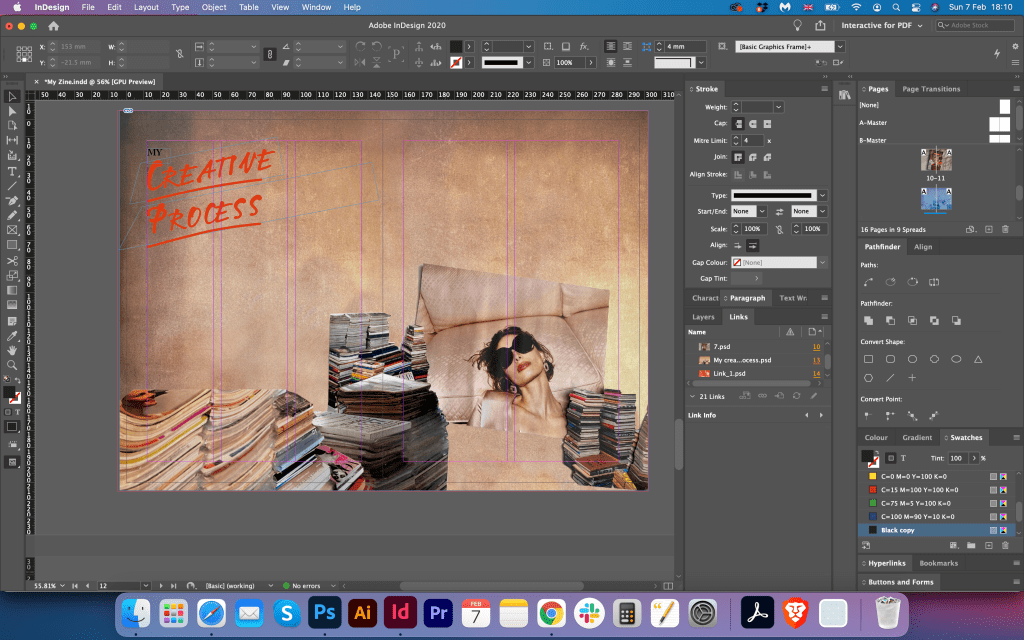
This spread was quite tricky for me to get right. I think I used so many different layouts and at the same time kept a similar theme before, so I wanted to create something in keeping with the general feel. I was thinking of creating the mind map look for this page, but instead, I just used some drafts I made for the creative process from my learning log and based on that notes I wrote a text for this part. This page I decorated with loads of magazines and books and with a picture of a thoughtful girl surrounded by printed materials. For the text, I used a wide column. This page probably is not the leading style for the booklet, but it has a similar feel to the general idea, and I’m glad I could organise my creative process into the path which starts from the brief and finishing in the approved final design.
Cover

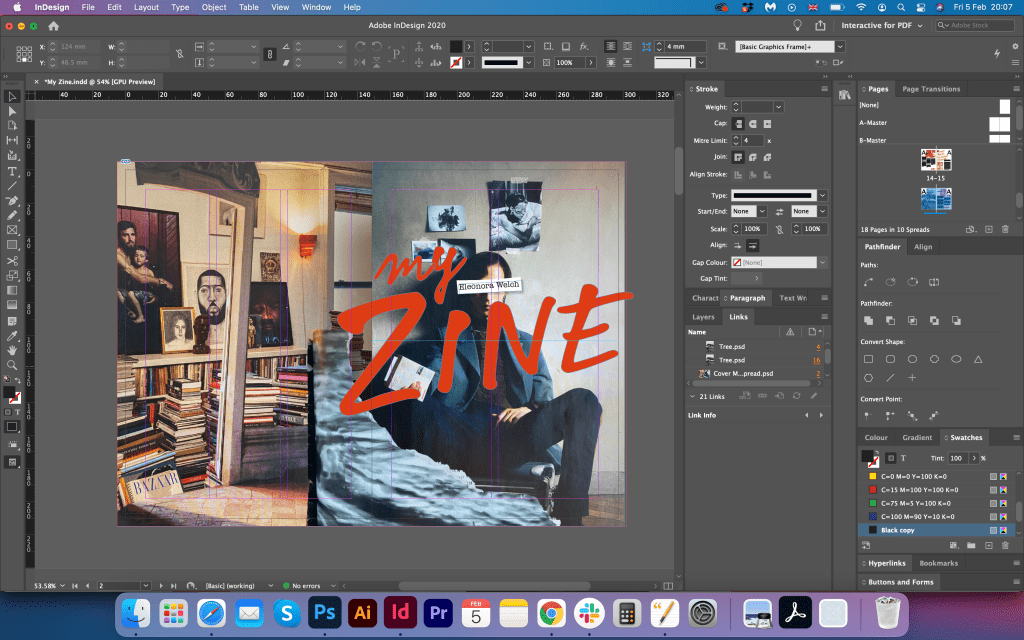
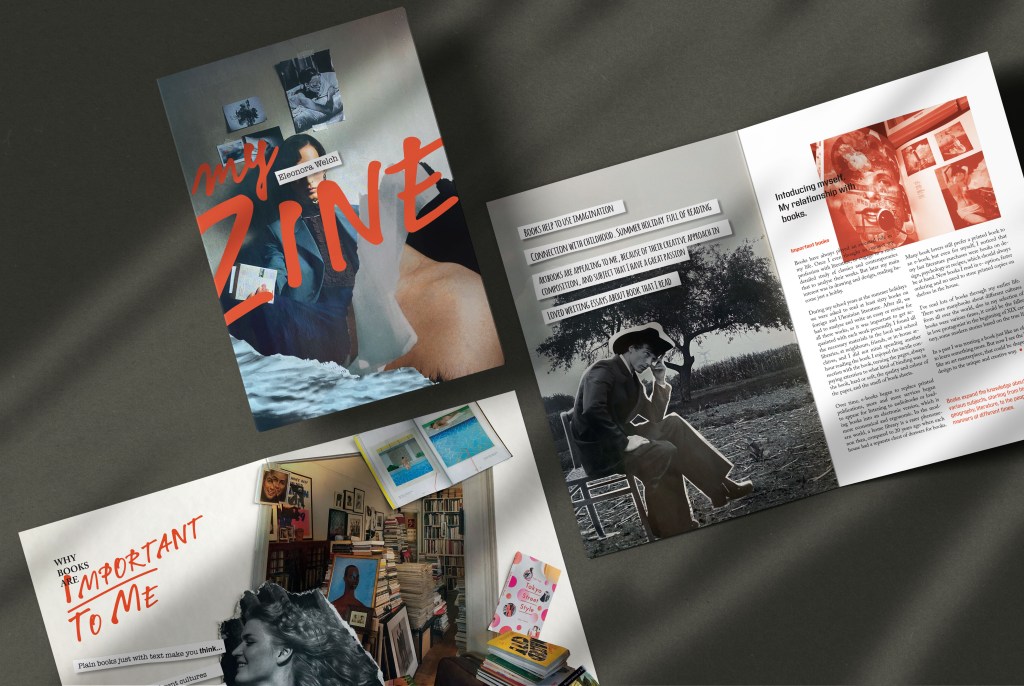
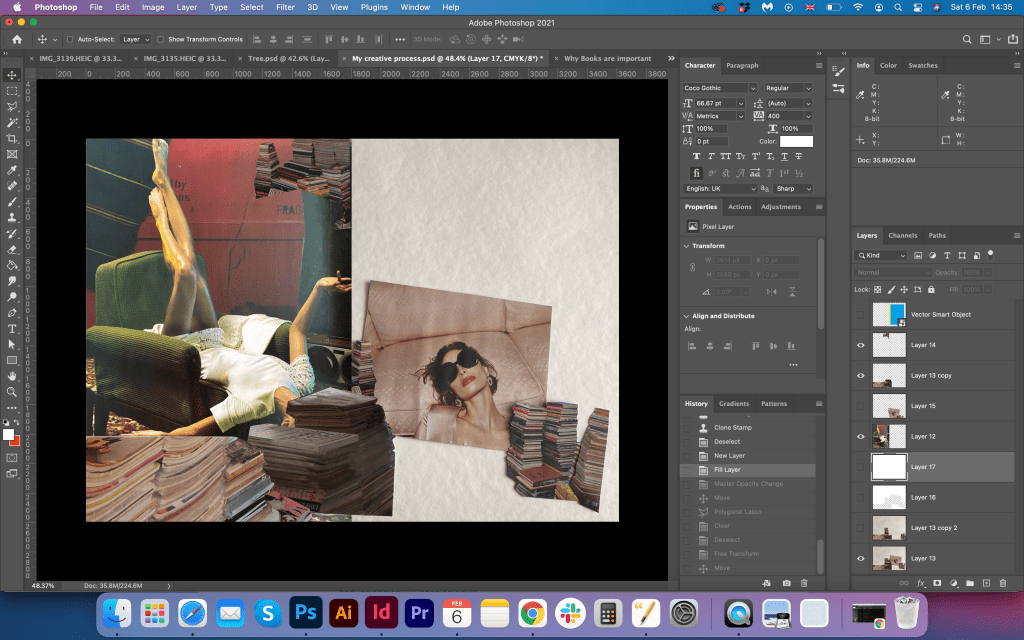
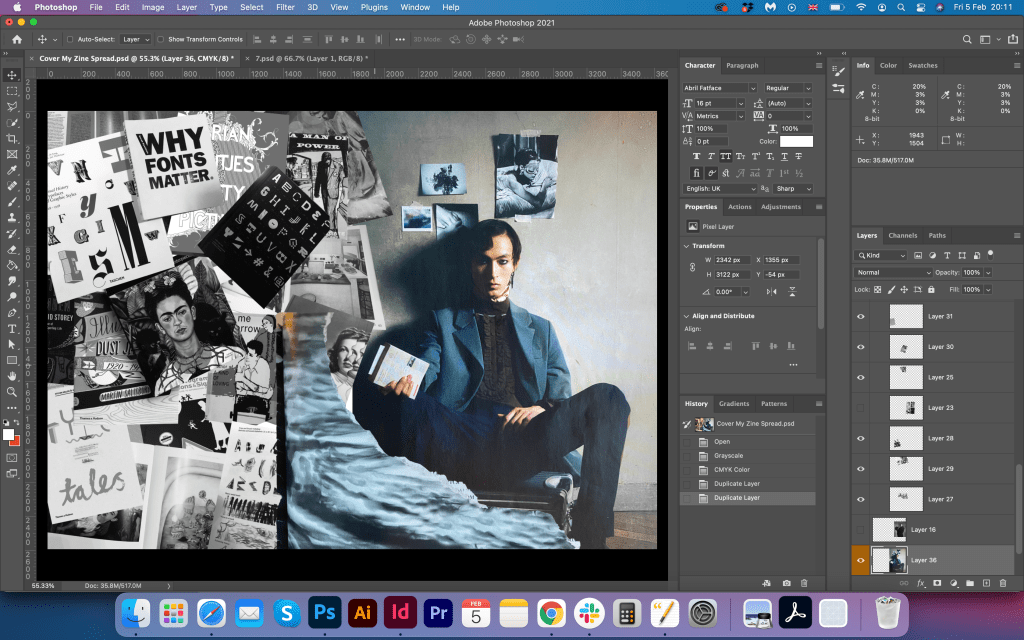
For the cover, I had an idea to create a collage with books on the back page and for the front to create cut and page collage from magazine leftovers pages I had. I placed the image of a guy with a book in his hand, and for the corner, I used the abstract image with some torn edges. This particular page I collected together in Adobe Photoshop, previously took some pictures of the objects I was going to use. Later I got rid of the books collage on the back cover and placed the picture of the library and some arch image from the magazine. For the front cover, I also used the girl’s shoulder, and it helped to bring the mystery to the cover page. For the My Zine writing, I used the same font as I applied for phrases inside of the booklet LTNotec Regular, but I made it extremely big, so it went beyond the ages, I wanted to see that ‘writing on the run’ feel.

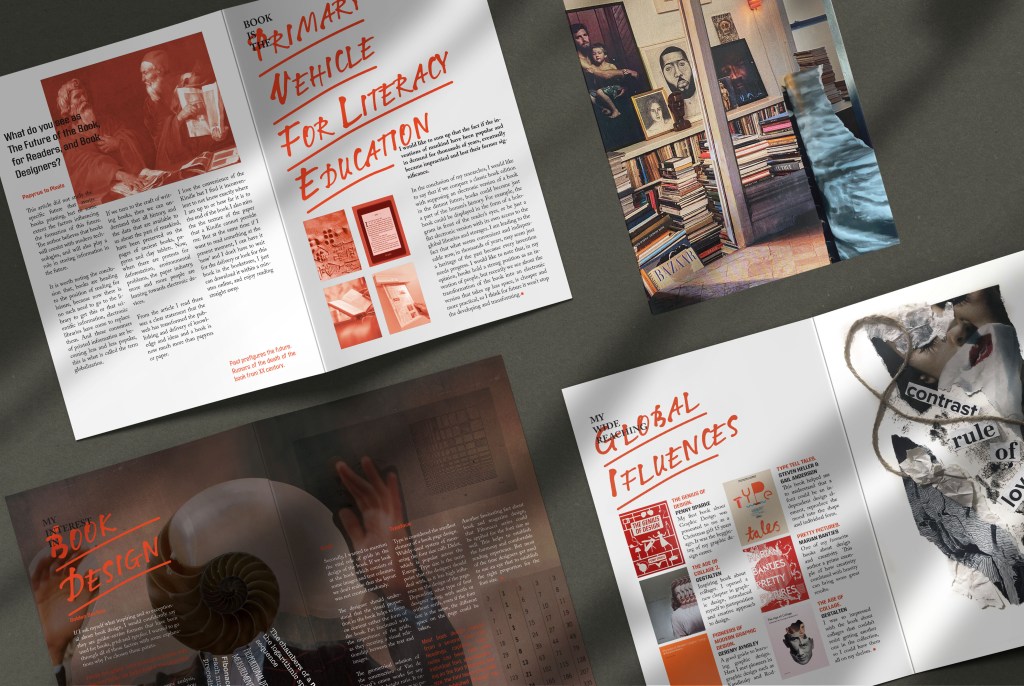
My Zine Mockup
Printed Fanzine

When I printed this piece of design it really made me super happy and proud of the work I’ve done. That was the occasion when I enjoyed the designing, loved the process, and during the process experimented with different forms and shapes. It took me a while to design it, and the idea came quite easily into my head, but it took me longer to describe what principles I applied for this booklet, and I did a lot of writings about topics in this booklet. I’m happy that I can be a copyrighter and designer at the same time, but obviously time-wise it was quite time-consuming process. I loved the quality of printing I had, this design had a style, harmony in colour and creative approach. I hope that will be a good direction for my future discoveries and designs.

Sources:

https://en.wikipedia.org/wiki/Canons_of_page_construction
https://library.si.edu/collection/artists-books/about-the-collection
Final Design

Exercise 7: Visualising, editing and critiquing

Based on your work from the previous exercises, think about how your designs within the context of the book. For example, visually explore how your artwork sits within the format of your A5 pamphlet – how the page might frame the artwork, how different pages sit together or how you might begin to develop a narrative across multiple pages.

This process might suggest new ways of presenting or developing your work. Think about how you want to finish your artwork, whether this is through typography, illustration, photography, drawing or another format.

Critique your work – what has the format of the pamphlet offered you, how might your ideas develop further, and how has your understanding of creative book design changed through this exercise?

Production

As a designer, you need to have an understanding of the processes involved in creating a book. Some of these processes remain essentially the same as in early books, for example, folding paper to form pages and binding these together to form a spine. The spine, like our own backbone, is structurally significant in that it holds the pages of the book together and allows us to open and read the pages.

For the purposes of your first assignment, your book will be based on a simple, fanzine-like publication. For the production, you will need to consider how you print or reproduce your content, what sort of paper you can use, how you will bind it, and importantly, how many copies you will produce. Even with a very simple black and white photocopied publication, you will need to consider how your artwork, and the structure of your content fits, with this mode of production. In other words, what are the possibilities and limitations of photocopying, and how can your design approach and artwork accommodate these?

Critiquing my work

That was a quite interesting turn for this part. When I designed this spread I didn’t think I would have to go back to it again. I thought that from the design point of view it was a good layout, and partly I could have inspiration for the future My Zine booklet. I loved that font I’ve discovered for the headers, the combination of red images with it, and usage of different size columns in one spread. I’ve noticed some disadvantages on that booklet, that I was going to correct. For example, little images on the right side needed to be bigger, as they practically disappeared on that page, they were too small. And I didn’t like the white space on the left side of the page under the text columns as much, the text definitely needed to go more down. As I was going to use this pamphlet for the A5 magazine page, I thought I could make the font bigger, and naturally, it will go slightly down. Overall, it was a good template to work with.

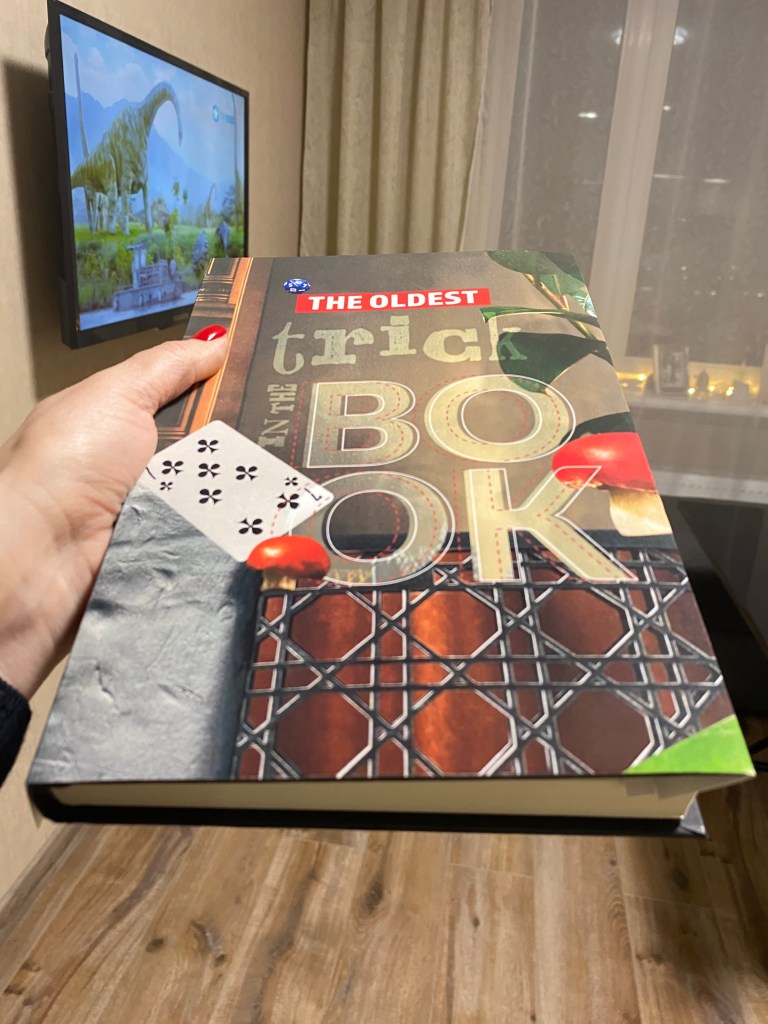
I found a book in my home library, measured the size of it and printed like a super-cover for it. That cover design turns out to be so bright and colourful, didn’t expect that at all. The collage approach I used for this cover could be useful for My Zine design. I was going to borrow that style again, but with different objects. This book cover had a vintage feel, probably that was because of the dominant sort of dark green and brown colour. I was thinking about how to combine these two opposite styles in one piece, and I was looking forward to some interesting solutions for my future design.

Exercise 6: Folding and mocking up your book

There are two elements to this exercise – thinking about how you produce your publication, and making a smaller scaled down version as a mock up.

Creating a small mock up

Printers use large sheets of paper to print multiple pages, which are then cut and folded. You’re going to use a simple A4 sheet to recreate the process of imposition and folding into ‘sections’ or signatures at a smaller scale.

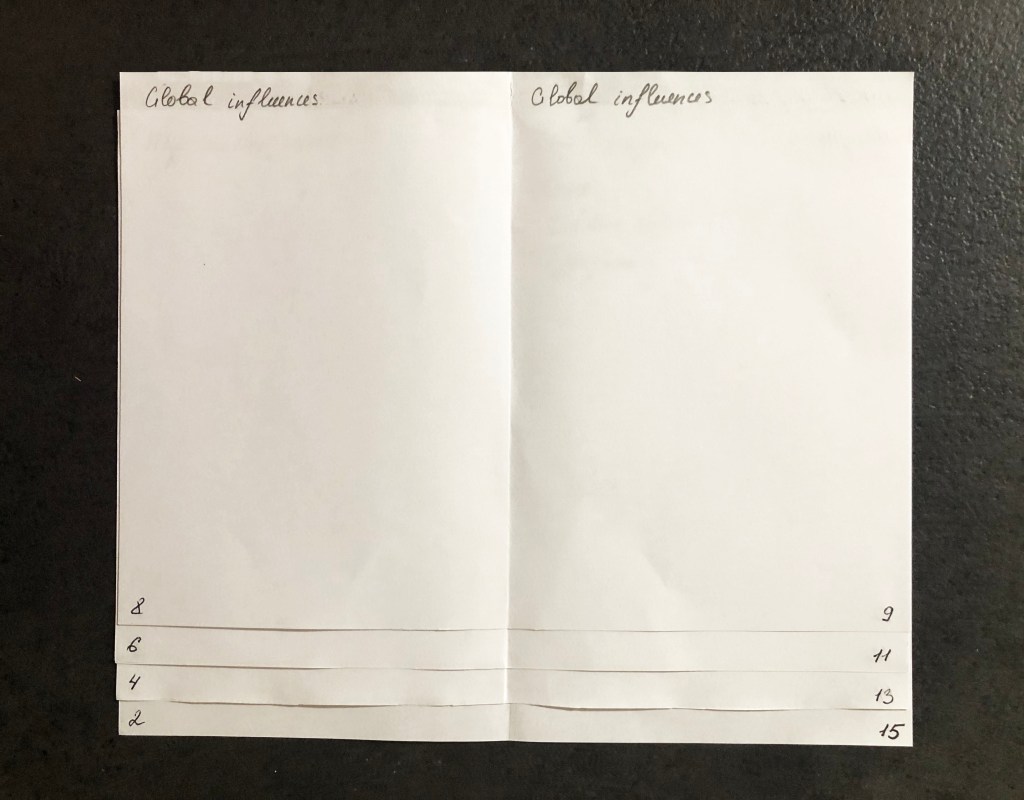
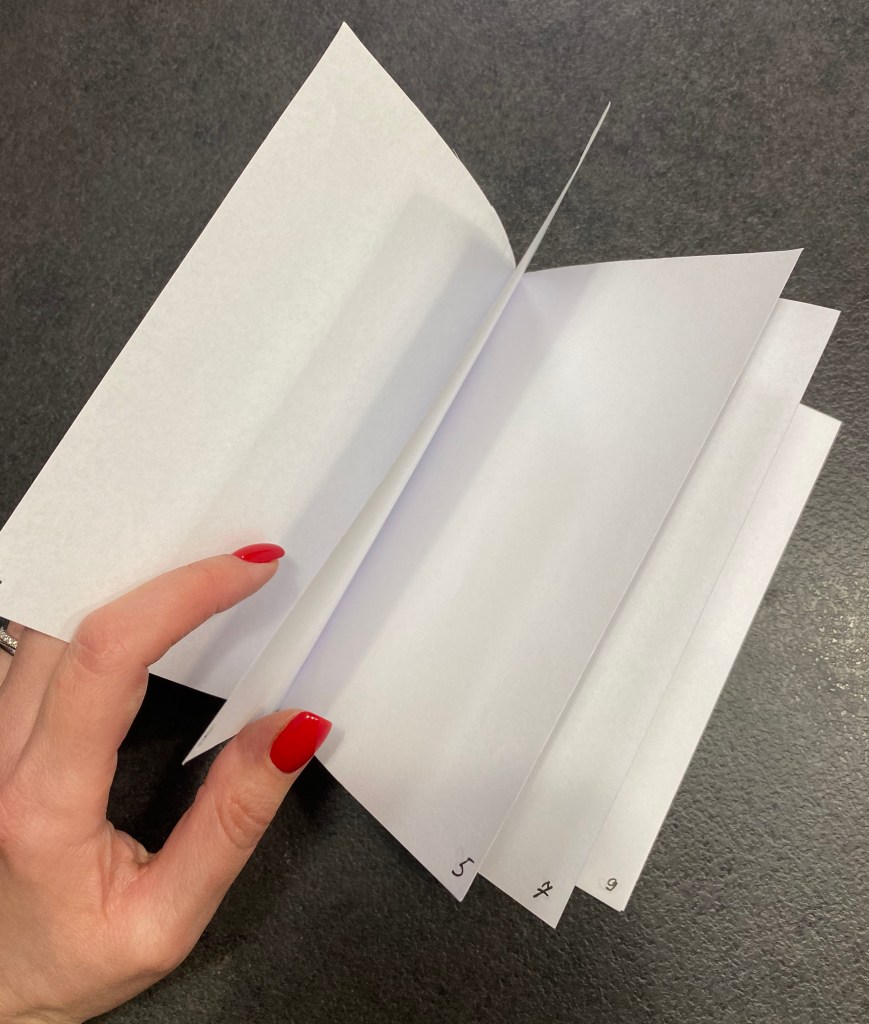
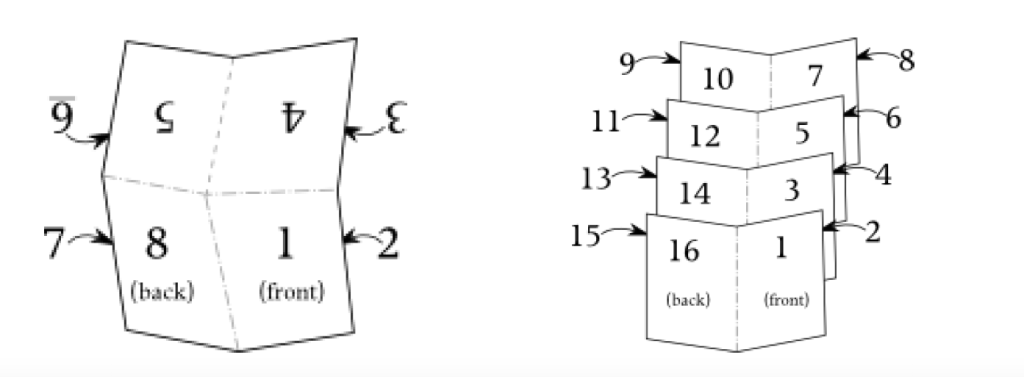
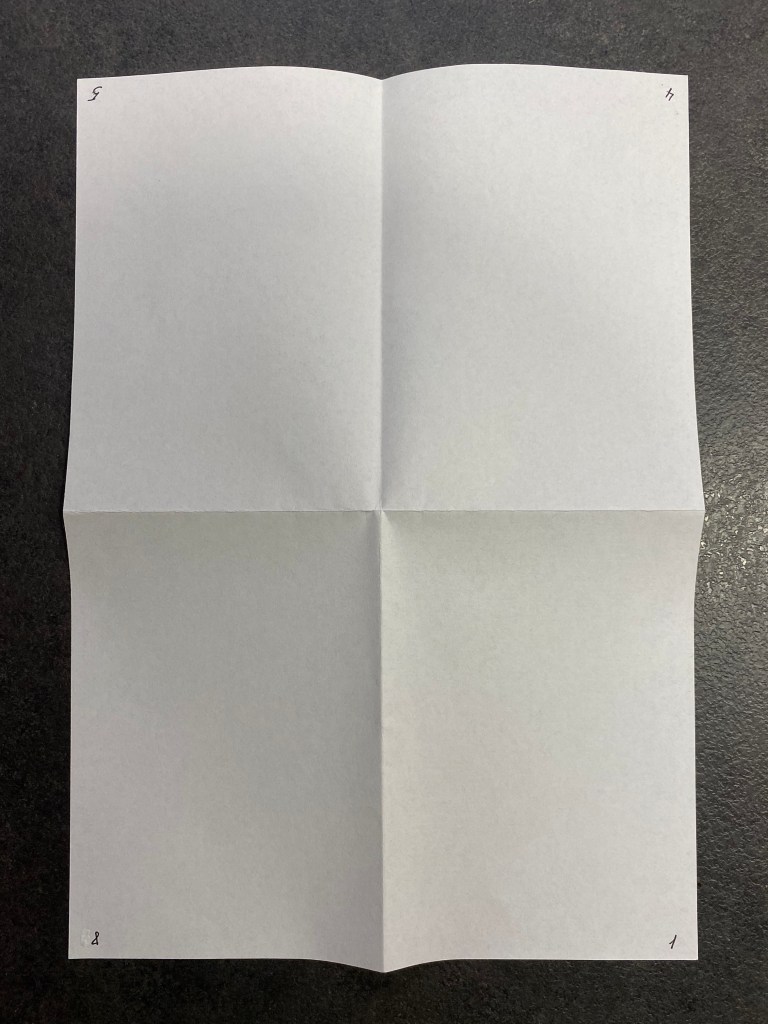
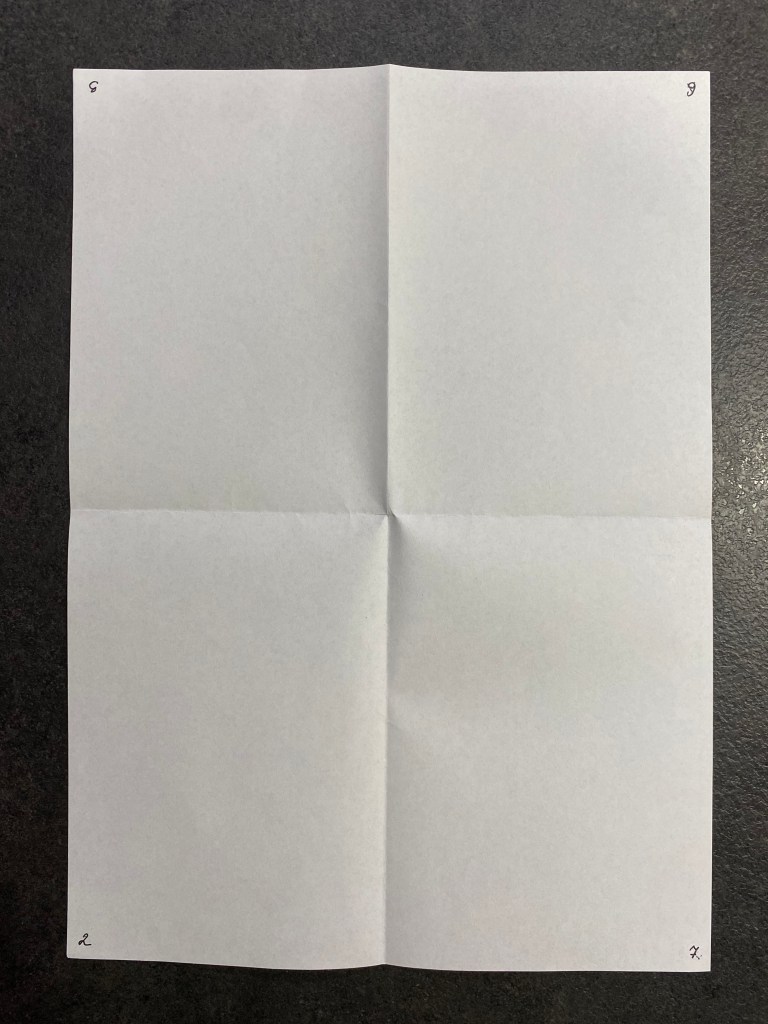
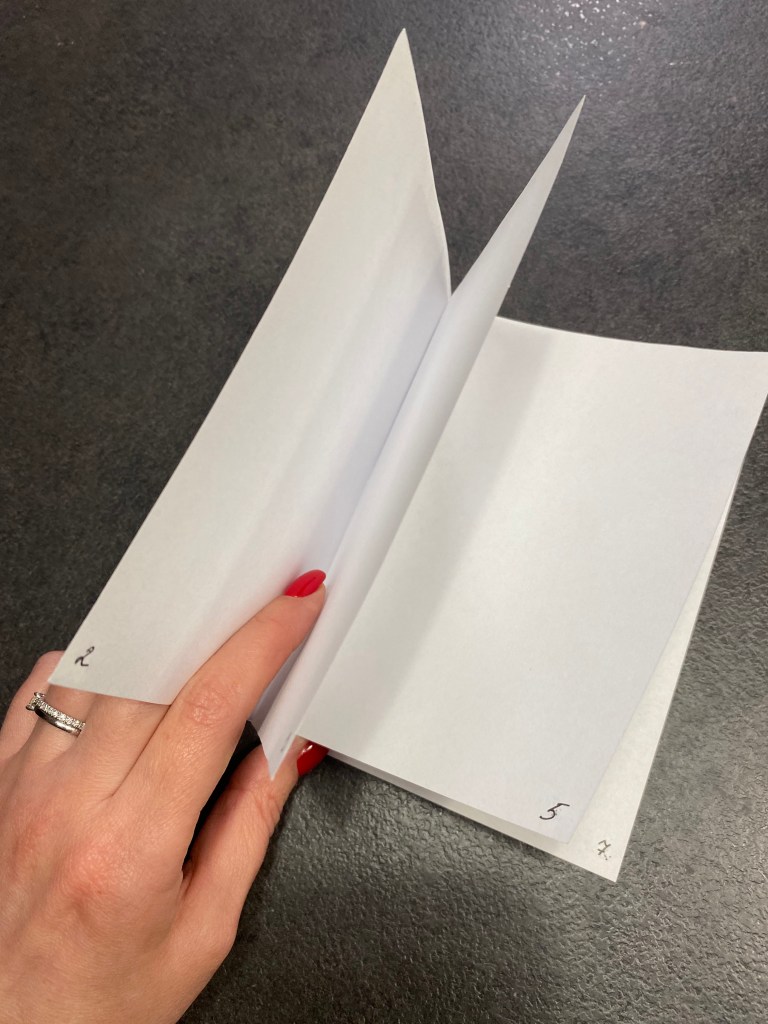
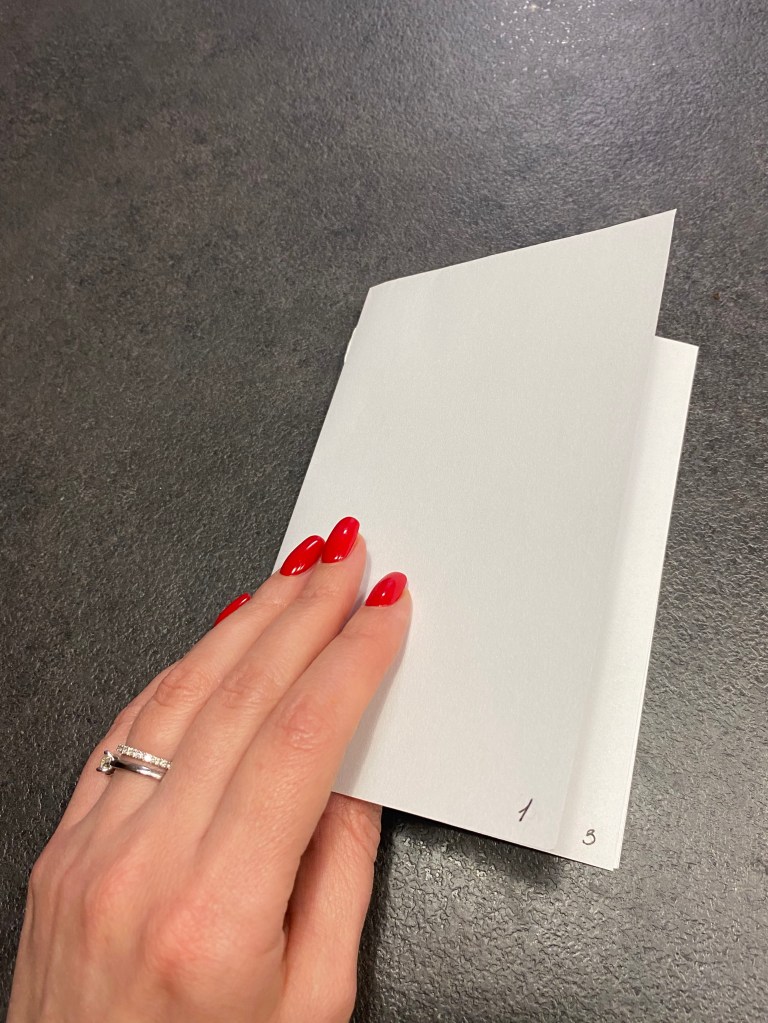
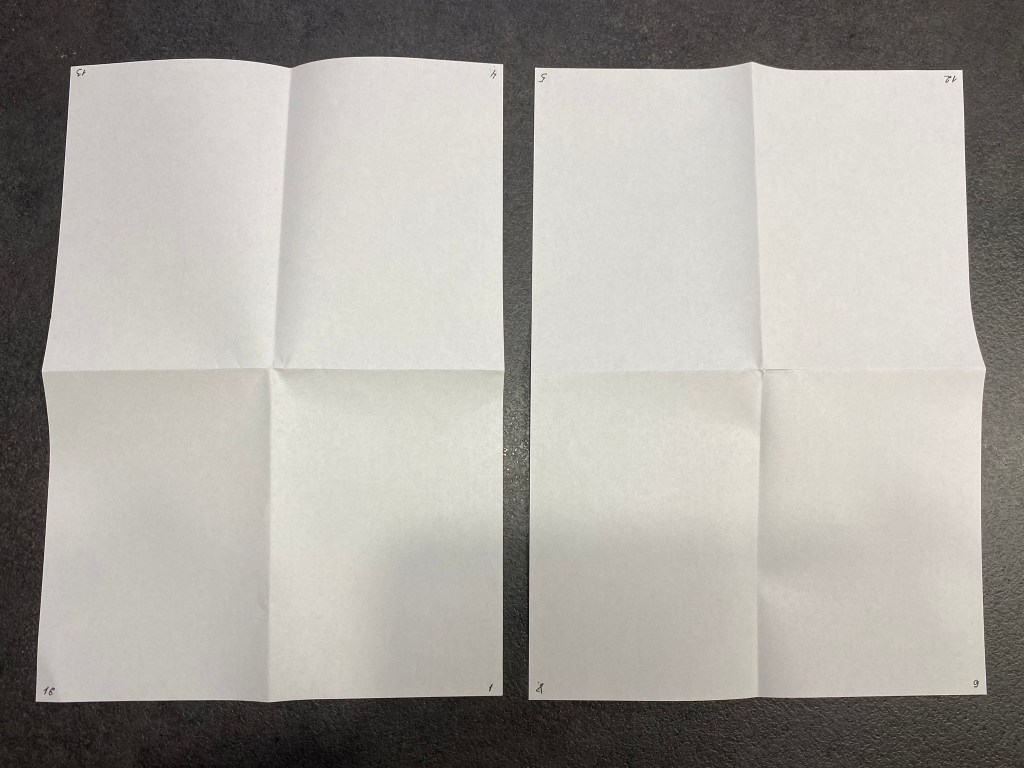
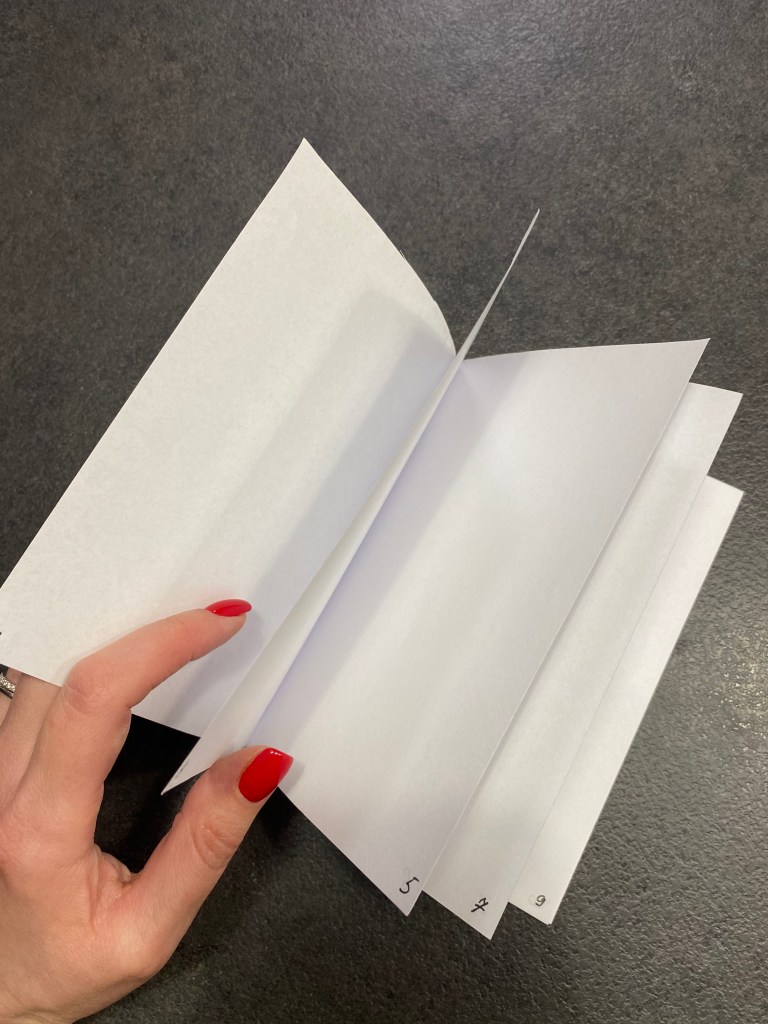
Fold an A4 sheet of paper in half, to create an A5 sheet. Now fold it in half again, so that you have an A6 size. This will comprise four leaves and eight pages. A page has a recto (facing) side and a verso (back) side. The terms recto and verso are also used to describe right-hand and left-hand pages in a double-page spread. With the sheets still folded, number the pages as they would read, from page 1, the front, through to page 8, the back. Now unfold the pages and notice how the numbers are distributed on the outspread sheet. This is a very rudimentary form of imposition, but the principle is essentially a miniature version of the same process within print production. By refolding your A4 sheet and then cutting the folded edges, you create pages, which can be stitched or stapled at the centre (gutter) to form a rudimentary book.

Books are constructed from folded sheets in this way, each one of which creates a signature. A signature is a section made up from a folded sheet which will create pages when guillotined. Signatures are built up in 2, 4, 8, 16, 32, 64 or 128 pages then stacked up in sequence and glued or stitched (or both) across the back edge to form the book block, which is then bound to the cover.

Creating a full scale mock up

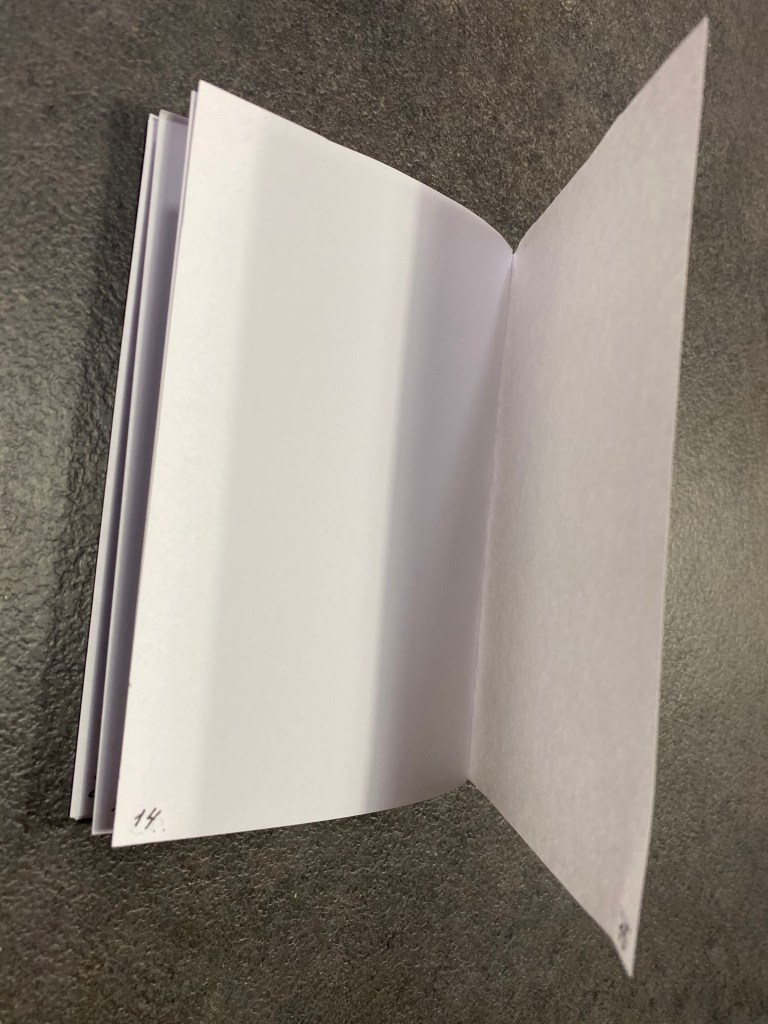
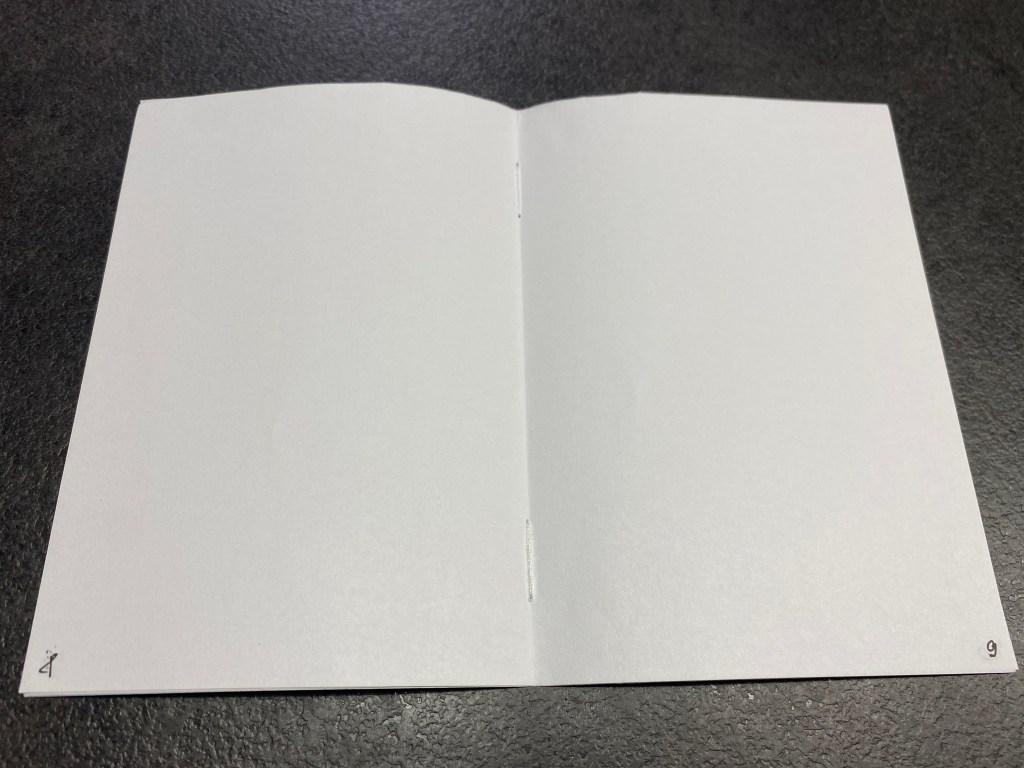
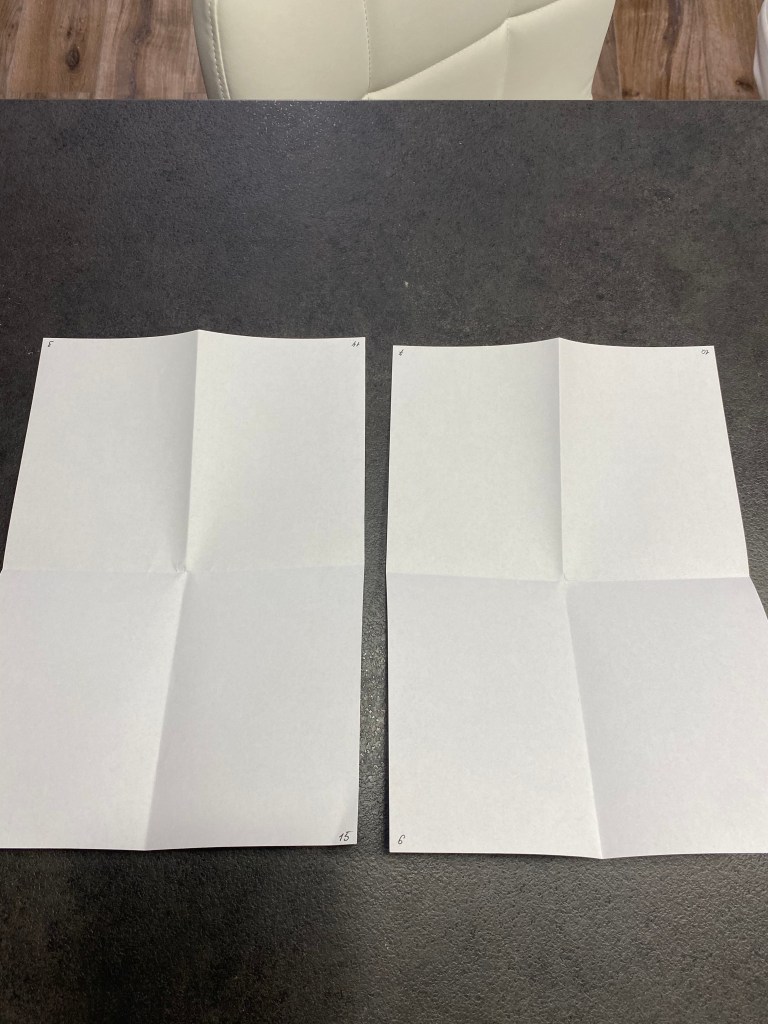
To create an A5 pamphlet with 16 pages take four A4 sheets together, and with the sheets positioned landscape, fold in half. Stitching or stapling on the fold will secure the sheets and form your publication.

Additional pages can be added, but there is a finite number that can be slotted together before you notice how the folded pages start to stick out from the non-folded edge. This can be remedied by trimming the edges of your pages. For professional book designers working on large publications, this process needs to be taken through binding choices, and carefully adjusting page designs across the whole document.

Number each of your sixteen pages from front to back cover. Unpack the document and notice how the relationship of the numbers on the front and back of each sheet. For example, 1 and 16 should be alongside each other, with 2 and 15 on the reverse. These numbers dictate where your content will go, and how this content needs to be printed, and are known as ‘printers pairs’.

Translating your DTP artwork, which has been produced in chronological order, 1-16, into the format needed to print your publication, is known as pagination. Commercially, printers often undertake this work, but as designers, it is also useful to understand how pagination works.

A simple way to approach this, is by taking the overall number of pages (often including the covers), and add one. So for your sixteen page booklet the magic number is 17. Go back to your mock up and add up your page numbers – each of your spreads should add to 17.

Critiquing and editing

Making decisions about which of your designs are the strongest is an important part of the creative process. Thinking about your designs within the context of a book can help spark new ideas, so the critiquing and editing of your work can initiate the start of a new creative process. With this in mind, don’t leave reviewing your work to the very end. It’s a good idea to test out your ideas within a book format as you go. This might mean seeing how your work is framed within a book’s borders, how content sits alongside each other on the spread of different pages, summarising your ideas down to essentials forms, or seeing how the turn of the page might start to build a narrative from one idea to the next.

Creating a small mock up

Following the instructions, I created small blanks of the book in miniature. Previously, I was present in the print shop, but mainly my role was to approve the design for the composition and colour correction of calendars and magazines. But in this task, I was able to see how DTP works with a small example. This task seemed to me fascinating because I was able to create mock-up books using materials at hand. Also, if I have to design a book, I could use this small layout for sketches.

Creating a full scale mock up

With this 16th pages book model I’ve got slightly confused. But once the puzzle was solved, from now and then I can see how multiple pages book can be created. What fascinated about book design, that pages in the middle of the book can be smaller than first and last pages, as when the book thickens, it can cause some pages sticking out problem. But designer should know from the technical points of view how to create the final products without errors.

Conclusion

This exercise was a good introductory into the internal printing process of the book. From that simple example clearly can be seen how printers creates multi-numbered pages products. For me, as a graphic designer, the structure of the InDesign software is only small process of the big process, and it’s vital to understand how the book printing works at all levels.

Exercise 4: Generating ideas

Use one or more of the following book related sayings as a starting point to generate visual ideas and responses:

● Bookworms
● A closed/open book
● The oldest trick in the book
● You can’t judge a book by its cover
● In someone’s good/bad books
● By the book

During this early formative stage, aim to be as wide-ranging and imaginative as possible in your ideas. ALL ideas are valid at this point, so don’t censor; this is not the stage to decide what is a ‘good’ or ‘bad’ idea – at this point they are all just ‘ideas’ with equal merit. Let one idea flow fluidly, intuitively and organically into another to make unexpected links and associations. Record your thought processes and ideas using thumbnail sketches, spidergrams and annotations. Thumbnail sketches are a way of recording ideas through quick pen or pencil line drawings. The quality of the drawing is not important; a drawing of a person does not need to be anatomically accurate, for example. The drawing serves as a visual reminder to you of a fleeting idea. Aim to make thumbnail drawings in the same quick way that you make short written annotations – keeping up with the flow of your ideas. Draw a range of visual and conceptual possibilities using the book sayings as your starting point. Aim to spend 45 minutes working on this, generating as much content, potential ideas, thumbnails, visual metaphors or imagined books as possible.

Thumbnails can give an indication of composition and art direction. For example, how does the subject sit in the frame? How is the subject lit? What particular attributes does that subject have? Thumbnail sketches, along with annotations, are a good starting point to begin exploring these aspects.

Researches

For this exercise, I decided to go with two choices for sketches ‘Bookworms’ and ‘The Oldest Trick in the Book’. I’ve heard some of those book-related sayings before, but for some of them, I had to do some researches. For example, the term bookworm was quite familiar to me, or open or closed book, as in the Ukrainian language we have identical meaning for it, for the rest, I discovered some new British idioms about books.

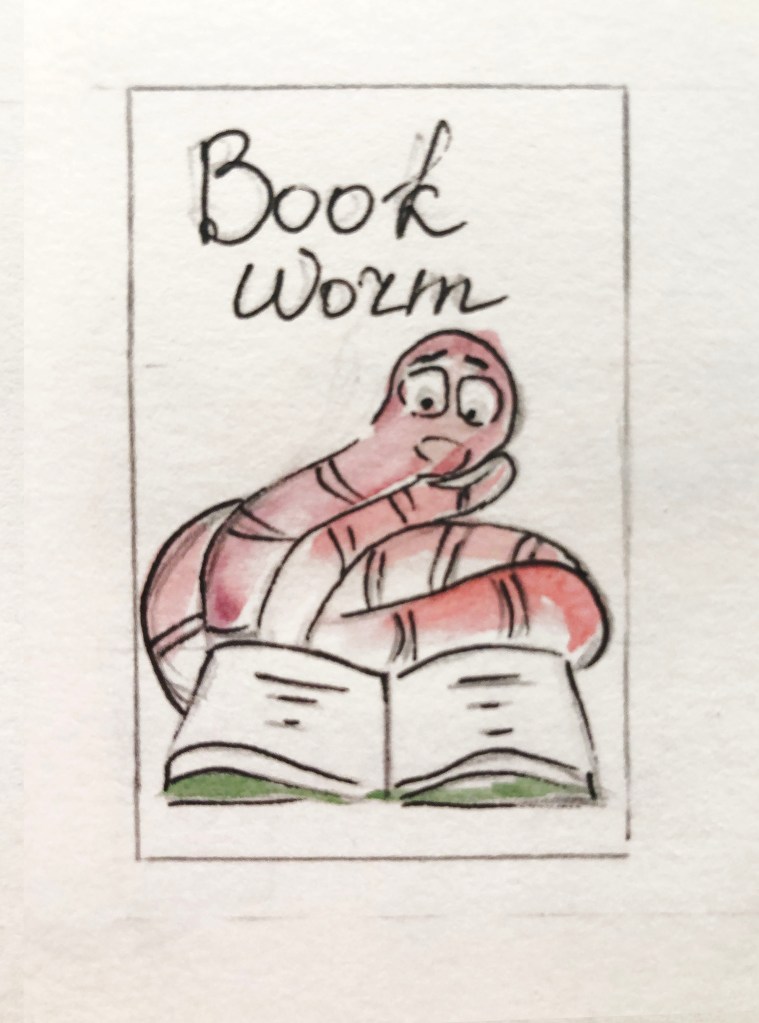
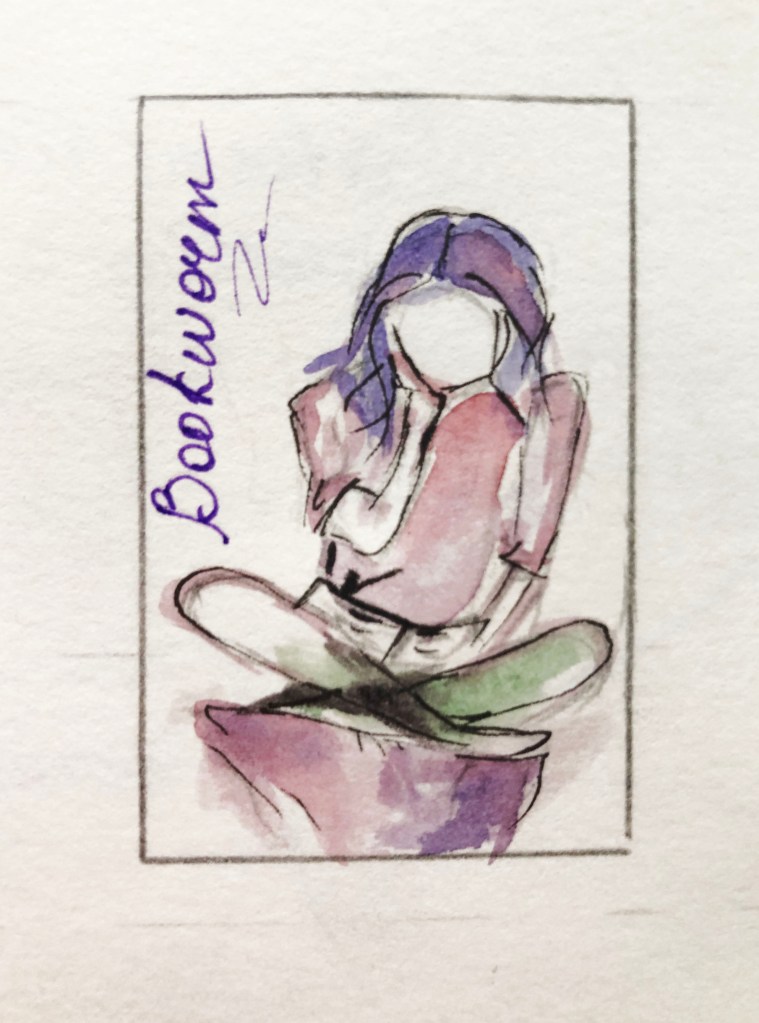
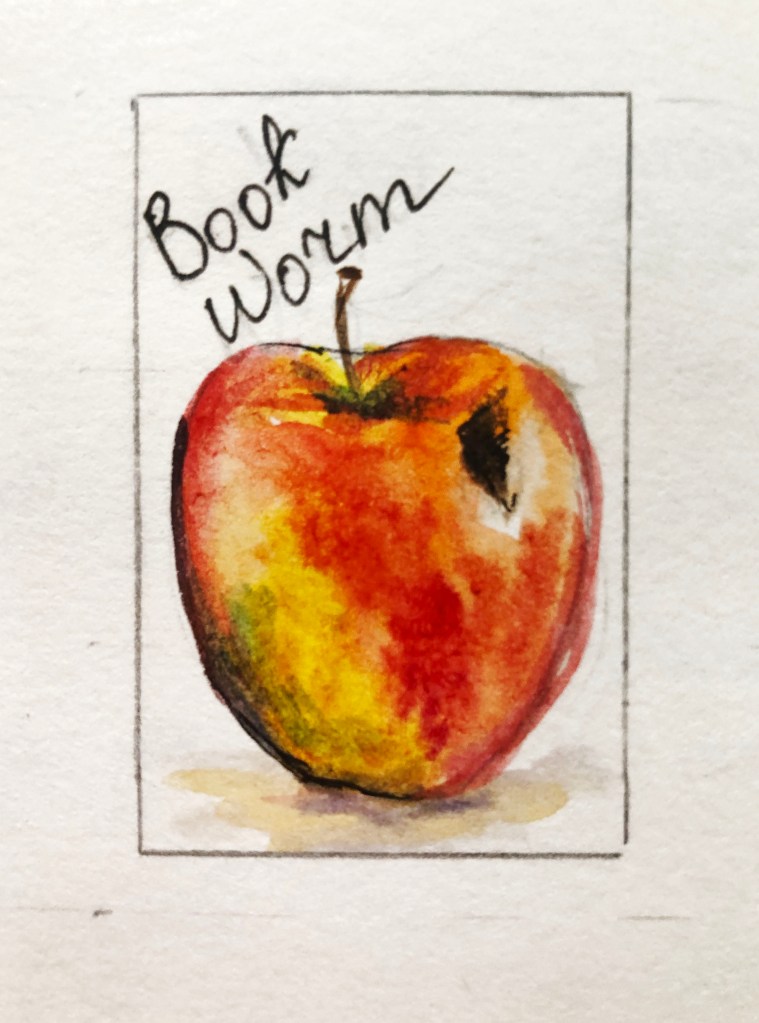
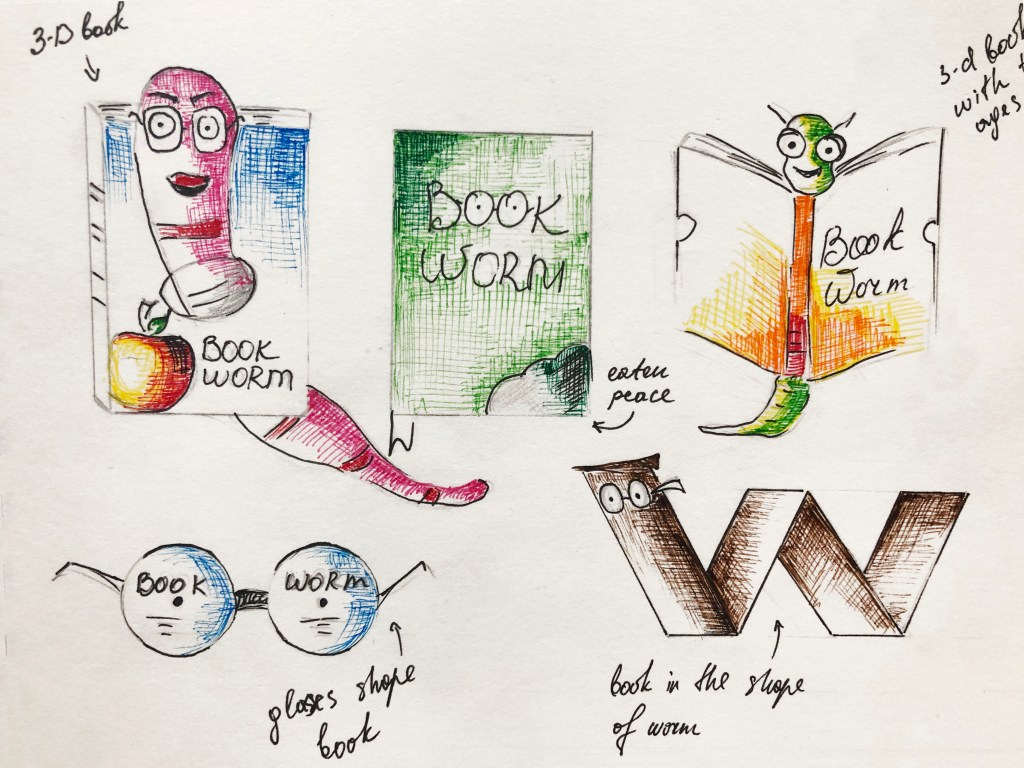
Sketches ‘Bookworms’

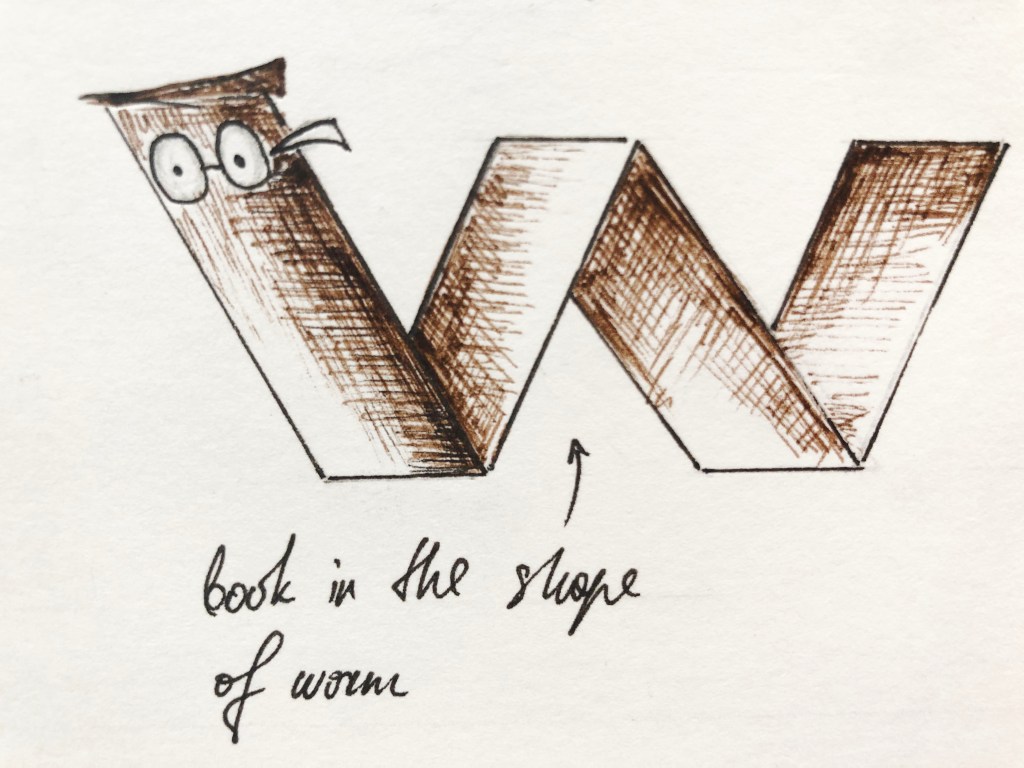
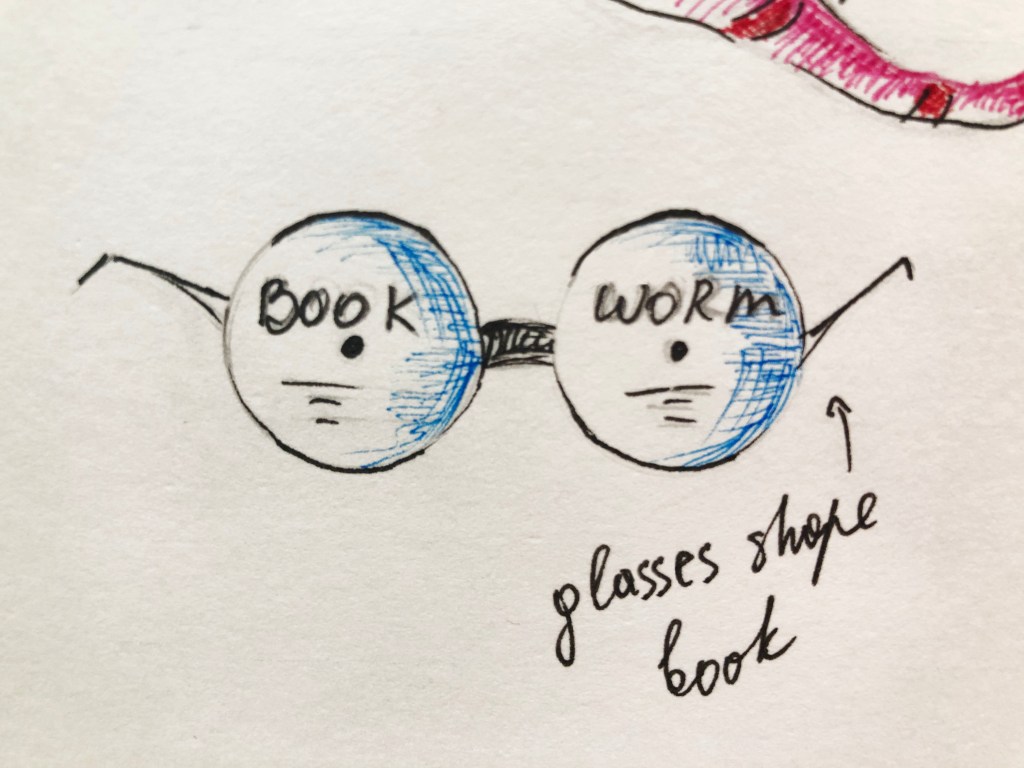
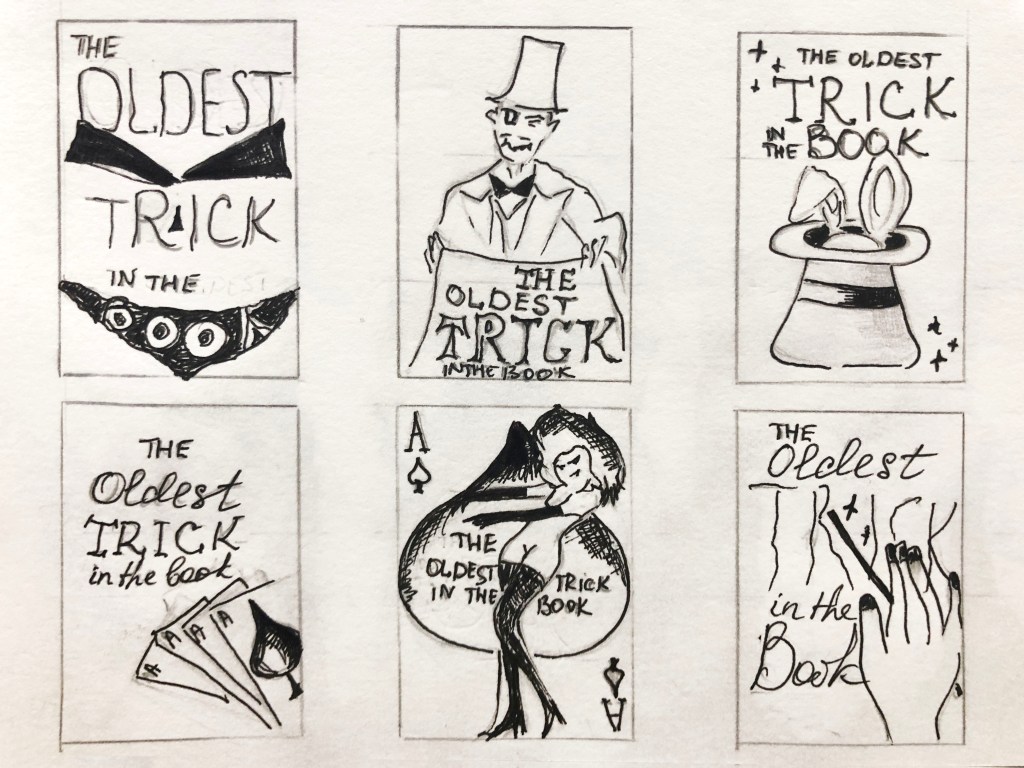
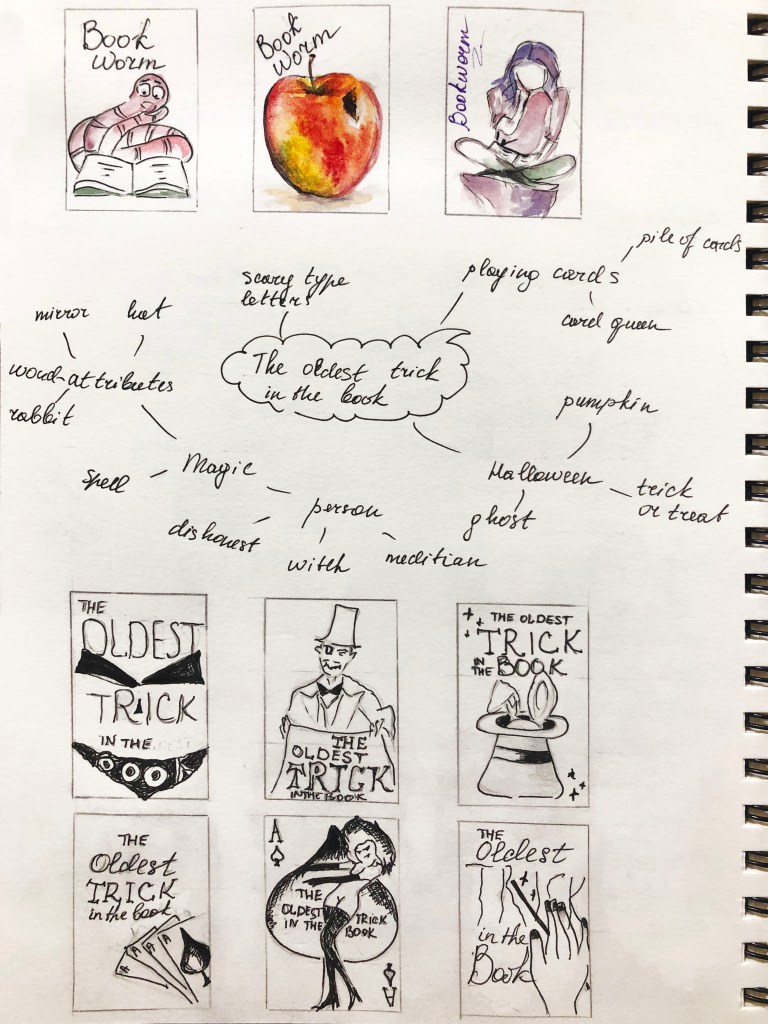
For the bookworms sketches, I thought it should be something cartoony with little friendly worms, the option as a 3-D book could work quite well, or eaten book. Also, I wanted to sketch something more serious, maybe like a thoughtful girl, who is a very attentive reader. I was thinking about designs made in the shape of the worm, it was more like a booklet look maybe, but that could work too. Some of my drawings didn’t look like quick sketches. I love the attention to details, so for some of them, I applied colours. The bitten apple, with a little sign of the worm, I painted in watercolour. I thought for the next book I could create more sketchy like designs.

Sketches ‘The Oldest Trick in the Book’

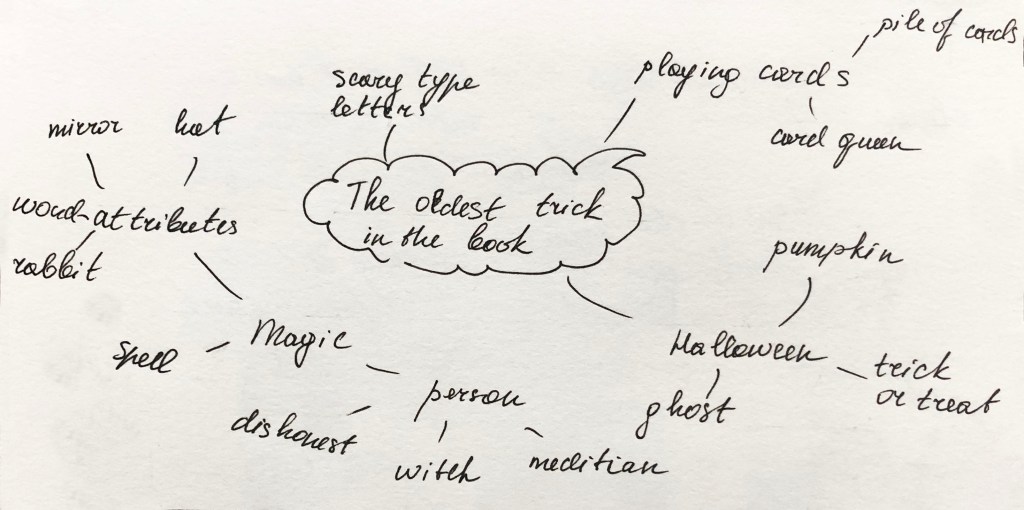
Here I experimented with different ideas for the term ‘The Oldest Trick in the Book’. I thought it all could be related to the magic, tricks, miracle, or playing cards, where wizards are tricking you. I tried to play with fonts, maybe make them all different look fonts, with some spooky details. I noticed, that we had that similar exercise with book covers, one I made as collage, and another one just font usage, probably I could apply similar principle here too. Anyway, they are just sketches, a first step to producing actual designs.

Conclusion

This one of those type of exercises I’m always trying to get better. Sketches and quick drawings are part of generating ideas skills, and they can help with the final design. Here I have a challenge of playing word and association’s task and cover them all into images. I like seeing the result because it gives me confidence that I can do more, and if I look deeper into each phrase, I can discover numerous different meanings and images. I love detailed sketches when they have colour and shape on them, but those 45 minutes sketches that is something I need to improve, as they are not as complicated tasks. I hope those sketches I produced will be useful in my first assignment.

Exercise 3: Alternative publications

Using your research into artists’ books and fanzines as a starting point, think about their physical or design qualities, and creatively apply some of these approaches to your own designs.

For example, there’s a distinctive visual quality to many fanzines which comes from a ‘cut and paste’ approach to designing and through the use of cheap photocopying and printing. Punk fanzines in particular make a virtue out of having limited resources, no computers and little, or no, formal training as graphic designers. Use your sketchbooks to experiment with a similar ‘cut and paste’ approach by cutting and collaging magazines and other material. What does this approach offer you as a book designer?

Alternatively, you can find other ideas you would like to test out in your sketchbook. You don’t need to make any finished designs, just give yourself room to experiment and try things out.

Research

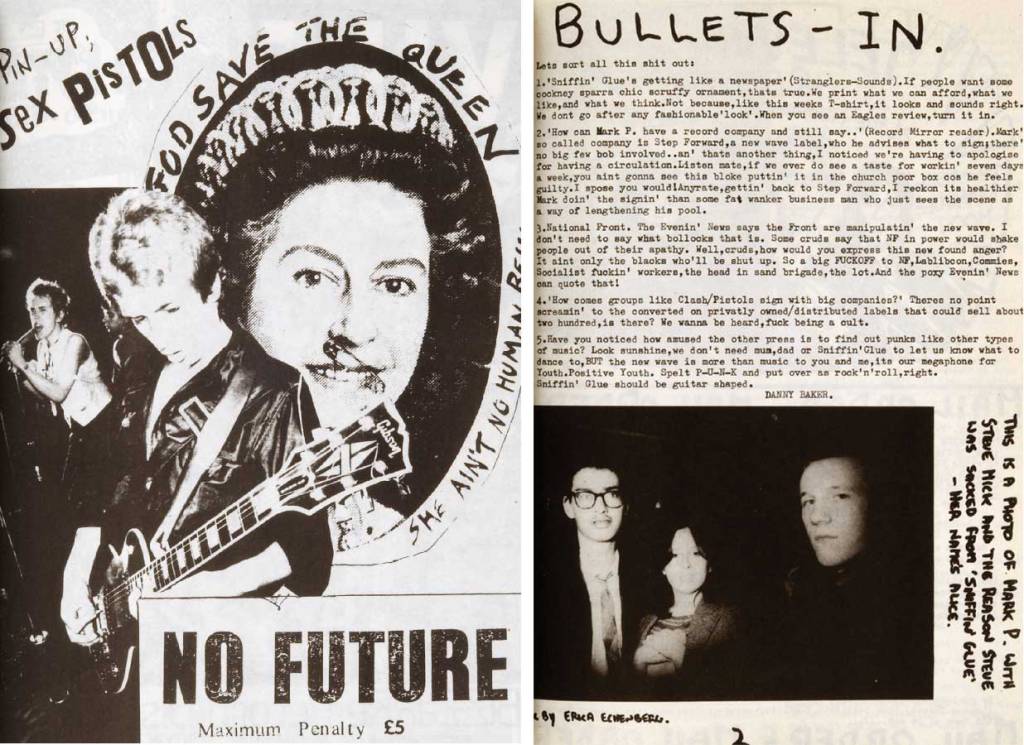
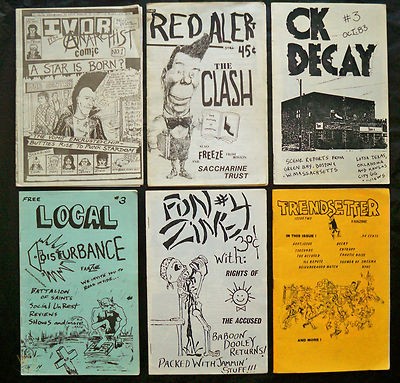
This exercise is a kind of continuation of my previous research in the field of the fanzine concept, and its role in modern culture and creativity. Here I have to analyse what are the main qualities and properties of a fanzine in terms of design. First of all, what catches my eye is the amateur design, the untidy look and the scattered, chaotic composition, the unthinkable selection of fonts, the feeling of bouncing text, and the complete impression that the design was created on the run, sort of in a hurry. What’s also noteworthy is that fanzines use inexpensive, lo-fi printing tools. Here I am reminded of my exercises from the Core Concepts unit where we created a poster for local vocal lessons, a budget version, printed on a black and white printer, as a variation on coloured paper. https://eleonoras.art.blog/2020/05/13/exercise-poster-and-flyer/
One of the reasons for creating those odd posters was the low budget, but another reason was the passion and creative thinking, to demonstrate that admiration of the artists is coming first, and only after that the budget could be invested in it. I think it’s a free spirit as well, not to be limited by higher expectations, something that goes against the norms. The world of marketing materials is replete with magazine models and perfect design solutions, so the opposite trend has come into fashion, the improvised material of an ardent fan. I think, in this case, enthusiasm won out over professionalism.

In my past experience, I only used professional software for designing images, but now it’s time to learn something new and replace it with improvised materials, clippings from newspapers, magazines, and so on.

Mood Board Punk Fanzines

Using punk music fanzines examples, I would like to create a map for inspiration. When I see the location of the text in these designs, I recall another exercise from the past unit, where we needed to place words in such a position, depending on what association a particular word evoked. For example, speed is a slanted word, as if rushing forward, or silly, in a playful manner https://eleonoras.art.blog/2019/08/12/exercise-playing-with-words/ Also fanzines have a collage element that is noteworthy is the component that we went through in the 3rd part of Core Concepts too. So this specific exercises is replicated our previous experiences, and gather them together https://eleonoras.art.blog/2019/06/20/exercise-photomontage/

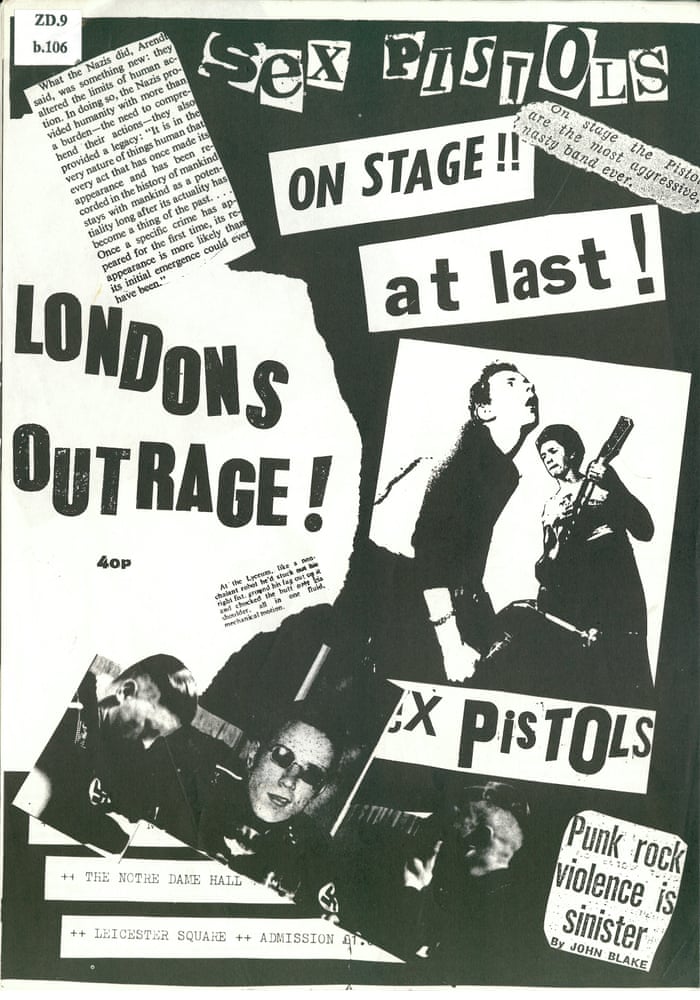
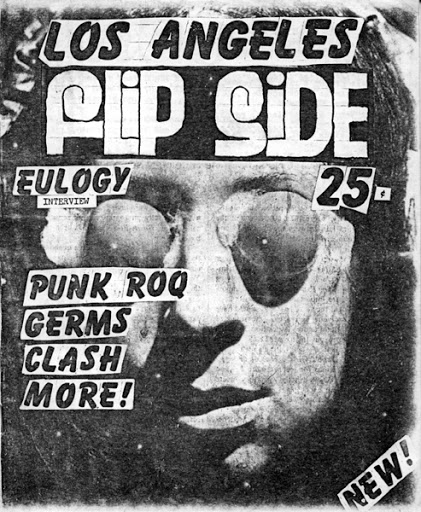
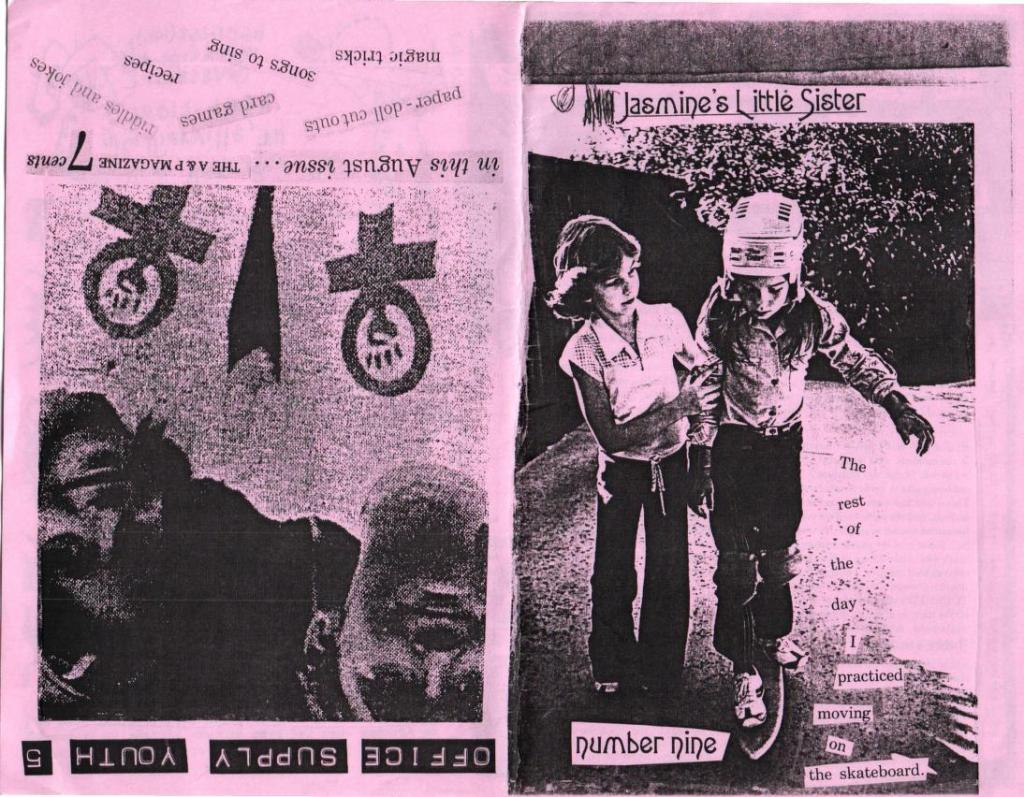
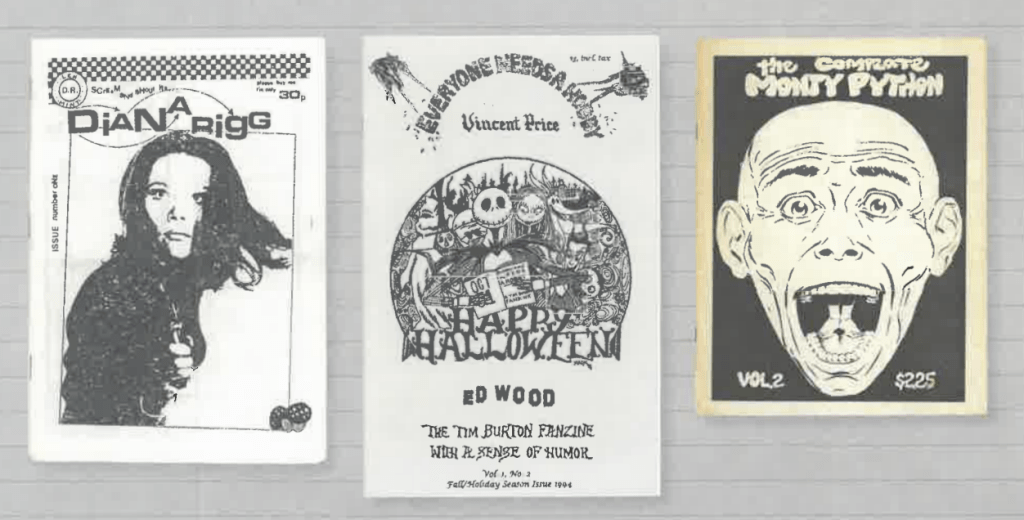
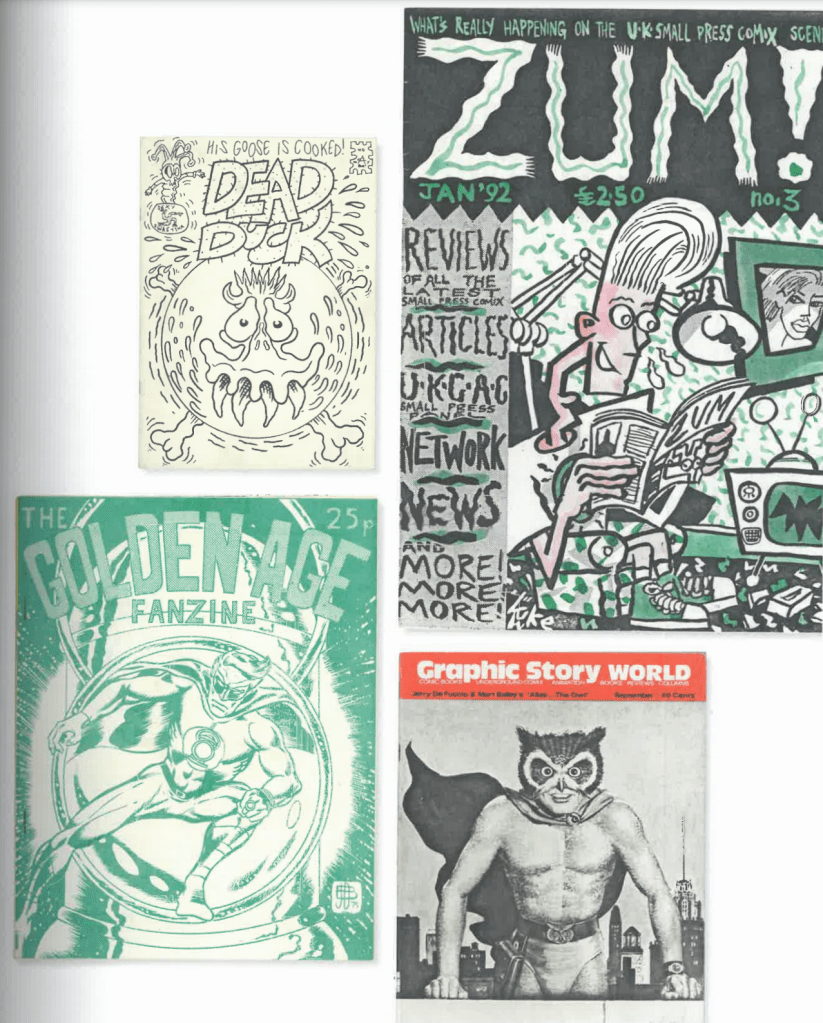
Here I have collected examples of punk fanzines that I liked. I noted a fascinating combination of fonts, amateur design, caricatures, and photographs taken in low quality, but all this together creates a unique style that is exclusive to this trend.

Mood Boards

Also, I would like to mention famous artists who work in a similar copy-paste manner. To do this, I again had to go back to my past notes on the Pinterest board. I noticed that I had several authors saved in my mood boards. There are Robert Rauschenberg and David Carson. Robert Rauschenberg uses more muted colours for his collages, with a vintage style, paints and brush strokes, while David Carson’s works are produced in a more modern way, and mainly with cut and paste objects. Nevertheless, both authors share a copy-paste style, and such a theme would be suitable for fanzines design.

Quite an interesting question, how could this fanzines-style collage skill be useful to me in Creative Book Design? I suppose I could apply this technique to a modern book edition. Even if the story was published a hundred years ago, and the publication wanted to reissue a new edition, perhaps collage techniques could work for the modern book cover design. Or, let’s say some art movement wants to publish a magazine book with some contemporary collages. Even if the designer works with different textures, in the end, everything can be photographed and printed in a brochure.

Another mood board I created specifically for this exercise. I created these mood board textures because they contained a lot of different materials that designers could work with. My aim was to see as many options as possible to create my own fanzine collage.

When I performed similar tasks in the previous unit, I always wanted to try working with different textures in design, use non-standard text, consisting of scraps from newspaper and magazine clippings, and try to combine the artistic part, and texture and design in one layout. While this exercise is mainly experimental, I would like to use as many different approaches and principles as possible in order to discover different variations of the creative layout.

Materials at hand

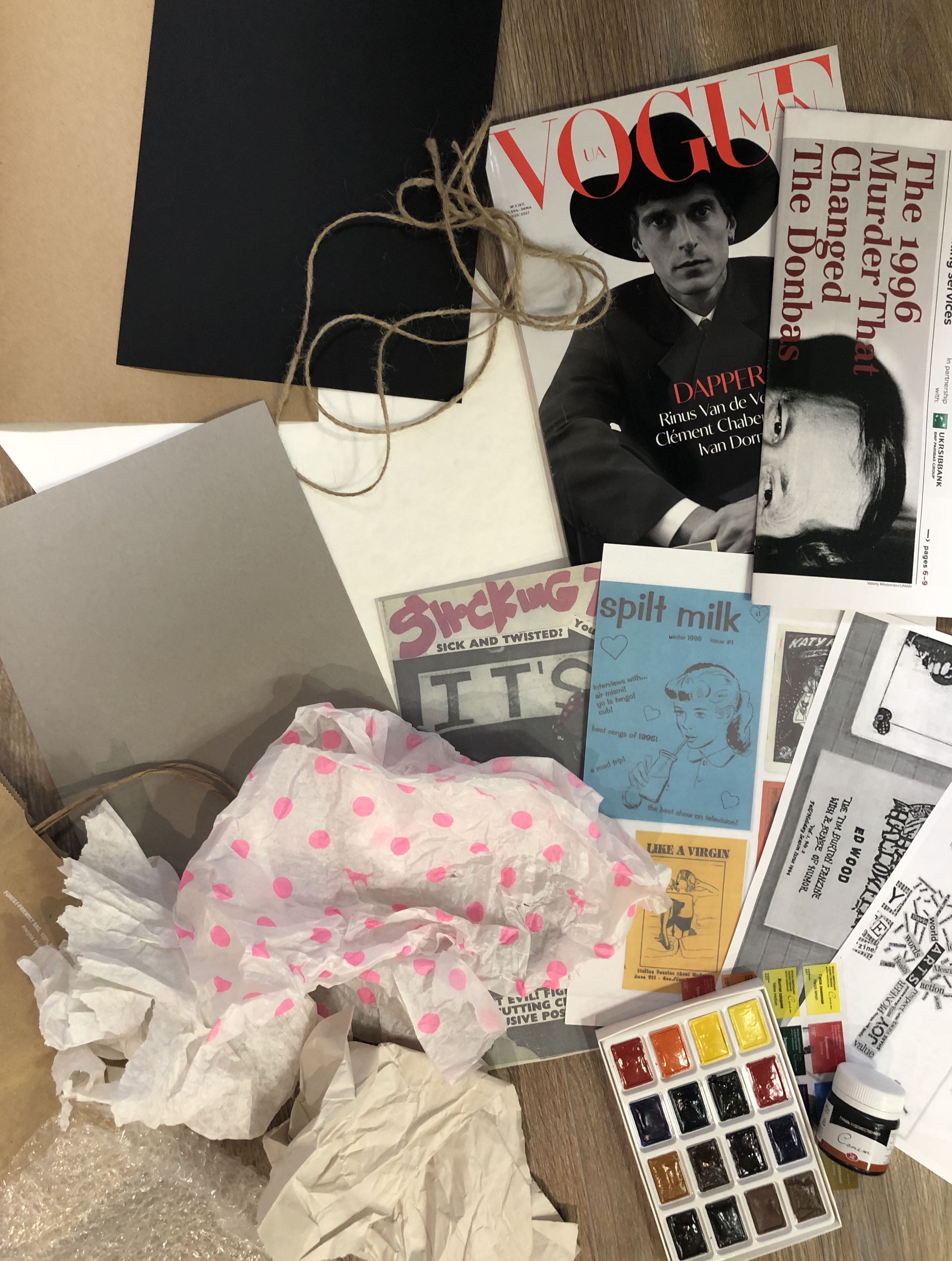
To get ready for this exercise I collected as many different materials as possible. I did not know if I would need everything but I thought better to have more, and if I don’t need something, I throw it back. So, I had at my disposal a few sheets of design paper, a packing wrap, a bubble wrap, gouache black paint, a paper bag, watercolours, rope, Kyiv Post newspaper, and Vogue Man magazine. I wanted to experiment with all the textures to see the result and compare which one works best.

‘Cut and Paste’ Approach

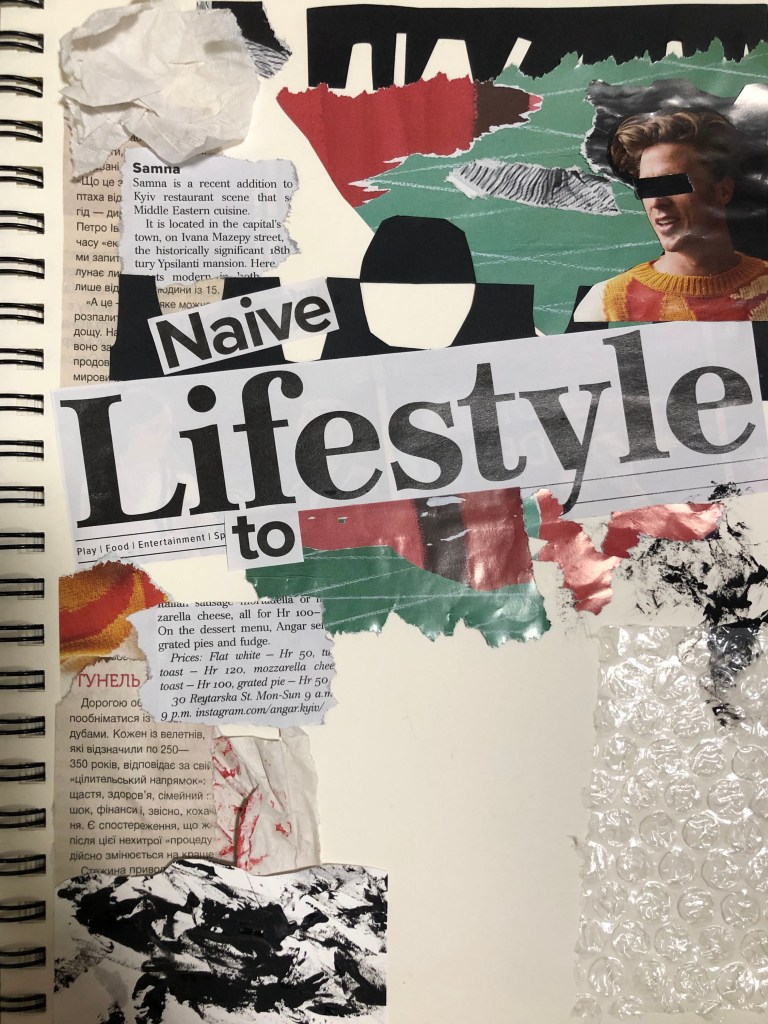
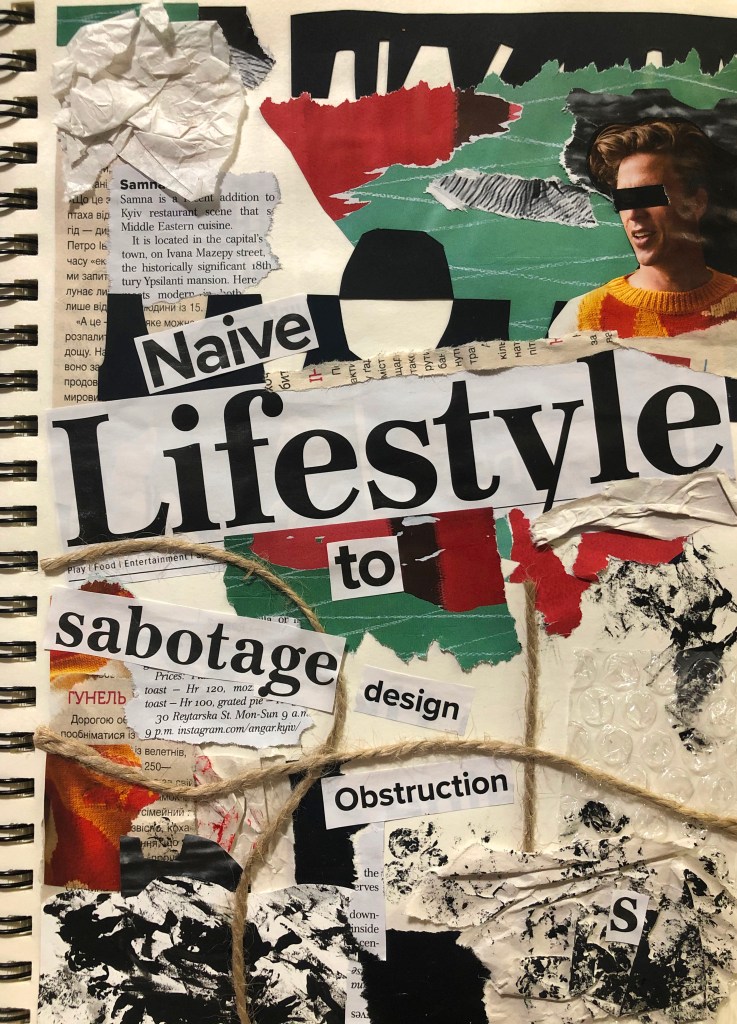
I created the first layout based on the principle of dividing the A4 size area into four even parts. The word Lifestyle was placed in the middle at a slight slope, and further around I filled the sheet with different objects. I wanted to create a layout inspired by the work of David Carson, who uses a huge number of different techniques in his work, which are later used in print. In this work, I used multi-coloured magazine clippings, so the design turned out to be full colour, mainly consisting of red, green, orange and black. Around I wanted to give some rigour to the layout, limiting it to black clippings. At the same time, I filled this collage with some smooth lines. I tried using small strokes of paint on paper, pasted one paper on top of another and tried to place the rope in the layout, all of this created a pretty interesting composition. I agree that it turned out to be a little overloaded, but since it was a test layout, I realised where I needed to improve. The process itself was entertaining. The conclusion was that even for such a chaotic composition, a strategy is needed, it was necessary to understand how to properly divide the sheet, and that here I got a square composition. There was little free air in it, but the layout itself looked confident and firmly in its foundation. I thought this was a good start for an experiment.

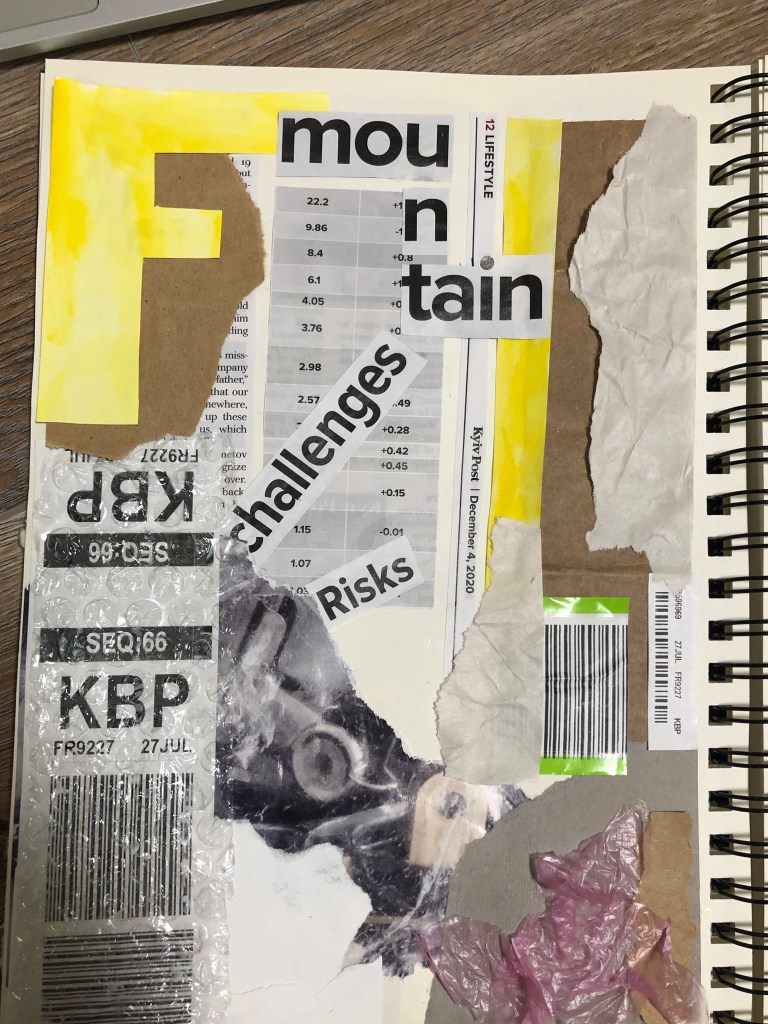
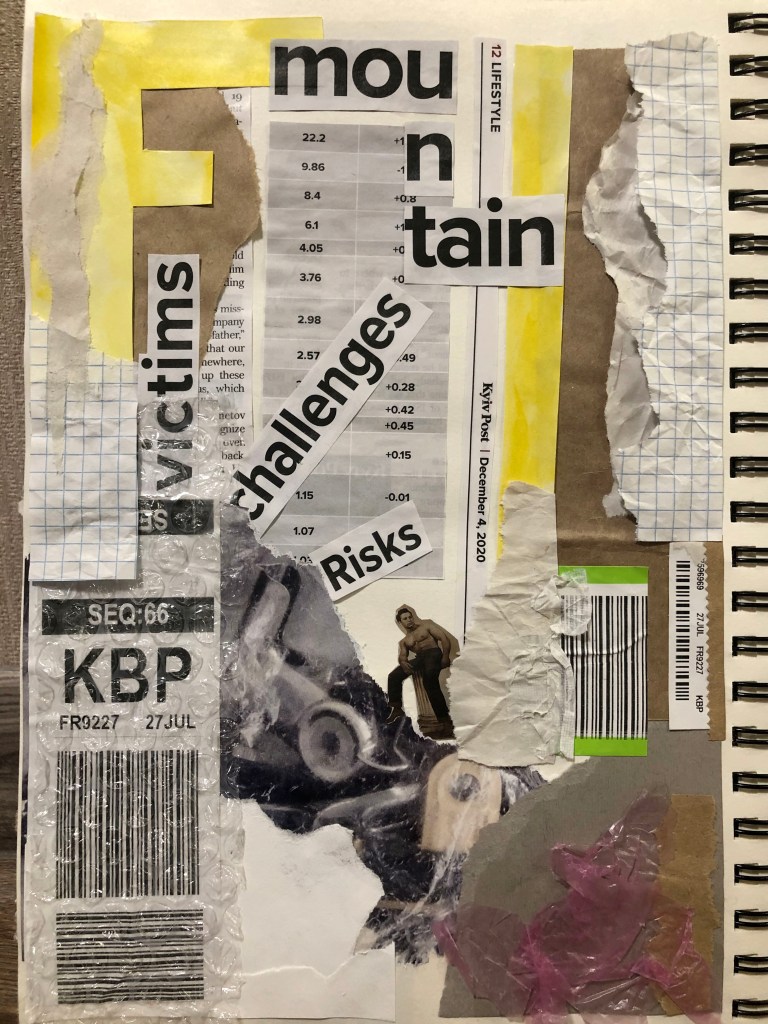
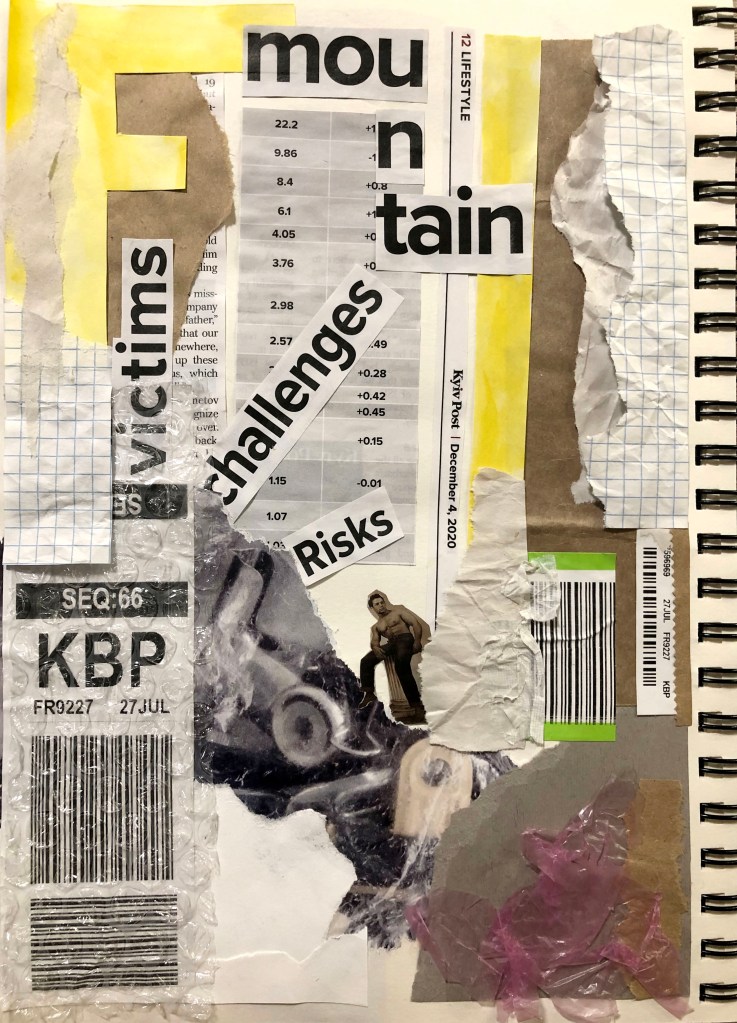
The next layout I wanted to do in the economic field, is to make an analogue with numbers and financial risks. Here I have used fewer colours, mostly black and white with a bit of yellow added. This layout was characterised by straighter lines, with angles and slopes. I wanted to add some rigour to this layout in order to compare it with the previous one. Nevertheless, the style itself and perhaps my style of work brought a casual look. I have signed the names of the layouts, they consist of various cutout excerpts from newspapers.

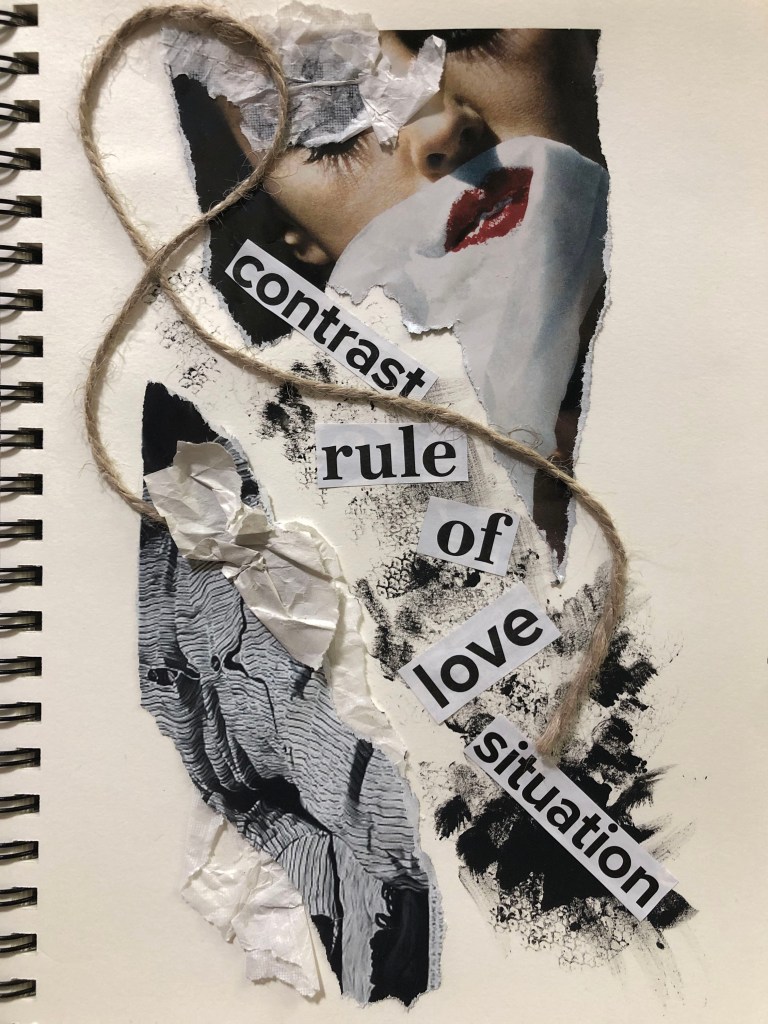
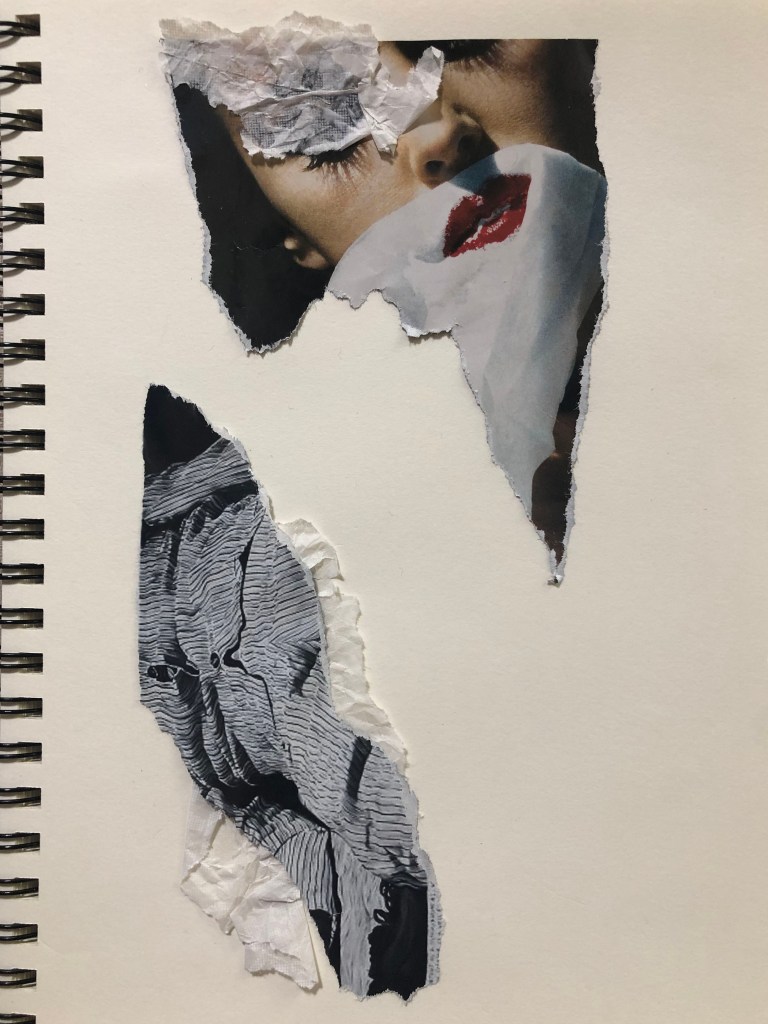
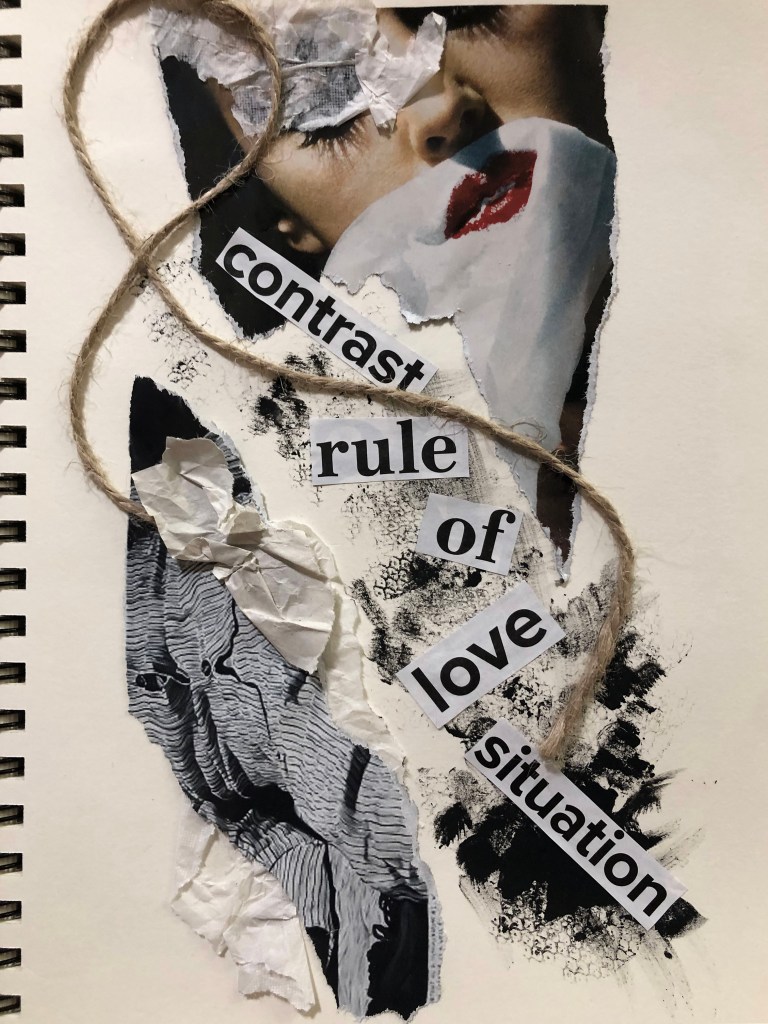
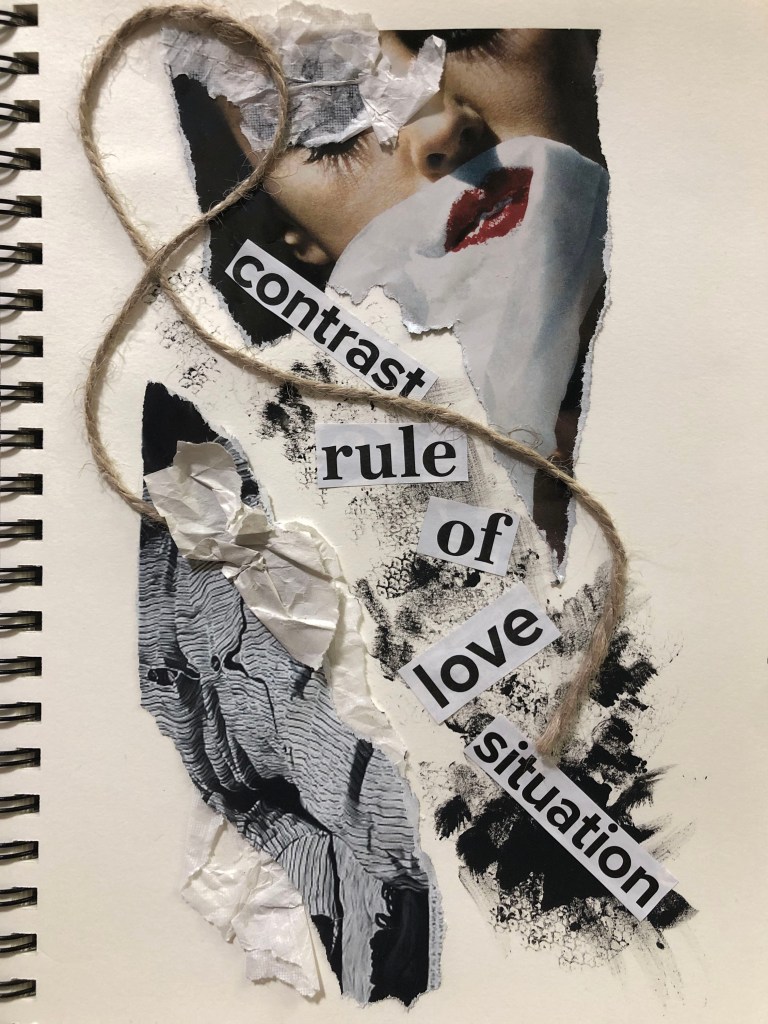
One more layout, in addition, I wanted to create lightness and freedom. Get rid of so many elements, bring in weightlessness, and a love line. I would like to say that perhaps this is my favourite experiment with collage and texture, the layout turned out to be so airy and delicate, there was something especially attractive about it. I used just a few scraps from a magazine, a bit of wrapping paper, a small piece of rope and strokes of gouache paints, with words scattered at an angle, and the layout is ready.

This exercise was an entry into the new world of hand-made designs, and the one I quite enjoyed. I could see first outcomes looked a bit mature, but I thought there is a potential in them for use in the future. Also, the software and special filters can elevate them to a new level. As a person accustomed to working exclusively with graphic software, I enjoyed the tactile process with texture, and collages as part of a fanzine, this is what I have long wanted to try, and now there is a reason for experimenting. Indeed, based on this principle, I could create postcards, magazines, brochures, illustrations for books and other materials, anyway it can be a great variety. Here, of course, was no reference to a specific topic, and we were free experimental artists, but I am sure that even if I had a given topic, I could still present it creatively.

Research task: Artists’ books and fanzines

Browse the American based Smithsonian Libraries’ Artist Book archive to identify
books that you find interesting or questions the notion of the book in some way.
https://library.si.edu/collection/artists-books
Explore fanzines in more depth by reading Teal Trigg’s chapter Definitions and
early days (pages 6–43)
from her book Fanzines: A do-it-yourself revolution (2010).
This chapter is available as a course resource on the student site.
Document visual examples of work you find interesting with annotations in your
learning log. You’ll be using some of this research in your first assignment.

Researches

In this research exercise, my task is to analyse non-standard designs for books and fanzines. As a term, I had never heard the term fanzines before, so here was the opportunity to discover some information about them.

Glimpse by Barbara Tetenbaum & Julie Chen

To begin with, I followed the link to the Smithsonian Libraries ’Artist Book, which contains all kinds of book design variations. Here I see an obvious example of how you can go beyond and create a real work of art from everyday things, this is something that does not occur in everyday life, and also helps to see new facets of art.

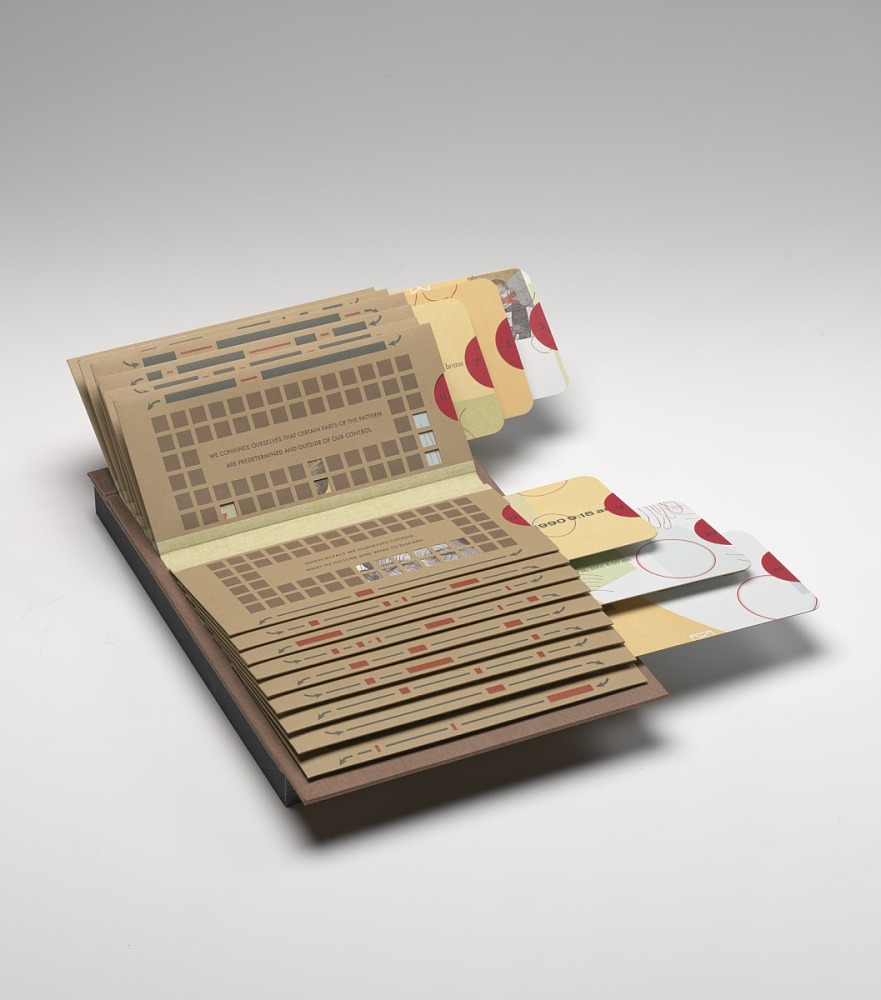
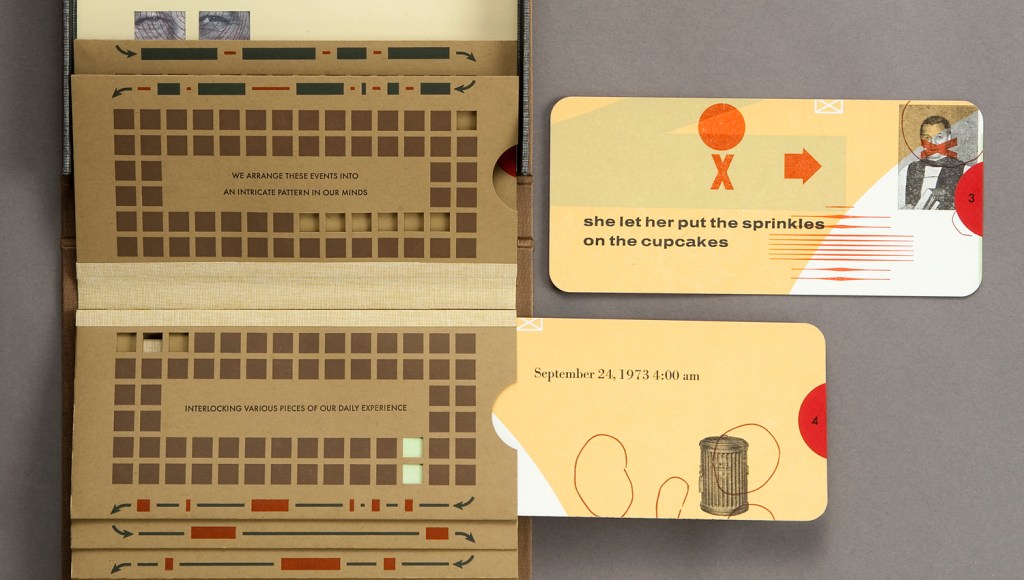
The first book I would like to highlight is Glimpse by two authors Barbara Tetenbaum & Julie Chen, who put their creativity into one project. In this project, the authors examine the idea of ​​the creation of their biography. For the design of this book was used letterpress from hand-set type, wire, antique news cuts, dingbats and photopolymer plates. They gathered together their prominent events in some kind of photo album style book.

In this book, cards could be pulled out from each envelope. Cards contain some phrases, dates and collages. I like the sepia colours used for this book and vintage style of images. They gave a feeling that it could be a historical masterpiece. This is a unique example of seeing ordinary events in an original way. At the same time, ‘Glimpse’ is another example of how creative approach could make something unusual and artistic.

Gifts from our elders by Kerry McAleer-Keeler

Another book creation that paid my attention is the book Gifts from our elders by Kerry McAleer-Keeler. Visually it has a similar feel to the book described above, like vintage objects, similar colour pallet, but in this case book was folded into the box. It reminded me pop-up books I remembered from the childhood, which had 3-D objects inside of it, so I could read the information not through words, but through images.

I loved the key theme of this book, the celebration of femininity and the gift of life. Here, the author, through medical images of the heart and brain, reflected the favour of the intellect and love for art. I noticed that Kerry McAleer-Keeler has a whole series of similar works, where she combines her philosophical views and her attraction to beauty in the boxes.

“I’m an artist who wishes to tell you a visual story.”

K. McAleer-Keeler

I am impressed that the artist wants to take the viewer into a new imaginary world, and through symbolic elements creates a new perception of spirituality and life cycle, especially I like associations she created for objects and the way she folded it altogether.

World without end / / by Julie Chen

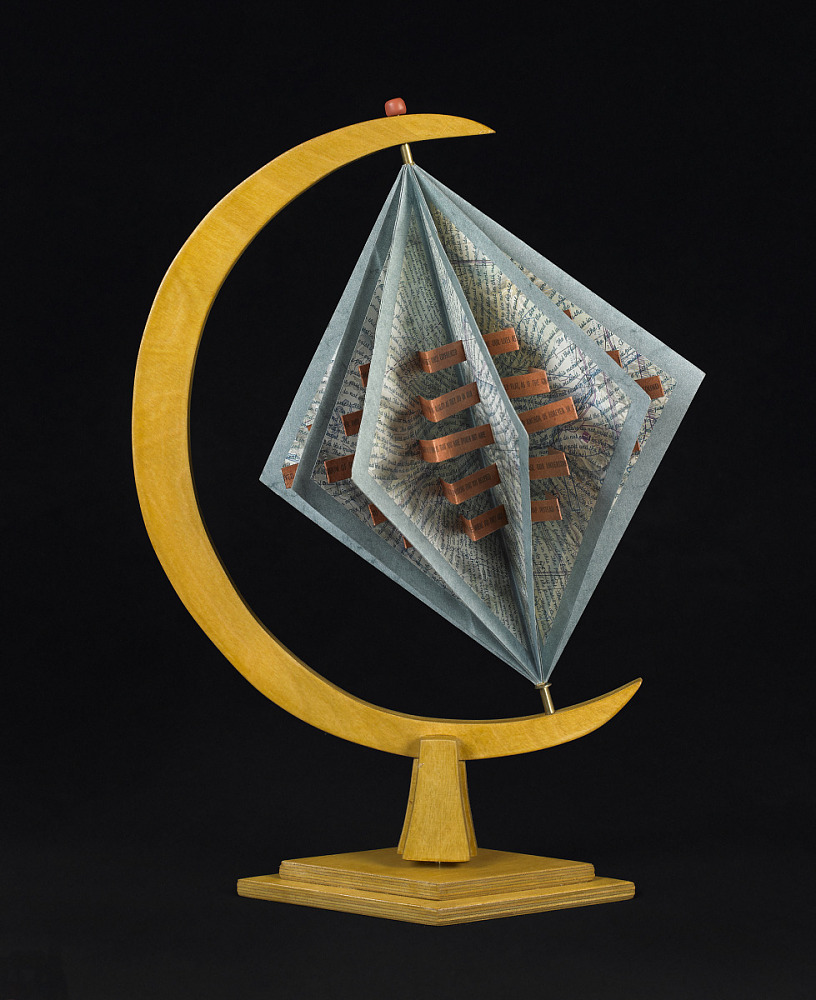
Another example of artists’ book I would like to mention was designed by the same author of Glimpse, Julie Chen. I think this work stands out because of it’s unique and original shape. I really loved that concept of endless globe, but in the shape of rhombus and envelops. Overall I would like to mention that I loved to learn more about exploring the sculptural and interactive potential of the book form, and discover a notion of what a “book” can be.

Fanzines. The DIY revolution

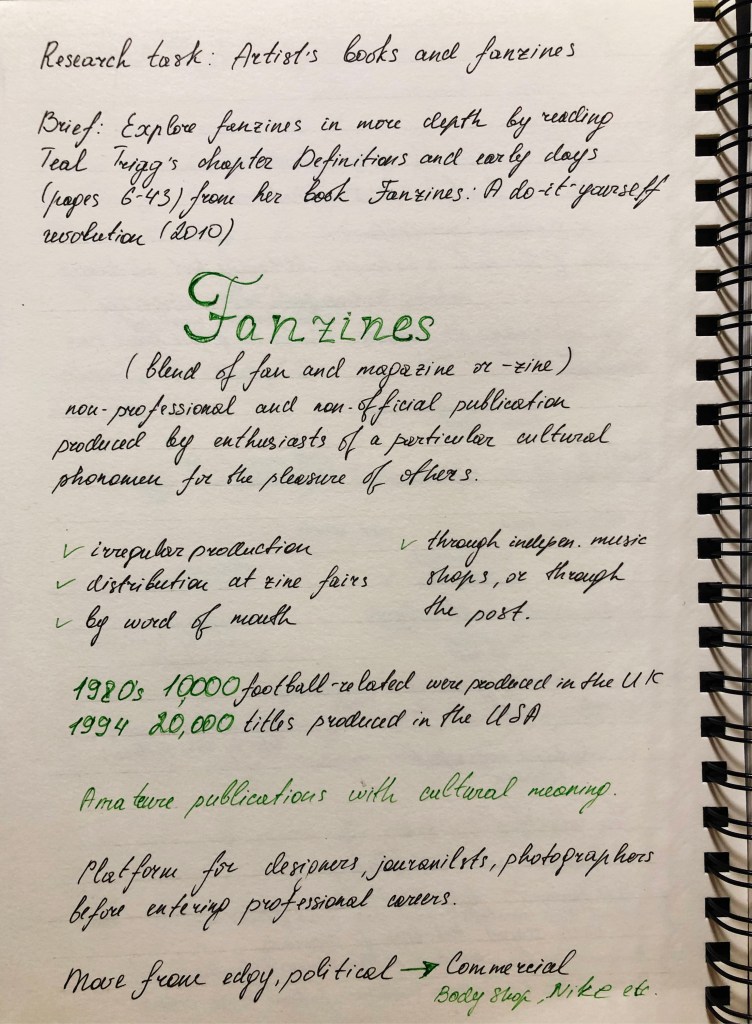
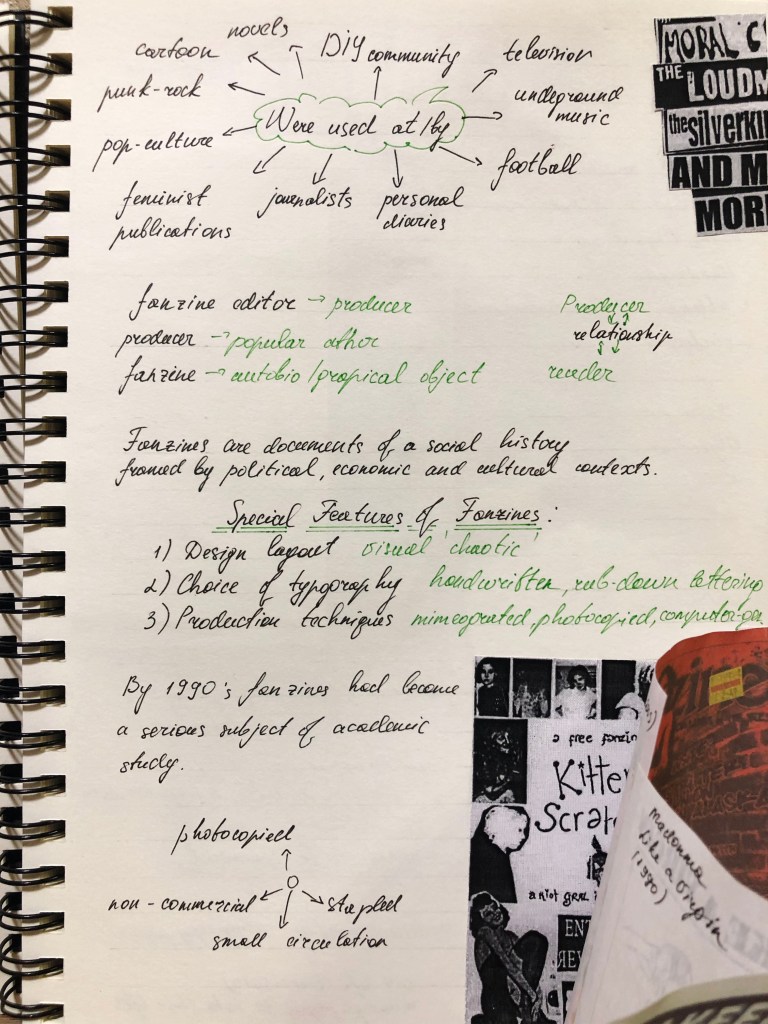
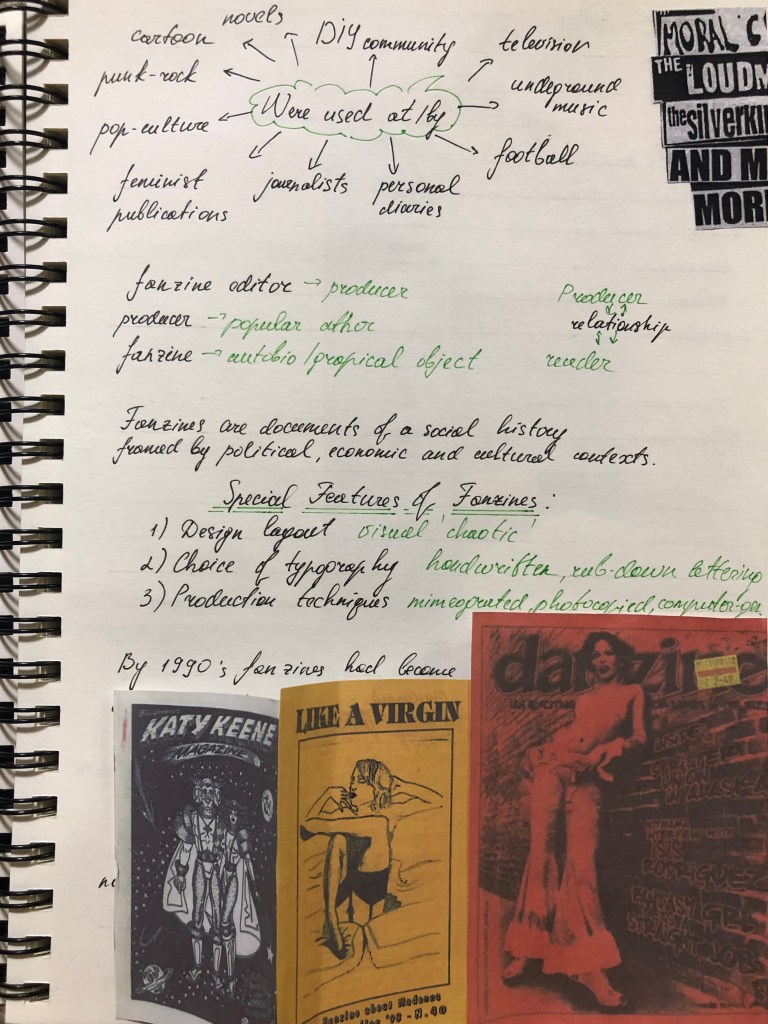
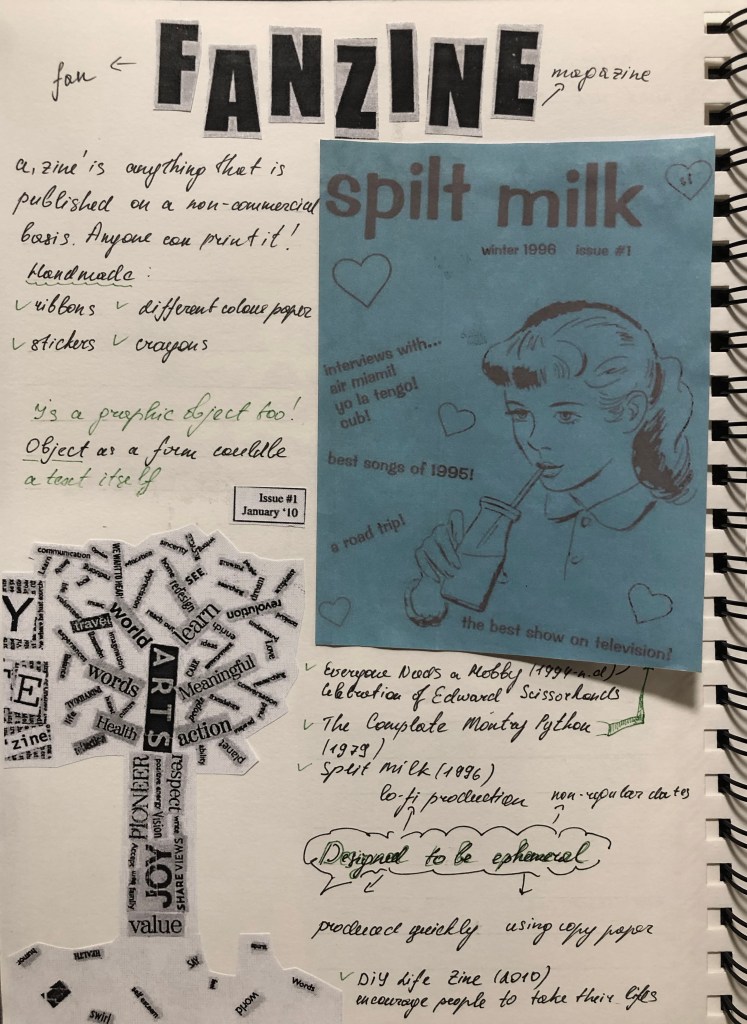
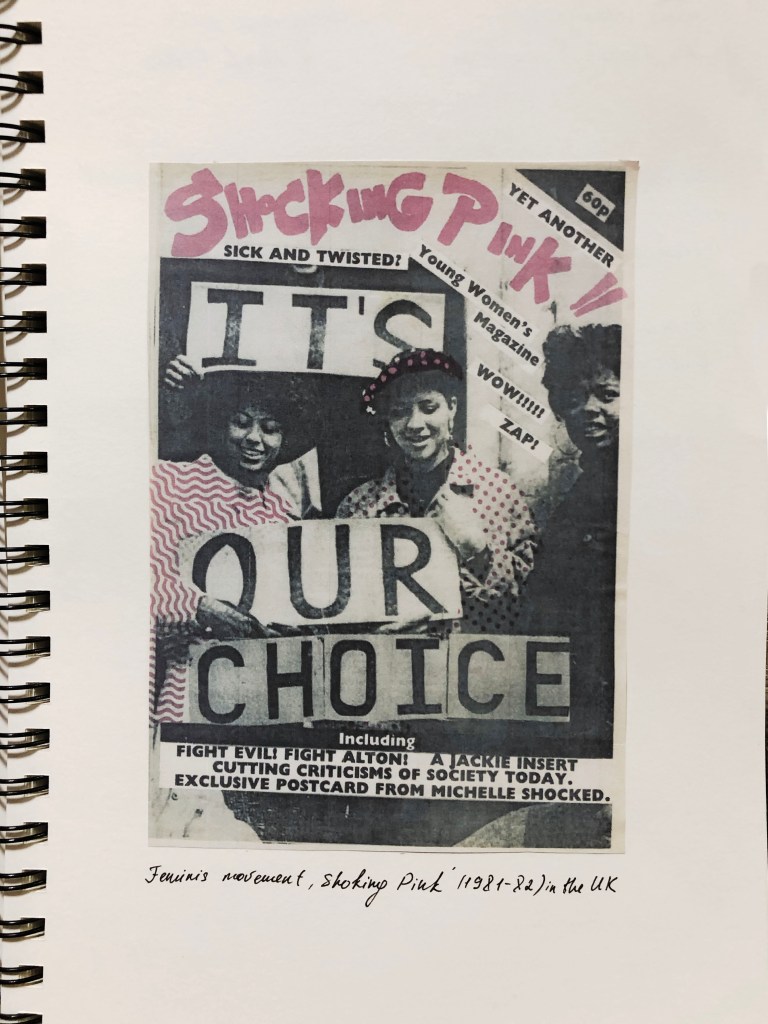
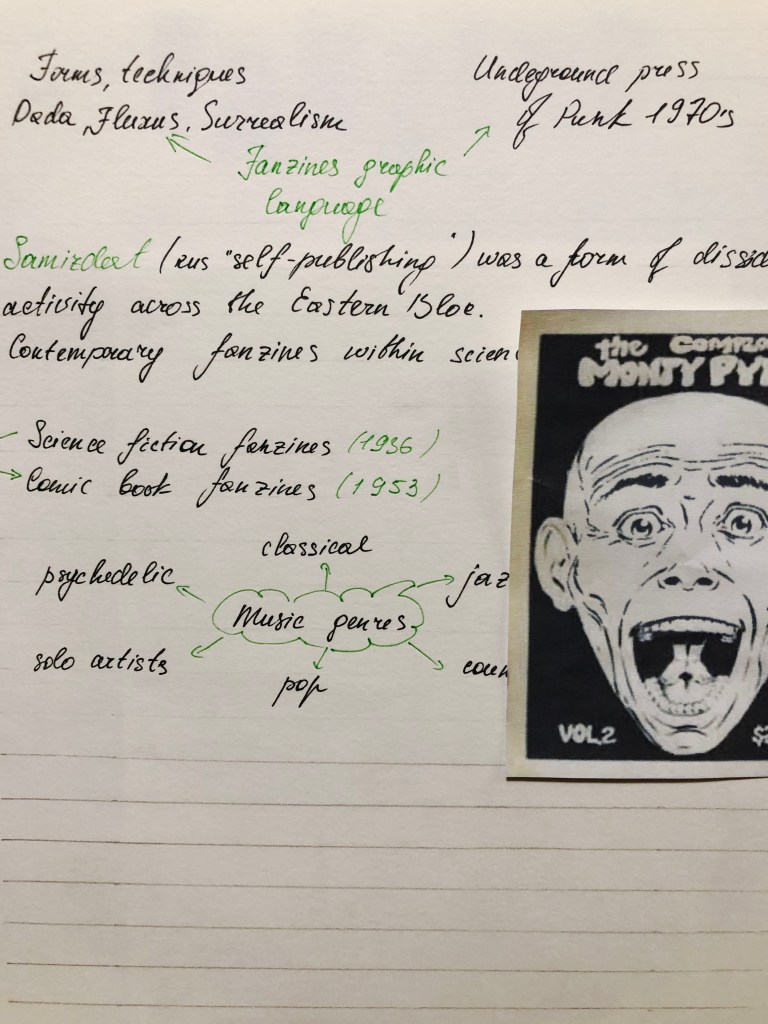
After researches some of the shapes and forms of creative books I proceeded to the next part, discovering the history of Fanzines. Overall, I found this article quite impressive, as here i could see example how something invented in the general publics, amateur and non-professional, but with a lot of passion and creativity could become an official term and implemented into the world of professional fashion industry, music, books, cinematographs and other forms of art. All important notes I gathered together in my learning log. I tried to create some mind maps, and graphics, highlighting annotations and dates, as these researches will be useful for my first Assignment.

Also, I’ve placed some screenshots of different fanzines from the article, so I could go back to them as a point of inspiration for my later works.

That research task was quite entertaining for me, as I love analysing and learn something new about artists, art movements and influencers in the culture. I found useful that here I discovered some new terms not only in graphic design but in the art culture in general. The challenging part was not only to get myself familiar with this article briefly but to understand the purpose of it for my future designs.

Exercise 1: Influential books

Consider the importance of books to you both personally and within a broader global sense.

First of all, think back to the earliest books you came across as a child, through your teenage years and early adulthood to where you are now. There may be half a dozen books which stick in your memory or are important to you in some way. There may be many more than that. It may be an early reading book, a particular image or short rhyme which helped you recognise letterforms. It may be the distressed metallic silver cover of a Salinger novel you read as a teenager, or the book you bought on impulse after work one day, seduced by the tactile quality of the cover.

Identify these books in your learning log, use photographs and annotation to create an illustrated list documenting the books that are important to you, for whatever reason.

Now, connect your influential books to those with a more global reach. Identify seminal works that have informed or challenged some of the areas you have identified. These may be scientific, artistic, historical, political, geographic, fictional, poetic or religious texts. For example, a book from your childhood could connect to other seminal children’s books by association, such as Heinrich Hoffmann’s Der Struwwelpeter / Shockheaded Peter (1845) or Charles Perrault or the Brothers Grimm. Likewise a book featuring dinosaurs might connect to Charles Darwin’s Origin of the Species.

When we appreciate the breadth and influence of books, we begin to appreciate the extent of a book’s potential impact. Books carry and communicate ideas; powerful messages can be contained within seemingly innocuous bound paper pages. In your learning log, create another list of books, with accompanying images and annotations, which you believe to be more globally important, but connect to your first list in some way.

This activity will feed into your first assignment, so document your ideas in your sketchbooks and learning log to refer back to later.

Researches

Books have always played an essential role in my life. Once I even thought to connect my profession with literature, to engage in a more detailed study of classics and contemporaries that to analyse their works. But later my main interest was in drawing and design, reading become just a hobby. During my school years at the summer holidays, according to the program, we were asked to read at least 60 books on foreign and Ukrainian literature. After all, we had to analyse and write an essay or review for all these works, so it was important to get acquainted with each work personally. I found all the necessary materials in the local and school libraries, at neighbours, friends, or in-home archives, and I did not mind spending another hour reading the book. I enjoyed the tactile connection with the book, turning the pages, always paying attention to what kind of binding was in the book, hard or soft, the quality and colour of the paper, and the smell of book sheets. I read some of the books because I should have known them according to the program, but some books are etched into my memory to this day.
Over time, e-books began to replace printed publications, more and more services began to appear for listening to audiobooks or loading books into an electronic version, which is more economical and ergonomic. In the modern world, a home library is a rarer phenomenon than, compared to 20 years ago when each house had a separate chest of drawers for books. Many book lovers still prefer a printed book to an e-book, but even for myself, I noticed that my last literature purchases were books on design, psychology or recipes, which should always be at hand. New books I read in e- option, faster ordering and no need to store printed copies on shelves in the house.

It was interesting for me to go over the books that impressed me since childhood. Since the age of 6, I have enjoyed immersing myself in fairy tales and children’s stories by such authors as The Brothers Grimm, Hans Christian Andersen, Korney Chukovsky, Charles Perrault, Lewis Carroll. Over time, when I began to grow up, I switched myself to more serious novels, such as “Angelica” by Ann and Serge Gollon, “Robinson Crusoe” by Daniel Defoe, “Anna Karenina” by Leo Tolstoy, “Children of Captain Grant” by Jules Verne, “Notre Dame Cathedral” Victor Hugo, “Crime and Punishment” Fyodor Dostoevsky, etc.

Oddly enough, the modern editions, the books I read as an adult were not that significant or influential for me. The book was already perceived more as a source of information than an authority. Still, I found authors who caught my attention, “Sapiens. A Brief History of Humanity” Yuval Noah Harari, “Eat, Pray, Love” by Elizabeth Gilbert, “Shantaram” by Gregory David Roberts and many others.

Walt Disney Big Dictionary

This was my first book on English, published back in 1993. It mainly consisted of vivid illustrations of cartoon characters with numerous words in Russian and their translation. The book was hardcover, large and very pleasant to study, and I always wanted to return to it. As a child, I considered this book quite difficult, despite the easy-to-learn English words, in my understanding it was a separate science, and the first window into the world of a foreign language, which I did not know at that time. But still, I liked to scroll through it, study the illustrations, the emotions that it conveyed.

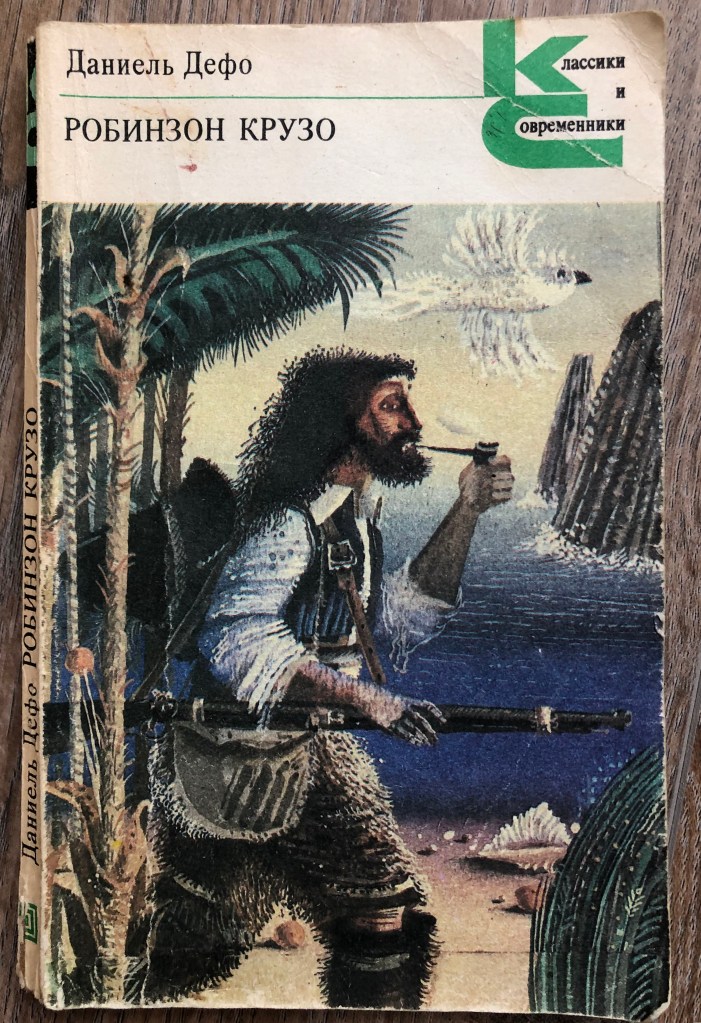
Robinson Crusoe. Daniel Defoe

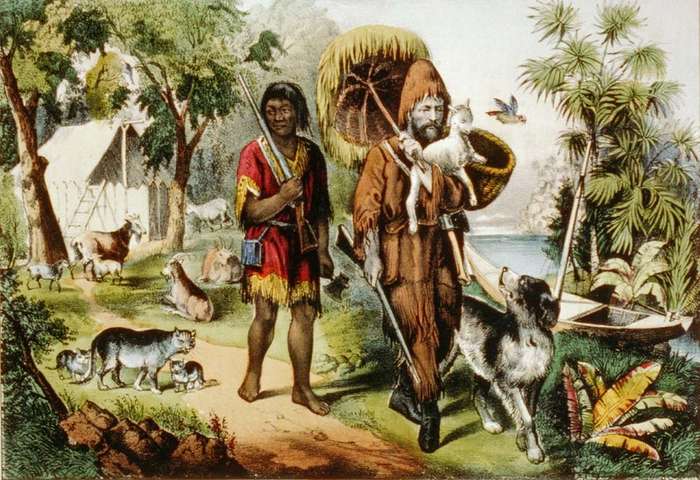
Why is this book important to me? Probably because it was the first discovery of the world of travel and distant islands. Many in childhood would dream of getting to a distant green island, overgrown with palm trees and the singing of wild birds. In my understanding, this book is a visual narration of how fortitude and a thirst for adventure can change a person’s life, the ability to find a way out of a situation. I think this story served as the beginning of my perception of the territory of the Earth, full of mysterious and exotic places, perhaps that is why I dreamed of getting to a distant island from an early age. At the first opportunity, I made a trip to the Maldives and Seychelles. Of course, this was all filled with comfort, compared to the tests that fell to the lot of Robinson, but I was still able to experience the very fact of being on a distant island in the middle of the ocean.

The cover of this book was soft and inside contained some black and white sketches of the work. Another example is that a book can be discreet in design, but the content carries some meaning that makes it memorable.

Anna Karenina. Leo Tolstoy

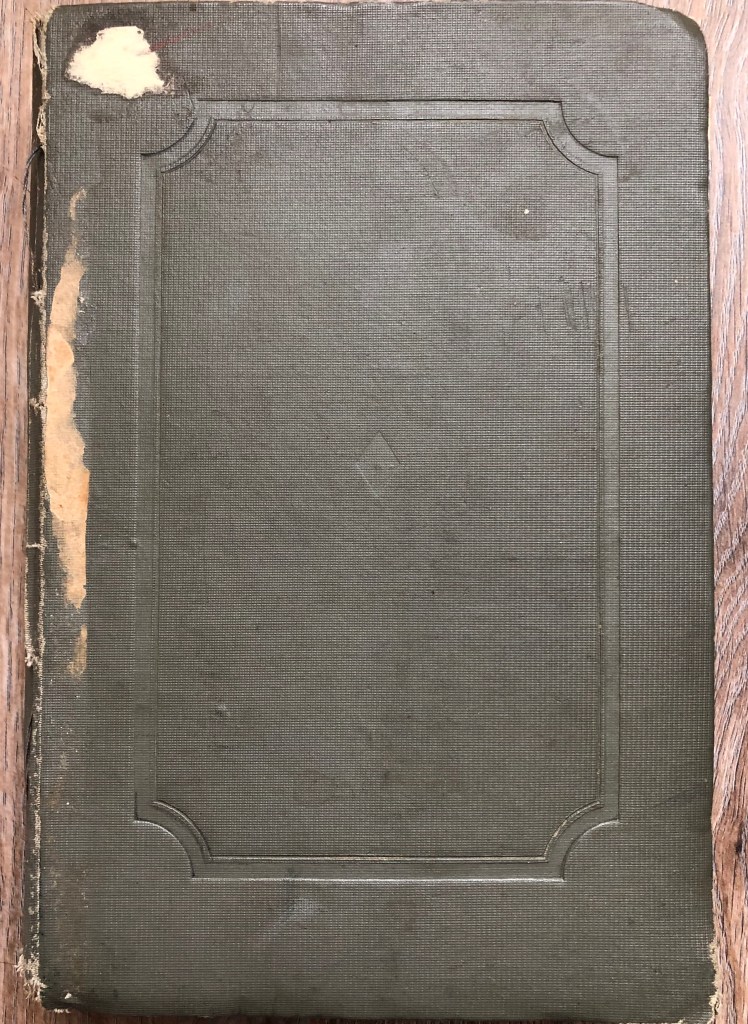
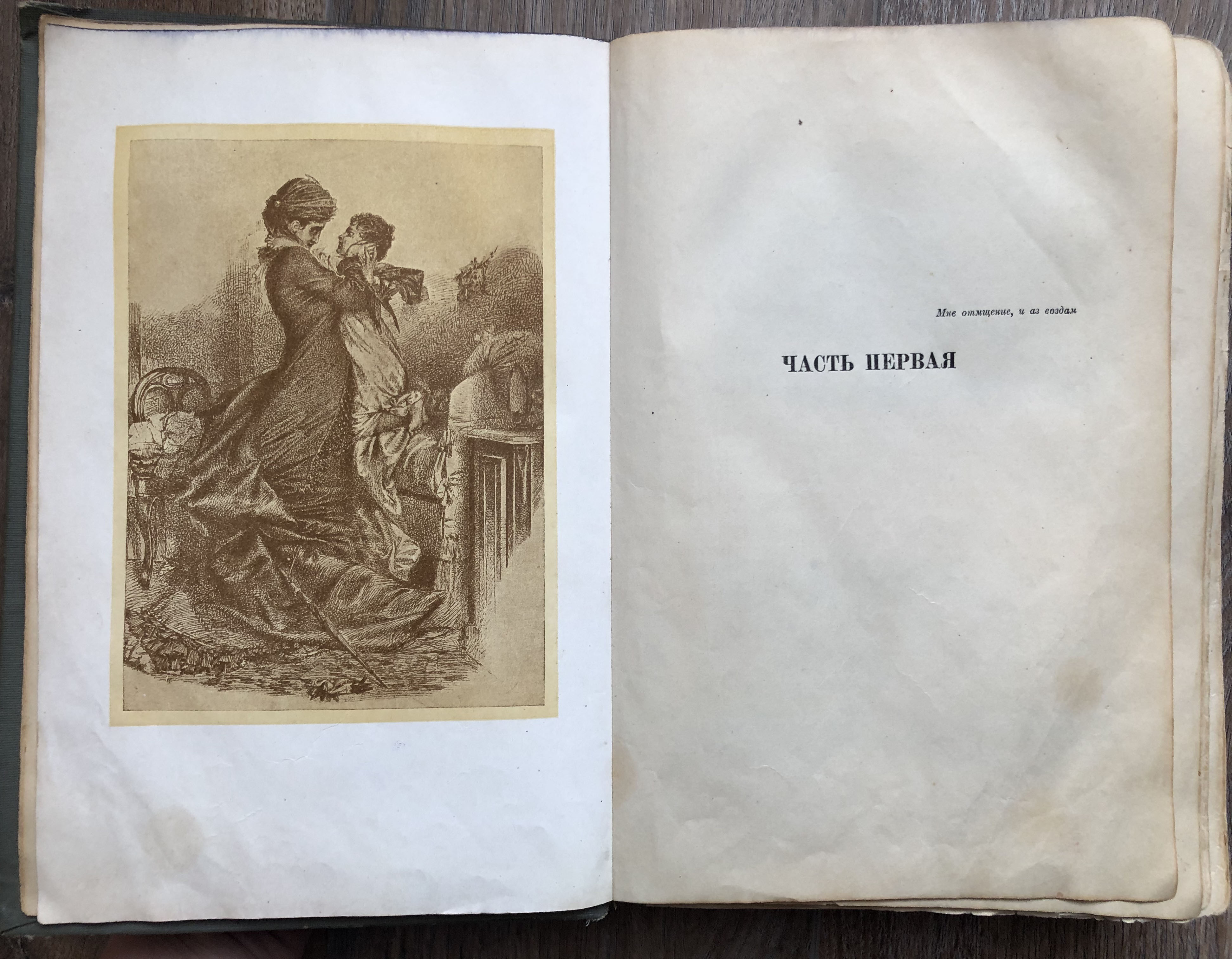
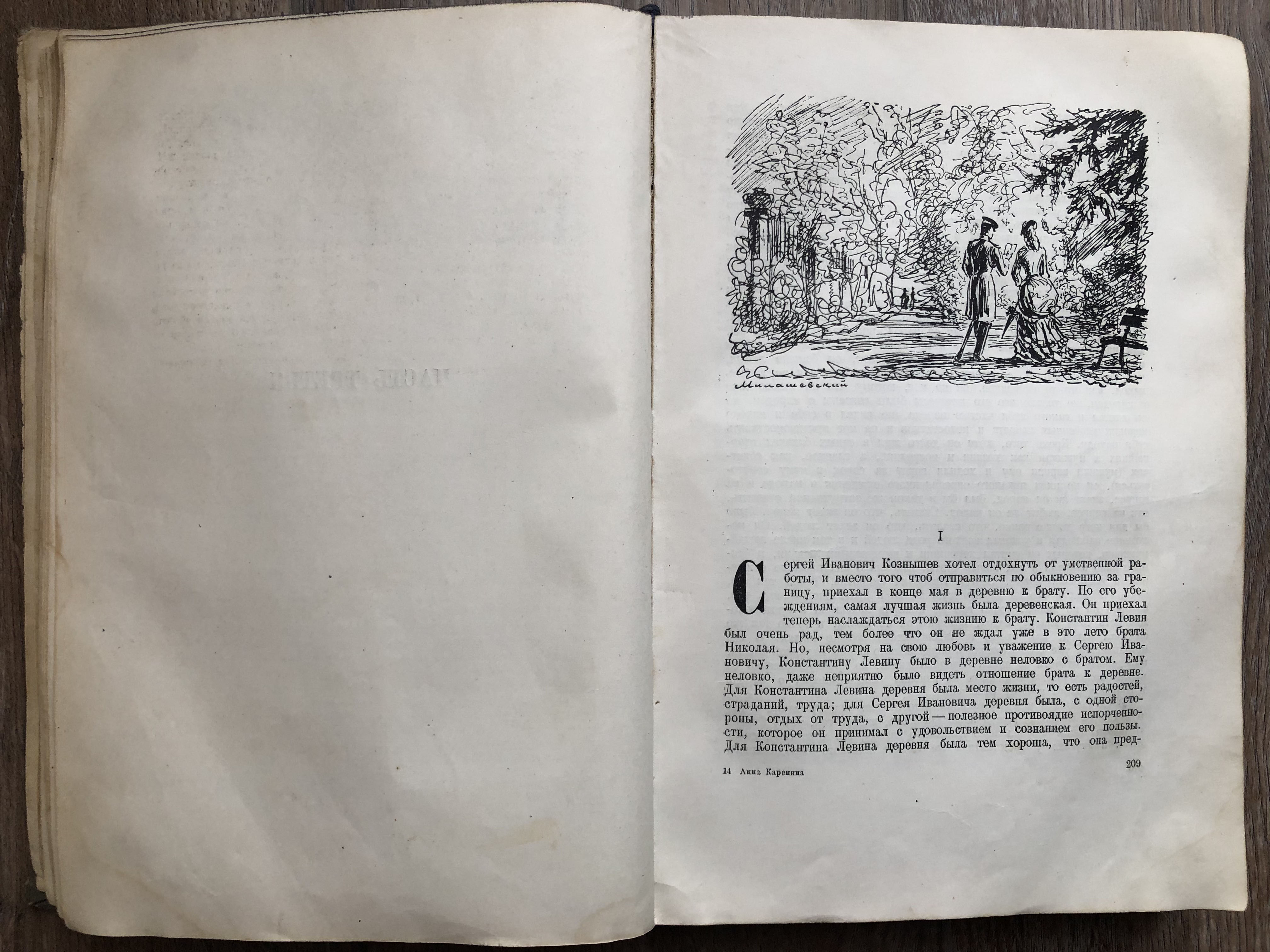
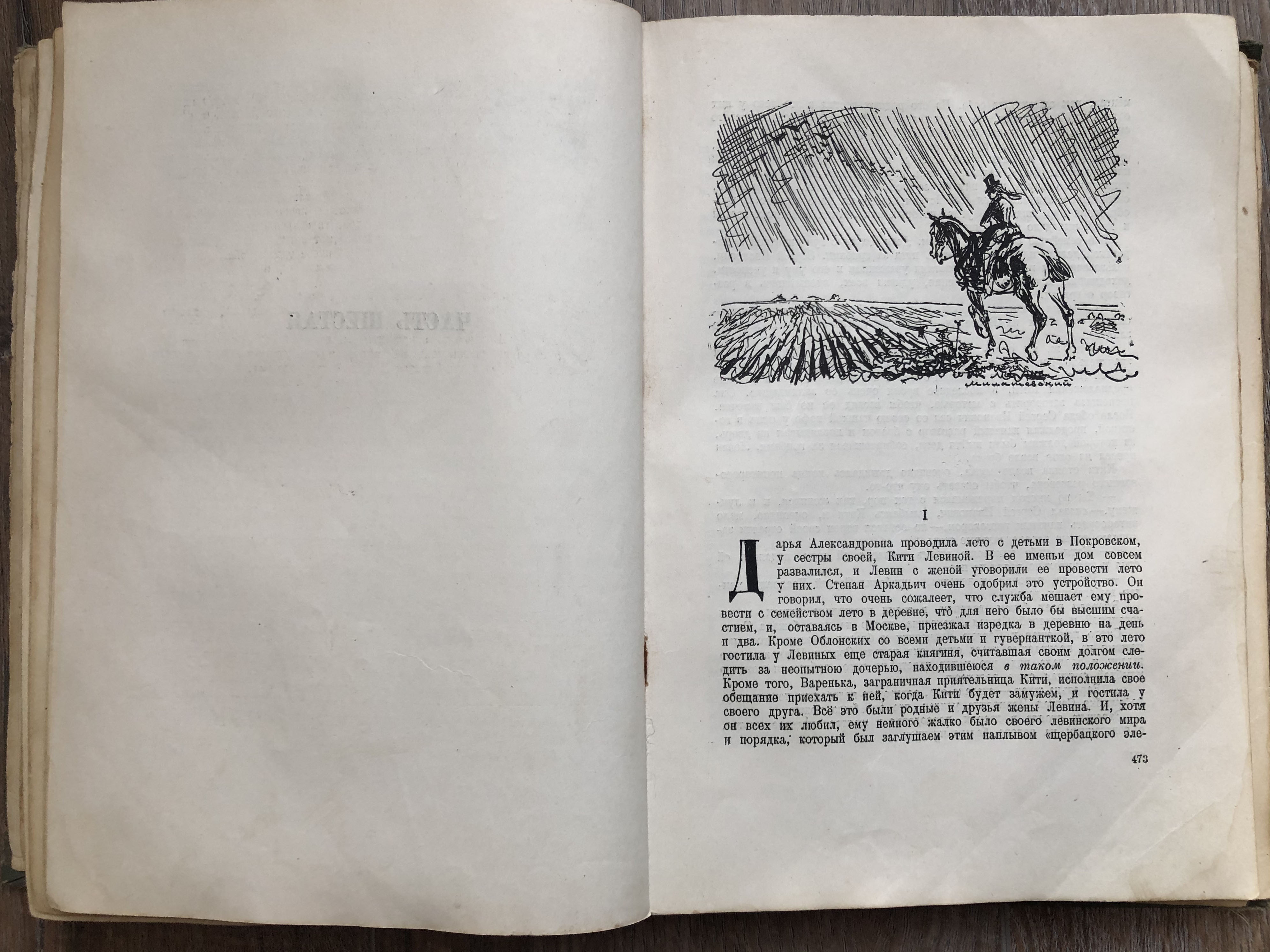
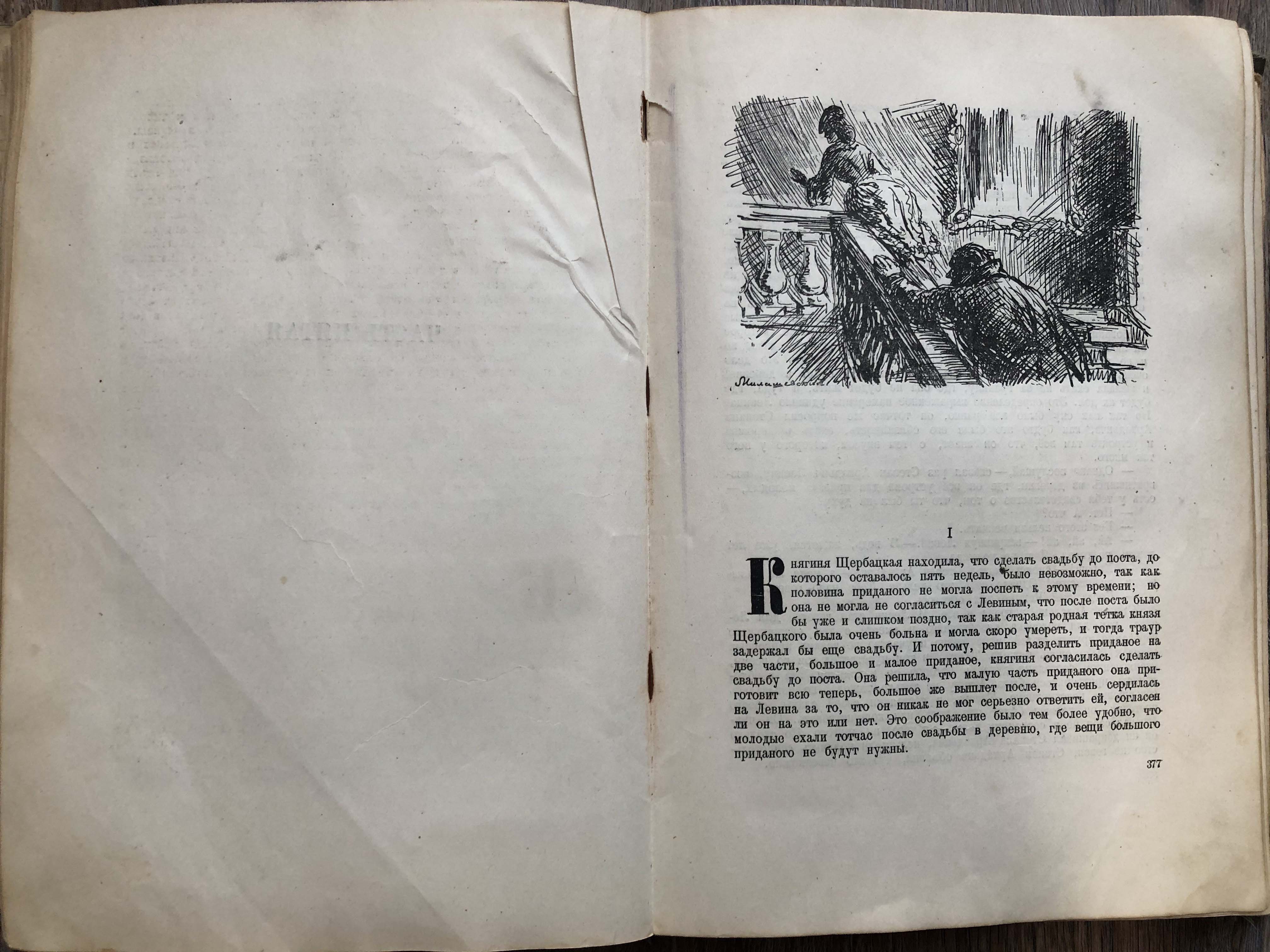
The peculiarity of this book is that I read it at a more mature age, and the publication itself dates back to 1939. The book is voluminous, similar to those that were previously stored in libraries, printed with some of the old printing technologies. The cover in it is hard and a little dull, but that is why this book seemed to be the most tempting to read, it seemed to me that this novel contains a part of history and culture, inside there were pictures in black and white, and in general, it tells a spiritual and tragic story, which will not leave anyone indifferent.

Fig. 3 Anna Karenina. Leo Tolstoy (1936) Home Library

Master and Margarita. Mikhail Bulgakov

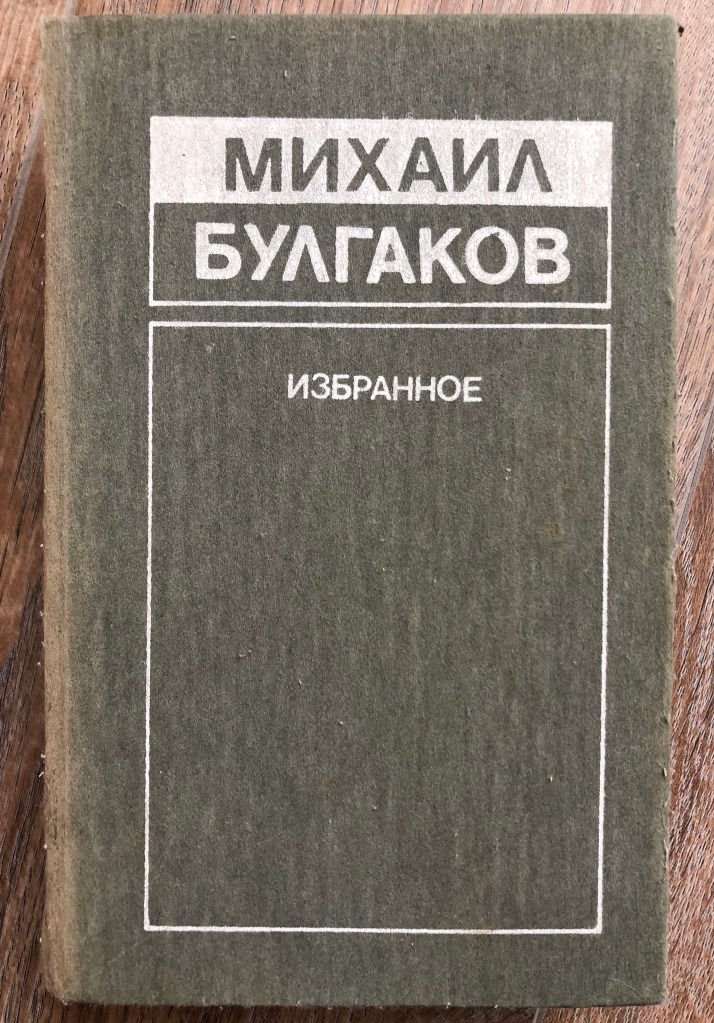
I read this copy of the Soviet Union Edition, when it was important to make the cover necessarily hardcover, with minimal decorative filling, and the colours of the covers also varied from dark green, burgundy, grey, the book was supposed to make a solid impression, without any tempting illustrations and registration. I confess I understood this novel only from the third run, the story is very deep and multifaceted, also thick, about 500 pages.

Sapiens. A Brief History of Humankind. Noah Harari

This is one of the modern books that I read about 3 years ago. I was attracted by the title of the book, it describes the theory of the origin of man on Earth, how evolution developed, it touches on parts of psychology, history and geography, and human knowledge. If you look at the design and design of the book, then the cover already has a more modern look, a paperback with a small illustration of a fingerprint on a light background. Inside, the author has placed several pages of B history museums and sketches, and the paper itself for reading the pages is whiter and smoother than the books I read at an earlier age.

Shantaram. Gregory David Roberts.

Although in fact, the novel itself takes place in more remote corners of Bombay, in the slums, the book tells the details of the gangster part of India.

Also an example of contemporary literature, a soft, catchy cover with a contrasting print. In general, I noticed that modern authors prefer to place some kind of image or photo, collage on the cover of a book. Restrained and monochromatic thick bindings are no longer as popular as they used to be. It is interesting for me to analyse this book in the sense that when you look at the cover and the beautiful title, the cover exudes a calm and cultural part of India, the Taj Mahal.

Fig. 5 Sapiens. A Brief History of Humankind. Noah Harari At: https://www.amazon.com (Accessed 24/11/2020) Fig.6 Shantaram. Gregory David Roberts. At: https://www.livelib.ru/book/1000329470-shantaram-gregori-devid-roberts (Accessed 24/11/2020)

Connection with global reach
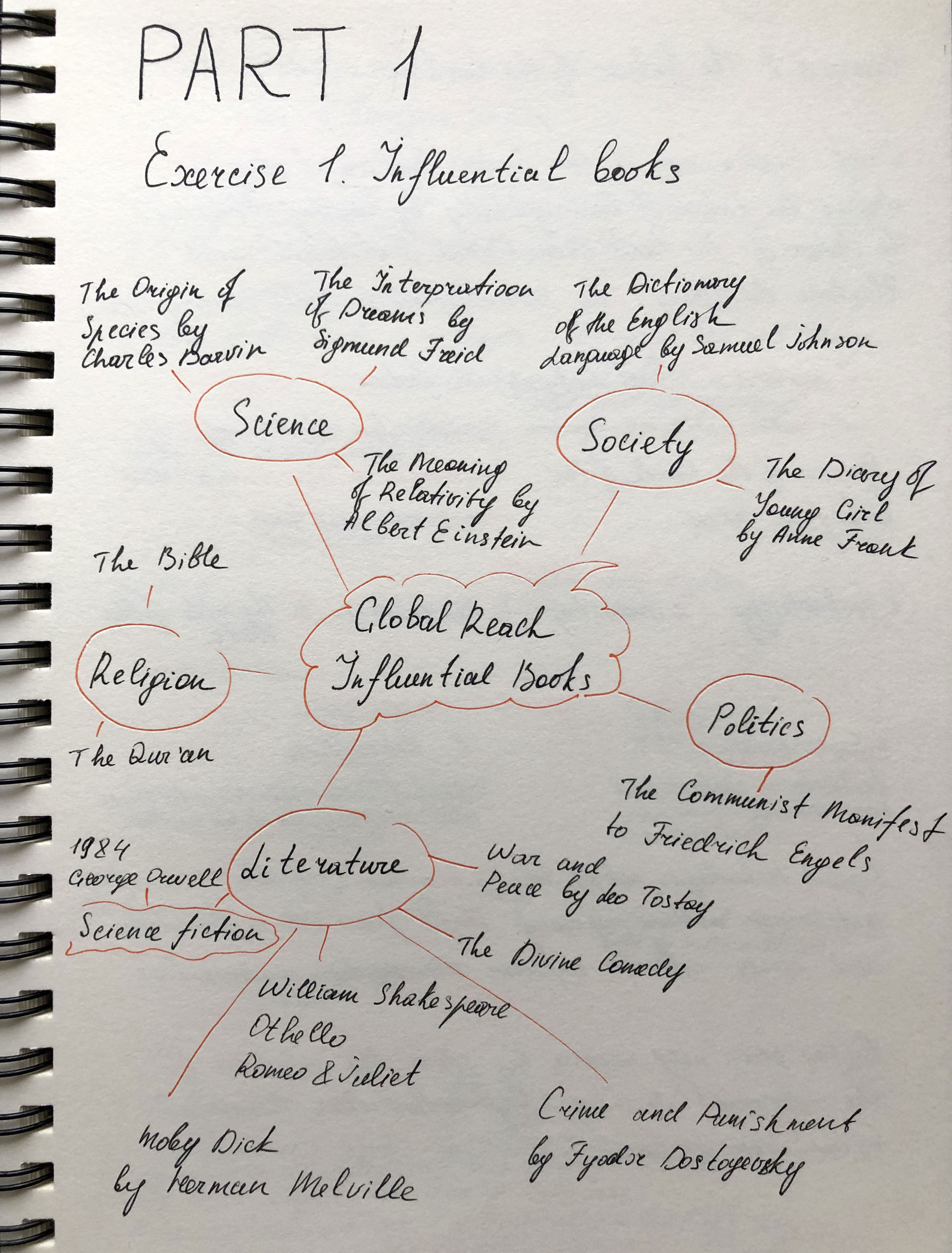
To understand how the above books are related to books on a world scale, I first decided to look through the list of those very famous books. They turned out to be at least 100 works from the field of science, psychology, history, sociology and also classical literature. In the Mind Map, I introduced books that I was familiar with personally, with which I crossed paths in one way or another, according to the same school curriculum.

Walt Disney Big Dictionary translation of the famous American edition of Walt Disney Productions, 1971. One of the best picture dictionaries of the English language for children, based on the famous cartoons Disney characters speak English and Russian. The dictionary is compiled on a thematic basis and allows children to learn the words that their American peers master in the first years of their lives. I see the connection of this book with A Dictionary of the English Language by Samuel Johnson, considered the most influential dictionary of the English language. Credited as the foundational text for the study of the English language and lexicography, Johnson’s dictionary was not the first of its kind, but it was the most comprehensive and well-researched.
Robinson Crusoe. Daniel Defoe’s novel became a literary sensation and spawned many imitations. He demonstrated the inexhaustible possibilities of man in the development of nature and in the struggle against a hostile world. This message was very consonant with the ideology of early capitalism and the Enlightenment.

The name of the protagonist Robinson Crusoe has become a household name, a kind of “survivor symbol.” But was Robinson the first survivor of world culture? I can see the connection of this book with many films that were produced in modern times. But the origins of Robinsonade coming from the ancient story “Tale of Haye, the son of Yakzan”, which was written in the Middle Ages, in the XII century. Its author is the Arab poet Ibn Tufal. The book tells the story of a boy who has been living in the wild on the island since his birth. A lama helps him to survive, which feeds him with her milk. From the plot of this Arab story, we can conclude that the motives of “Robinson Crusoe” and “Mowgli” intersect in it. Many motives of “Robinson Crusoe” are intertwined with the story of Ibn Tufal.

Anna Karenina, novel by Leo Tolstoy, published in instalments between 1875 and 1877 and considered one of the pinnacles of world literature. Indeed, too many readers, including Tolstoy himself, it signalled a radical shift in the already impressive history of the novel as a literary form. With its sweeping and complex plot lines, subtle characterisations, and blend of romance and social commentary, Anna Karenina is often mentioned in the same breath as Cervantes’s Don Quixote (1605) and Laurence Sterne’s The Life and Opinions of Tristram Shandy (1759-1767), both of which have permanently altered and defined the novel. Indeed, these books reset the standard for novel writing. In the final and tragic act of Anna’s suicide, readers recognise the theme that Tolstoy has been building towards: Anna’s love, like that of Shakespeare’s Desdemona or Thomas.

The Master and Margarita is now recognised as one of the finest achievements in 20th-century Russian literature. Witty and ribald, the novel is at the same time a penetrating philosophical work that wrestles with profound and eternal problems of good and evil. By turns a searing satire of Soviet life, a religious allegory to rival Johann Wolfgang von Goethe’s Faust, and an untamed burlesque fantasy, this is a novel of laughter and terror, of freedom and bondage.

Sapiens: A Brief History of Humankind. The book surveys the history of humankind from the evolution of archaic human species in the Stone Age up to the twenty-first century, focusing on Homo sapiens. Harari’s concept of a “cognitive revolution” reminded me of he Origin of Species by Means of Natural Selection, Charles Darwin. This work by Darwin laid out the foundation for the theory of evolution. Since its publication, the book’s theories and observations have helped make life sciences what they are today. Darwin’s adaptation and evolutionary model still aid modern scientists as they build a better understanding of all Earth’s species, including our own.

Shantaram is a novel by Gregory David Roberts, in which a convicted Australian bank robber and heroin addict escapes from Pentridge Prison and flees to India. The novel is commended by many for its vivid portrayal of tumultuous life in Bombay.

Stepping away from stories about life in prison and instead focusing on books that have similar writing styles to Shantaram, The Alchemist by Paulo Coelho is undoubtedly a great book to read for lovers of Shantaram. The main plot is taken from European folklore: according to the classification of folklore plots by Aarne-Thompson-Uther – plot 1645 “Treasure of the House“. A typical representative is the English fairy tale “The Pedlar of Swaffham” (“The dream of a peddler”), as well as one of the episodes of “A Thousand and One Nights“.

Conclusion

The task in my understanding turned out to be very interesting and informative, I have always paid special attention to books and world literature, here you could find out the opinions of other authors, plunge into the research or fictional world of writers. So, thanks to a little research, I was able to draw a parallel of some of my favourite works with stories written in ancient times. So for myself, I was able to connect such works as Robinson Crusoe and Mowgli, or Anna Karenina with the works of Shakespeare, and in the bark of the book The Master and Margarita, there is a similar story of Faust. Hope my introductory research will help me with my first assignment.

Materials:

https://en.wikipedia.org/wiki/Robinson_Crusoe

https://en.wikipedia.org/wiki/Anna_Karenina

https://www.encyclopedia.com/arts/educational-magazines/anna-karenina#:~:text=FURTHER%20READING-,INTRODUCTION,novel%20as%20a%20literary%20form.

https://en.wikipedia.org/wiki/The_Alchemist_(novel)

http://sonic.net/~rteeter/grtinfluential.html