
Further inform your understanding of paper and bookbinding by reading pages 165–180 of Alan Pipes’ chapter ‘ On Press’ available as a downloadable resource at http://www.oca-student.com/
Collect lots of different paper samples, and assemble these into a standalone book, or integrate them into your sketchbook. See this as the start of an ongoing resource that you can add to, and refer back to. Add notes to your paper sample book/sketchbook identifying the paper source, stock, and any reflection on the paper’s qualities. You may want to extend this investigation by exploring how your paper samples can be folded, combined, stitched, printed on, or bound together. Explore your samples’ physical properties by working with them, testing them out, and visually documenting the results of your research.
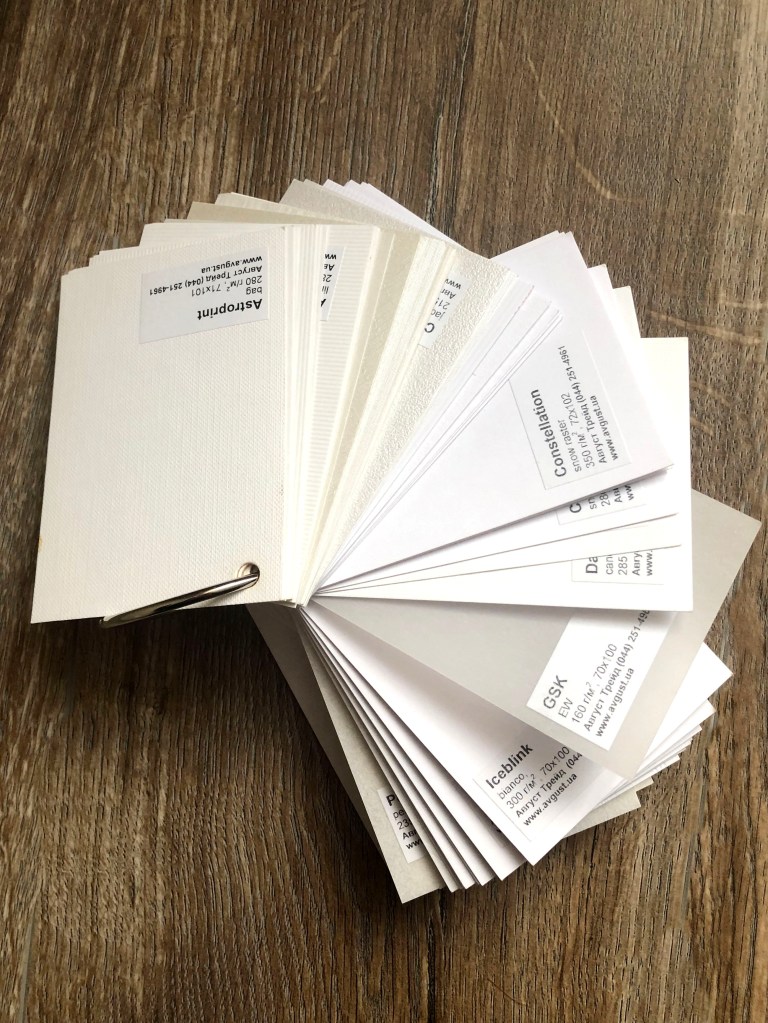
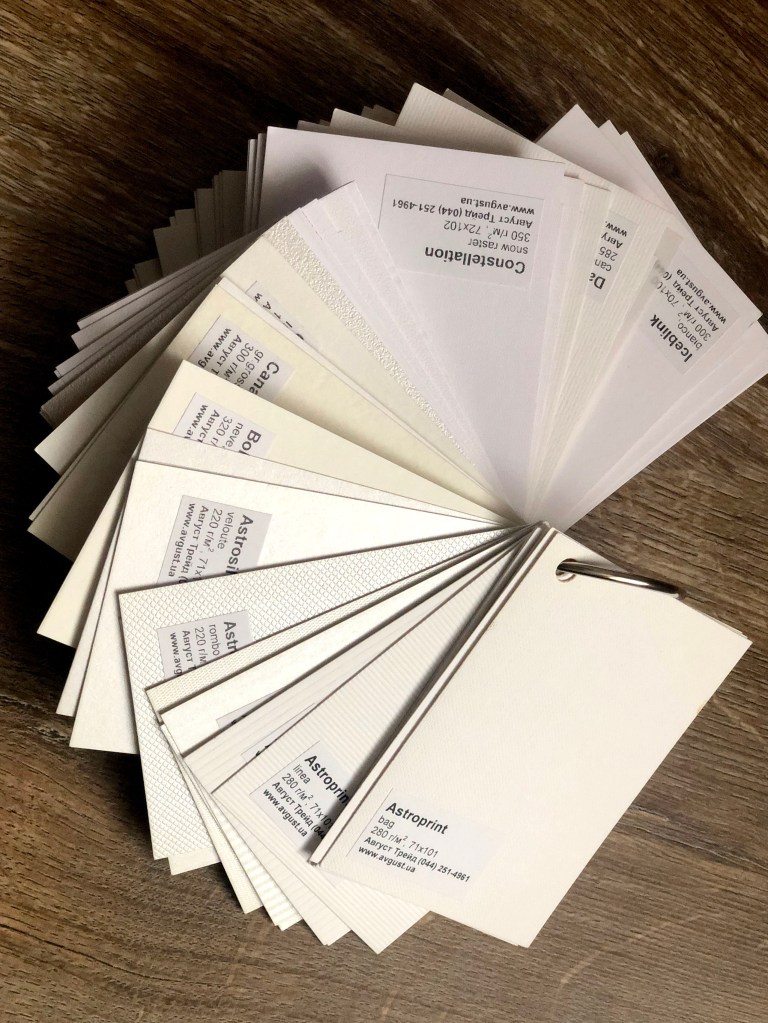
White examples of design papers
These are valuable examples of all possible textures of papers that typography market can provide. I borrowed them from my friend’s design department. I tried to take a picture of them in groups, that to see the difference between those papers. The density of designer papers is usually in the range of 80-350 g/m2, and for special purposes, factories produce papers from 60 g/m2 to 700 g/m2.
Most design papers are printing papers, and can be used in the common types of printing – offset, silk-screen, digital, letterpress, embossing – and all types of prepress and post-printing work. Each example has its unique texture and feel. Some of them I know quite well from my previous jobs, like wedding invitation cards, or events invitations. Design papers have so much texture on them, so printing is practically impossible on it, in a result I had to use a thinner layer of papyrus on the top of it, that to place a text on it. Some examples of paper have beautiful sparks on them and make them aesthetically pleasing to use that to create special moments.
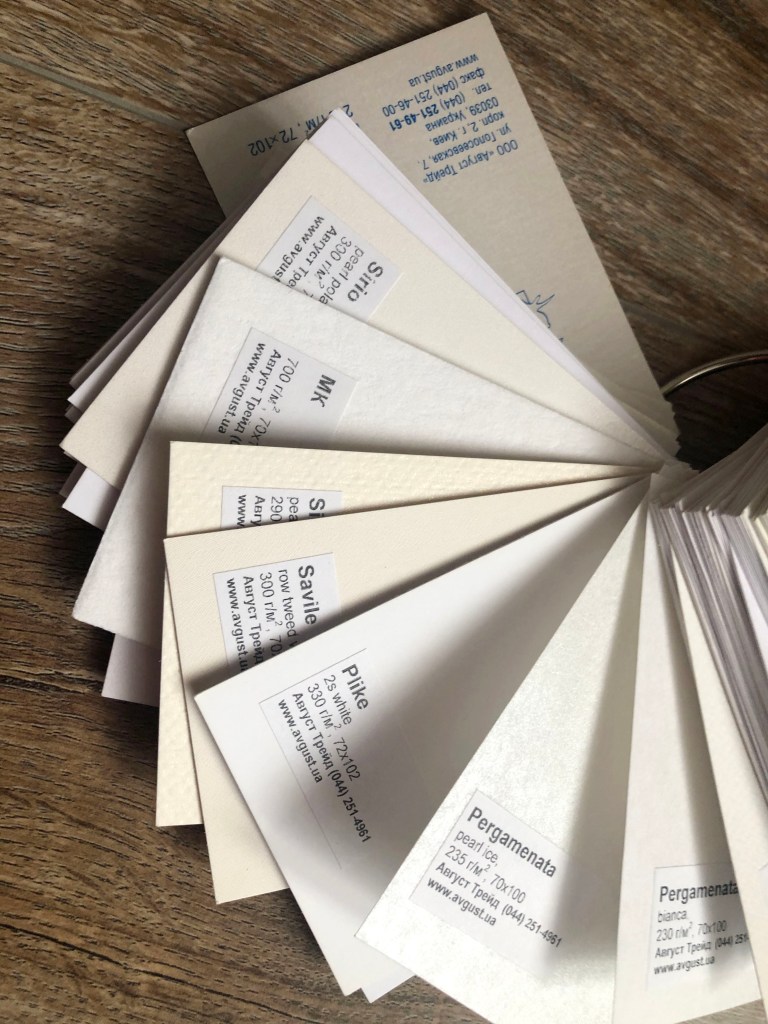
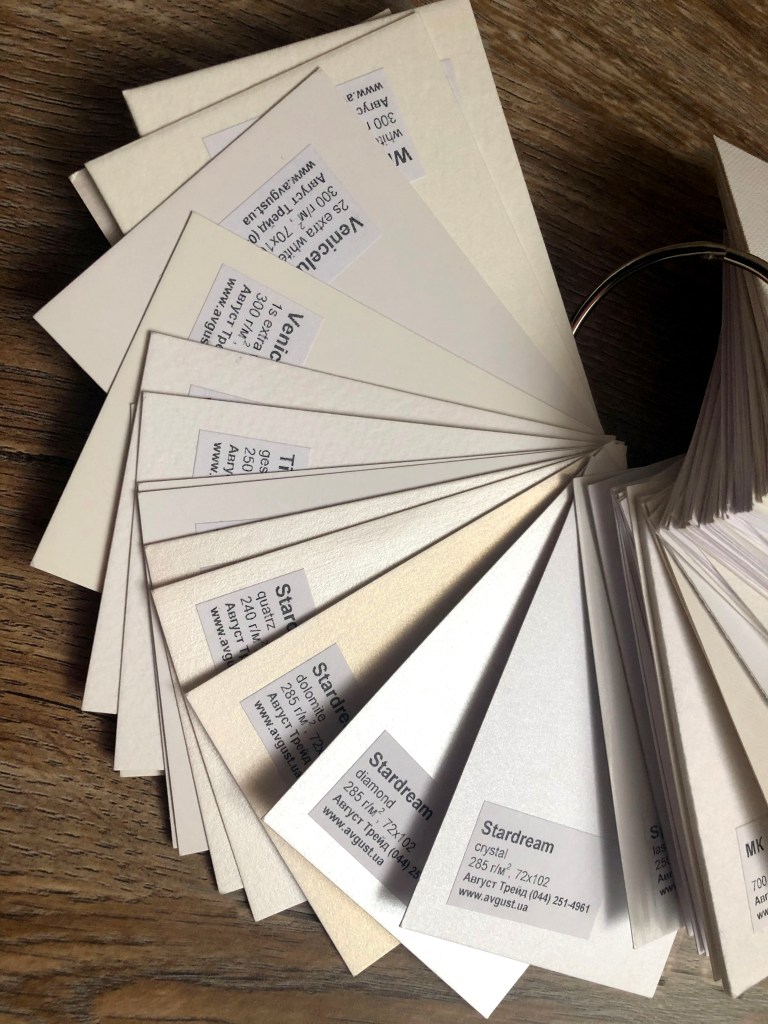
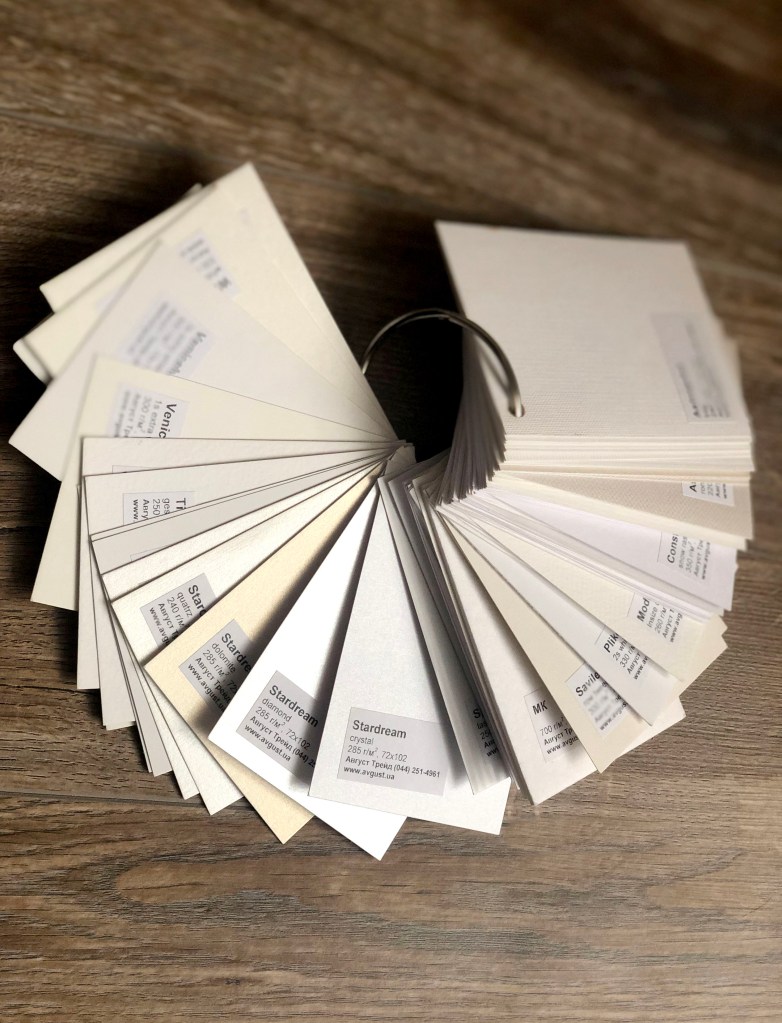
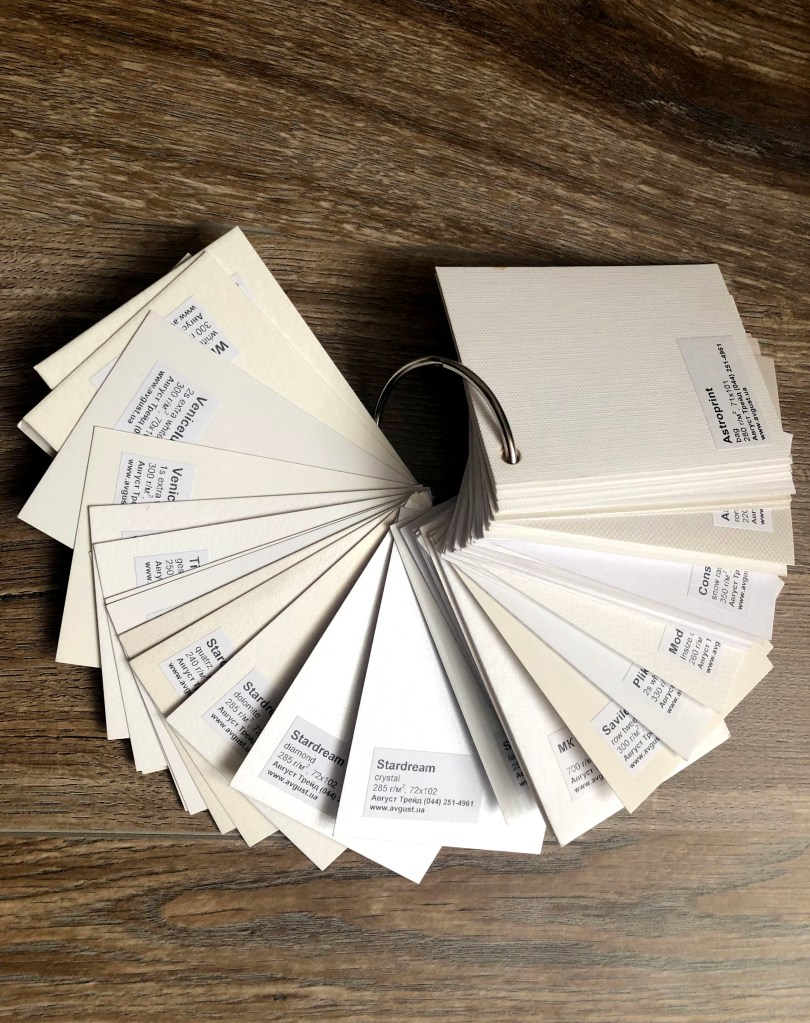
From my experience the most commonly used papers usually were:
- Stardream dolomite/diamond/quarz 285g/m2 (had beautiful shiny effect on it;
- Splendor Gel EW 340g/m2 (very smooth and soft feel paper);
- Plike 2swhite 330g/m2 (porcelain feel paper);
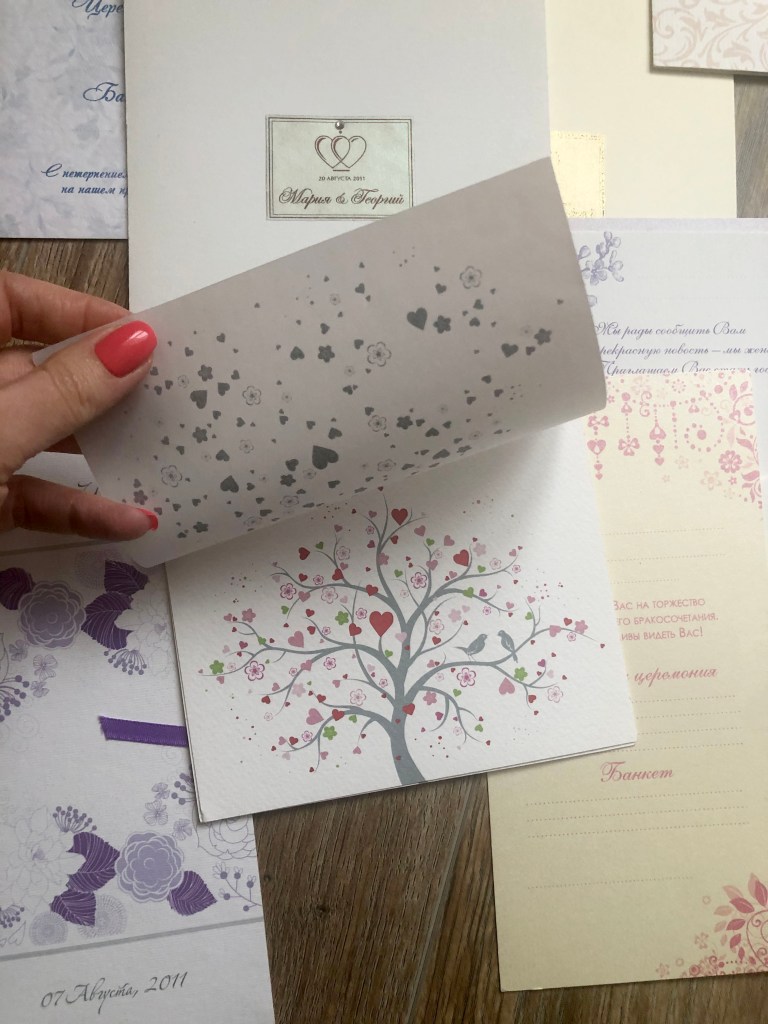
- Pergamenta bianca/pearl ice 230 g/m2 (beautiful transparent paper for additional layer);
- Constellation snow tela 340g/m2 (paper with some square lines on the texture);
- Astroprint (have the widest variations for the texture, started from lines, honey comb, silk, sparkle types of paper).
Colourful examples of design papers
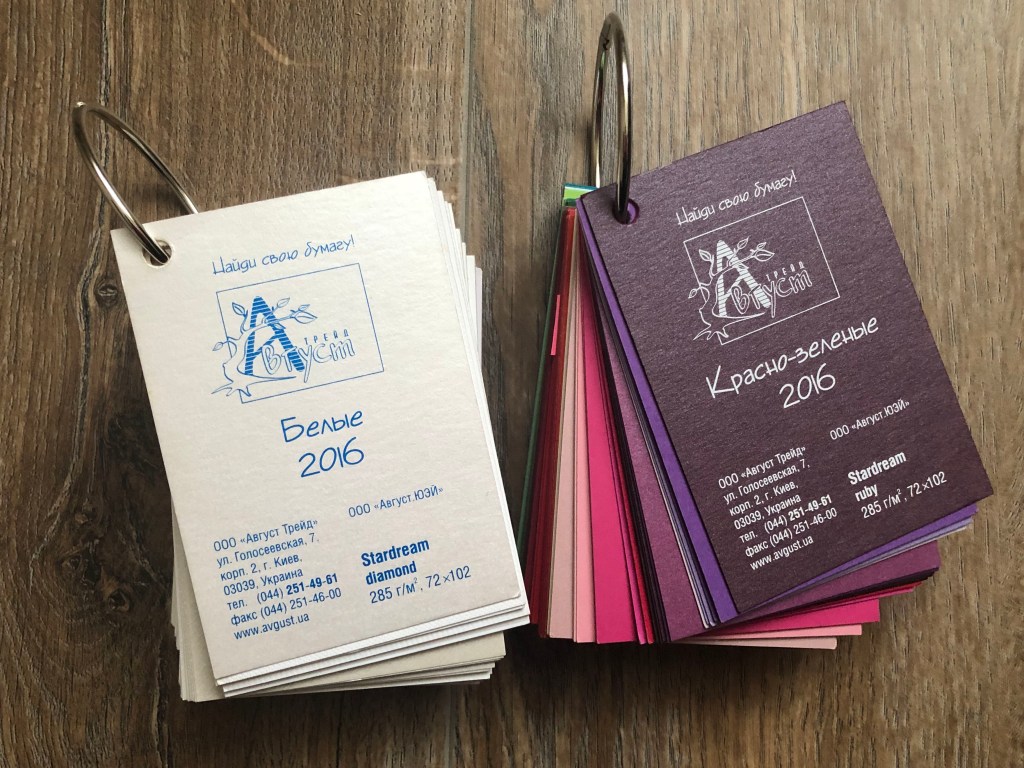
This colourful pack is quite valuable as well, as each paper had been coloured in a particular hue, and has a consistent colour for the creative designs. Most of the colourful paper samples coming from white examples, and even has similar names, but the difference is in code. Here is the example of Stardream paper in purple, pink, green, blue, ruby colours. Or bright and string colour of red Plike design paper. But at the same time, there are some unique examples that I’ve seen only in two colours, velvet feel Daniel design paper in red and green. Also there some pieces of So…Silk series of glamour green, pink, and green colours, – amazing samples.
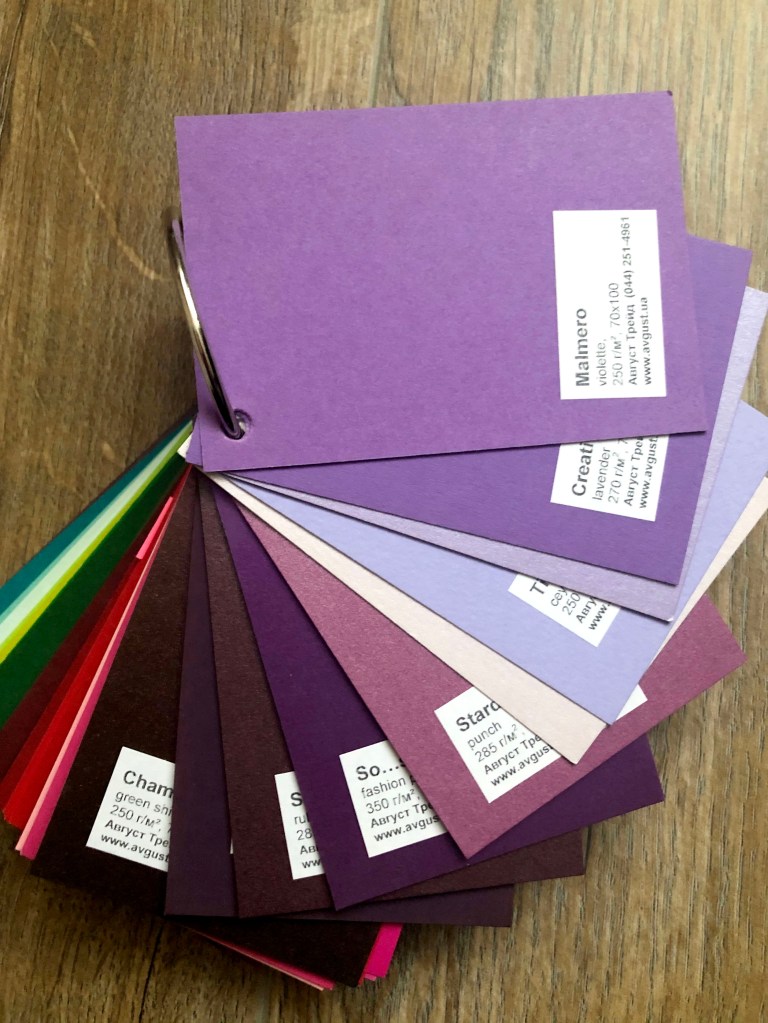
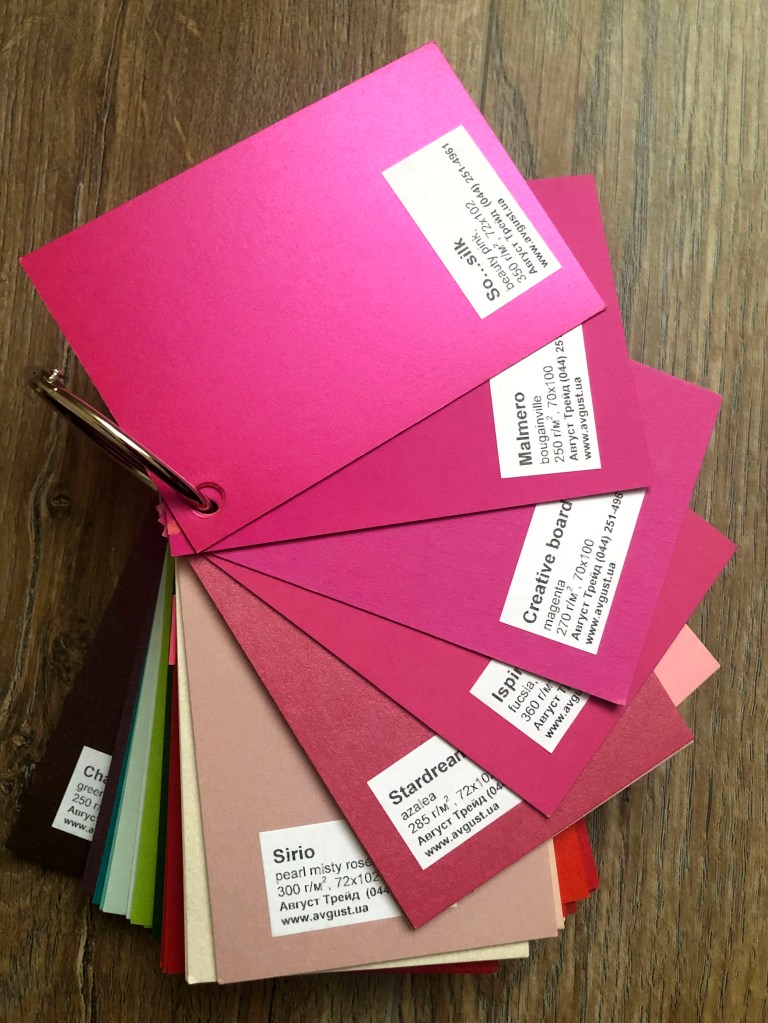
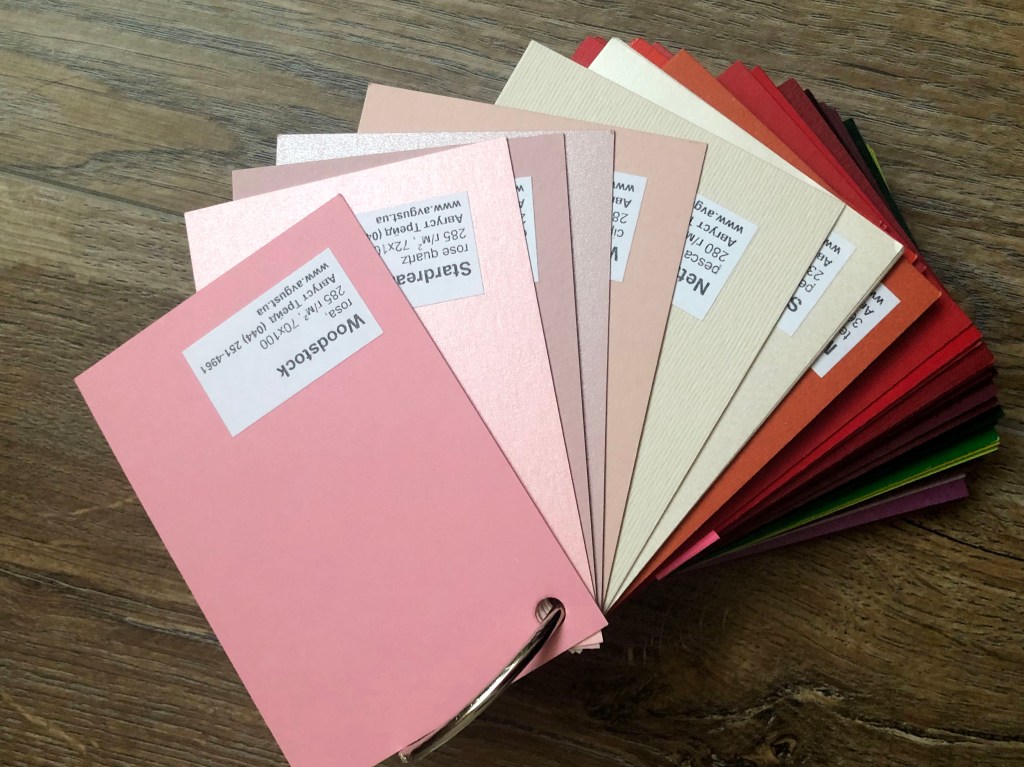
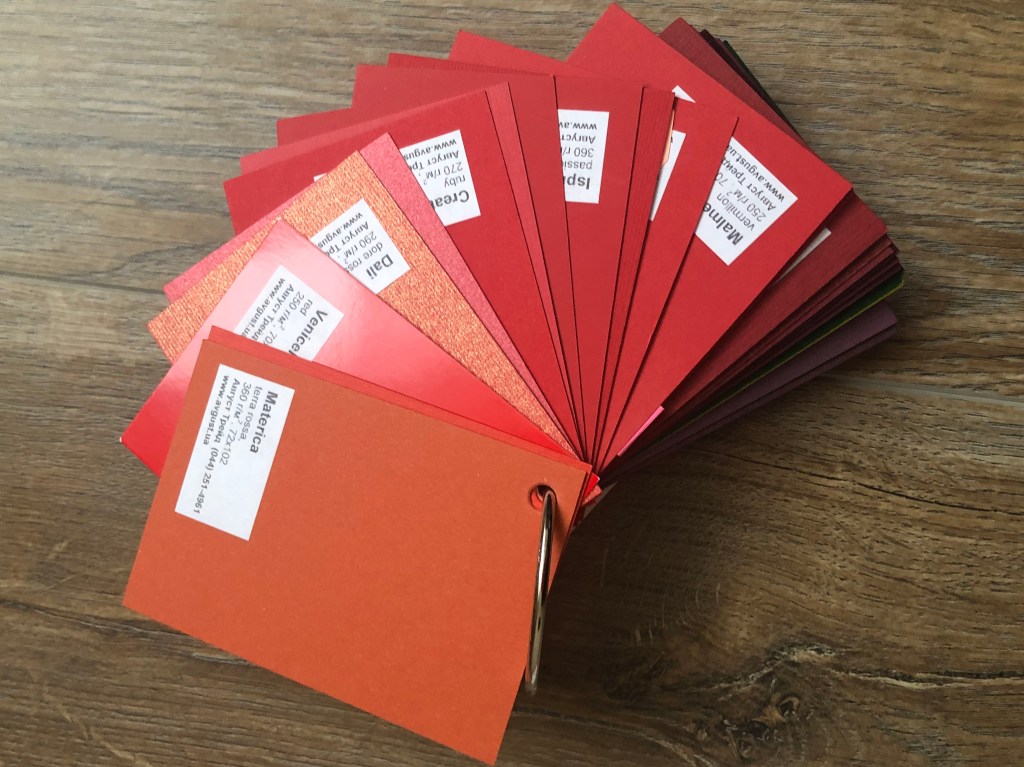
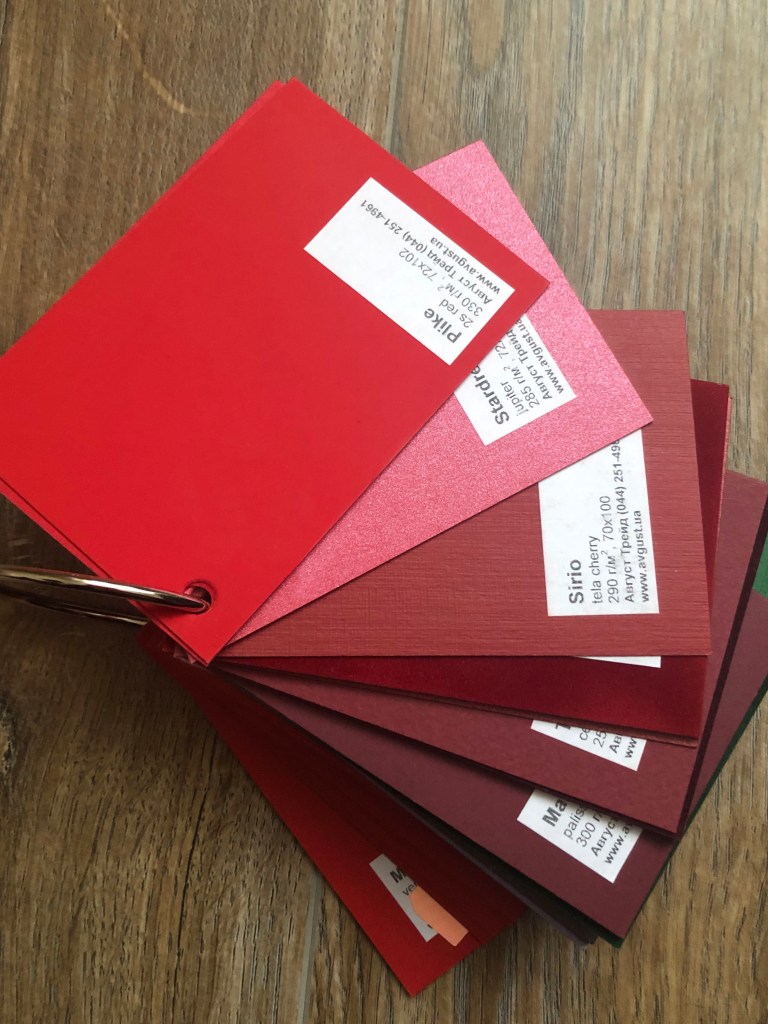
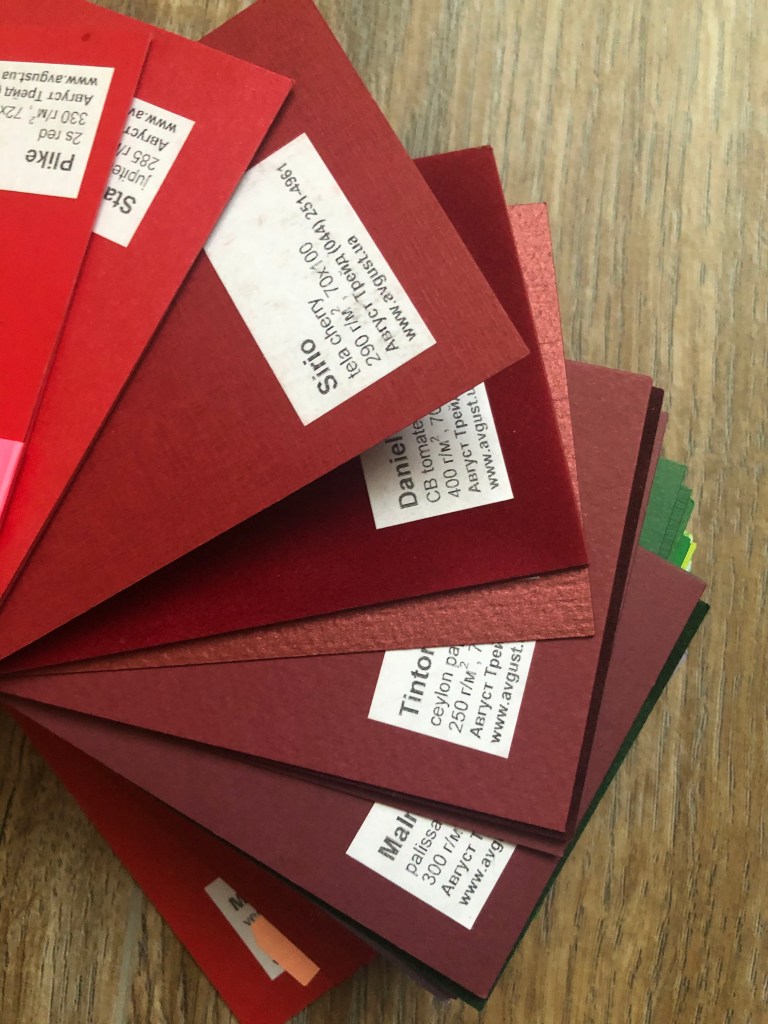
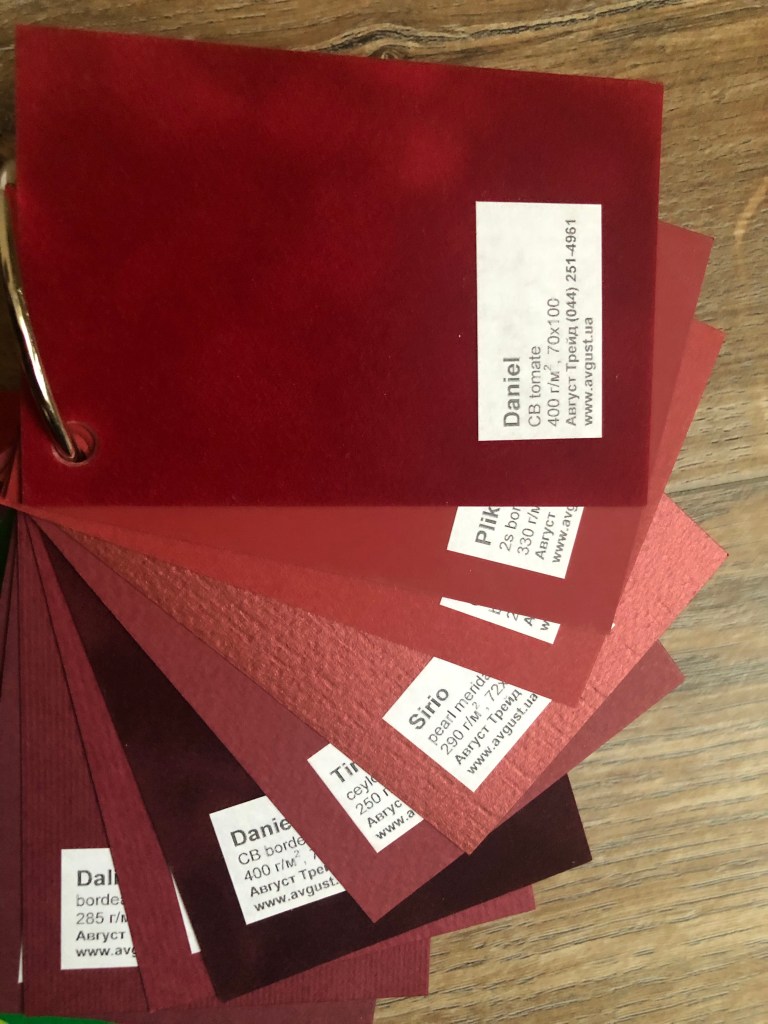
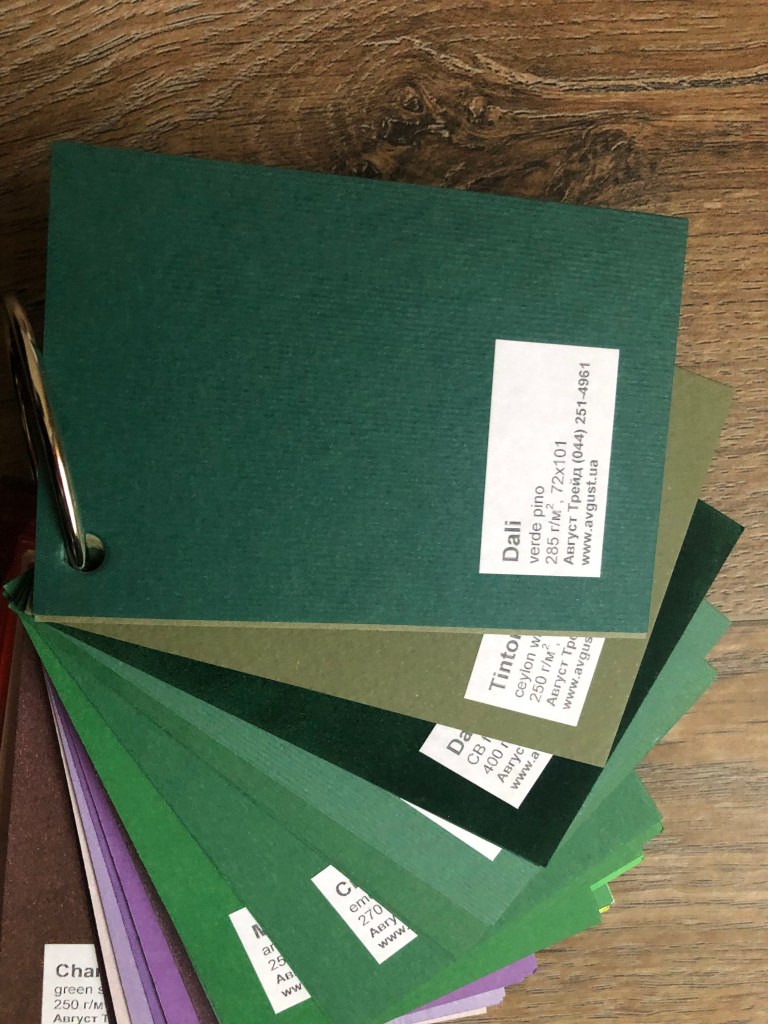
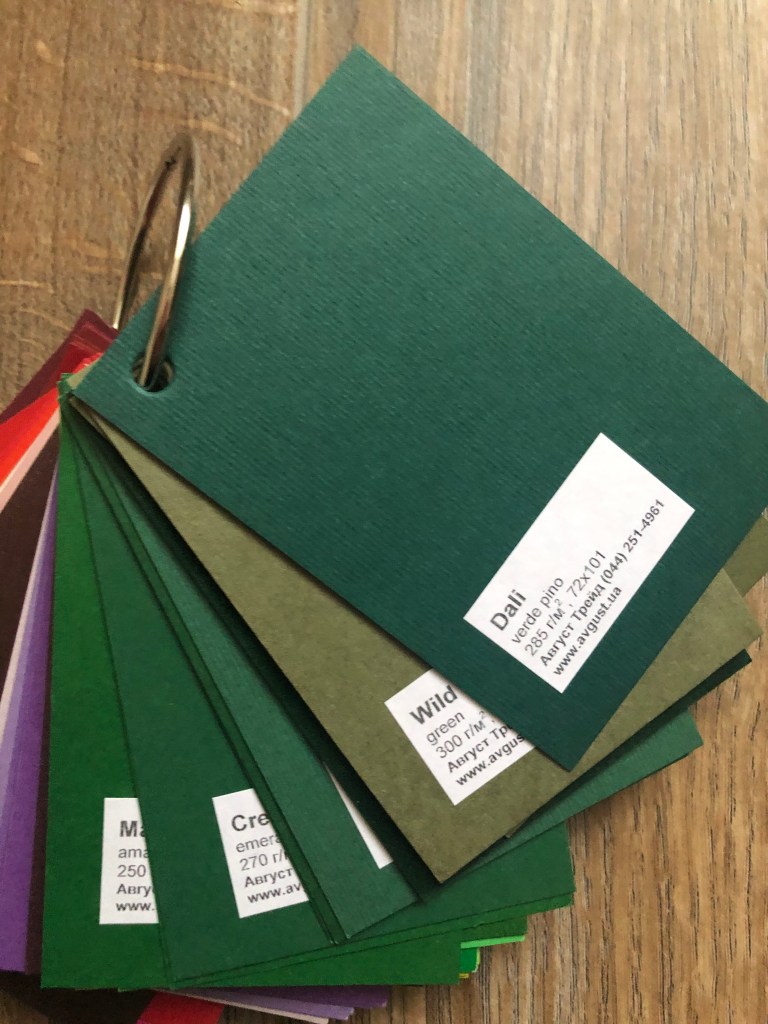
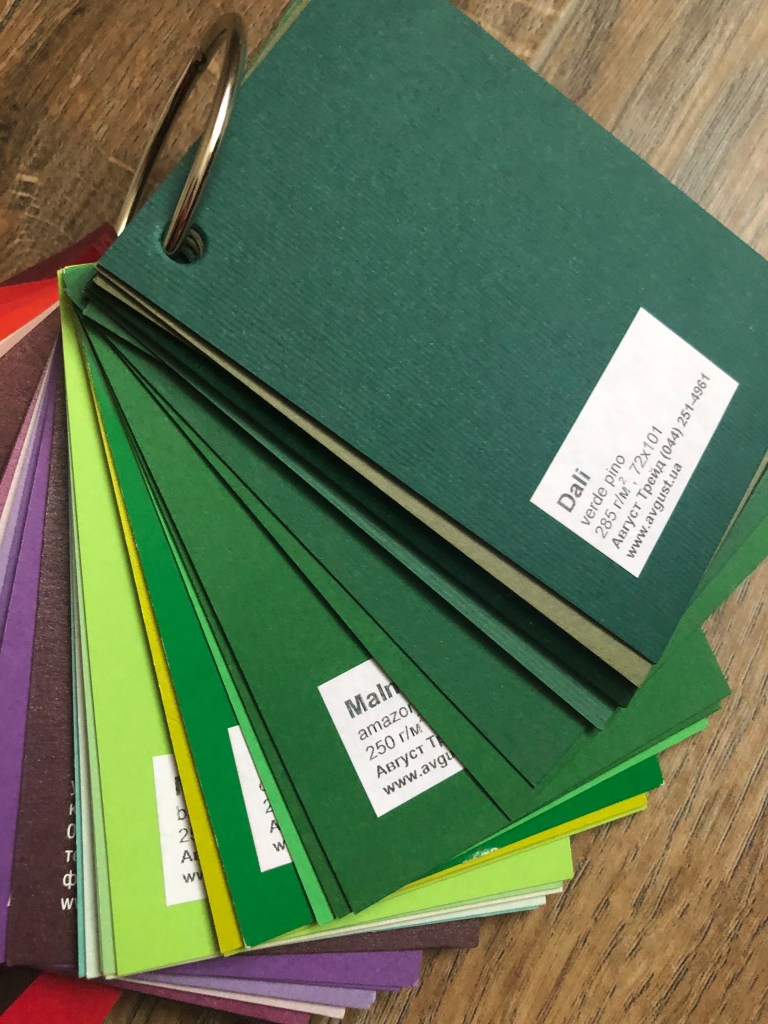
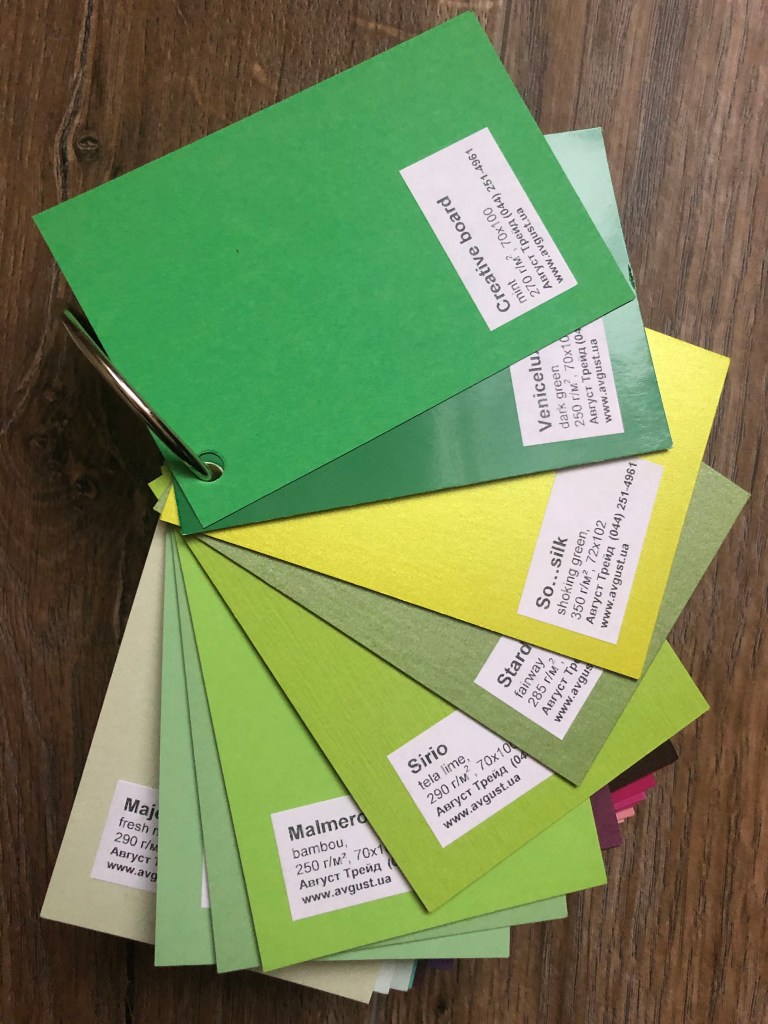
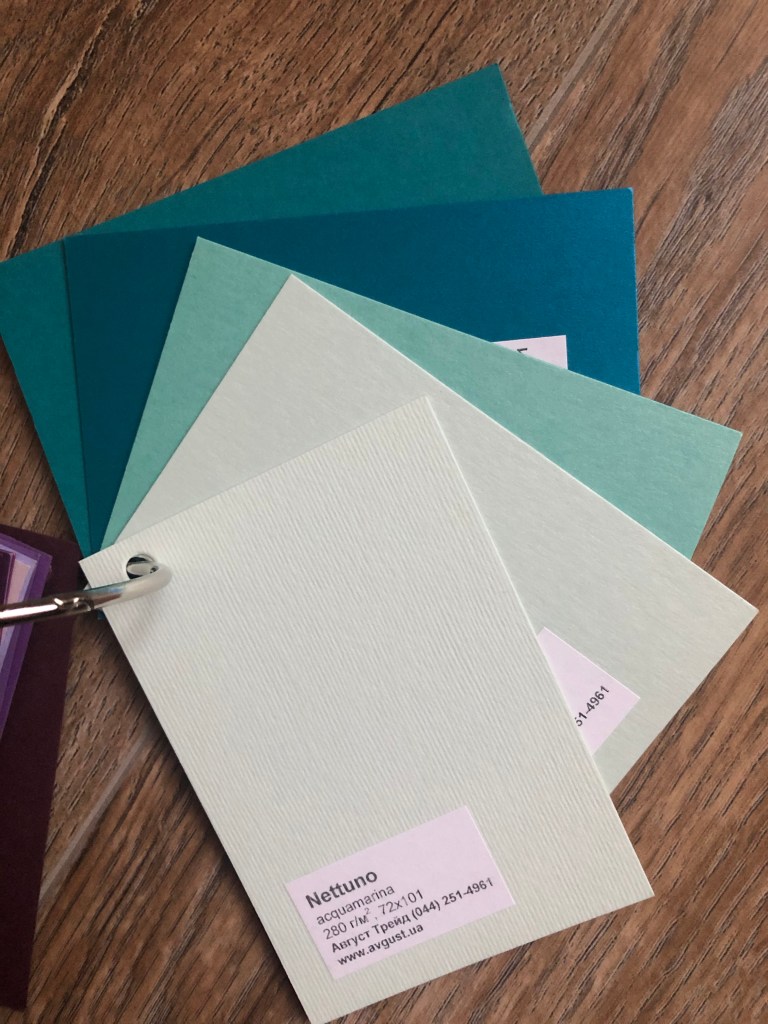
Examples of design paper
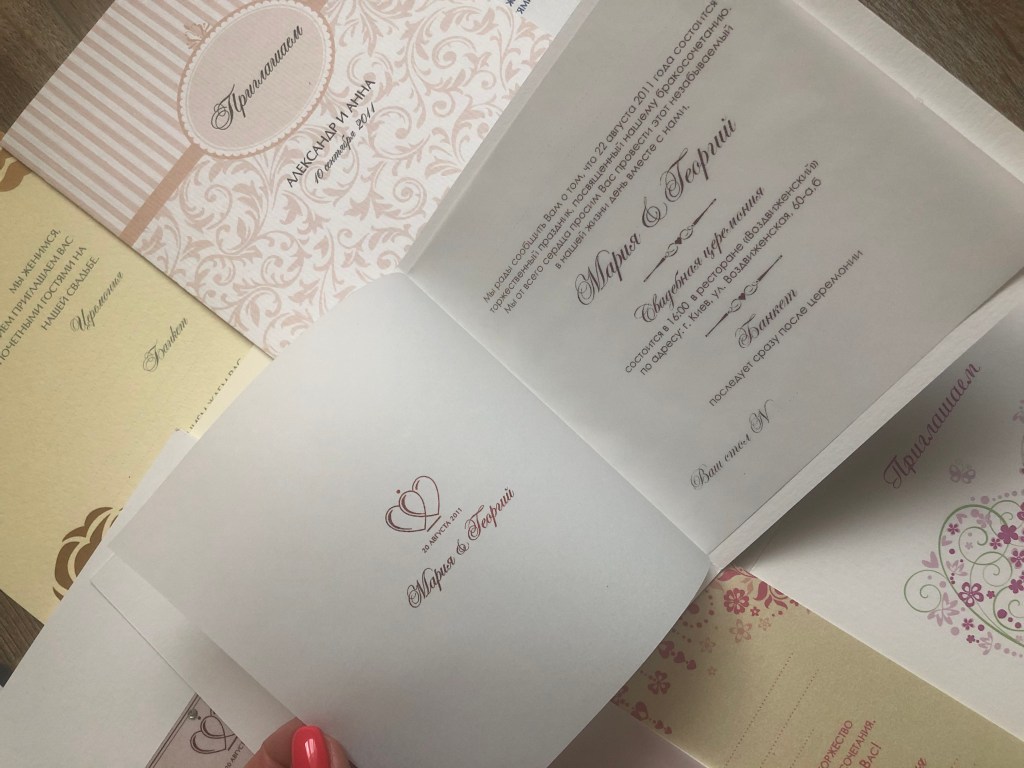
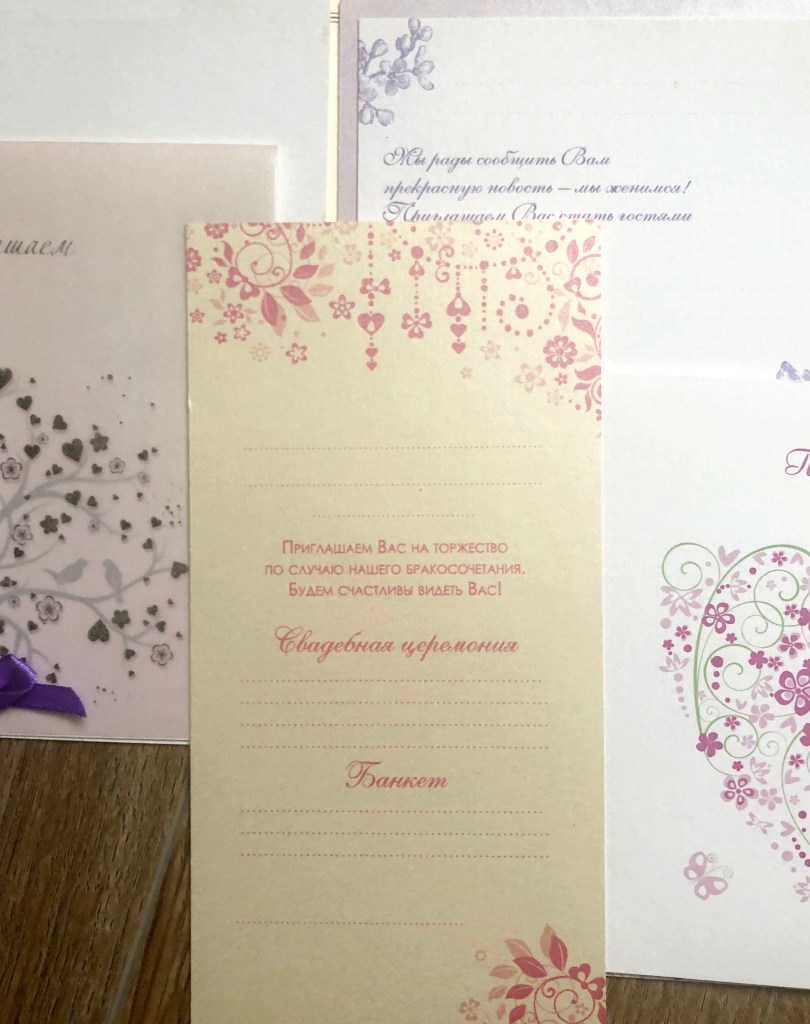
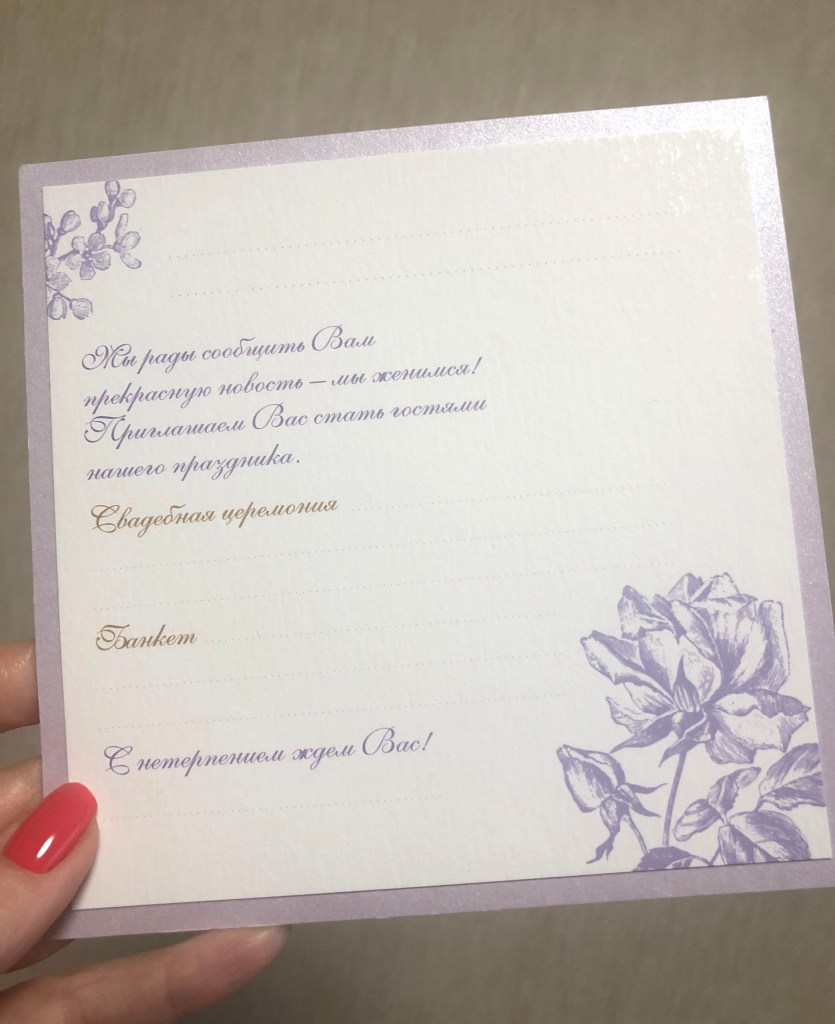
Here placed printed examples of wedding invitations I had in my portfolio. I keep them as a representation of how design paper can work together, what type of layers the designer can use. I showed that Pergamenta paper and thick cardboard paperwork quite well together. Some papers can be used only like a background or bottom layer for the card, like this dark blue sample, or some paper is sufficient enough, that to have a minimalistic design on it with only one or two colours.


Printed examples
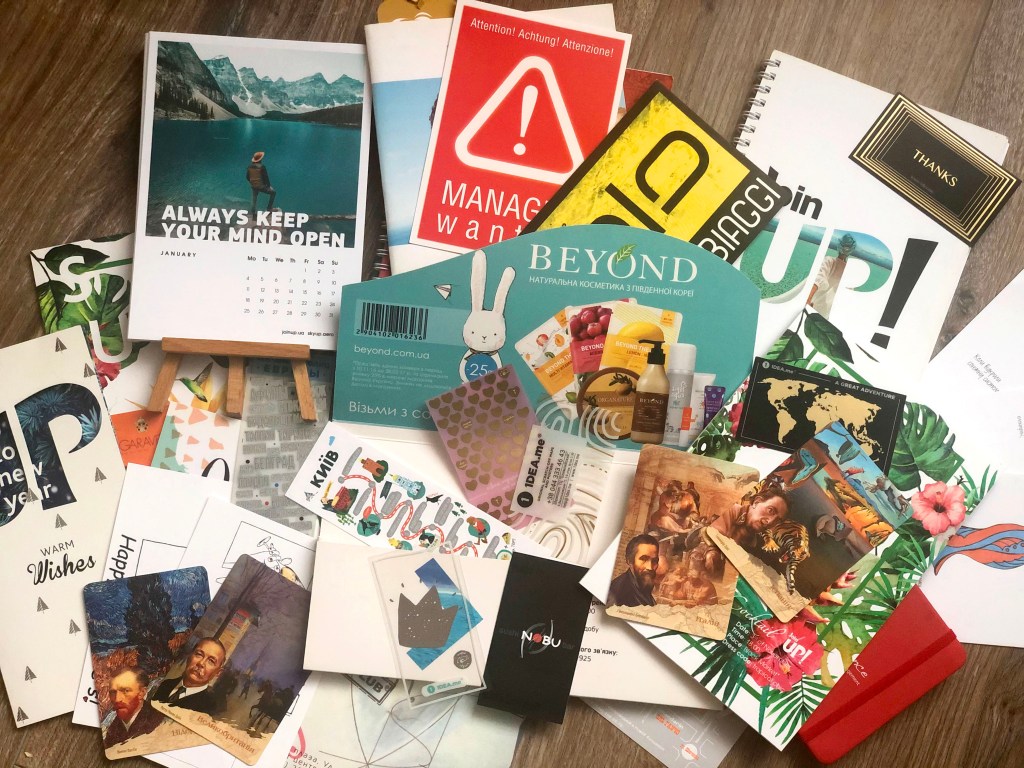
These are printed examples that I’ve been collecting for a while. It’s a small collection of different postcards, invitations, business cards, calendars and notebooks. This task gave me inspiration to collect even more works, as some of them could be out of time and I can relate to them in my future designs.
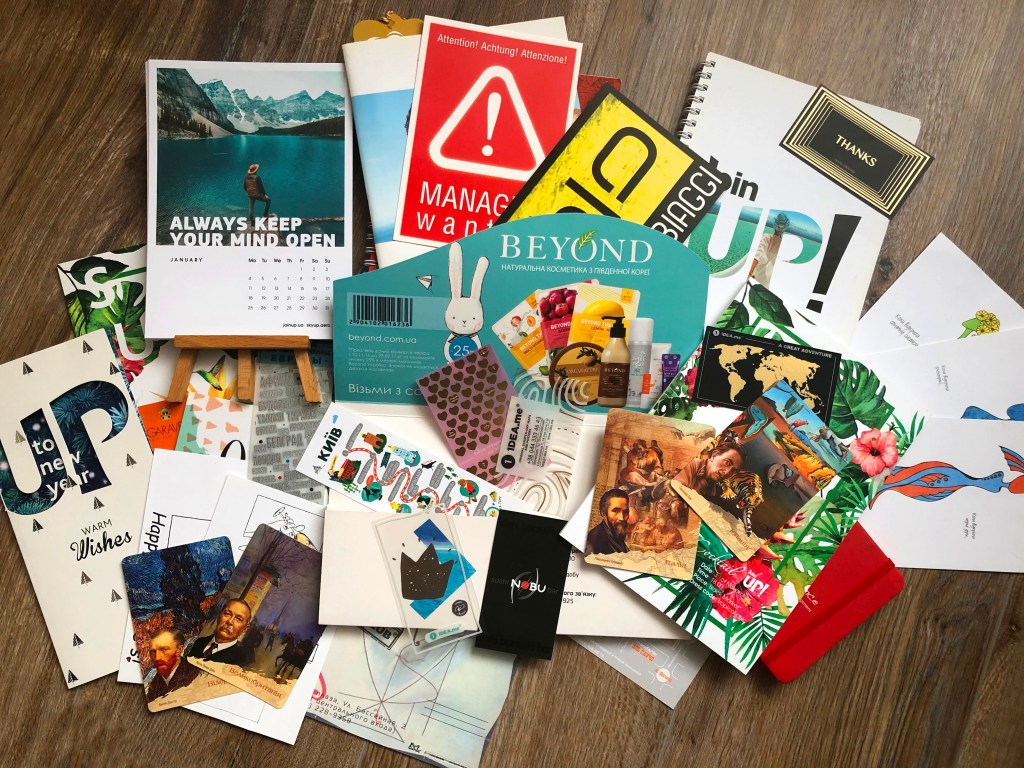
Hybrid printing from typography
Additional examples of typeof printing, when lacquer elements were used on the top of brochure paper.


One thought on “Research Task: Paper and Bookbinding”