Your choice

This final assignment is an opportunity to consolidate the understanding you’ve gained so far, reflect on the work you’ve enjoyed and your achievements. It allows you to create certain parts of the brief yourself so that you have the maximum capacity to show off your interests and talents. Choose one of the briefs below. Then work through the design process, researching and visualising a range of ideas before critiquing your work and choosing your selected design to present as print ready artwork.

Brief 1: Book design
Penguin Books have asked you to design a new house style for a collection of books on design for children and young people. They are starting with three titles: Colour, Typography and Photographs. You will need to produce three covers (front, back and spine). The designs will need to be recognised by readers as a series and at the same time be appreciated on their individual merits. The book dimensions are 190mm wide by 225mm high. In addition they have asked you to produce the one on typography called A is for… It doesn’t have to be a conventional text book. Create an introductory chapter of at least 4 pages that is visually interesting and will entice young people into wanting to buy the book and read more about the fascinating world of typography.

Brief 2: Promotional design
A youth theatre club is performing a production of Abigail’s Party. Mike Leigh’s tale of suburban taste is set in the 1970s and explores middle class aspirations and preoccupations. You will need to acquaint yourself with the play if you don’t know it already, as they are particularly keen for it to have a 70s feel. The play will be touring local theatres for a month, performing every Friday night and Saturday matinee. Produce a poster (A3 portrait), a flyer (A5 landscape, double-sided) and newspaper advert (A6) to promote this event. In addition they would like their A5 programme cover to continue the design theme. For the purposes of this brief you need to invent dates, times, places, names and any other information you think will be required. Use Lorum Ipsum text for areas of body text.

Brief 3: Charity work
The Gerald Anthony Furniture Store is a charity that helps poor and displaced people furnish their homes with the basics. It has been running for over 100 years, staffed mostly by volunteers. They would like you to design a generic business card, letterhead, and paper mock up for the home page of their website. In addition they want you to design their 8 page annual review.
The review will consist of:
• front cover
• inside front with a bit of blurb about their history (90 words)
• the chair’s report (365 words)
• the co-ordinator’s report (300 words)
• the treasurer’s report ((260 words)
• a graph or design to show the breakdown of income and expenditure
Income Expenditure
– local authority grant £48,927 – direct charitable expenditure £113,192
– grants from trusts £66,750 – fundraising costs £6,655
– donations £14,655 – management and administration £10,924
– other £4,032
• a page giving the names of the main grant funders (20 in total with each name about three words long) and a list of the management committee: chair, treasurer, co-ordinator secretary and five
other members,
• the back cover with an advertisement to encourage people to volunteer. Maybe the biggest challenge of this brief is to solve how to break up and lay out the text in the 8 page document. Photographs will need particular care as some people who benefit
from the charity may not want to be identified.

OCA Graphic Design Core Concepts

Abigail’s Party Researches

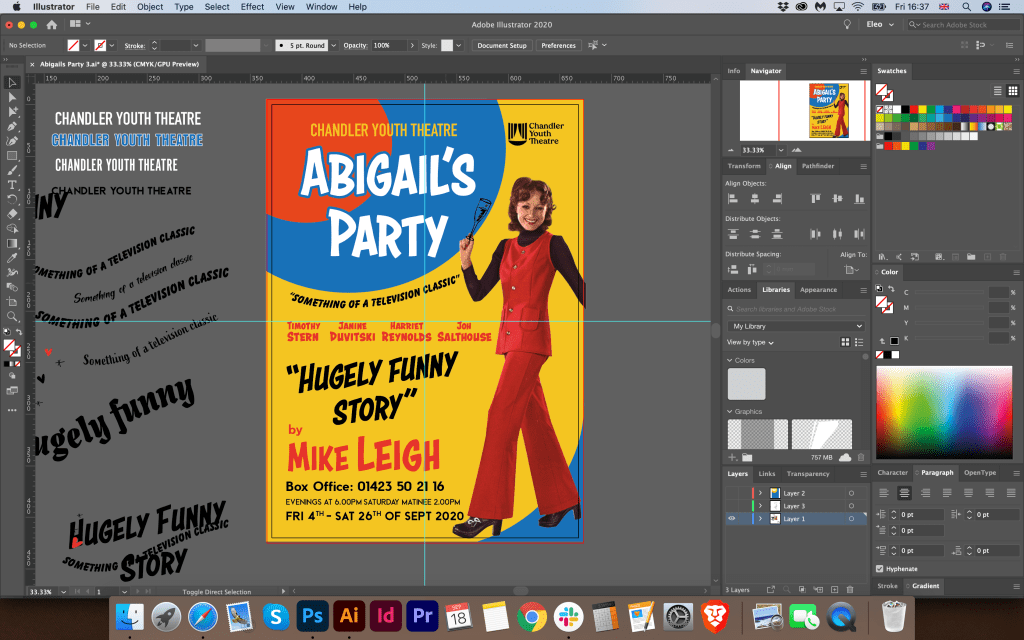
For the final fifth assignment I had a choice to decide which one of the brief is the most attractive to me. I would probably say that I went to the choice of the theatrical poster “Abigail’s Party” with no doubts. The reason why I’ve deiced to design “Abigail’s Party” poster because it has a feel of 70’s that my future design potentially could bring. It has some original themes, colours, and shapes, that I have not discovered before. My original thoughts were that I’ve done book cover design earlier, where I produced some designs for the Michael Bulgakov books, the branding for the charity organisation “Chance” was done recently as well, but in the case of “Abigail’s Party” I had an opportunity to create my own vision of the 70’s theme, something new to try. That style, starting from the colour shades of orange to brown, with some additional colours of pastel green and blue, the feel of theatre, acting and performance, the art-deco style in some design elements, was all that would catch my attention to produce designs straight away. The challenge that I had was based on the fact that I’ve never heard of those BBC series, or have never seen that performance itself, so first of all I need to familiarise myself with the play online.

Abigail’s Party is a play for stage and television, devised and directed in 1977 by Mike Leigh. It is a suburban situation comedy of manners and a satire on the aspirations and tastes of the new middle class that emerged in Britain in the 1970s.

The story itself sounds like as satire, with aspirations and tastes of the emerged middle class families from 1970s.

I had some researches online, and I found that the story about woman calls Beverly Moss who invited her new neighbours, Angela and Tony, who moved into the road just two weeks ago, over for drinks. She has also invited her neighbour Sue, divorced for three years. Sue’s fifteen-year-old daughter Abigail was holding a party at home. The party starts off in a stiff, insensitive, British middle-class way gather. The tension escalates when Beverly and Laurence start sniping at each other, and some issues in their family could be seen. As Beverly serves more drinks and the alcohol takes effect, Beverly flirts more and more overtly with Tony, as Laurence sits impotently by. During the all performance could be see Sue’s anxiety over her daughter’s party. After a tirade about the artwork Wings of Love, Laurence collapses a fatal heart attack.

Source: https://en.wikipedia.org/wiki/Abigail%27s_Party

Pinterest Board

After my primary researches on the scenes, I proceed to the usual Pinterest Mood board creation. I’ve gathered all photos from the play, illustrations for the similar subject posters, also some geometrical parts from the ’70s. It helped me to pick up some inspiration and feel of the art from that decade. I really loved those warm colours that designs could bring, the dominating colour was orange, yellow and brown, with dynamic decorative fonts, in the style of disco. I tried to find some new ideas from the 1970s in general, where I found lots of psychedelic creative posters with unusual compositions and wonky fonts placed in circle composition or in angle. I’ve learnt lots of patterns that I could apply to my designs, and some cartoon style objects.
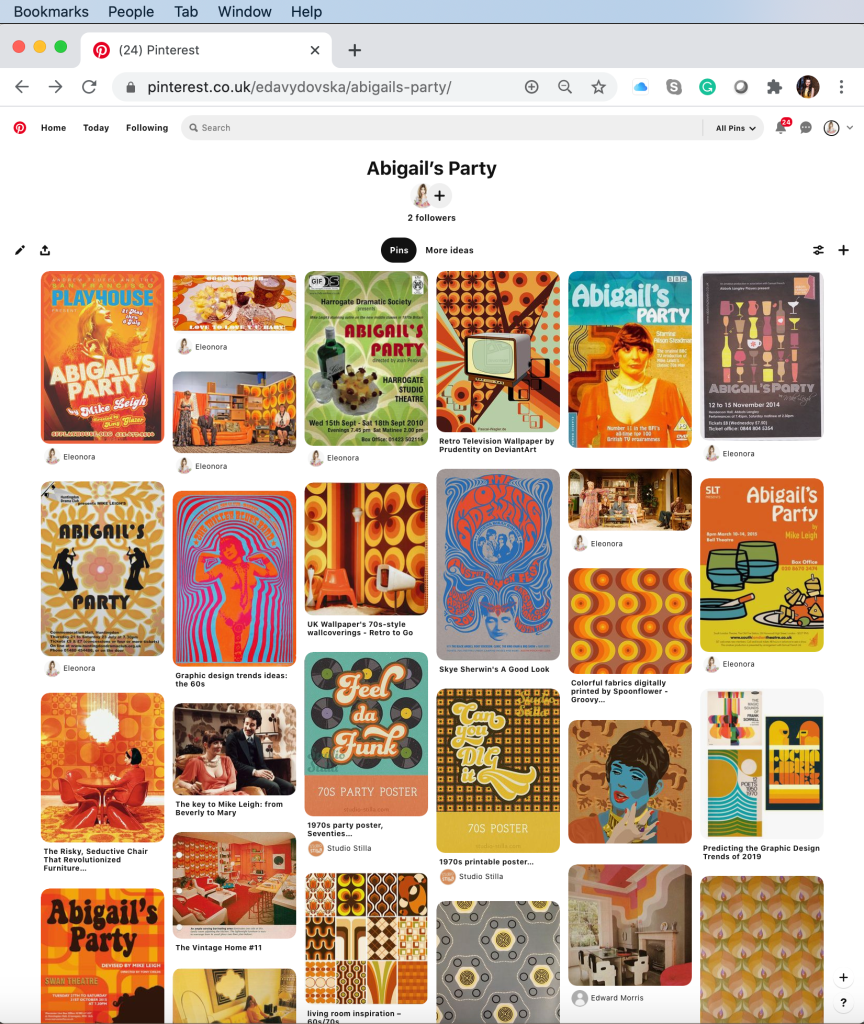
Examples for theatre poster

Further down in my researches I wanted to analyse closely how artists approached similar brief. As far as I could see there were numerous representations of original Mike Leigh’s version from 1977, and the performance was covered by different theatres on modern times.

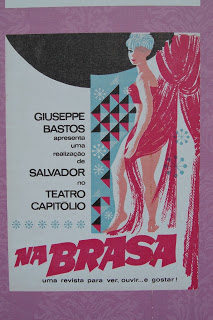
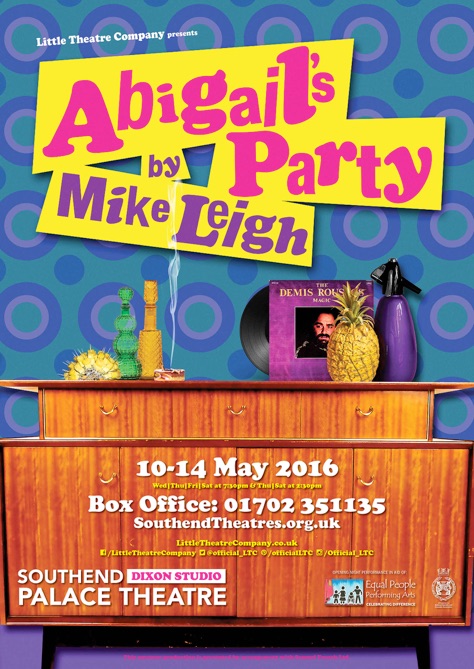
I could see how different designs were, and the way they stand out individually. For example, the feel that Southend Theatre brought was a visualisation of house interior from the ’70s, with some round shapes wallpapers and dynamic different angle font. In this poster, I really loved the brightness of the colours, and their contrast, I think it had a similar approach as magazine’s about gossips would do, to attract potential customer attention. Which was definitely achieved in this poster.

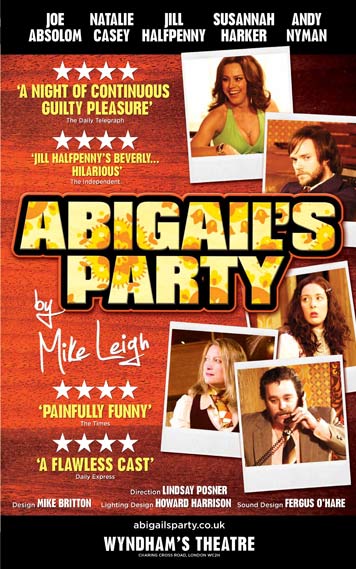
Another design with polaroid photos had the feel of film advertising, it had a more modern feel, the photos themselves looked quite modern, maybe because of the layout that they were placed, and font’s choice was quite modern as well, narrow and san-serif. Advantage of that poster was the clarity of reading the information.
Poster with vector illustration only is one of my favourites in this collection. I was surprised how those minimalistic elements, with an object in black outline, could work for the theatre poster from South London. Space was divided into two parts, and the elements of the still life are quite balanced in here. The name of the play probably as too small in my preference, maybe that composition itself looks too static, but I think that was the idea of design itself. Overall this poster works well from my point of view.

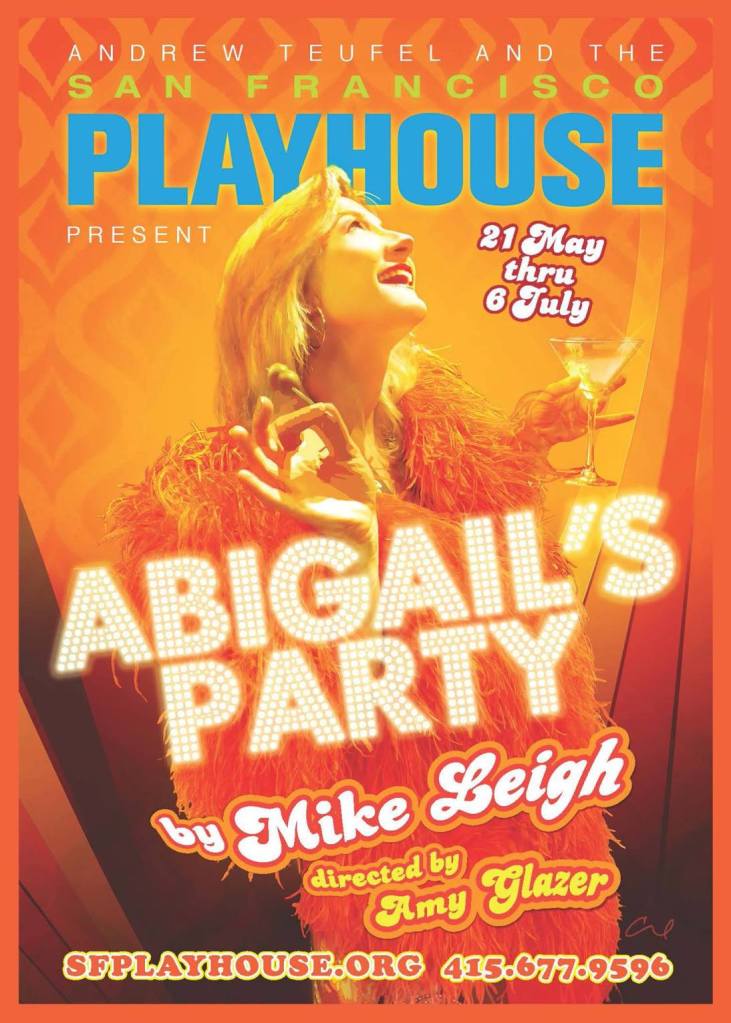
The fourth poster probably was made in the most professional way from my point of view. It has an original font for the name of the play, with some shiny light around it, it has needed background with traditional ‘70s pattern, the main character Beverly is cheerful and enthusiastic. But the main point of that poster is that it has that melting combination of the modern poster with the ‘70s feel, as we don’t want to go to old-fashioned, but we still want to bring the feel of the performance.

1970’s Inspiration

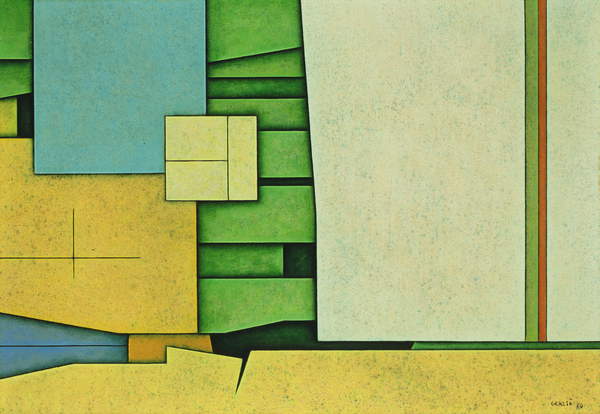
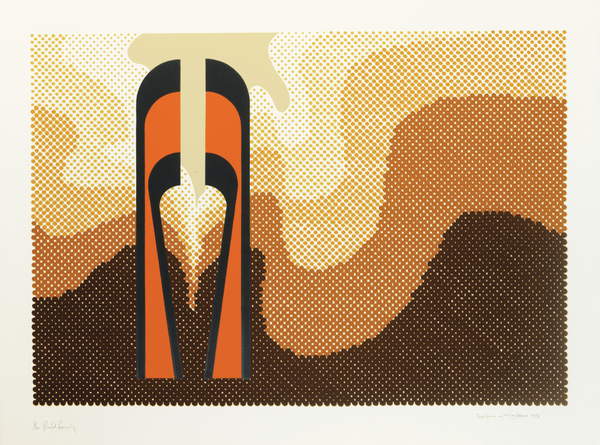
In additional to my researches about theatrical poster style I went to the Bridgman images for some famous art to catch up with original style of artists from the ’70s. I’ve noticed that mainly where used some of the warm brown shades with some original shapes. That image below was created by British artist of his generation Gerald Laing (1936-2011). His paintings of film stars, dragsters, and other icons of popular culture place him as a major figure in both the British and American Pop art movements.
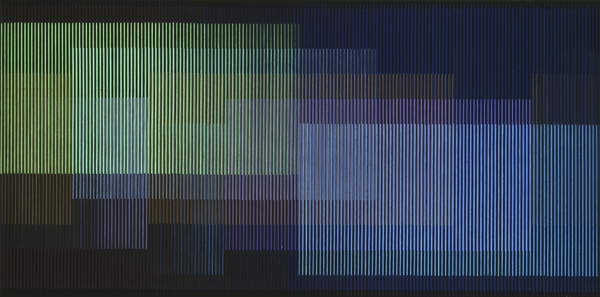
These are another interesting example’s from innovative Venezuela’s artists Carlos Cruz-Diez and Blue-Green by Mexican artist Gunther Gerzso. Carlos Cruz-Diez was an artist and member of the Op Art movement whose work focuses on the kinetic energy of color. I thought they are another examples of art that stands out from 20’s century, where could be seen that artists were experimenting with colours and shapes.
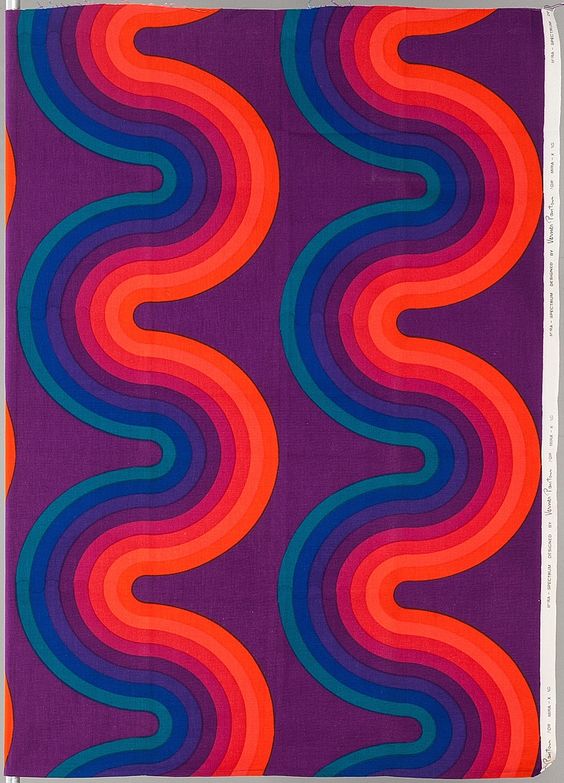
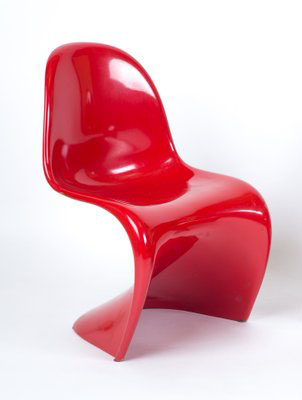
Another example one most influential 20th-century furniture and interior designers Verner Panton. During his career, he created innovative and futuristic designs in a variety of materials, especially plastics, and in vibrant and exotic colours. I love his experiment with vibrant colours and unusual shapes.
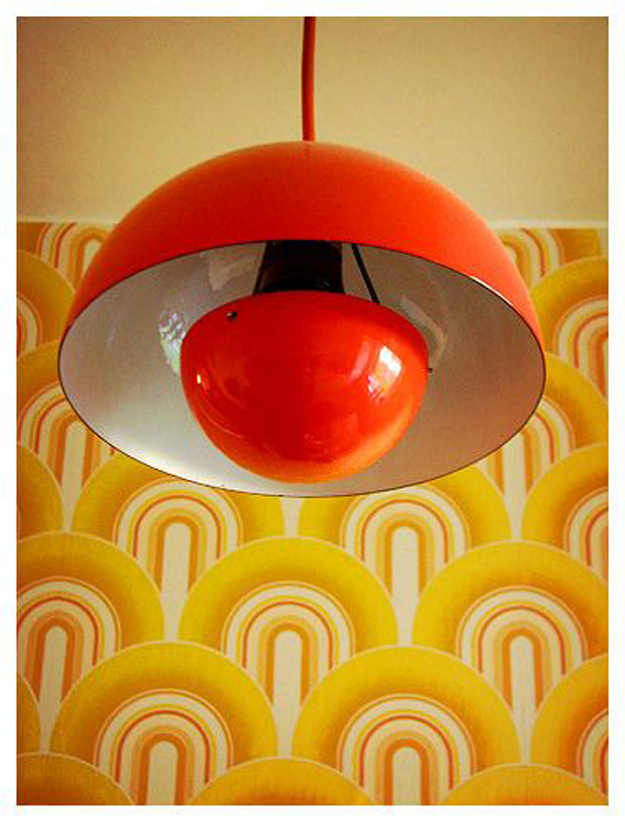
These are more recognisable shapes and colours from ’70, those colours and shapes were used mainly in the people’s interiors, like on walls, decorative elements, or sometime even on clothes.
After my researches on the plot of performance, the characters, some examples of artwork that was used by other theatres, and influencers from 1970’s I felt that I’m ready to go to the next stage, creating mind map and some conceptual ideas for my poster.

Analysing the brief

Then I started analysing the brief. Here I followed the standard path, I needed to write out the keywords and tasks for this exercise. In total, I need to prepare materials such as:

  • Poster A3 (portrait)
  • A flyer A5 (landscape, double-sided)
  • Newspaper advert A6 to promote this event
  • In addition, the A5 program covers to continue the design theme.

Another important part of the brief was to understand the characters. I felt I needed to get inspiration from the performance, to get the feel and vibes that this play had. I wrote down all characters into my brief, and overall I had a visual portrait for each person. I’m glad I watched the play, as otherwise, I wouldn’t get the right impression from this performance. Logically, the word ‘Party’ would lead you to some kind of fun, relaxed comedy, with some conversations that people would have while they serve drinks and chat, but originally that play had some tension, some hidden personal issues could be seen in the characters. The atmosphere was quite awkward, and other features that could be seen from the performance. I’ve noticed that each actor brought there originality and personality, they were completely different kind of people gathered together. For example, Beverly, chatty, nosy, she used to get what she wants, quite insensitive, she enjoys herself and loves being in the centre of attention. While her neighbour Sue was not feeling comfortable in that environment, felt anxious over her daughter’s party, she can’t say no to something, even when she doesn’t want to do it. Angela is childlike, not confident, listens to her husband’s opinion, who has a sort of influence on her. Angela’s husband Tony is irritable, moody, annoyed with her wife, polite to other people, but quite aggressive to Angela. Laurence, Beverly’s husband have completely different taste on music, art with his wife, which is quite common in the families, but they tend to argue over it, and Laurence lost his temper about it, which affected his heart at the end of the play.

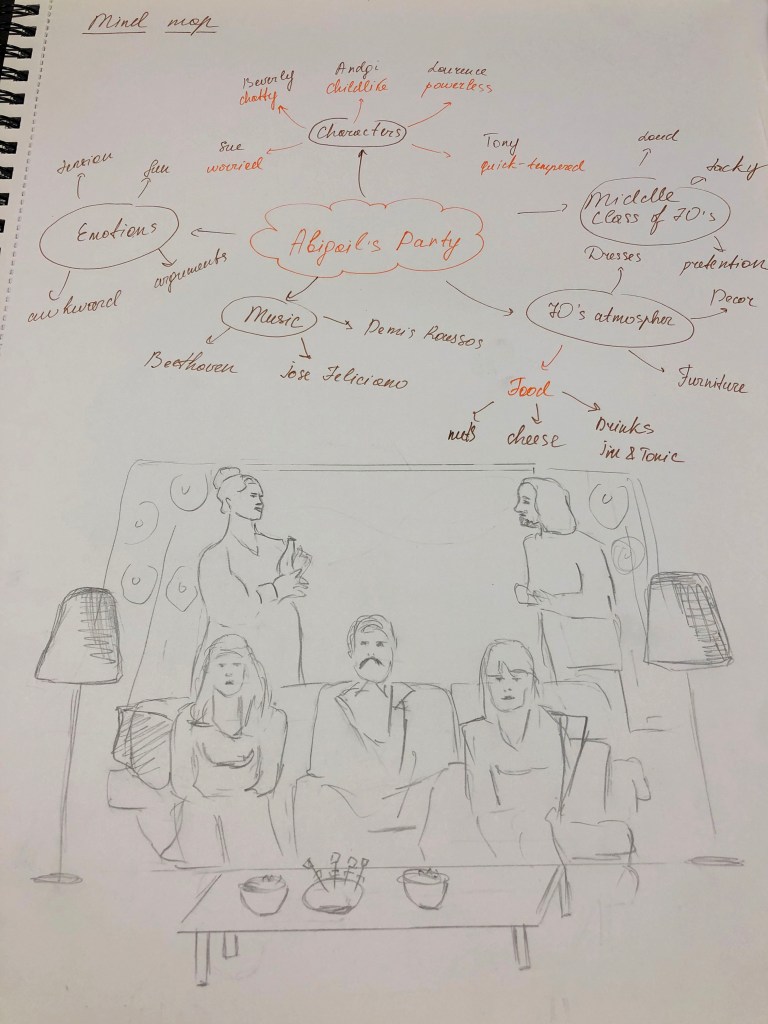
I have created few mind maps, one helped me to understand connections in the play, and some key factors in it, another one was main Mind Map with some ideas I could use in my sketches and future designs. I was thinking about what would I like to picture, wether it was to show some emotion in that poster, how many characters I want to use in design. I asked myself if I want to use some interior elements in my poster? What colours is this poster going to be? In the next part, with producing some sketches I was going to answer this questions.

Sketches

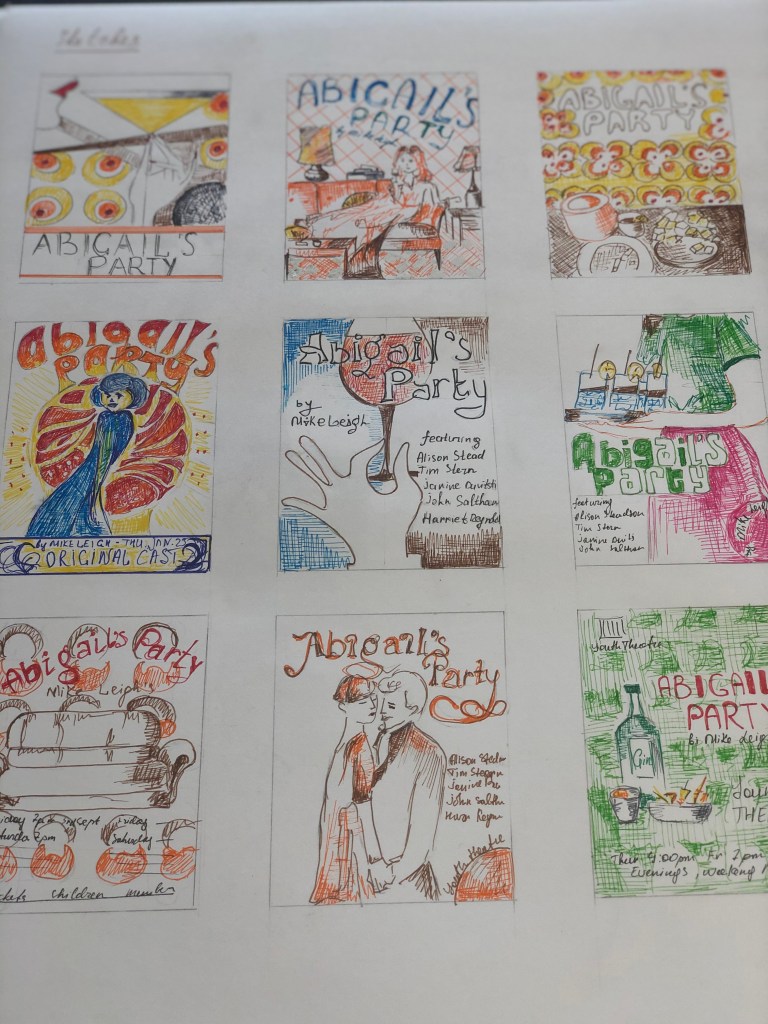
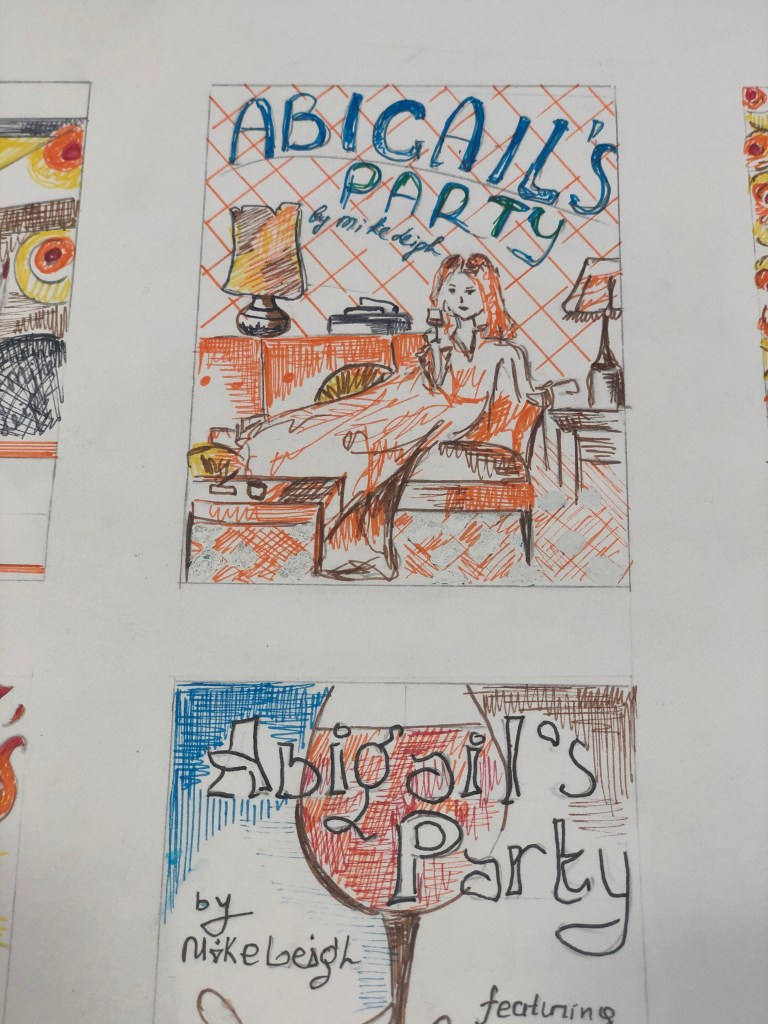
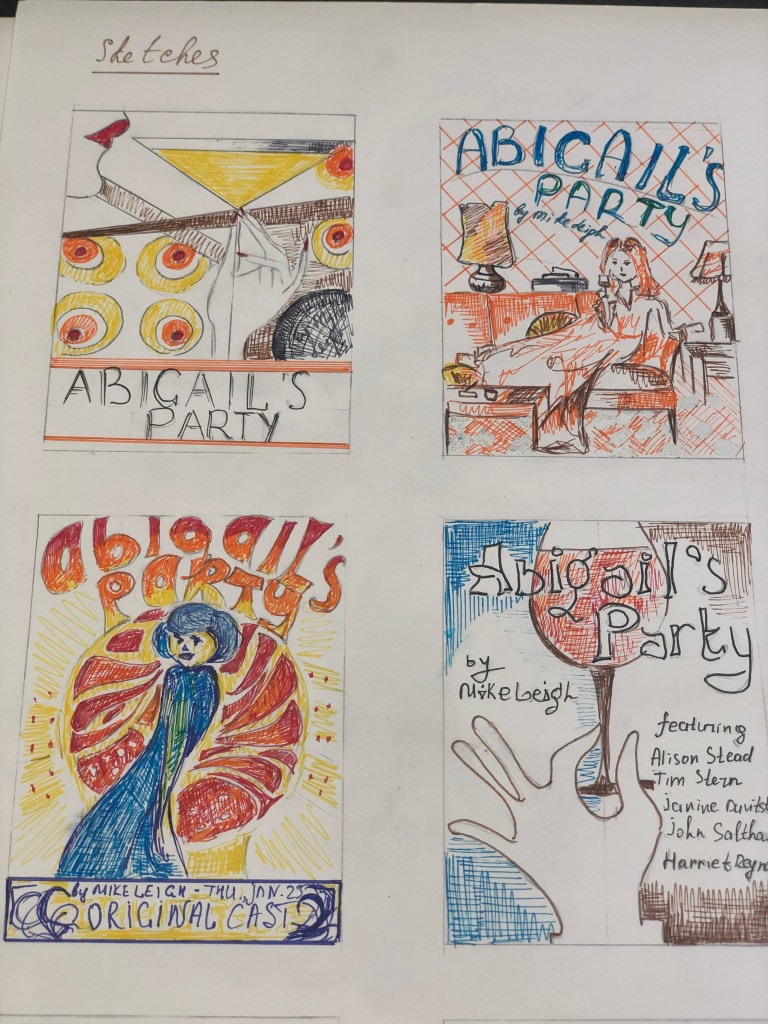
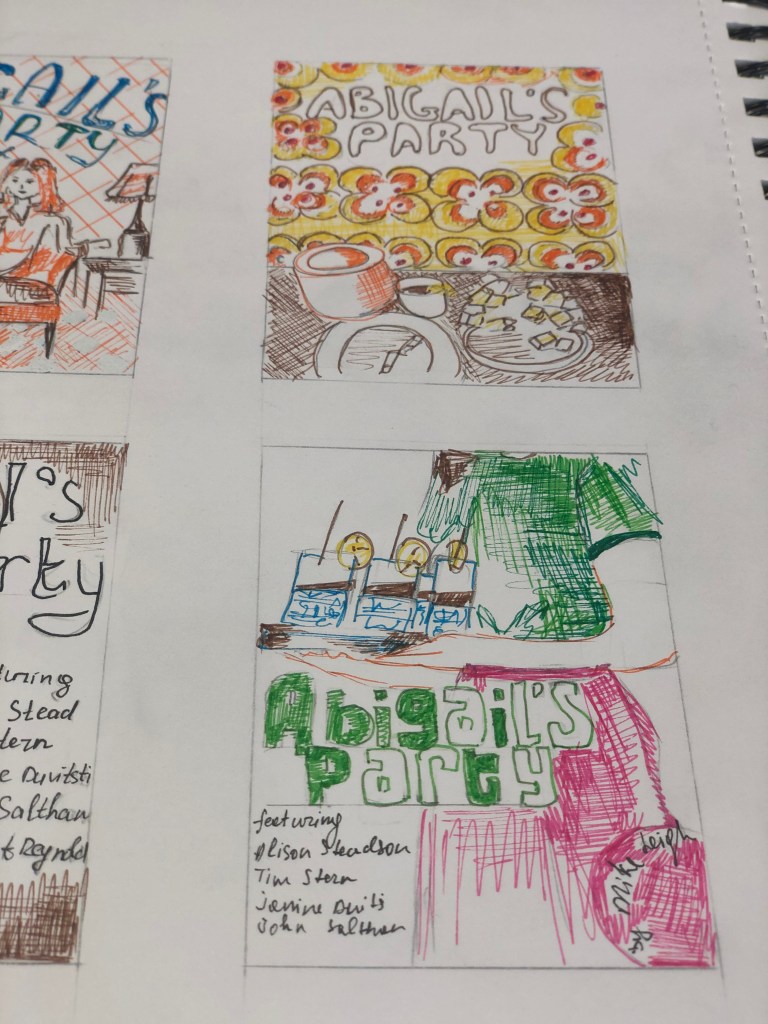
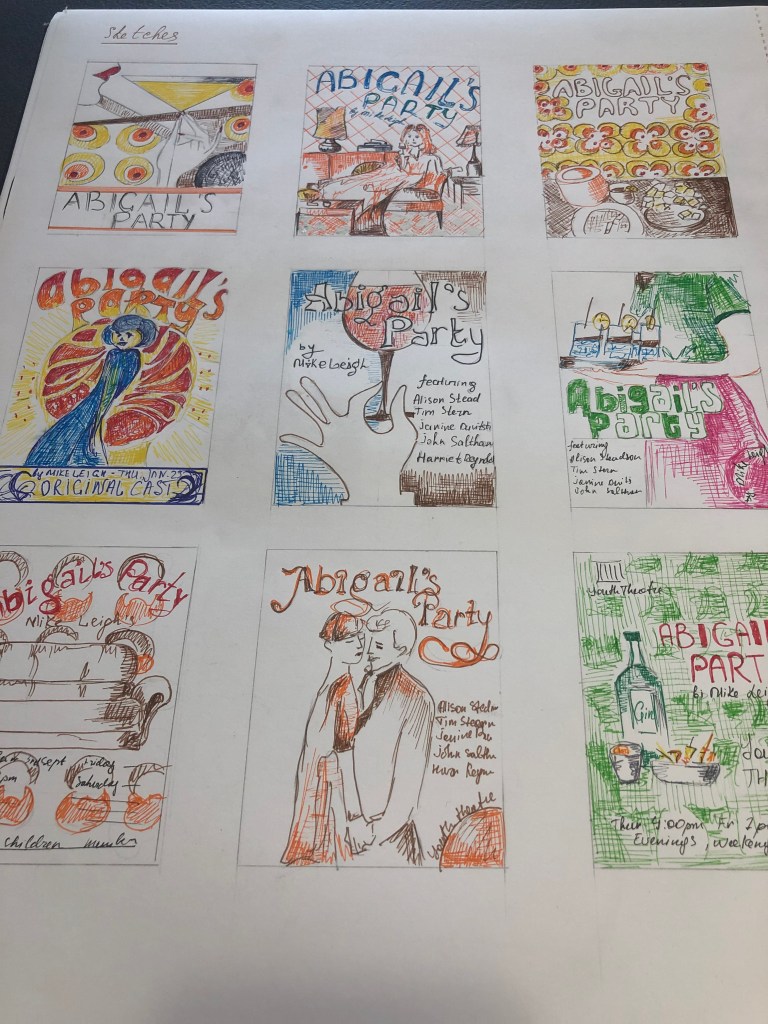
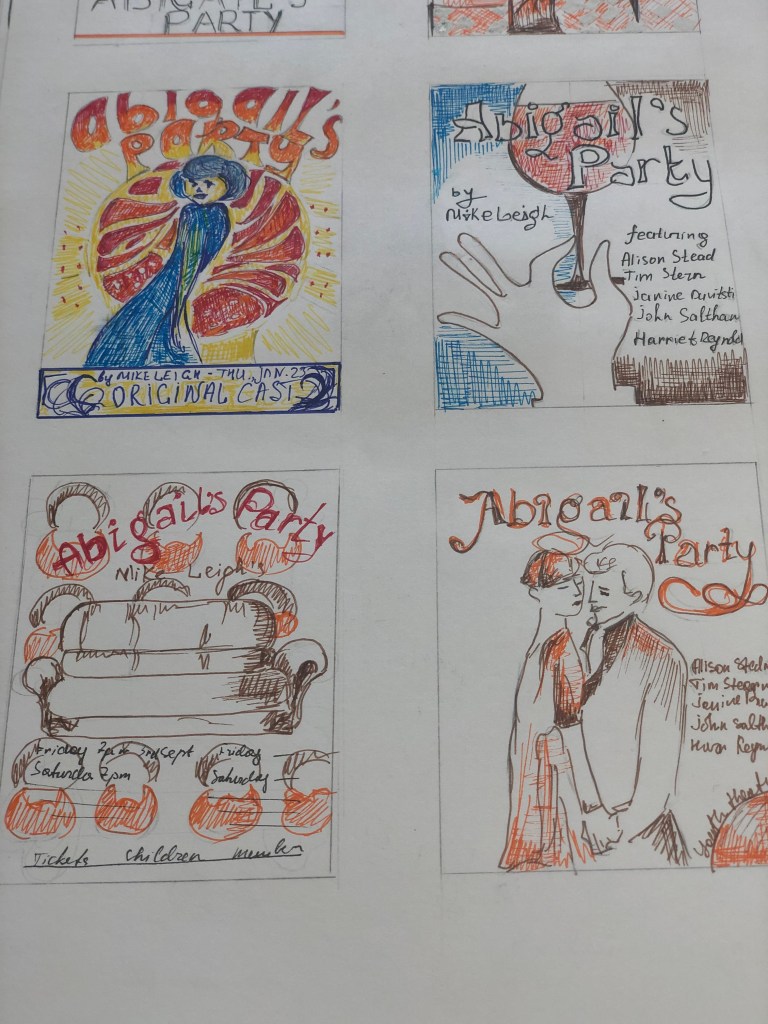
The next stage was to sketch my designs. I understood that they would help me to finally decide on the style of the future layout. I sketched some of my layouts using coloured pens. This technique helps me bring together some of the colour schemes in one layout, like yellow, orange combined with green or blue. I made the first sketch in art deco style, with straight lines and design elements from the ’70s, based on the image of an elegant girl with a glass of Martini. The composition itself is quite interesting, but it seemed to me that it does not reflect the spirit that was required in a brief. My next sketch is based on the image of Beverly sitting proudly on the couch, a full-colour image with a bold blue font for the title. But here I had a challenge if I could find a similar image, with the appropriate style. On the next layout, I depicted a table with appetizers and snacks, because so many details were given in the theatrical production to these appetizers, cheese, nuts, olives and gin and tonic. I also had an idea to portray a merry Beverly against a background of colourful elements in the style of the 70s, but perhaps here I would have needed to draw all parts of the design by hand since the idea was to display the design in vector. Also in my drawings, there was an idea to display a hand with a glass of wine, or an event guest with drinks. Also in this production, all the events took place around the brown leather sofa, which I thought to use in this layout. And lastly, a design with a dancing couple, as this production culminates in flirtation and sympathy between Beverly and Tony. I was not sure in what angle I would find the photograph I needed, but there was such an idea to display two people sitting in front of each other or dancing. I noticed that basically most of the posters from the internet showed only one girl taking in, I thought, what if I display a couple?
Then I was challenged to find the required photo of the couple. I recently discovered Alamy’s photo resource where you can find retro images. My attention was drawn to the photos of parties from the ’70s, where the girls were dressed in bright outfits, and the men were dressed in business suits and ties. I chose this photo for the future design, I liked the atmosphere in this poster, it is a little playful for this performance, but I planned to play this photo in colour to add more 70s style.
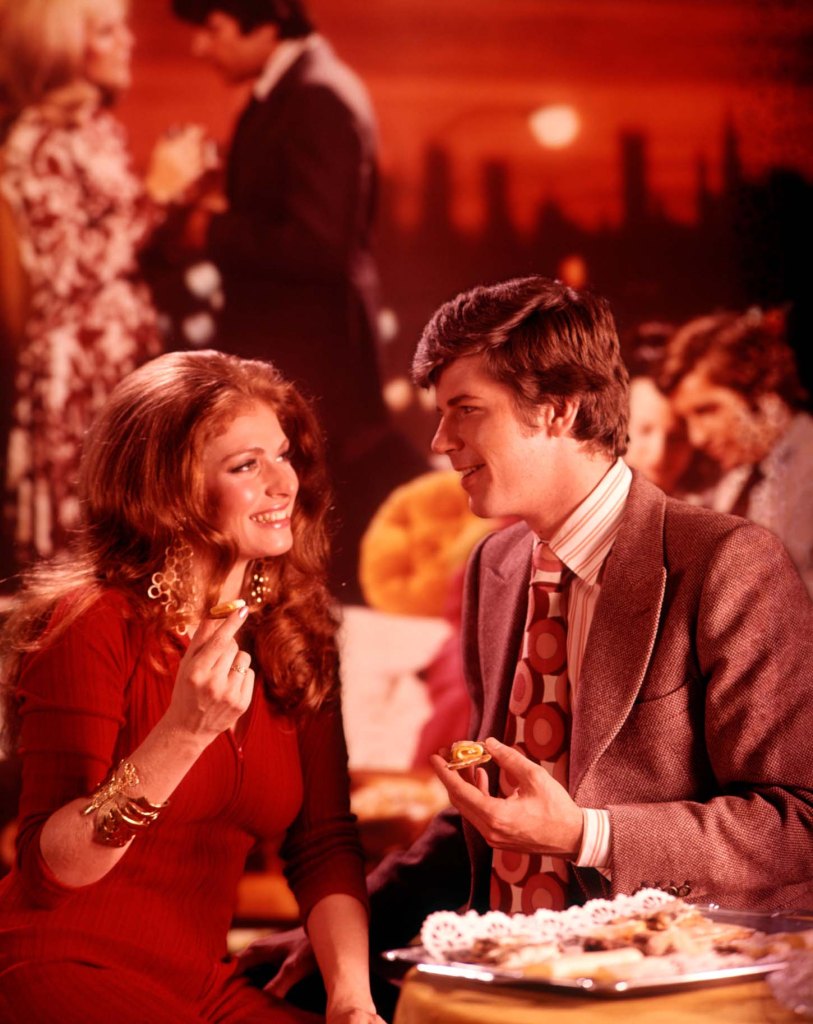
Photo resource: https://bit.ly/2E6MhWh

Steps of Design

Then I was challenged to find the required photo of the couple. I recently discovered Alamy’s photo resource where you can find retro images. My attention was drawn to the photos of parties from the 70s, where the girls were dressed in bright outfits, and the men were dressed in business suits and ties. I chose this photo for the future design, I liked the atmosphere in this poster, it is a little playful for this performance, but I planned to play this photo in colour to add more 70s style.

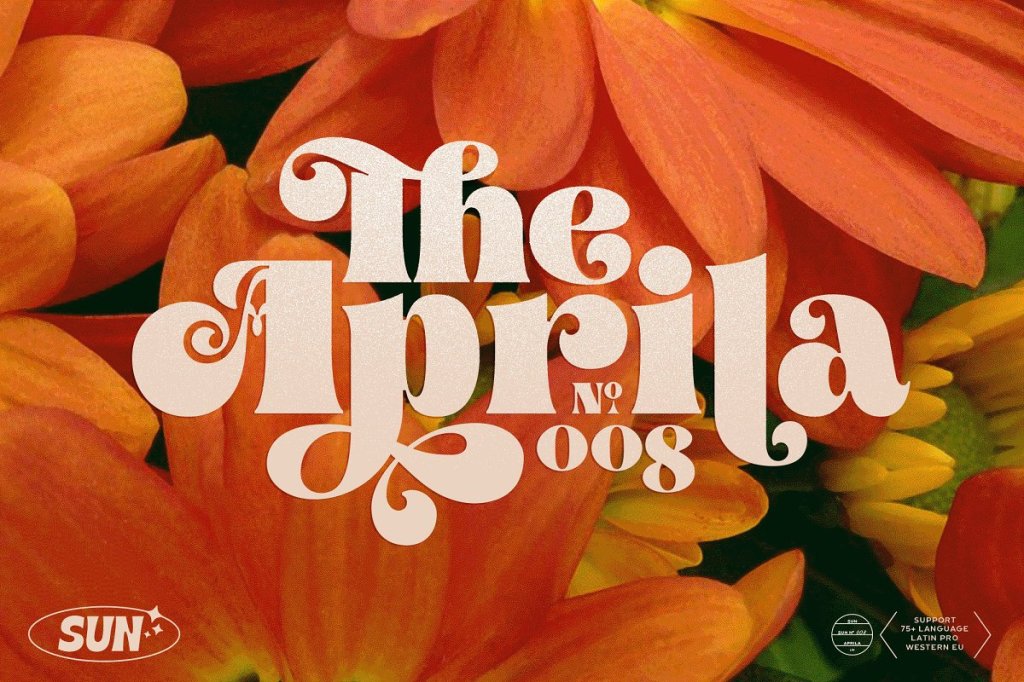
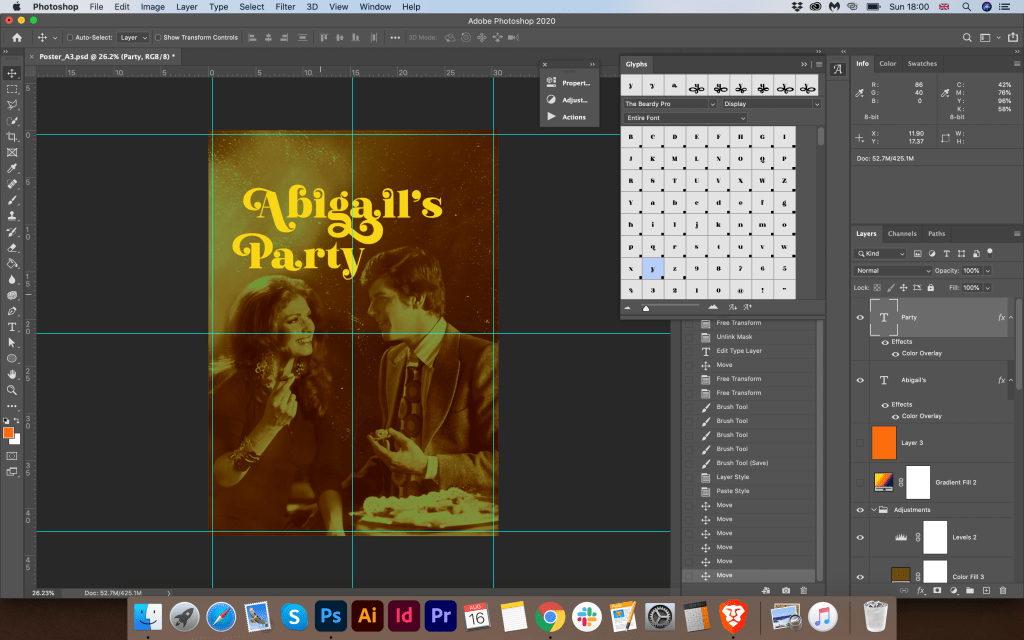
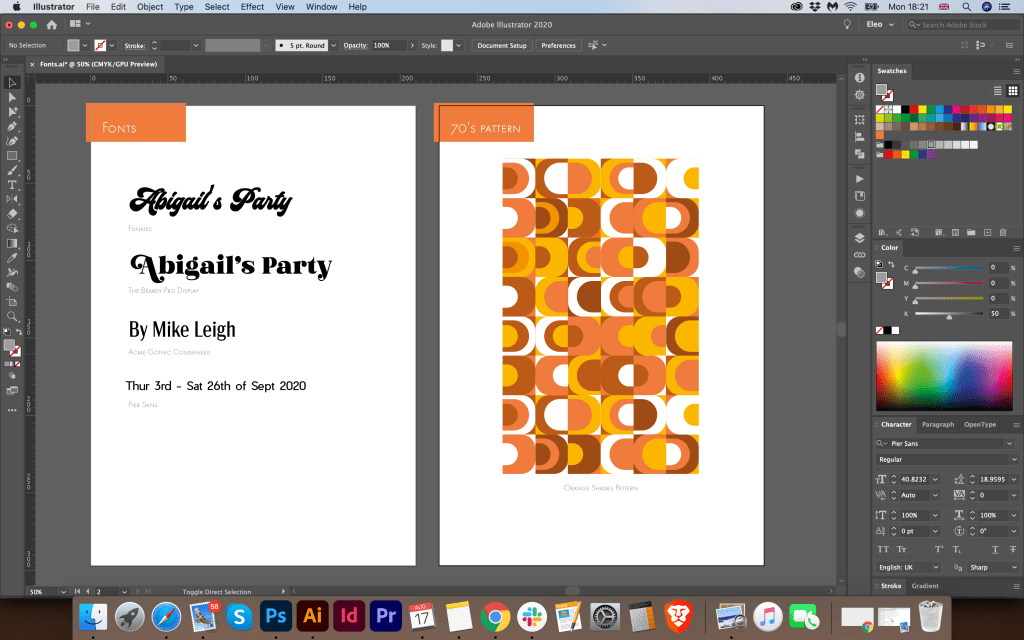
Before starting the poster design, I sketched the fonts that could be used in my design. I also drew a 70s style vector texture that could be used as a background for a poster. In my design, I wanted to focus on the font. I wanted to display such a beautiful ornate decorative font with bright capital letters in a yellow-red hue. I found such interesting fonts that I could not pass by. They seemed to be perfect for this poster. Their advantage is that, in addition to the standard spelling, there are glyphs in their properties, and there I could choose the required format for my poster. The font resource is Creative Market. Link to The Beardy Font:

https://creativemarket.com/Aiyari/2910174-The-Beardy
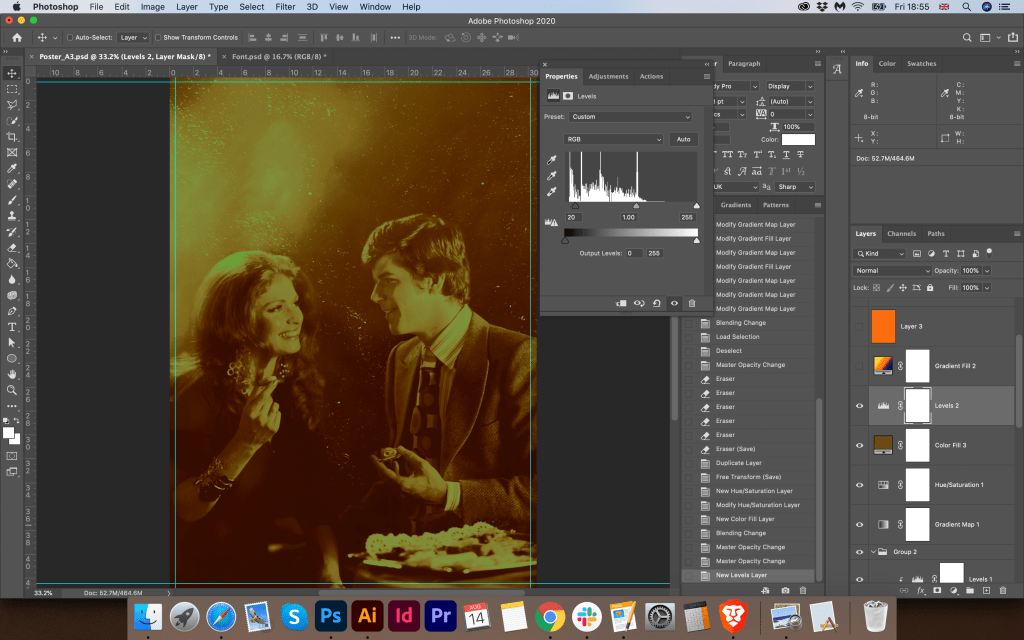
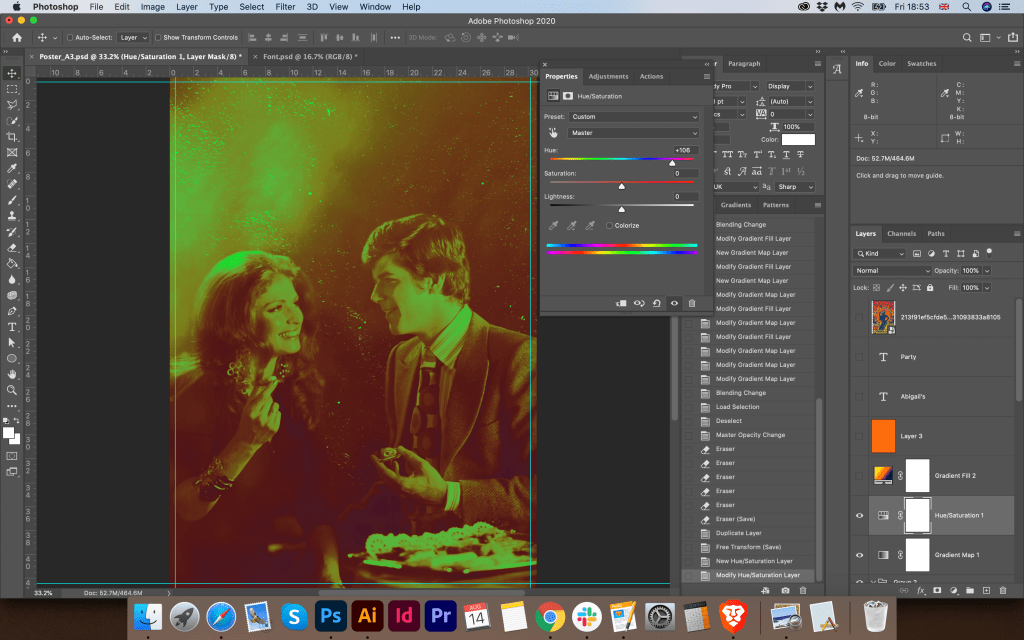
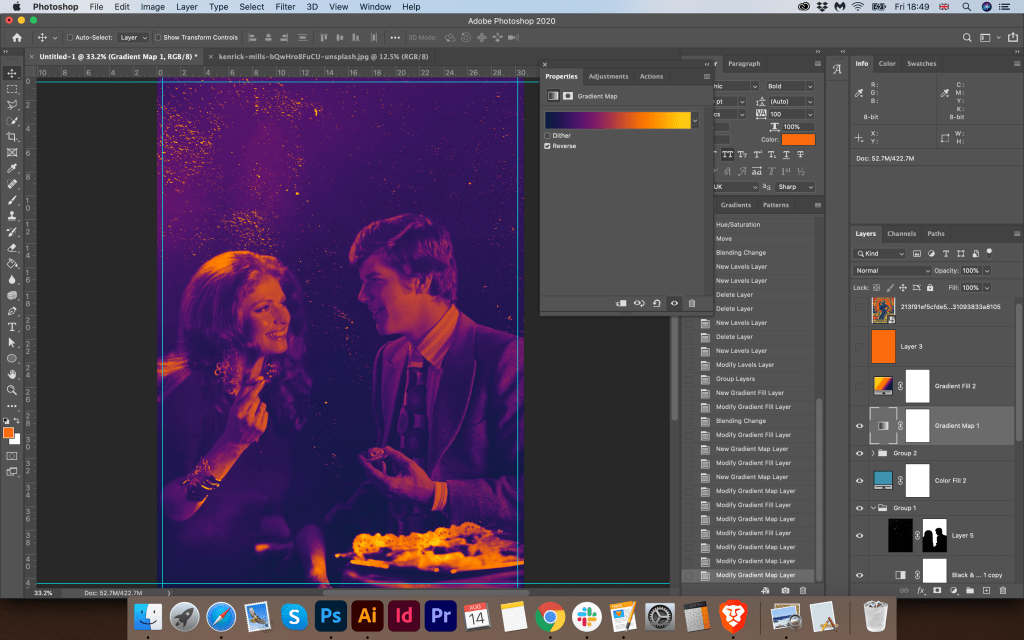
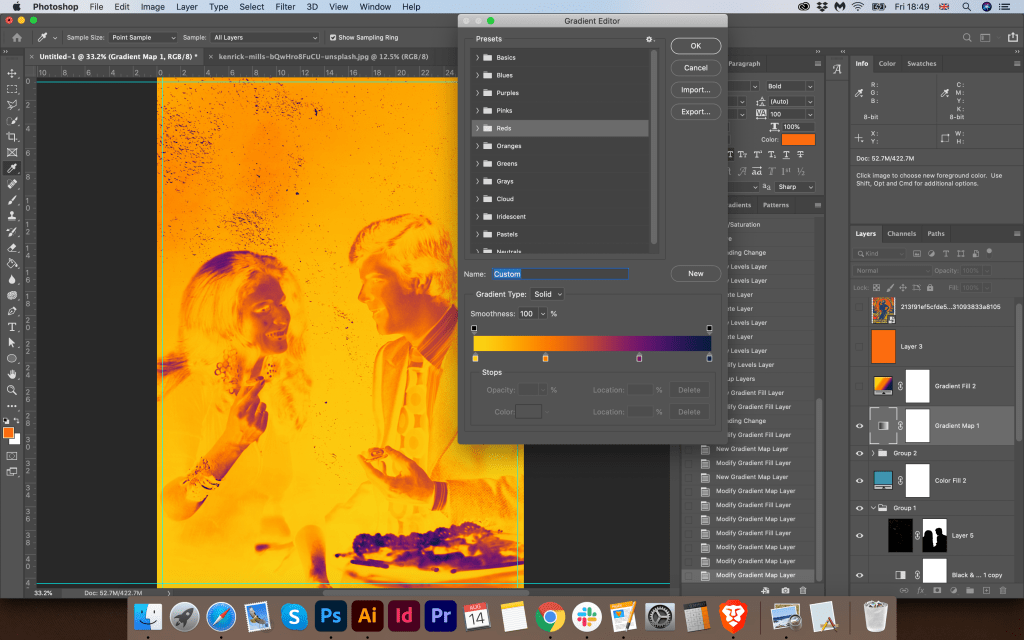
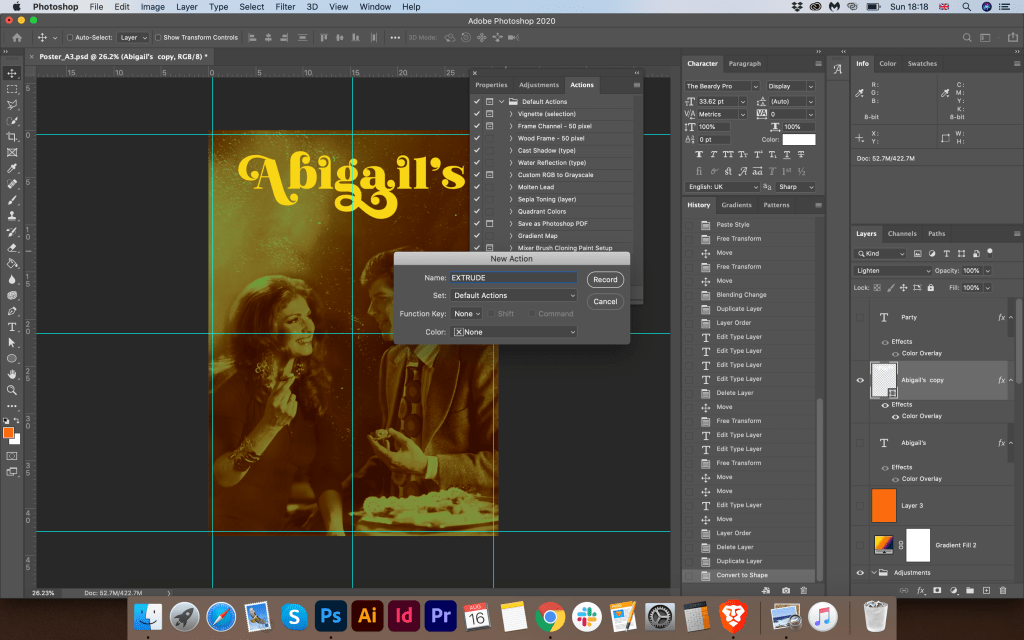
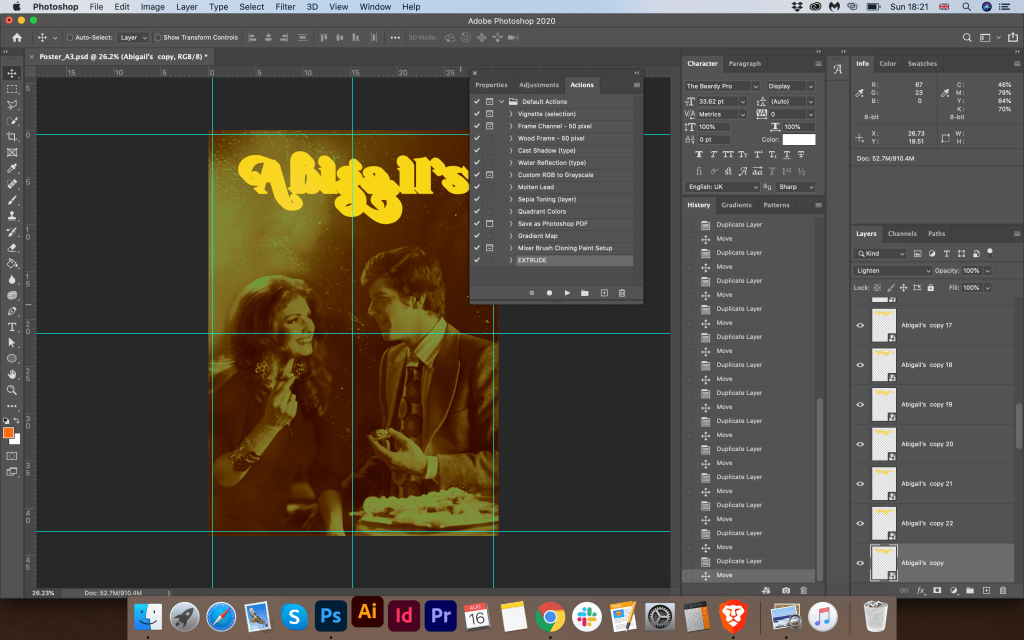
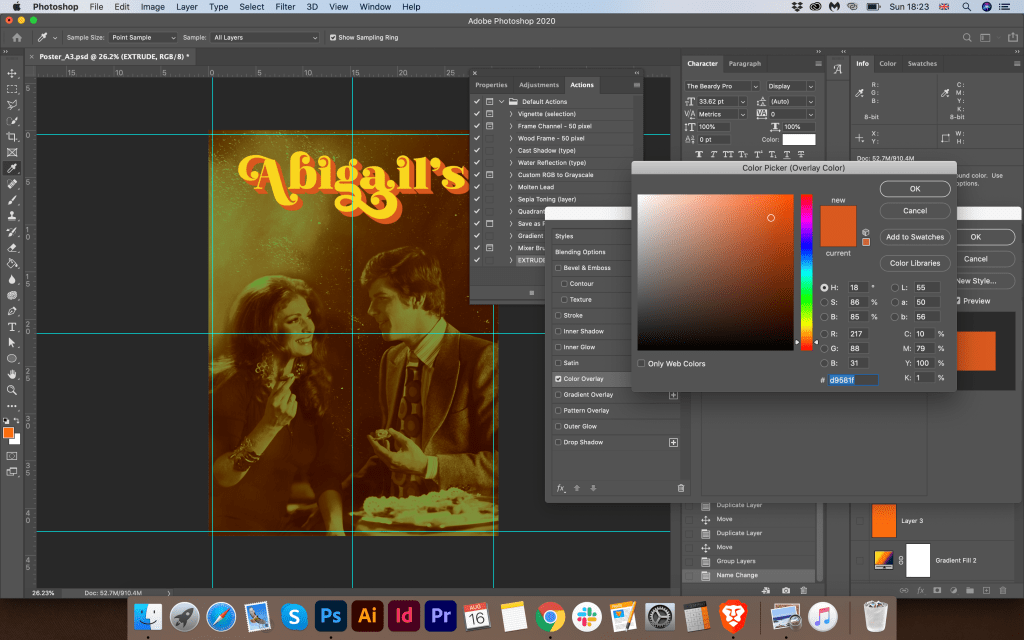
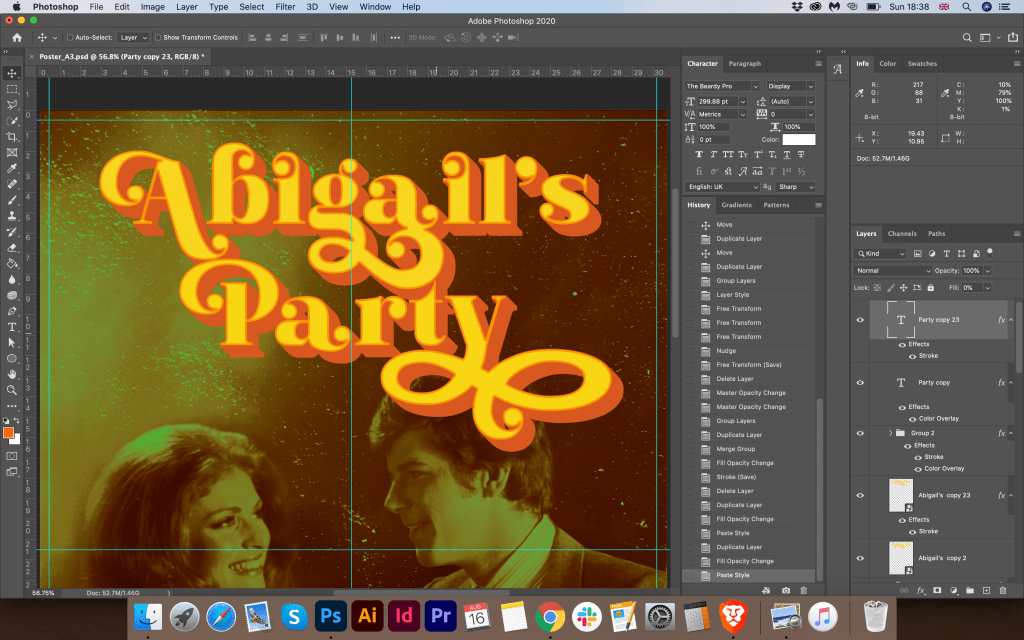
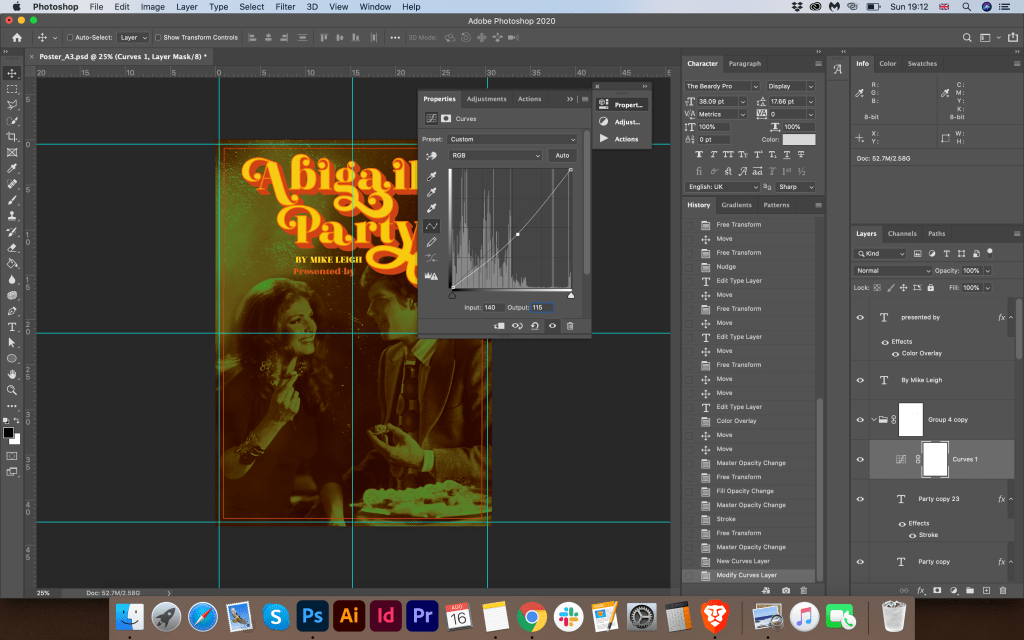
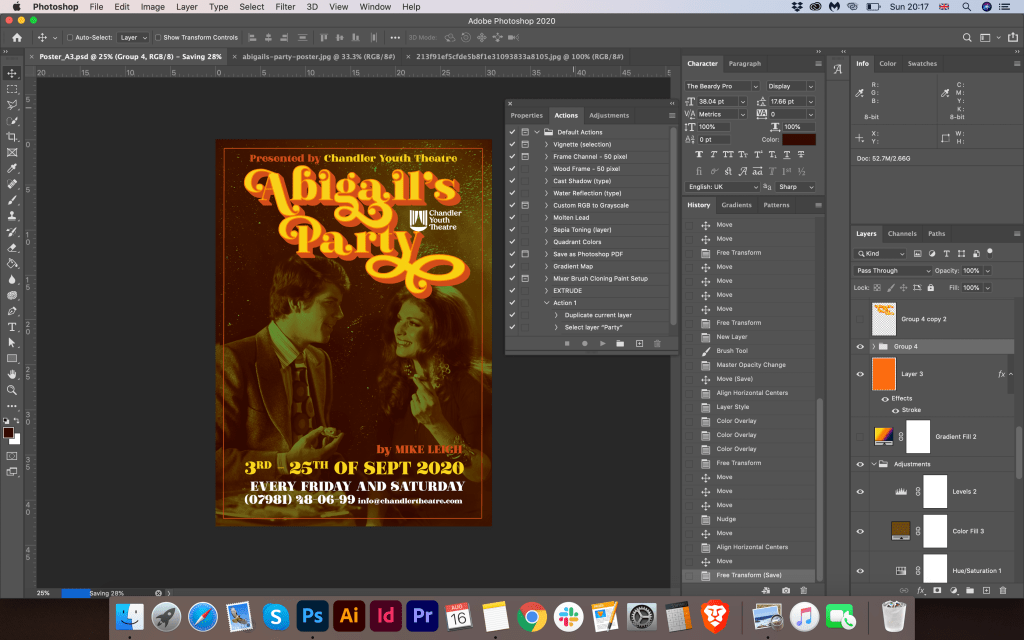
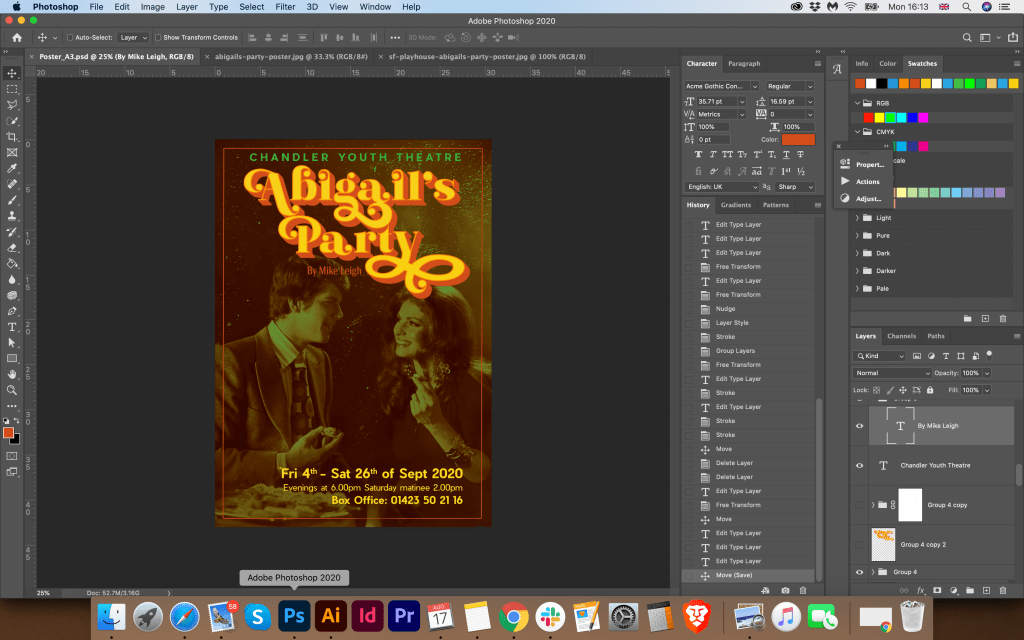
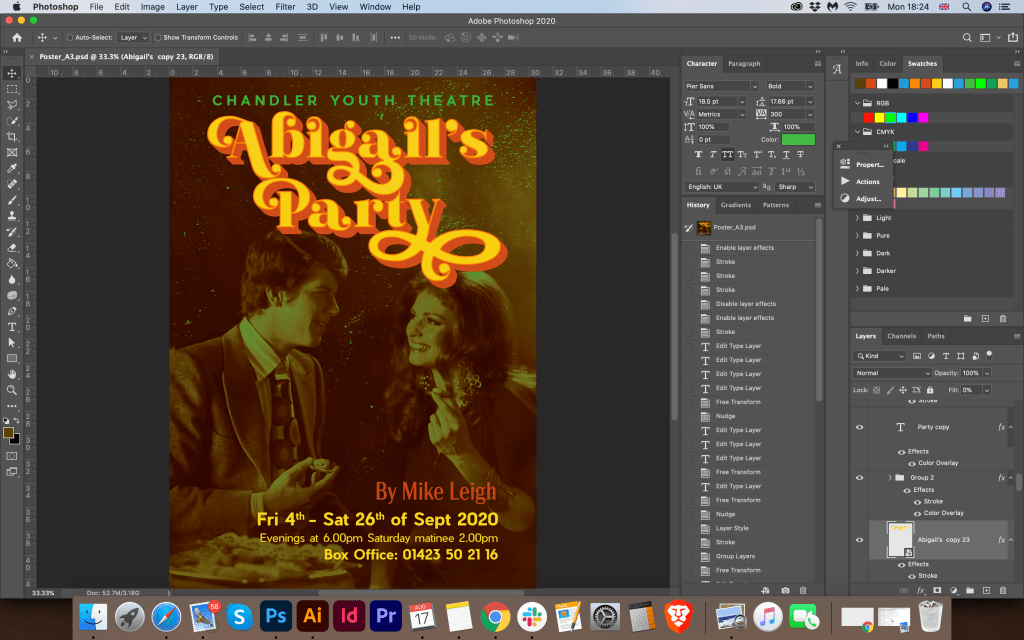
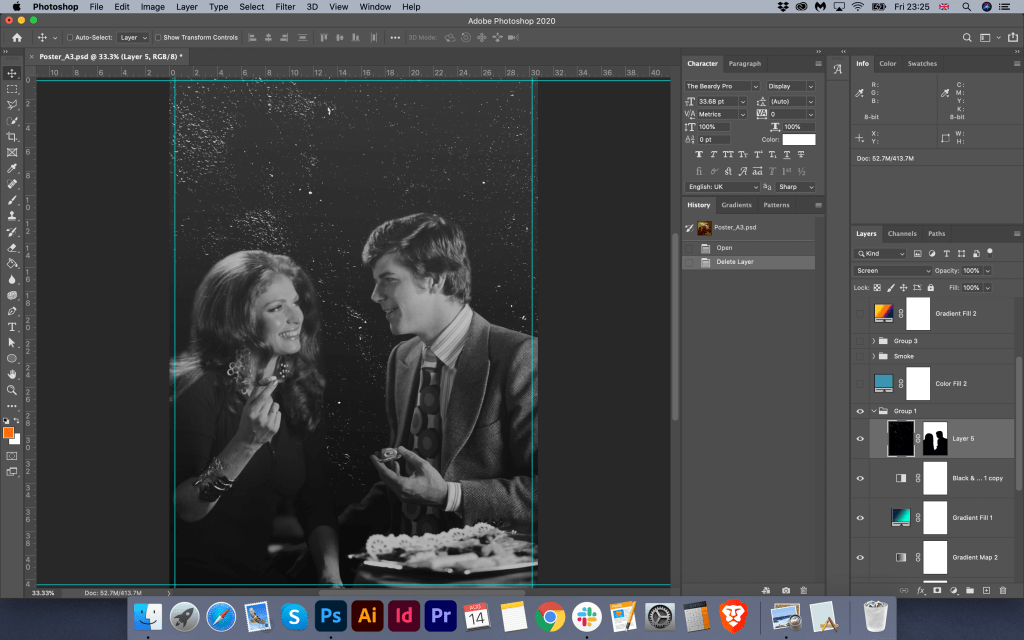
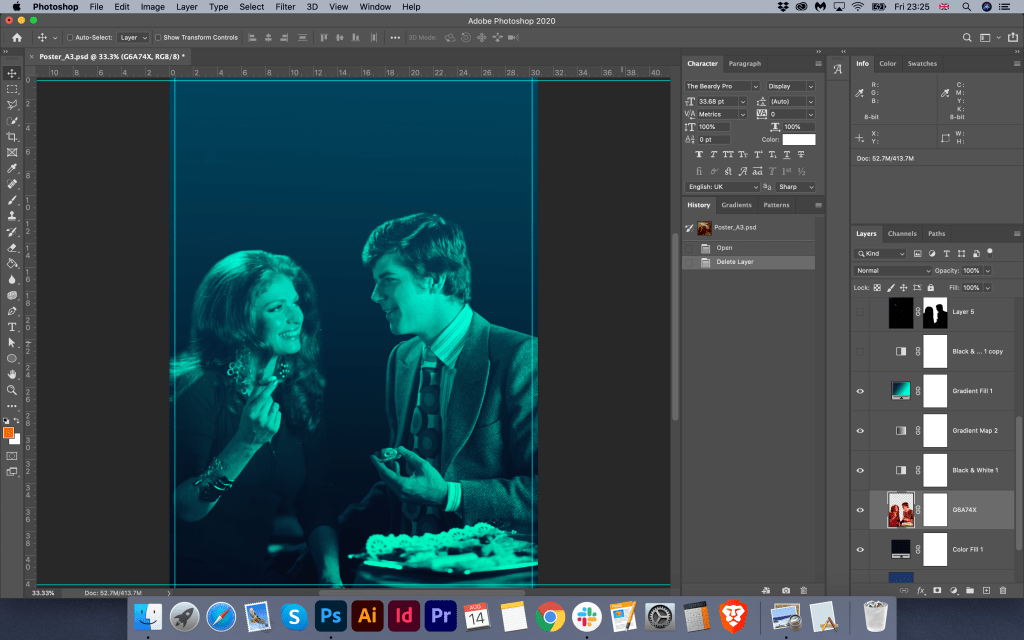
Then I started developing the design in Adobe Photoshop. First of all, I needed to process the photo in colour terms, and give it more muted tones, like sepia. The idea was that the more I dim the photo, the brighter and clearer the text information will be read from the poster. I have attached screenshots of the colour processing technique for a photographic image, with all the stages of applying filters, gradients and masks. In the process, you can see how I brought the photo from black and white photo to muted sepia. I also rendered the font, with a 3-D illusion, overlapping the font under each other.
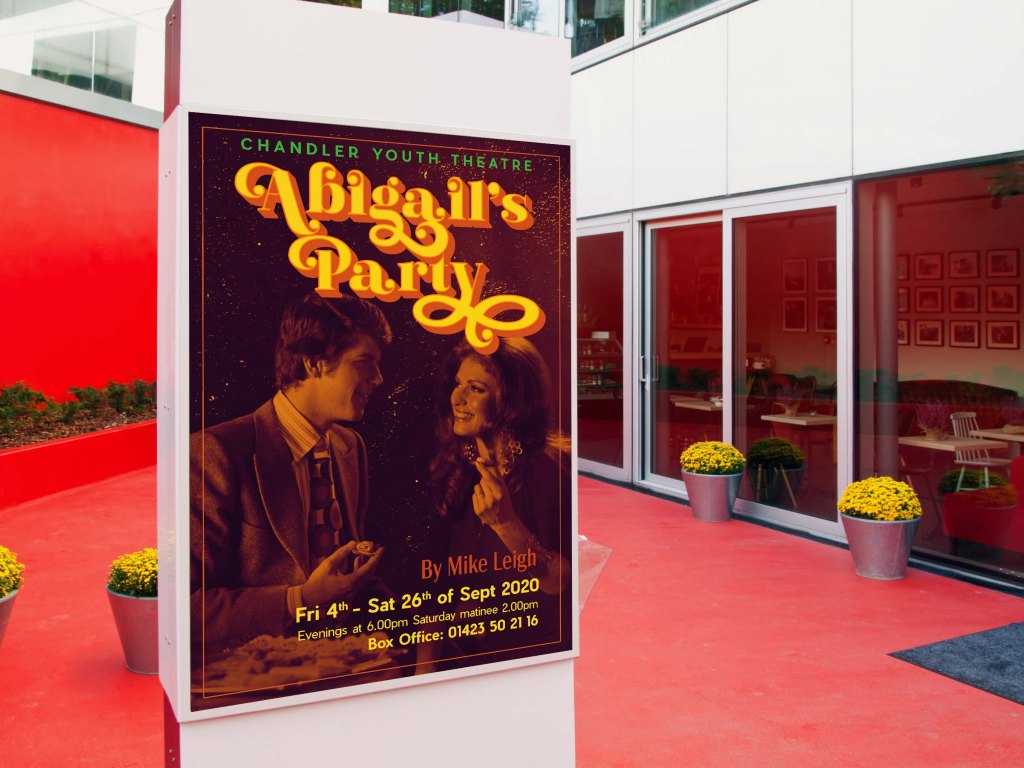
As a result, I got a poster in muted colours and a bright catchy title of the performance. I planned to use the same The Beardy font for the key information about the dates and times for the shows, but the font style seemed to me too heavy for the bottom of the poster. So I decided to use the lighter, more readable Pier Sans sans serif font in a bright yellow colour. For comparison, I decided to check which filter is more suitable for this photo, so I had four options, a poster in a blue tint, a bright gradient from purple to orange, a greenish sepia, and a sepia in red and brown shades. I showed to my family these options, and we all agreed on the last poster in red and brown. I posted the finished version on the Mockup room.
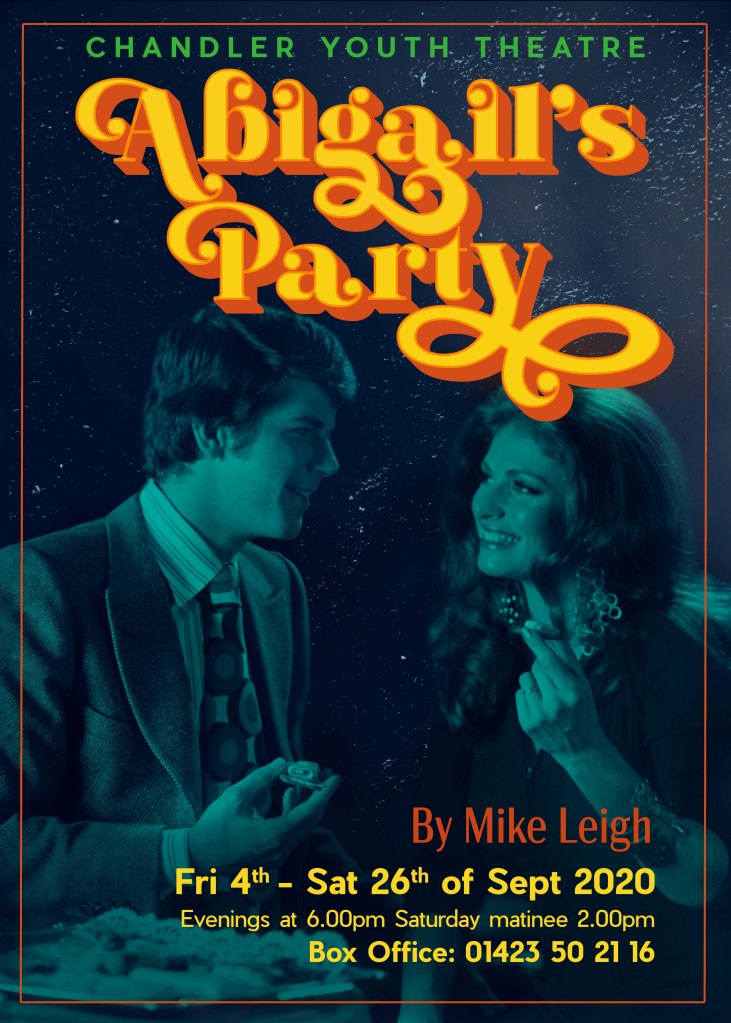
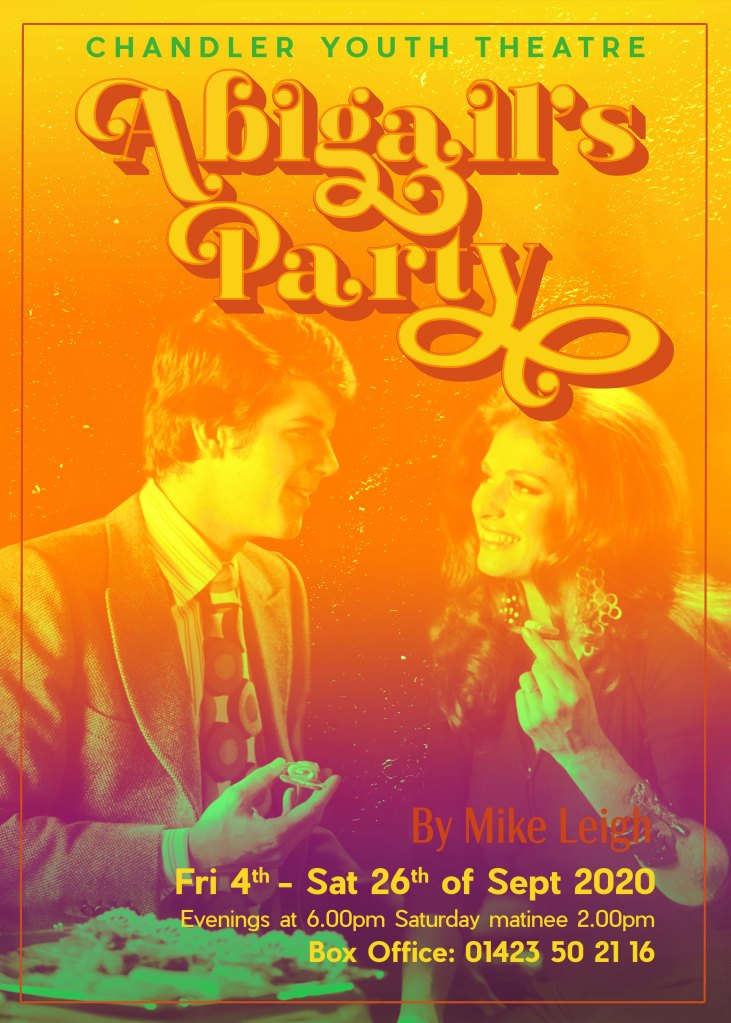
I was pleased with the result, I liked the combination of dark muted tones of the photo with a bright and contrasting font, which in general looked quite unique and bright. I think I managed to convey the atmosphere of the 70s. The only moment is that I could not apply the pattern I outlined in the poster. Combined with a bright font, the curly font completely overwhelmed the effect of the readable name of the performance. So I decided to keep my pattern for flyers, as I had an idea of how I could use it.

Flyer Design

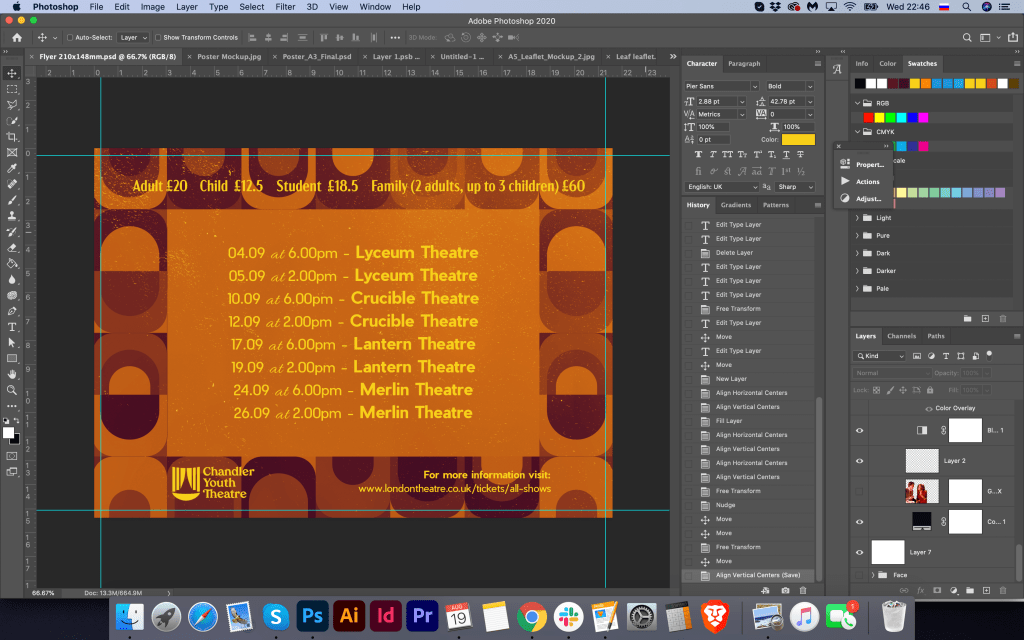
Flyer Design I wanted to display more informational. I added the names of the actors and characters, as well as the logo of the Young Theatre. On the reverse side, I used the pattern I had drawn, but for the readability of the text, I used an orange background. Also on the reverse side, I duplicated the name of the production, and as information texts, I displayed a list of theatres and the dates of the performance. I made the font large and readable. At first, I thought of displaying the title of the presentation on the backside and making the text smaller, but after that, I thought that I could avoid overloading the backside of the flyer and made the main emphasis on text information and a bright pattern.

Newspaper Advert

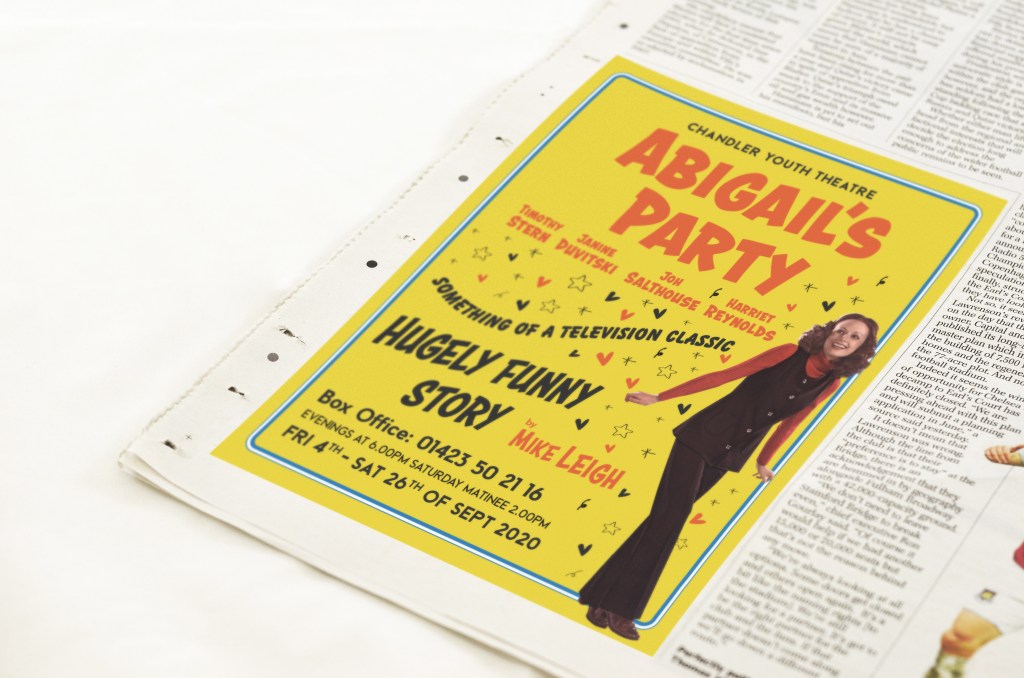
For the newspaper, I decided to use a similar principle as for the poster, where the main focus is on the photo, the title of the performance, and contact details. I tried to list a list of theatres that will host the events, but the layout was overloaded, so I used the poster layout with less text information.

A5 Programme

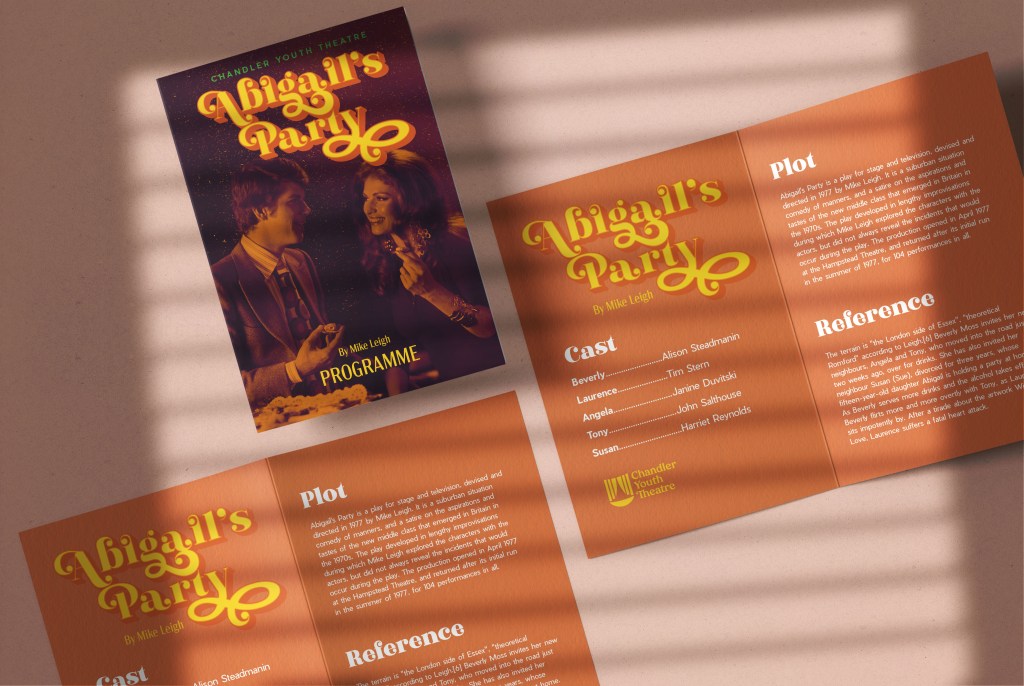
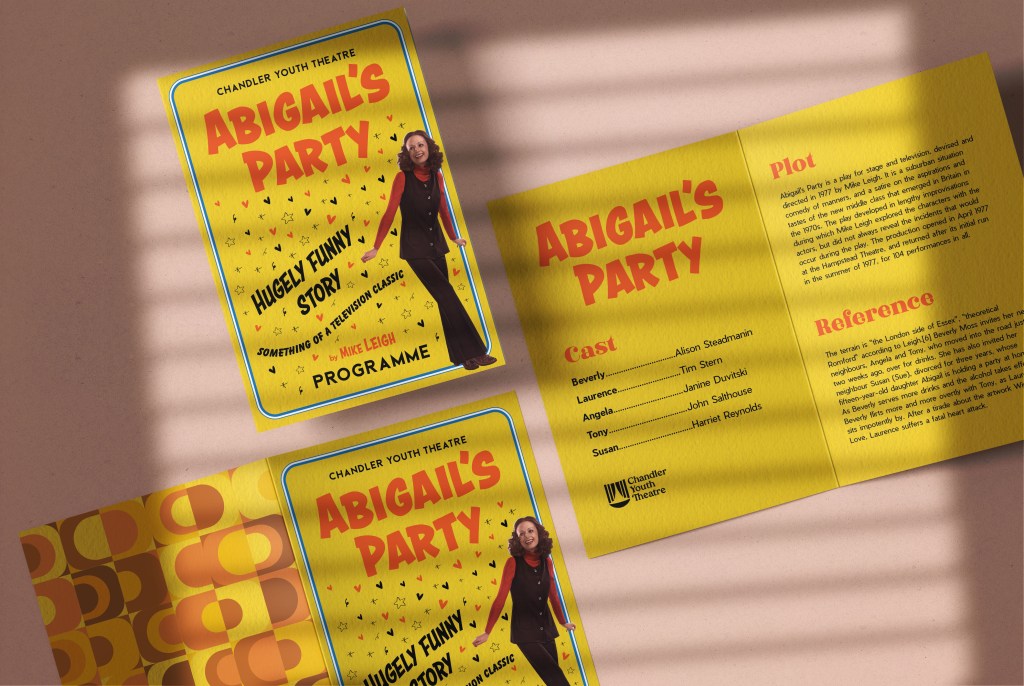
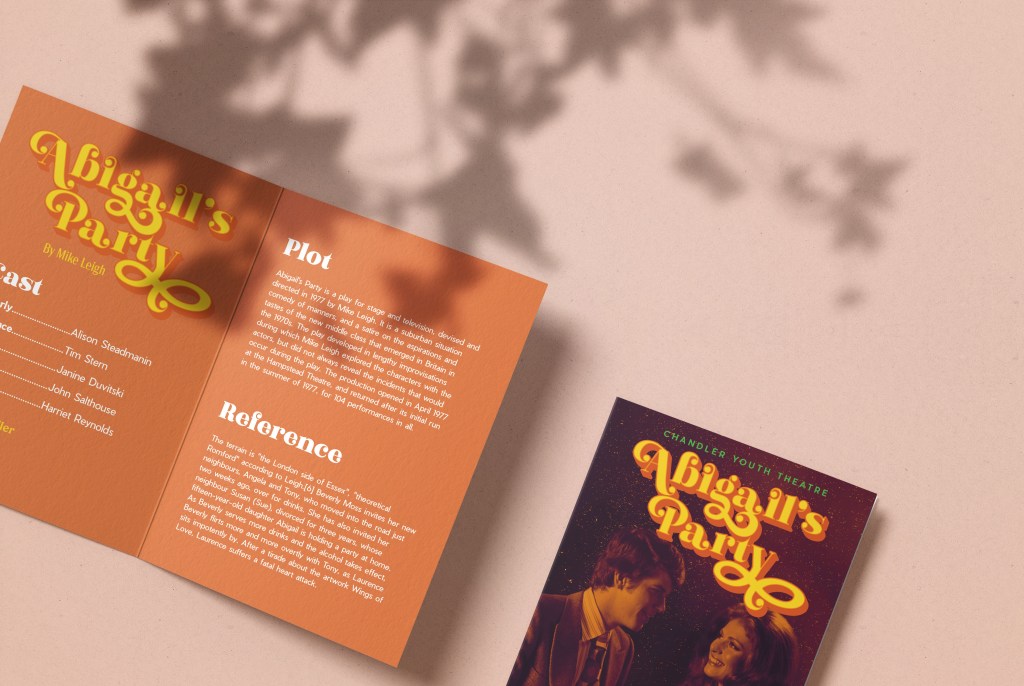
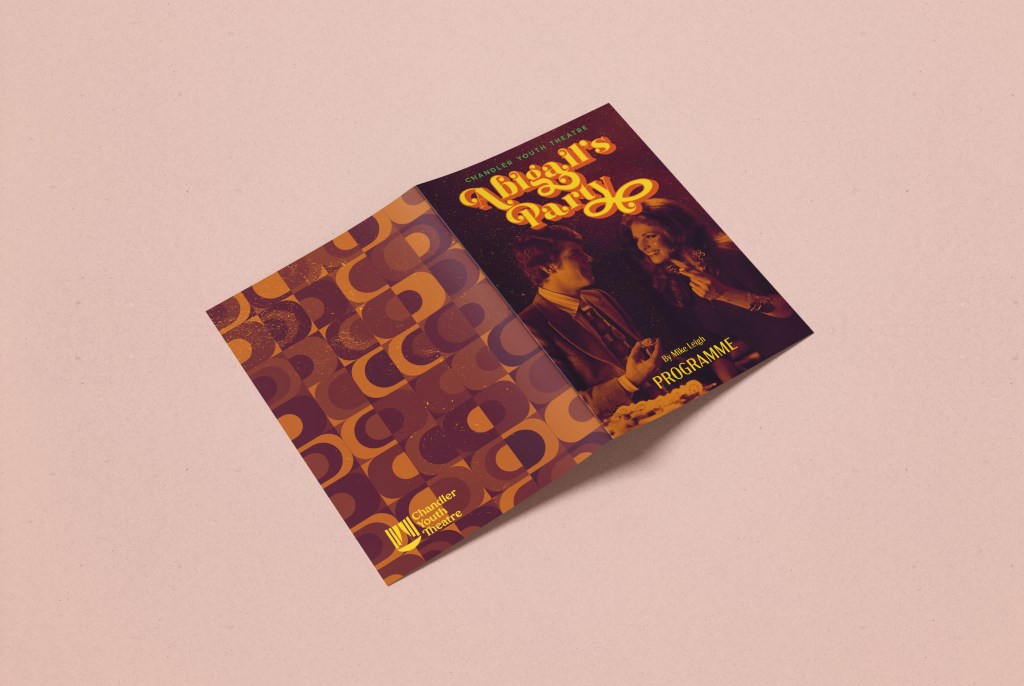
For the design of the program, I created a new document in Adobe Illustrator A5 format plus a spread. For the inside design, I chose orange colour and put some text information on it. For the cover, I placed previously designed poster format, and for the back side, I chose a vector pattern that looked harmoniously with the front side of the program. I placed the finished designs on Mockup.
Reflection

Well, it has been a long journey for the Graphic Design 1 Core Concepts. I think this fifth brief was a good conclusion for the all work and experiences gained so far. Overall I enjoyed this assignment and I am pleased that I could expose learnt from this course some key design principles such as text hierarchy, typography, layout, colour and visual dynamics.

I liked the experiment with the type that I did on this task, and also the processing of editing the photo giving the layout a taste and style of the 70s. As I did not want to overload the composition of the poster with pattern elements, I am glad that I was able to use the vector drawing on other advertising materials such as A5 flyer and the A5 program. I think that this theme of 70s theatre performance is so vast and creative that there would be no limit to the design and variety of layouts. I settled on one choice, maybe I could go deeper and find more extensive options, but I’m glad I was able to experiment with text information and layouts on the rest of the promotional materials.

Additional Designs. Tutors Feedback

After I did the work for the final assignment “Your Choice”, wrote the conclusions and sent designs to my tutor for estimation, I had a feeling of unfinished business. I had the thought that the design should still be finalised, that I need to try to look for new layouts for the poster. In addition, after I received a response from my tutor that I could produce something more creative solutions, show my individuality and my corporate approach to solving the design layout, I decided that I had to try a few more poster options.

So I got down to business. First, I decided to look for an image of a girl in the style of the 70s. Perhaps it would be a smart girl who is planning a party, or who is dressed in evening dress. Since in the previous layout, I depicted a couple, here I wanted to display only one character. That all the attention was on one main person. I came across this image. I liked the mood of these girls and their dynamics in motion.

I already approximately understood how I could beat this layout. I wanted to add some movement to the design, give it dynamism, light flying objects around. My last poster for Abigail’s Party turned out to be very static, and all the attention was paid to the type and contrast photography. Here I wanted to create a bright and memorable design, apply a solid background, add slogans, some additional calls to action, in general, create a mood for attending this performance.

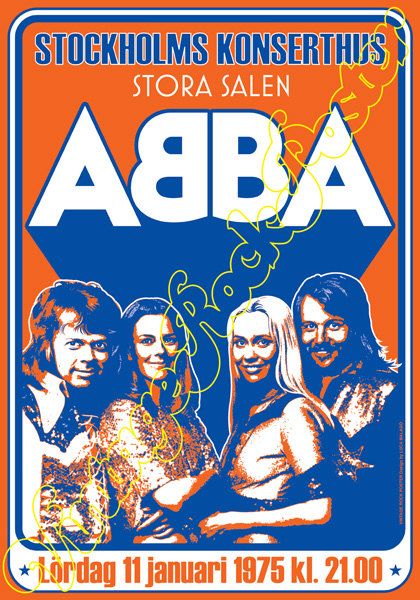
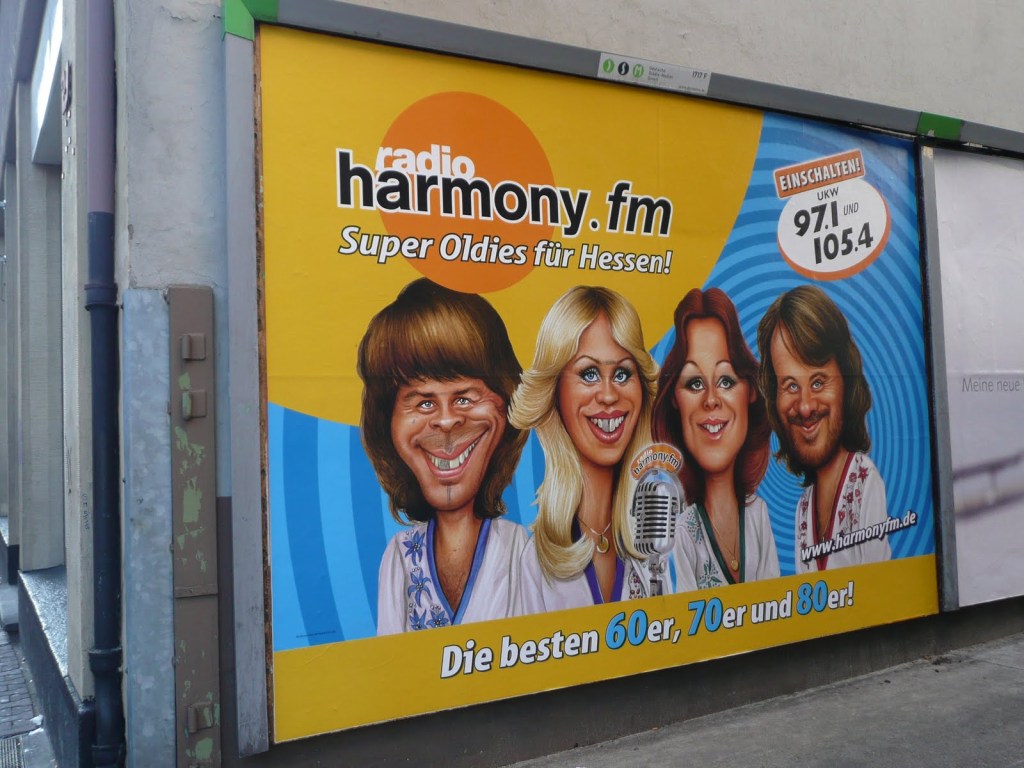
For the inspiration board, I additionally looked for some more images of 70s style posters on google, as an example, I chose posters from Abba’s group. In the layouts that I put together below, I liked the bright background solutions, the solid fill in orange and yellow warm shades, and the circular composition for placing the text, it all prompted me to design a new layout.

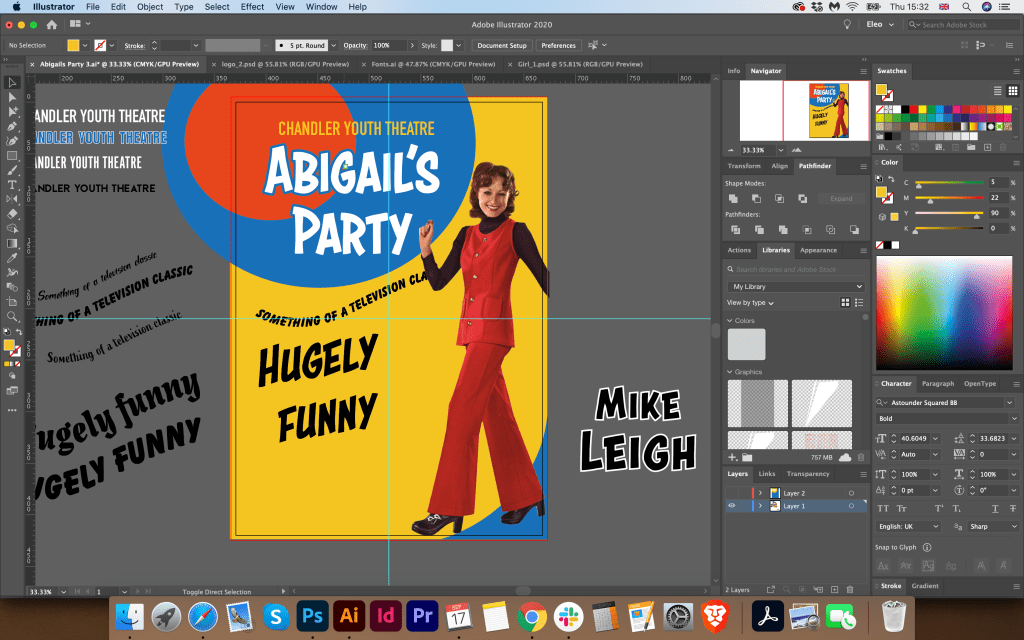
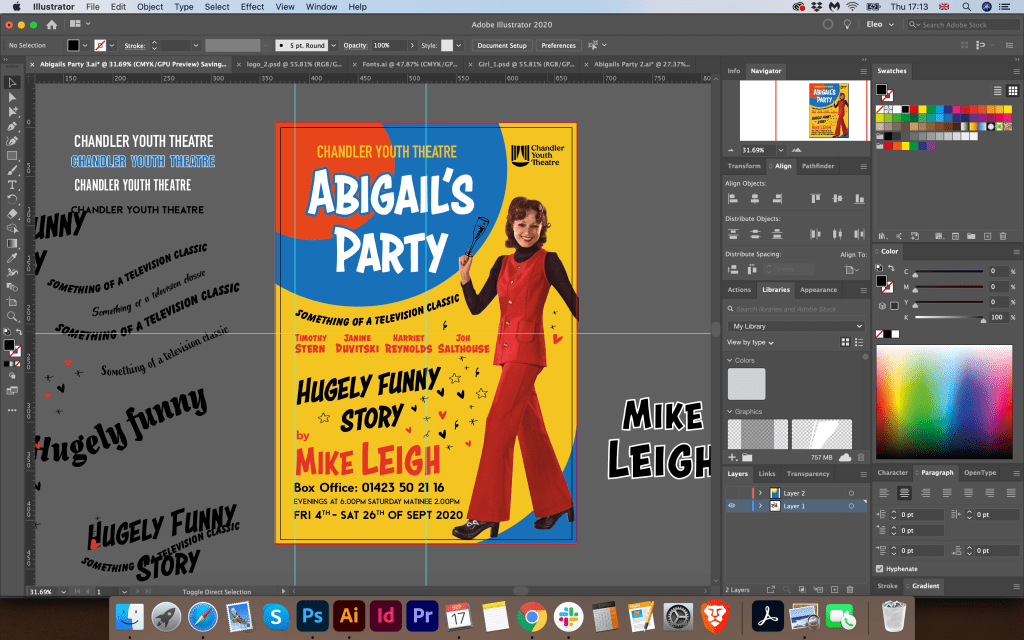
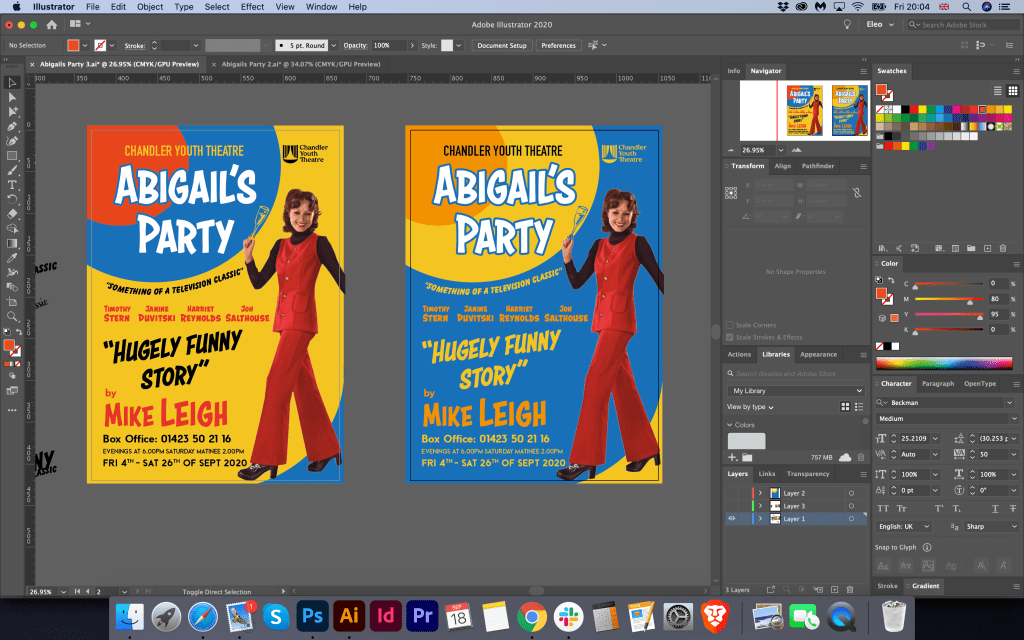
I started to sketch the poster design quickly. I also decided to replace the font for the title, here I liked the font in the retro style. The previous method of the poster had a too ornate and heavy font, but here I wanted to use a more direct type and at the same time playful. I chose Astounder Squared BB Bold for the name of the performance, DIN Condensed Bold for the theatre name and Beckman Black for contact DIN Condensed Bold for the theatre name. In my first screenshots, you can see that I tried to round up my composition, give it a shape. So I decided to try to depict one poster in transitional colours and circular shapes; in another poster, I wanted to play up with dynamic text. I planned to make the first poster in such a contrasting colour combination:

  • Warm Yellow
  • Intense Blue
  • Orange to match the girl’s outfit

Around I wanted to place slogans, these were reviews of the performance from famous publications, due to such phrases I wanted to create a dialogue between the poster and the viewer. I decided to place the phrase: “Something of a television classic”, – in the shape of a circle while choosing an easy-to-read font Balloon D Extra Bold.
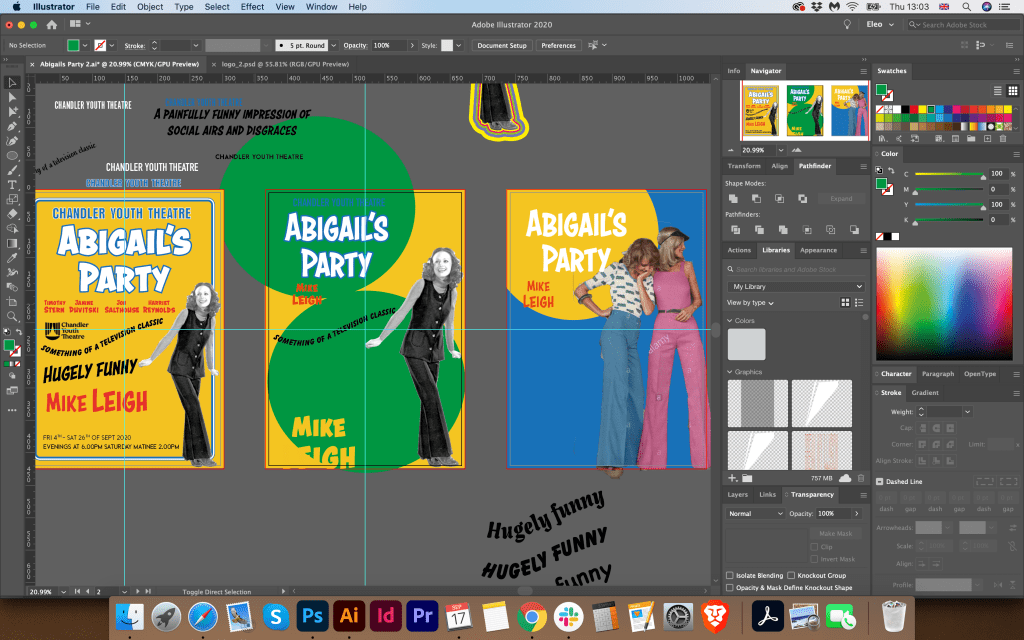
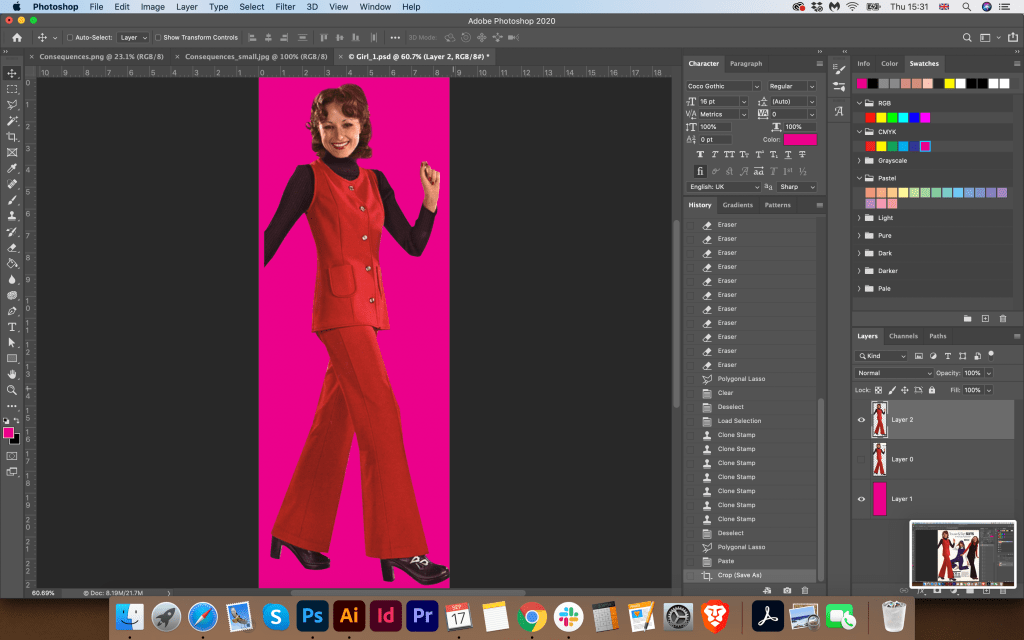
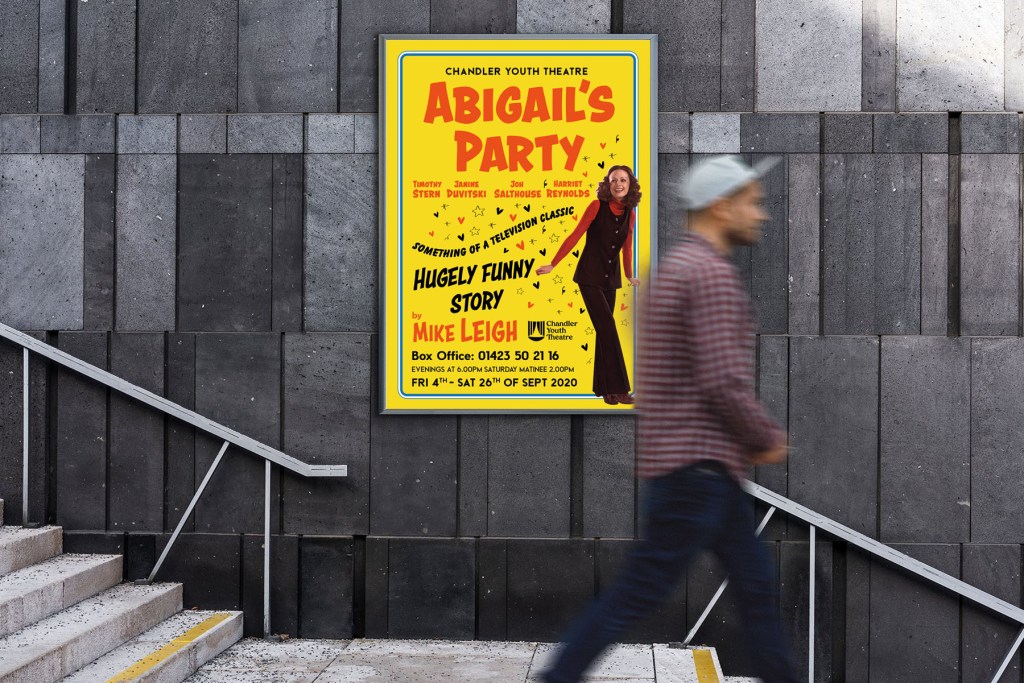
Next, I placed a list of characters, and under it another phrase Hugely Funny Story, which I needed to take up the free space between the top of the layout and the bottom where I placed the information block. For a little twist, I decided to add glass to the girl’s hand, vector layout. I was not entirely sure that the glass would be read from a long distance, but for now, I decided to leave it, as it gave some little accent at the mood of the performance. I tried to play around with some extra objects around the poster, like stars and hearts. I tried to fill with them the empty space around the girl, but I decided to keep two options for poster, so one poster I left with more free space around, and another option I made busy with flying objects. Vector image I found at Freepik.
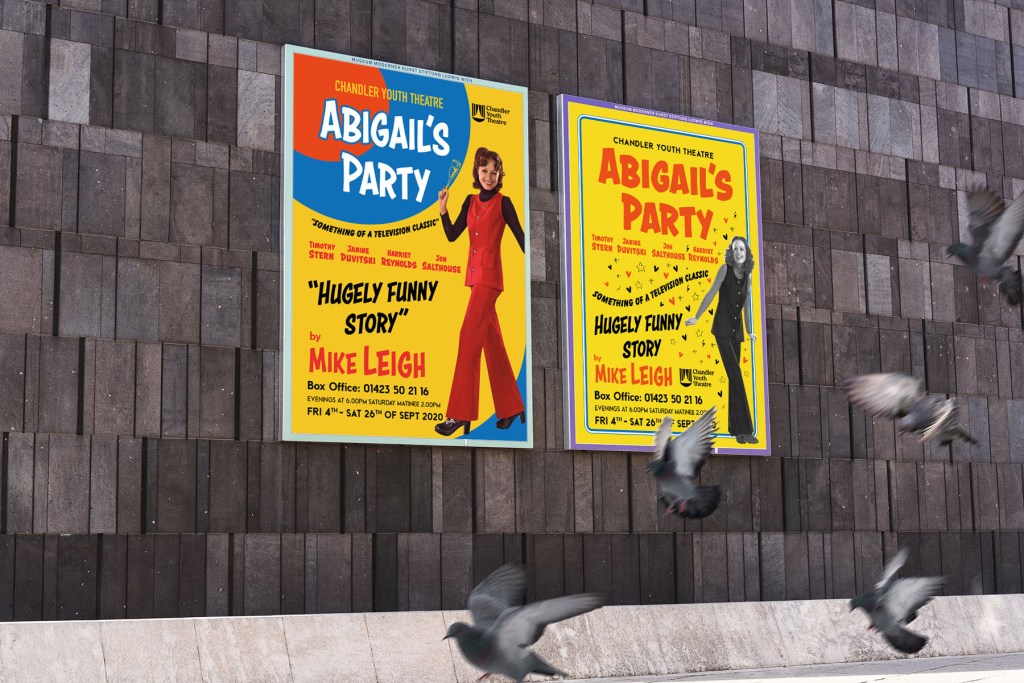
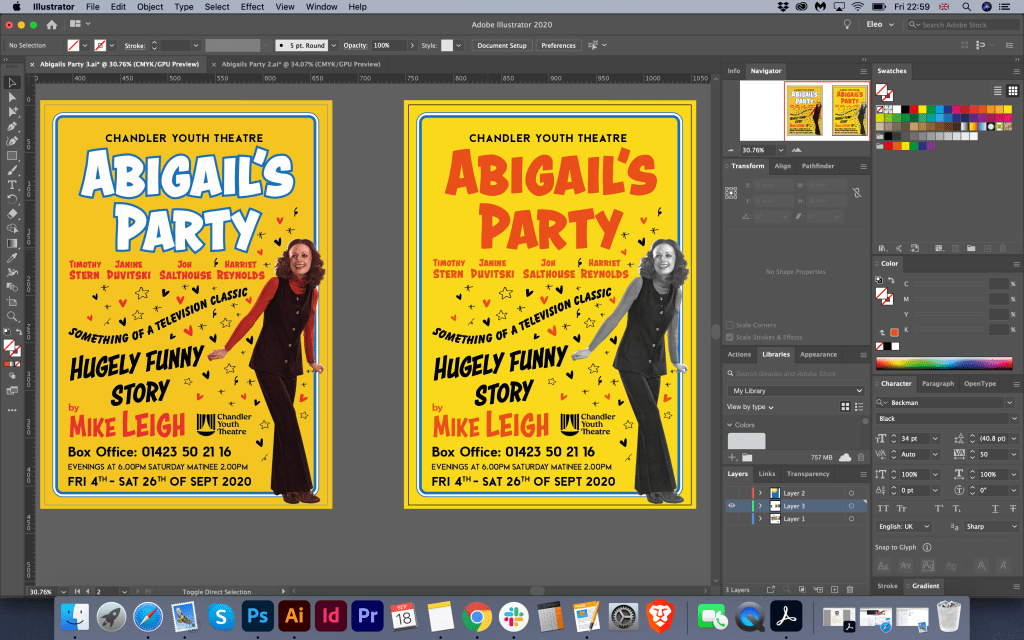
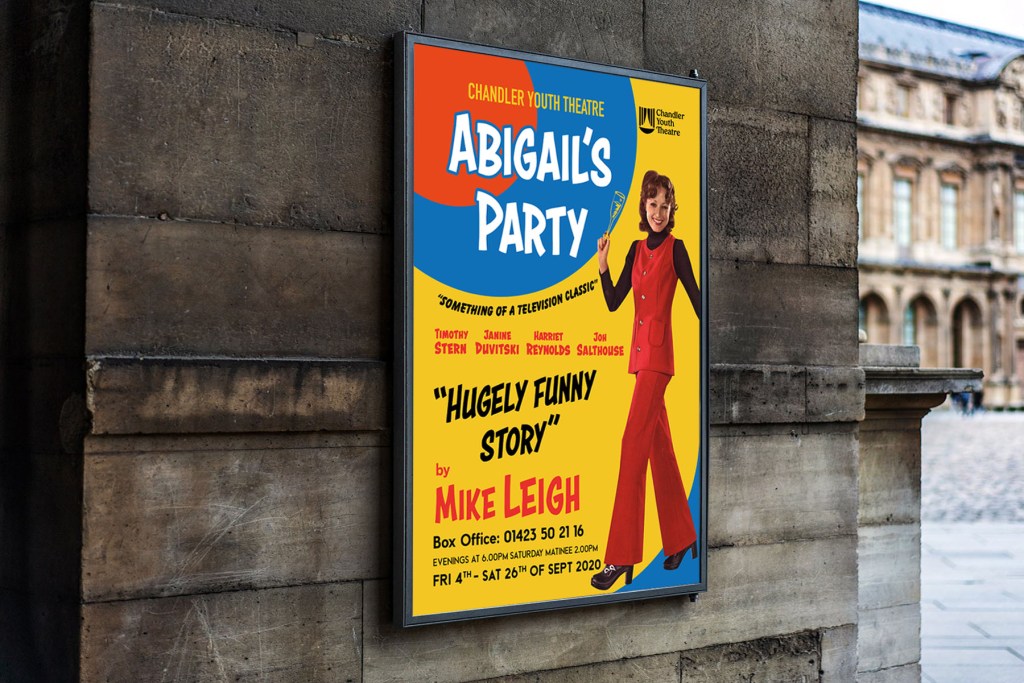
New option for the poster I used in the bright yellow background with a blue frame around it. Mainly I kept the same fonts for the poster, apart from the name of the performance in the bolder version of the Astounder Squared BB font. The idea was similar to the previous design, apart from to some details that I updated in the poster. For example, I used the different image of the igrl in colour and black and white used different colour variations and slightly rearranged the text. I liked both posters, so I couldn’t choose which one works better, so in the end, I’ve decided to go with the designs below.
Final Posters Mockup

Flyer Design

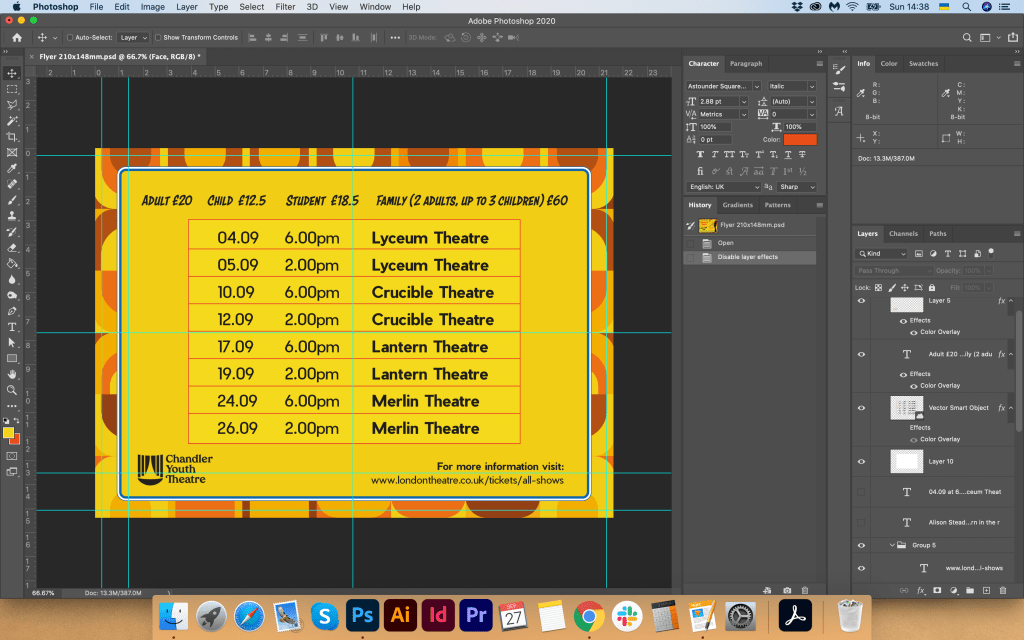
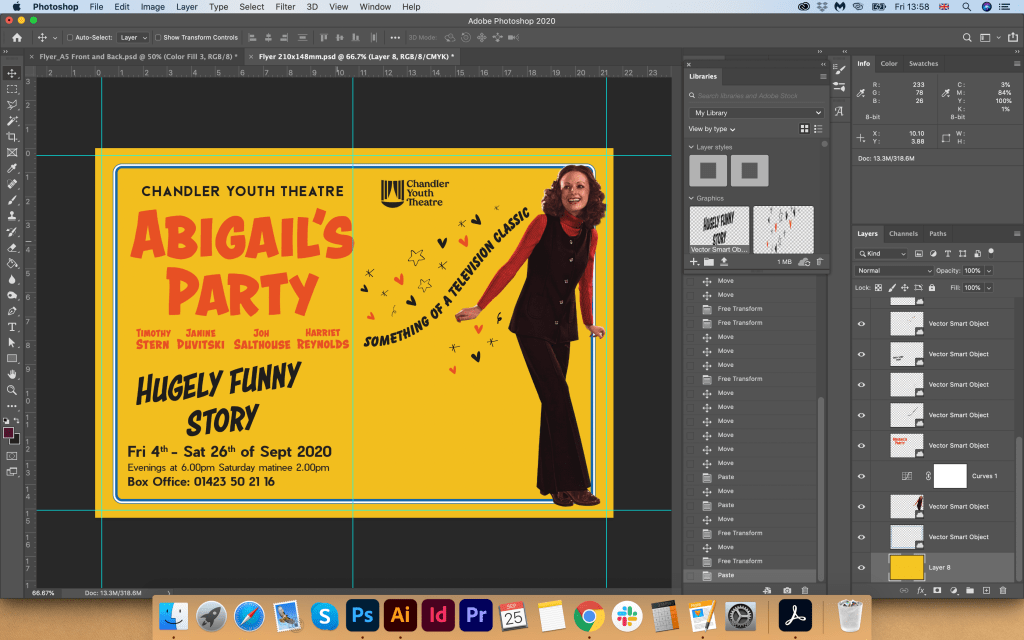
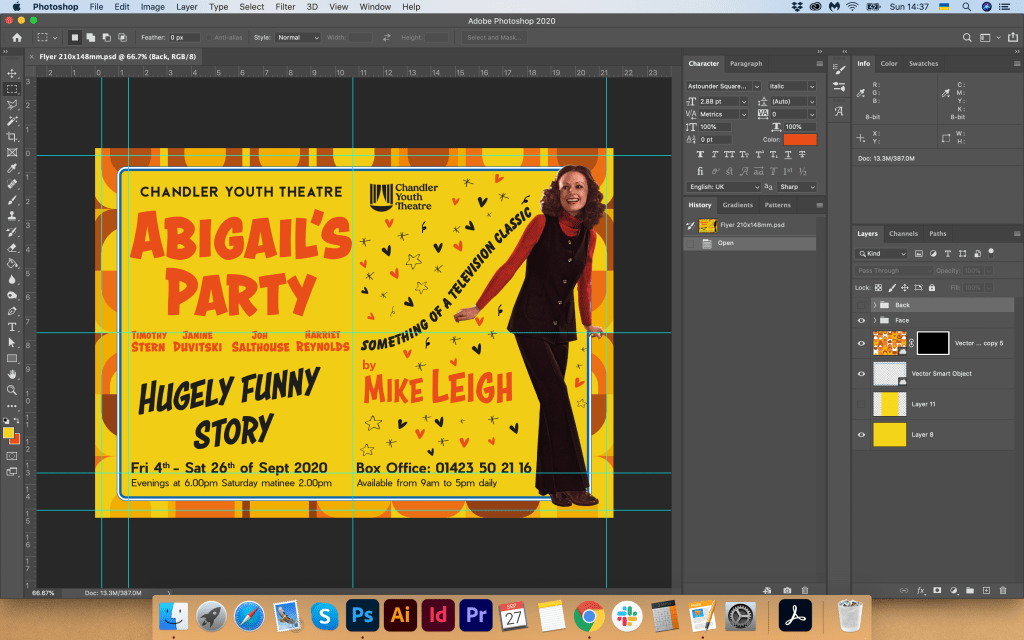
In this format, I had a bit of a challenge. I needed to create a flyer at the landscape format. So I decided to divide the space into two zones, and placed images and text like from the right and left side at the face of the flyer. I decided to add extra details for the brochure, same pattern in 70th as I designed for posters from the first part of this assignment. I used this pattern at the front and back. My tutor respond was to minimise the amount of text at the from of the flyer, so I did it. Performances schedule and prices I placed at the back of the booklet too, but this time I created a readable table for the flyer, which worked quite well in here. I was quite pleased with the result. This flyer was an excellent addition to the poster, and its design idea helped me to create a programme design as well.
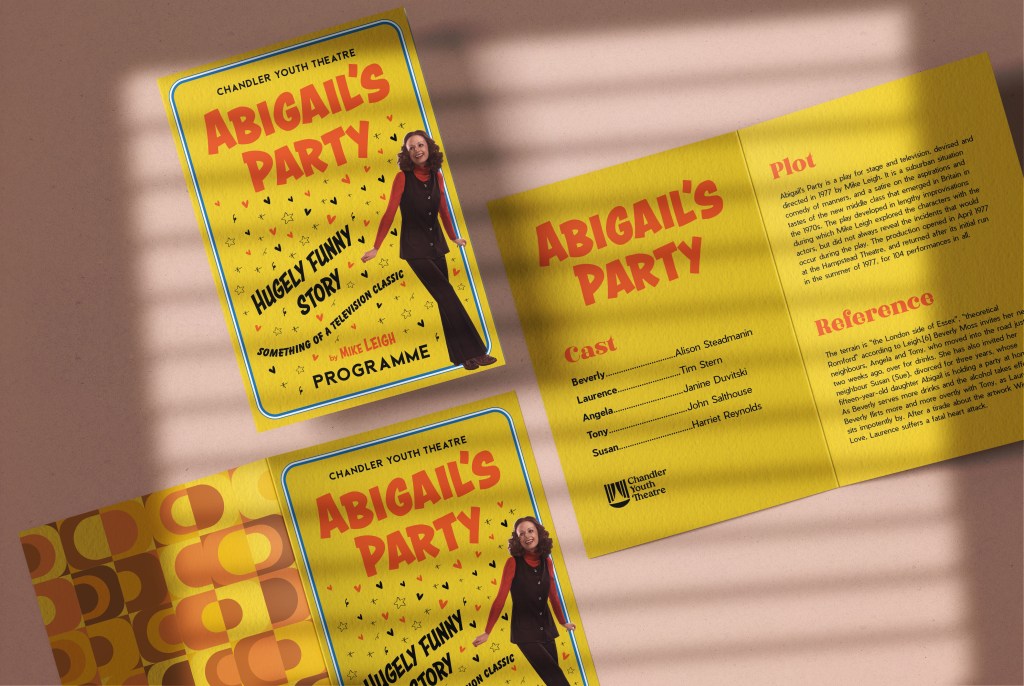
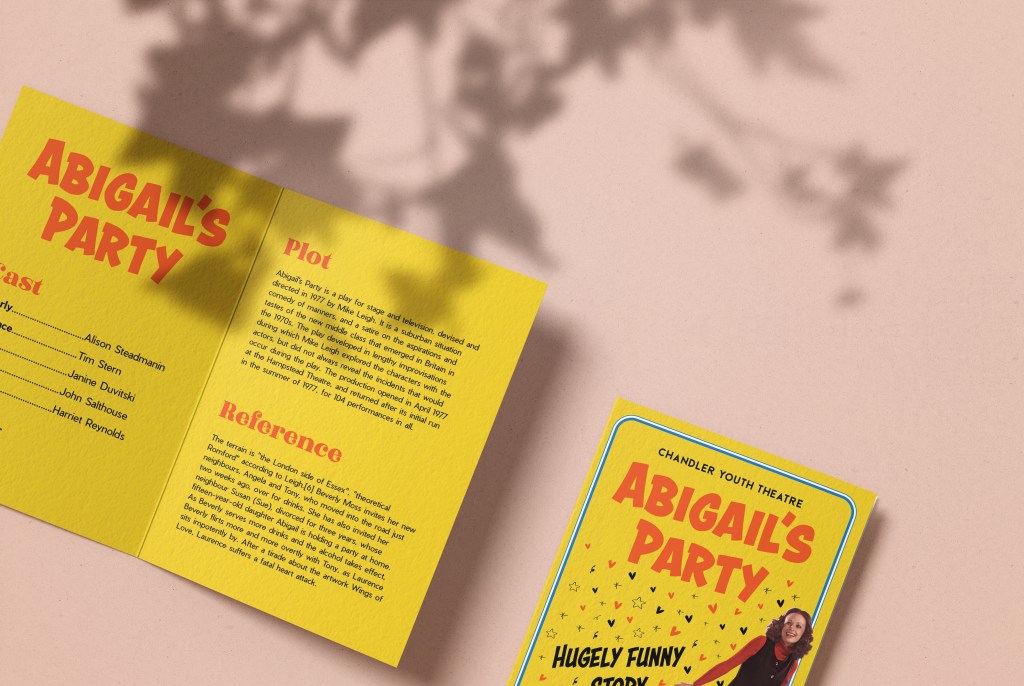
A5 Programme

Mainly for the programme, I used the same technique as for the first option of Abigail’s Party designs, with text placement, the pattern at the back of the program, and font choice inside of the programme.
Newspaper Advert

For newspaper advert I used same idea as poster design, but because of the different size I slightly rearranged text placement.
Reflection

In conclusion, I would like to say that I’m glad I could produce different designs for this final assignment. I knew that only one option for this poster wouldn’t be enough, as sometimes it’s hard to make the final decision based only at one design. The first option that I send to my tutor for estimation was not bad, but overall I felt that this assignment missing some depth in producing ideas and had a lack of my personal touch. Through this first unit journey, I created an original style, that I could apply in designs. I loved the experiment with the one colour background, and some dynamic text and objects around it, the image of the person used for this poster reflects the mood of the performance quite well as well. I’ve noticed that the main challenge in this assignment to find that perfect layout with the right composition and be able to arrange text around it, use appropriate fonts for the 70th style, also to make sure that all promotional materials have essential information on it and don’t look overload. I hope that I was managed to rehabilitate and provide more vital pieces of work for the final assignment.

Show me…

Context
Typographers and type foundries (the companies that commission and produce typefaces) have always had to promote their latest designs to printers and designers to show off a particular typeface, its different fonts in a variety of sizes and contexts, and the unique features of it. Once Specimen Sheets were the main way of doing this. Nowadays most of that marketing takes place online – research type foundries on the internet.

Brief
Design the font for use on the cover of a magazine called type and write a short article for the magazine using a range of typefaces, with typographic illustrations, drawing on all that you have learned in this section. The article should include sections on:
• what makes a typeface interesting?
• how a typeface is constructed
• question marks.

Requirements
Do a mock up of the magazine cover to show where and how your title font will appear along with other cover elements. Produce a magazine article that is attractive and interesting enough for someone to want to pick it up to read, and which shows off what that you have learnt so far about typography. Add illustrations, photographs and colours as you want.

Introduction

So, the time has come for Assignment 4, which is like a conclusion on the topic of studying and analysing fonts and typography. I realised that here I would not only have to collect all my knowledge gained in past exercises but also create something new that I have never done before, to reproduce a new unique font, maybe something special. For me, this task is my own kind of challenge. I wonder what decisions I will come to after analysing and sketching some fonts. I’m eager to start this task because this is a new branch in the development of a creative approach to design.

Since I was going to have an extensive work of several components, I decided to start by compiling a complete brief analysis, which included the main sections such as primary research, secondary research, keywords, and designs that I have to complete. Later I created another mind map with a more detailed solution already on the very design of the font, cover and article in the catalogue.

  1. Research type ideas. Research on type foundries and start collecting more examples of typography magazines, on Pinterest, online or general magazines that use typography in an interesting way. Look at the history of type foundries (I think there would be a help A Visual History of Typefaces and Graphic Styles book) how it has evolved. Find existing type foundries, for example, recommended by my tutor film Helvetica. Have a look for some possible grids, that to transform them into my own font. Make notes on particular type foundries and styles that appeal to me for inspiration for this assignment.
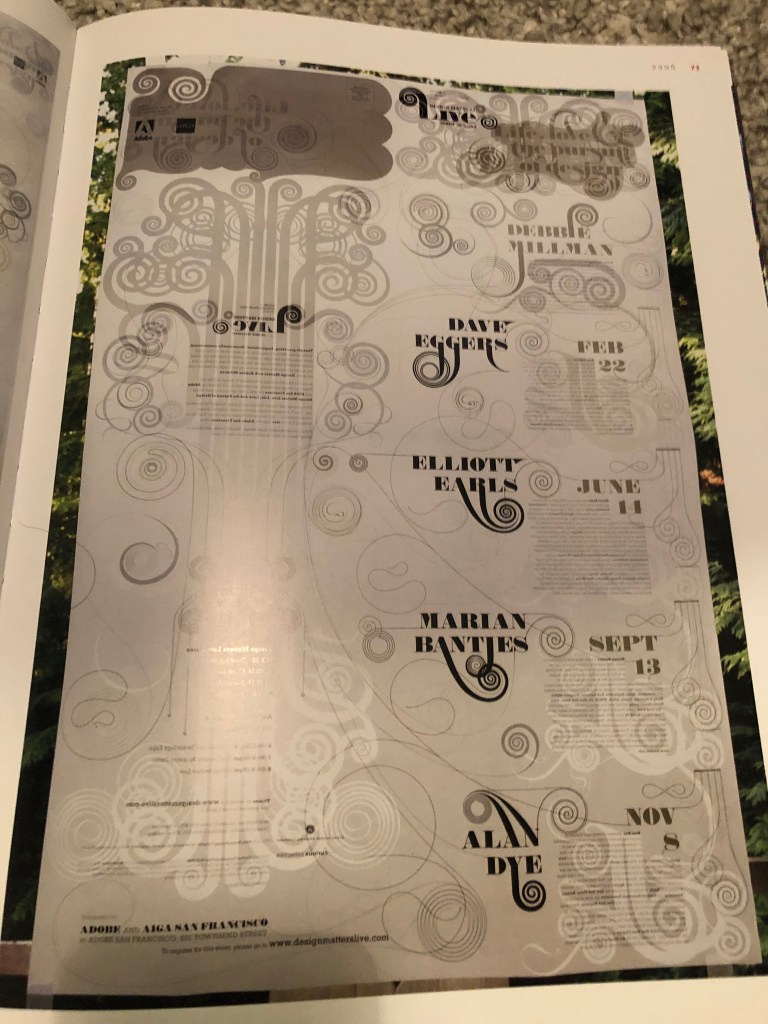
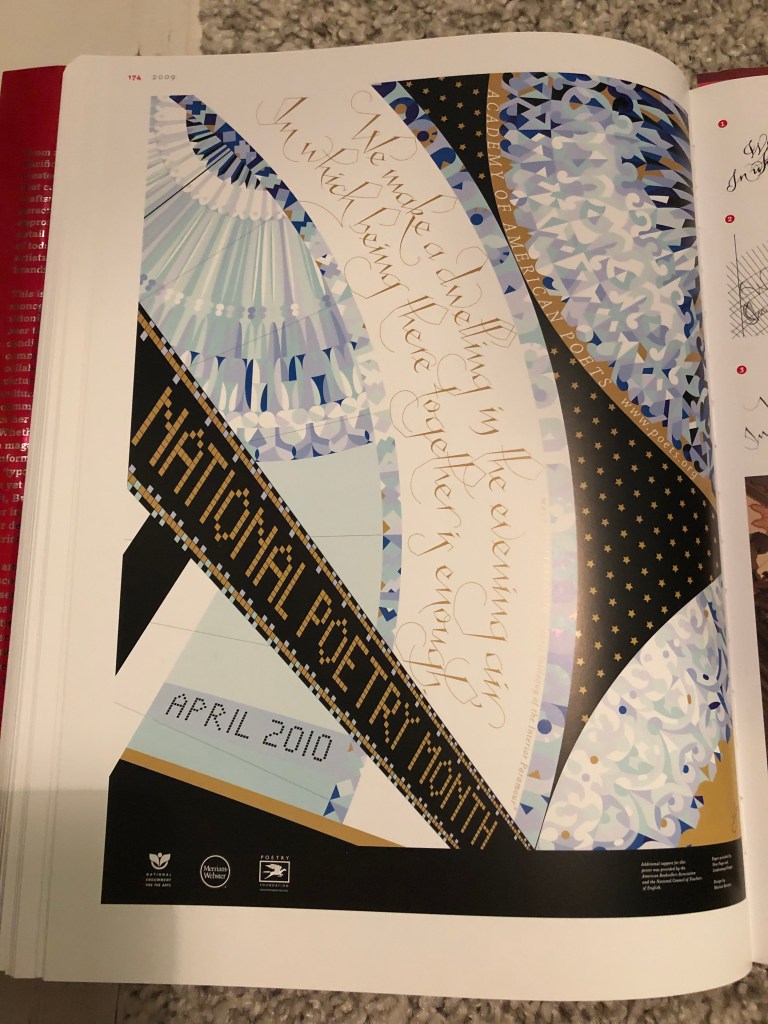
  2. Design Font. Use this area for experimentation in my sketchbook, create interesting patterns, then transform them into Adobe Illustrator. Try to create my own letters, following examples of Marian Bantjes, look at layouts to distinguish what sort of layout I think would work well for the magazine cover and TYPE header title.
  3. Mockup magazine cover. Use Photoshop to piece together all elements previously worked on alongside the chosen theme and aim for the overall feel of my cover.
  4. Write and Designs an article. Based on studies on Part 4 reflect on previous exercises and build upon what was already learnt for each section of the article. Also, build on the magazine examples collected to see what sort of layout would work well for the article. Establish what font size and font article info need to be, play with column layout and think about kerning, tracking, alignment etc.

To begin with, I decided to create a mood board for myself from Pinterest. The Pinterest collection has a variety of font options, some digital and 3-D effects, some such as artist Ed Fella are drawn with careless pencil strokes. The more I explored, the more diverse the range of options became with which I could start my own design.

Some examples of font designs and covers from the Google search engine. I liked this images as they consisted some nice font ideas, also I liked that bright colour combinations.

Fonts and typefaces are usually designed by type foundries and designers. In the past, type foundries used to make metal and wood typefaces and later used them on printing machines. Film Helvetica is a documentary about typography, graphic design, and global visual culture. It’s a good way to familiarise yourself how font invention can impact our modern life.

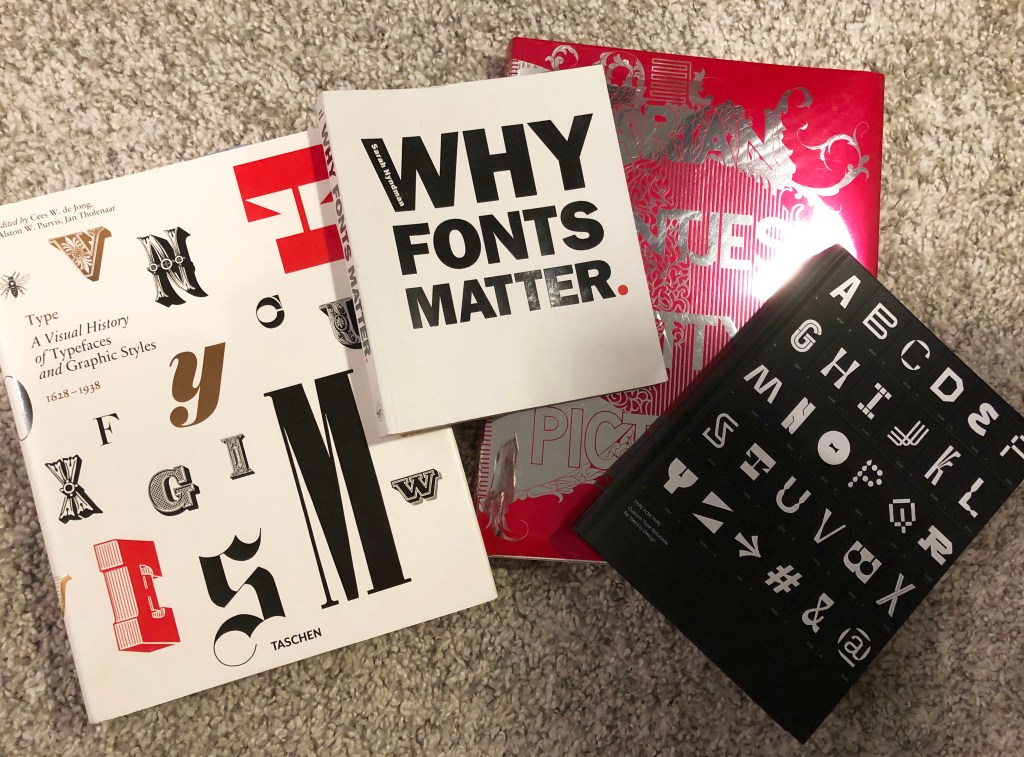
I had several books at my disposal that would help me reproduce my vision of designs. In font design, there is an interesting flow, which calls Type and Sound Workshops. One of the experiments was that participants were played three different sounds, such as heavy metal music, the sound of waves on the beach, a screaming woman from a horror film. As soon as three different sheets had been filled with marks, participants searched the letterforms in each and cut them. In the end, they had alphabet with different styled, which would reflect sounds that inspired them.

Fonts give words a personality

Sarah Hyndman. Why Fonts Matter

There is a saying that typography is storytelling; the font has personality and can reveal the scene independently. I was thinking about what story do I want to tell that to represent a meaning of it? So there was another question as well: what kind of story I would like to say with my font? Is it a romantic story, or is it progressive music kind of font, or is it sketches of the font of the mad scientist while he is making some sketches for his researches?

As a part of my research, I wanted to ask myself the following questions:

a) can I prove that my typeface has a unique personality?
b) is there significant agreement from others on different personality types
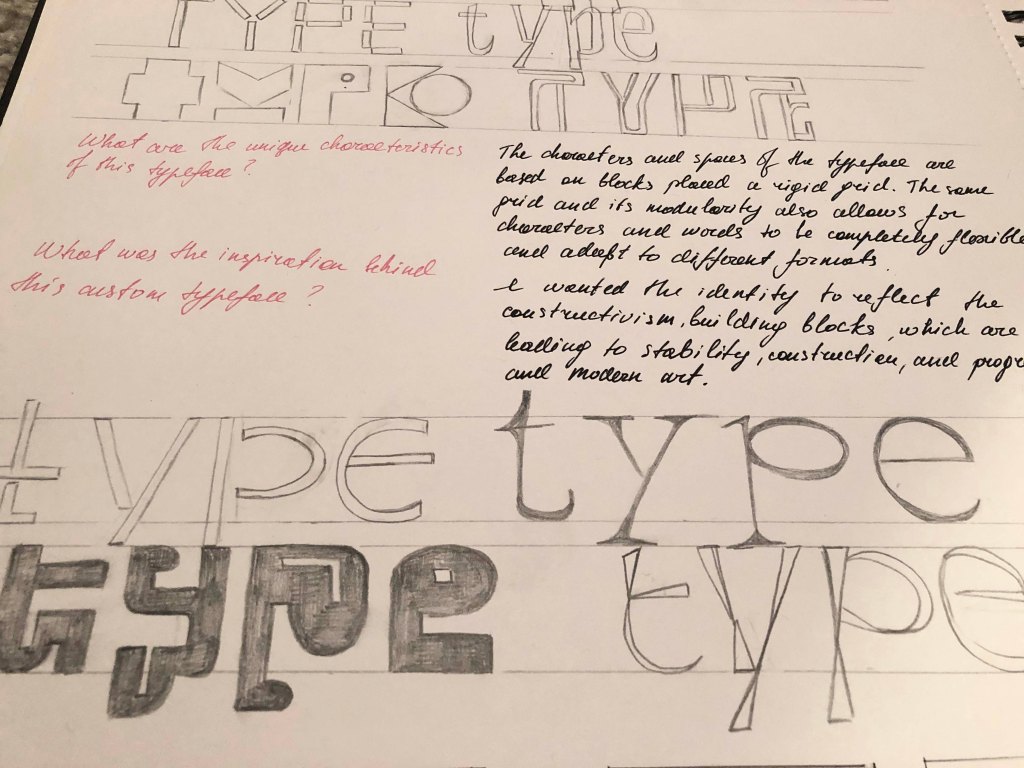
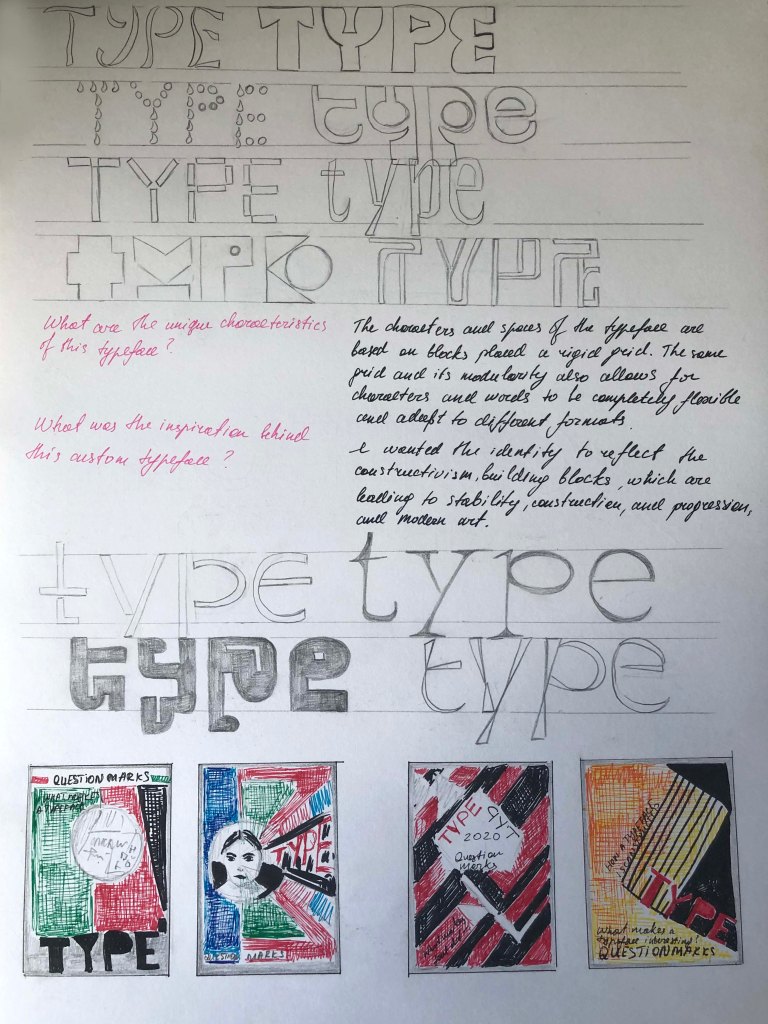
c) what are the unique characteristics of my typeface?
d) what was the inspiration behind this custom typeface?

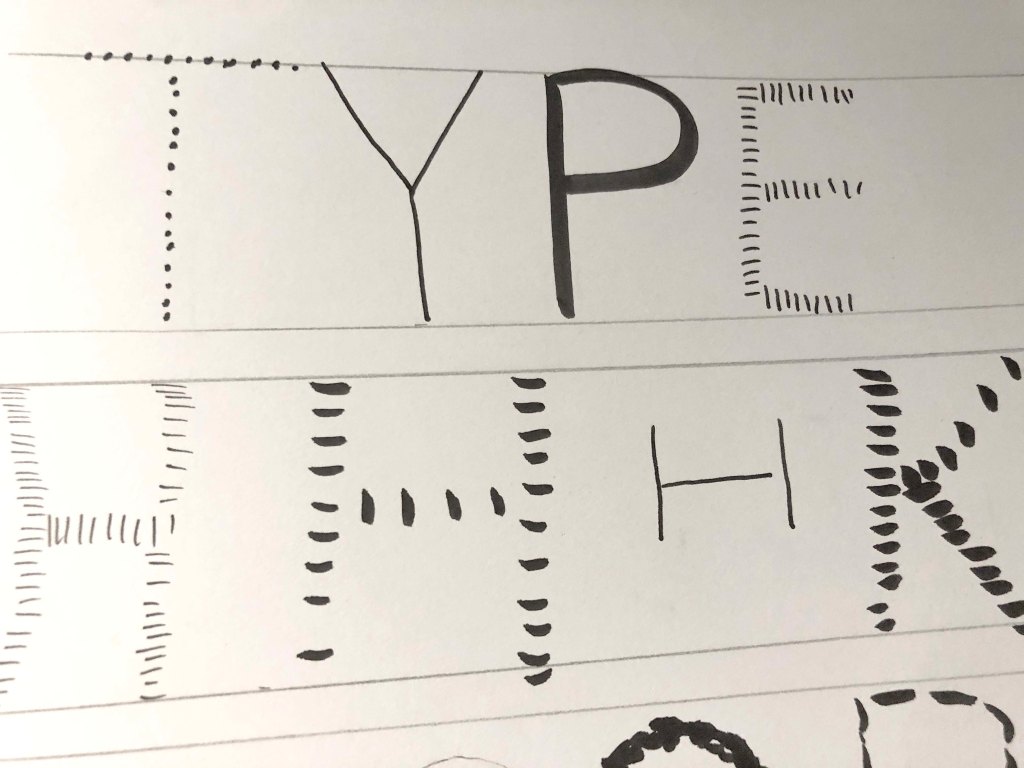
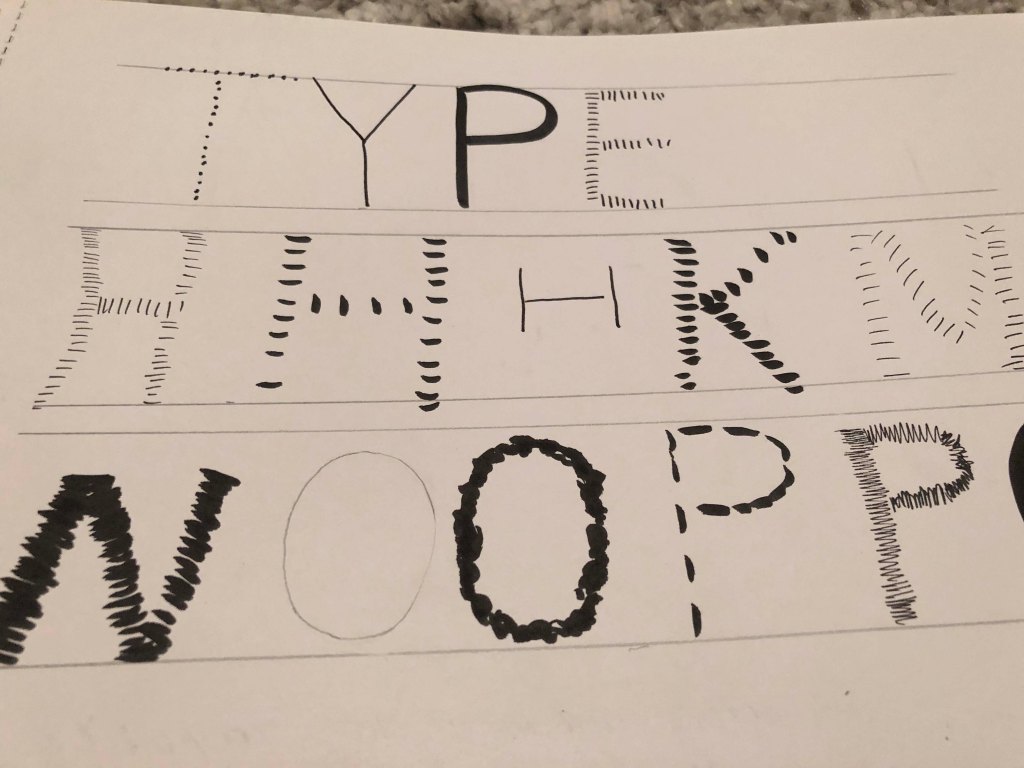
Experiments with the texture

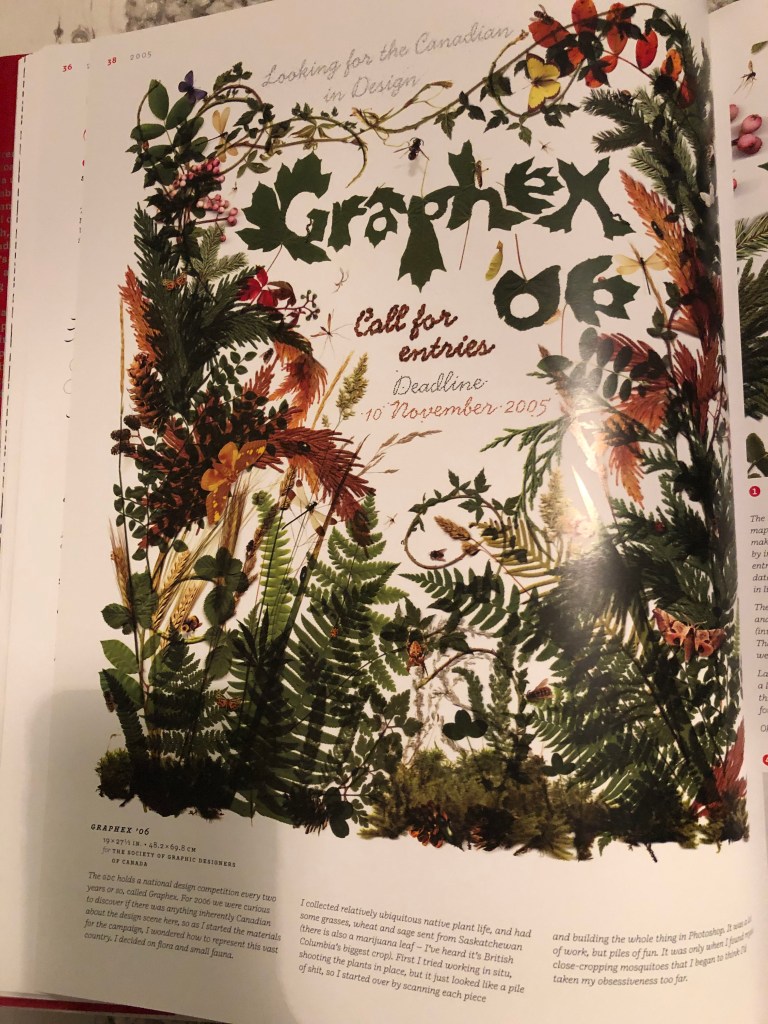
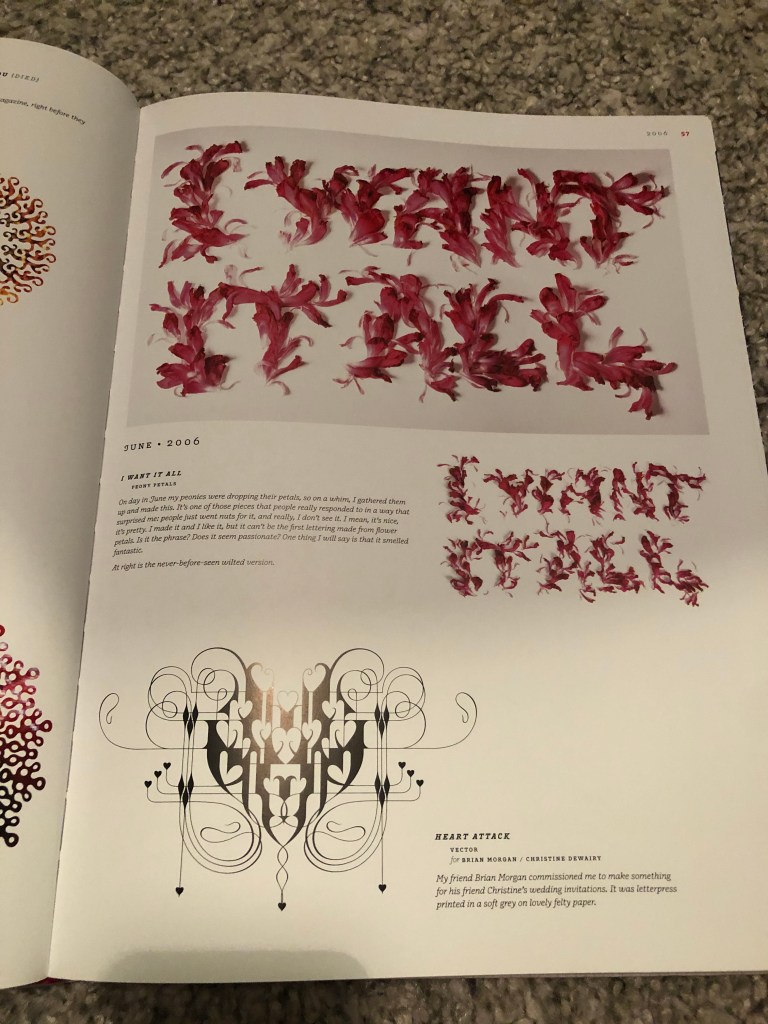
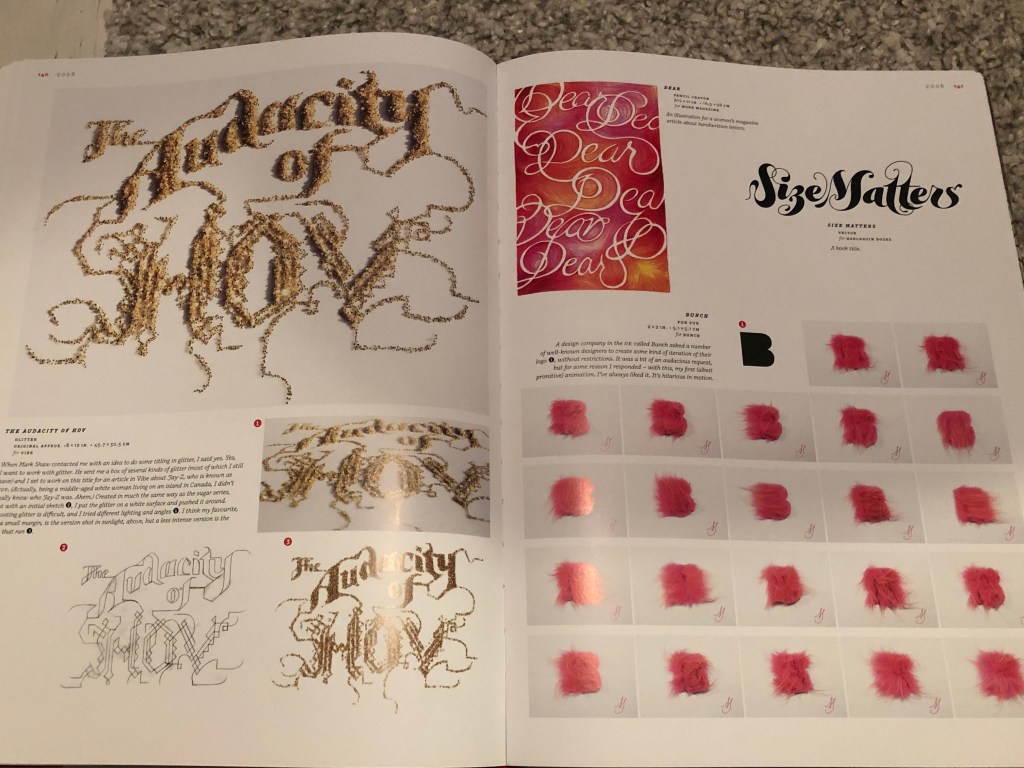
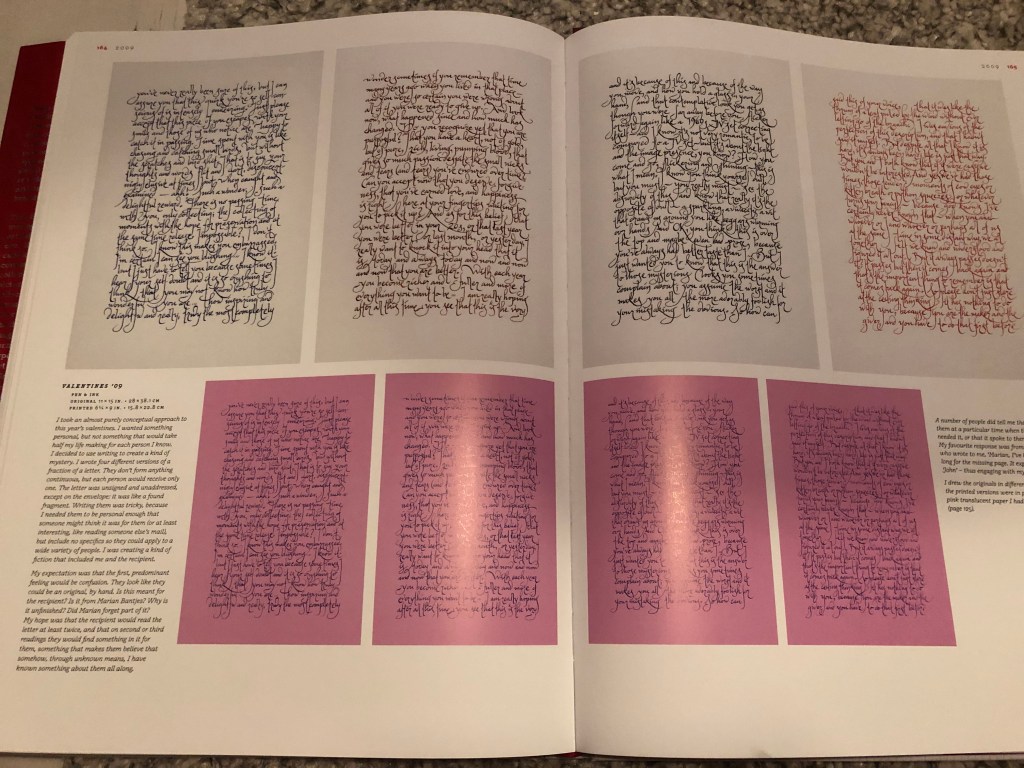
I had one idea for a while about ​​creating my own font from improvised items, and now the moment has come when I am given the opportunity to realise some of my them. I always had at hand the book Marian Bantjes “Pretty Pictures”, which I periodically look through for inspiration. I like her bold experiments and how easily she describes them in her diary. She often draws the font itself, and her layouts are quite strong and professional, she also uses different materials for design, such as fonts on grapes, fonts made from flowers, letters from fur, a font from glitter.

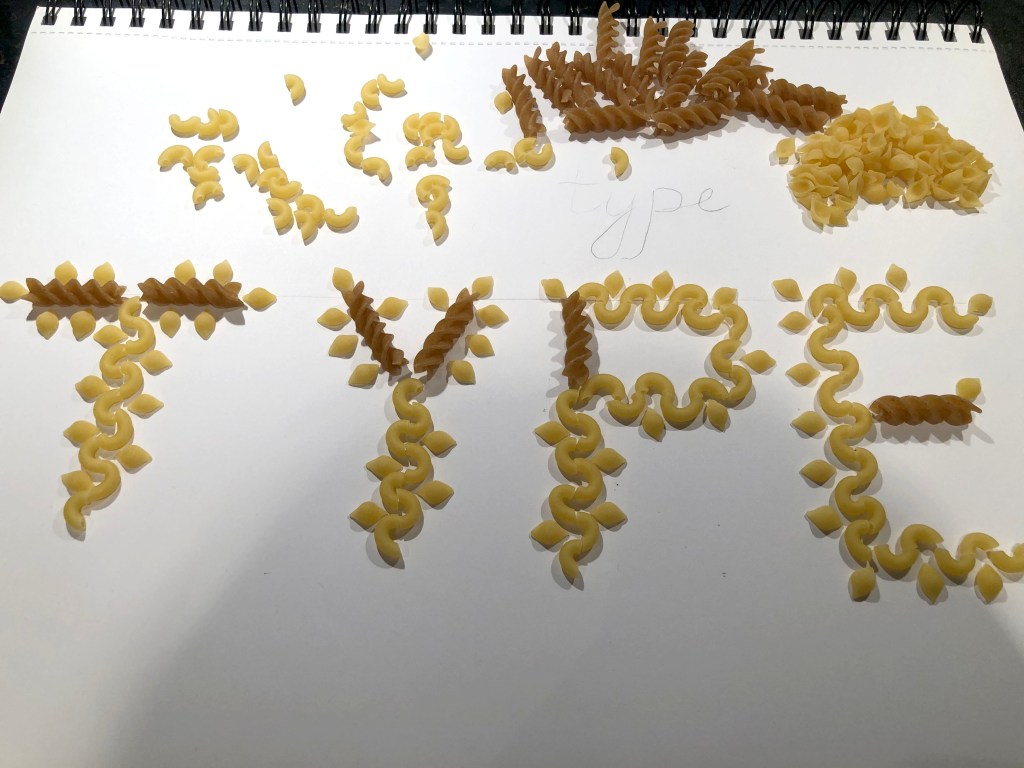
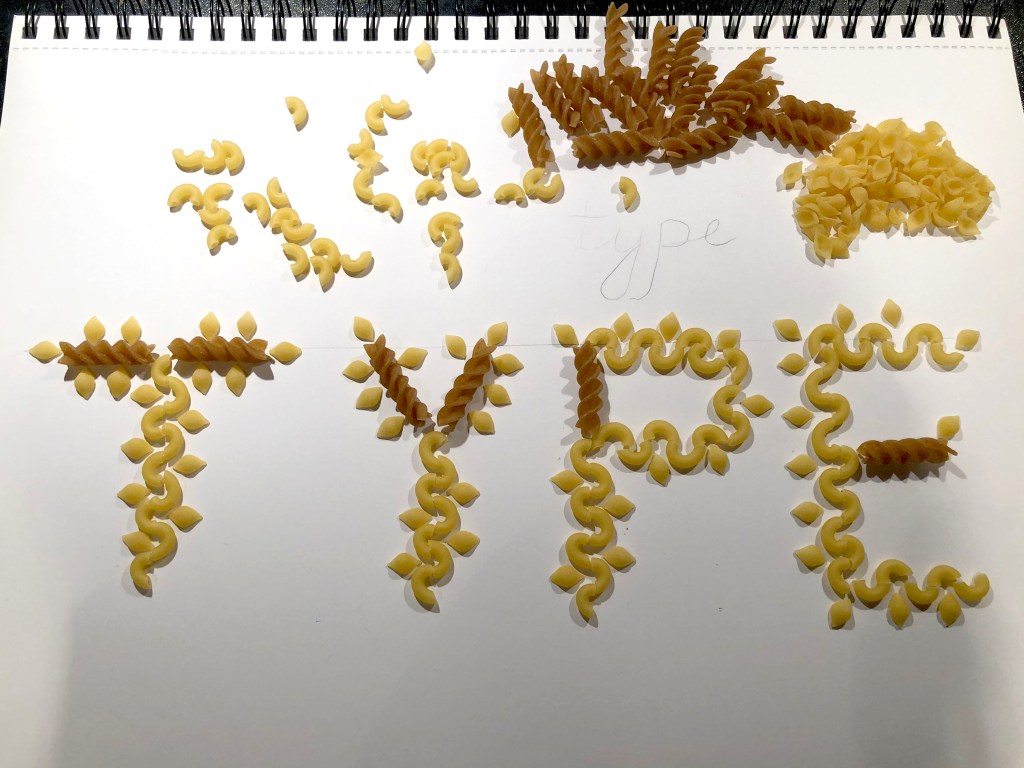
I thought that in this task, by the way, I can also experiment with voluminous fonts made from objects that surround us around. Because I had some deadlines, here I decided to concentrate on the four letters of the word TYPE.

So, materials that I was going to use:
1. Pasta
2. Flowers
3. Loose granules (sugar, salt) in my case is sugar

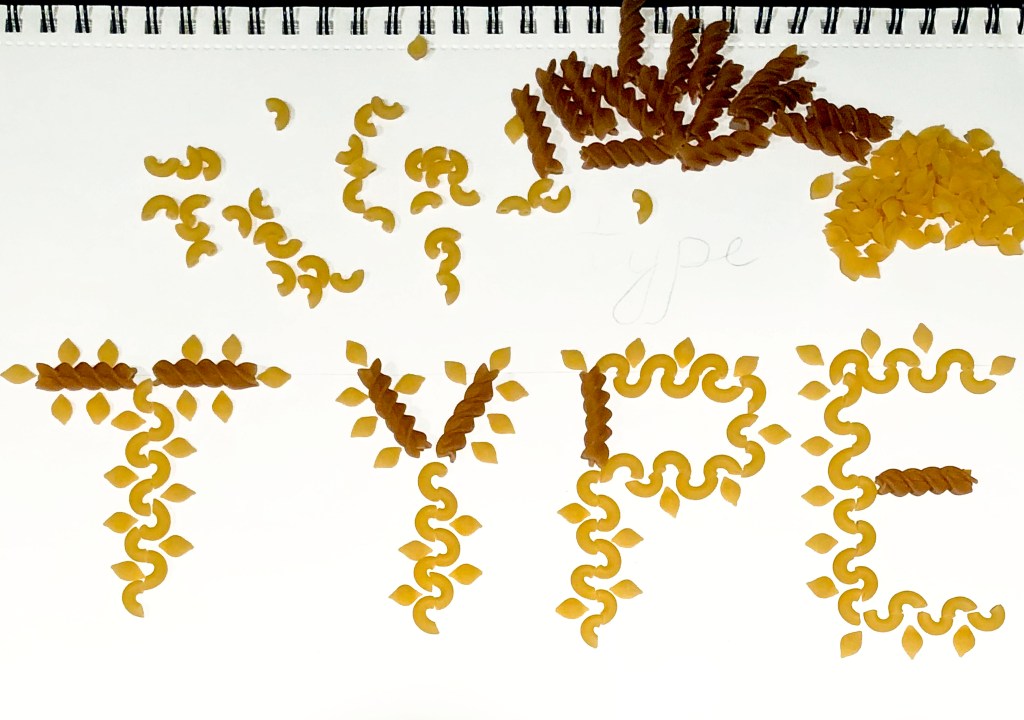
Pasta font

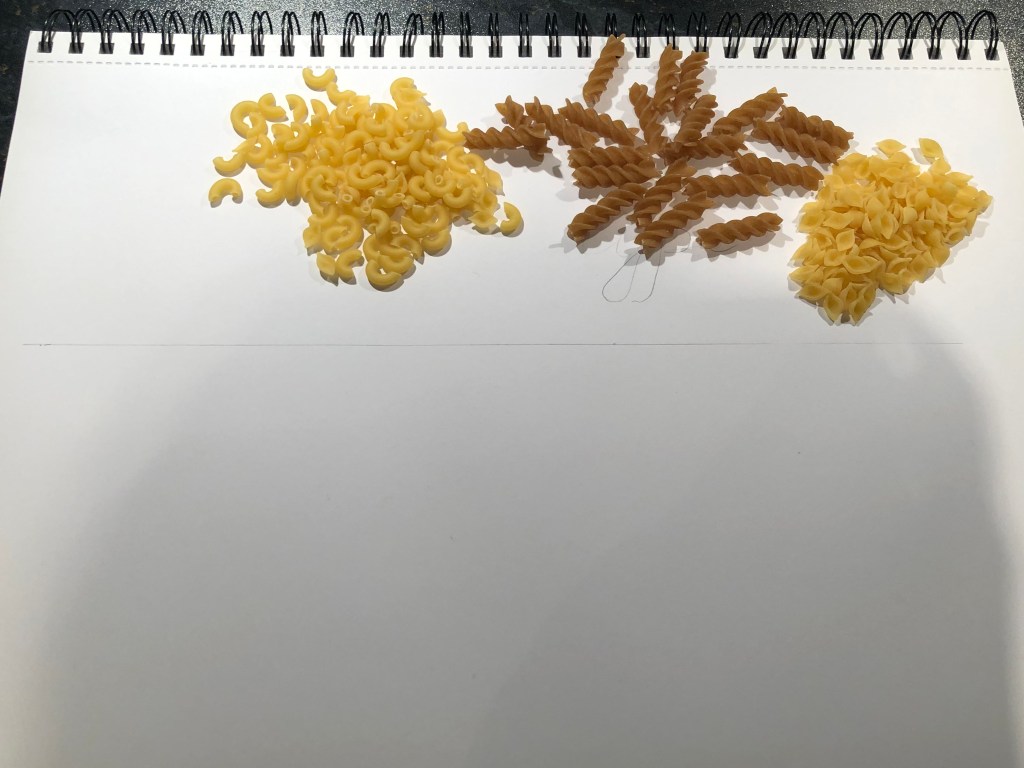
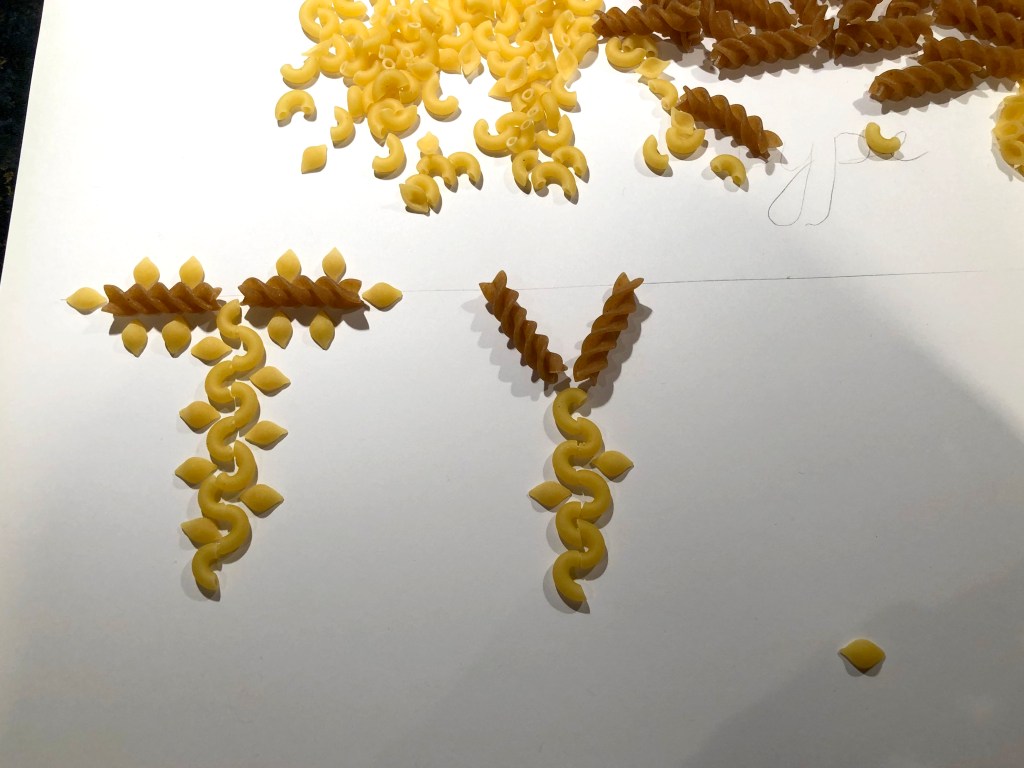
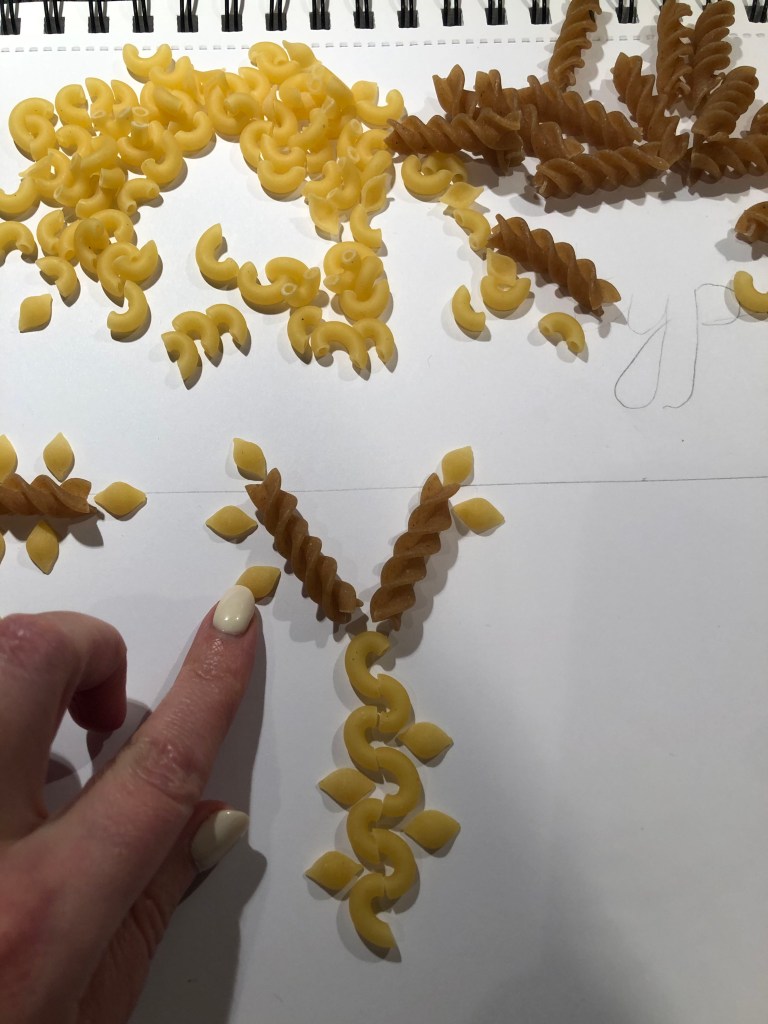
Having rummaged in my kitchen cabinet, I found several types of pasta, which I piled up on a side, I needed a curly paste to design a wavy font. Fusilli of dark wheat varieties I used as an accent for supporting characters. After that, I began to build them in the form I needed. The result was such cute, funny letters that could be used as a decorative font. I think it could be used for some kind of agriculture layouts, something related to flour production etc.

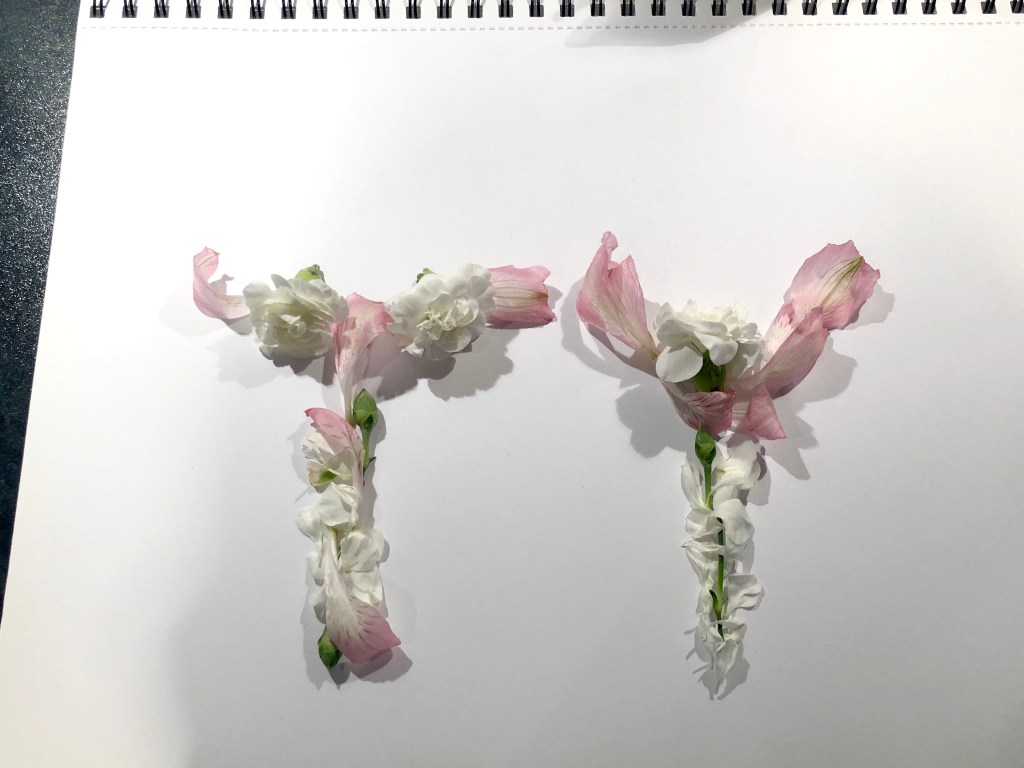
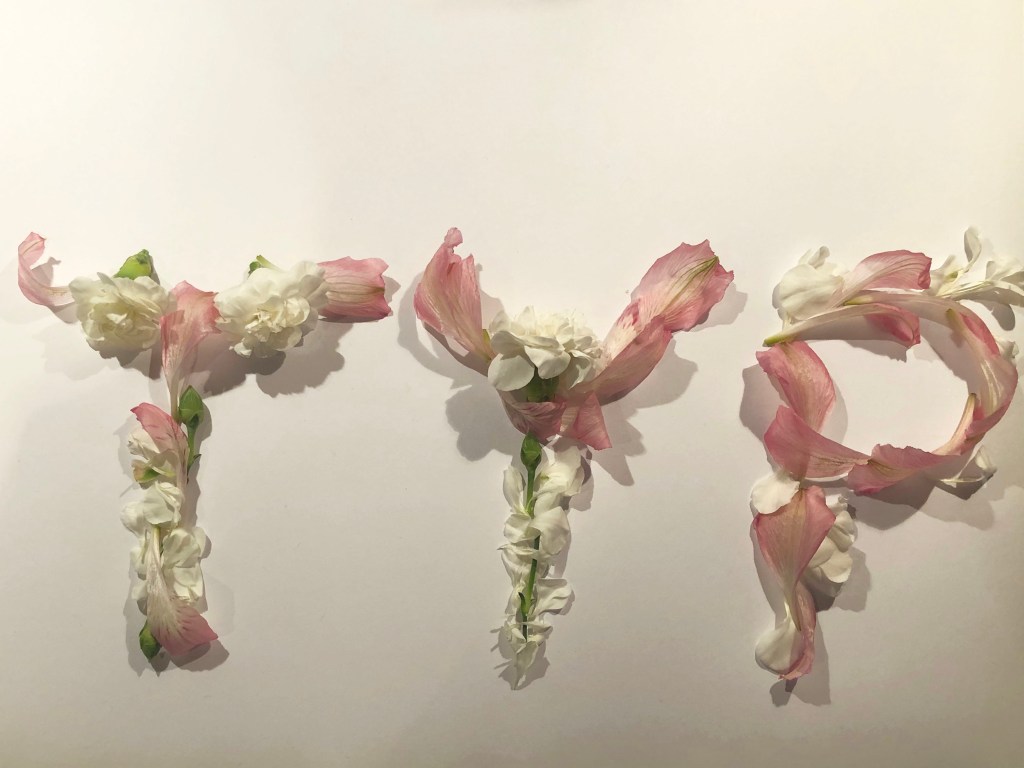
Flower font

After I proceeded to the flower font, I only had white and pale pink flowers in my stock, as I didn’t have brighter shades, I decided to use the colour palette that I had available. At first, the petals did not want to line up in the forms I needed; after several trials, I still managed to achieve the forms I needed. The font turned out to be very tender, airy, it could be used in the design of women’s perfumes, or boxes with floral aromas of gift candles and so other more.

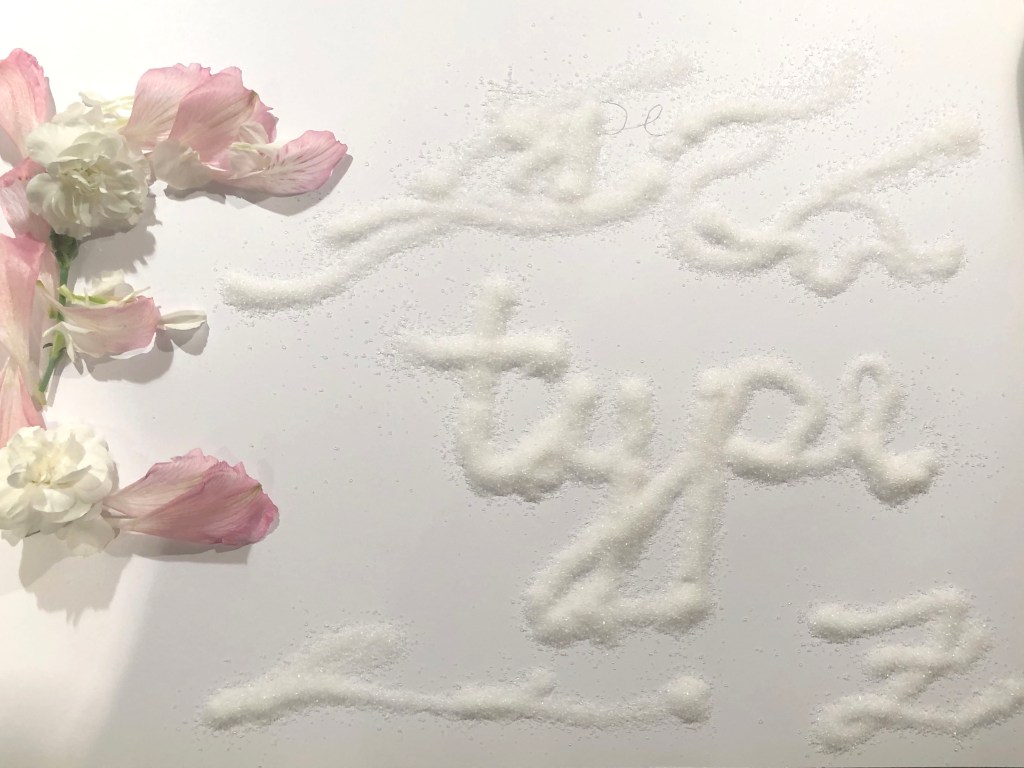
Sugar font

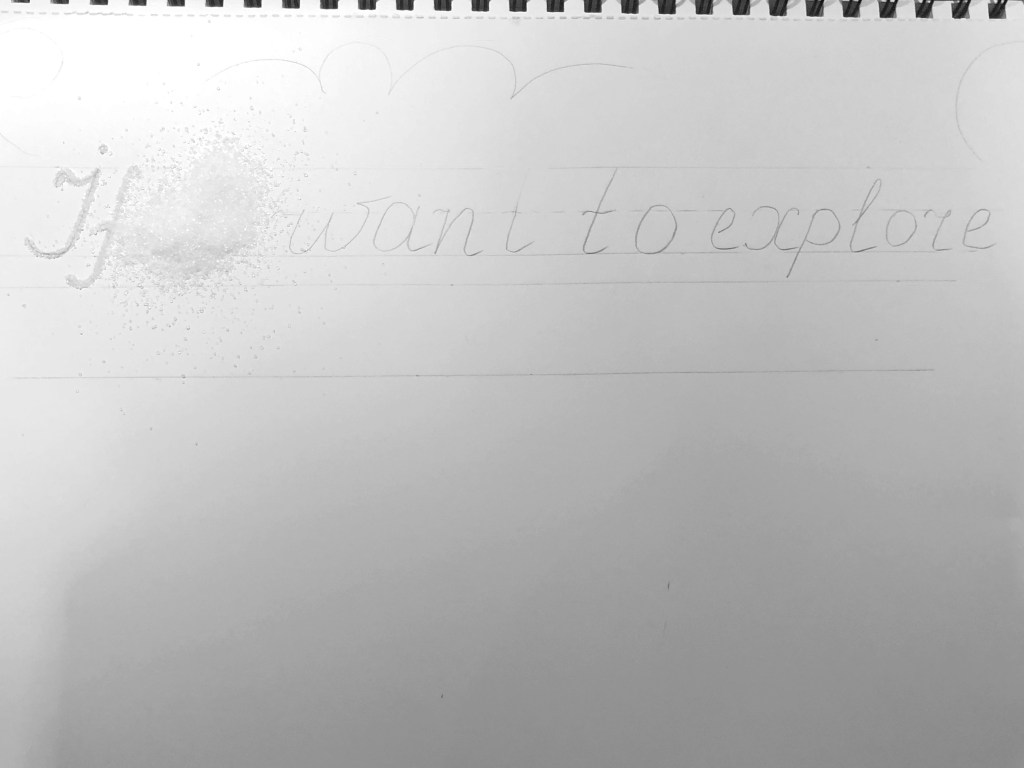
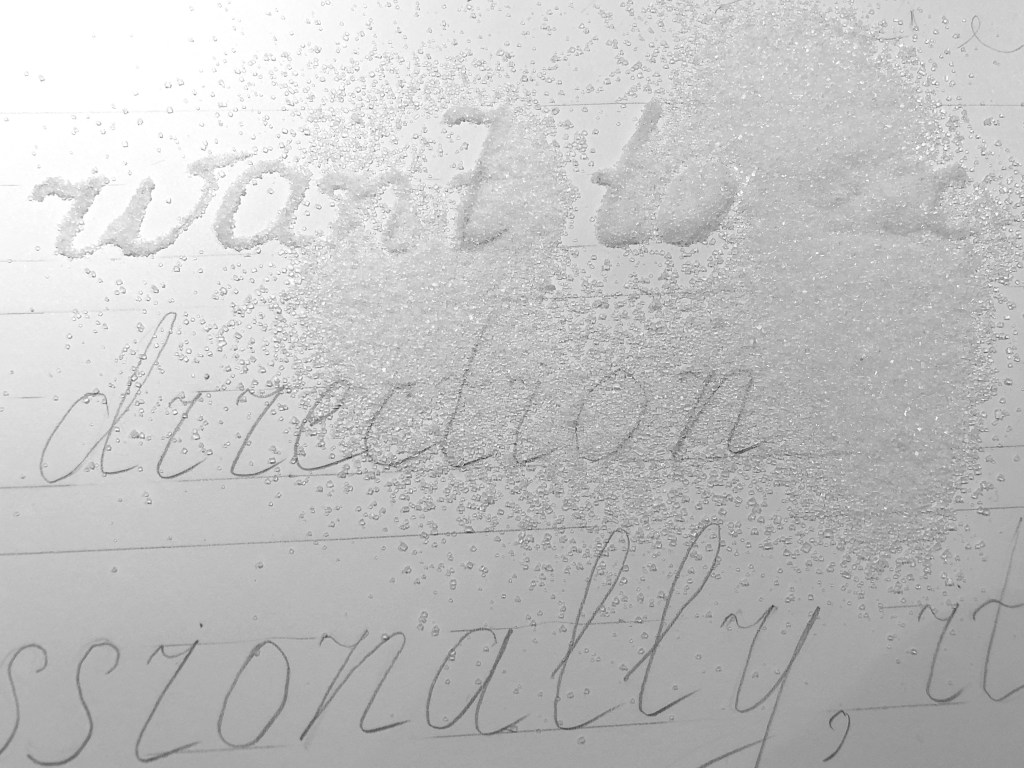
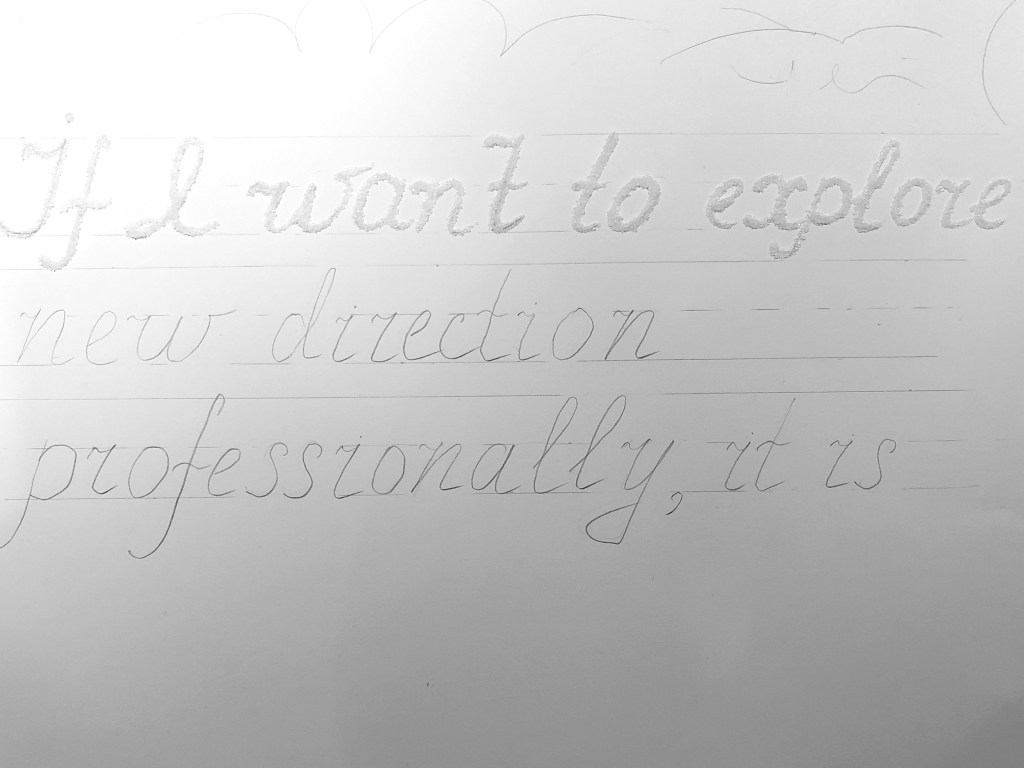
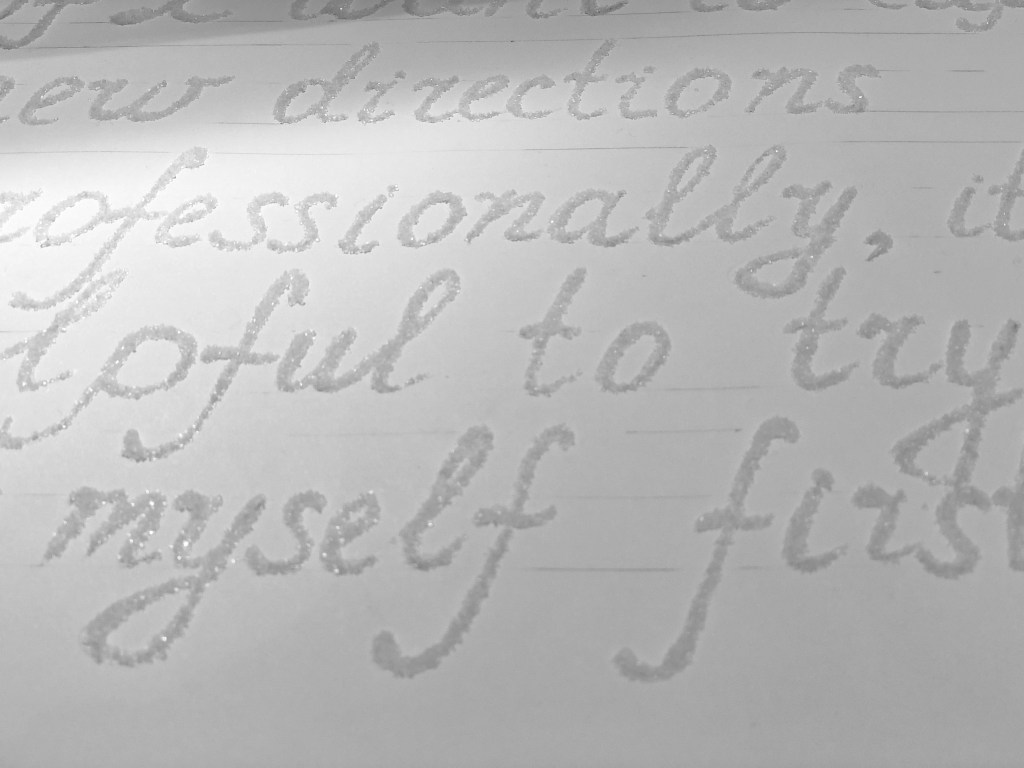
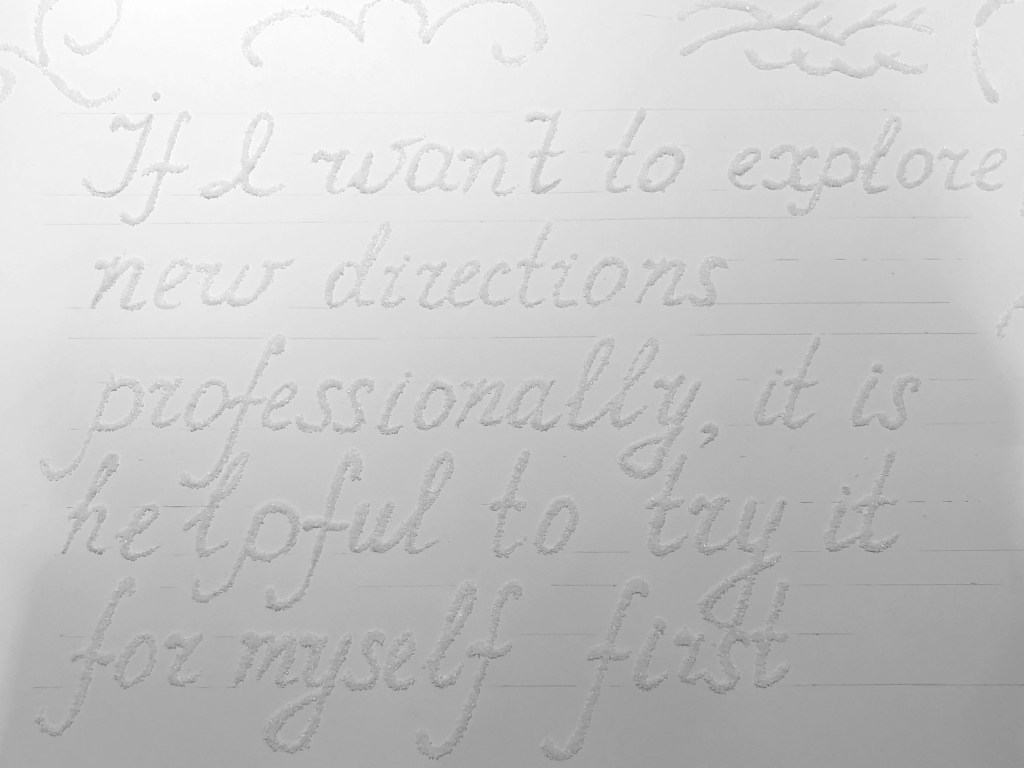
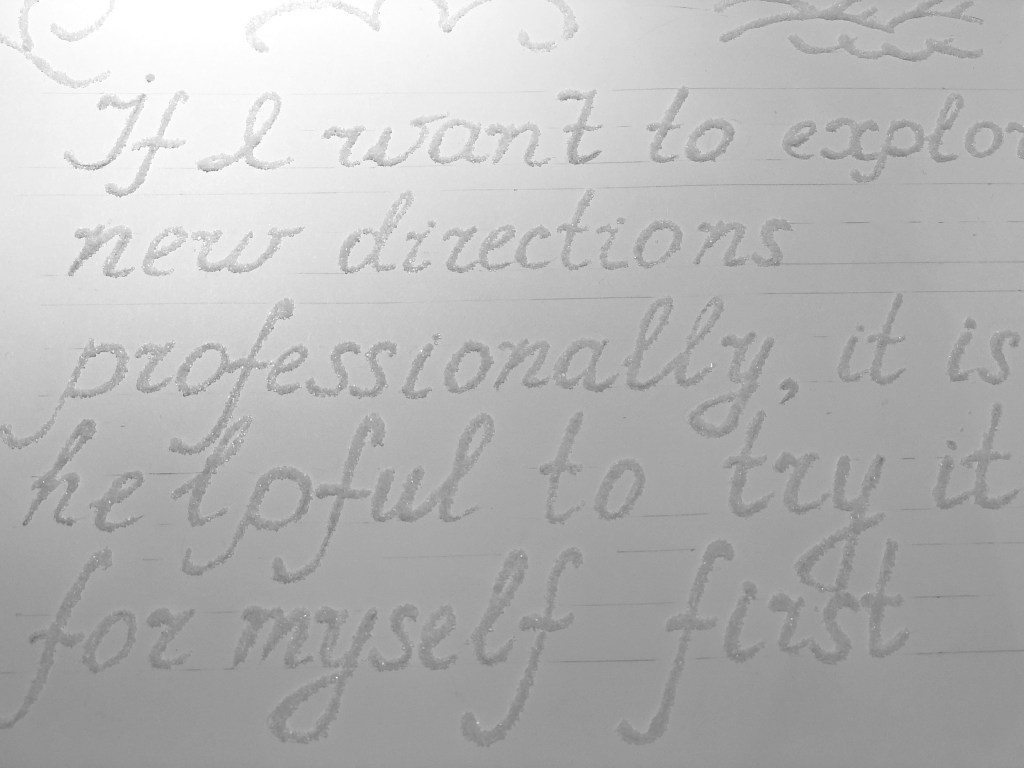
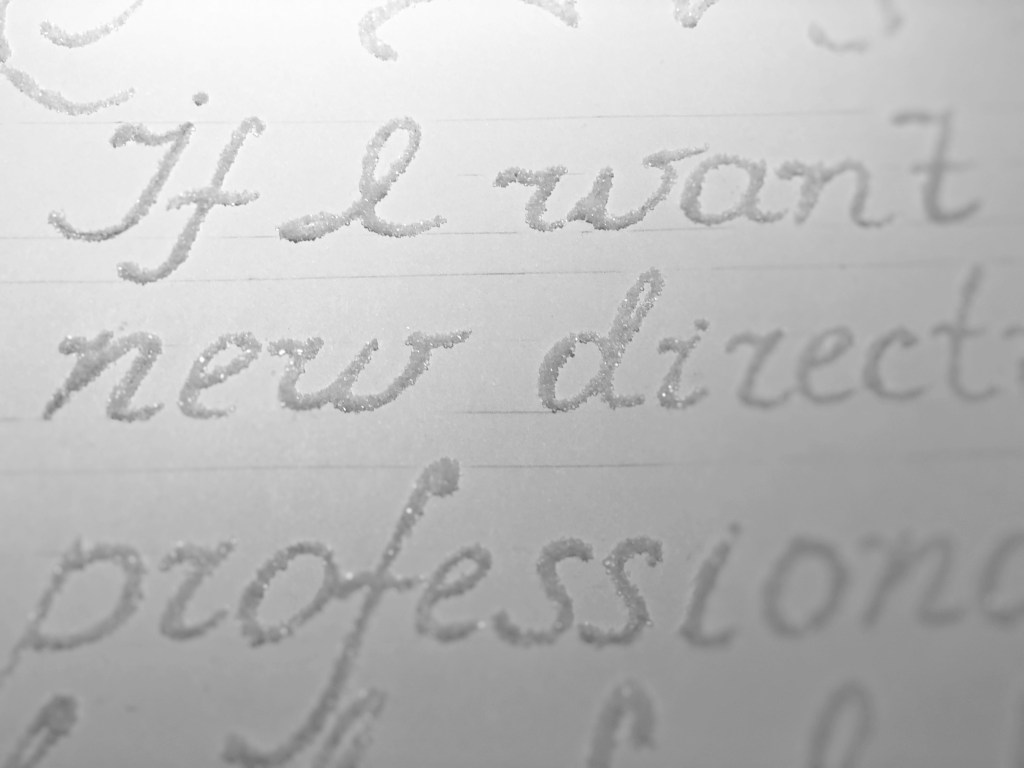
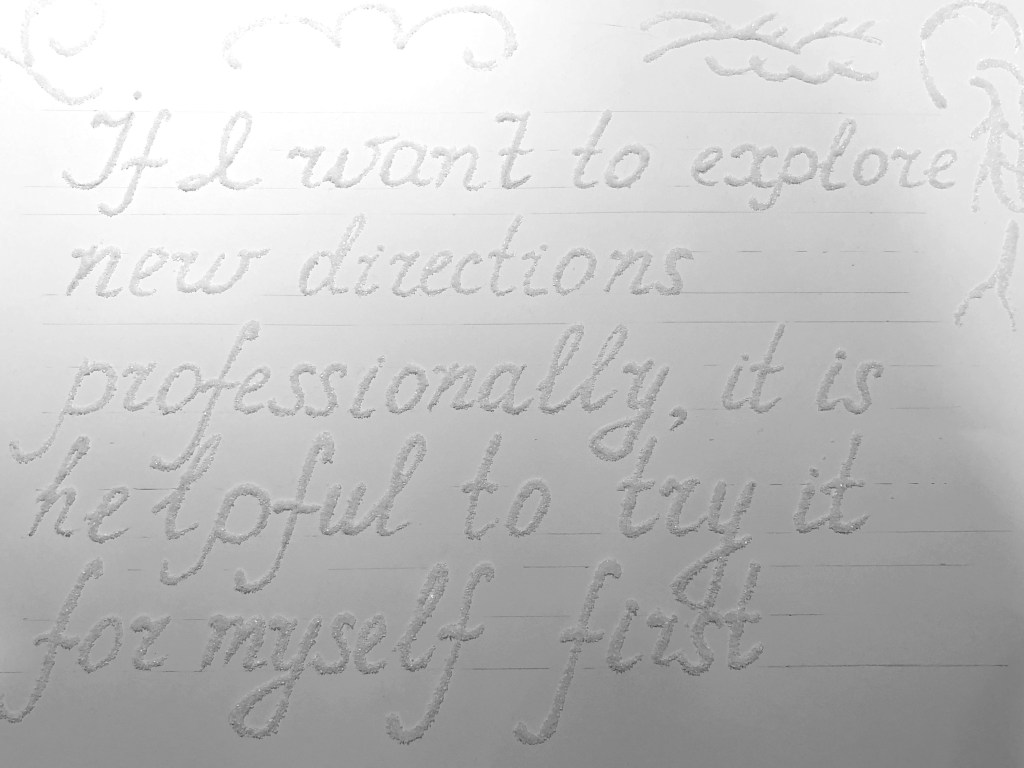
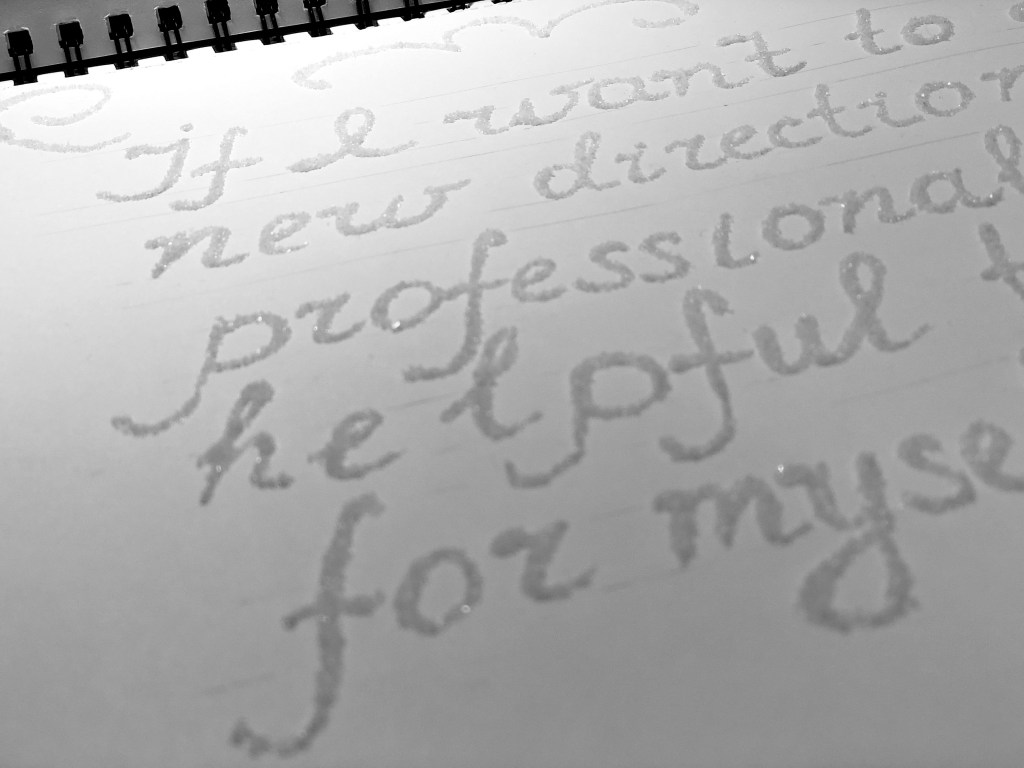
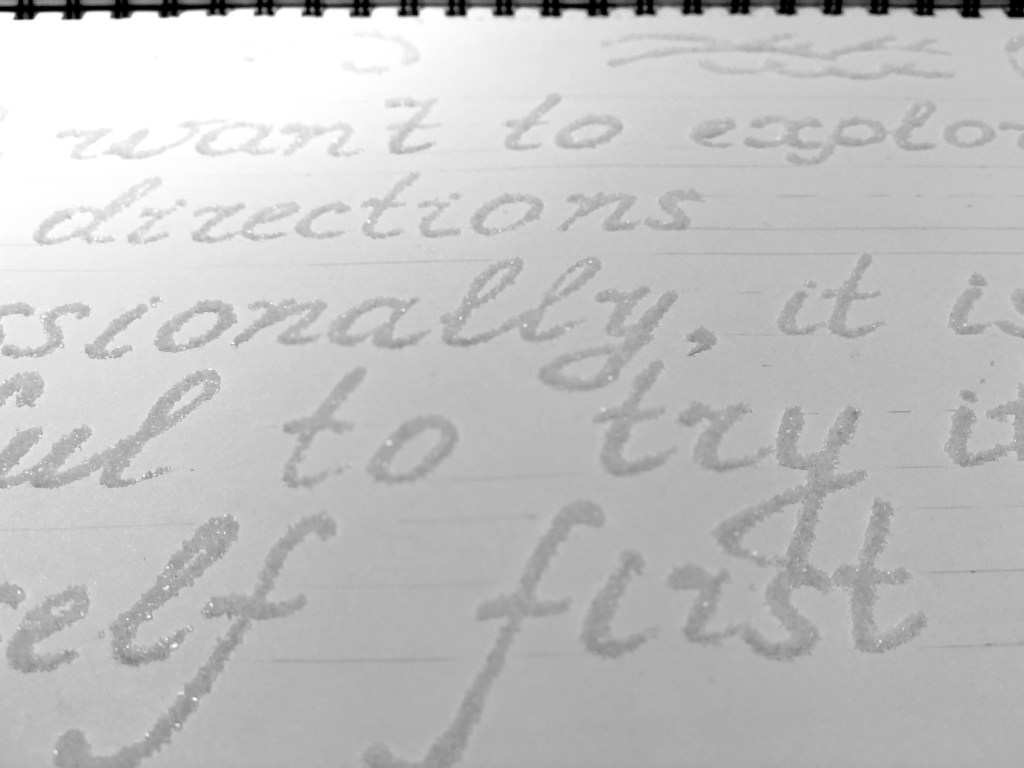
With a sugar type, I had to fantasise a little. I needed a very thin tube through which I could pass this very font. I decided to write the font by the analogy of my own calligraphic emphasis. I wrapped an A4 format in a tube, thereby creating a funnel for sugar, the font was thicker than I planned. My first trial with thick funny looking letters is below.

I was thinking about what I did wrong; suddenly, I remembered our lessons from school times, where we used glitter to stick things around. Then I realised what I was missing, and how I can reach a desirable thing font. I needed PVA-glue, thin painting brush and some sugar. I really was inspired by this idea. I could use my own hand-writing and create a unique and fancy font for it. I created the outlined font first, trying to keep my fonts similar to each other in size. I was missing full alphabet there, but I still created some key letters for the word type in small letters. I was thinking about what grains to use, sugar or salt, but then I thought that sugar creates a nice big texture that I needed, plus it gave some sparkles. I liked that effect of practically white font on a white background. I called it Sugar Calligraphy

Font Sketches

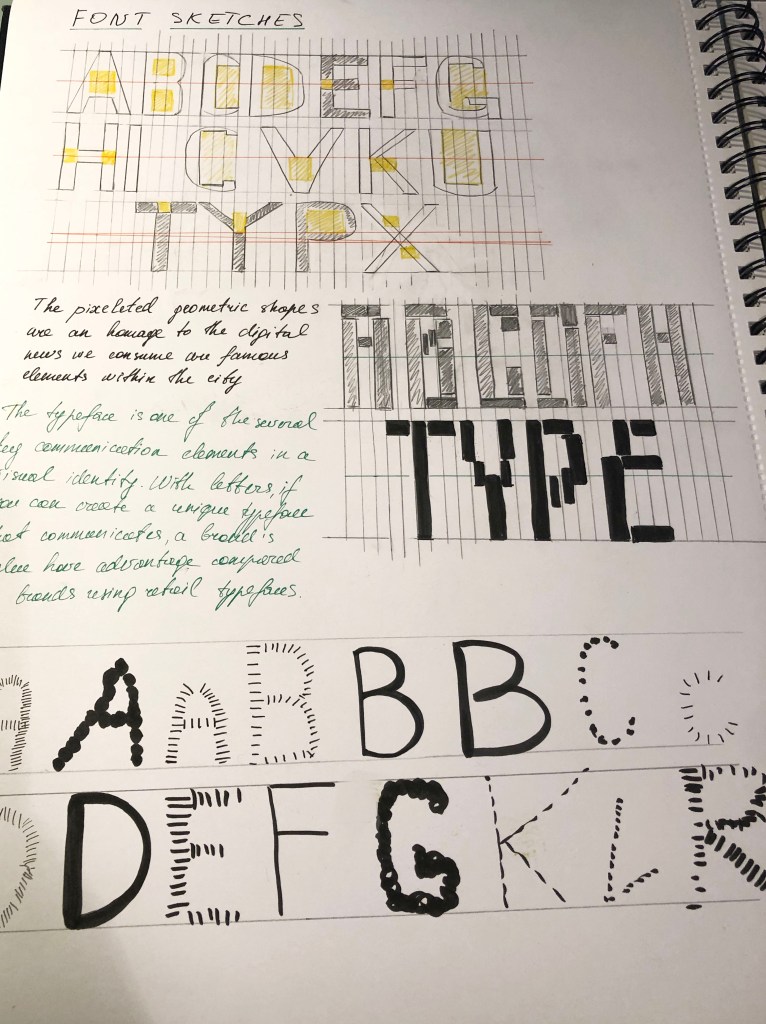
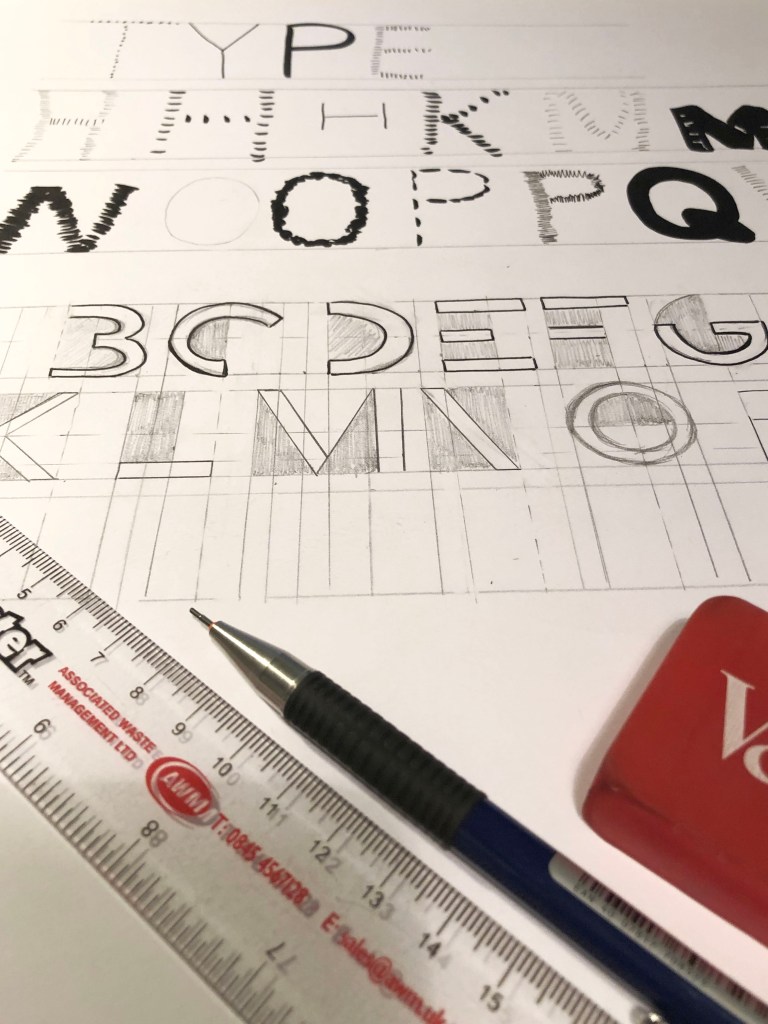
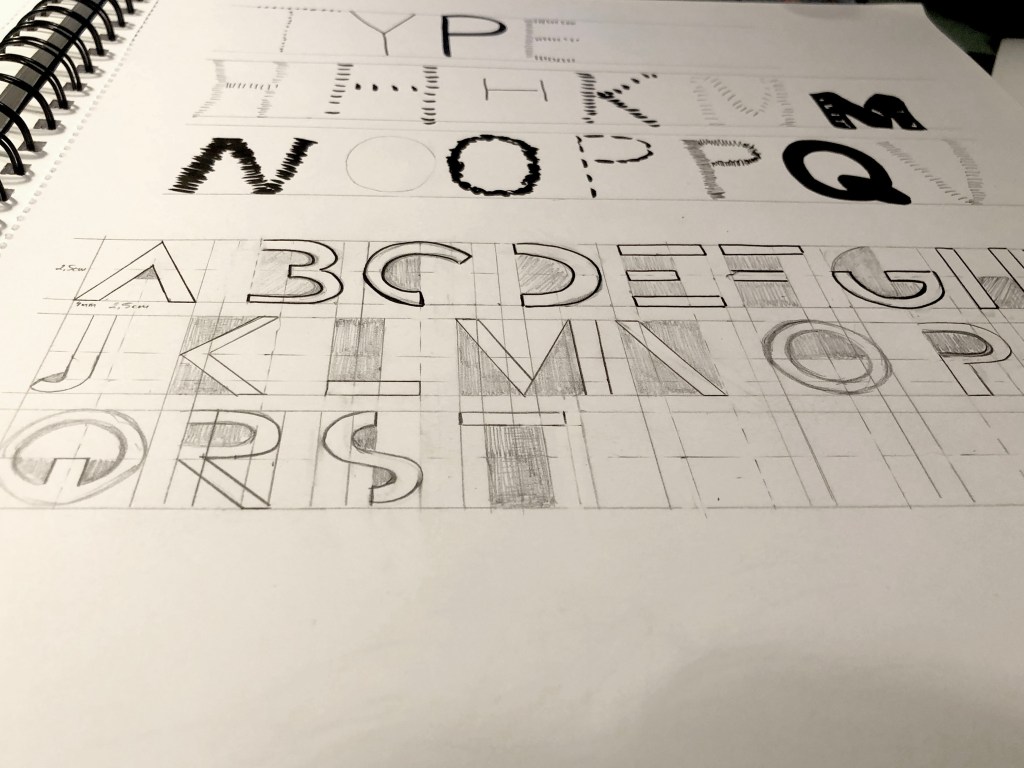
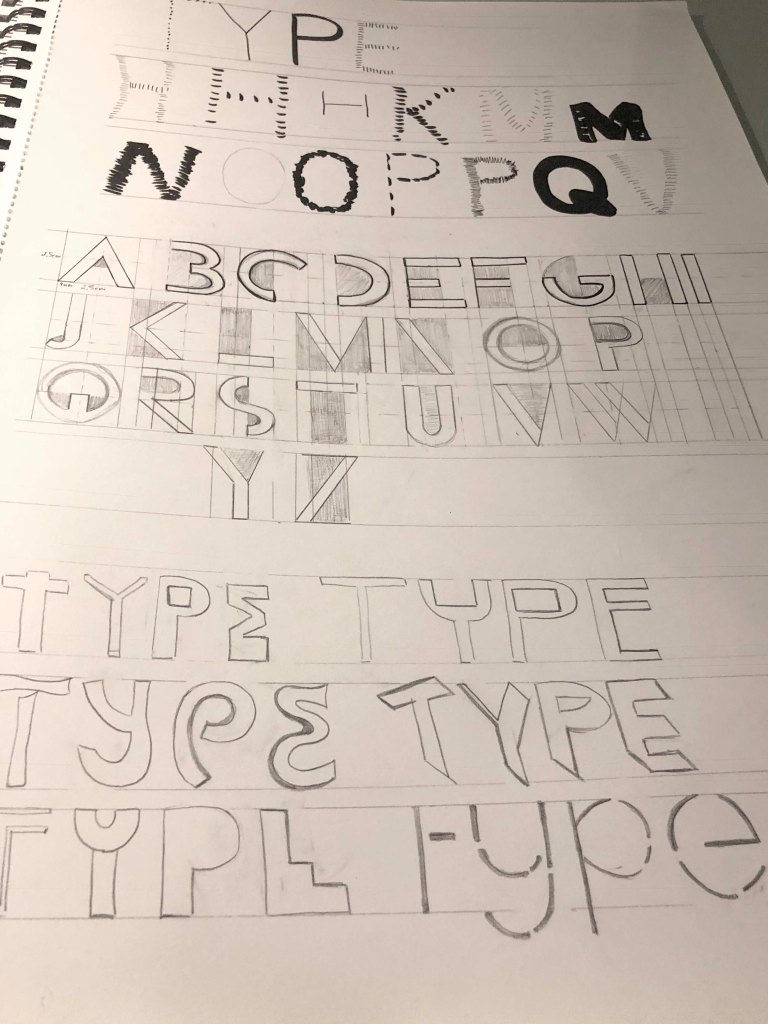
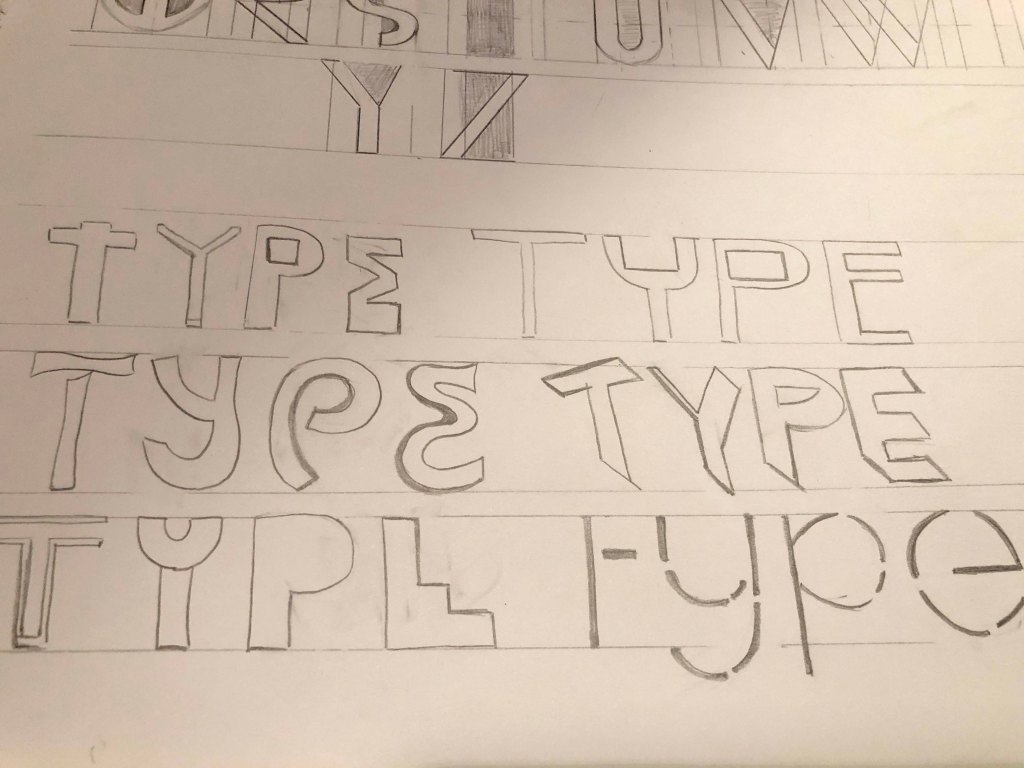
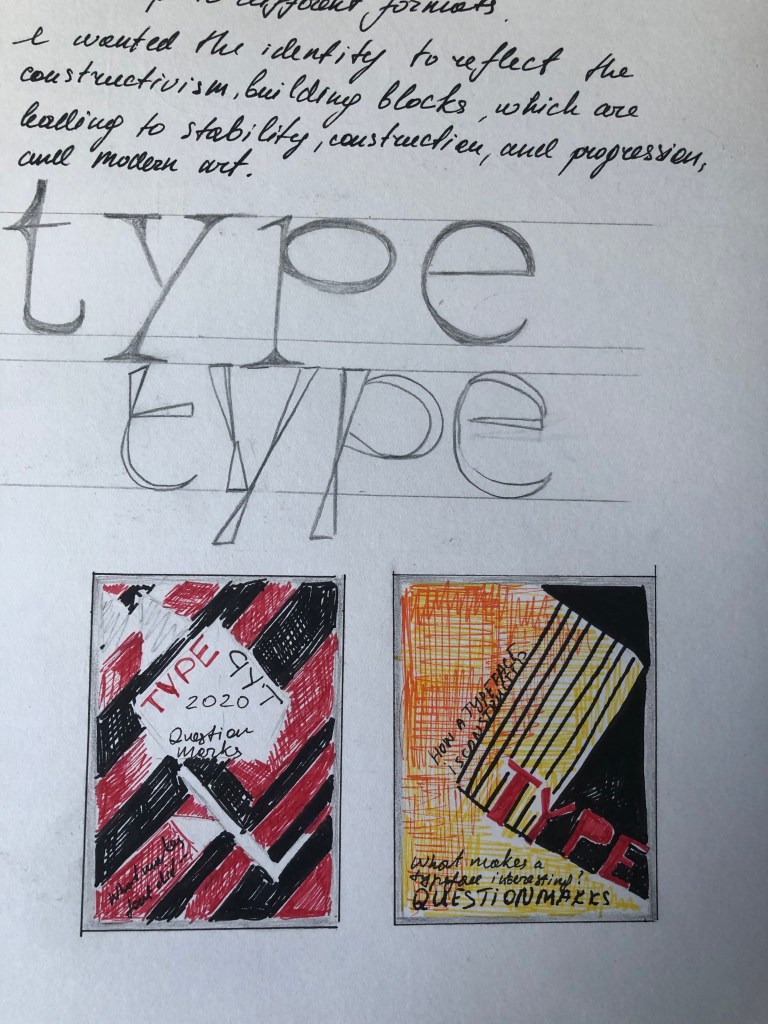
Before starting to draw the font, I knew that I needed an idea, that to explain how my font and designs are evolved. I created some sketches of fonts of different shapes and styles, from patterns with waves and smooth lines, thick decorative sketches, thin font options that would look like a constructor, decorative dot and lines font options, different shapes font, with thin or thick lines. My thoughts led me to the fact that this is the first font that I drew, and I had such associations around this assignment, keywords:

• Construction
• Building
• Block
• Modern
• Constructivism
• Stable, Reliable

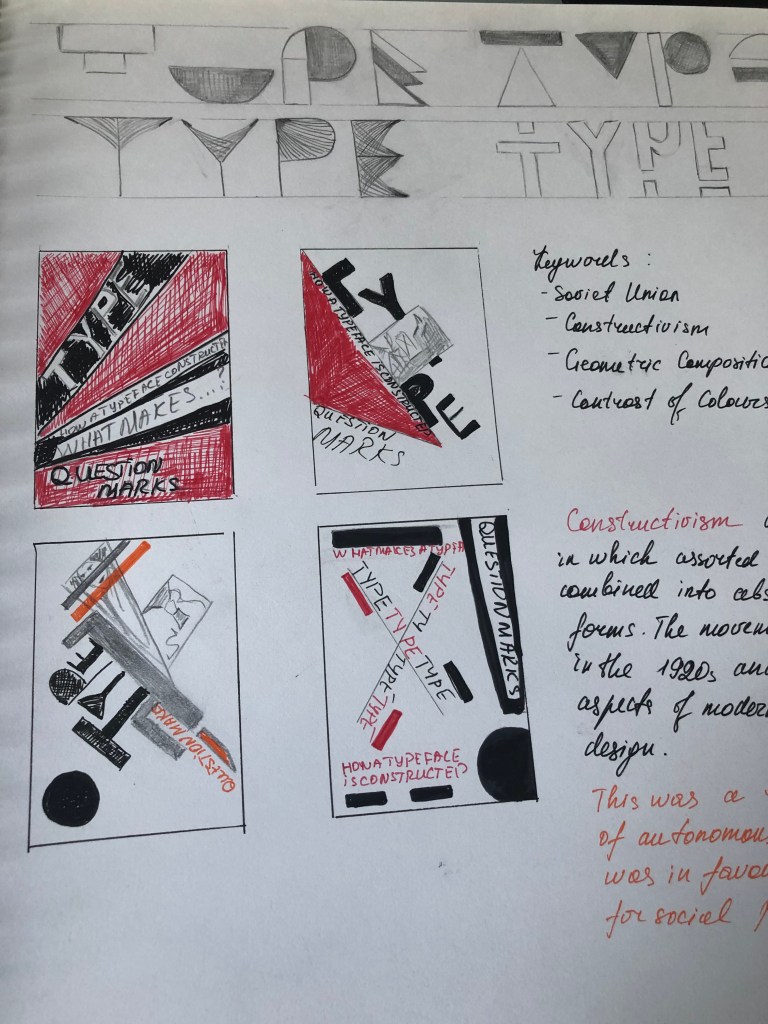
I wanted to draw an analogue with the construction, but at the same time bring in the spirit of the Soviet Union past, here I came for inspiration from several authors like Kandinsky and Rodchenko, in their works, there are confident geometric shapes, and the main colours are red and black, additional colours are green and blue.

Constructivism was an artistic and architectural philosophy that originated in Russia in 1913 by Vladimir Tatlin. This was a rejection of the idea of autonomous art. He wanted ‘to construct’ art. Constructivism had a great effect on modern art movements of the 20th century, influencing major trends such as the Bauhaus and De Stijl movements. Its influence was widespread, with major effects upon architecture, sculpture, graphic design, industrial design, theatre, film, dance, fashion and, to some extent, music. (source: Wikipedia)

I really wanted to experiment with design in the style of Constructivism, and I decided to take this opportunity in this Assignment. The direction was chosen, now I was faced with the task of combining the pieces of the puzzle.

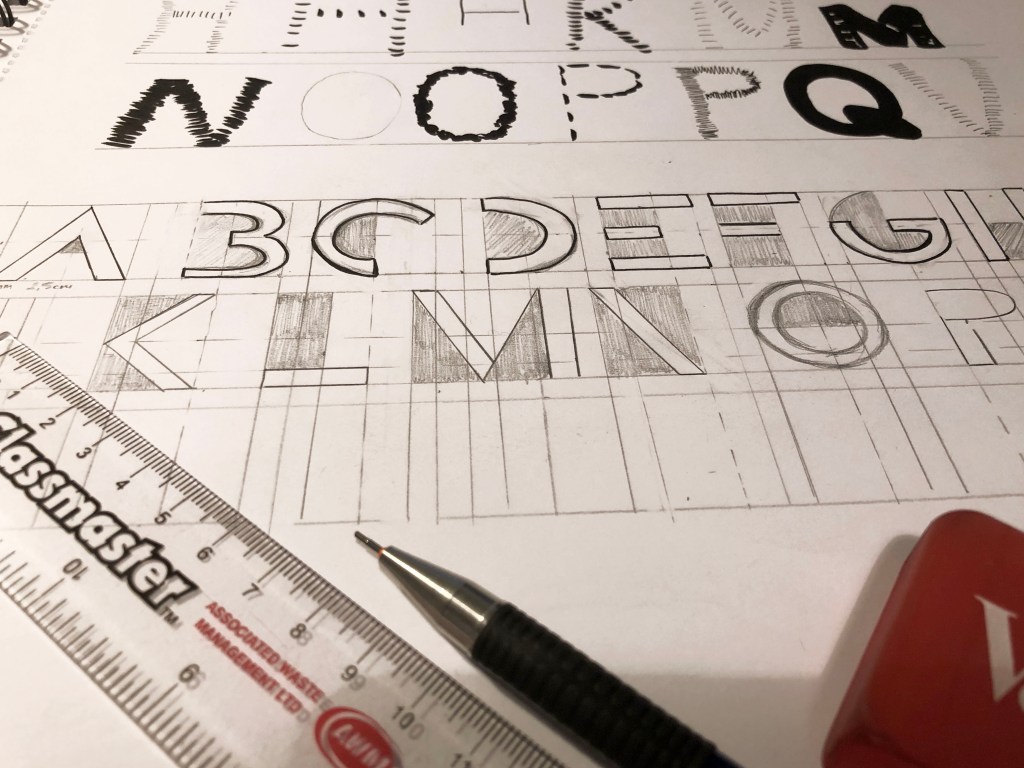
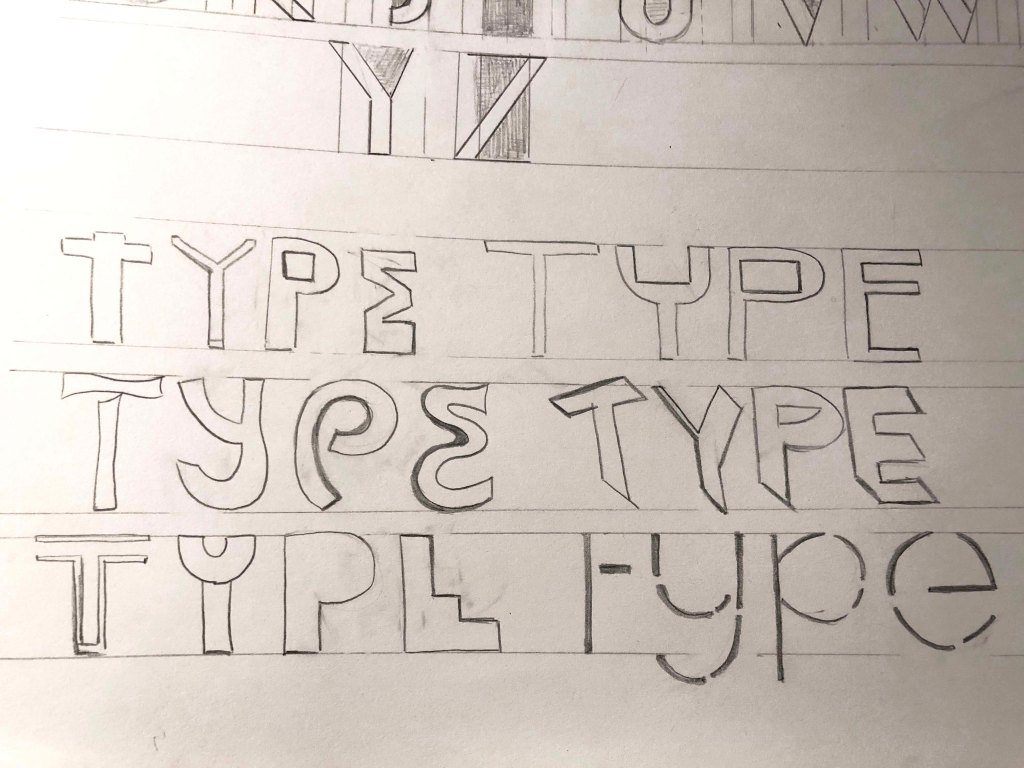
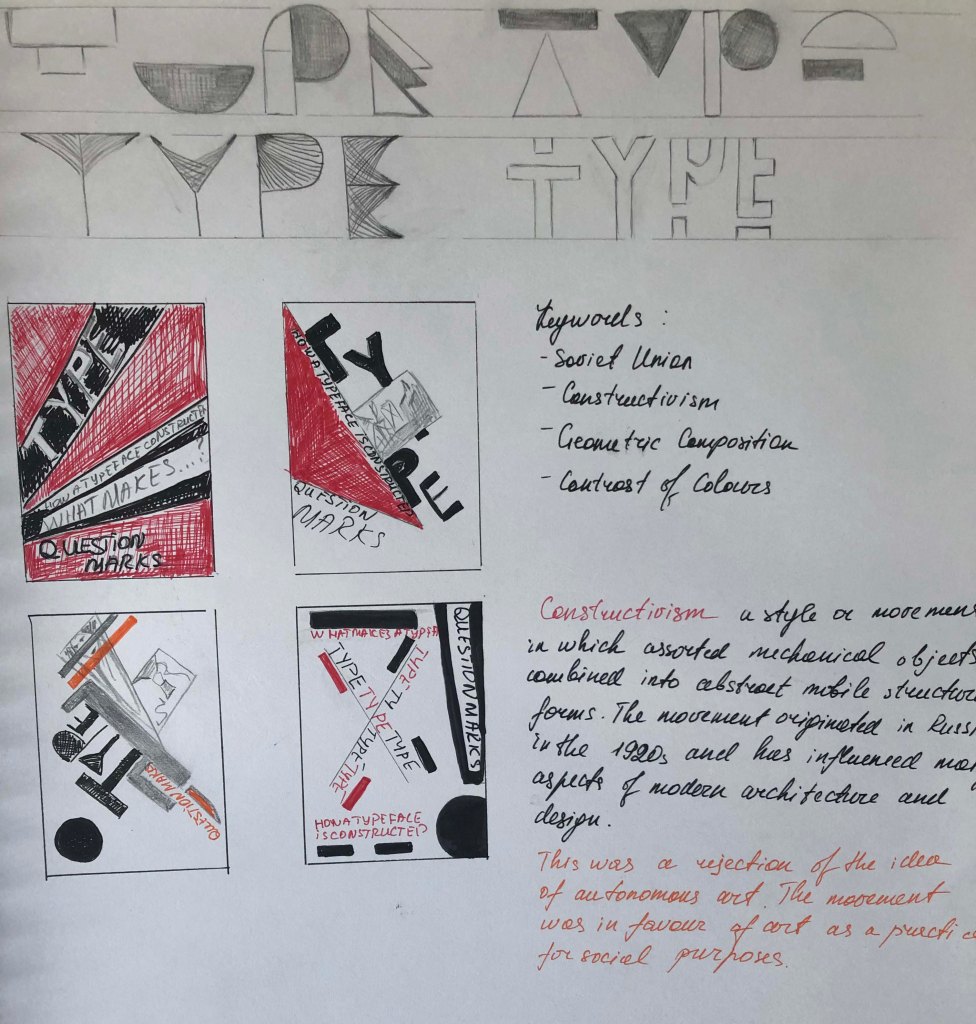
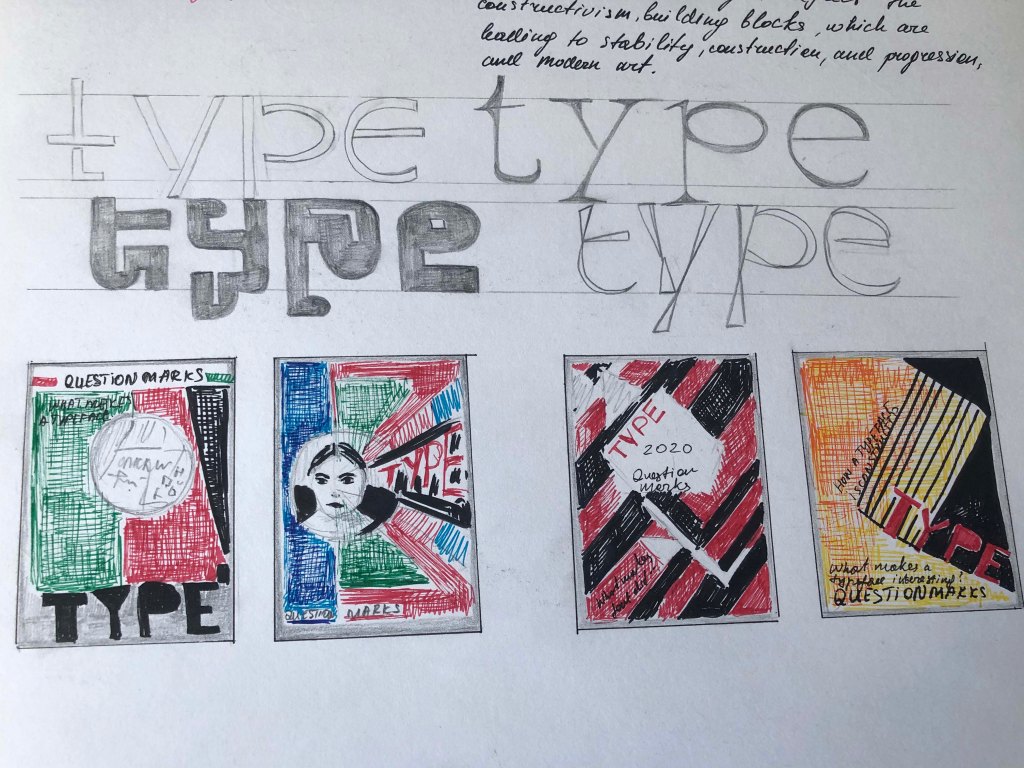
From my examples, it can be seen that I started drawings from standard fonts, at the same time with additional elements, as in the first example, with yellow rectangular blocks. Later I tried a Tetris-style font, but it seemed to me too crude. Then I tried a font with different textures, dotted, linear, thin and thick lines in one alphabet, but here I risked the lack of experience, I realised that my font might be too crooked for future use in design. I tried several font shapes, most of them were decorative and in the style of fixed width. I would like to note that some of my sketches turned out to be quite successful, but due to lack of time, I realised that I needed to focus on one style that would help me put everything together. So I’ve chosen one direct font, which is described in the next section.

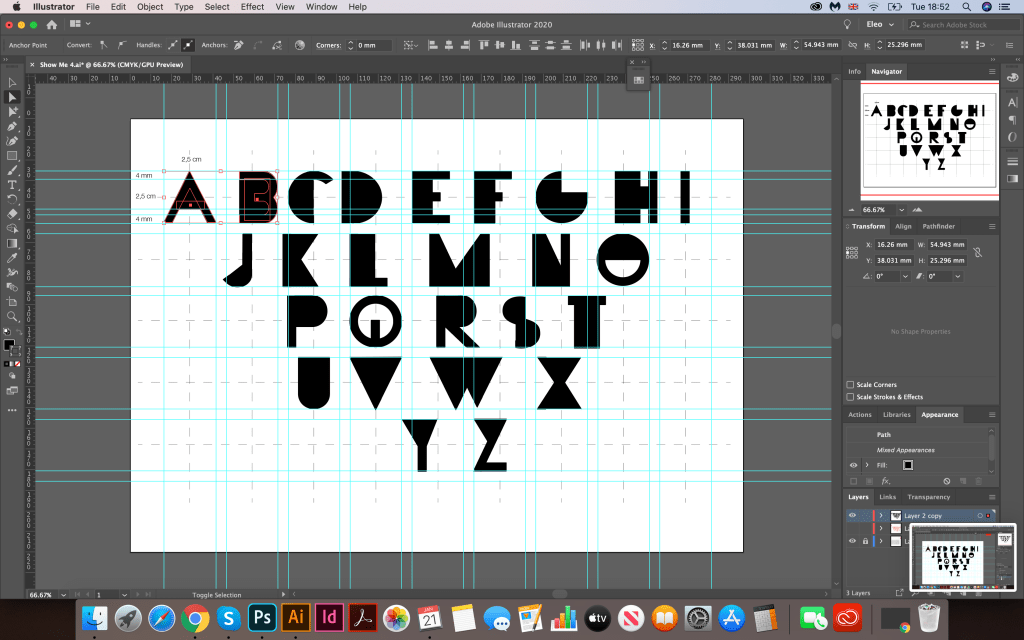
For my first font, I wanted to create something stable and durable, with confident lines, but at the same time, I wanted to add a twist to this font, something unusual so that it looked not just like a sans-serif font, but closer to a decorative font. I collected some more font options on my Pinterest account. And then I started sketching the font.

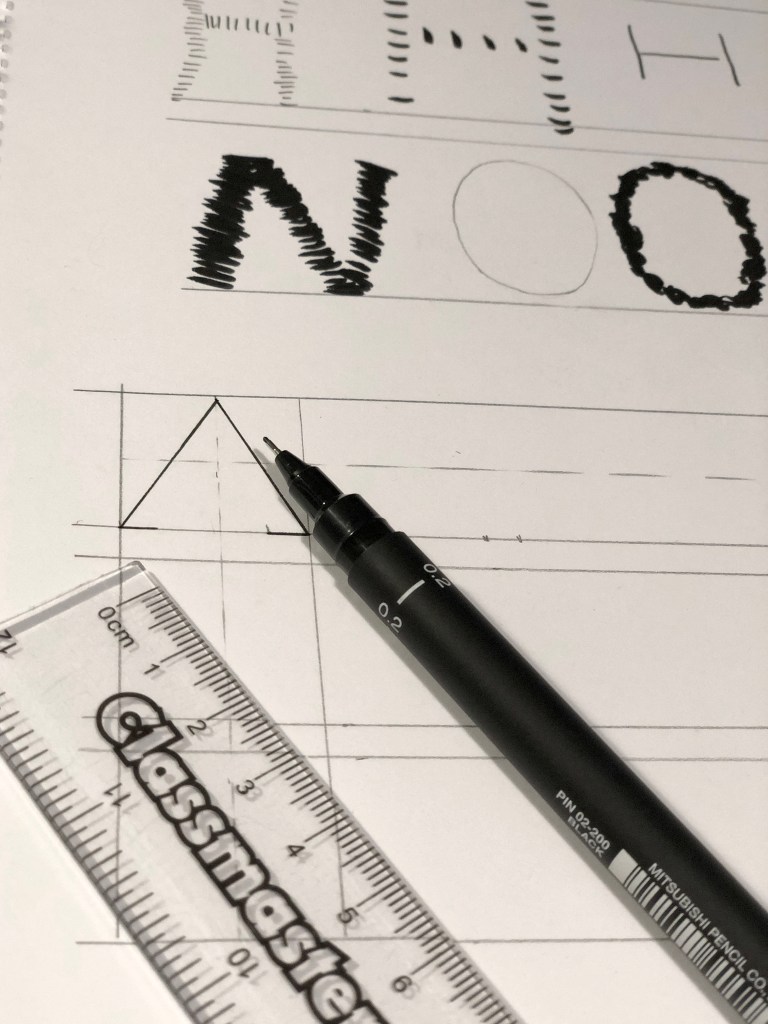
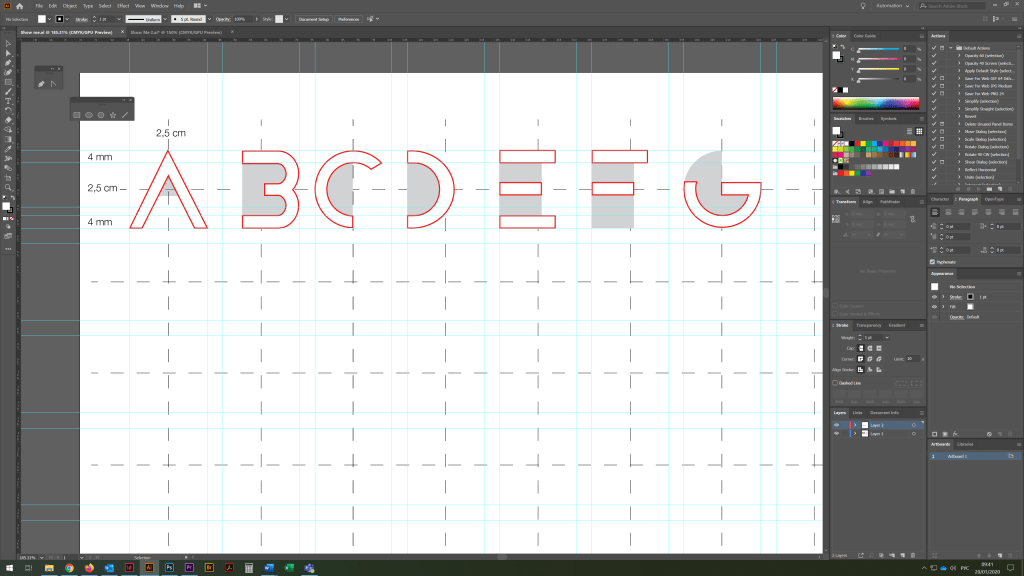
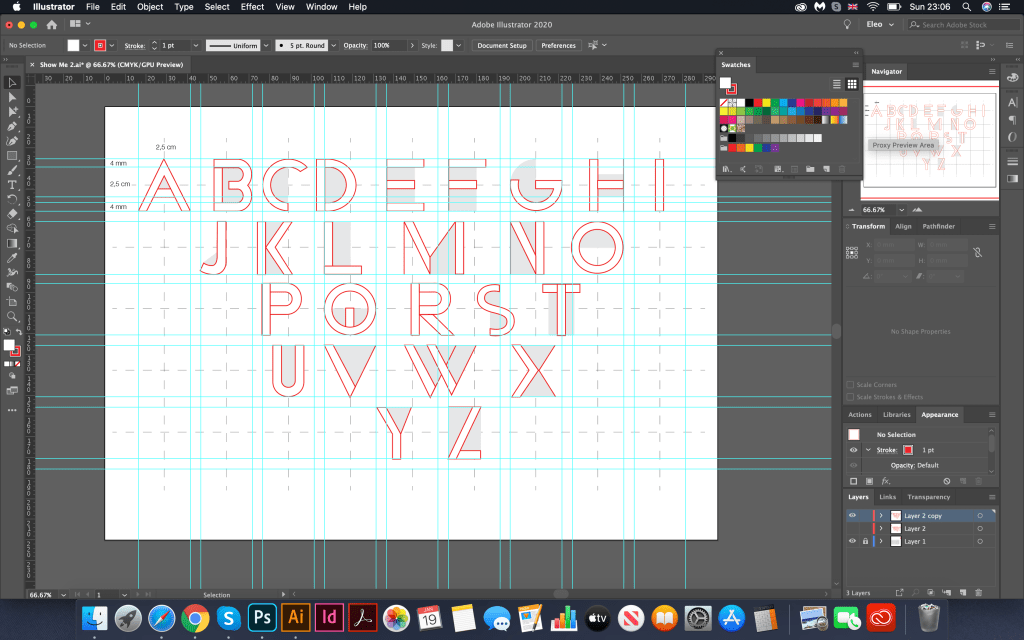
I started with capital letters. I transferred my sketches to the electronic version, created a grid and marked the centre. My main proportions were 2.5×2.5 cm, the width of each block was 4 mm since for the cover I needed to use the word TYPE, my task was to beat these letters in an unusual way, at first I had the letter E with a wide side block, after which I changed it’s on a thin line, similarly for the letters F, M, N, so this font looked more designer, and not like Helvetica or Arial.

The first font was ready, it was straightforward, confident, and successfully fit into the style I set. Later, I started designing the font for the magazine cover. I tried several options. I used the large letters TYPE in the design number one, inside which I placed photographs of the buildings. All photos were selected from Pinterest. I tried several options for writing the font, with multi-coloured books, plain, but my designs still looked amateurish, however I still could see that I needed to refine the font.

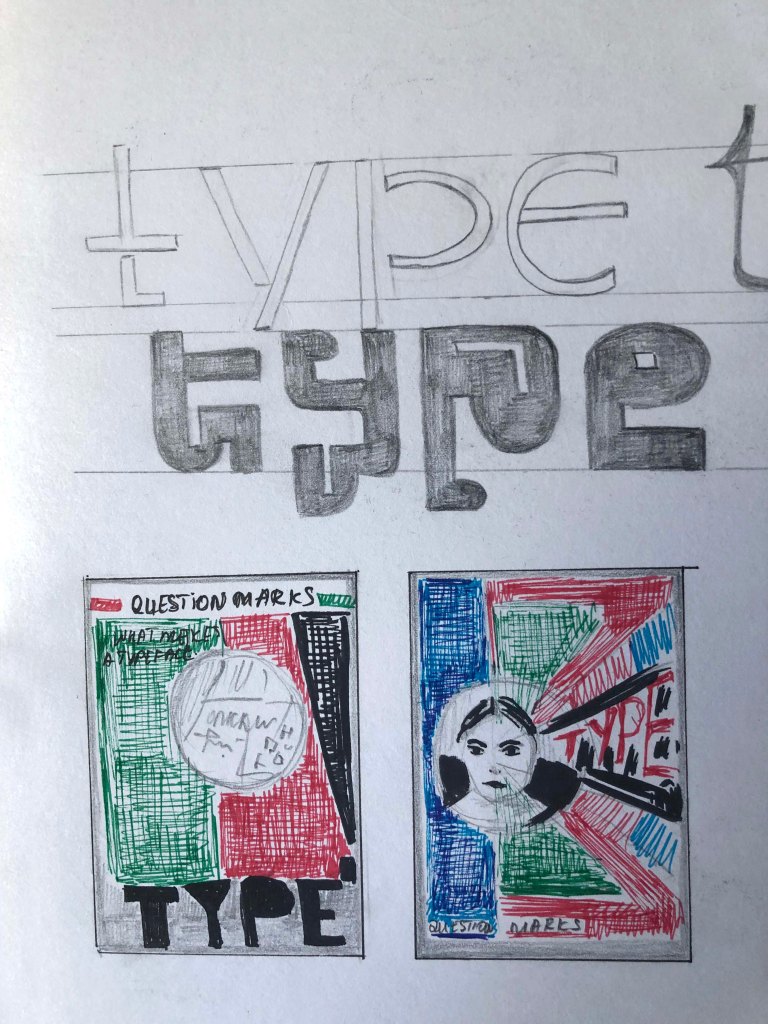
Looking carefully at the font, I realised how I can improve it, then I came up with this idea to paint over the inside of the letters, and also thicken the main lines in the letters E, F, T. The ready-made font was quite interesting, I managed to achieve the desired result!

I experimented with a few structures, trying to avoid copying the styles of famous authors and to bring my vision into the design.

In my works I wanted to introduce a spirit of nostalgia and retro-style, in which there were muted primary colours, a darker shade I achieved due to old paper in the background, and Multiply transparency was applied to each colour.

Keywords:
• Soviet Union
• Constructivism
• Geometric composition
• Contrast of colours

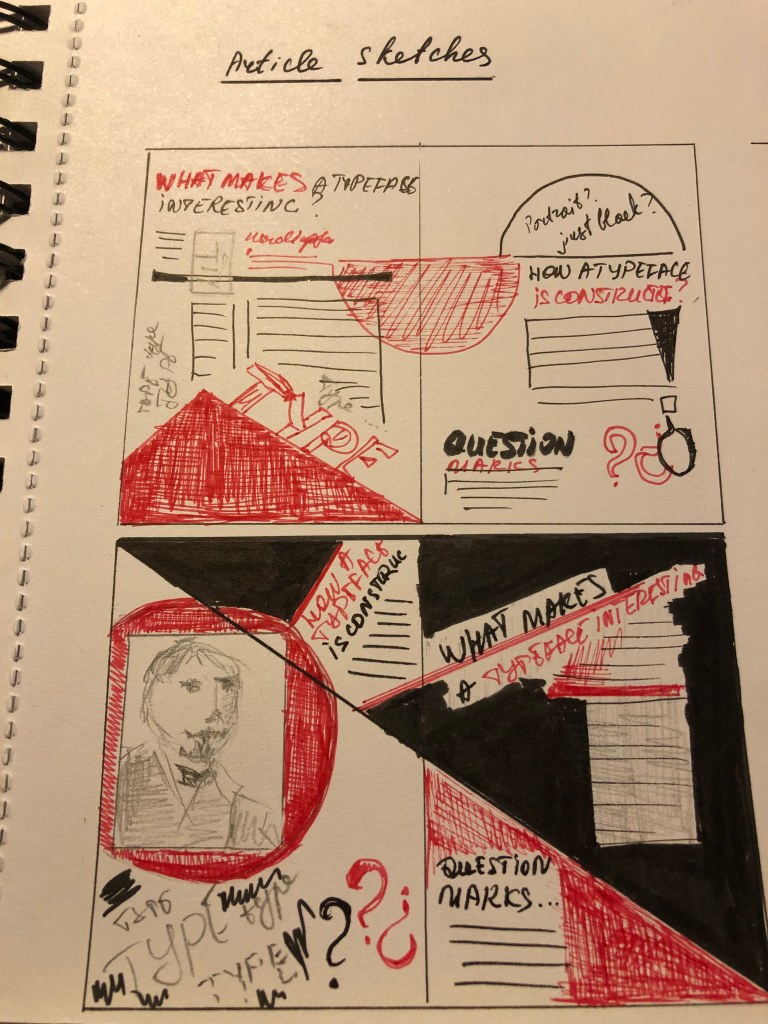
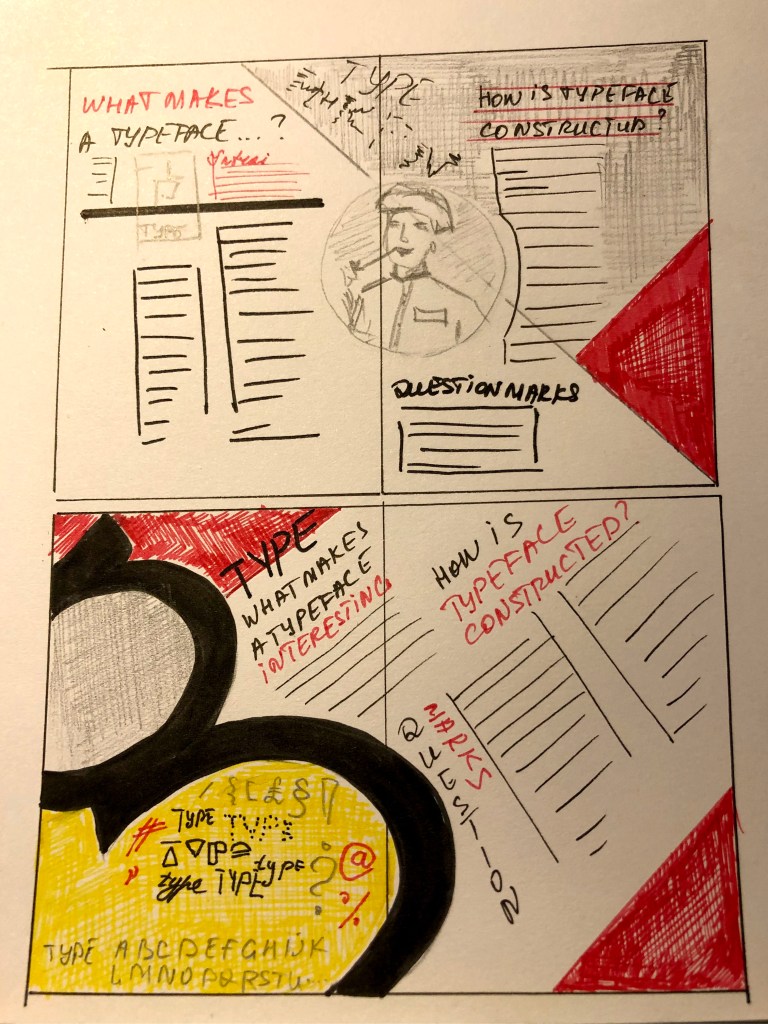
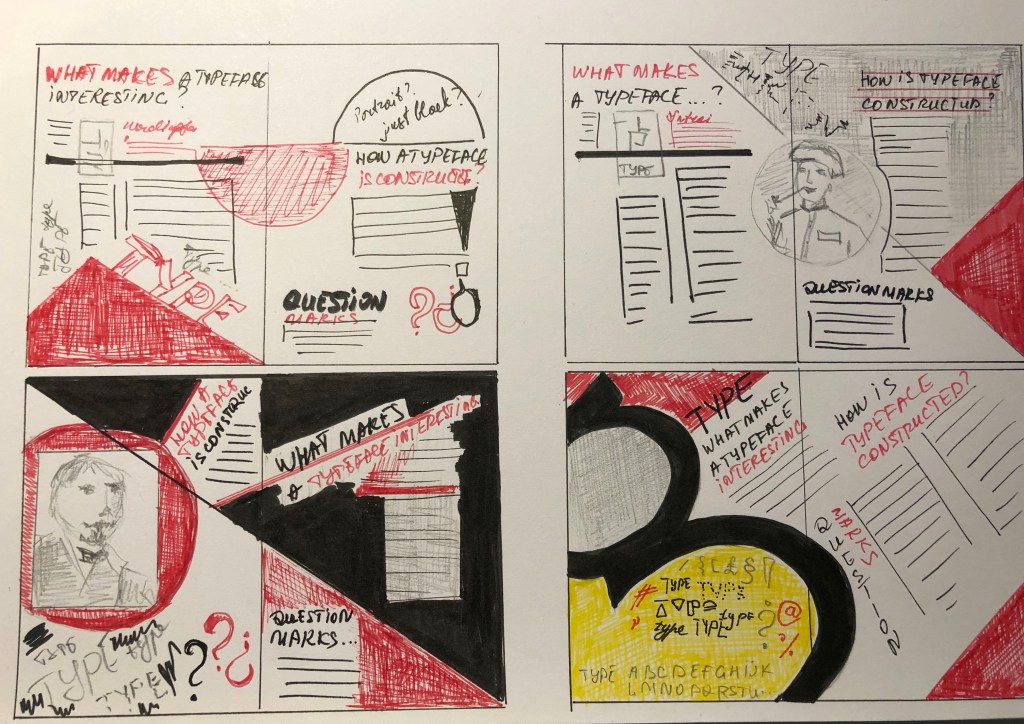
Before I started designing in Adobe Illustrator, I decided to make preliminary sketches for my layouts, so I managed to arrange my ideas on a piece of paper, understand what basic compositions I would like to use in my work, and understand what colours I should focus on.

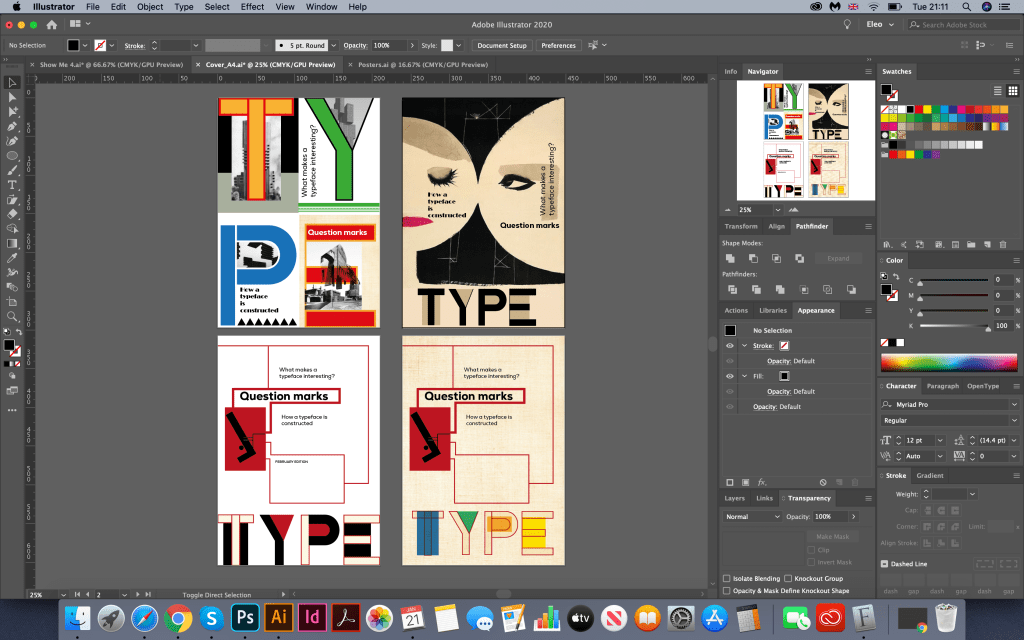
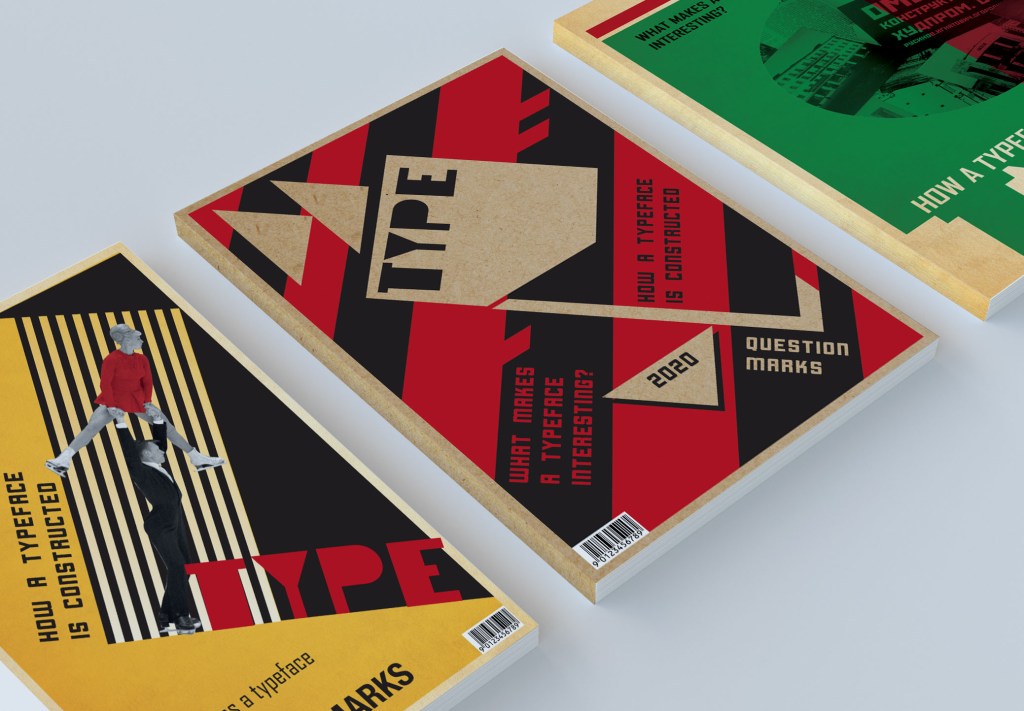
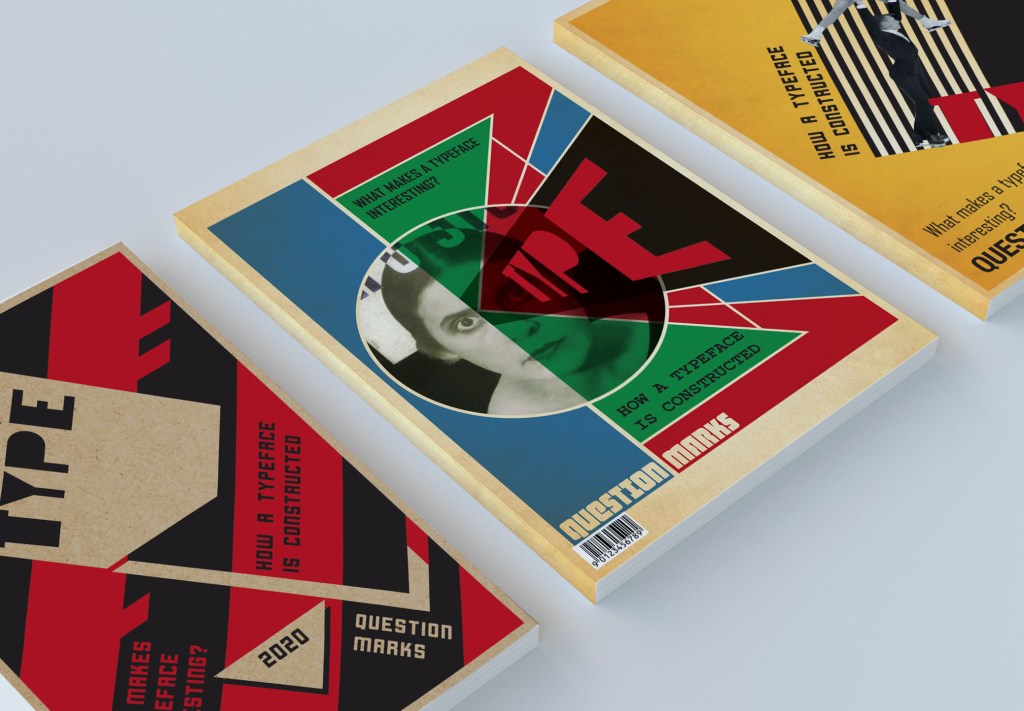
In the first version, I used a fairly confident (communist) combination of colours: red and black, and also old paper in the background. For questions, I chose the Cornerstone Regular direct font. I put the words at an angle. I would like to note that the style of the font turned out to be more modern than the style of the cover, it still kind of worked together, but I still wanted to see some more options.

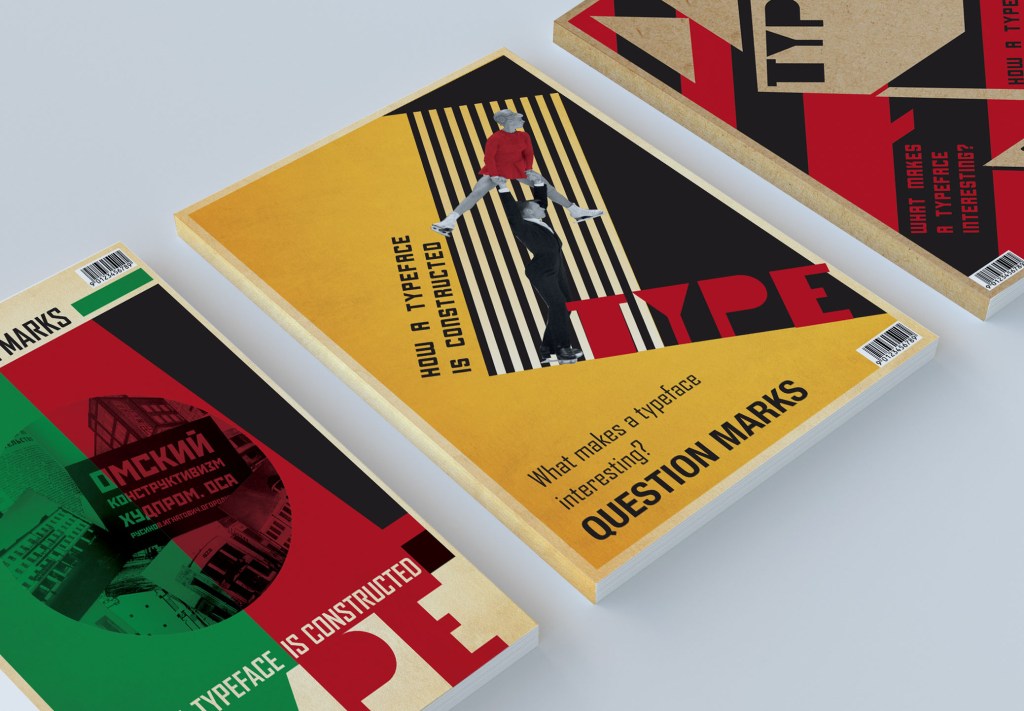
The second design came to me with the idea to add the Olympic achievements of the Soviet Union period, I wanted to add dynamics to the cover, a person in motion. I found an image of skaters on Pinterest through a search for Soviet Union Olympics. Liudmila Belousova https://www.pinterest.co.uk/pin/839358449286748854/ I designed the layout in yellow-black combination, indicating the contrast of the word TYPE and the skater’s outfit in red. In this layout, I used a different font style: Cornerstone Regular, Agency FB, Helvetica Condensed Bold, as I wanted to see a slight contrast between each font. I made the headings of small size because the idea was to save free space. The layout turned out to be quite interesting, but it seemed to me that it was too similar to the design of Rodchenko’s poster, so I don’t see it as the main one.

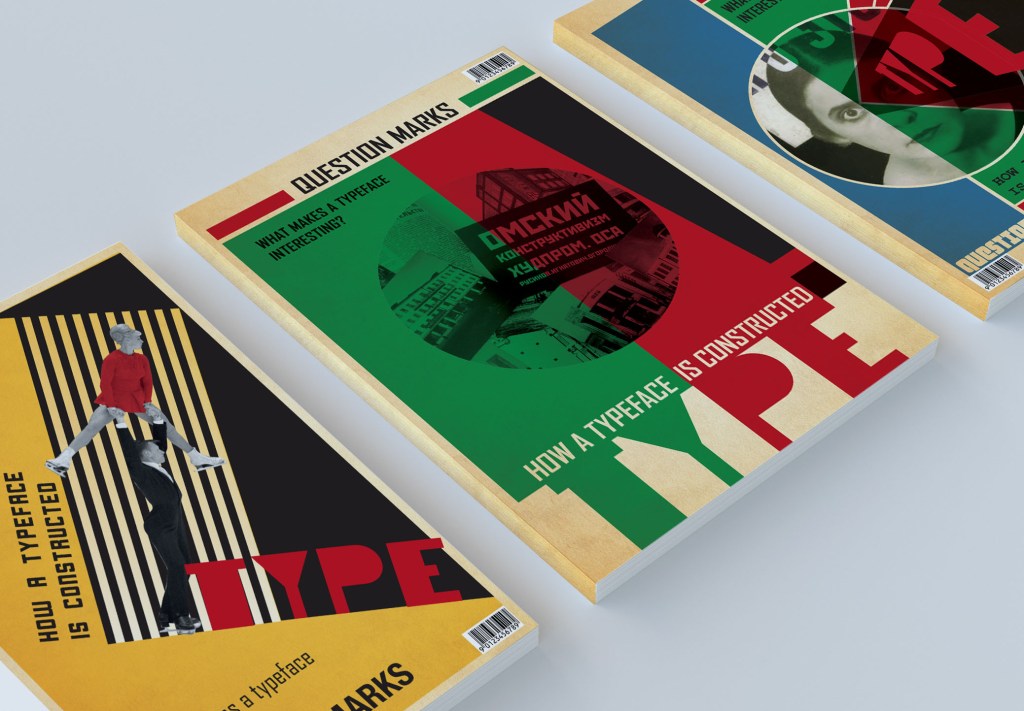
For the third cover, I divided the layout into two parts, in the middle I placed a Soviet poster with propagandizing slogans in Russian. I found images of buildings on the postcard website of the Soviet Union http://www.togdazine.ru/article/925 The letters of the word TYPE I placed at the bottom, as a continuation of the green and red fill. For headlines, I used the font Agency FB. For the background, I also used an old canvas. I think I managed to achieve an interesting effect in this poster, despite the fact that the layout itself was a bit empty, it still had interesting elements. I was not quite sure how to fill it with more element, but as I have some more ideas about design, I proceeded to the next layout.

And finally, for the forth cover, I used the image of Mayakovsky’s wife. I used Bridgeman Images for Constructivism. Cover design for the poem ‘About This’ by Vladimir Mayakovsky (litho) bit.ly/2sWGCwl. In this poster, I added more colours, the muted shades of blue, green, red and black created a good contrast between each other. Also, geometric elements around, such as triangles, a circle and rectangles, created an unusual composition. I angled the word TYPE in Photoshop using the same updated font in red, and for questions, I picked up different fonts. I made Question Marks by the type of cut out letters that shine through the bottom layer of old paper, I also used the font fixed width and Agency FB for questions.

Bellow are presented 3-D models for covers. From that perspective you can see if design works well.

Article Design

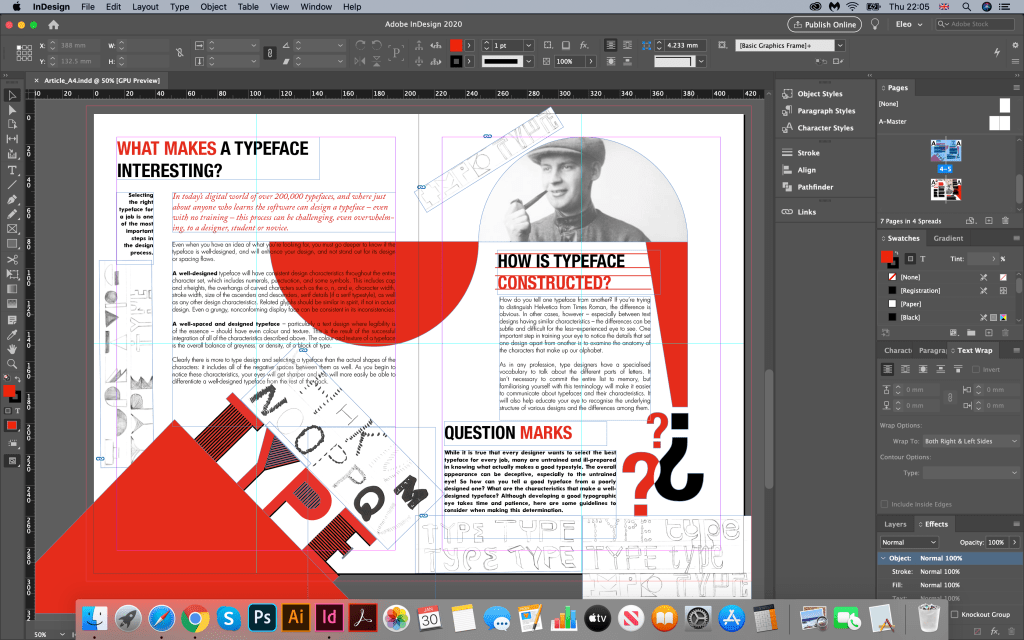
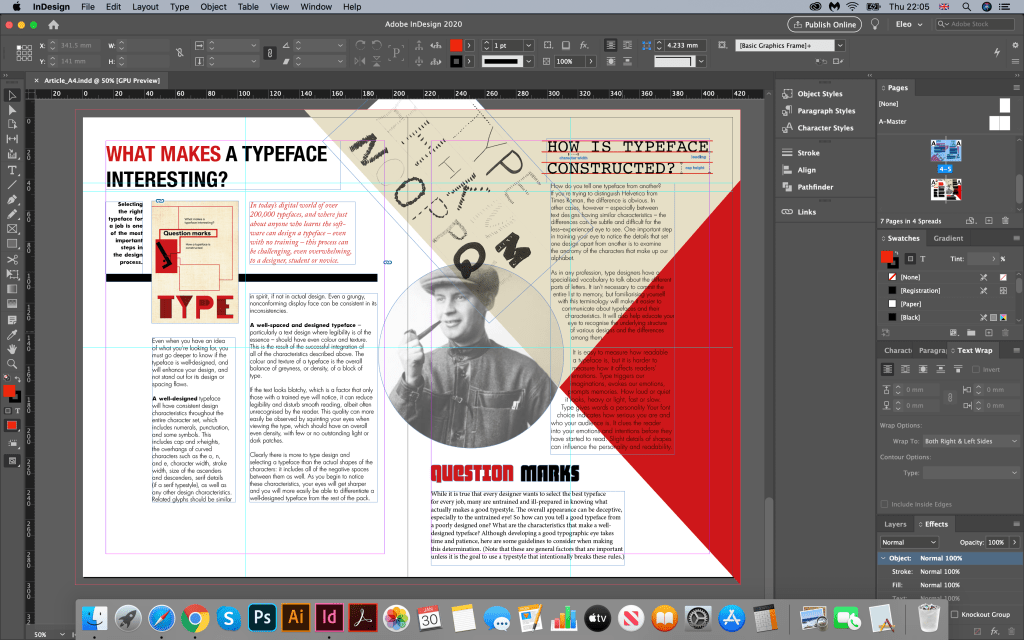
In the final part, I had to make a few sketches for the article, and understand what layout I would like to depict for my design. The main requirement was certainly to comply with the style of the cover of the magazine. Here it was already clear to me in which direction to move, I knew that I had the basic colours (black, red, white, old canvas) the geometric composition, it was only necessary to present all this correctly. I created some sketches from which I realised which layout I would like to depict.

The main elements for the article were such items:

  1. Three text layouts
  2. The word TYPE, to which I have given even more depth, by marking the borders with black lines
  3. Portrait of Alexander Rodchenko. Credit: Portrait of the artist, photographer and graphic designer Alexander Rodchenko (b/w photo). Portrait of the artist, photographer and graphic designer Alexander Rodchenko (b/w photo), Kaufman, Mikhail Abramovich (1897-1980) / Private Collection / Bridgeman Images
  4. Sketches of fonts from my initial sketches
  5. The magazine cover I used as a draft from my previous designs.

For headlines, I decided to use several fonts, I took two fonts from the cover of Cornerstone Regular, Agency FB, Helvetica Condensed Bold. I experimented with my sketches of fonts and used them as a substrate at the bottom of the magazine, but it seemed to me that they only distracted attention, so in the end, I decided to abandon them. I used paragraphs of different sizes, thus indicating the dynamics for reading, the article is quite creative, so I used a narrow paragraph, combined with a wide one. I chose the font for the body of the text without sans serif, aligning it to the left without hyphens. As a featured person I used the portrait of Alexander Rodchenko, here he acts as an expert. I also liked the combination of several photos of creative people with the magazine cover and the article itself.

Conclusion

I have really enjoyed the processes behind this assignment as it has helped me summarise the mini modules set within part 4 and has allowed me to cover a lot of the new skills learnt over the last couple of months. I felt that I have made my researches as wide as possible, allowing to discover some new ideas within font creation task. I’ve realised that the theory and creativity within font creation is so wide, that I would keep doing my researches for it, however as I had some deadlines I had to be determined within my ideas, and concentrate on the certain thing, which in the result leaded me to the idea for constructivism. On a positive note, I am happy with the outcome of my designs and feel that I have created a style within my choices which can be seen in both the cover and article. The only one thing I was so carried away by Constructivism style cover designs that the font design on the ready cover itself was on the second plan because it is orchestrated with a lot of graphic elements and colours around, however, I believe that I managed to create a unique interesting font. Part 4 has really boosted my confidence in my abilities to make as many sketches as possible, and do not be scared to experiment with fonts. Now feel that I am ready to take on part 5 to showcase what I have learnt over the past year.

Sources:

  1. Bridgeman Education Images (Constructivism). Portrait of Alexander Rodchenko. Portrait of Lilya Brik
  2. A Visual History of Typefaces. Jan Tholenaar
  3. Marian Bantjes “Pretty Pictures”
  4. Type for Type. Custom type solutions for design and identity
  5. Why Fonts Matter? Sarah Hyndman
  6. What makes a good typeface? https://creativepro.com/what-makes-a-good-typeface/

Colour Me…

We run on purple time

The brief

To produce a poster (297mm x 420mm) that celebrates a colour of your choice. Choose a colour that has a meaning that you want to explore and celebrate. Think about what the colour you have chosen means both to you and to other people and create something that celebrates that meaning, for example, you may choose a golden brown because you like real ale, a vivid green because of a particular landscape, green to celebrate Irish identity or the yellow sandstone of Bath’s architecture.

Requirements

Work only with your chosen colour, its complementary colour and black and white. You can include text, collages, illustrations and photographs. Use black and white to help establish a range of tints and shades with your chosen colour. These limitations are to get you to work with colour thinking creatively about how to make a limited palette work for you. This project is as much about visual dynamics and contrast as it is about creating something with meaning. Make full use of it to show off to your tutor all the skills and processes you have learnt so far. You need to submit at least three variations of your poster as well as the finished artwork.

Chosen Colour

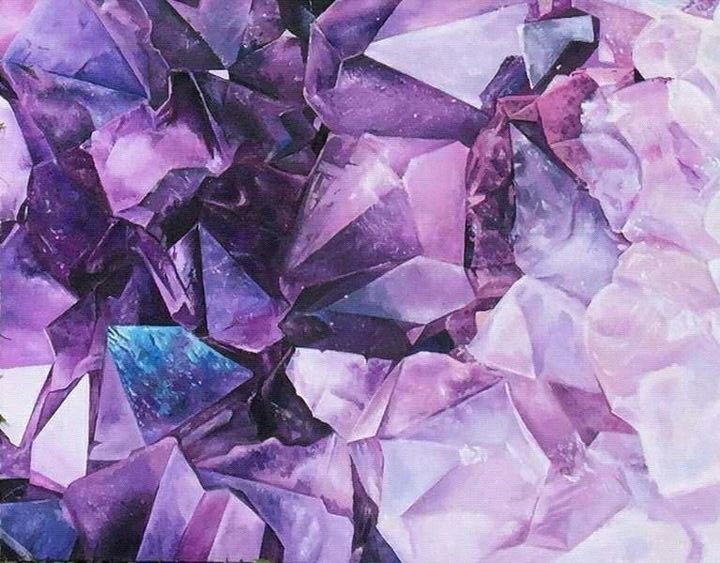
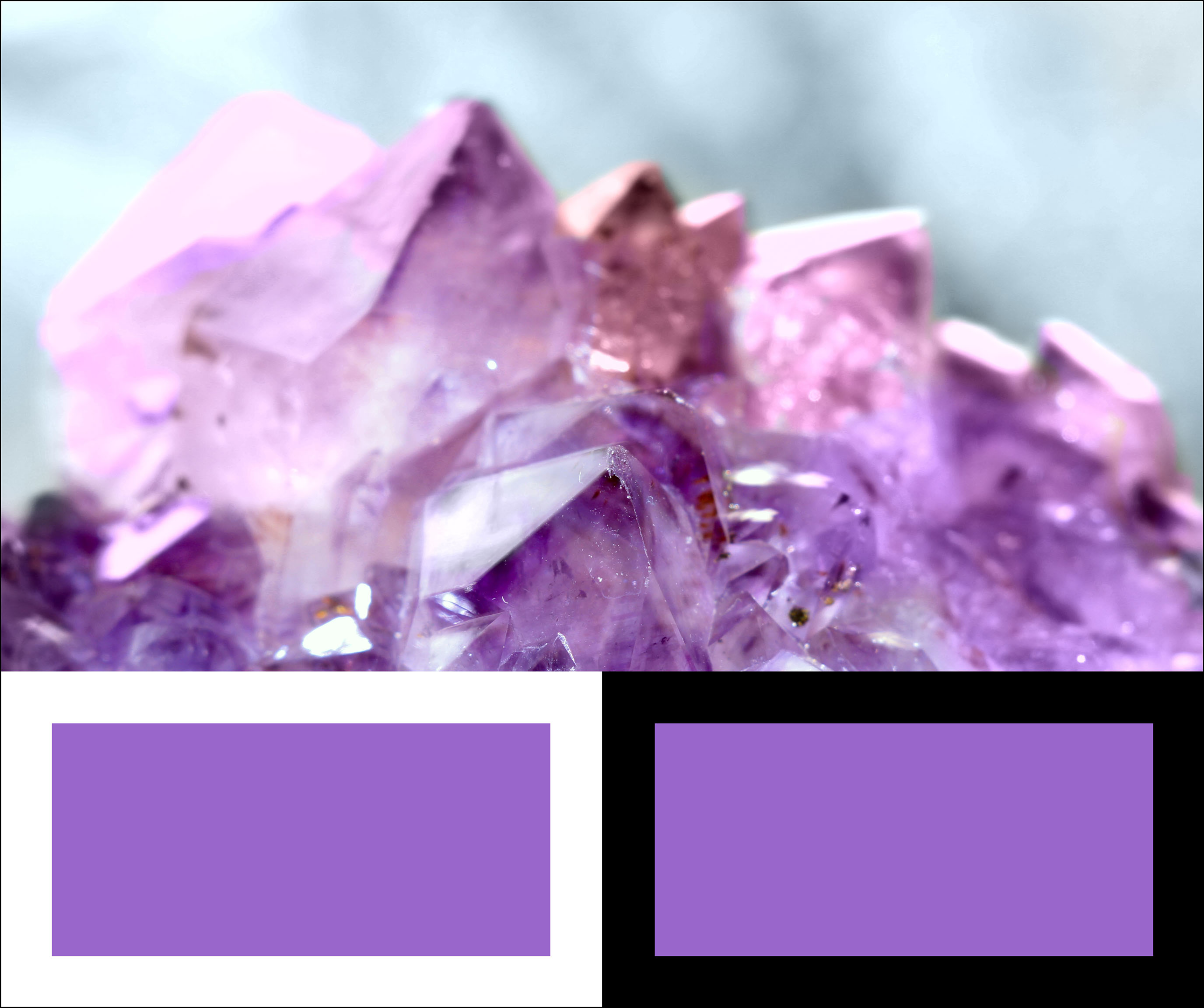
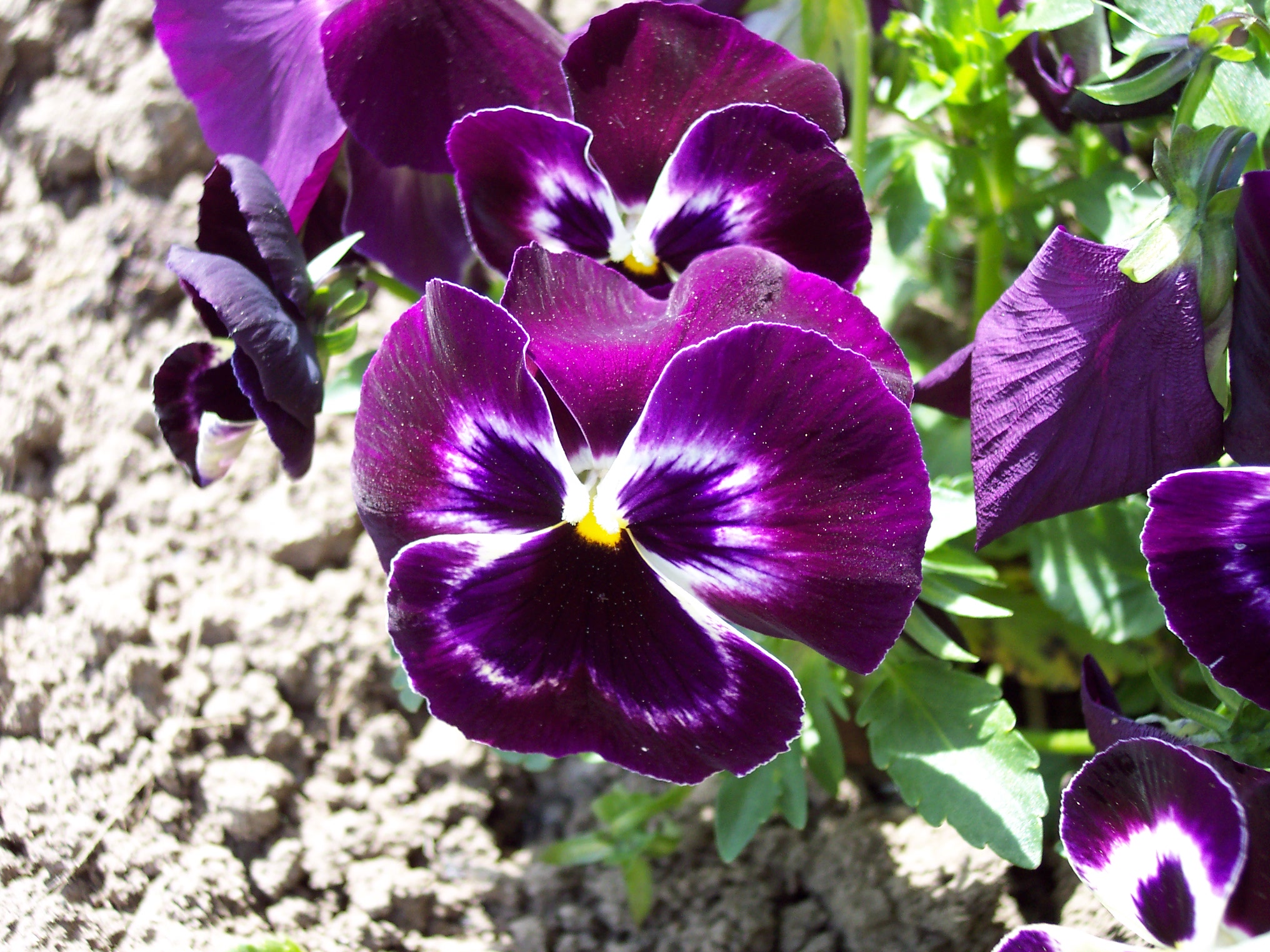
Despite its prevalence, amethyst has been one of the world’s most revered stones for many centuries. The was a belief that the amethyst crystal meaning was synonymous with luxury. As a result, it was widely used as part of their crowns, sceptres and rings. Christian bishops once wore amethyst jewellery in the form of a circle. Its colour was meant to symbolise royalty and allegiance to Christ.

Purple Amethyst has been highly esteemed throughout the ages for its stunning beauty and legendary powers to stimulate, and soothe, the mind and emotions. It always was associated with February, the month the Romans dedicated to Neptune, their water-god, and is the traditional birthstone of that month. It is the stone of St. Valentine and faithful love and signifies ecclesiastical dignity as the Bishop’s Stone. It carries the energy of fire and passion, creativity and spirituality, yet bears the logic of temperance and sobriety.

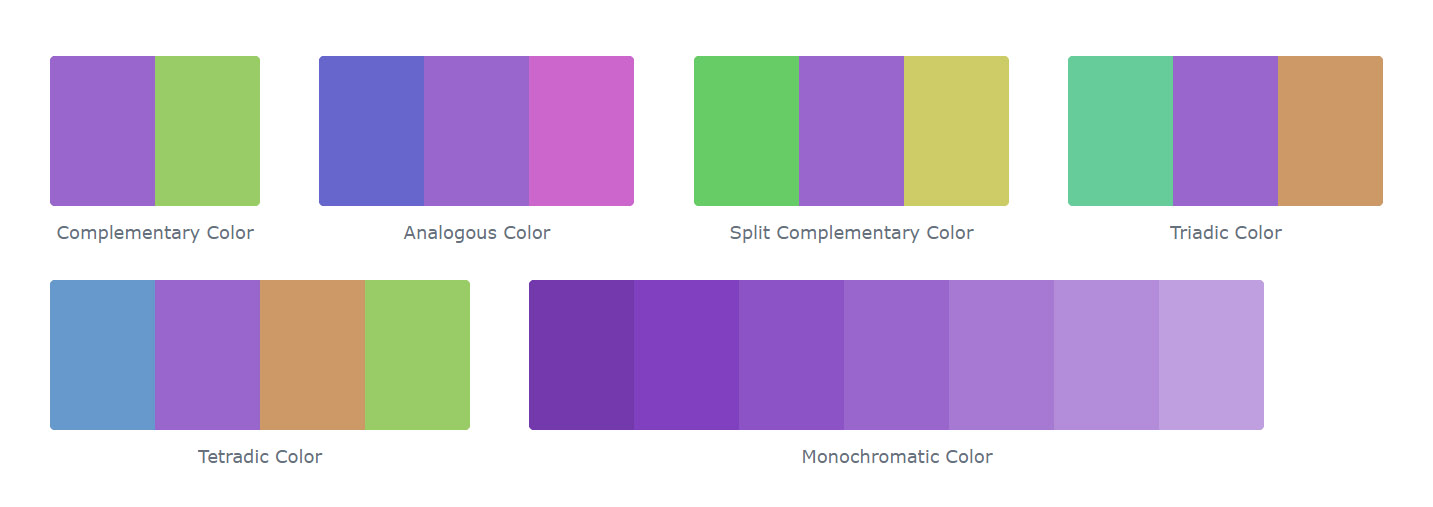
In RGB colour space, hex #9966cc (also known as Amethyst) is composed of 60% red, 40% green and 80% blue. Whereas in a CMYK colour space, it is composed of 25% cyan, 50% magenta, 0% yellow and 20% black. It has a hue angle of 270 degrees, a saturation of 50% and a lightness of 60%.

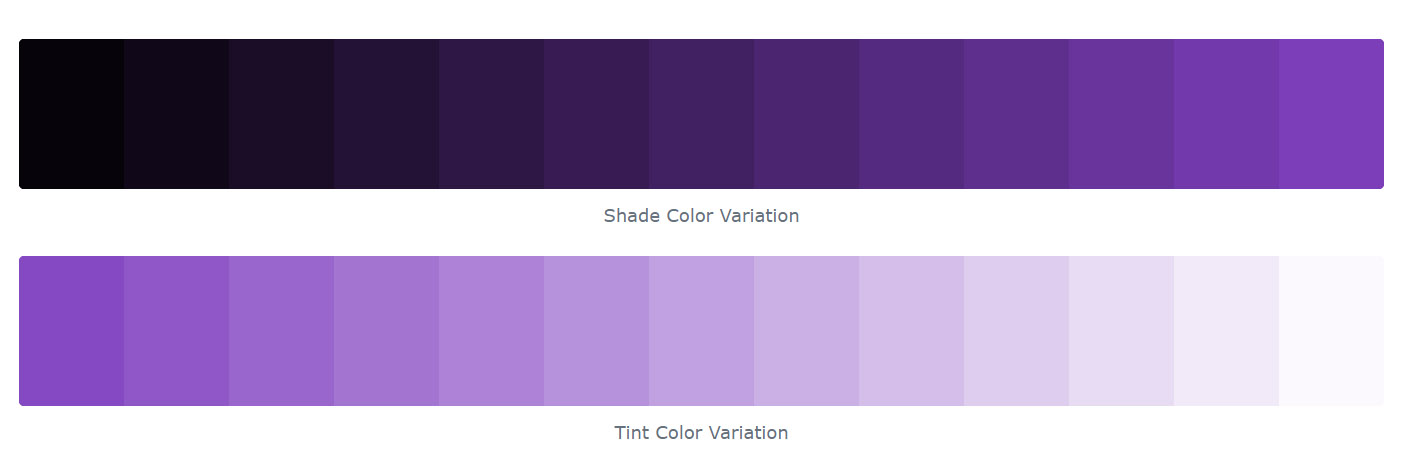
Below some colours close to #9966cc. Having a set of related colours can be useful if you need an inspirational alternative to your original colour choice.†

A shade is achieved by adding black to any pure hue, while a tint is created by mixing white to any pure colour. In this example, #060309 is the darkest colour, while #fbf9fd is the lightest one.

Source: https://www.colorhexa.com/9966cc

Primary Research

The Middle Ages and the Renaissance

Violet and purple retained their status as the colour of emperors and princes of the church throughout the long rule of the Byzantine Empire.

While violet was worn less frequently by Medieval and Renaissance kings and princes, it was worn by the professors of many of Europe’s new universities. Their robes were modelled after those of the clergy, and they often wore square violet caps and violet robes, or black robes with violet trim.

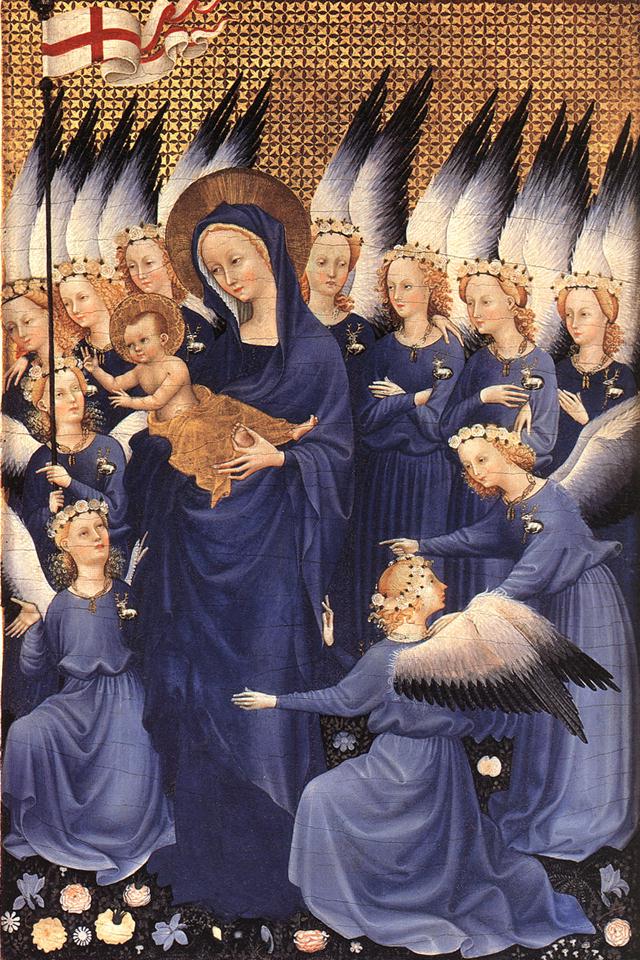
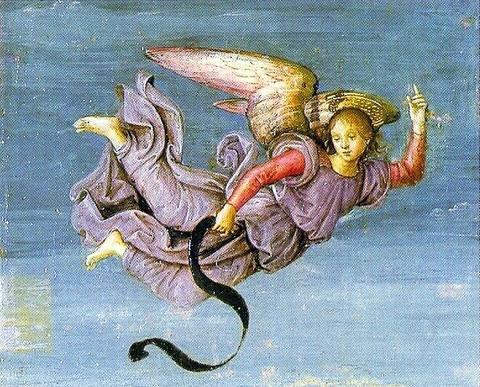
Violet also played an essential part in the religious paintings of the Renaissance. Angels and the Virgin Mary were often portrayed wearing violet robes.

18th and 19th centuries

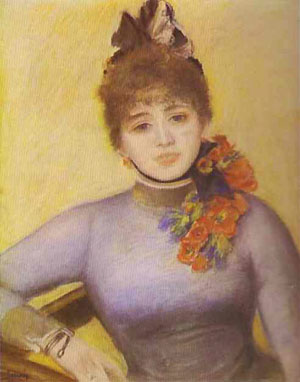
Portrait of Caroline Remy de Guebhard, by Pierre-Auguste Renoir (1841–1919). Mauve became a popular fashion colour after the invention of the synthetic dye in 1856.

In the 18th century, violet was a colour worn by royalty, aristocrats and the wealthy, and by both men and women. The good-quality violet fabric was expensive, and beyond the reach of ordinary people.

The first cobalt violet, the intensely red-violet cobalt arsenate, was highly toxic. Although it persisted in some paint lines into the twentieth century, it was displaced by less toxic cobalt compounds such as cobalt phosphate. Cobalt violet appeared in the second half of the 19th century, broadening the palette of artists. Cobalt violet was used by Paul Signac (1863–1935), Claude Monet (1840–1926), and Georges Seurat (1859–1891). Today, cobalt ammonium phosphate, cobalt lithium phosphate, and cobalt phosphate are available for use by artists. A colour similar to cobalt ammonium phosphate, cobalt magnesium borate, was introduced in the later twentieth-century but was not deemed sufficiently lightfast for artistic use. Cobalt violet is the only genuinely lightfast violet pigment with relatively strong colour saturation. All other light-stable violet pigments are dull by comparison. However, the high price of the dye and the toxicity of cobalt has limited its use.

Portrait of Empress Catherine the Great of Russia, by Fyodor Rokotov. (State Hermitage Museum).

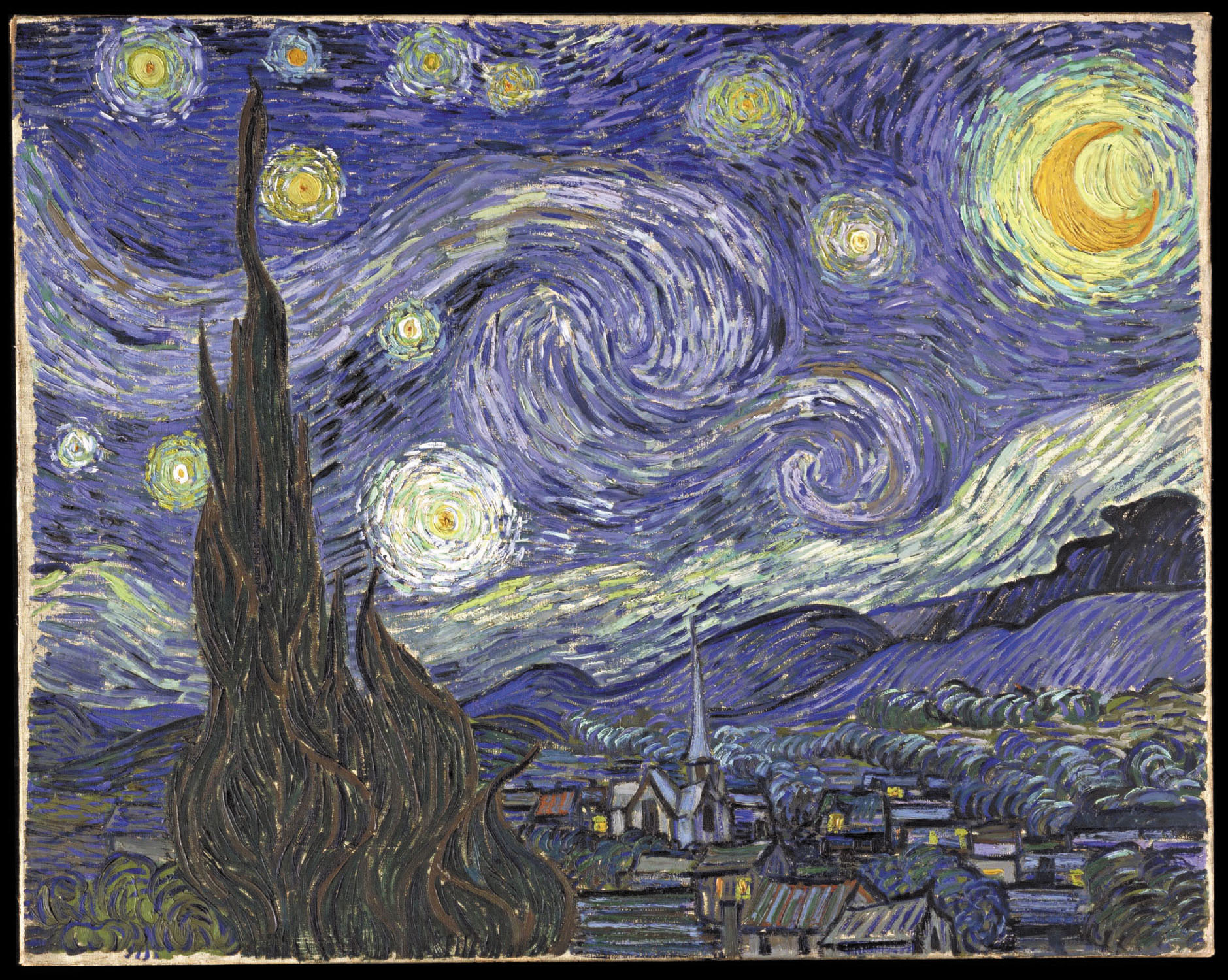
Vincent van Gogh (1853–1890) was an avid student of colour theory. He used violet in many of his paintings of the 1880s, including his portrayals of irises and the swirling and mysterious skies of his starry night paintings, and often combined it with its complementary colour, yellow. In the picture of his bedroom in Arles (1888), he used several sets of complementary hues; violet and yellow, red and green, and orange and blue. In a letter about the painting to his brother Theo, he wrote

“The colour here…should be suggestive of sleep and repose in general…The walls are pale violet. The floor is of red tiles. The wood of the bed and the chairs are fresh butter yellow, the sheet and the pillows light lemon green. The bedspread bright scarlet. The window green. The bed table orange. The bowl blue. The doors lilac….The painting should rest the head or the imagination.†

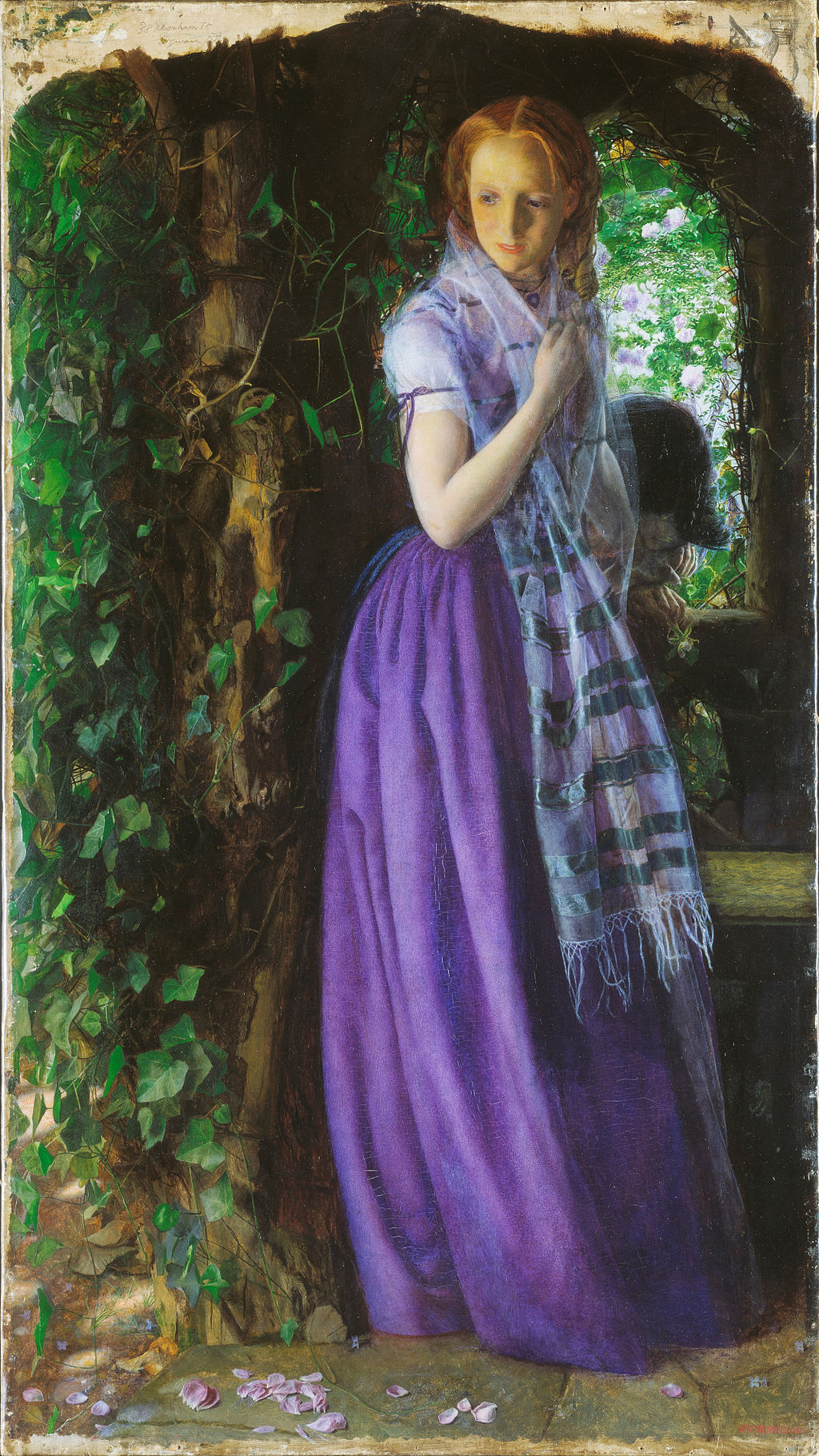
In England, pre-Raphaelite painters like Arthur Hughes were particularly enchanted by purple and violet. This is April Love (1856).

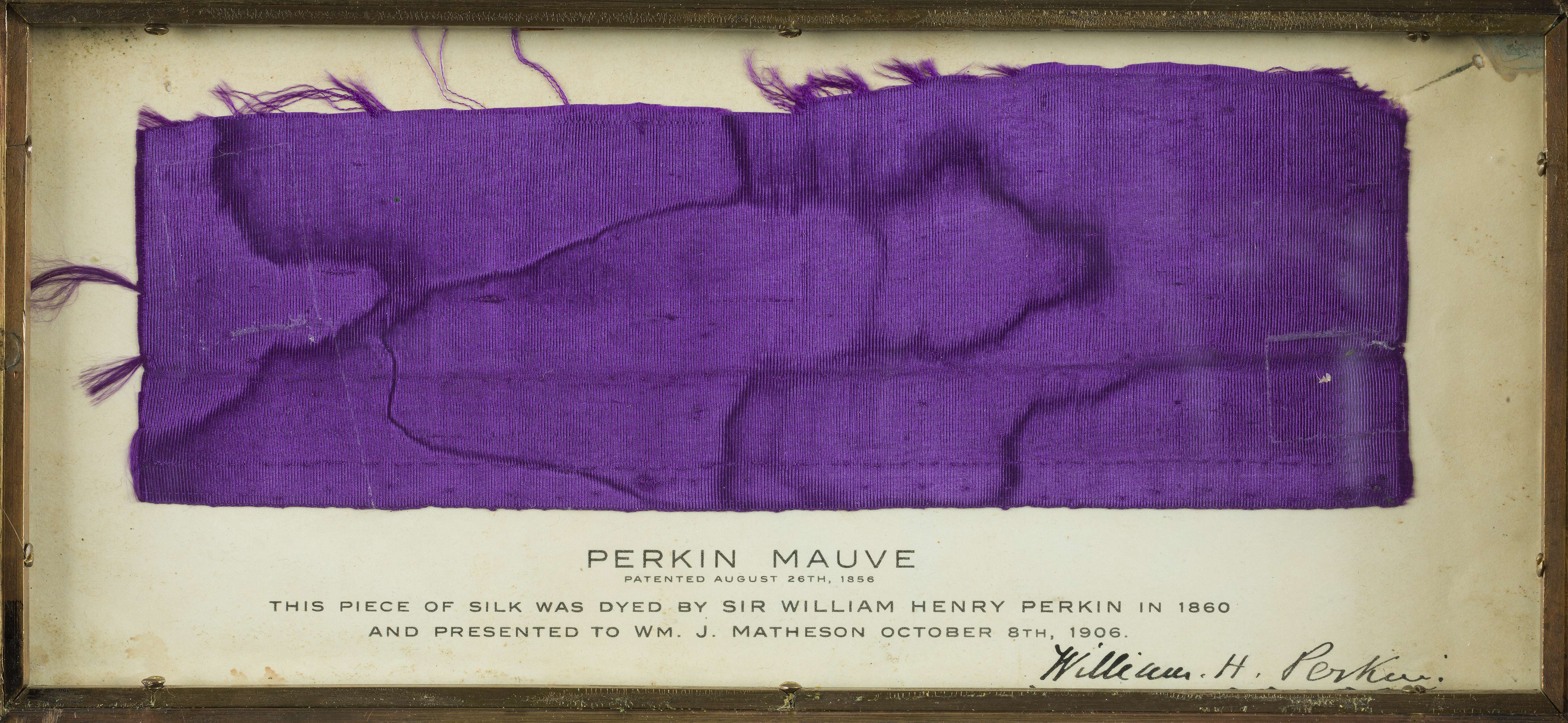
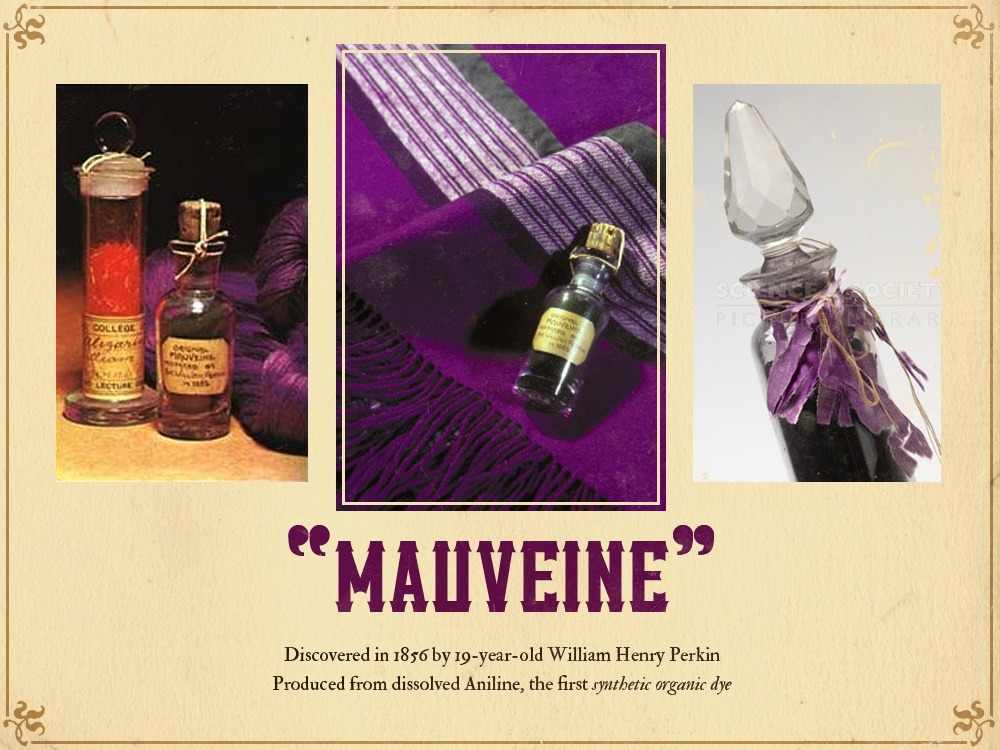
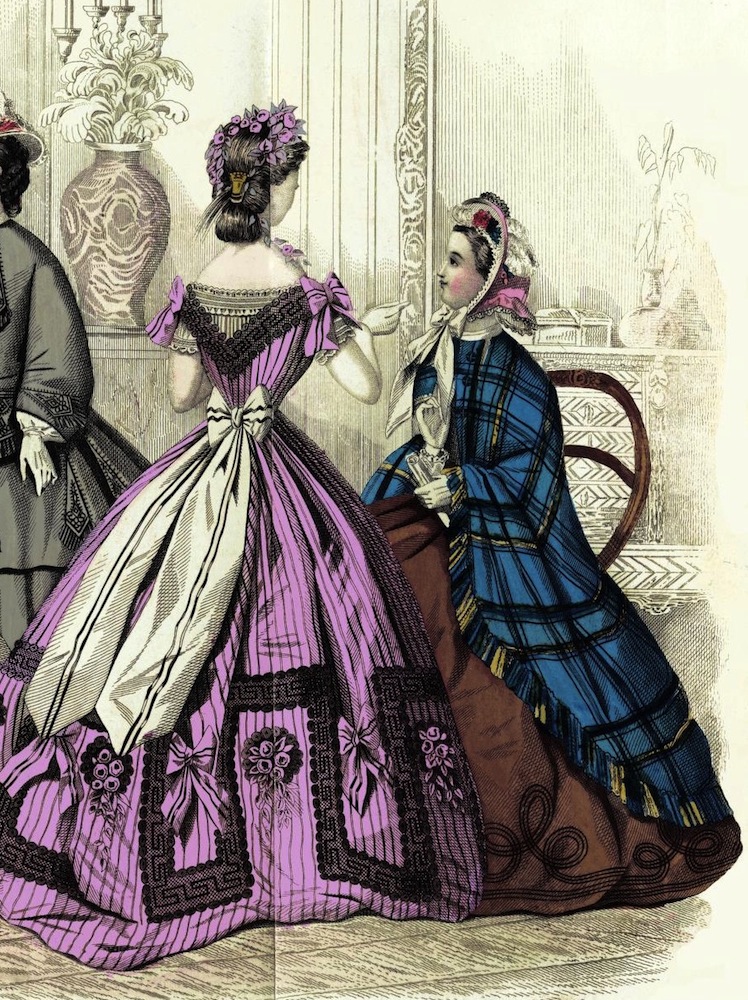
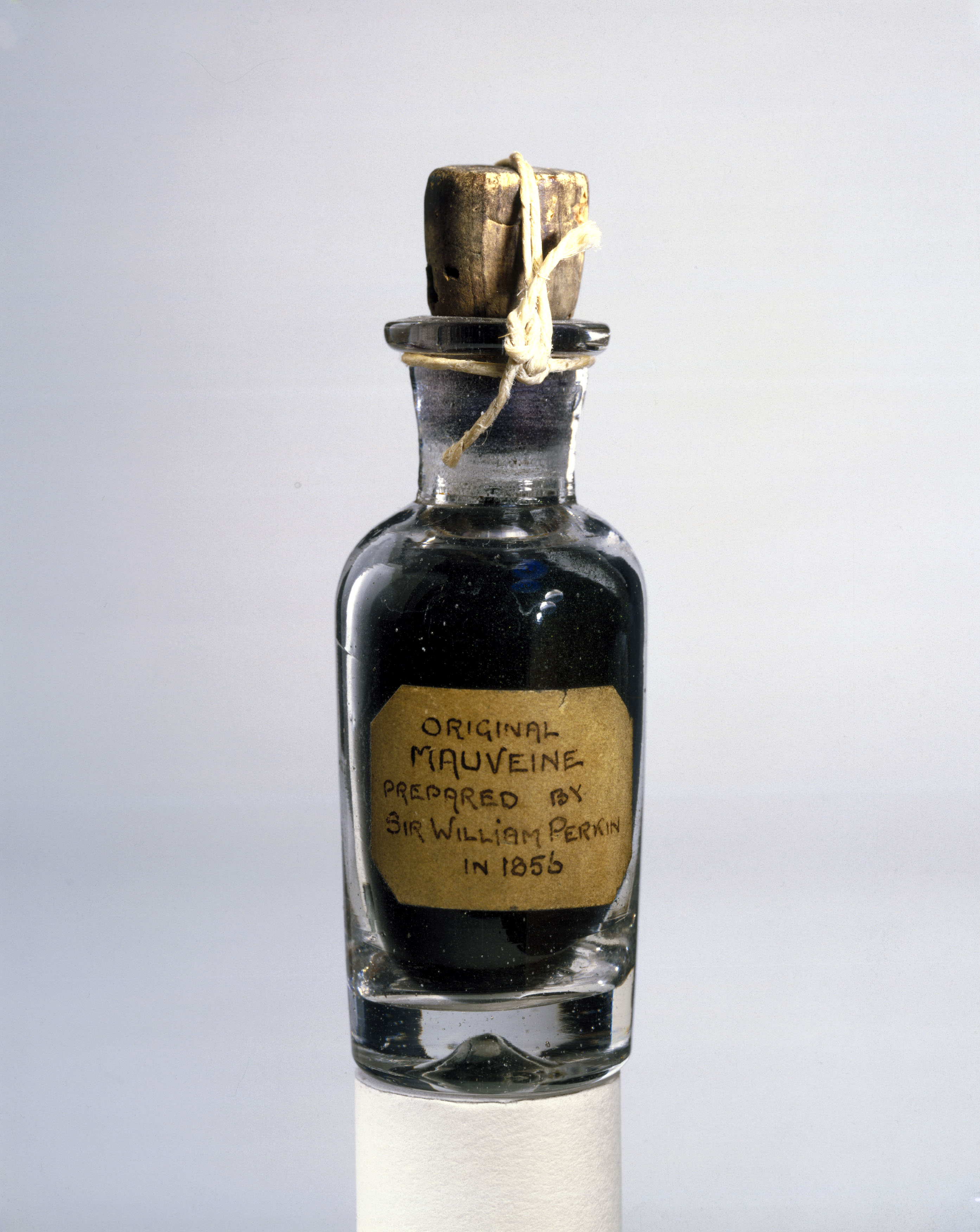
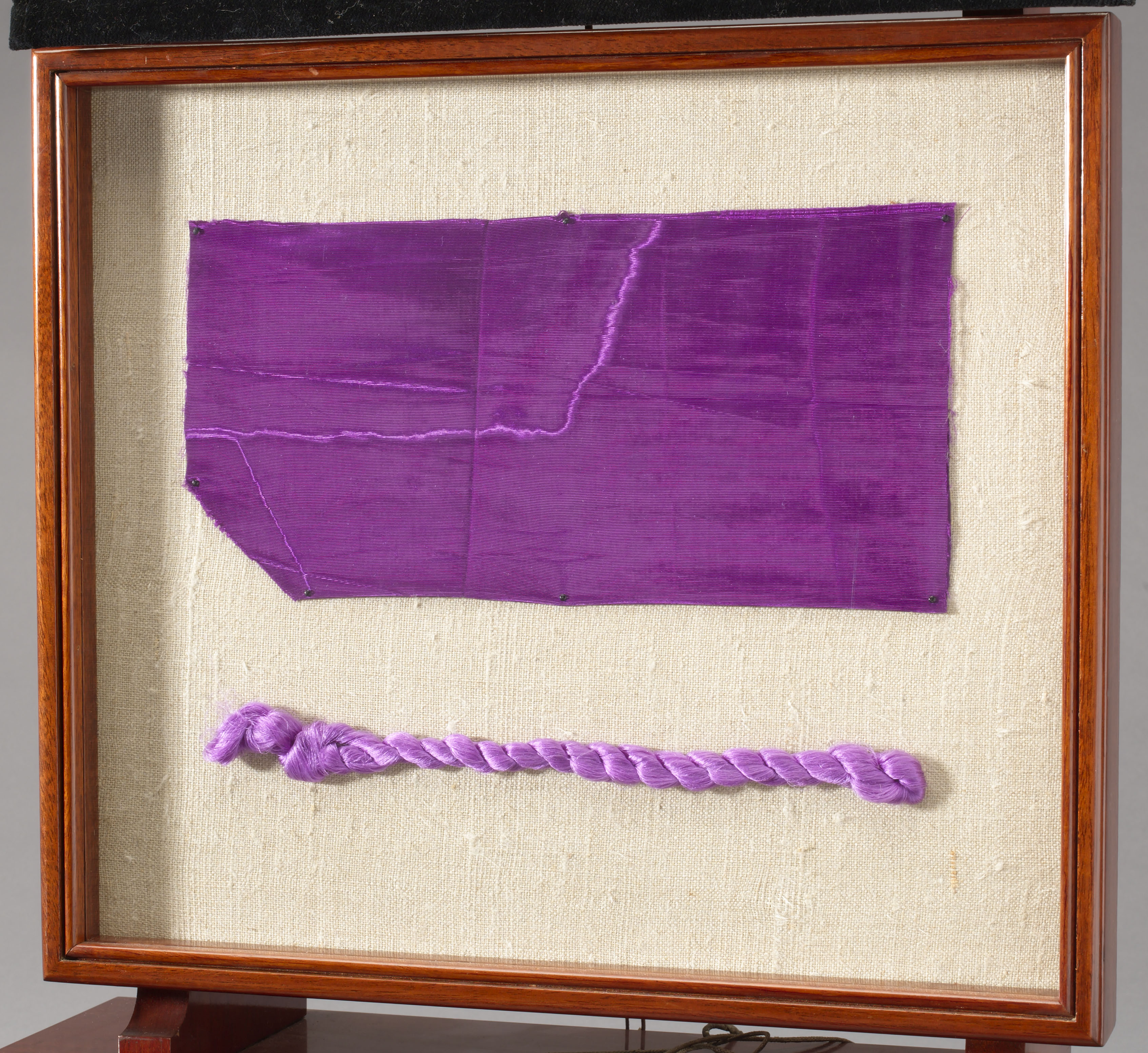
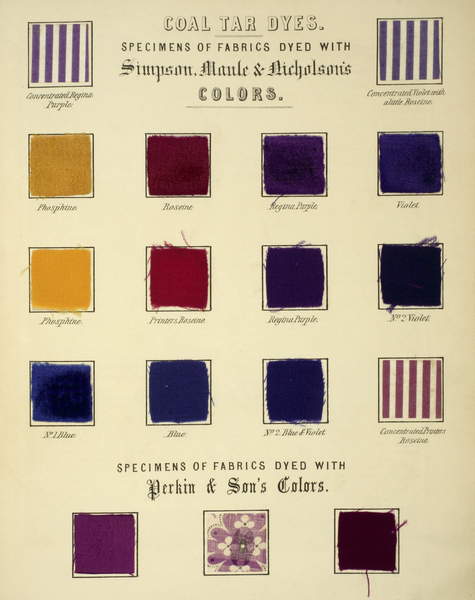
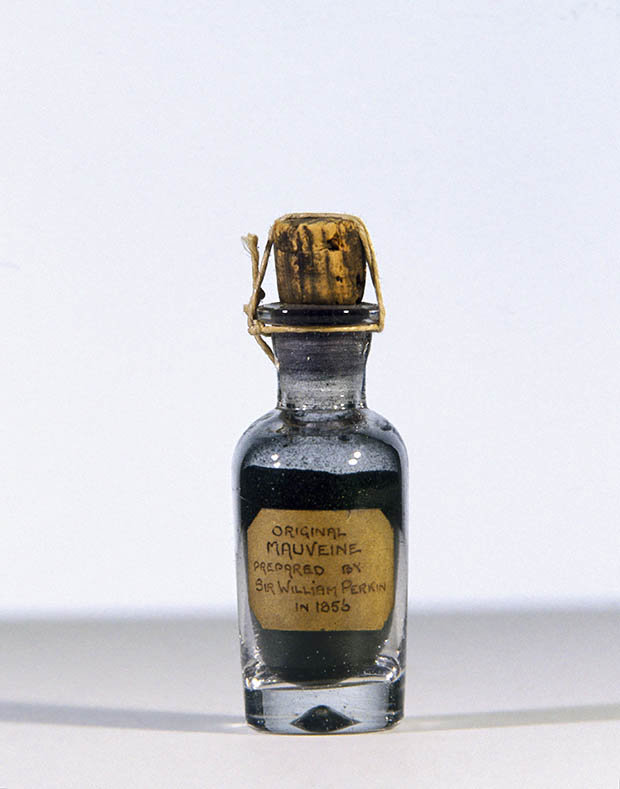
In 1856, a young British chemist named William Henry Perkin was trying to make a synthetic quinine. His experiments produced instead an unexpected residue, which turned out to be the first synthetic aniline dye, a deep violet colour called mauveine or abbreviated simply to mauve. Used to dye clothes, it became extremely fashionable among the nobility, and upper classes in Europe, mainly after Queen Victoria wore a silk gown dyed with mauveine to the Royal Exhibition of 1862. Before Perkin’s discovery, mauve was a colour which only the aristocracy and wealthy could afford to wear. Perkin developed an industrial process, built a factory, and produced the dye by the ton, so almost anyone could wear mauve. It was the first of a series of modern industrial shades which completely transformed both the chemical industry and fashion.

Source: https://en.wikipedia.org/wiki/Violet_(color)

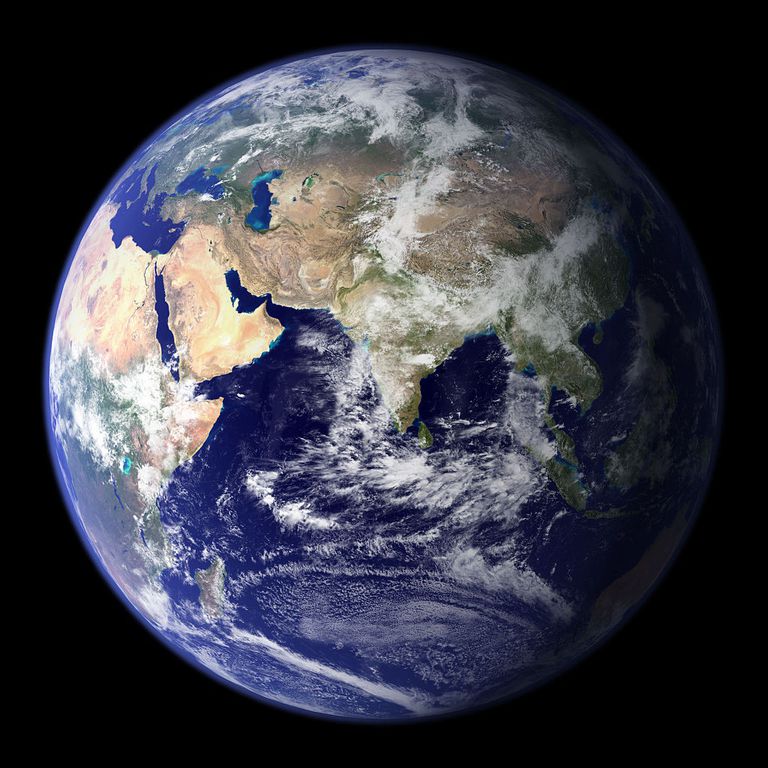
The next step in choosing my colour was the concept where I planned to work on the poster. The course of my thoughts led me in several directions. What if you imagine the space and atmosphere in remote, uncharted solar systems in bright purple or violet colour, or the birth of a new planet, which gives lilac radiation? I wanted to learn more about the existence of purple on our planet Earth; in the end, I came across this video. I liked the idea that the young Earth may have radiated a purple hue, which calls Purple Earth Hypothesis. That means that bacterias didn’t use the chlorophyll at all, instead of a simple molecule (Halobacteria) absorbed all green light and reflected purple colour. But according to research at the moment, scientists could not find a planet in such a non-standard colour in space, because that combination would indicate an early generation stage of life.

https://www.voicetube.com/videos/63525

After analysing the first concept, I decided to move on and came across this video, which describes in detail why the purple colour was so rare and difficult to access? It became a discovery for me that this colour was officially registered only on October 8, 1856, by the English scholar Sir William Henry Perkin (by the way, October 8 is my birthday). The colour that was present in the birth of the planet was the last officially popularised in society. My design series are dedicated to discovering the colour that I wanted to call “The Birth of the Colour Purple“.

Why don’t country flags use the colour purple?

Secondary Research

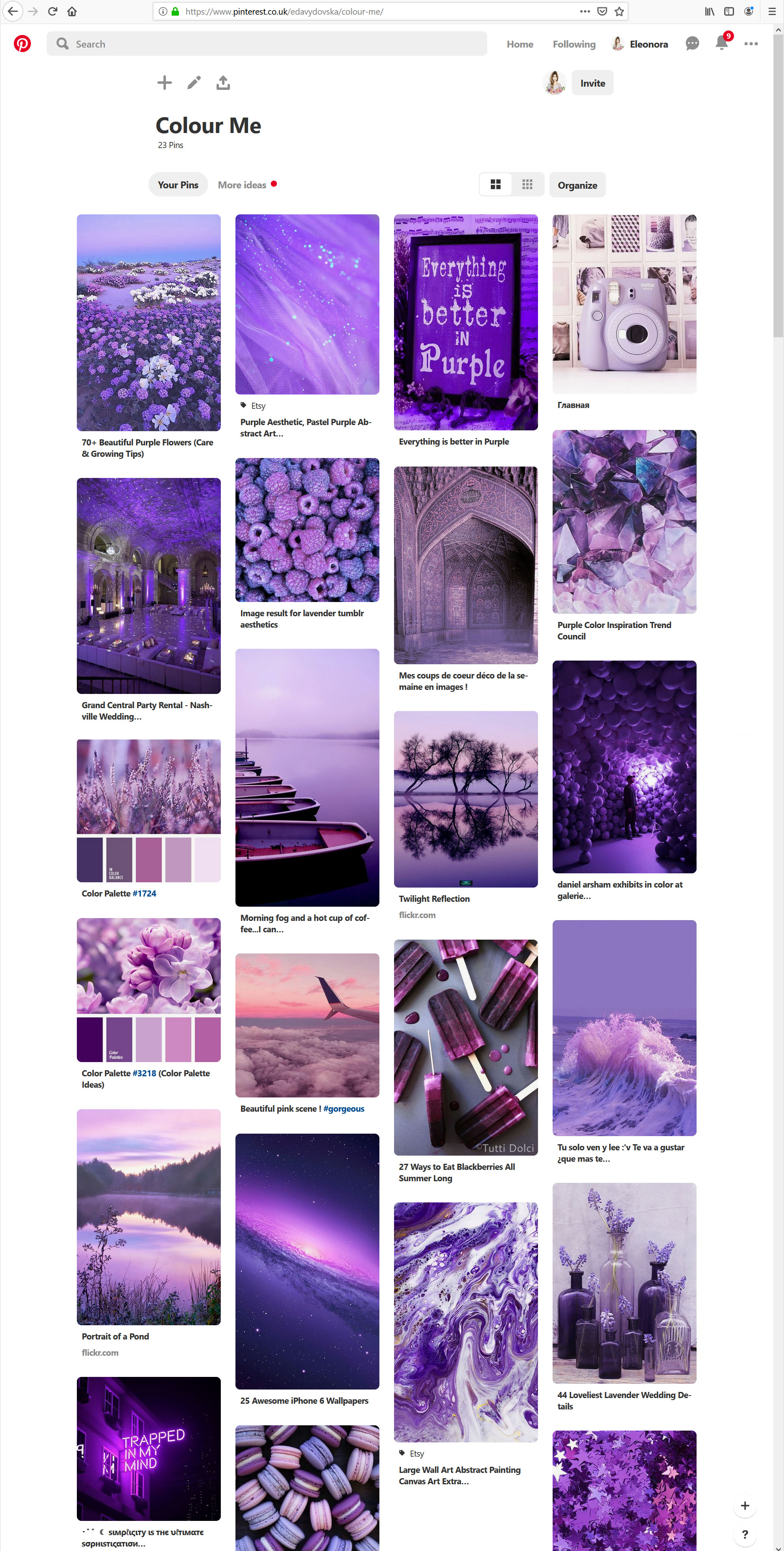
I went on Pinterest to collect some purple images for my mood board. All of those images looked creative, artistic and visually appealing.

Pinterest Board

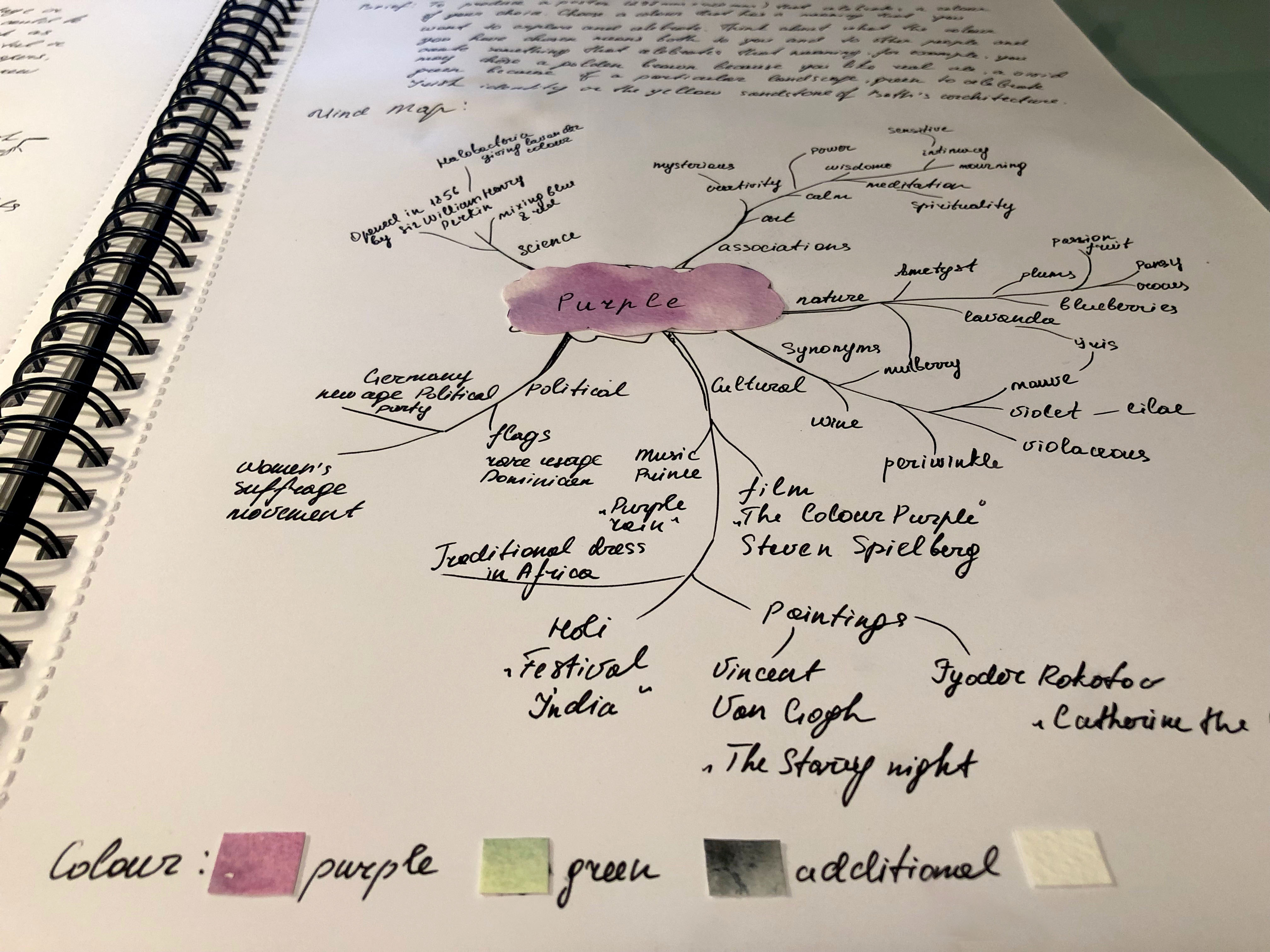
When I was browsing this collection of images, they gave me a feeling of peace and passion at the same time, and I described my researches of the colour properties of purple in my mind map. I made some sketches for the mind map and the collections of words around it, for such main ideas as Science, Associations, Nature, Art, Cultural and Political.

Mind Map for the Colour of Purple

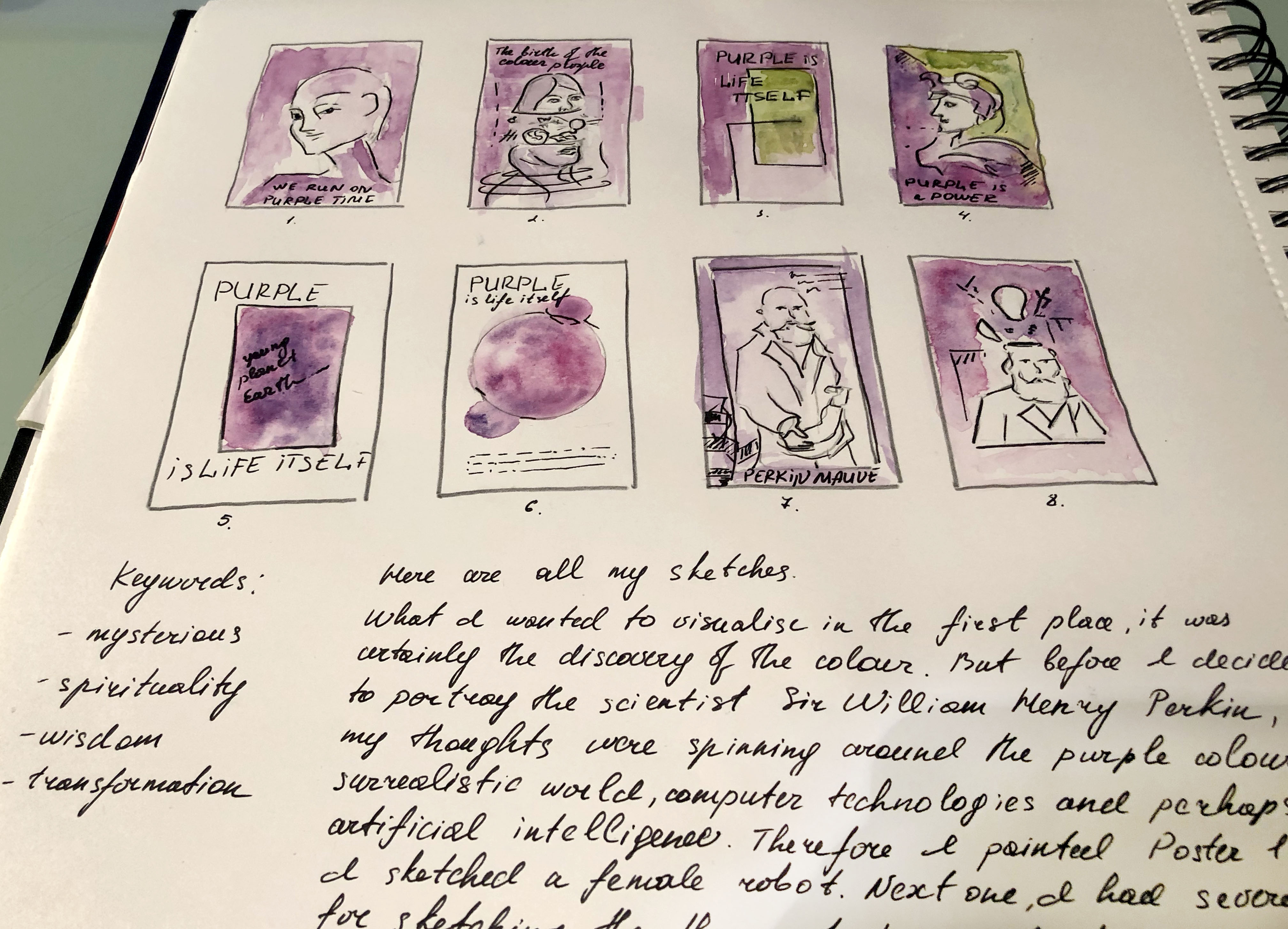
So, it’s time to start sketching. What I wanted to visualise in the first place was undoubtedly the discovery of colour. But before I decided to portray the scientist Sir William Henry Perkin, my thoughts were spinning around the purple colour, its surrealistic world, computer technologies and perhaps artificial intelligence. Therefore, I painted Poster 1, where I sketched a female robot. Next, I had several options for drawing the theory of the Birth of the Colour Purple, which I imagined as a woman with her head divided into several parts (Poster 2) with rotating objects around. I also had an idea to portray a poster in several hues, purple and green, as a theory that on planet Earth the purple colour was accompanied by complimentary green colour, as absolute proof that we live on the planet which continually changing and evolving (Poster 3). For Poster 4, I imagined this purple as a colour of the power, which could potentially be an idea for the collage with the sculpture head of the inflectional leader. Also, I had two main poster options — the discovery of purple by scientist Sir William Henry Perkin. I wanted to capture his achievement in several versions of my design, where the first version of the collage had the imposition of texture and objects of study, and scientist’s brain process (Posters 7 and 8). At the same time, in my sketches, there are geometric sketches, as an idea of how would a planet look like if we captured it from space (Posters 5 and 6).

Sketches

Poster 1

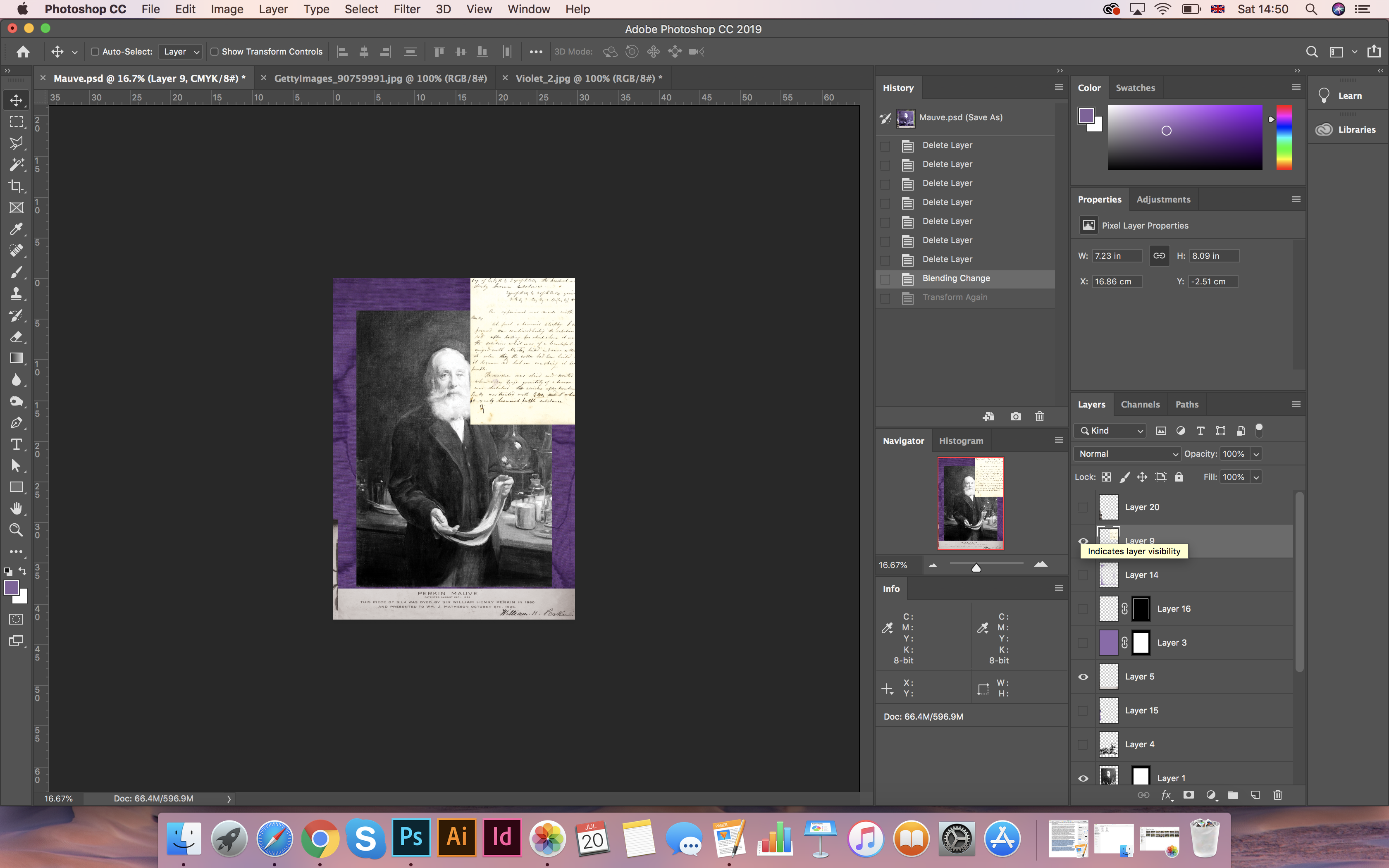
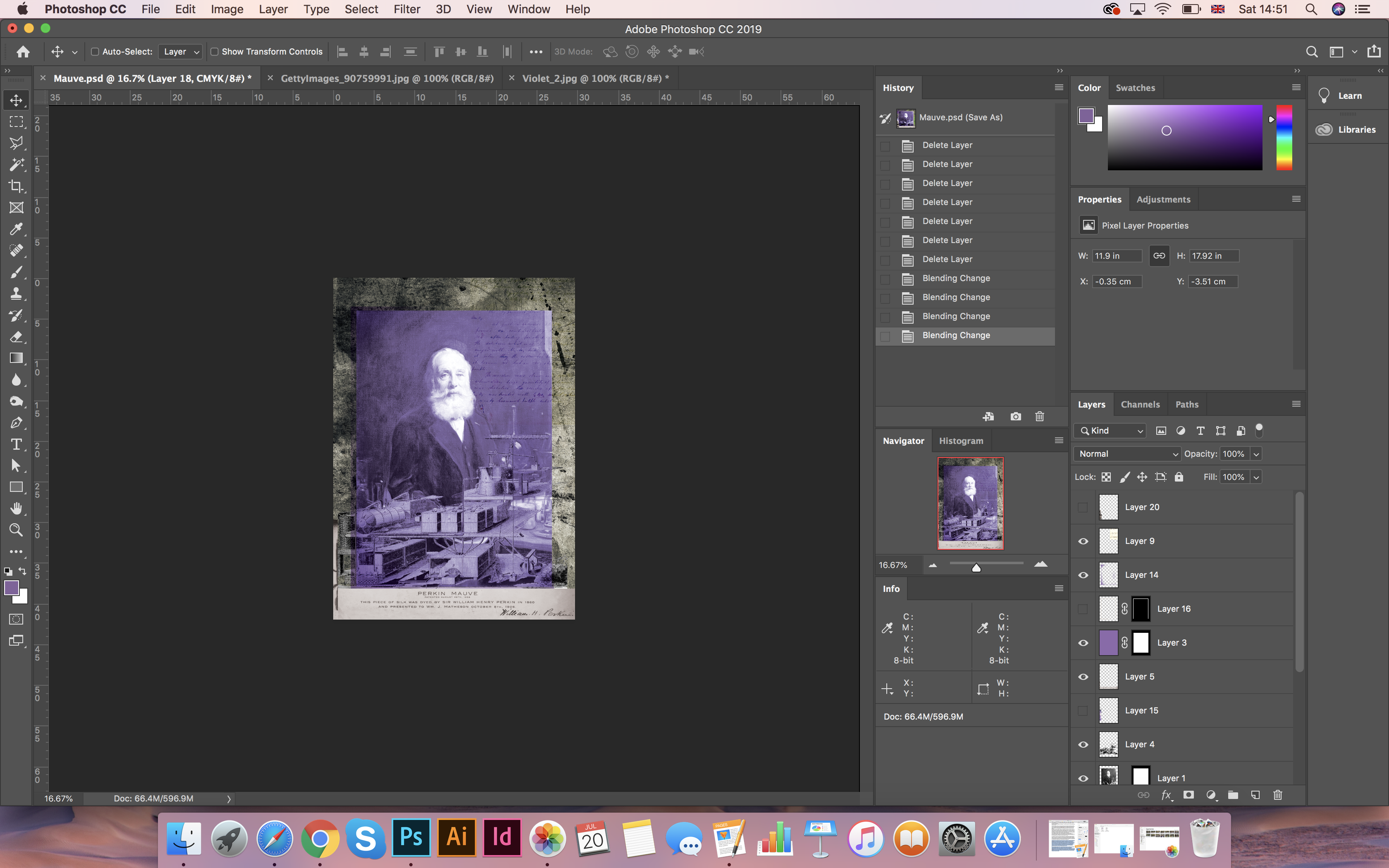
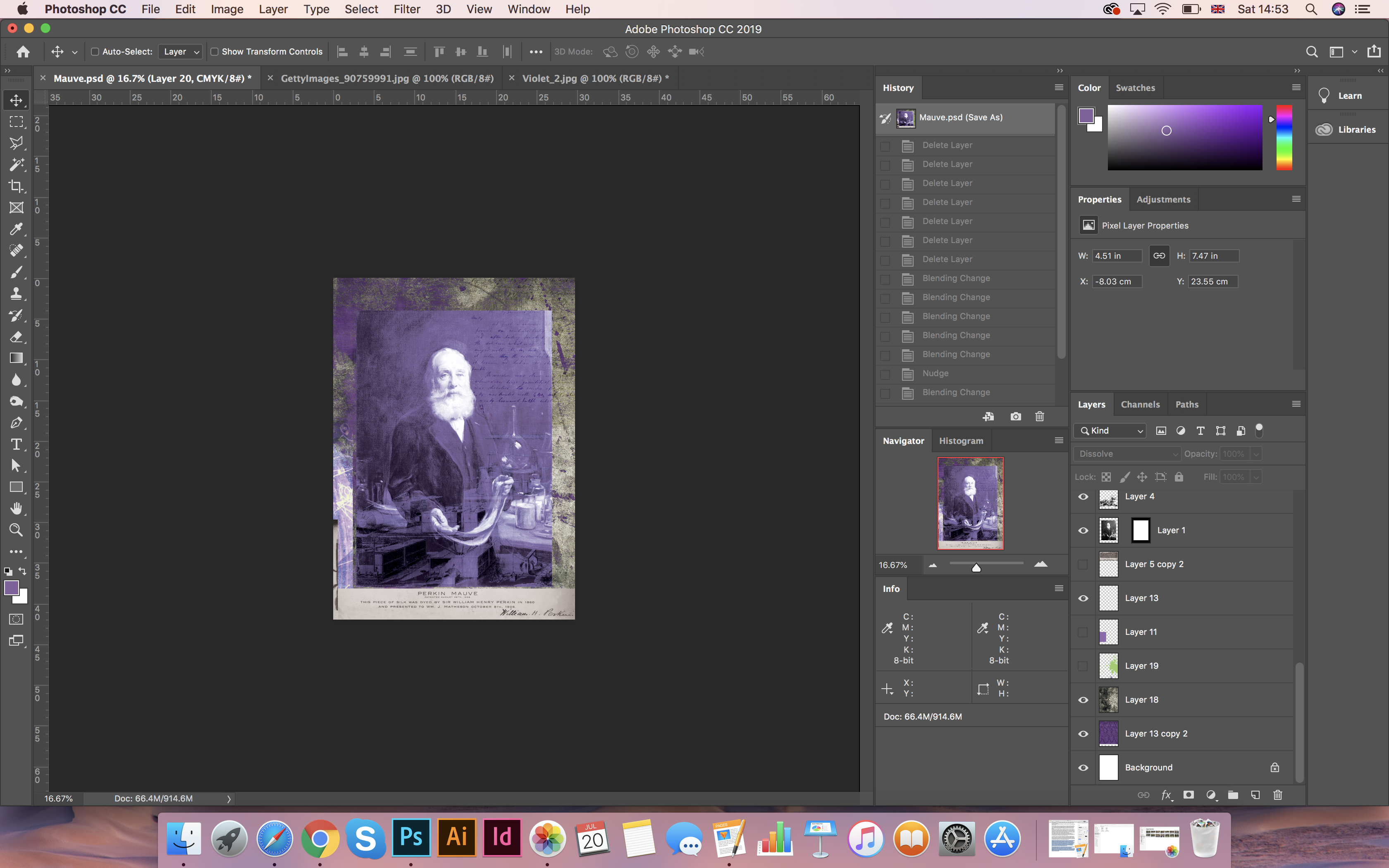
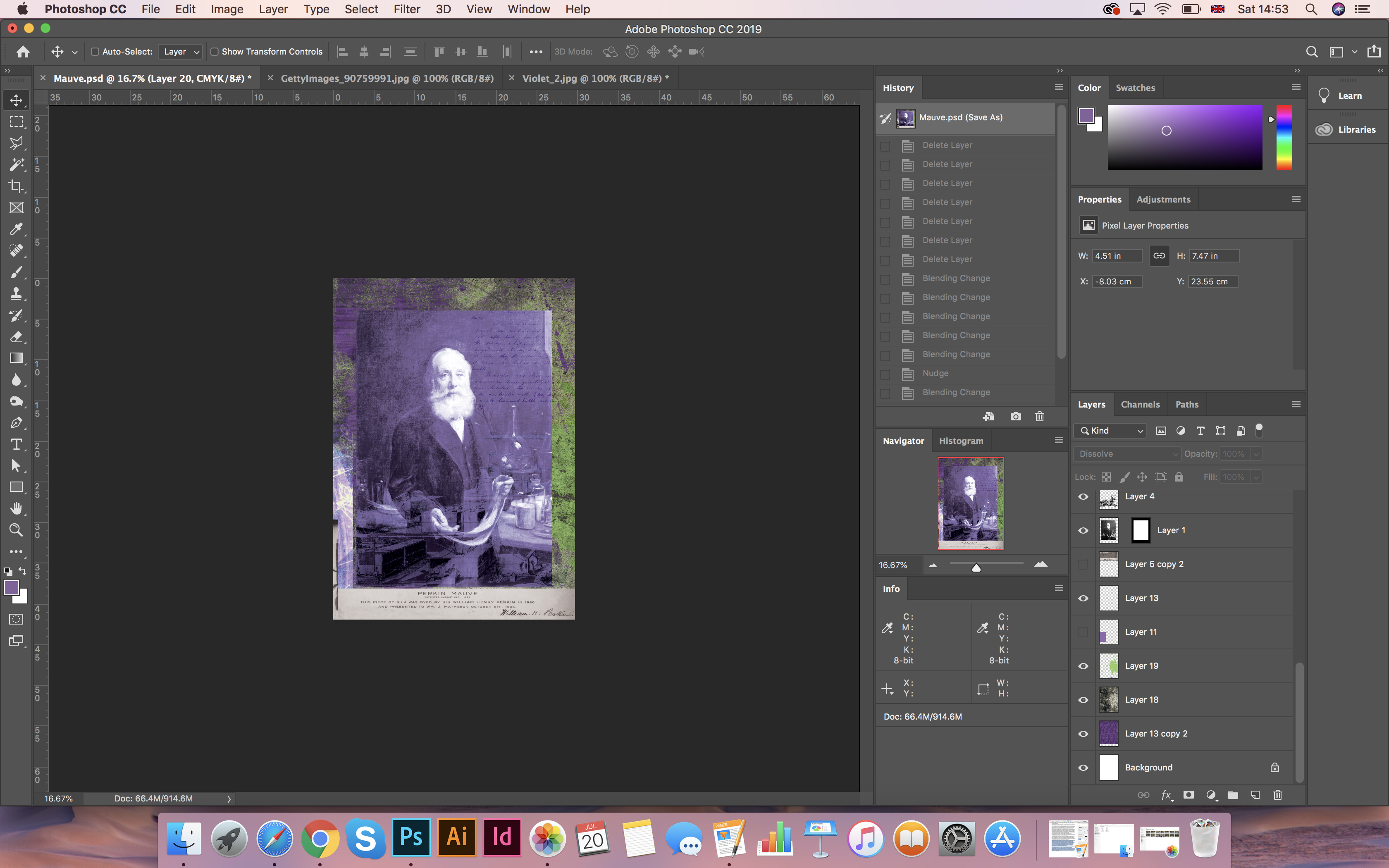
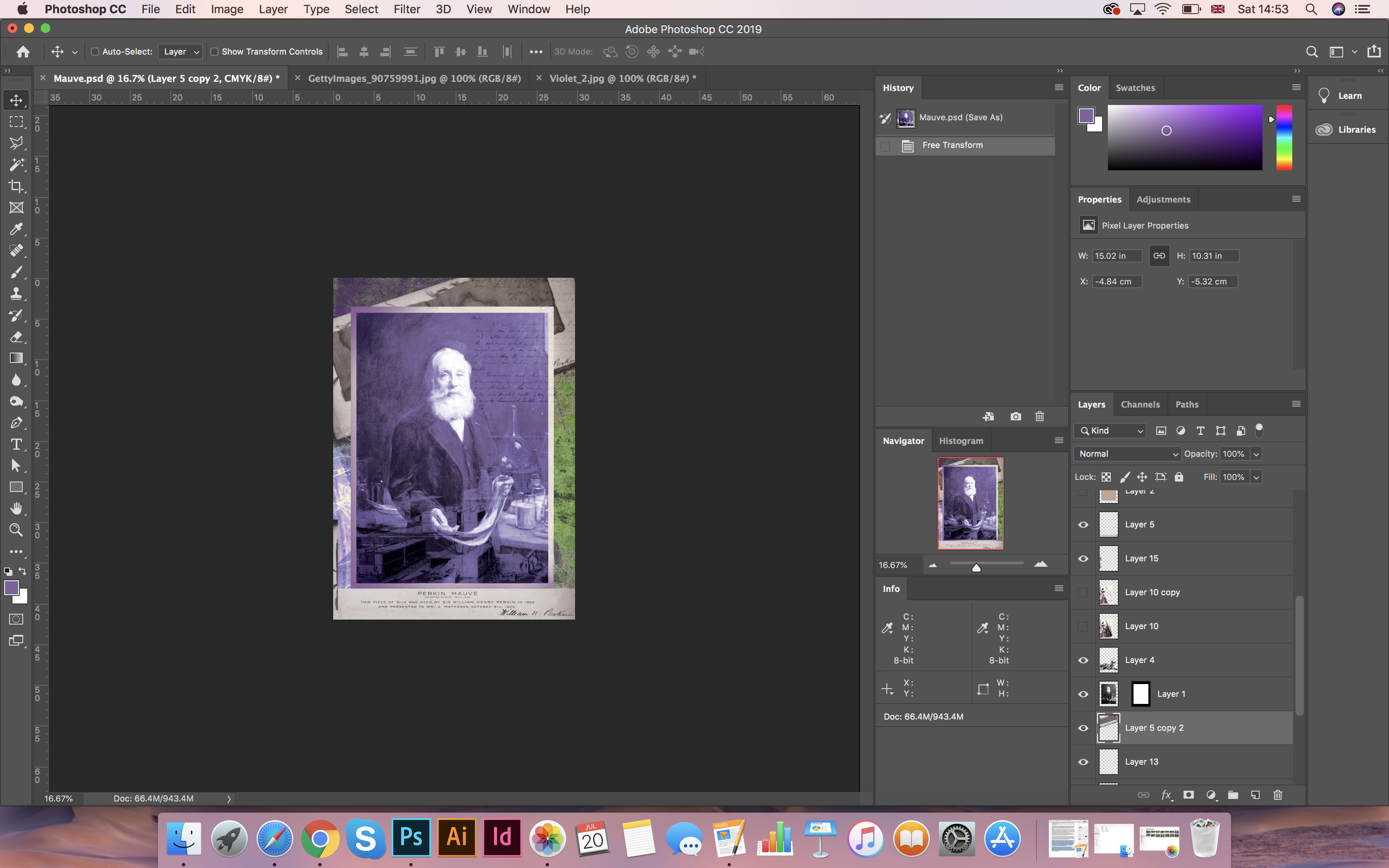
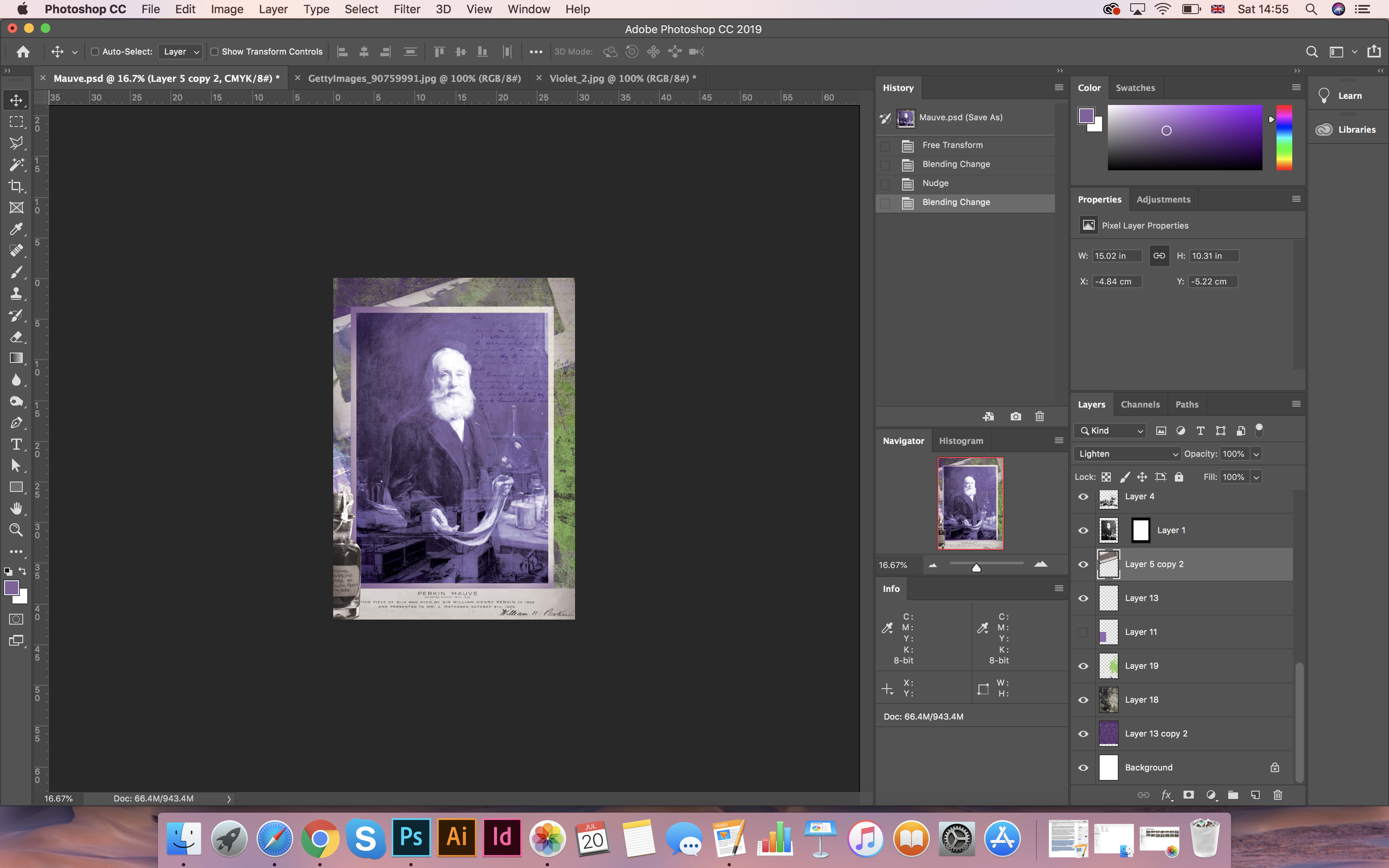
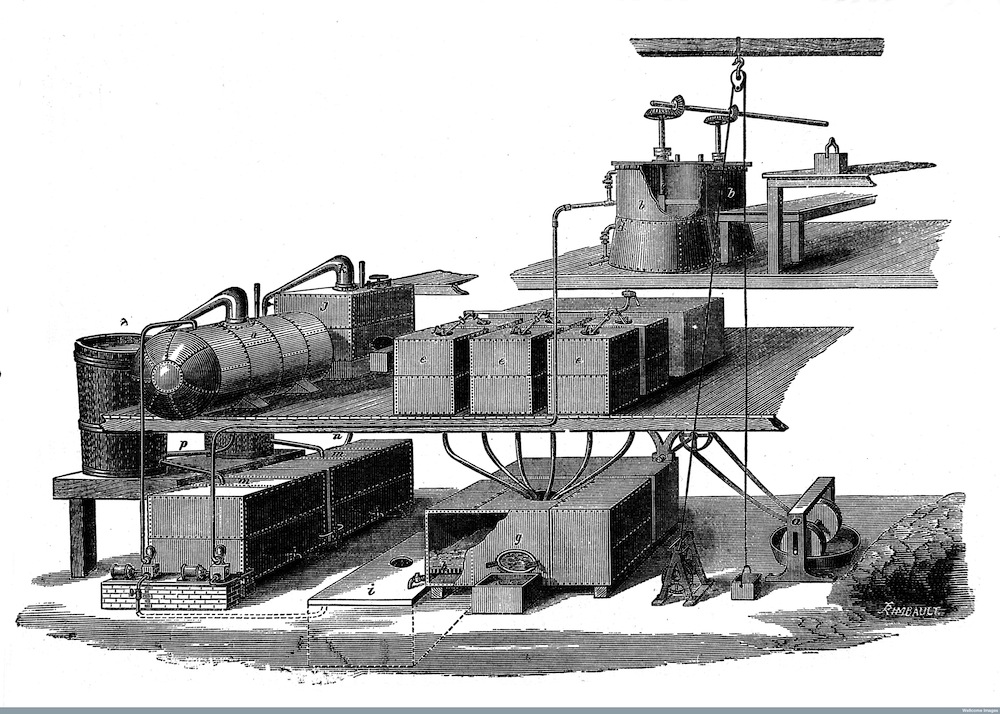
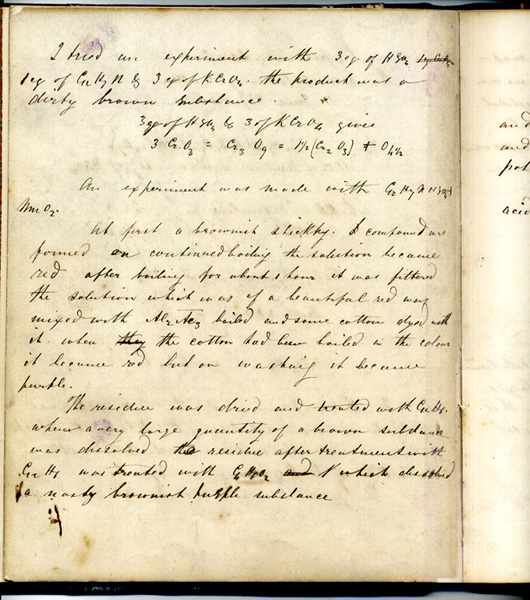
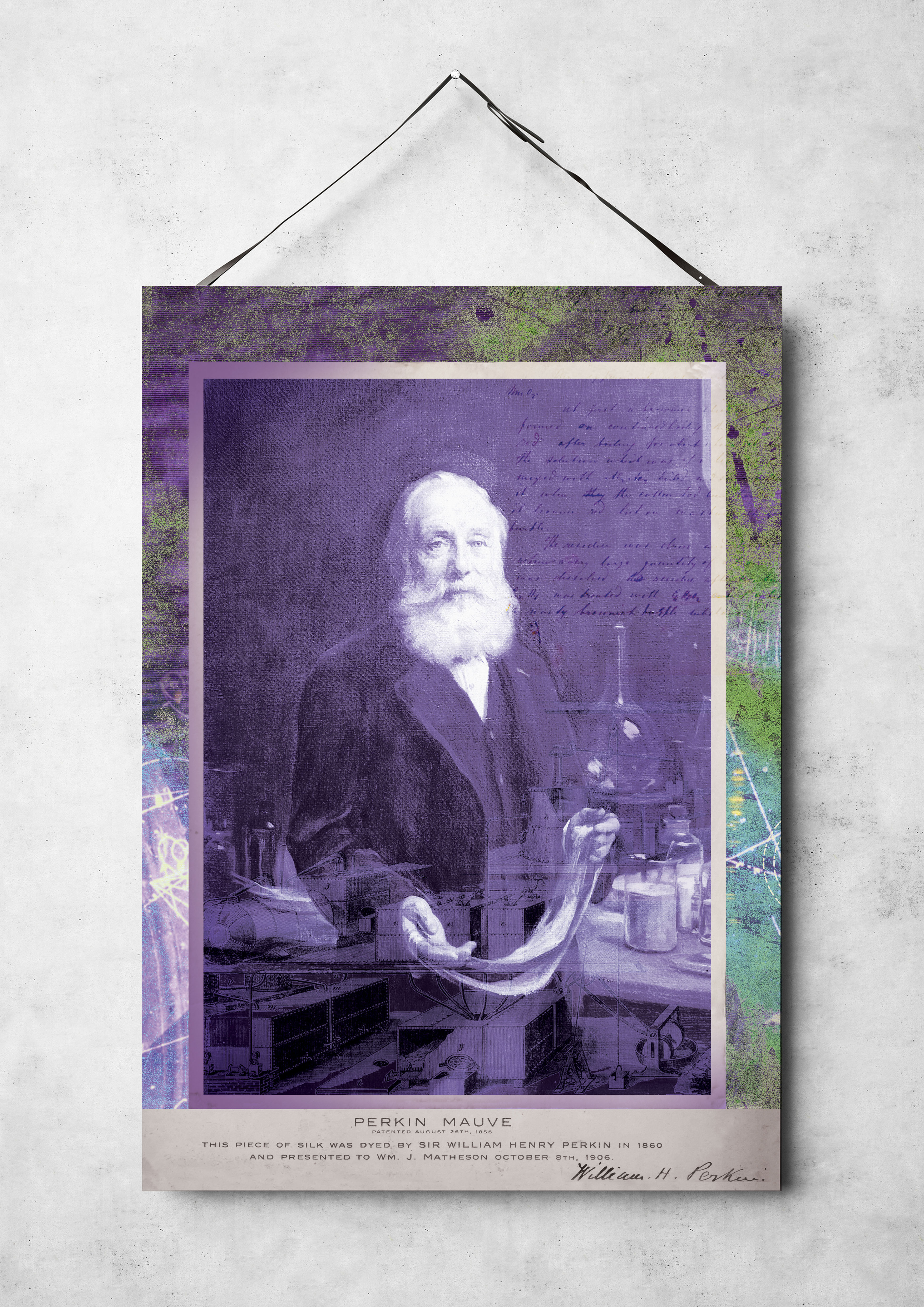
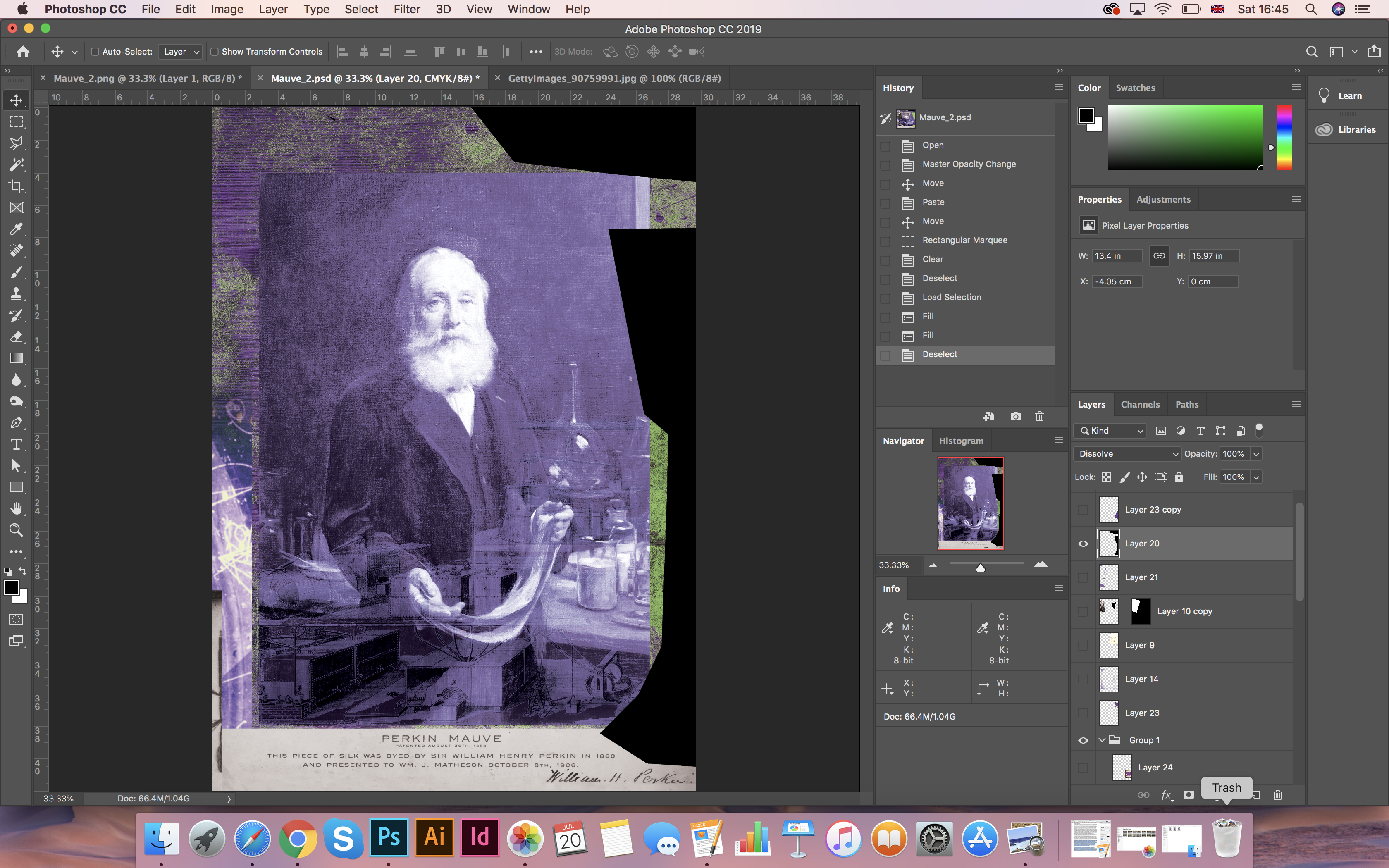
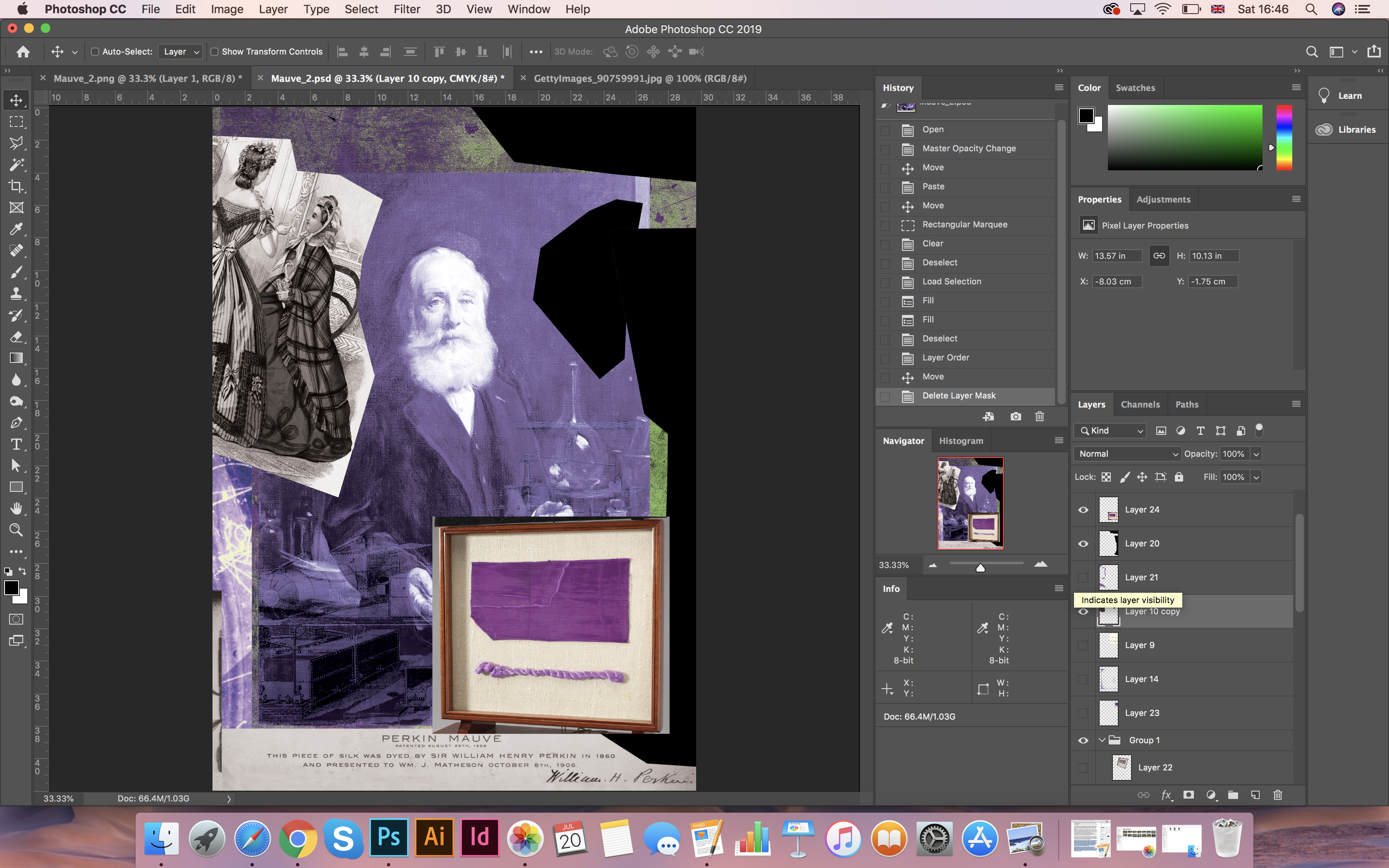
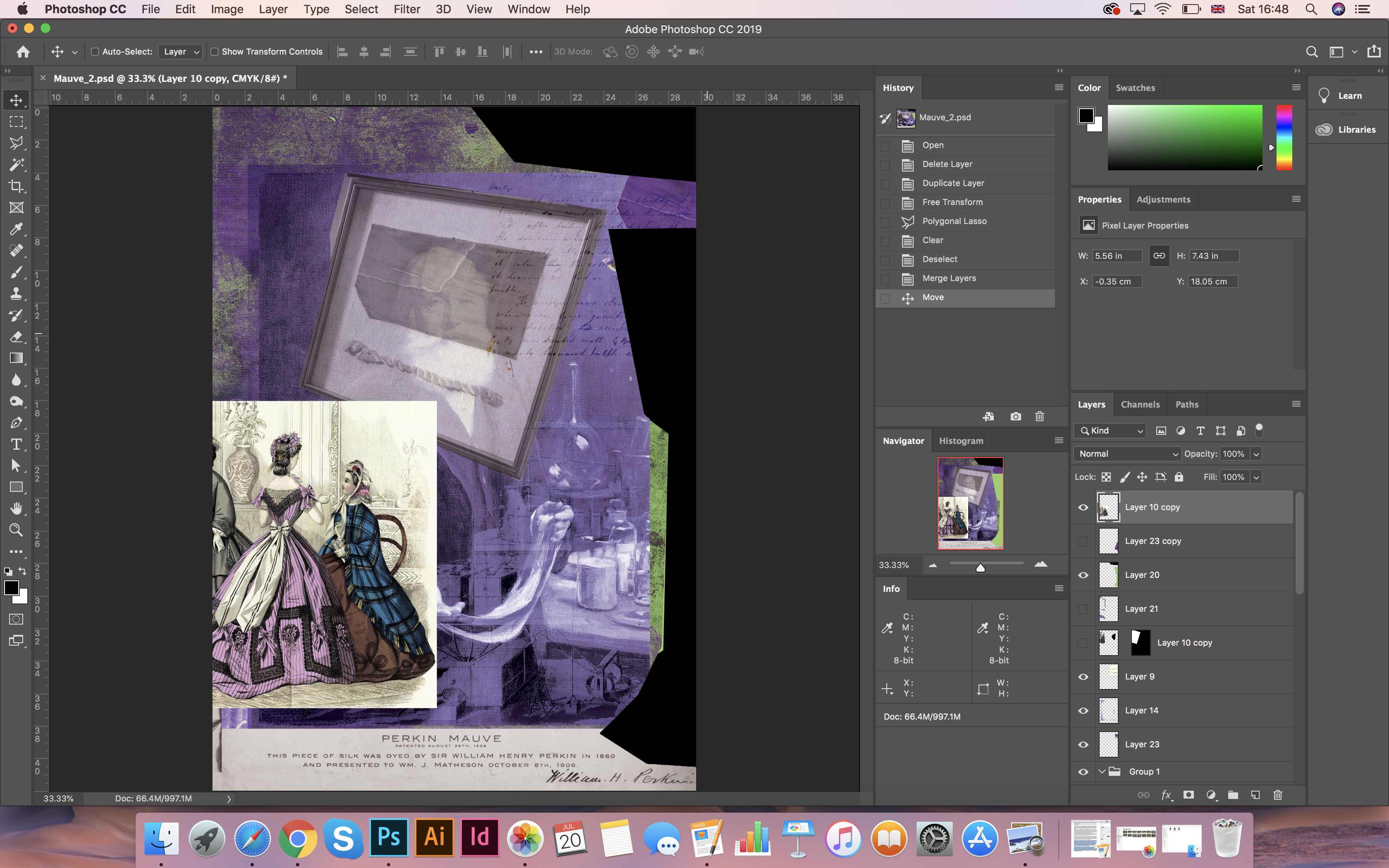
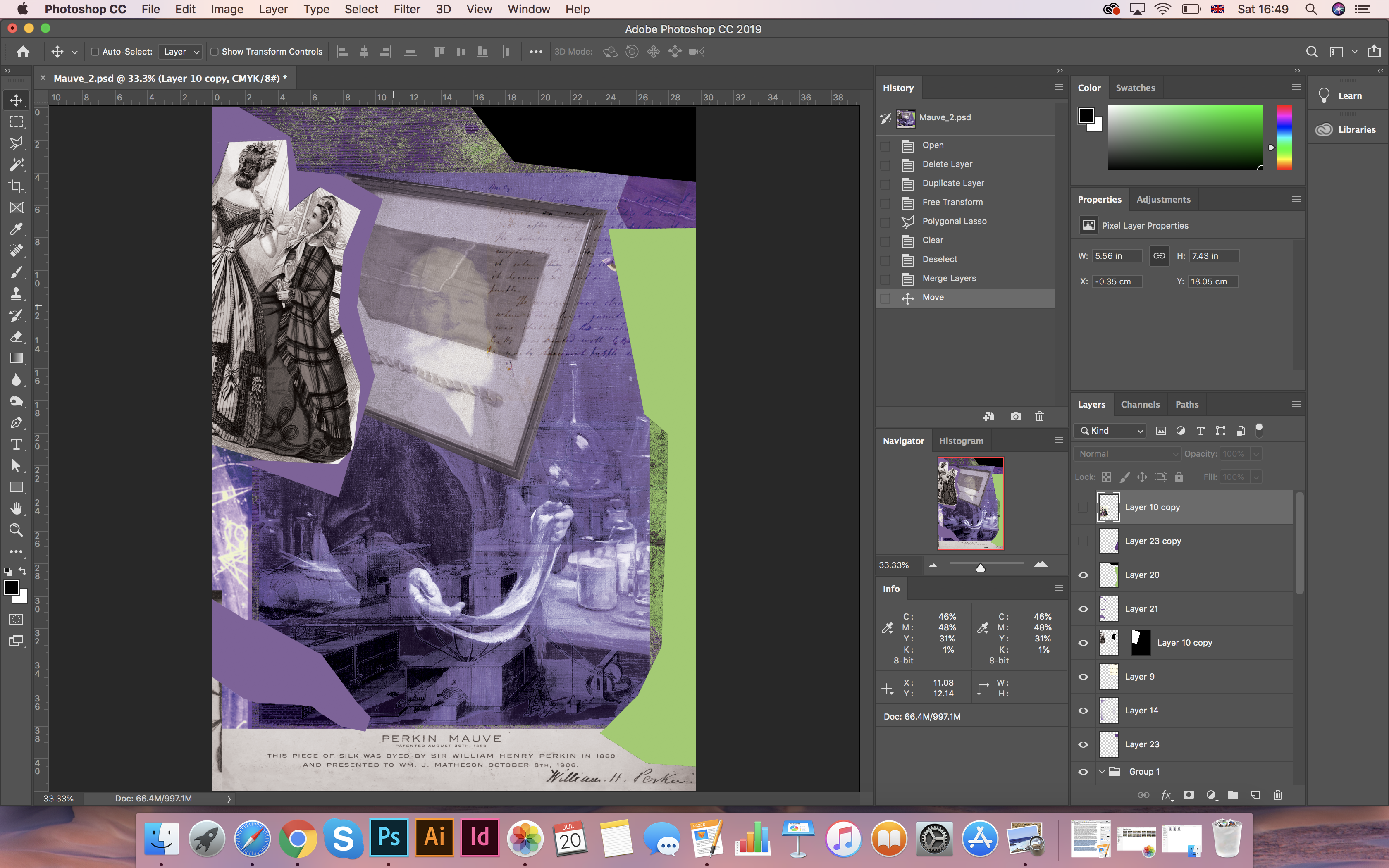
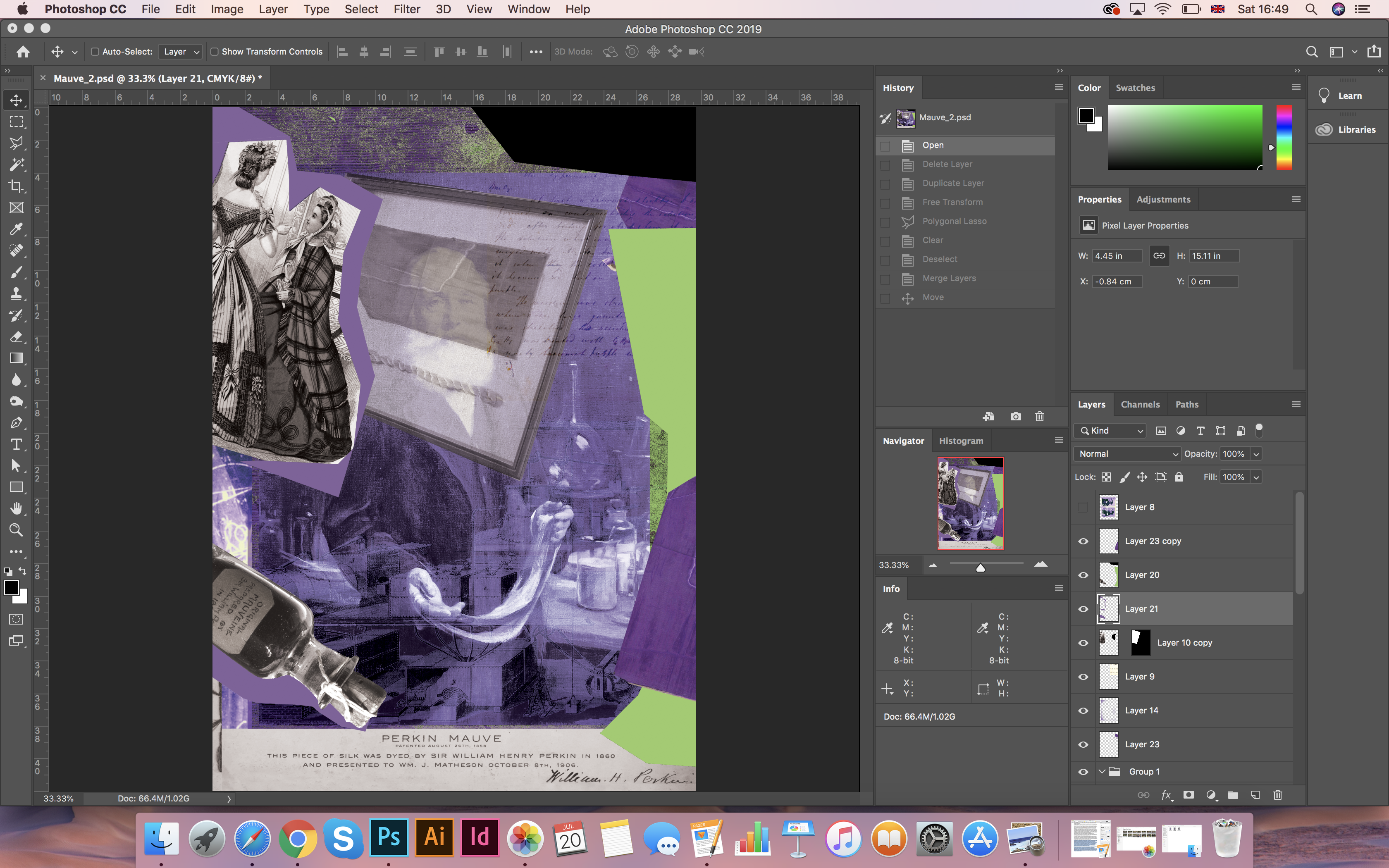
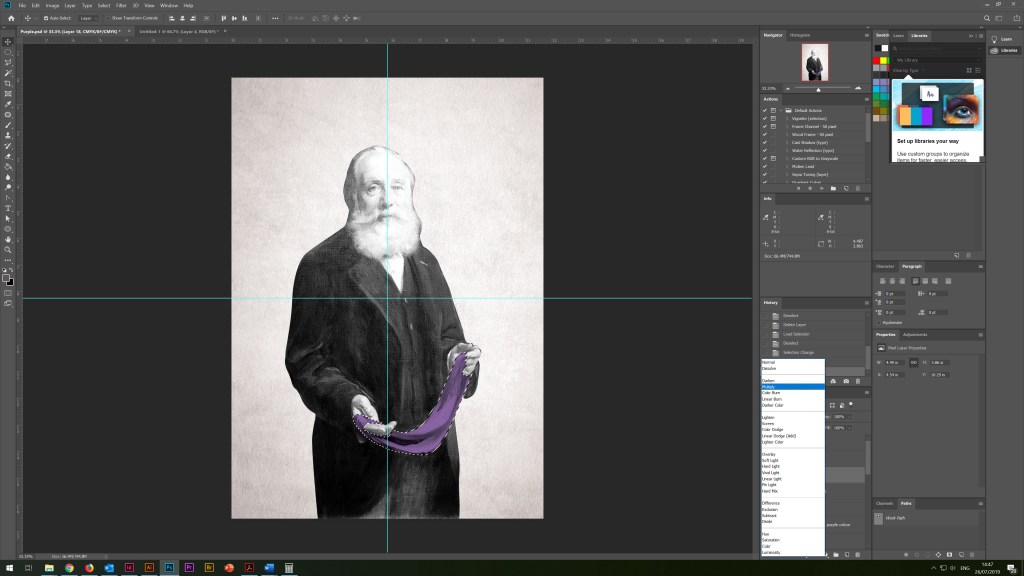
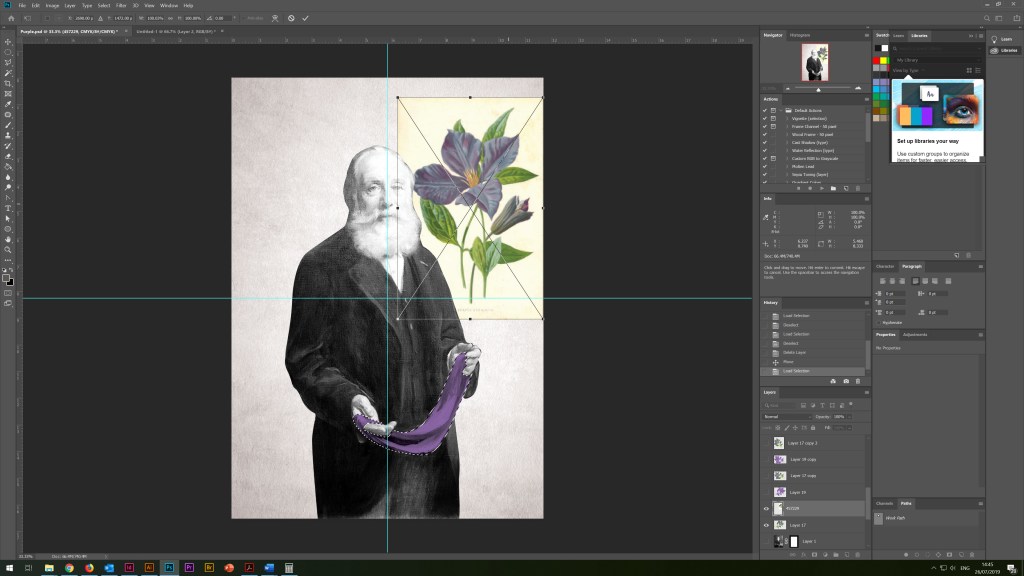
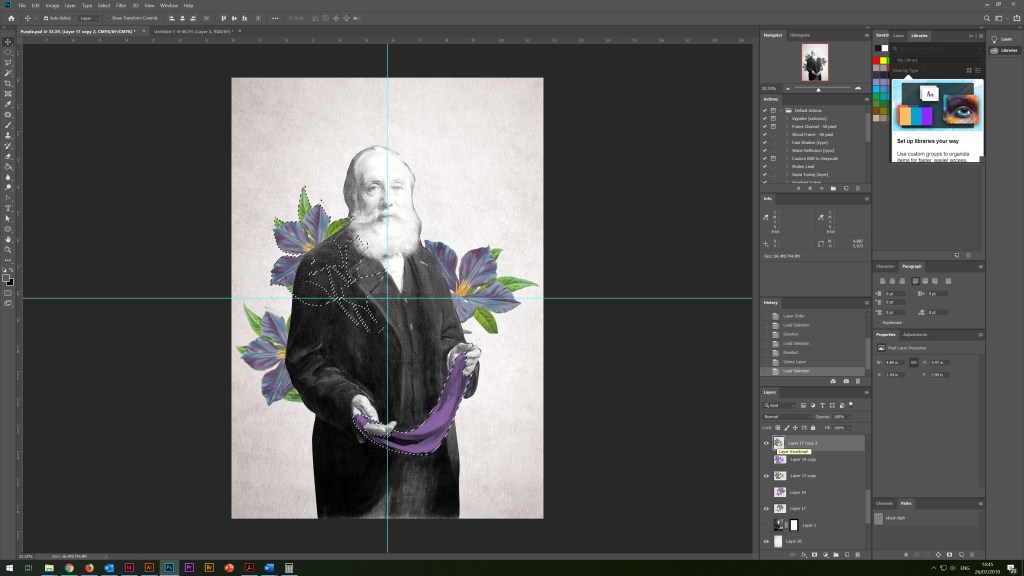
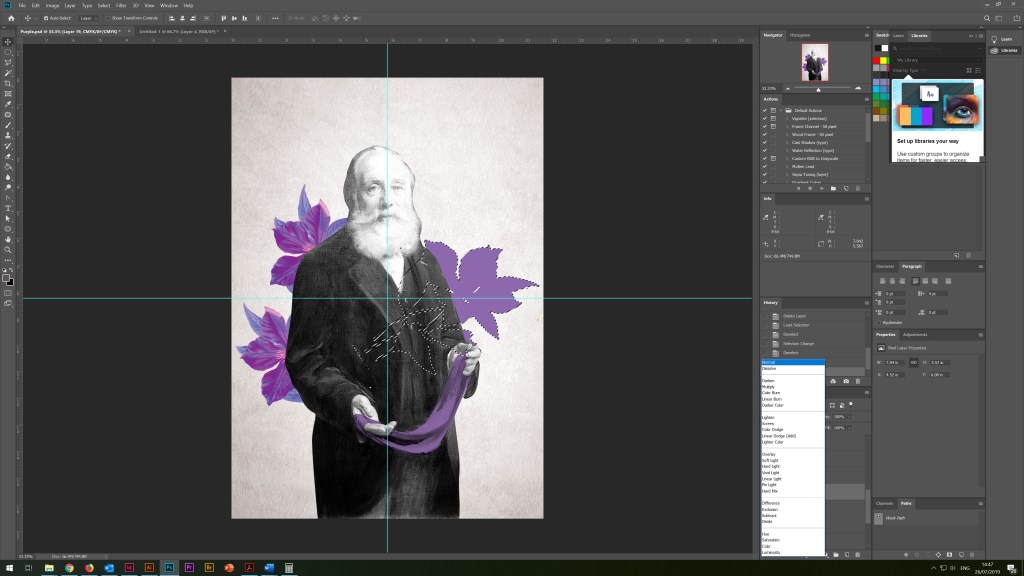
For the first poster based on the composition was made by the inventor of the purple colour Sir William Perkin. For the background image, I chose an enlarged photo of the fabric. Then my collage was consistently supplemented with various ideas that related to the invention, such as the scientist’s notes on the invention, the inventor’s mechanism-device, and also the photos from the bottle of mauveine dye collection. For the depth of the image, I found Grunge background. Also, in the process of work, I realised that in the chosen colour of the decision I was asking for an additional colour, which was made as lime green colour. Using the method of overlaying transparency, I managed to get a design that had at the texture and depth.

Sources for the pictures:

The design that I got in the process of experimenting with transparencies and layers is provided below. Overall, I was pleased with the result in colour, the texture of the poster, and with the idea itself. However, I still had concerns about the static nature of the composition, all objects looked too straight and in too much order to me. This example was lacking the dynamics and chaos in the elements. And I decided to follow further in my experiments, I wanted to add more non-standard objects that would act beyond the frames of the composition, but at the same time were harmonious with each other.

Poster 1. The Birth of the Colour Purple 1

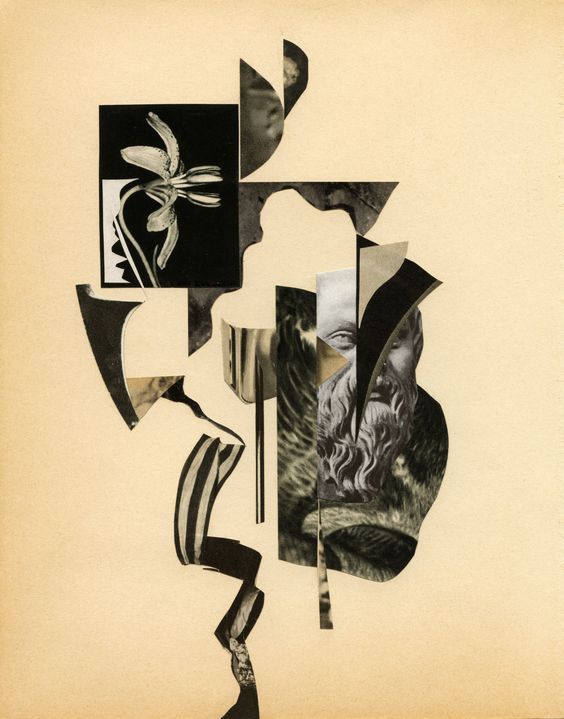
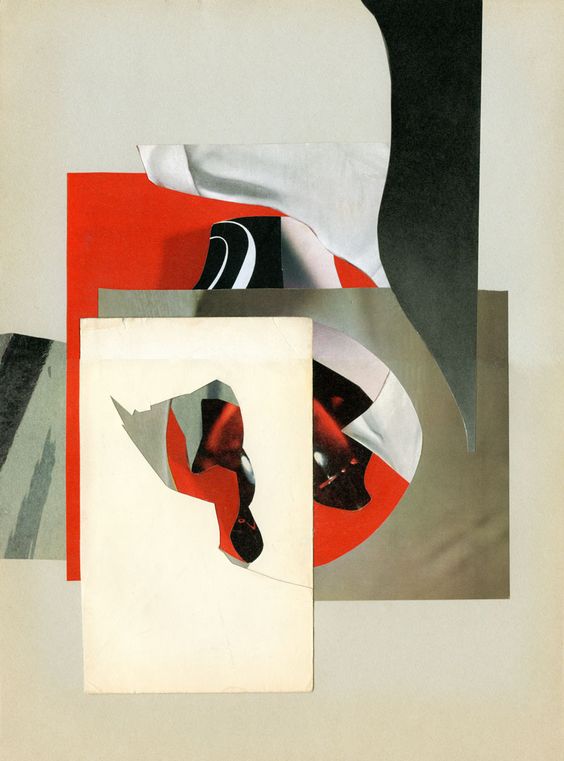
For inspiration, I turned to my early acquisition, a book The Age of Collage 2, which I bought at the Art Gallery in Germany. My attention was attracted by the designer Bill Noir, who struck me with simplicity and at the same time, a feature in the composition.

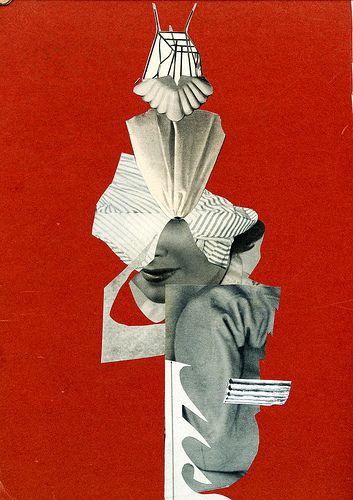
I thought what if I add torn geometric objects in my work in the same contrasting colours of purple and lime green, while, creating the illusion of movement? I scattered objects along with the entire sheet; in the end, I came to this decision. The phase of my new design in the same subject given below.

I liked the process of experimenting with shapes and pieces of different colours. As a result, I got a design upside down, but I had some doubts about the poster composition, I realised that in the end, I had to too busy space that didn’t have enough balance. I thought that such a solution would be more in a winning position if I try to minimise the background, i.e. remove the texture and try to experiment with the portrait of the scientist. More about this process, I will explain in the next poster.

Poster 2

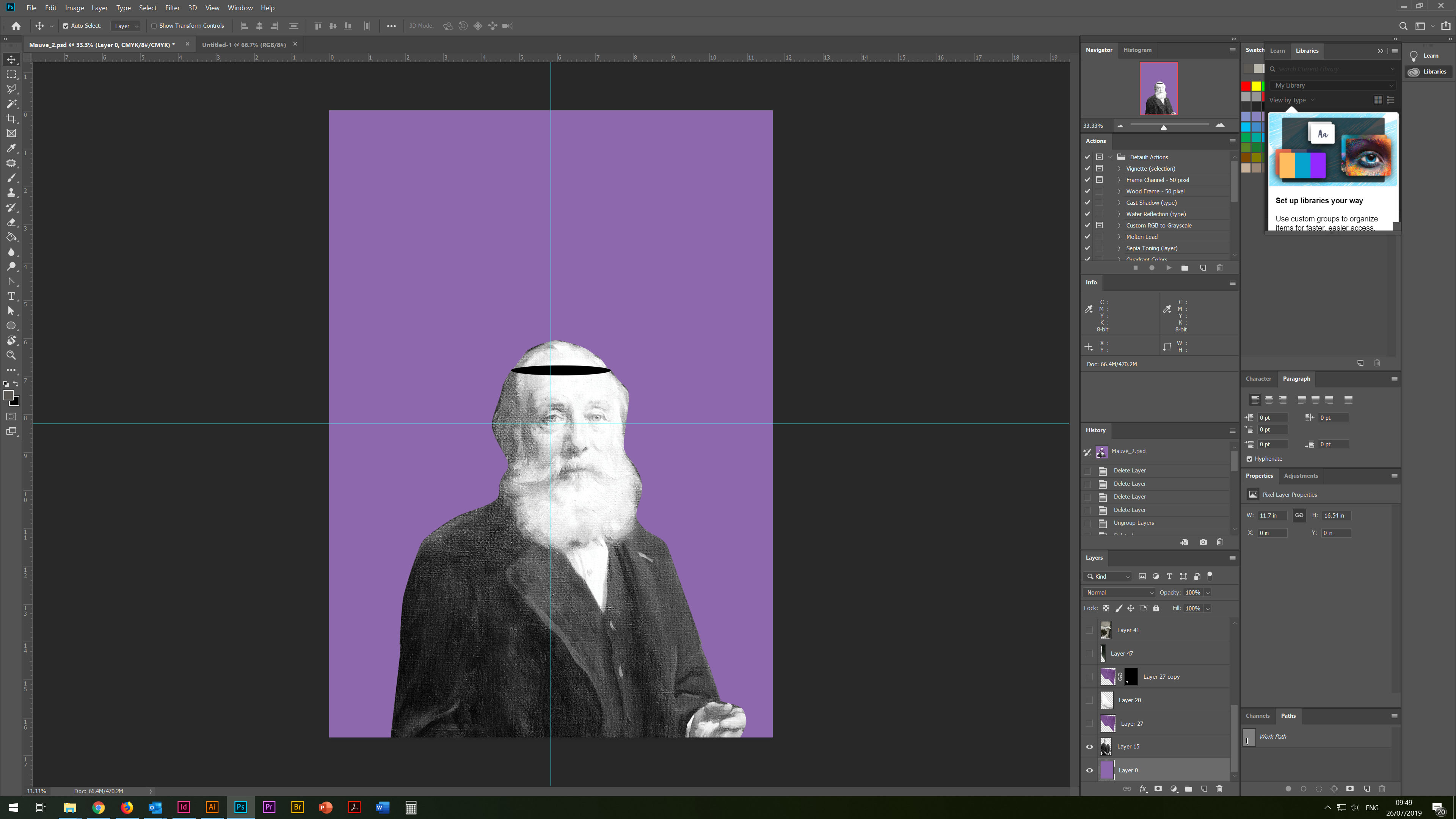
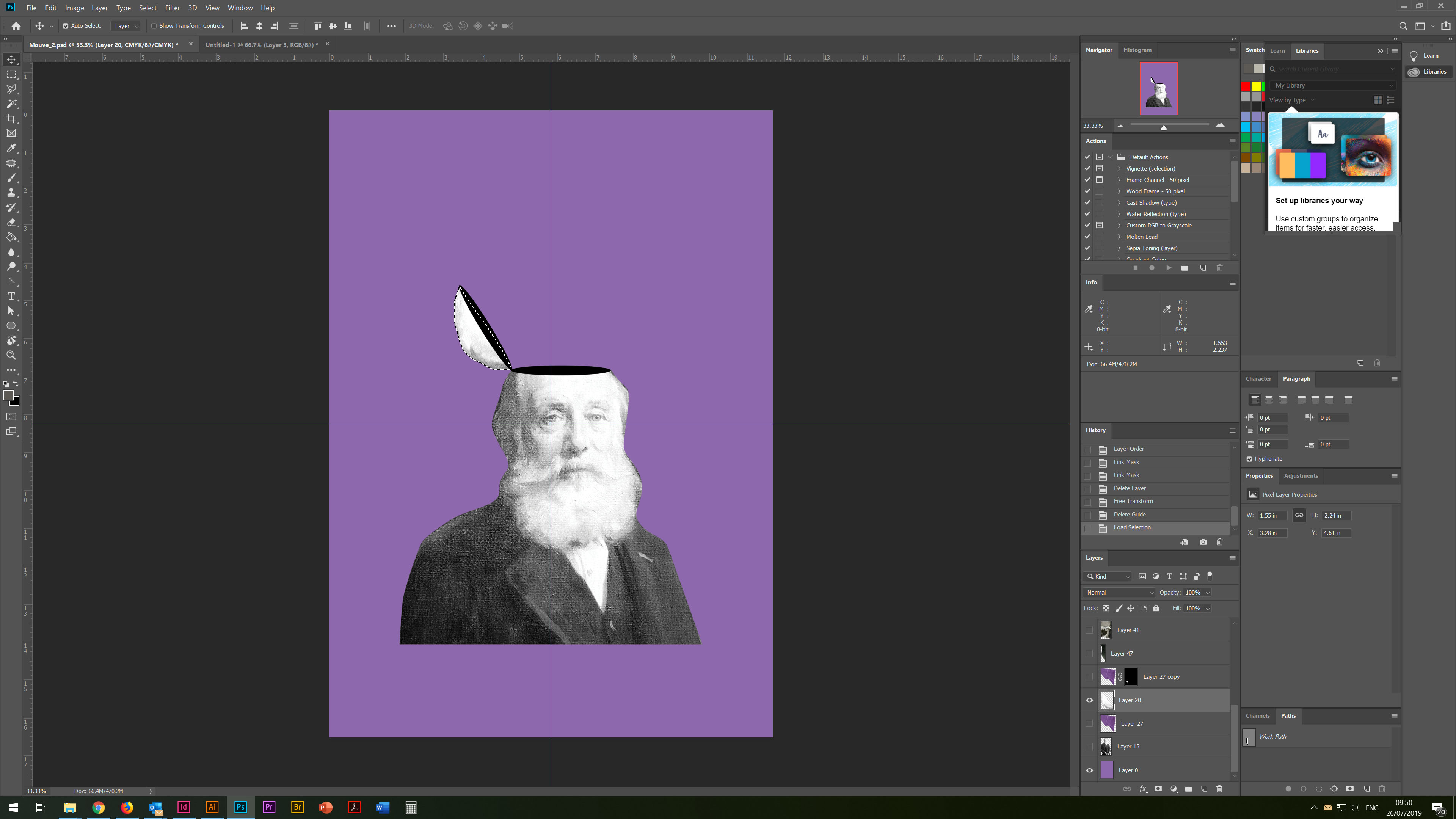
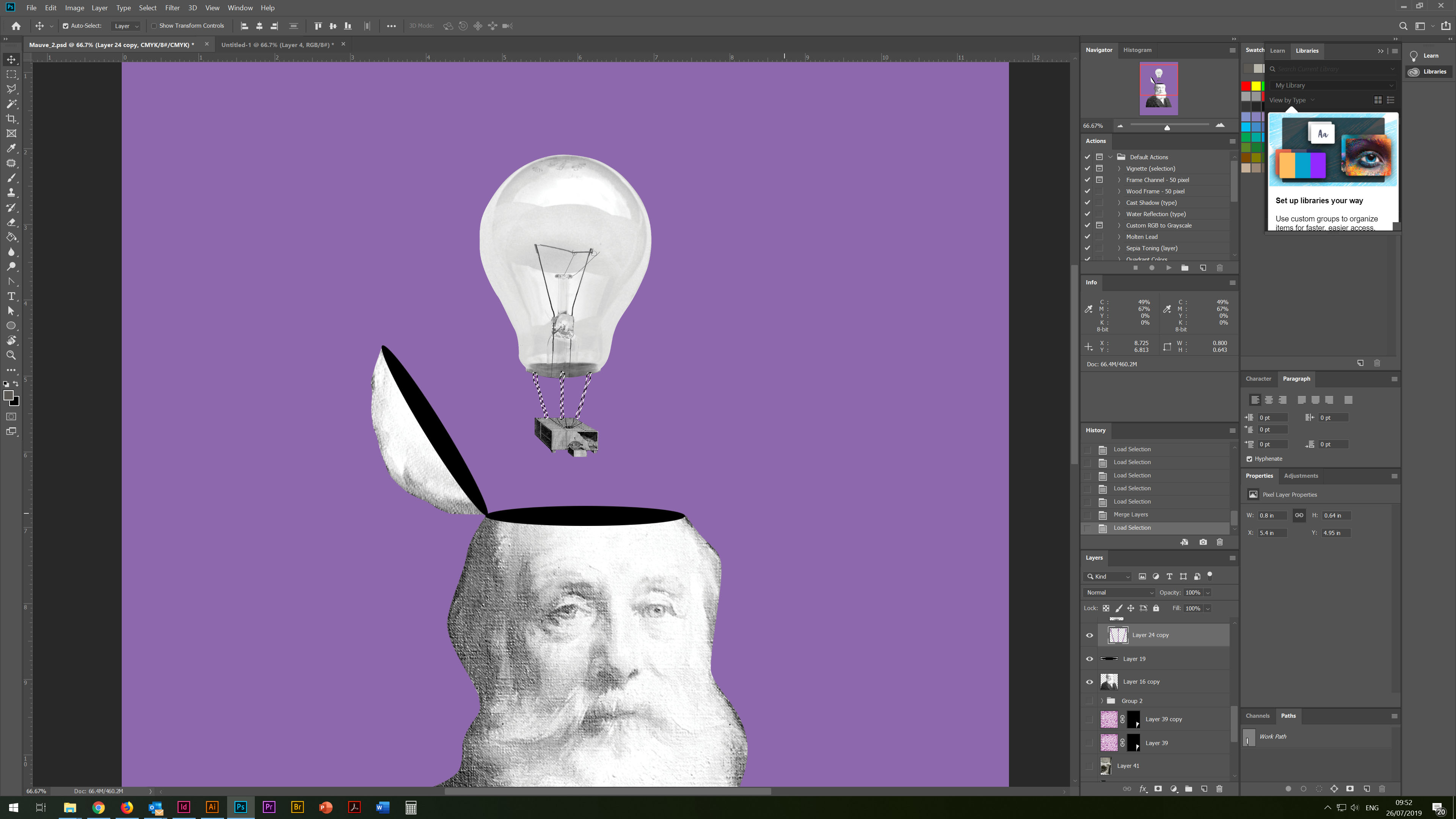
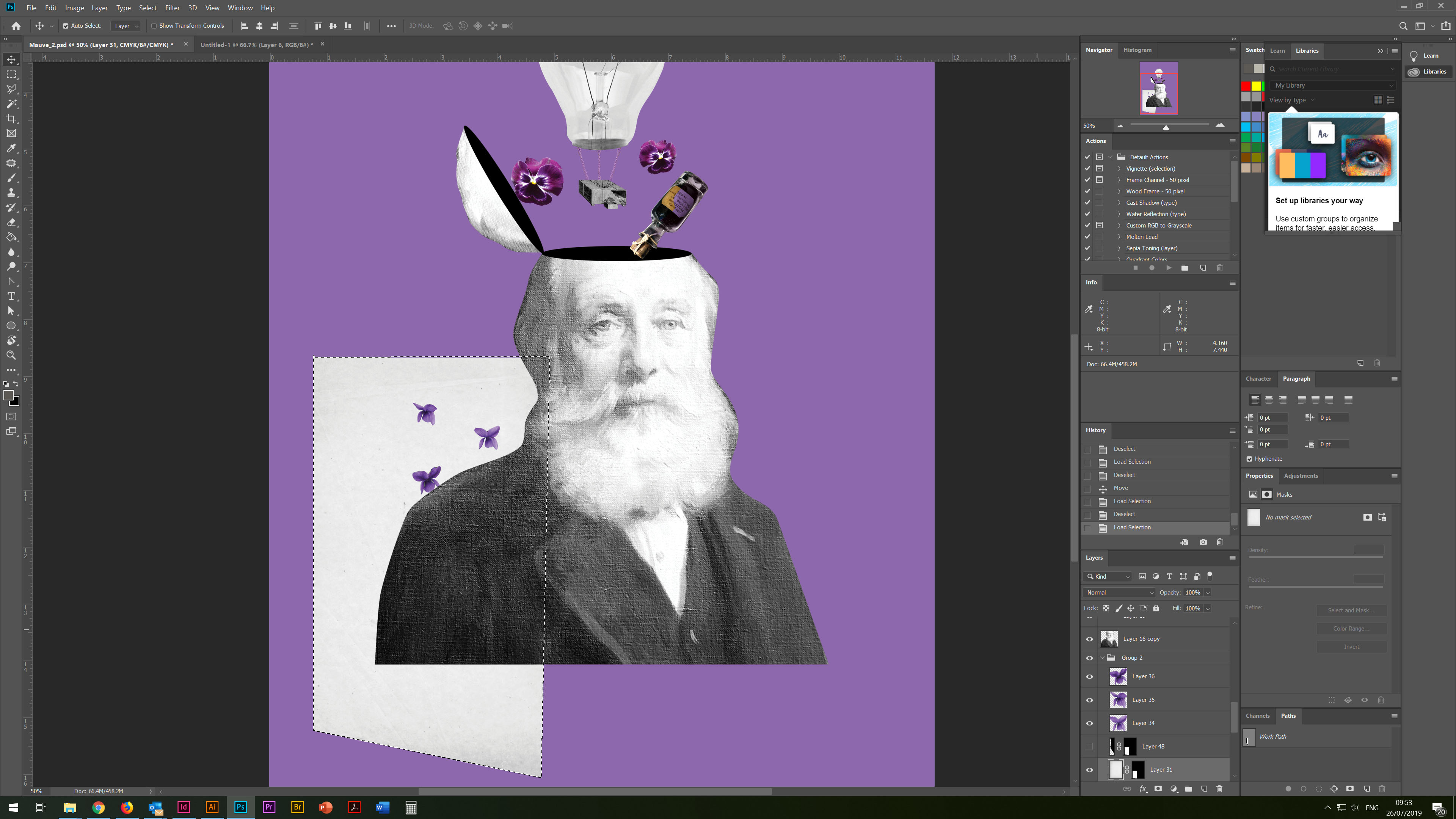
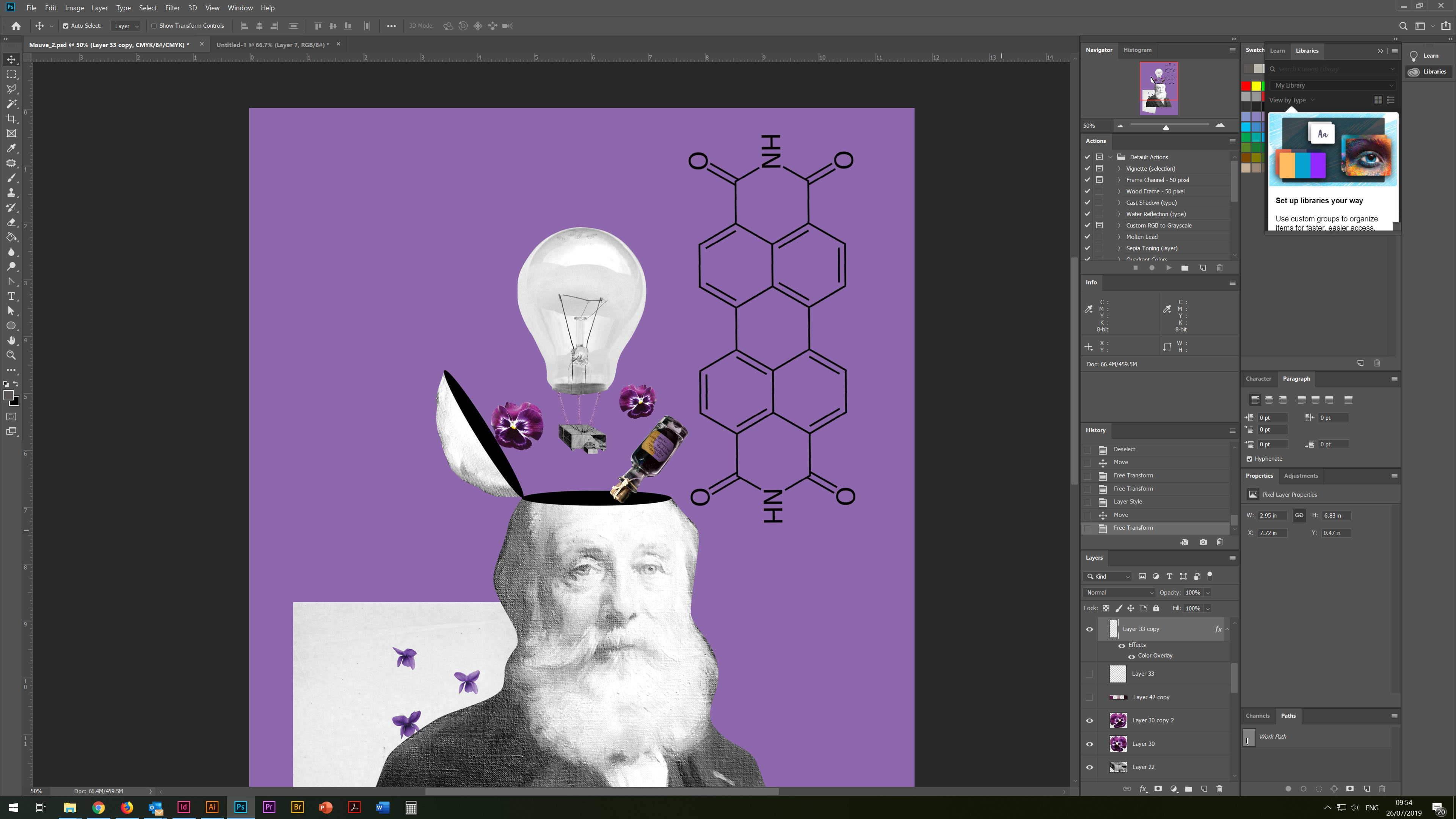
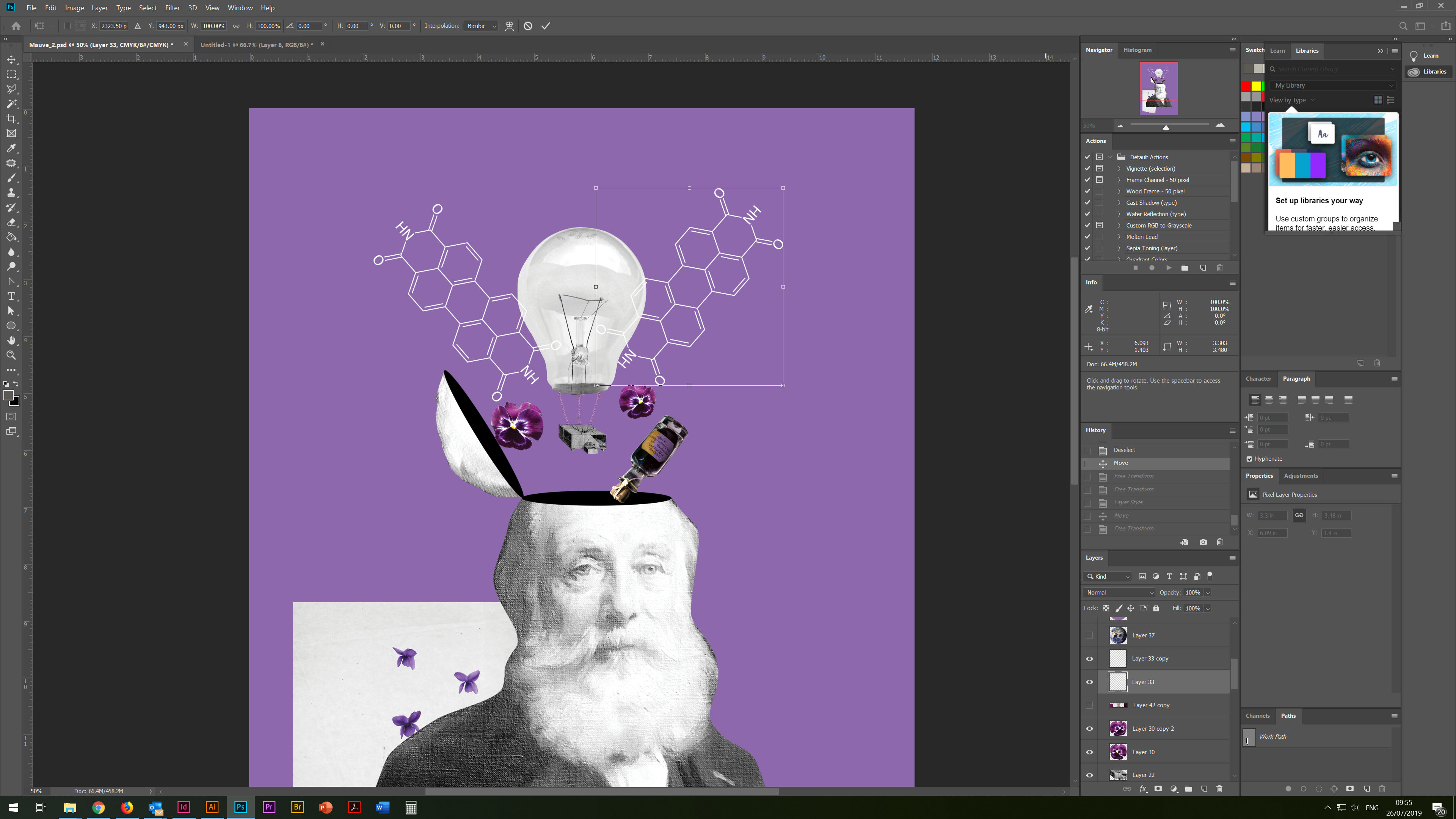
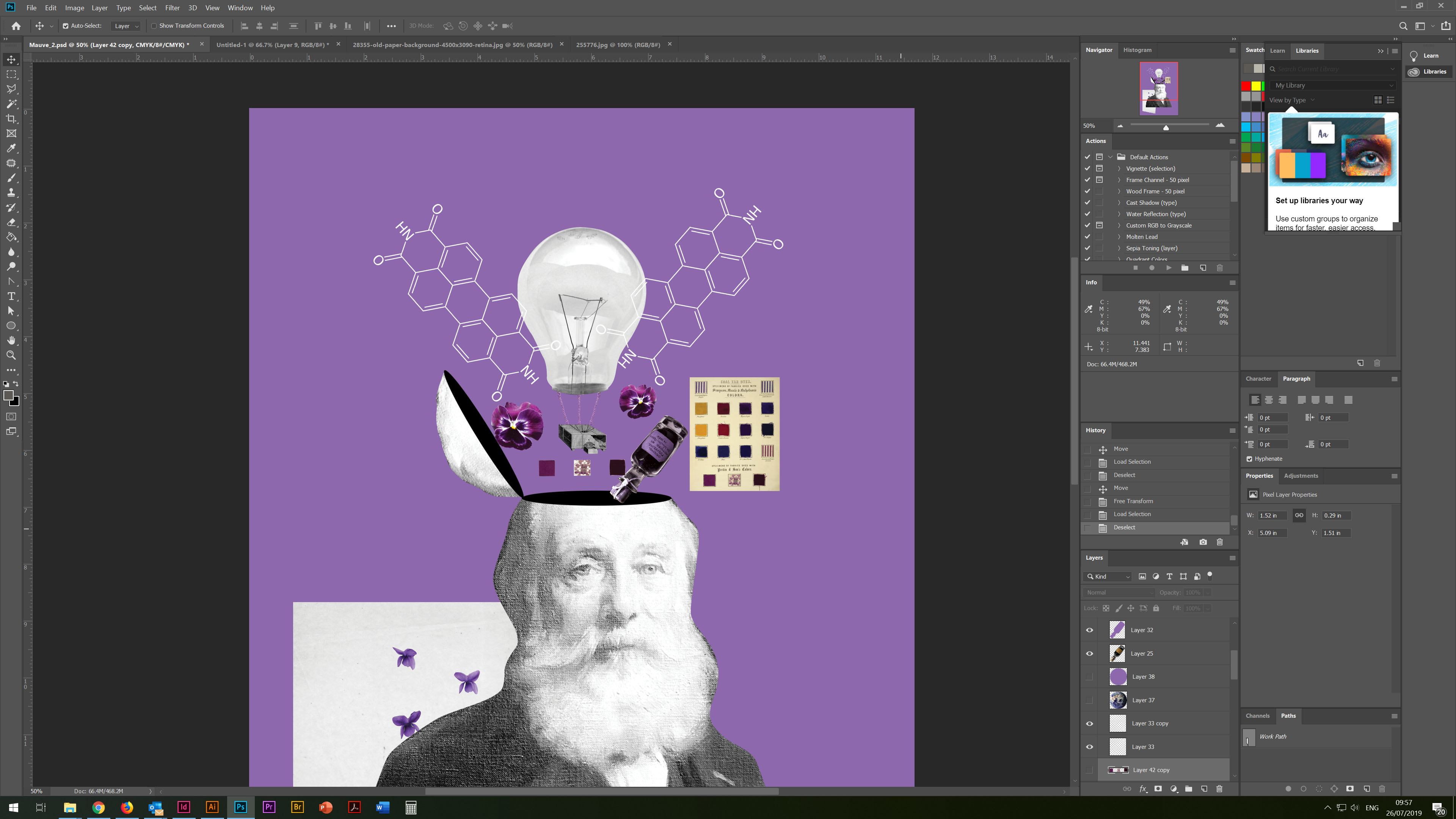
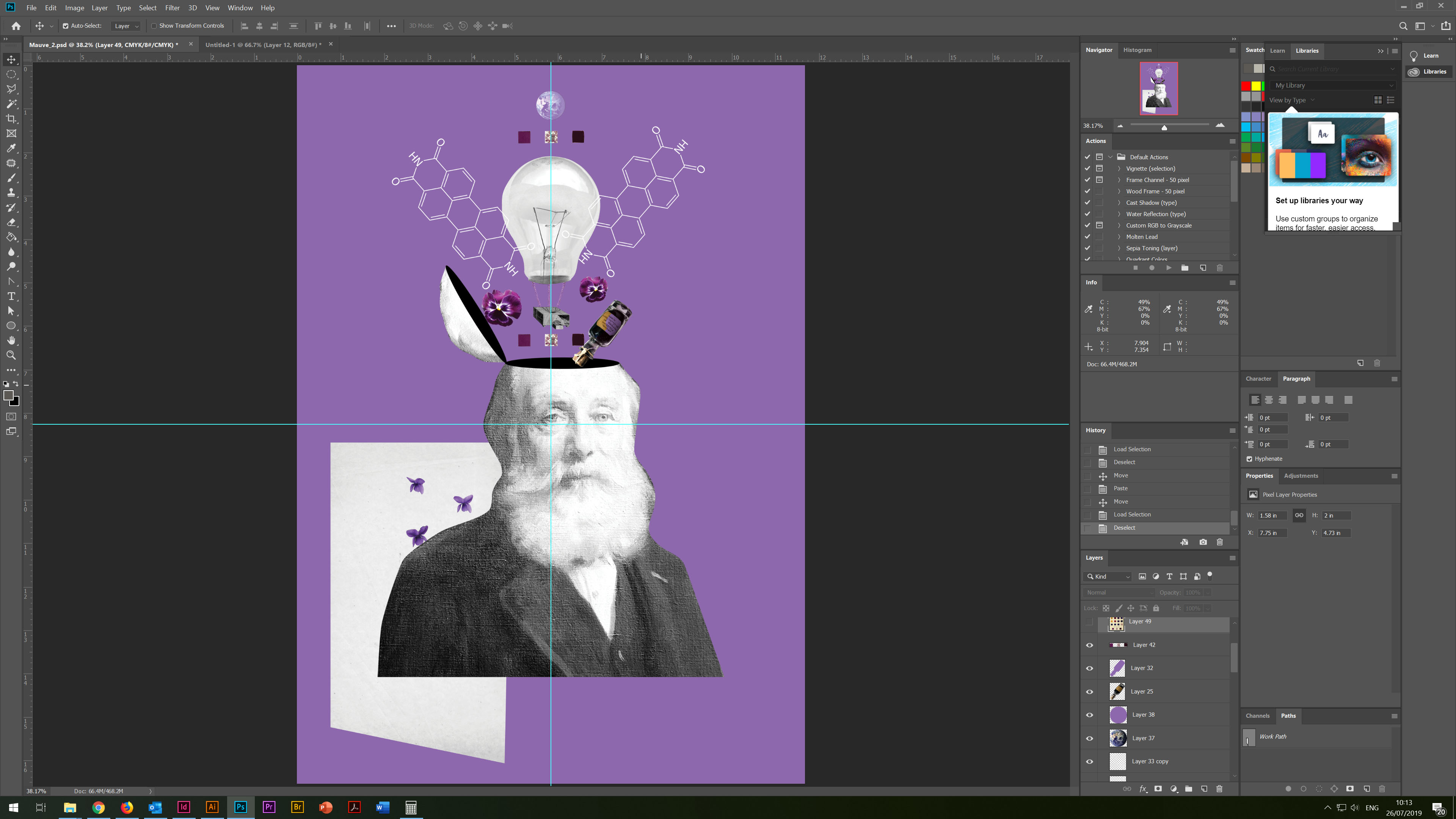
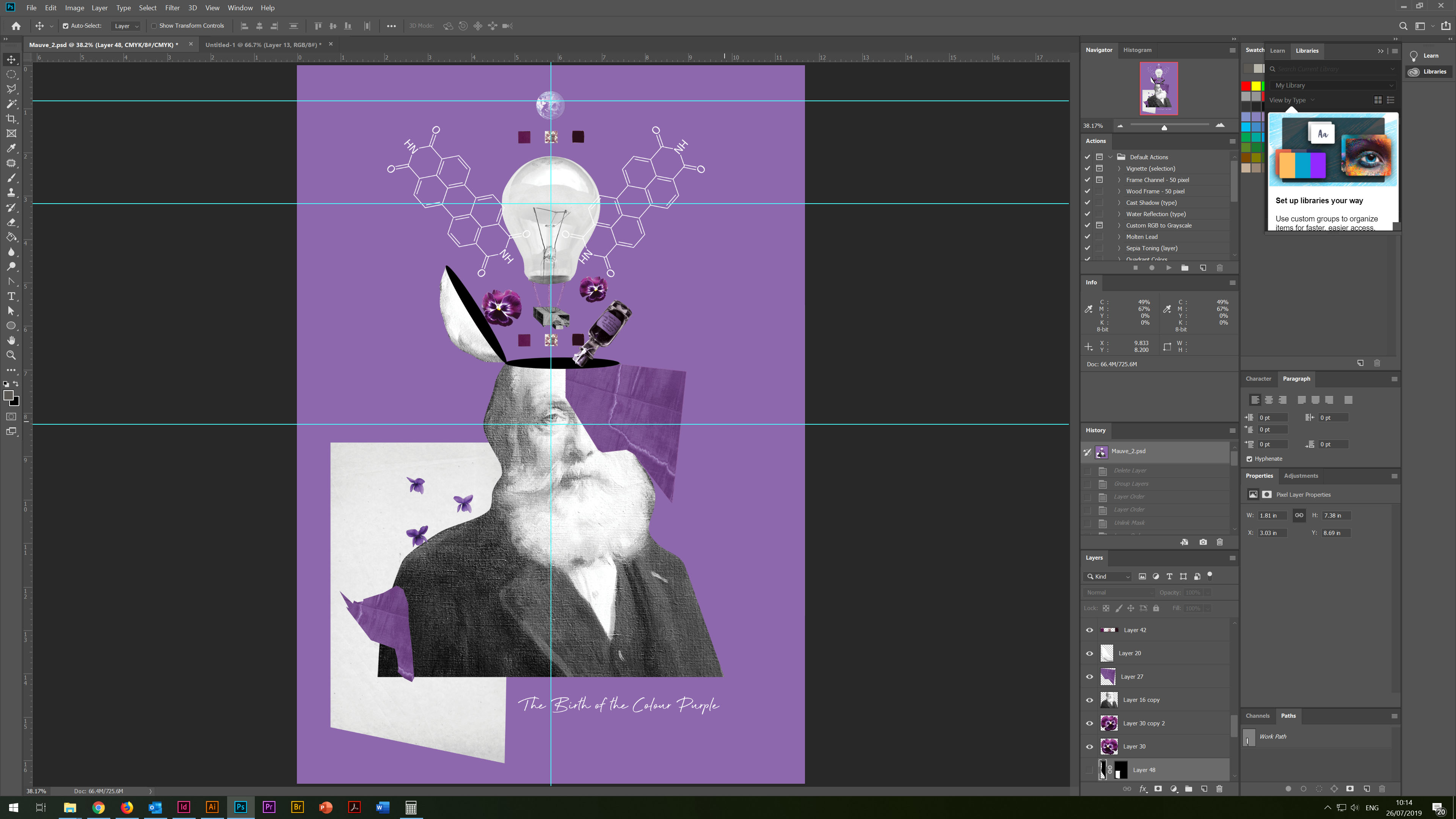
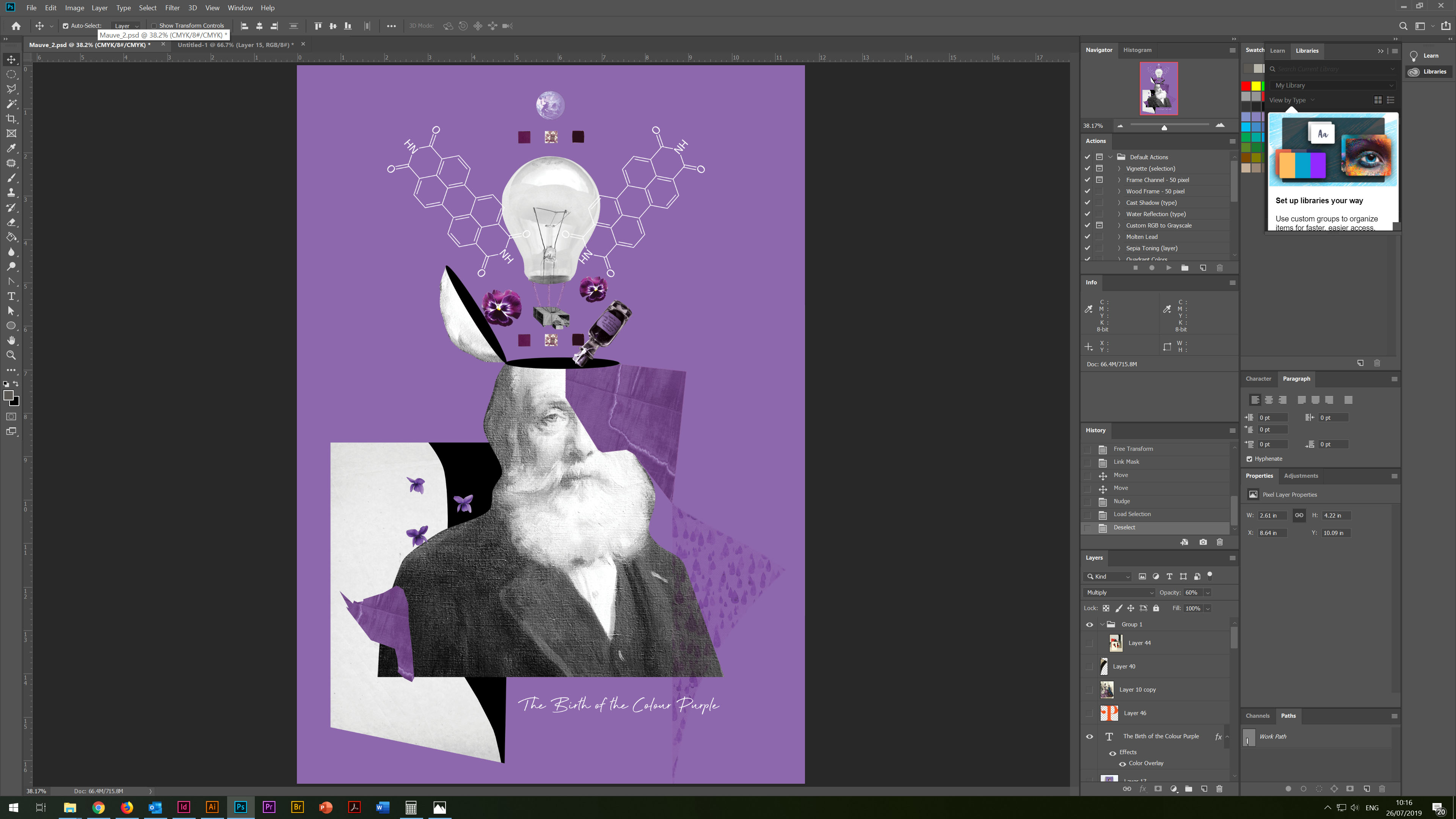
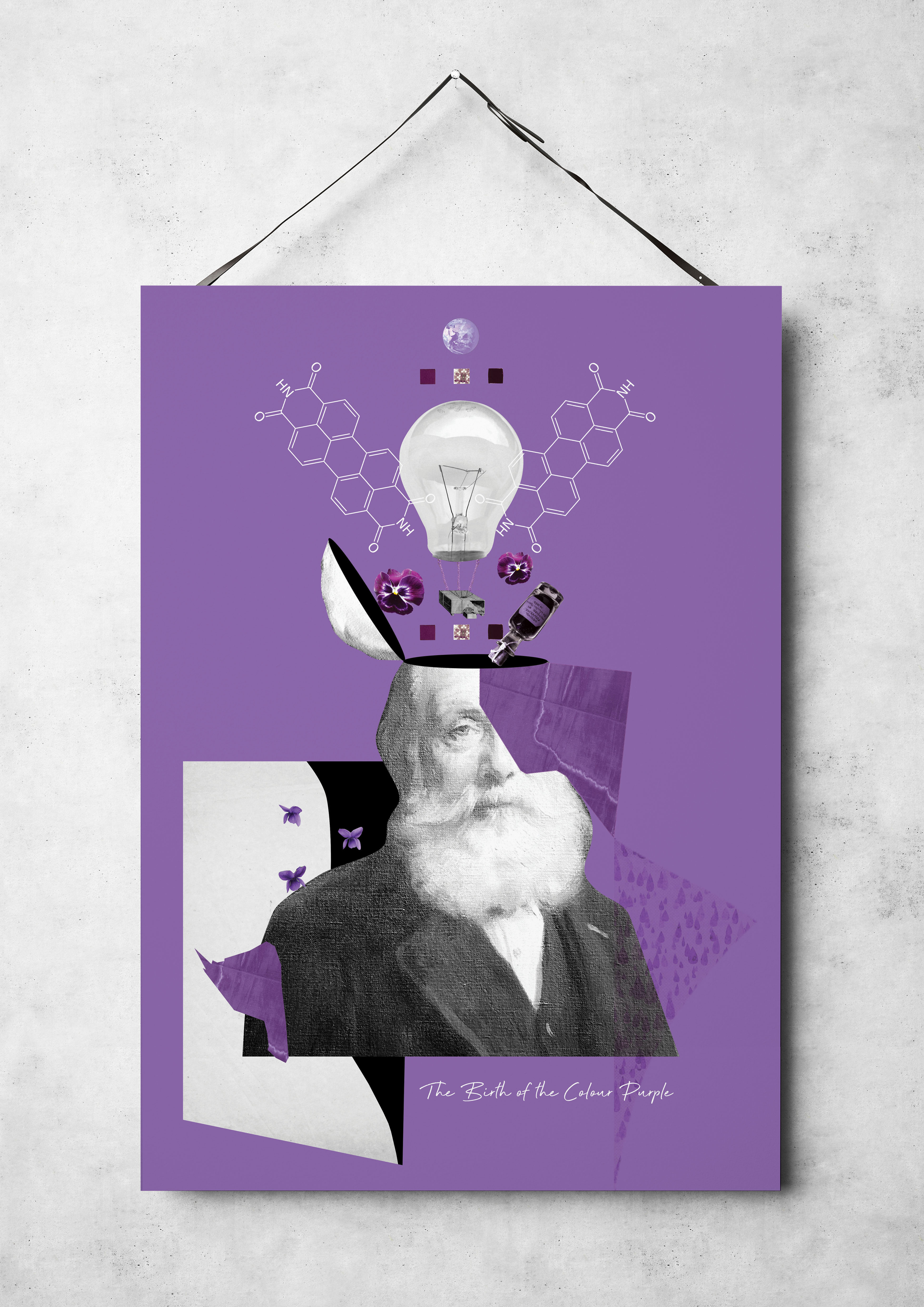
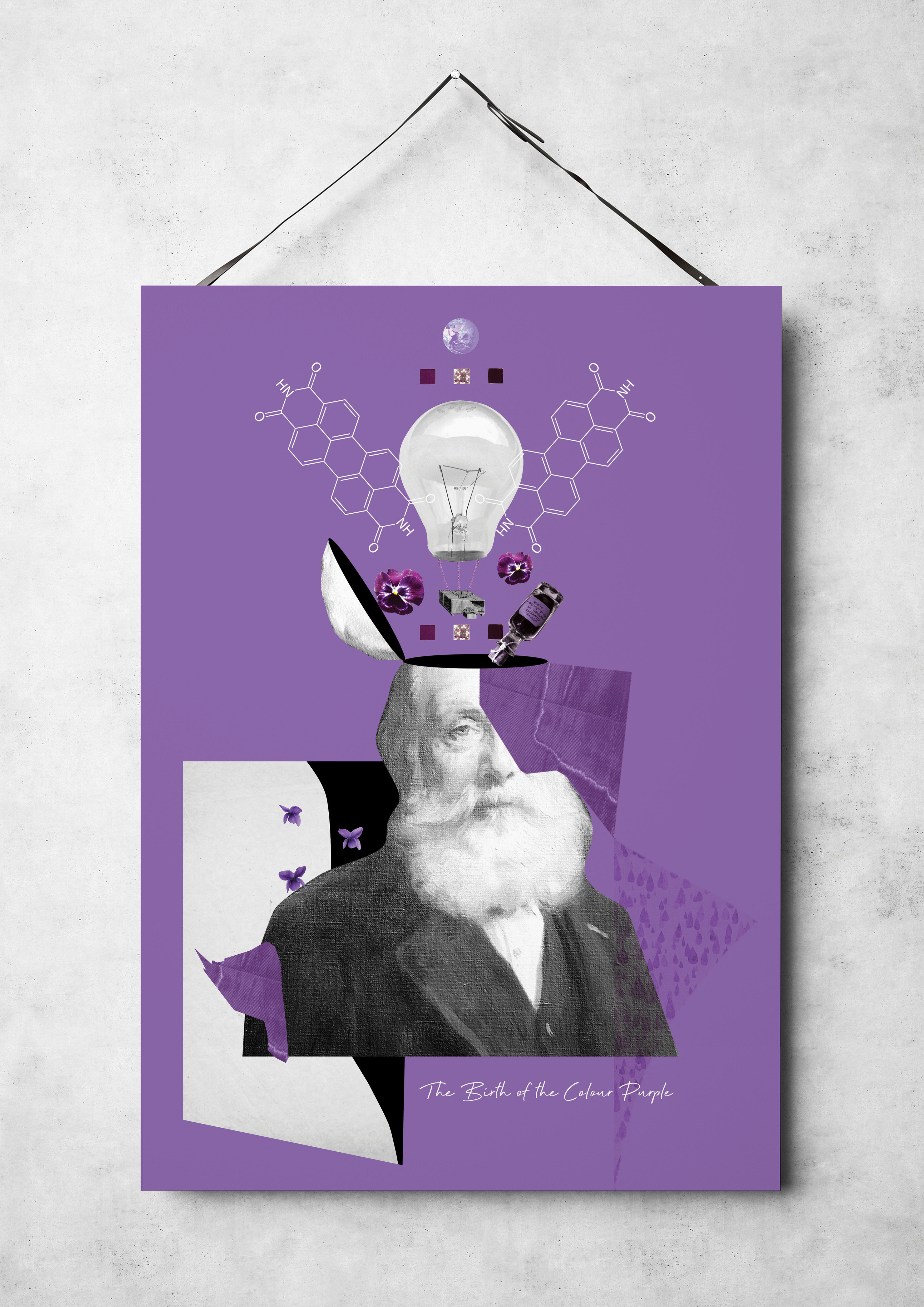
In this chapter, I would like to describe a new design solution for a poster, also based on the discovery of the purple colour by scientists Sir William Perkin. In one of my sketches above, I had a version with a forked head and rotating objects around it, but in this version, I decided to amend the design slightly and depict ideas that fly out of his head. For the background image, I used a solid purple fill and then followed to superimpose the objects on top of each other, arranging them in the composition I needed.

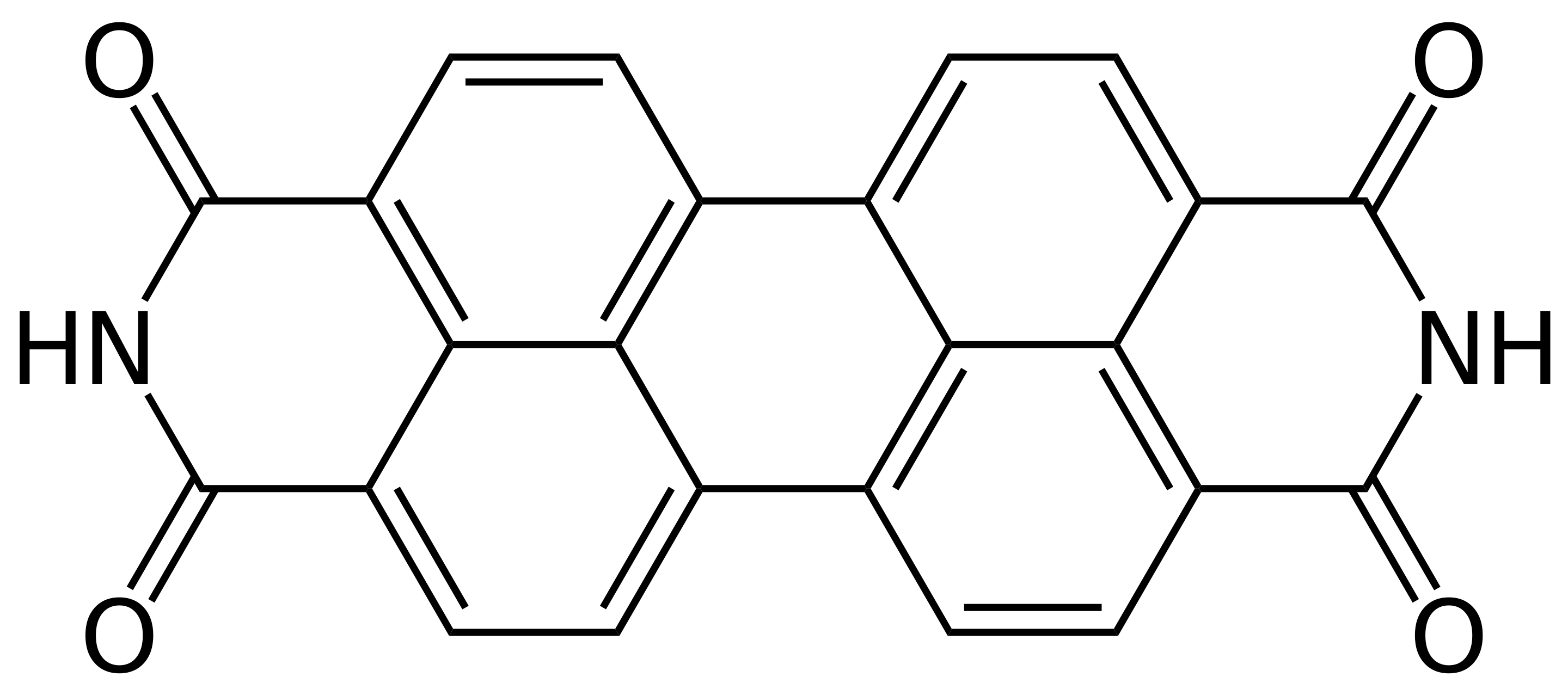
As a result, I had a whole collection of images that I found on the Wikipedia site and the Bridgeman Images. As a symbol of an idea, I used a light bulb, which by the way I designed in my previous exercise, I fixed the ropes to it from the collection of the painting called Perkin Mauve, and the scientist’s small box of the plant which reminded flying balloon. I scattered small colours around, added the chemical formula of purple to scientists, a jar of rasters, and tissue samples, and I placed planet Earth on top to show the global significance of the discovery. In the background of the portrait and around, I added pieces of cloth, black, white and purple, as auxiliary elements for the illusion of three-dimensional composition. In the corner for the brevity of the poster, I wrote the name of the poster, choosing a handwritten font Beyond Infinity – Demo.

I was pleased with the final design. I think this is one of my favourite work at the moment, it has an idea and an original composition.

Poster 2. The Birth of the Colour Purple 2

Poster 3

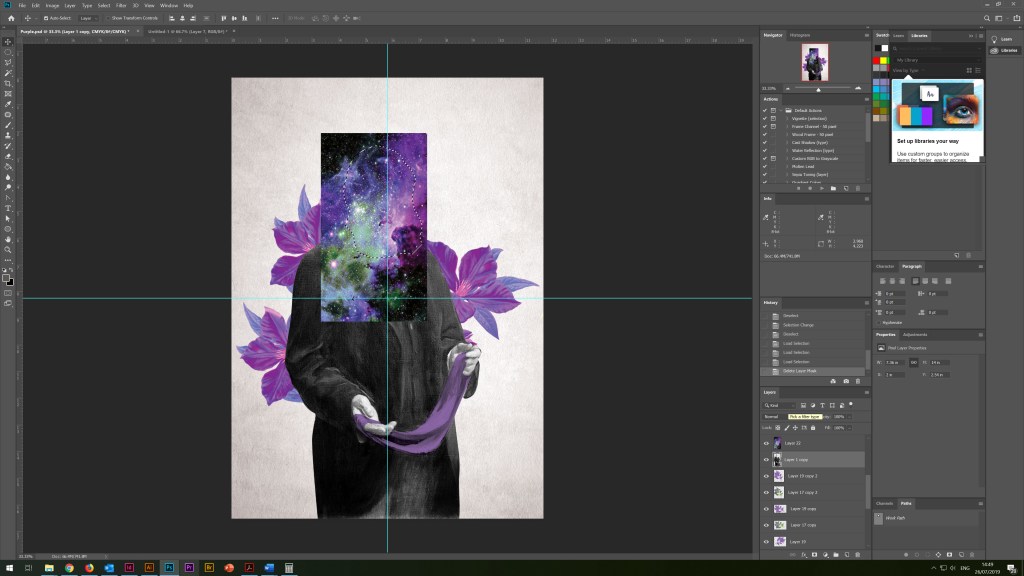
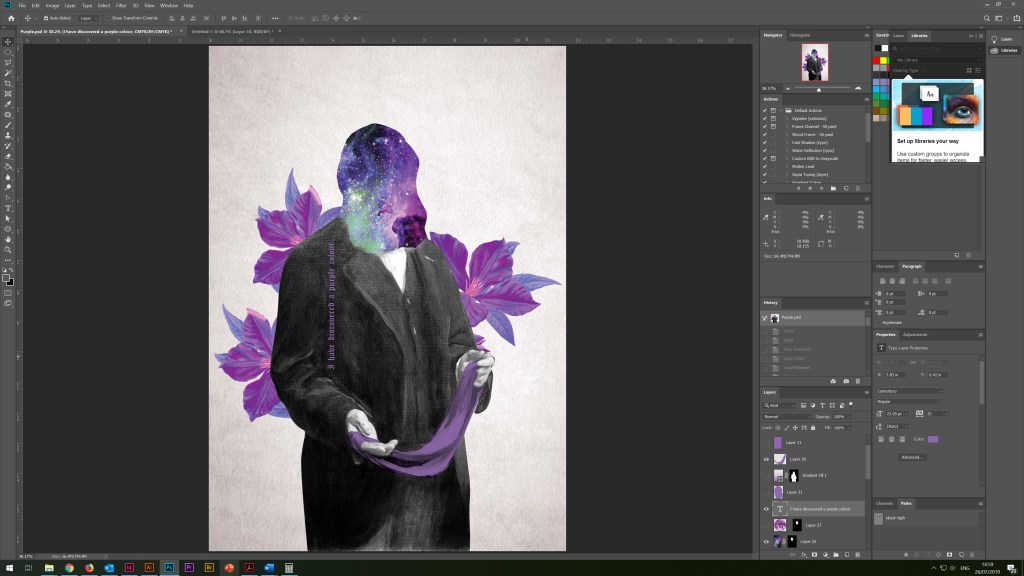
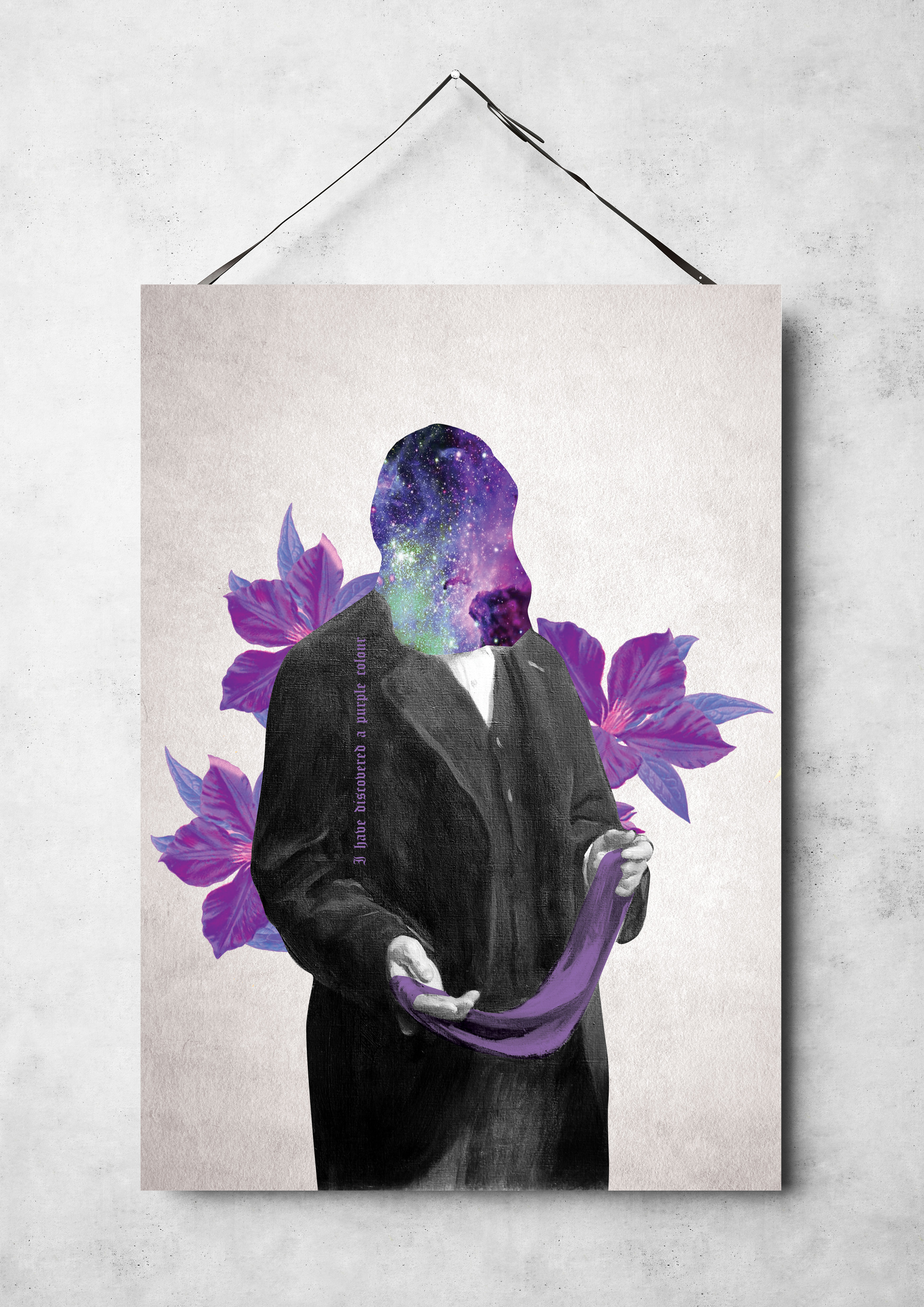
Additional poster idea was born in my design process for poster 3, is the unification of the concept of the presence of the purple colour in the universe and the invention of purple shades on planet Earth. Sir William Perkin, bright purple flowers and a piece of multi-coloured weaving acted as my main character again. But in this design, the main emphasis is on the face of the scientist; here, the main focus is on the space of the universe and bright colours. On the side of the suit, I wrote the phrase “I have discovered a purple colour” in the old Canterbury style. In this poster, I liked the combined idea of purple in space and the discovery of a new formula of colour on Earth.

Poster 3. I have Discovered a Purple Colour

Poster 4

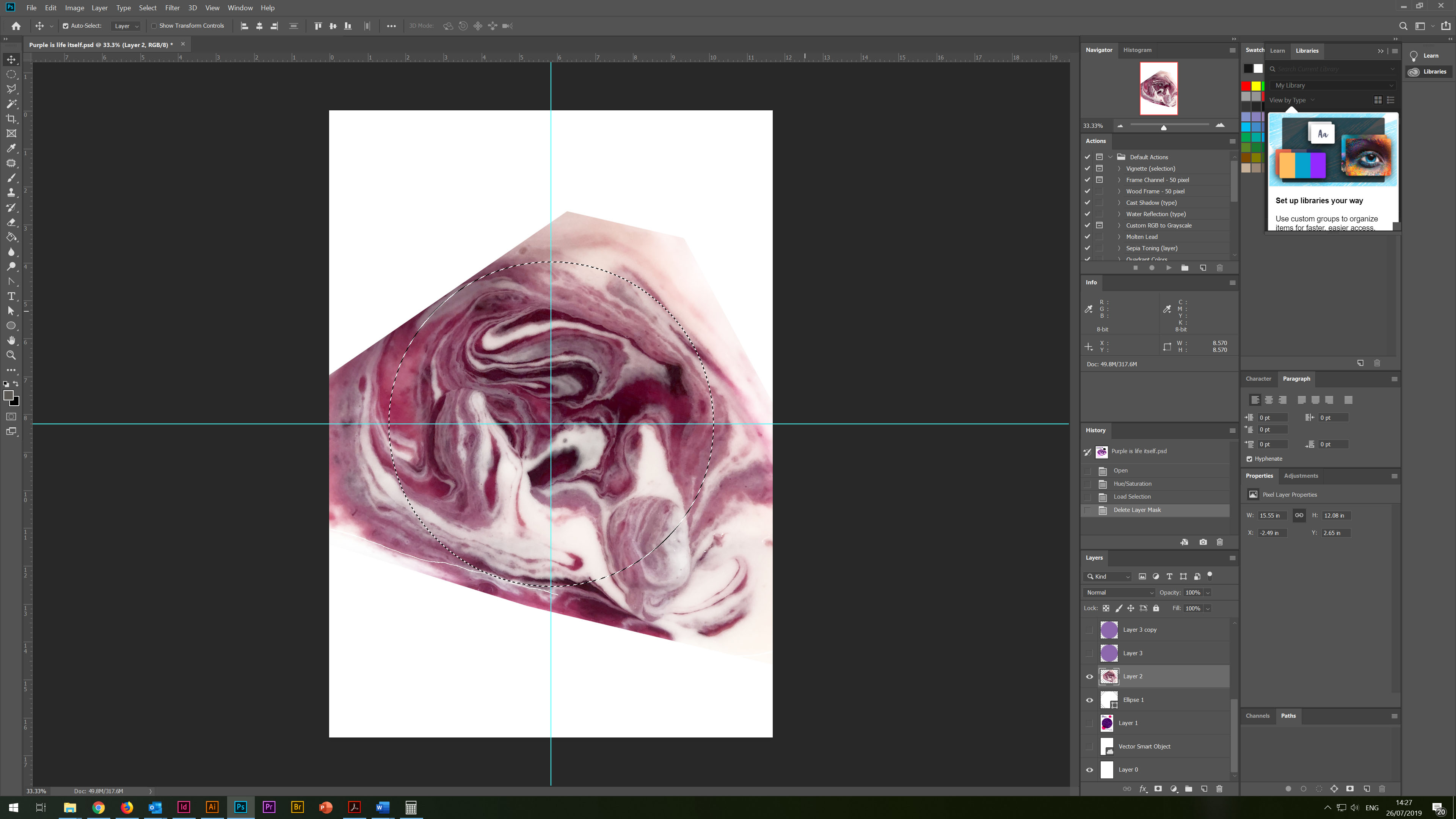
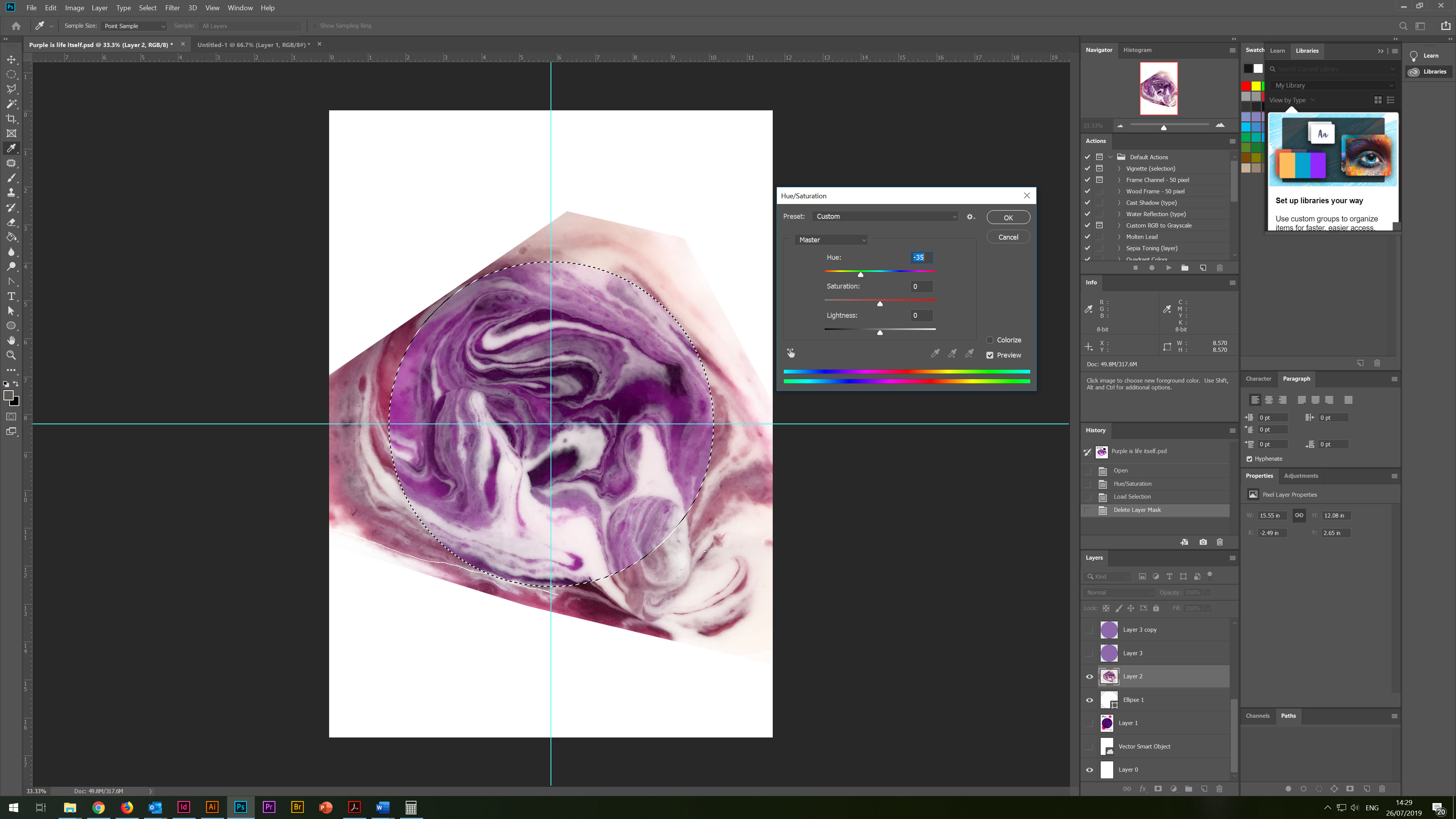
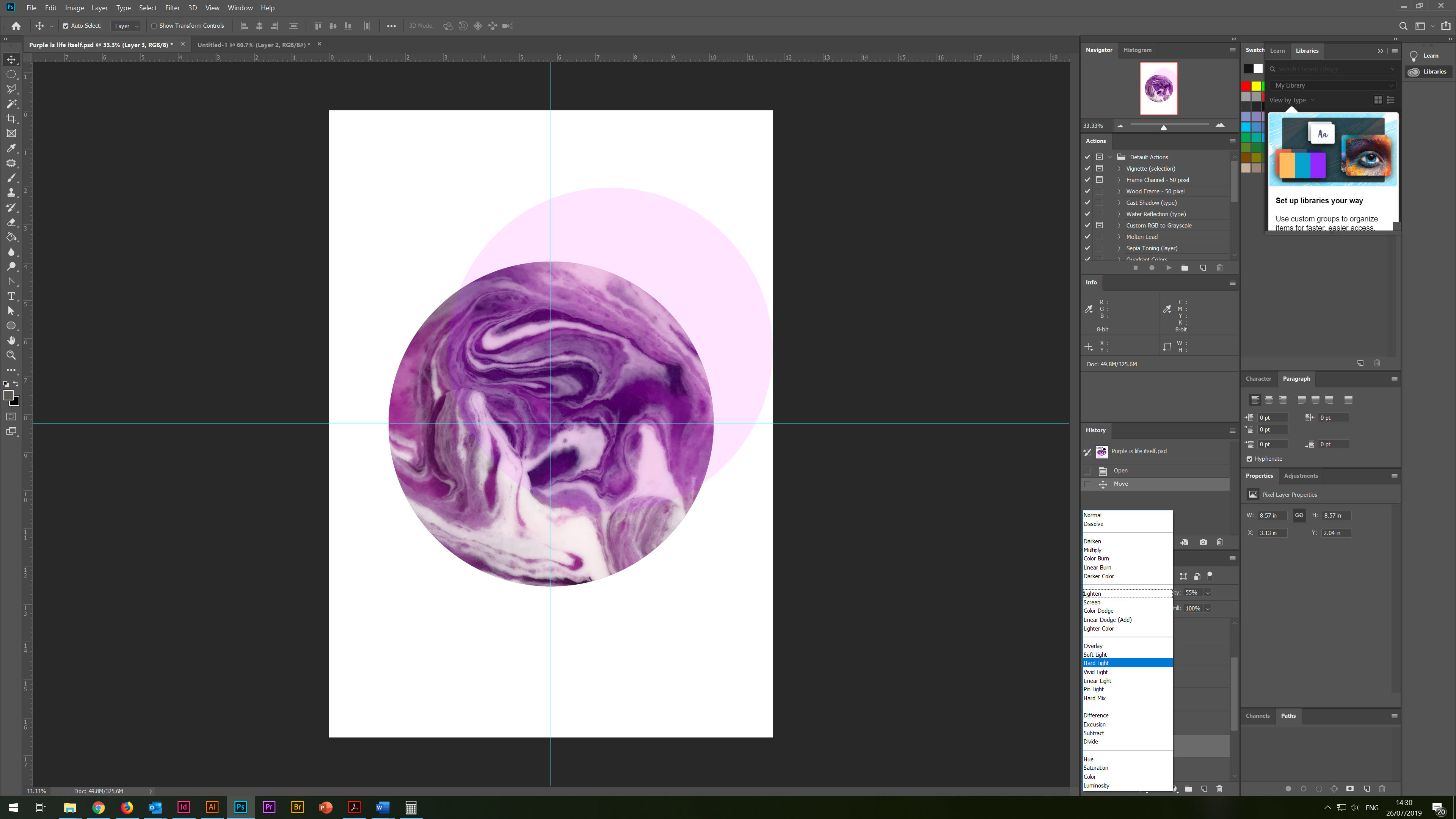
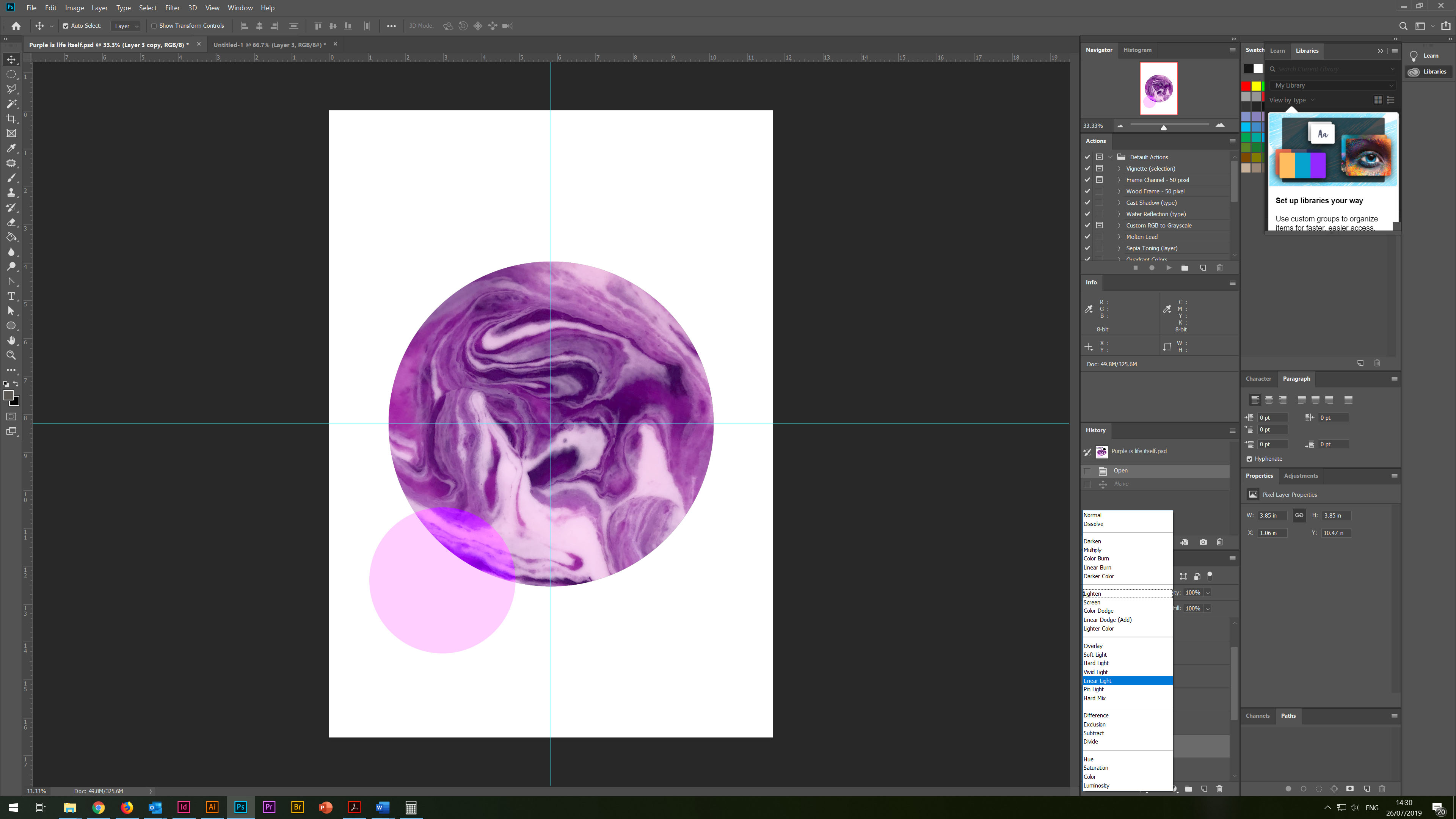
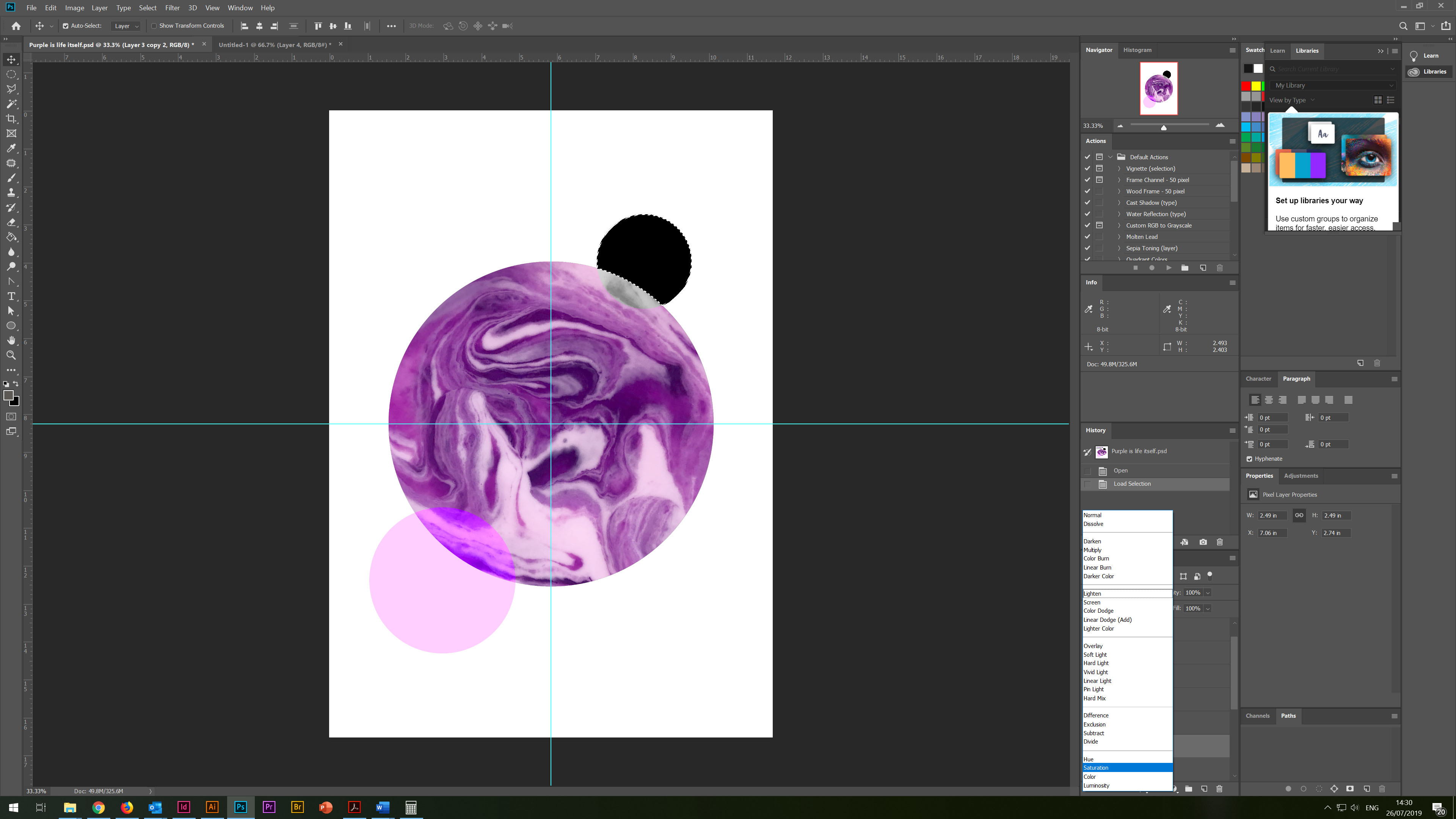
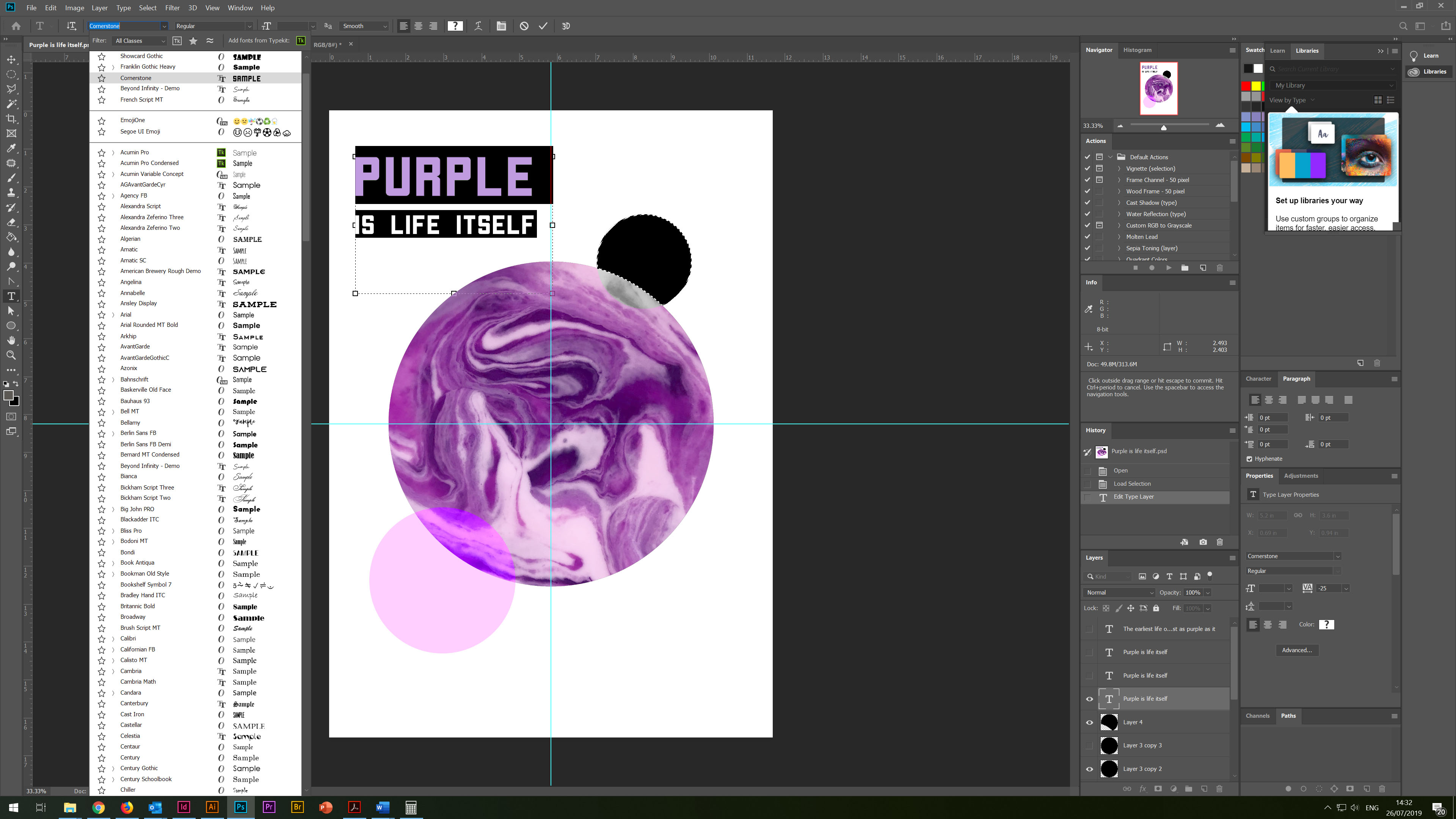
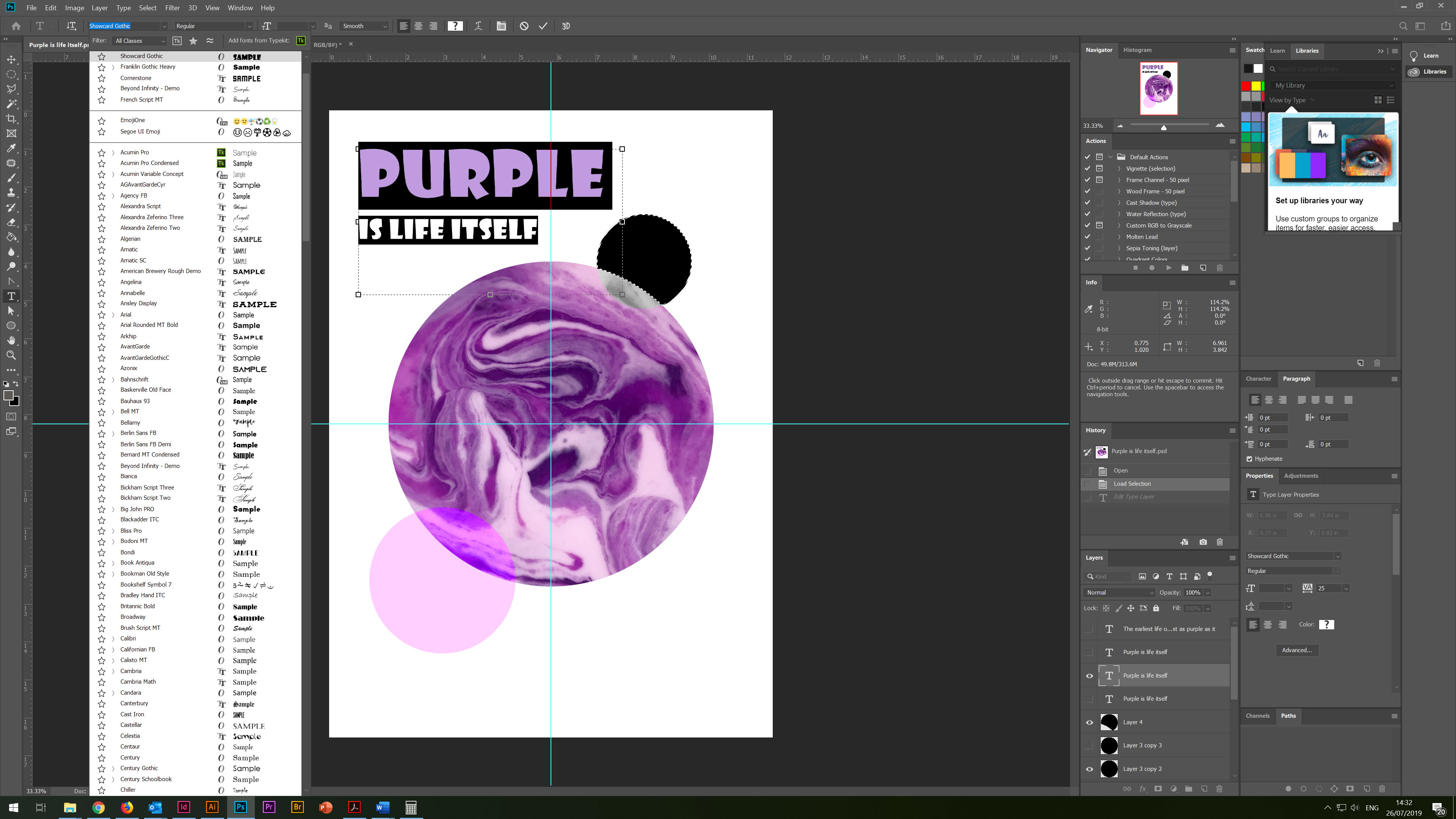
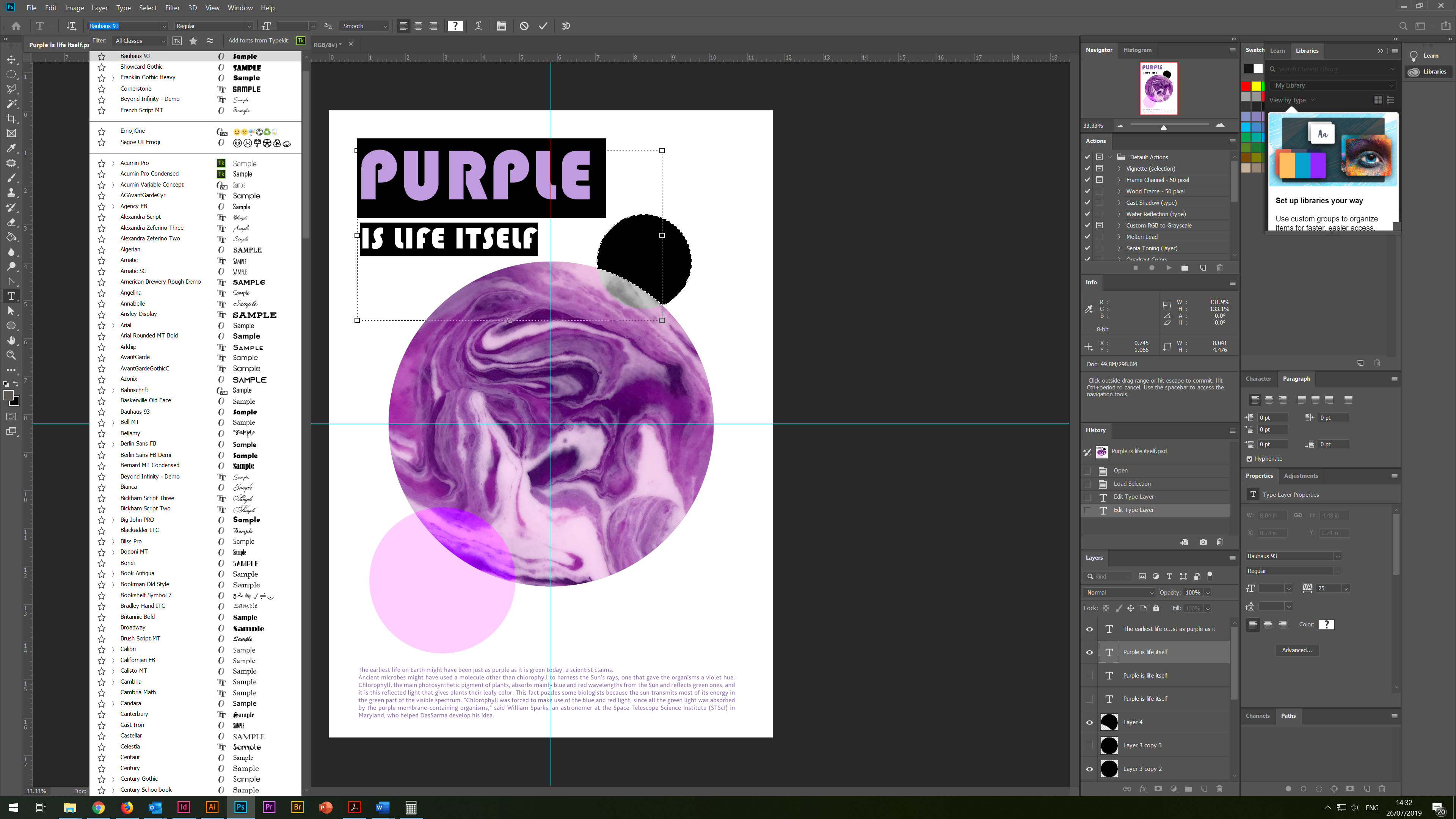
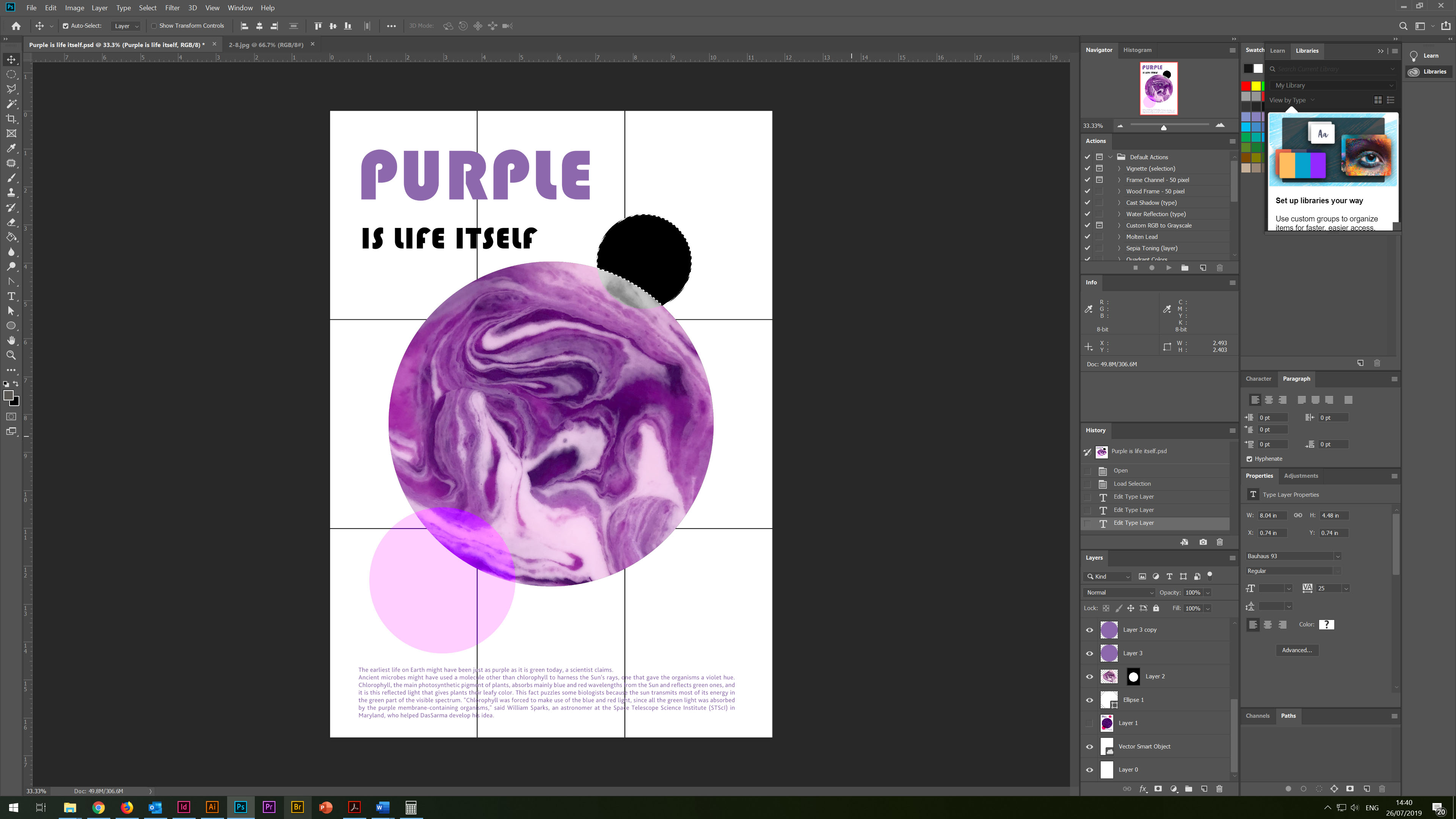
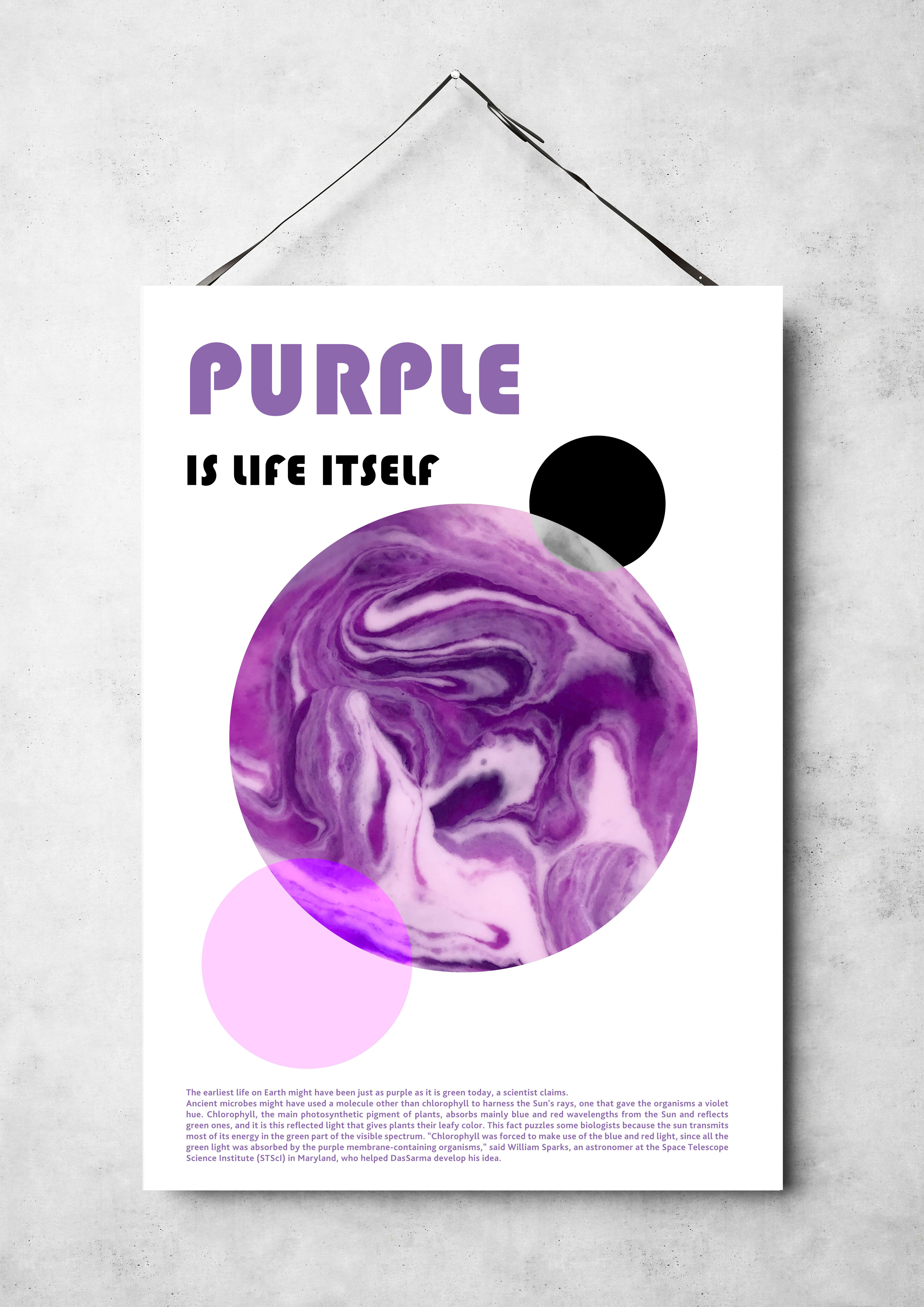
So, at the end of this task, an additional poster design, which was born spontaneously. Even though the style of this poster is different from other methods, I could not include this poster in my list of works. Here, strawberry yoghurt played the leading role. I noticed that when mixing jam and yoghurt, a gradient is formed as when mixing colours of several colours. I tried to impose colours on top of several layers, so I got an abstract image of the Earth, how it would look if we saw it from space, even at the very beginning. I tried several fonts; in the end, I chose a modern round font.
Below to balance the composition, I added the conclusion about the purple hue on the Planet Earth.

The black satellite is the Moon, and the bright purple circle, as an additional element for the balance of the composition.

Poster 4. Purple is life itself

In conclusion, I would like to say that I was pleased with the work done, and with the results of my research. I enjoyed my journey in the process of studying the purple colour and its properties. I noticed that the more I practice collage style and colour theory, the more new facets and opportunities open up in my studying. However, I still come across a long approach to sketches and drawings, even when I get the idea of design, I can visualise in my mind how I imagine the visual. I want to proceed to the plan immediately, but I still insist on myself you need to practice more drawings, as they are an essential link between the idea and the design itself. I also try to approach carefully to the selecting images from Internet resources, while respecting the rules of copyright.
I think that my favourite design is this one.

I prefer this work when I look at it, it gives me a sense of balance and calmness, and I am impressed by the purity and ease of colour perception in this design. In my opinion, this design has an idea and a composition that is pleasant for perception.

If I criticise this work, perhaps I would add more non-standard elements, maybe more torn edges, going beyond, but for now, I feel that I try to be neat with objects, and act within my feeling of the design.

Thinking of you

This assignment will allow me to put into practice everything that I’ve learnt through the exercises, also my abilities to work through the design process of problem-solving. 

Brief
What am I being asked to do?
Create a range of cards of sentiments or events that are worthy of a greetings card, but are currently not catered for by card manufactures. I need to design the cover and the message inside.

Requirements: At least three finished cards will be produced, which can either be unrelated or work as a series linked to the same sentiment. Size and dimensions that I have available.
Target Audience: Identify through the researches.

Where: Online stores, supermarkets, hand-made gif-shops, markets.

How: Analyse the brief, identifying keywords, communication issues and design problems. Develop ideas that are unexpected and fun. Explore some of life’s other landmarks that currently don’t feature in greeting cards, find the audience for them, visualise ideas and complete designs by using Adobe Software.

When: Deadline 22 January 2019

Steps of design

  • Analyse the brief
  • Identify keywords
  • Identify primary and secondary research
  • Create mood boards to explore the feel of sentiments
  • Visualise my ideas through thumbnails
  • Create mock-ups for cards
  • Critique your work. Write a short rationale for each of my designs
  • Finish artwork. Use appropriate DTP, image manipulation and/or illustration software to complete them.

Keywords:

  • Landmarks
  • Sentiments
  • Celebrations
  • Greeting
  • Fun
  • Creative

Primary Researches

Definition of greeting card

A greeting card is an illustrated piece of card stock or high-quality paper featuring an expression of friendship or other sentiments. Although greeting cards are usually given on special occasions such as birthdays, Christmas or other holidays, such as Halloween, they are also sent to convey thanks or express other feelings (such as to get well from illness). Greeting cards, usually packaged with an envelope, come in a variety of styles.

A standard greeting card is printed on high-quality paper (such as card stock), and is rectangular and folded, with a picture or decorative motif on the front. Inside is a pre-printed message appropriate for the occasion, along with a blank space for the sender to add a signature or handwritten message. A matching envelope is sold with the card. Some cards and envelopes feature fancy materials, such as gold leaf, ribbons, or glitter.

Photo greeting cards are most popular for sending holiday greetings such as Christmas, Hanukkah, and for baby showers.

Personalised. Websites using special personalisation technology, such as Moonpig, allow consumers to personalise a card which is then printed and sent directly to the recipient.
Reusable are greeting cards for the budget conscious. The pages that have been used for reusable cards can be removed after being received and fresh pages can be used to reuse the cards.

Musical. Some greeting cards play music or sound when they are opened.

Electronic (also called e-cards). Flash-based cards can be sent by email, and many sites such as Facebook enable users to send greetings. Many of these electronic services offer open or anonymous chat, to enable further discussion.

Pop-up cards are normally cards that, once opened, have a picture coming outward, giving the reader a surprise. Pictures and printed messages in greeting cards come in various styles, from fine art to humorous to profane.

Printable also known as digital greeting cards, they can be found online through shopping platforms such as Etsy and some blogs. Usually available in the form of a pdf document, the design for a card can be printed out at home or a local print shop. Printable cards have allowed designers to make cards readily available to customers all over the world.

Interesting facts about the greeting card industry

  • No other country has such a tradition of card sending or card display in the home – the sending and receiving of cards is an important part of our culture.
  • We buy more cards per person than any other nation – 33 each year.
    The UK card industry is acknowledged to be ten years ahead of the rest of the world in terms of design.
  • It’s a creative industry with strong bases in London, Nottinghamshire and the North, especially
  • Charities estimate that £50m is raised for good causes through the sales of charity Christmas cards each year.
  • One of Sir Henry’s first Christmas cards, sent to his Grandmother was recently sold at auction for £22,500.

According to the Greeting Card Association, 85% most greeting card purchases in the UK are made by women. This means that four out of five purchases are going to be made by a woman. Therefore, regardless of who the end recipient of the card is, my key customer target is female. That fact is leading to the conclusion that even male themed cards are likely to be purchased by a woman.

I’ve noticed, when a man buys a card most of the time they are for special occasions, such as Christmas, Birthday or Saint Valentine Day. Nevertheless, when it comes to the buying Christmas card for friends or family, most of the designs are full of sparkles and tender paintings that most likely will be attracted by a woman.

Secondary Research

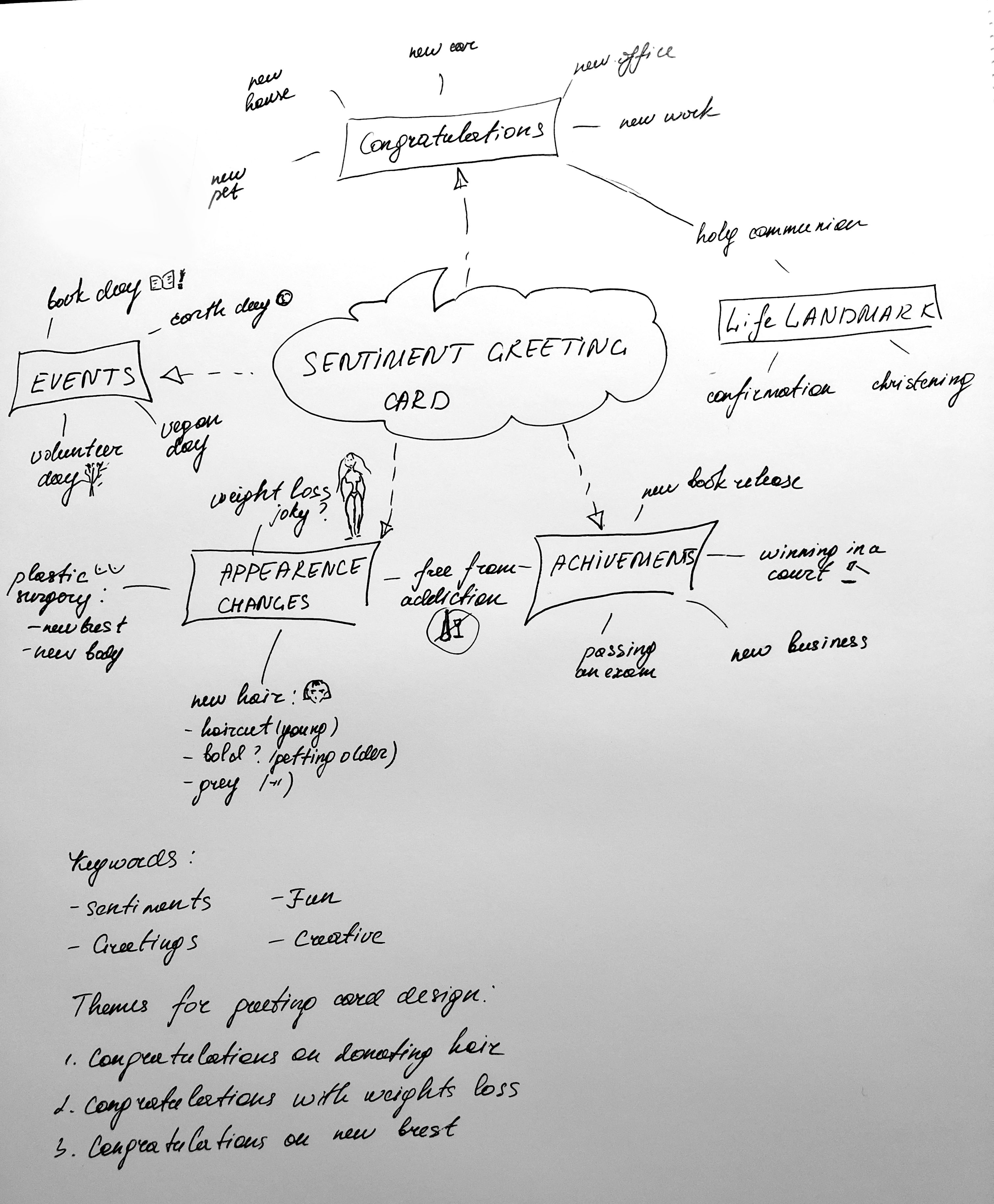
After Primary research I could identify the target audience, they are women, aged 25-55 years which have made a decision under the different circumstance to make some changes in their appearance, I’ve specified for myself basic themes I could use for cards design, which was:

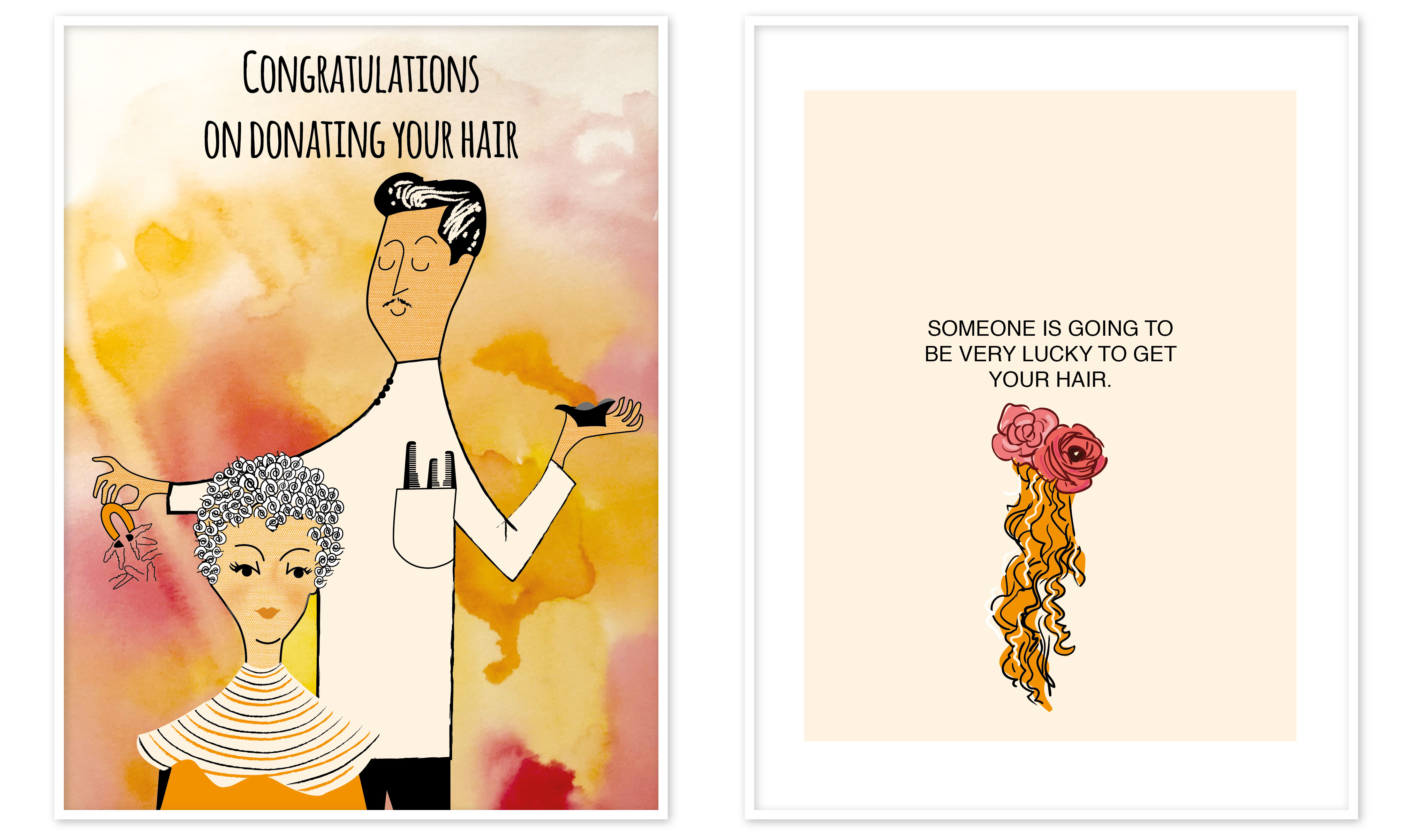
  1. Congratulations on donating your hair
  2. Congratulations with weight loss
  3. Congratulations on new breast

I thought to create a theme of cards untied by such an important subject for the modern society as volunteering, keeping fit, and quite popular phenomenon as plastic surgery, in my case – breast enlargements.

I’ve created a mood board from the different cases cards, but at the same time, they were similar in style that I could see for my future designs. They are soft, tender, minimalistic, with pretty much usage of watercolour and painting technic.

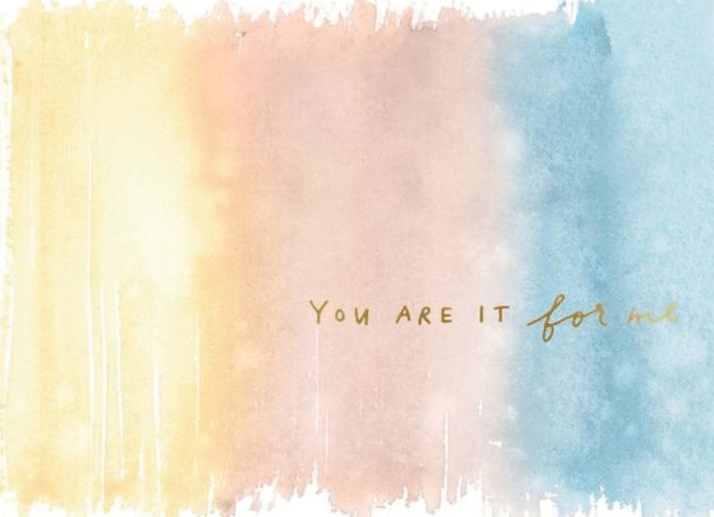
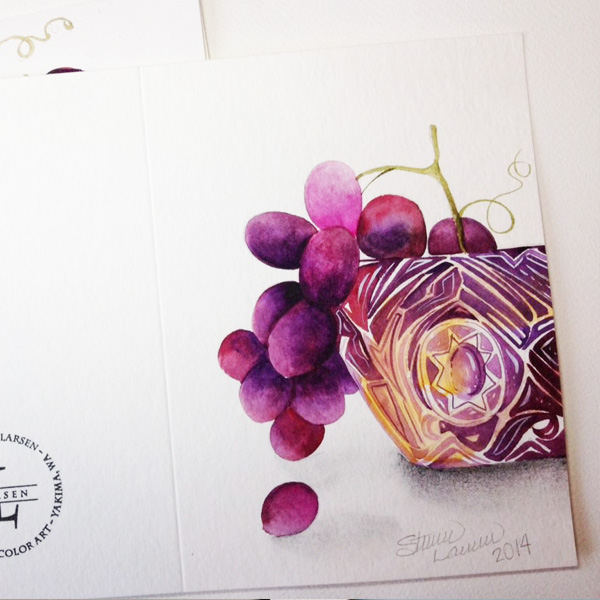
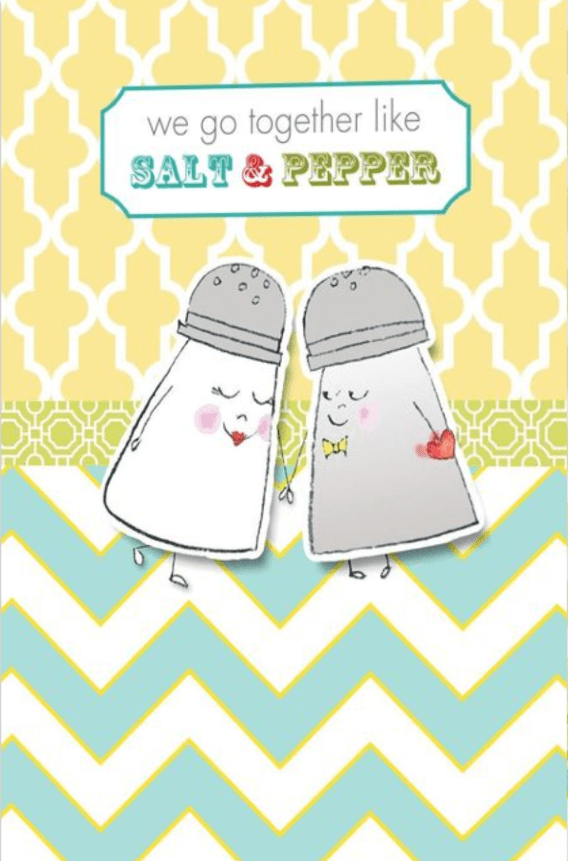
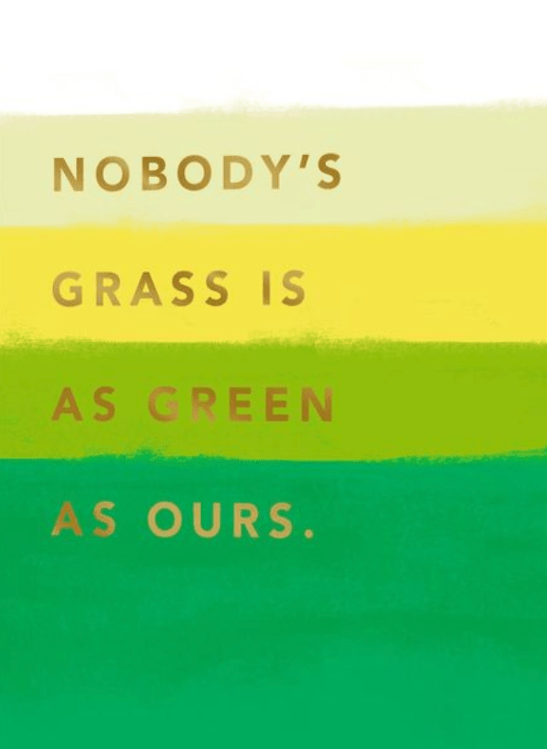
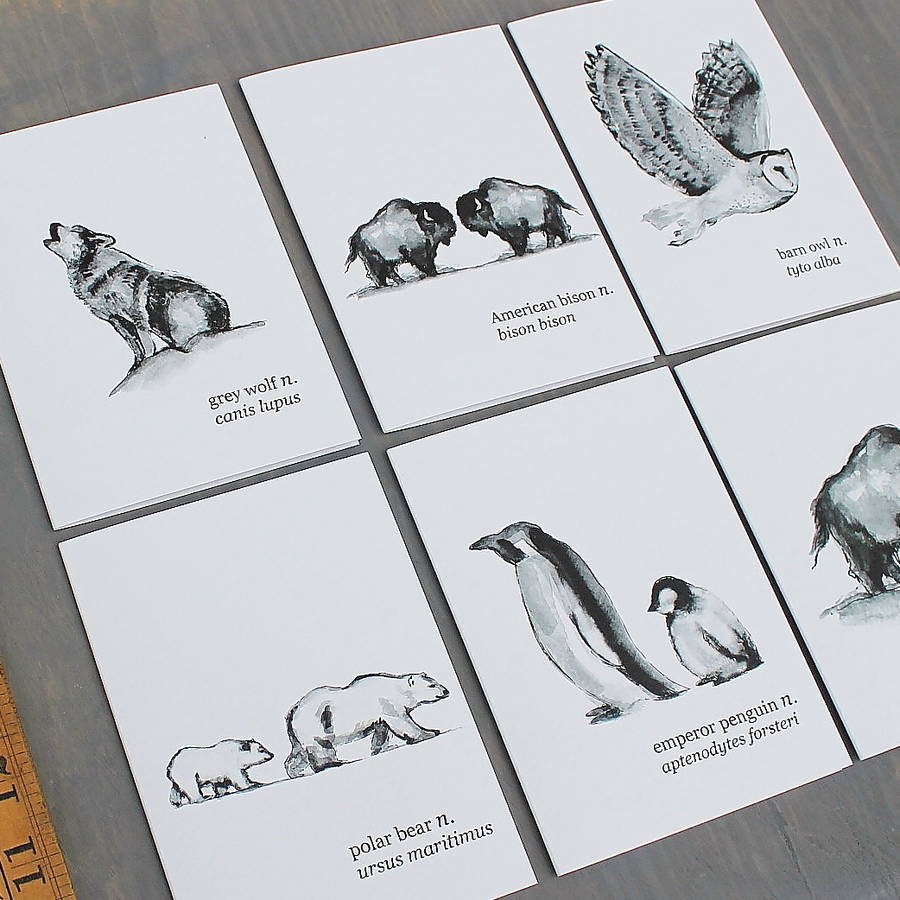
Greeting cards examples from hallmark.com

Card design

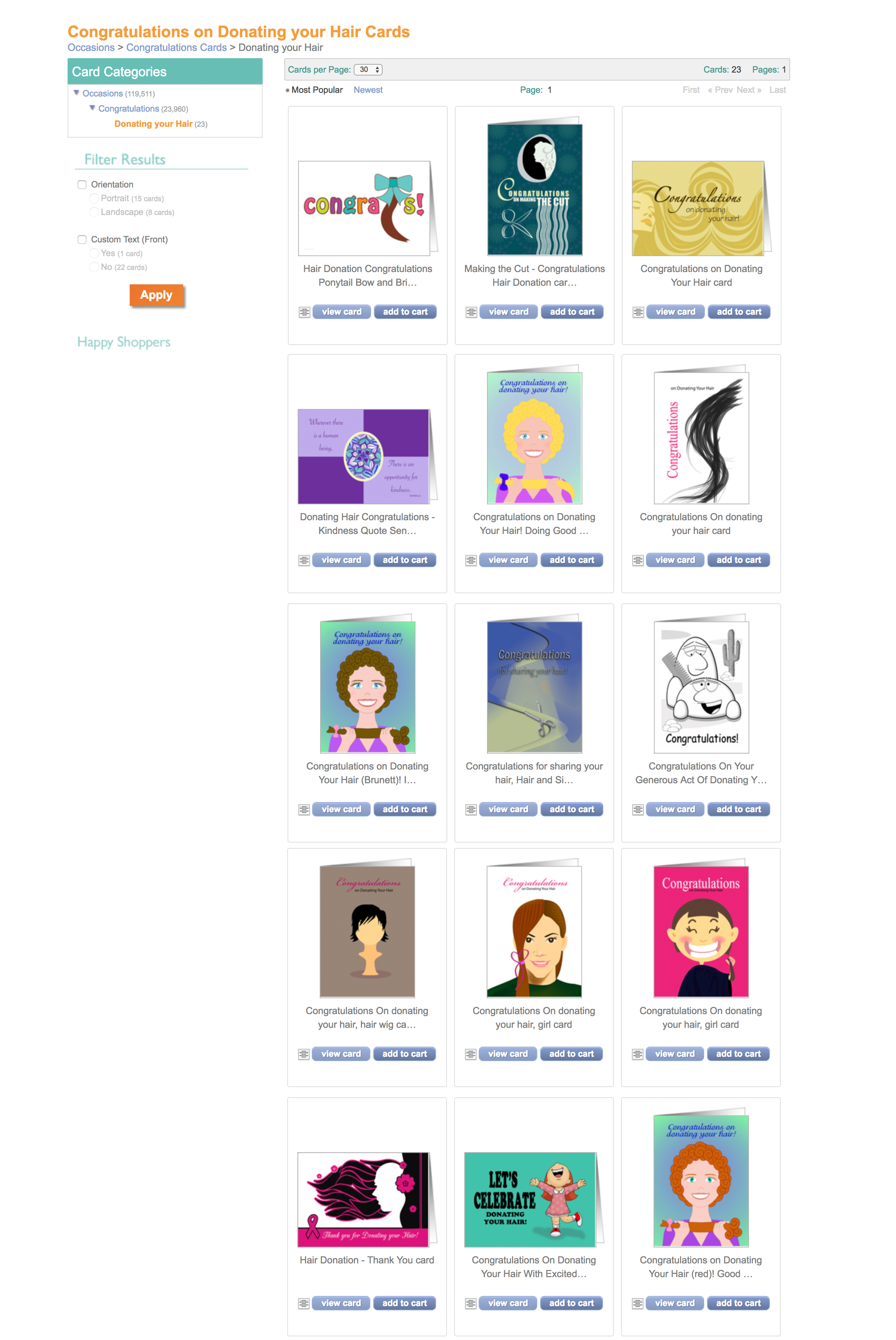
I’ve made secondary researches for the first card Donating a hair, what I’ve noticed that theme is available on the market, but not that popular as it could be, and the variety of cards was not great. I believe that volunteering is an important part of modern society, and donating hair could actually play a significant role for many children in need. Also, what I thought, that for women who decided to make that big step would be a little pleasant gift to get that card, as a reminder that they actually did something important.
Greeting card design from https://www.greetingcarduniverse.com/congratulations-cards/donating-your-hair [Accessed January 2019]

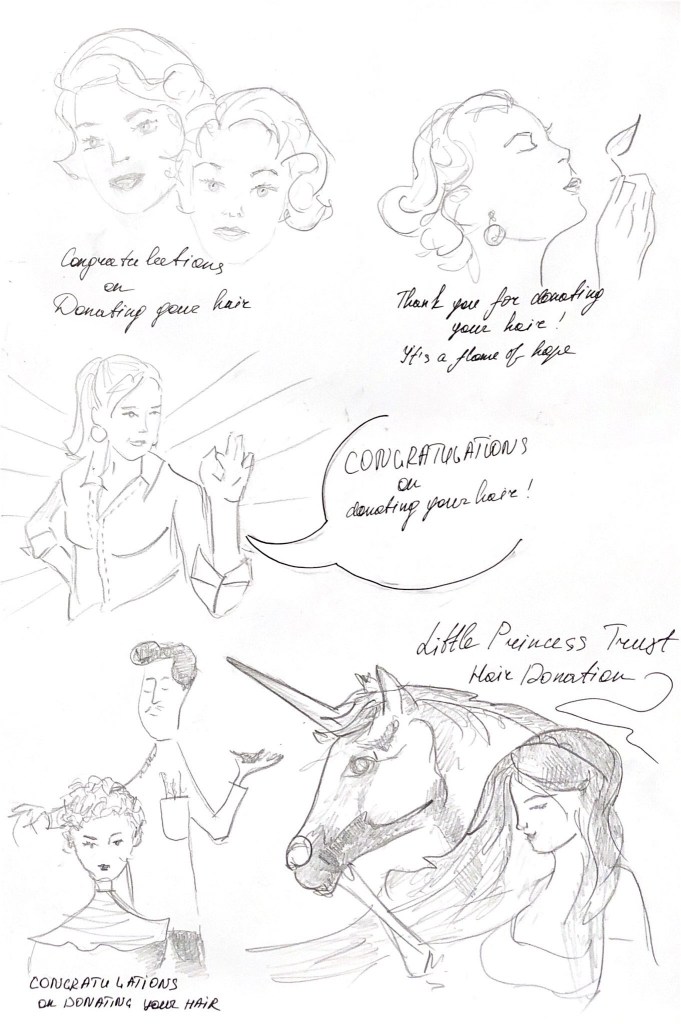
For that card design I imagined a lady with a short hair, she is happy and smiling, as she cut them for a good case. Another idea I had was related to the Little Princess trust charity, which is providing real hair wigs to children and young people with hair loss. I made some sketches with happy inspiring woman, also, another image was coming from princess next to the unicorn, as a symbol of faith to magic.

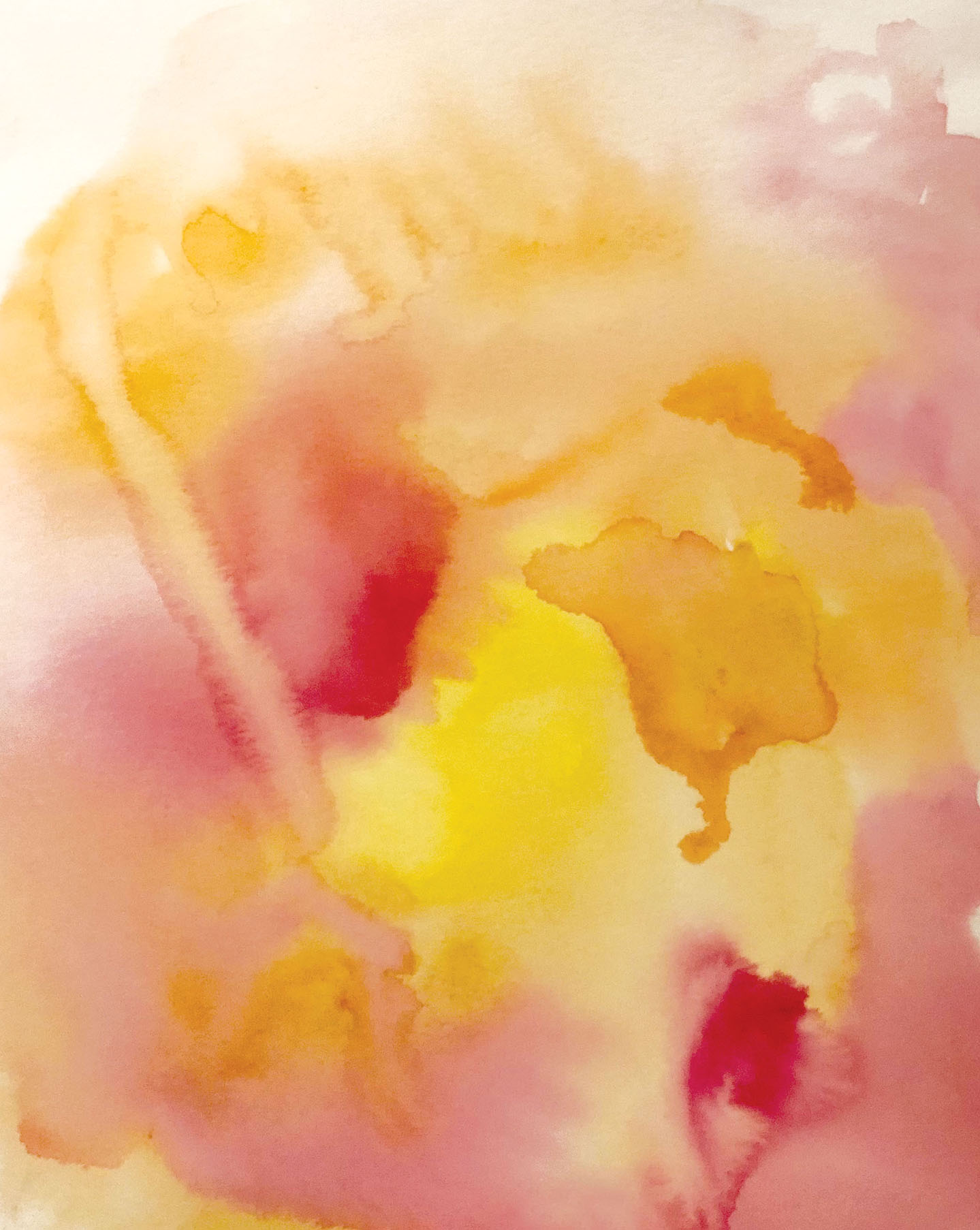
After some sketches I decided to go for a sketch of woman with a hairdresser on the watercolour background. I painted some watercolour samples that I could use for the first card. Firstly, I did some drawing of watercolour, as I planned to use them for the background for my card. After some trials, I decided to use the soft and warm colours of pink and yellow stains.

I painted an illustration of a woman with the hairdresser, the drawing was created in the old style cards. For human faces and hands, I used a piece of pale orange fabric, as it would give the texture to the image. For the slogan, I’ve decided to keep it simple ‘Congratulation on Donating Your Hair’, with the font Amatic Bold, which matched to the drawing style.

Card Design ‘Weight Loss’

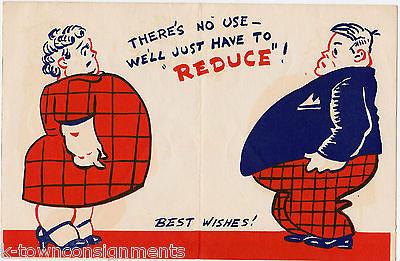
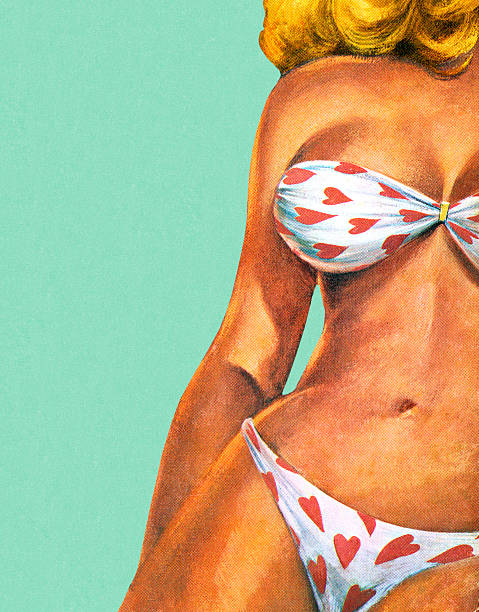
For the second card I same researches to explore a current market. The greeting card for the weight loss was not varied either, most of the cards were joky and made in cartoon style.
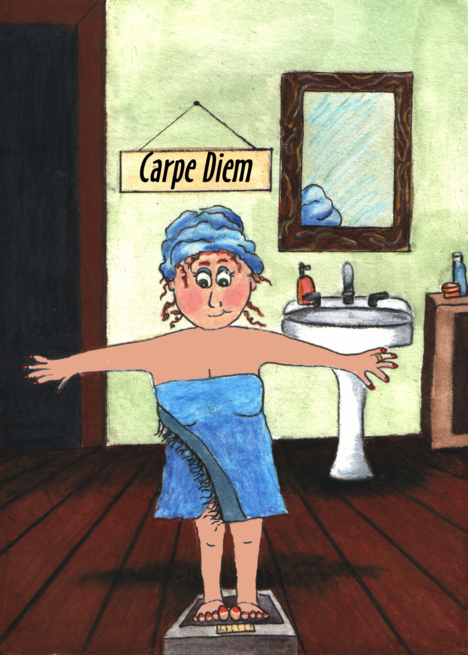
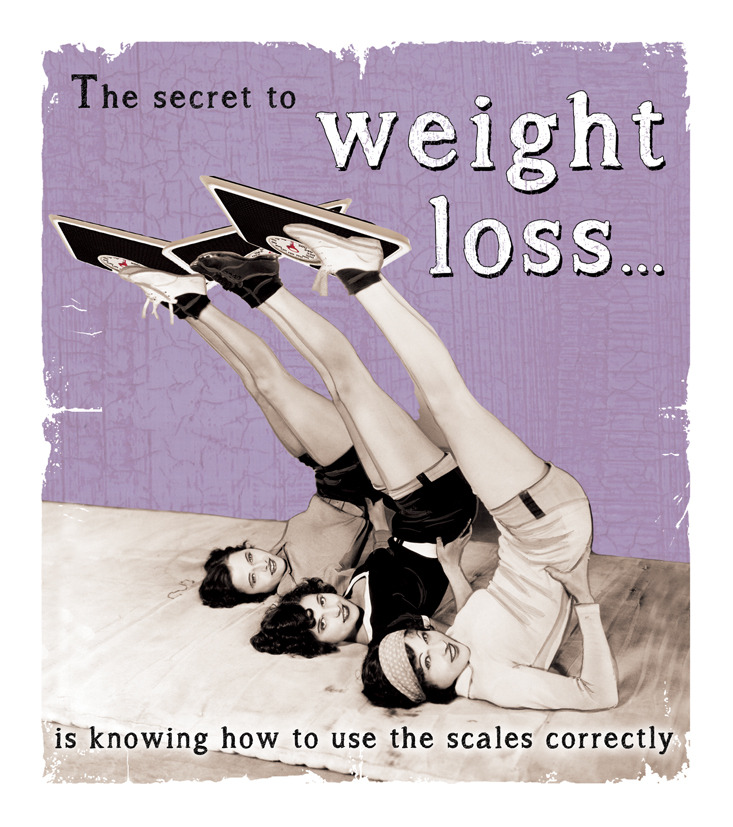
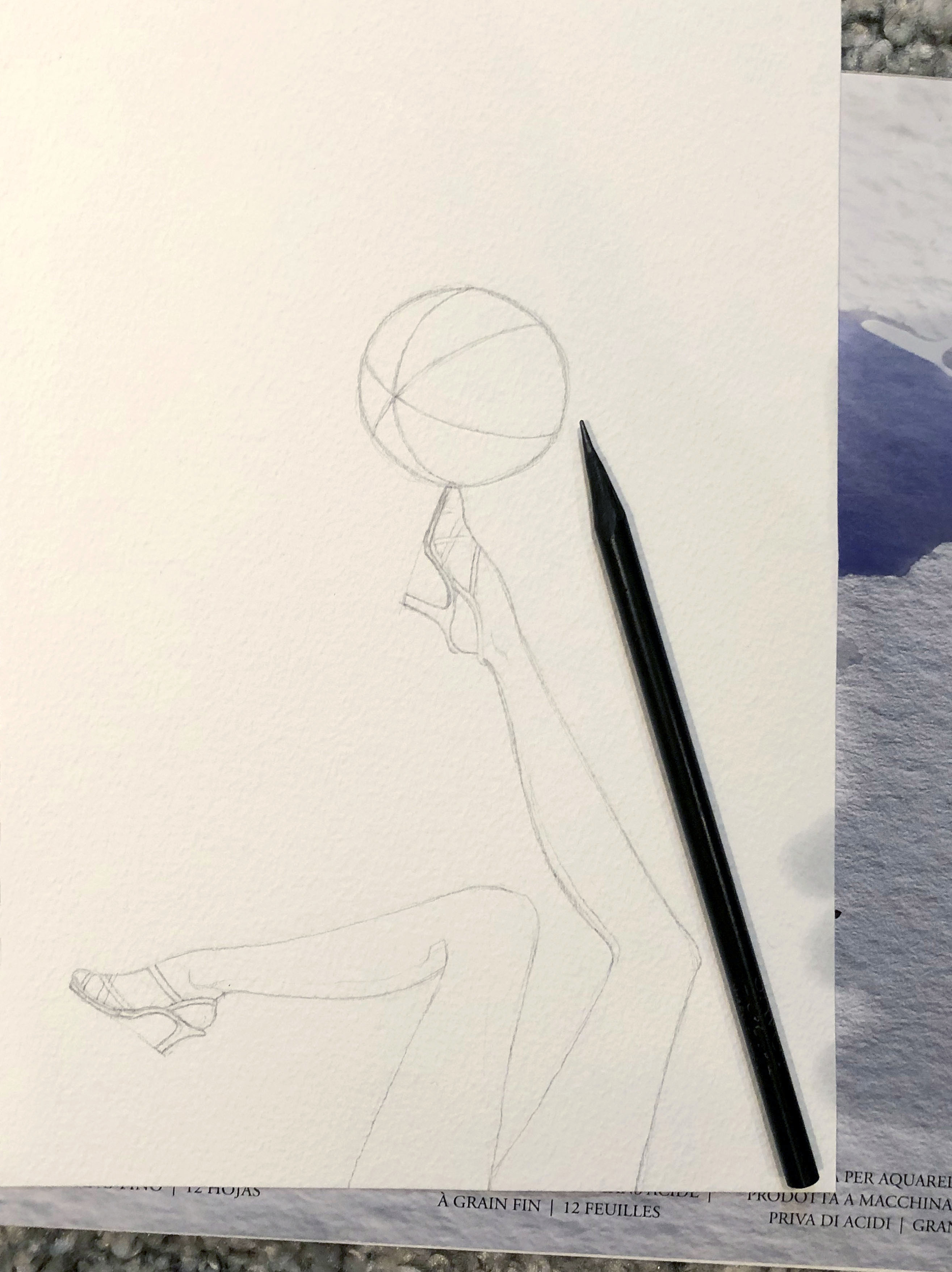
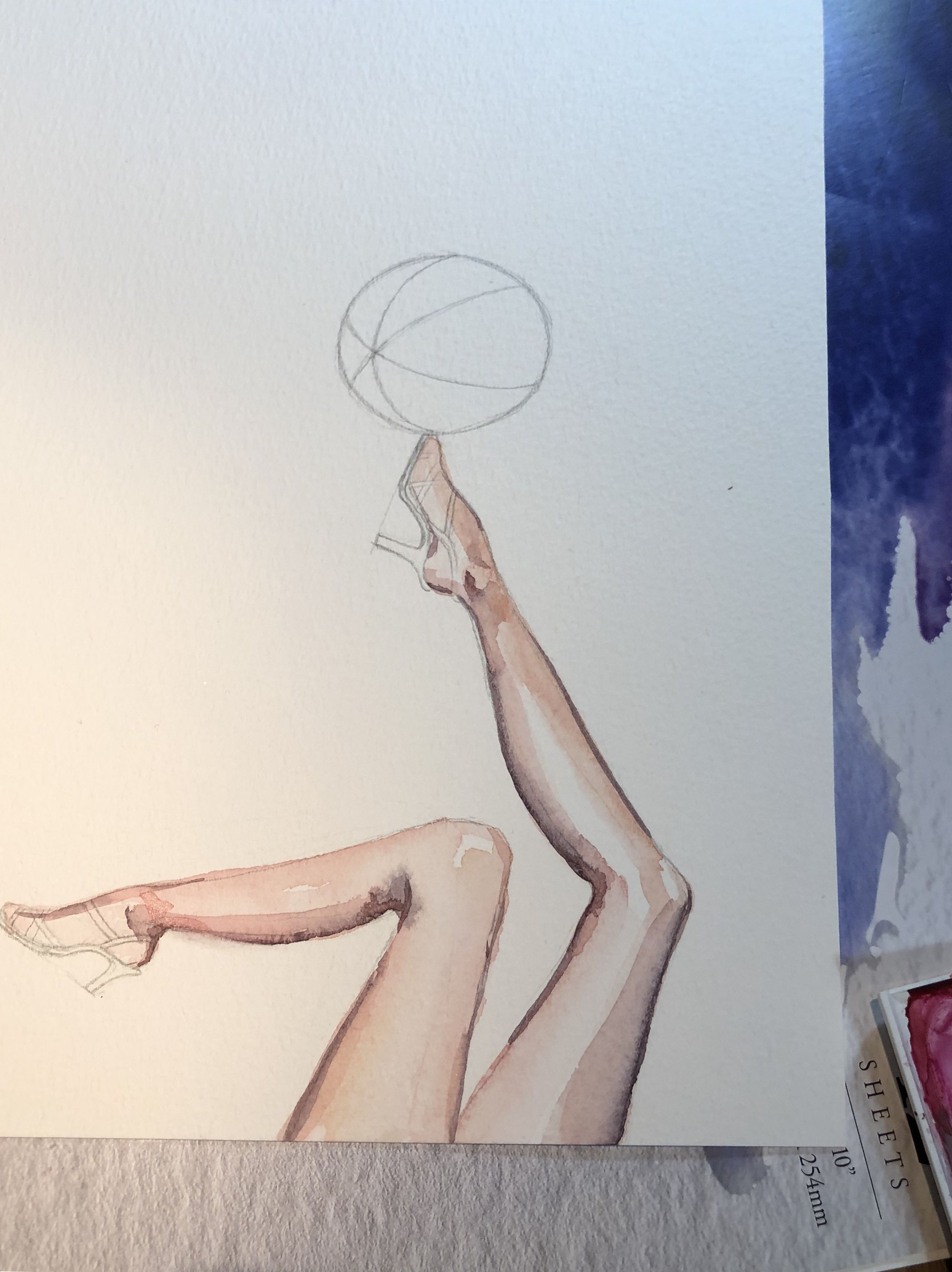
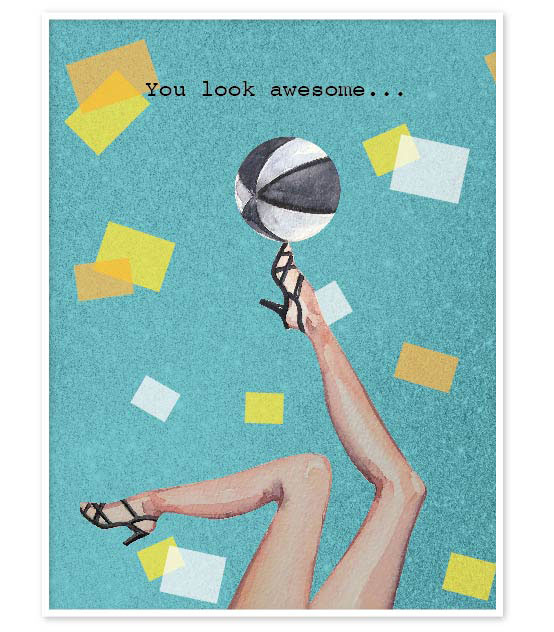
I was quite sure that for my cards design I would like to keep the retro style. I found that image with upside down girls with scales on the top of their tiptoes, I like it as it was joky and quirky.

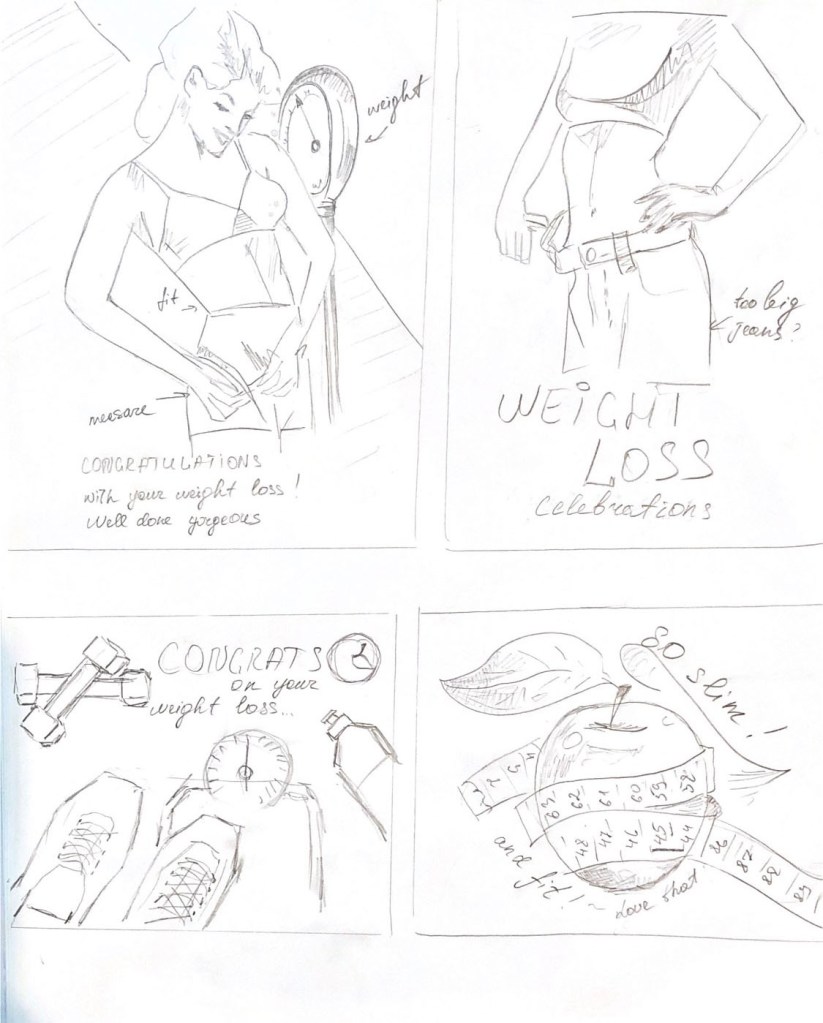
I made some sketches of a woman measuring her shapes, she is wearing old style lingerie and stands on the old-style weights. I tried to develop my ideas around healthy eating, weight measure, and some sports equipment, but as I like that upsidedown image of girls, I thought that it would be interesting to produce something similar.

For inspiration, I went through the book Pioneers of Modern Graphic Design. As I imagined a classic card in retro style, I found the design that I could use as an example for my watercolour drawing. Advertisement by Paul Rand for Jacqueline Cochran, 1946.

Painting Progression

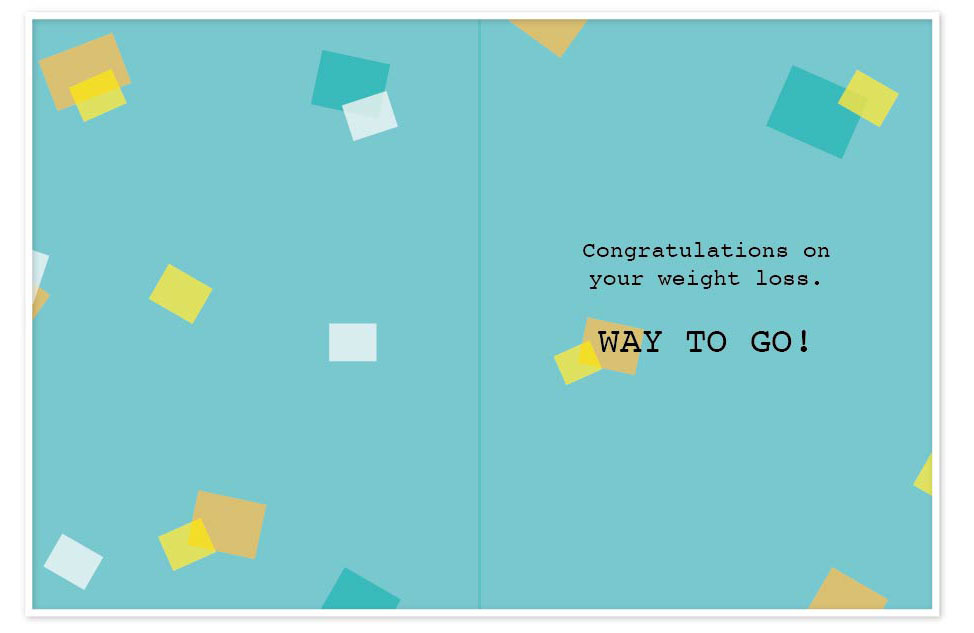
The drawing that I got in the result was worthy by itself to be used for the greeting card, but I thought that I should try to apply colourful background on it, as I wanted to pop out an image of the legs on the first plan. I tried to combine sparkle background with tiffany blue colour in Photoshop, I was quite happy with the result, as I got needed 3D-effect. I’ve put around colourful confetti squares, which played a contrast around the key image. For the font, I used Courier regular, as it completed my design with a retro sense.
Samples for background colour and confetti images for the greeting card

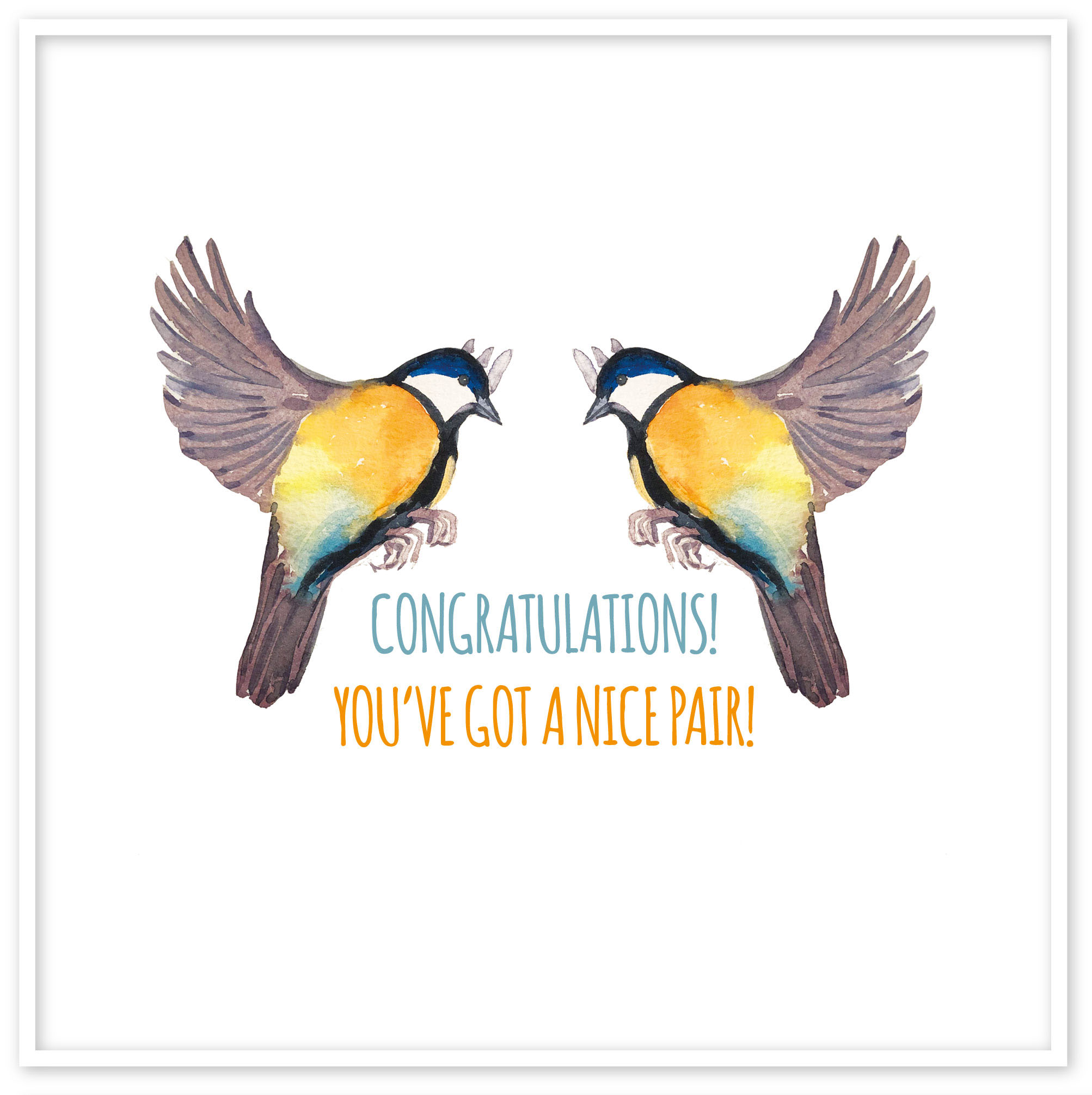
Card Design ‘Nice Pair’

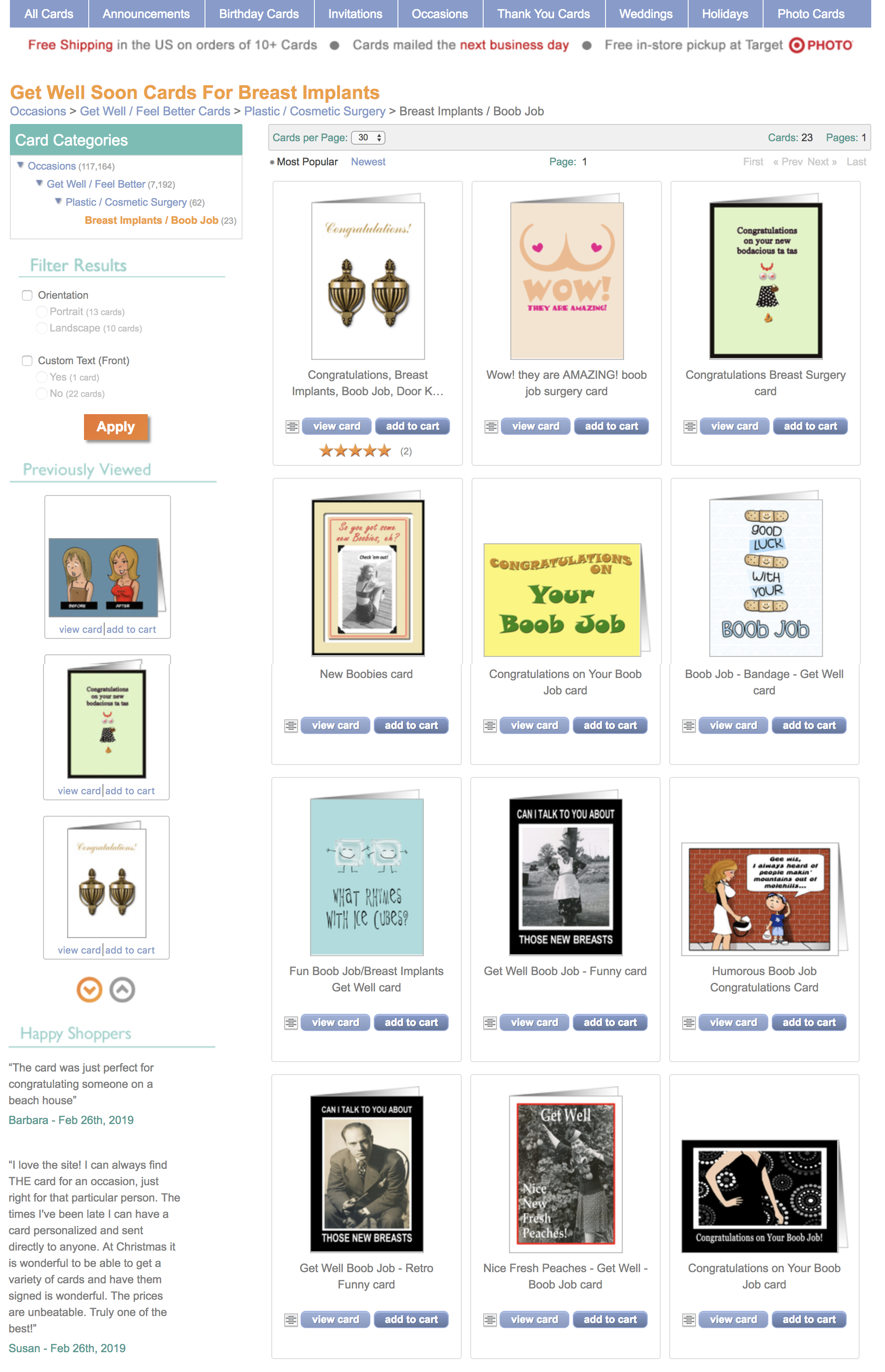
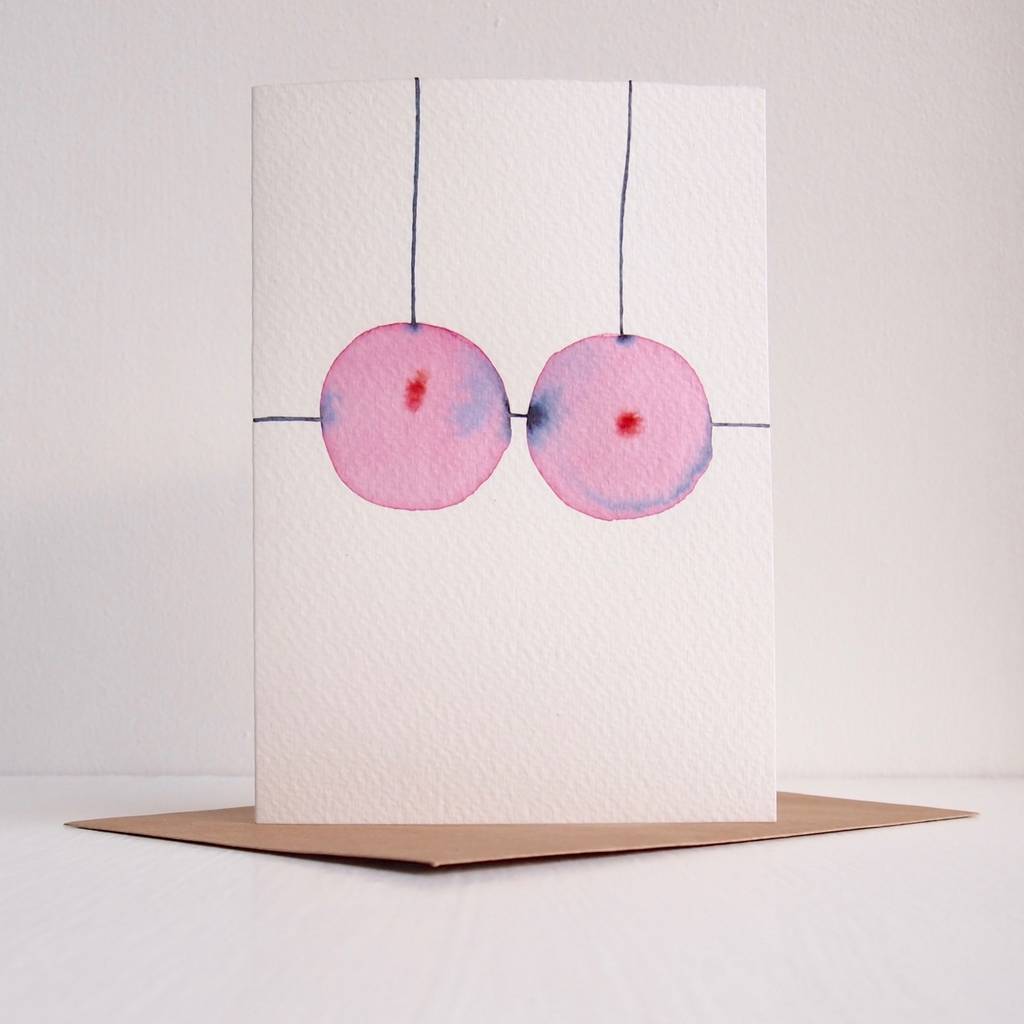
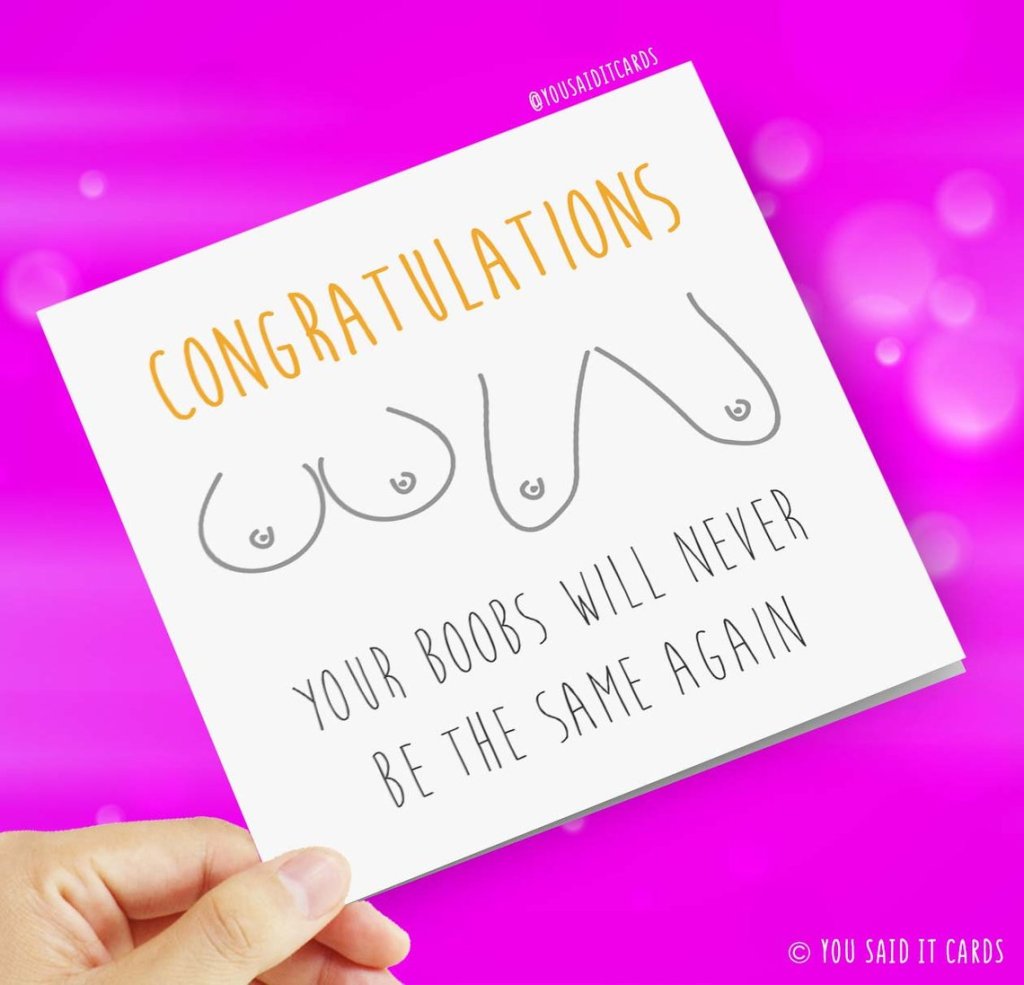
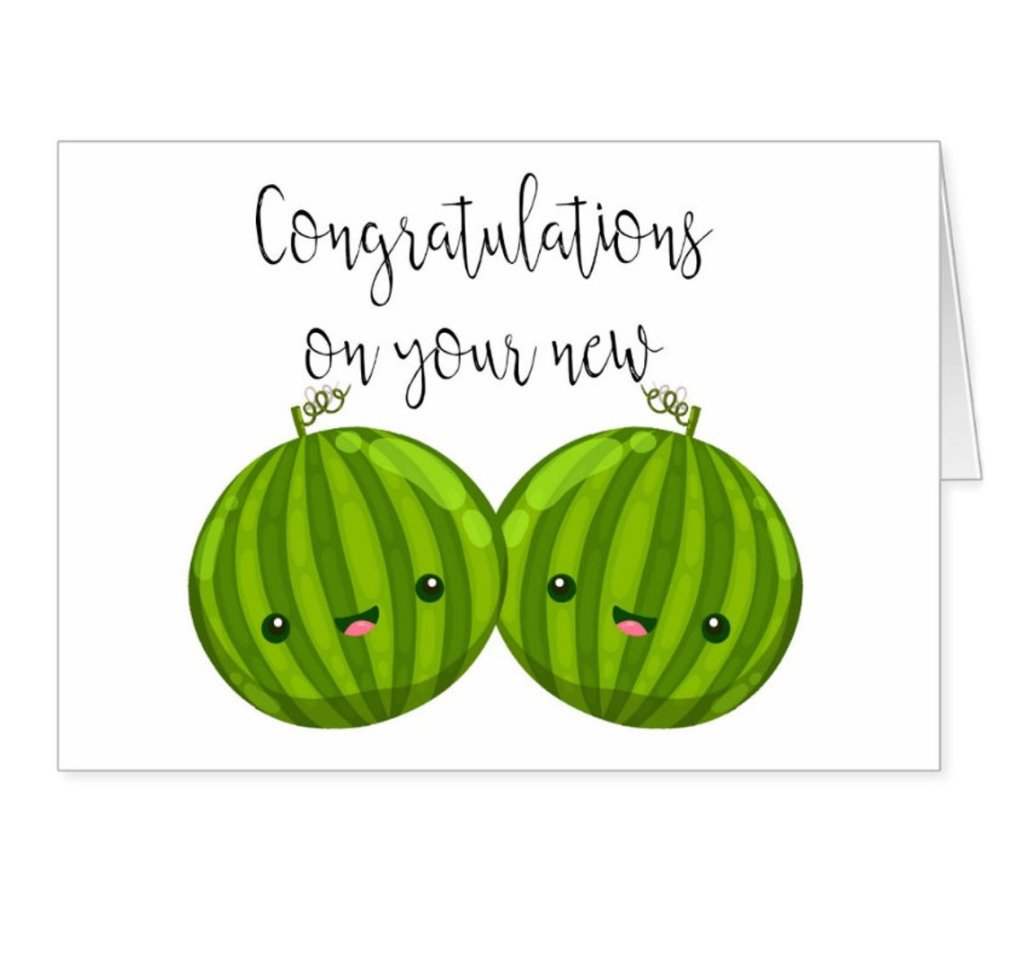
For the third greeting card, I was a bit hesitating what theme to choose, as I wanted to keep it decent but funny at the same time. I went for some researches for the breast surgery cards. There was more variety on those cards, but of them were online cards, as they were not popular for printing.

Greeting card design fromhttps://www.greetingcarduniverse.com/get-well-feel-better-cards/plastic-cosmetic-surgery/breast-implants-boob-job [Accessed January 2019]

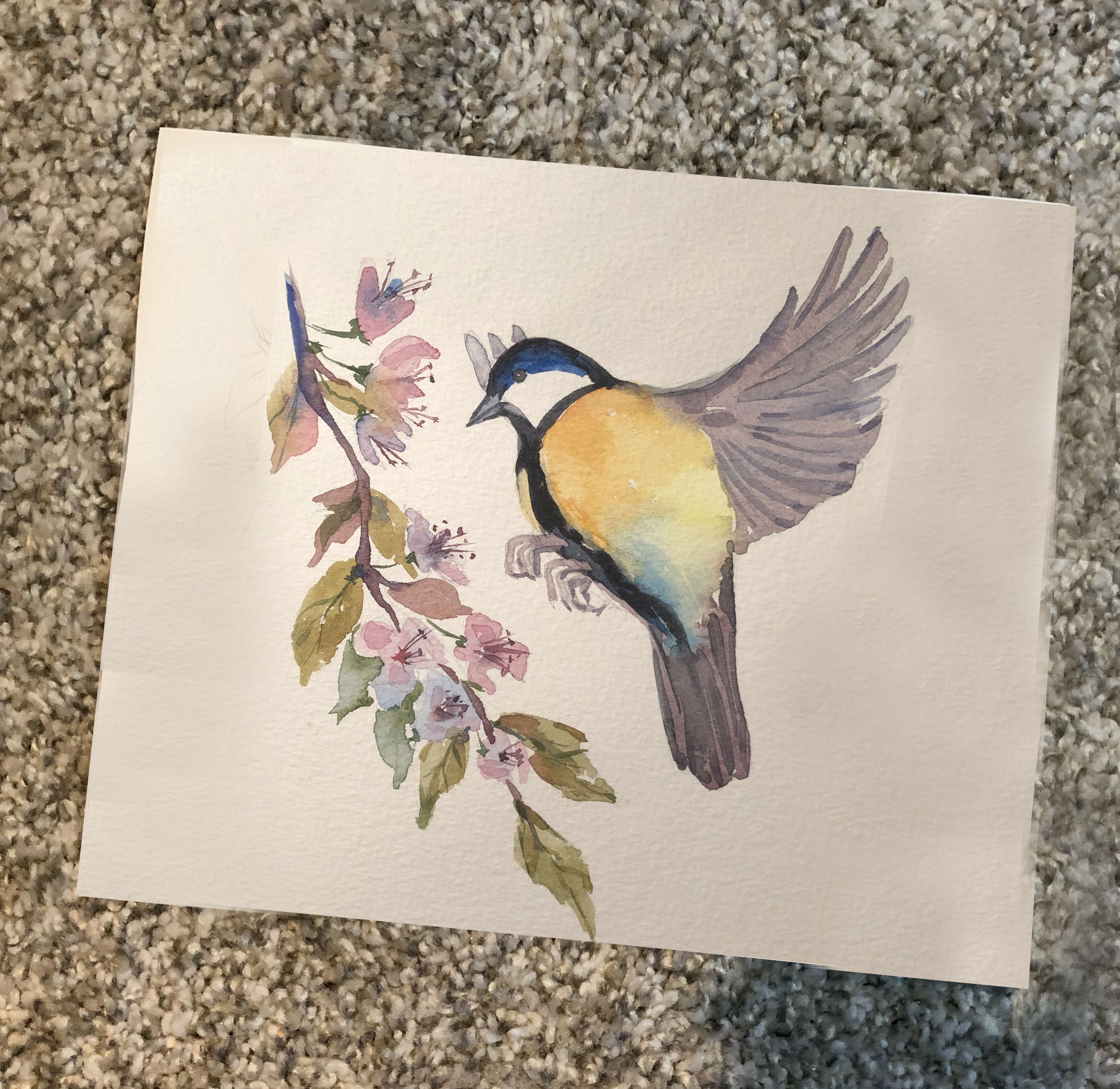
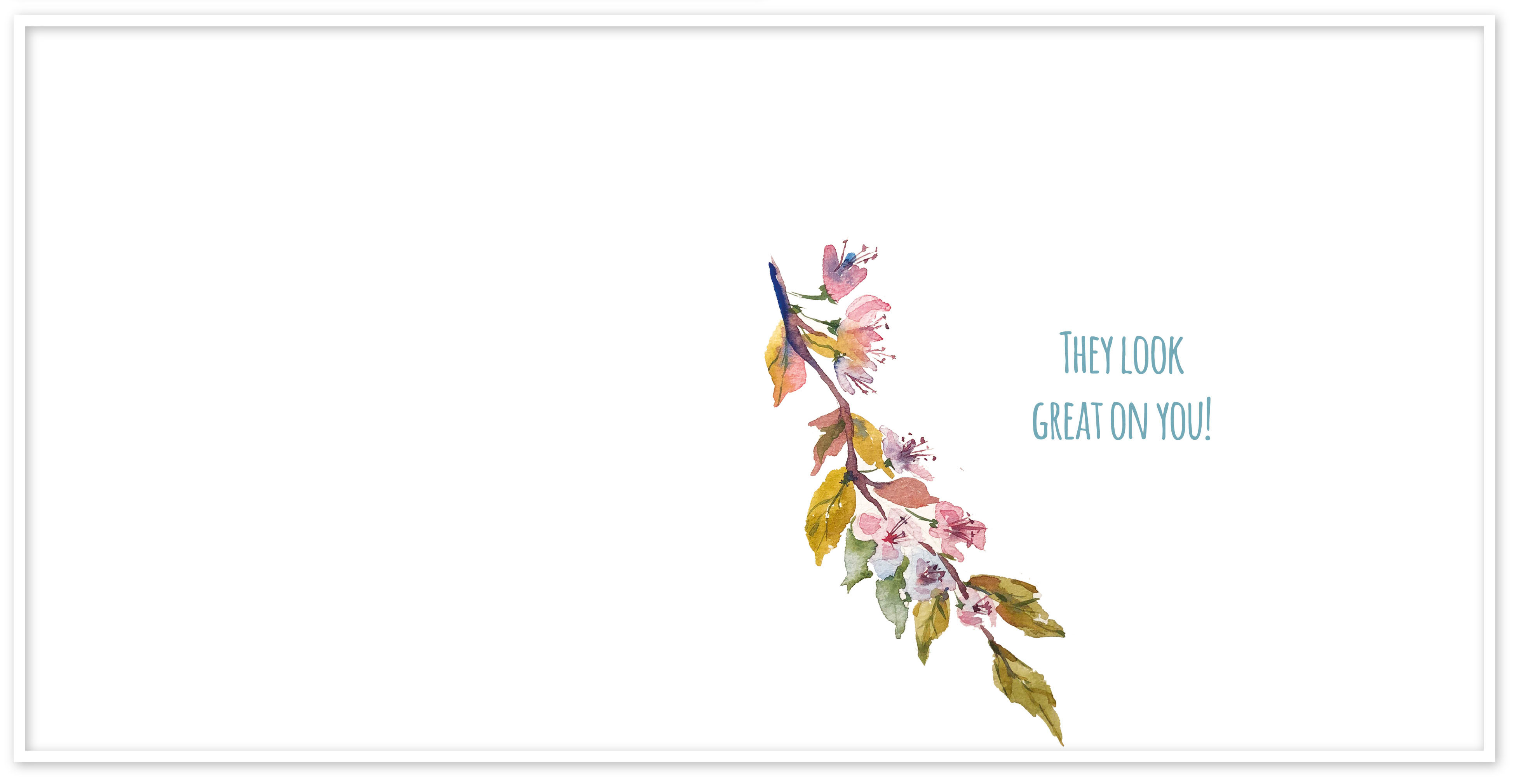
I liked the idea of playing with words, so for this card, I have painted watercolour birds. For the font, I’ve chosen Amatic bold, same as for the first card, as to me that is the kind of handwritten font plays well with my drawing. I painted only one bird and flipped it around that to have the same proportional bird. I was going to put the cherry tree branch in the face of the card, but I felt like there were too many objects, therefore I placed it inside of the card. I think that card looked minimalistic and clear, but that what made is special in the result.

Painting progression.

In conclusion, I would like to say that have enjoyed this assignment as it helped me to dig dipper into my creative abilities. The most difficult part for me was to make researches and to find out what greeting card would be worthy to produce, as I wanted to design something original and funny at the same time. I have never thought about the target audience for greeting card until I found out that the card manufacturing market is more related to a female audience. I think my cards would definitely be attracted by female aged between 25-45 they are thoughtful and have a good sense of humour.

‘Hair Donating’ card stands out in front of other cards as it can play a major role in modern society such as volunteering and donations. This greeting card would have a big potential, as it can take a part in the charity project, for example, like from the purchasing each greeting card, some of the money will go to the special organisations.

I feel like ‘Weight Loss’ greeting card is my favourite, as it would have a good chance to stand out in the market. I’m pretty satisfied with the result I’ve got, but I’ve noticed that I could develop my ideas only when I created a style for them, in my case it was related to the watercolour paintings.

‘Breast Enlargement’ greeting card differs to other cards as I would call it less serious, however, I would think if a woman has made a decision for such changes it’s always nice to get some attention and cheering words.

In addition, that course for the second assignment helped me to go through all the stages, I’ve learnt the importance of researches, mood boards, and sketches for the problem solving, and critiquing my work.

Introducing yourself

First Impression. Memories

For my first Assignment, I have a task to introduce myself. Below the example of the mind map I produced, some generic ideas that came into my mind, how I would describe myself.  For me is quite important to reflect graphic design ideas through the colours, so each card was associated with the specific colour that I imagined. In the result I had three main ideas:

  • card for the childhood memories and influences of the Eastern Culture
  • card for the maturing, hobbies as ballet and painting
  • card for the travel, like travelling which always is my passion

After some brainstorming, I started to design them straight away.

mind map.png

For my first postcard, I’ve decided to design it through the cultural influences from the countries that I have lived in. Firstly I would like to picture my native country where I was born and where I lived until I was 6 years old. That country is Uzbekistan — a faraway place in Middle Asia, a country with hot summers and cold winters. Where towns were surrounded by desert, 🐫🌵 where fruits were the sweetest in the world, where fabrics were full with bright and juicy colours, and girls wearing long braids were spinning in dance with a smile on their faces.

3768172
Folk Dancer From Uzbekistan/ Bridgeman Images

From pictures of Uzbekistan I wanted to show a traditional Uzbekistan Dancer, which is always smiling, she has long dark hair, and she loves spinning in dancing. Uzbek dance is characterized by intricate arm and hand movements, a variety of spins and turns, backbends, shoulder isolations and animated facial expressions.

Girls loved wearing wide dark eyebrows, which were joined in the nose bridge. The unibrow is considered a symbol of beauty and purity for women, this little girl reminds me of myself at an early age when I thought I was gorgeous as I imitated adults.

Pascal Mannaerts - Photographer | Pamirs
Pascal Mannaerts Photos

On another image below, is the soul of Uzbekistan — a place called Bukhara, an old traditional city which is one of the older cities in Central Asia.

When I close my eyes, I see spacious Uzbek streets, with no trees, just dry open space with an old mosque, where in the early mornings and evenings we could hear prayer songs. The sketch painting reminds me of my favourite Eastern Fairytale about Princess Budur “Aladdin’s Magic Lamp” from the collection “A Thousand and One Nights.” On the side of the road, you could always find a stream with cold clean water, which you could drink if you felt thirsty under the hot Asian sun.

Also, I’ve pictured traditional pattern Uzbek plates, as we used them to serve traditional fruits and hot naan pieces of bread for family and friend dinners.

“Motherland cradle me
close my eyes
lullaby me to sleep
keep me safe
lie with me
stay beside me
don’t go, don’t you go”―Natalie Merchant

51538
The Romana Melon, 1818 (w/c on paper), Hooker, William (1779-1832) / Lindley Library,  London, UK / Bridgeman Images

639899
The Samanid mausoleum, built by the first local Muslim dynasty in Bukhara/ Bridgeman Images


3245902
Uzbekistan (Indian ink on paper)/ Bridgeman Images

shutterstock_700069756
Ethnic Uzbek ceramic tableware / Shutterstock Image


I was pretty happy with the card design, as to me it was a tender and soft card, filled with Eastern elements and personal memories. The font that was used for Ode is handwritten font Katherina, I like it as it is similar to my writing.

Cards A6-01
Postcard Ode

In conclusion for the first impression, I would like to say, that the main influence from the country where I was born was:

  • appreciation of Eastern Culture
  • understanding that each part of ethnic features affect the personality formation
  • memories from childhood are given the strongest influence on personality

Second Impression. Maturing

Secondly, after the country where I was growing up, I will go to another part of myself, which is the country where I lived for 25 years until I moved to the UK. That country is Ukraine, a place where summer fields are in blossom of sunflowers, 🌻 where the sky is a dark blue colour, and wheat is bright and yellow, which creates a beautiful combination in contrast. In that card, I would like to picture my country as a collage of main places that inspired me during my life in Ukraine. When I moved to Ukraine for the first time, I was 6 years old. It was the time when I started to learn a new language, which I really enjoyed. At the art lessons at school we had tasks to paint traditional places of Ukraine, so when I see sunflowers, viburnum or ears of corn like on the postmarks below, they remind me that they are all a part of myself.

marks
Traditional Ukrainian Post Stamps/ Wikipedia

My native city was Kiev, a place with a huge wide Dnipro river, where on the Volodimir Hill you can have a panoramic view of the big green city. High buildings and hills covered with fluffy bushes and trees. As my first impression of Kiev was from the Soviet Union, I would like to use old photographs to picture my city, as that is firstly what came up into my memories from that place.

One of my hobbies in Kiev was visiting Ballet Performances at the National Theatre of Opera and Ballet of Shevchenko. I loved the theatre by itself, the decoration of the performance, orchestra music and tender classical dances from some of the best dancers in Ukraine. 🇺🇦 I have visited many performances, starting from Swan Lake to the Nutcracker. In the honour of my love of the ballet, I have painted an oil picture of a Balerina.

212652
Kiev at Kreschatik Street / Bridgeman Images

IMG_1746
Ballerina. Oil on Canvas


412585
Sunflowers and batik cloth (w/c on paper) / Bridgeman Images

Cards A6-03
Postcard 2

It’s not about the shoes it’s aboit what you do in them, – Michael Jordan

The postcard design that I a got in the result was a bit flat, also I couldn’t fit there domination of blue and yellow colour, so I decided to go deeper, where I would be able to use my own painting. For inspiration, I went to the website to analyse famous Illustrators ideas. I found some source of inspiration for myself from Darrel Rees design style and the complexity of collages combinations, as I noticed my cards where missing foreground and background. So my updated design had a completely new look. Below are designs that inspired me.

rees_darrel_07-1

rees_darrel_03-1

This time I decided to use my own painting. I used a picture of a ballerina, for the background I used a picture of Kiev. In ballerinas hands, I put some sunflowers – symbolic Ukrainian flowers. Visually I divided a space into two colours – yellow and blue, which are traditional Ukrainian colours. In the corner, I used an old photograph of Kiev, place where I had been living for 25 years. A postcard that I got in the result presented below.

Cards Travel
Postcard Maturing

In conclusion for the second impression, I would like to say, that the main influence from the country where I lived was:

  • the Slavonic culture is open-minded and close to my spirit
  • it’s a place I will call home anytime

Third Impression. At the present

1126479
Vintage Travel Poster for Santa Margherita Ligure, c.1950 (colour litho)

During my work career for a travel company, I’ve opened for myself a new world,🌏 with big beautiful oceans, exotic fruits and far away islands. As I worked as a visual graphic designer, most of the time I was looking for photographs to attractive places to visit for tourists, and at the same time, I was looking for places I dream to go too. Since that time I have a wish, travel around, and see the most unseen places in the world. In my third card impression, I would like to visualise journeys and travels as a part of my life.

This young lady on the poster from Santa Margherita is a symbol of happiness and excitement of the new world discover, I love that she is open to the world and with a big smile on her face, also she is wearing yellow, the colour of energy and activities.

“There is a kind of magicness about going far away and then coming back all changed”― Kate Douglas Wiggen


I liked the idea of the presence of yellow colour, and the spirit of happiness that woman brings into, but I thought that my postcards look too similar to each other, as most of them were made in the style of flat collage, therefore I went for inspiration and searches to the famous graphic design and illustration artists.

Eleonora Davydovska 518265 Third Impression copy

I found some ideas which were leading me to some new way of thinking, where I could combine not related images to each other, that to create some new sort of image. I loved the idea from illustrator Matthew Richardson of using transparent images and full-colour images, which created a kind of mystery effect. At the same time, my personal expression told me that I more keen on using a bright background, as though the colour we can express our personality as well.

Connects4_670.jpg

schools_670

By trying to combine different images, I’ve decided to try to use two pictures of myself, first one a picture from passport, as that is related to travel abroad, another one a picture of myself with open hands, as I’m open to the world and travels. At the same time, I used some images from my journey to the Maldives. Leaves and parrot I used as a decoration for my clothes. I liked the slogan “Travel is always a good idea”, I used Helvetica font for it, that to keep its message clear and simple. In the corner, I put a picture of dancing Maldivian man.

Cards Travel-01
Postcard Travel

In conclusion for the third impression I would like to say that:

  • travelling is what makes a person happier
  • travels open up new horizons, changes the live view, gives the opportunity to look at familiar things from a completely different angle.
  • this is what fills us, inspires and makes us fall in love even more.

Final Cards Designs. 

Postcards explanation-01

Postcards explanation-02

Postcards explanation-03