
Read the following extract and then answer the questions:
• If this were to be made into a film what would the main character be like?
How do I envision the main character for the film? He appears tired and thoughtful after a long day. His mind is teeming with thoughts and sharp analysis, reflecting the weight of his responsible job as an investigator. The stress of wartime is evident on his serious face, with the first signs of ageing beginning to show, even though he is just over 40. He has dark hair, mingled with strands of grey, and expressive brown eyes.
• What clothes would the character be wearing?
I see a man, wearing a grey or brown suit, a spring coat, with a hat on, he is wearing a cotton shirt, in natural colours, like cream or light grey, and a brown shades tie.
• What furniture is in the main area where the action takes place?
The investigator is situated in a grey room, featuring a large, bulky wooden table and a dark brown wooden chair. Leaks mar the walls, likely due to dampness and a lack of heating. The table is positioned in the corner, adjacent to a window that reveals the devastated landscape of London outside.
Collect visual references for the items on your list
I felt quite enthusiastic about this exercise, as I enjoy tasks focused on character development and visualising key moments in a story. During my school days, literature lessons often involved portraying a narrative or illustrating the protagonist. My main approach was to identify the most significant moment in the book and explore how it personally affected me.
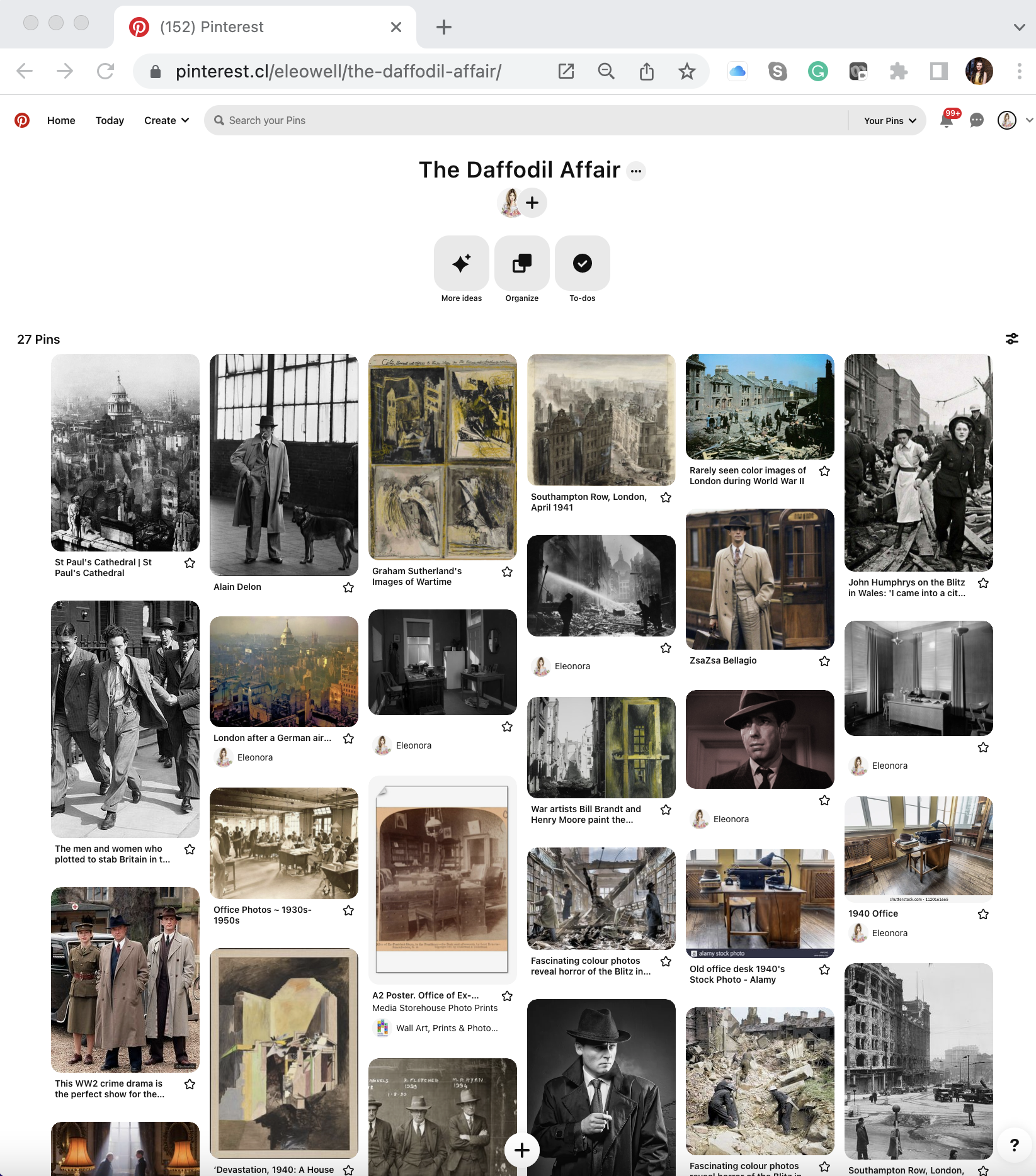
In this instance, I revisited that familiar path of gathering visuals that represent the era, drawing inspiration from the character’s personality, job, and environment. Below, I have collected images from World War II, featuring traditional men’s clothing from the 1940s and office arrangements of the time. Many of these images evoke a gloomy atmosphere, reflecting the devastation of that period. I drew this mood from the book, which helped me determine the direction of my illustration.
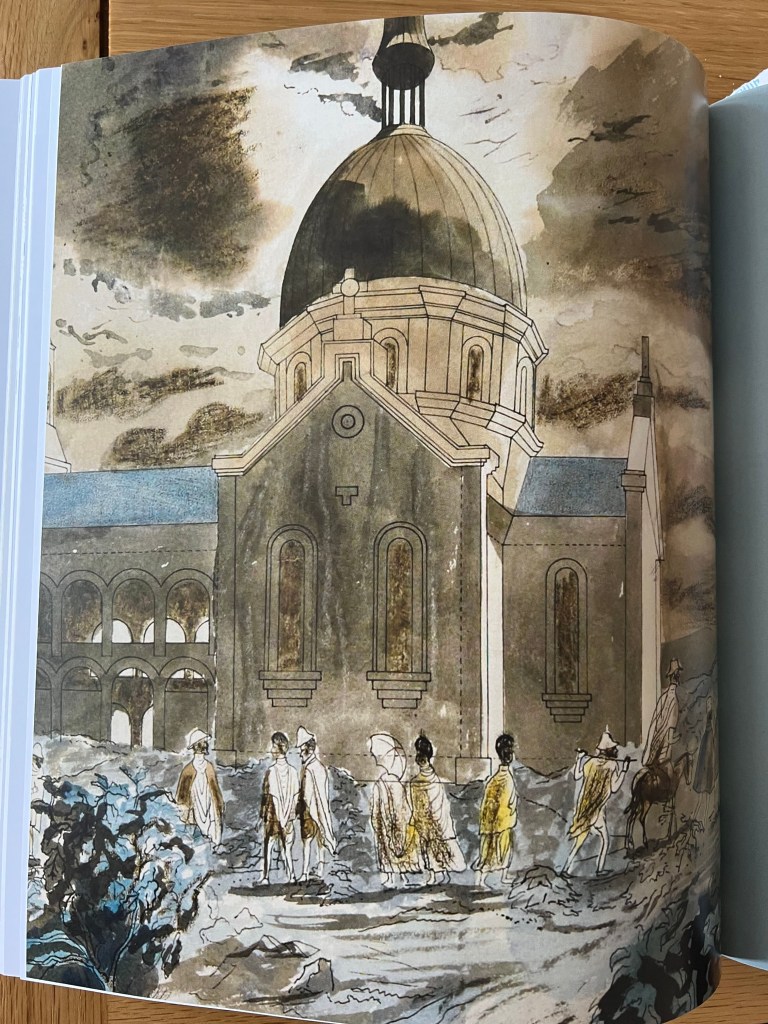
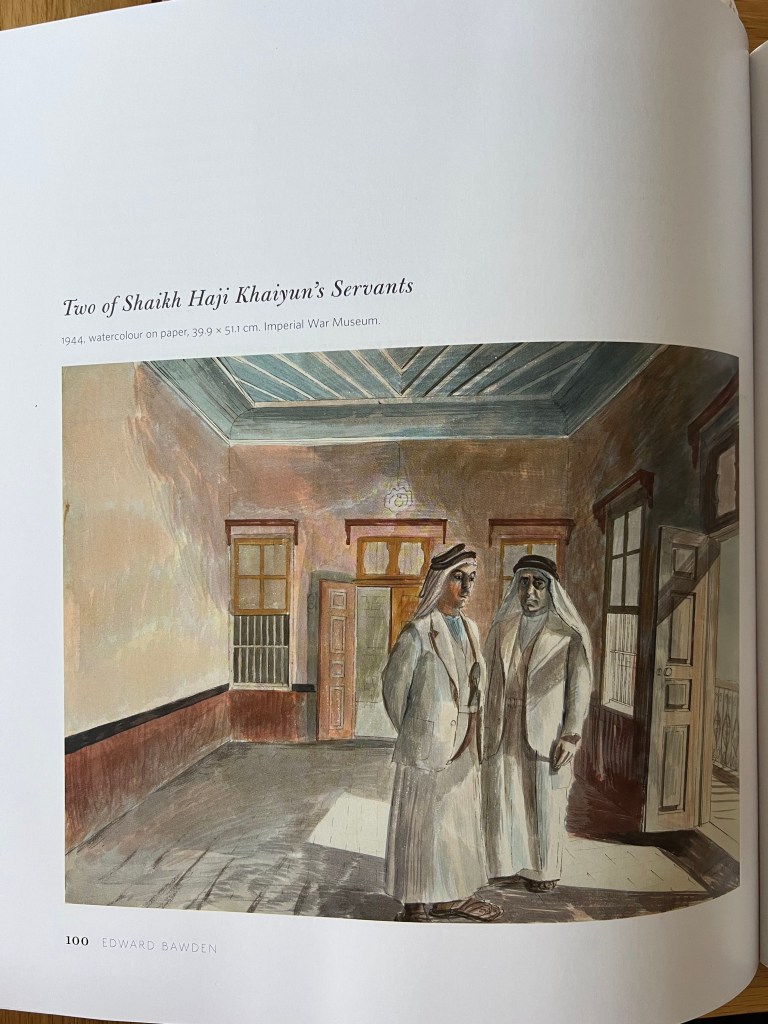
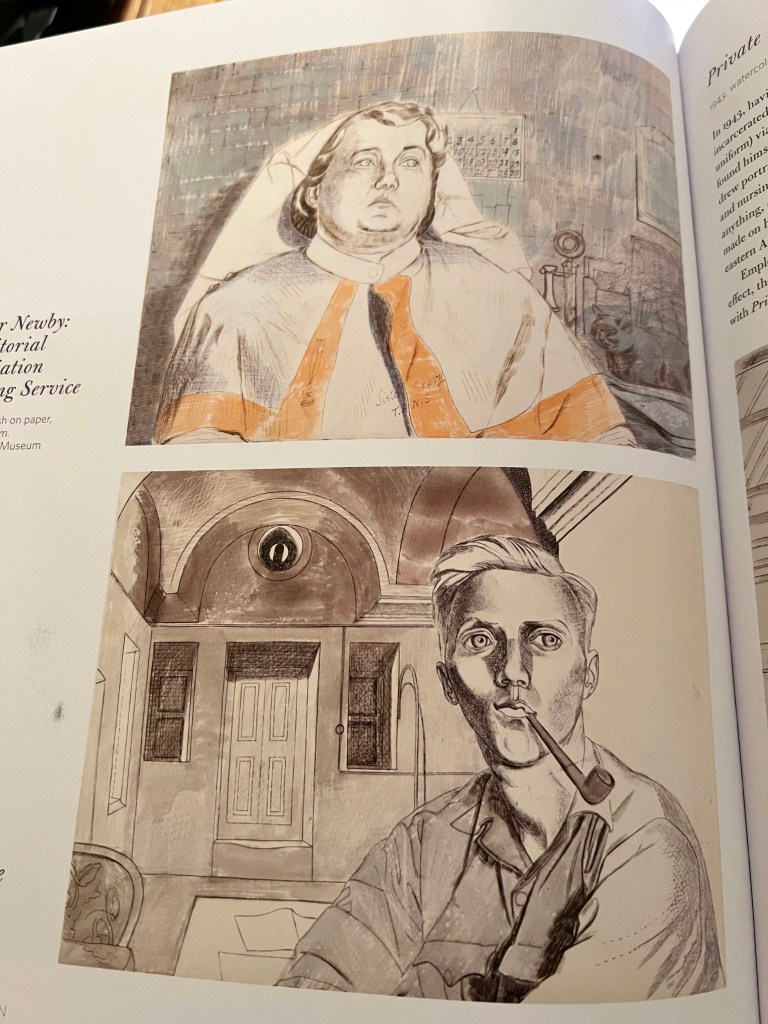
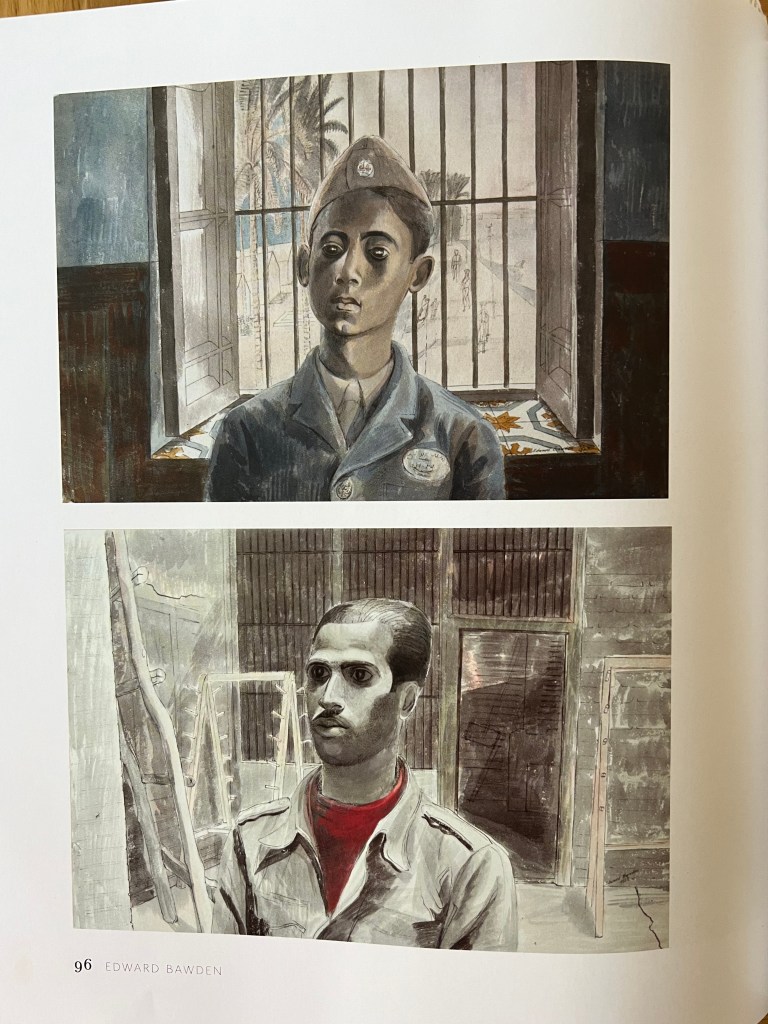
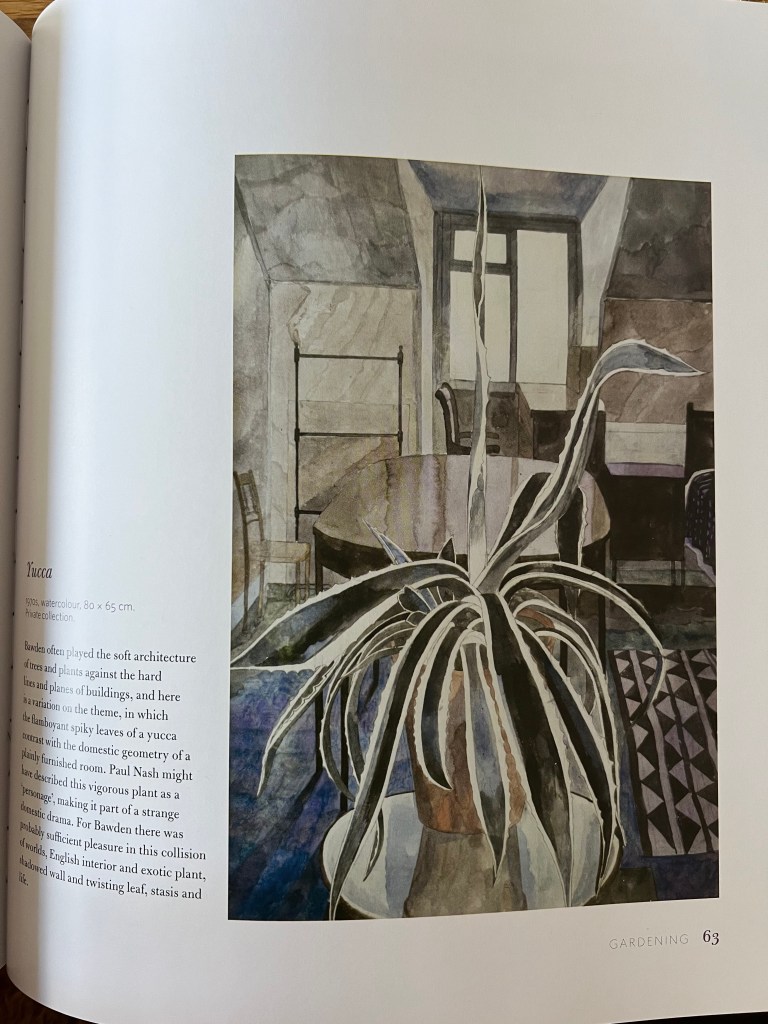
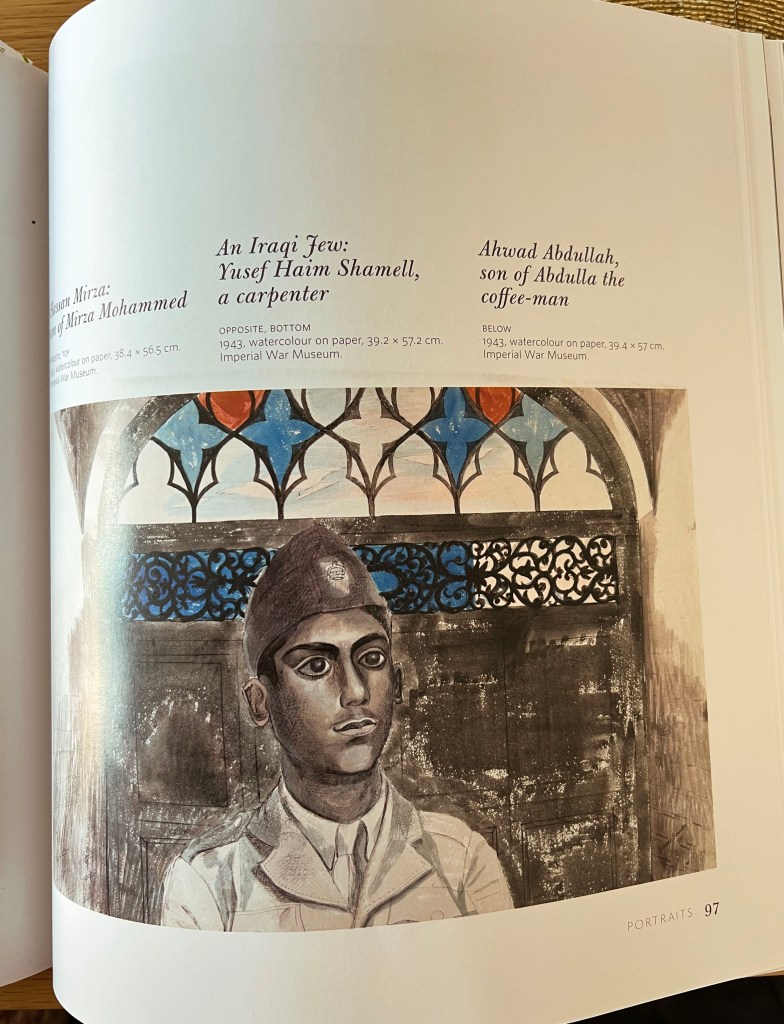
In addition, I collected some illustrations by the war artist Edward Bawden. I was truly captivated by the powerful paintings he created during the war, his diverse collection of portraits from his global travels, and the evocative mood present in his distinctive works. Bawden had an incredible ability to depict both the physical and psychological essence of subjects. Additionally, I am in awe of the vibrant colour palette he employed in his works, which encompassed sepia tones, rich browns, deep blues, and subtle greys, punctuated by pops of bright colours like yellow and red.
Chose a word, which you feel captures the mood you would like to convey
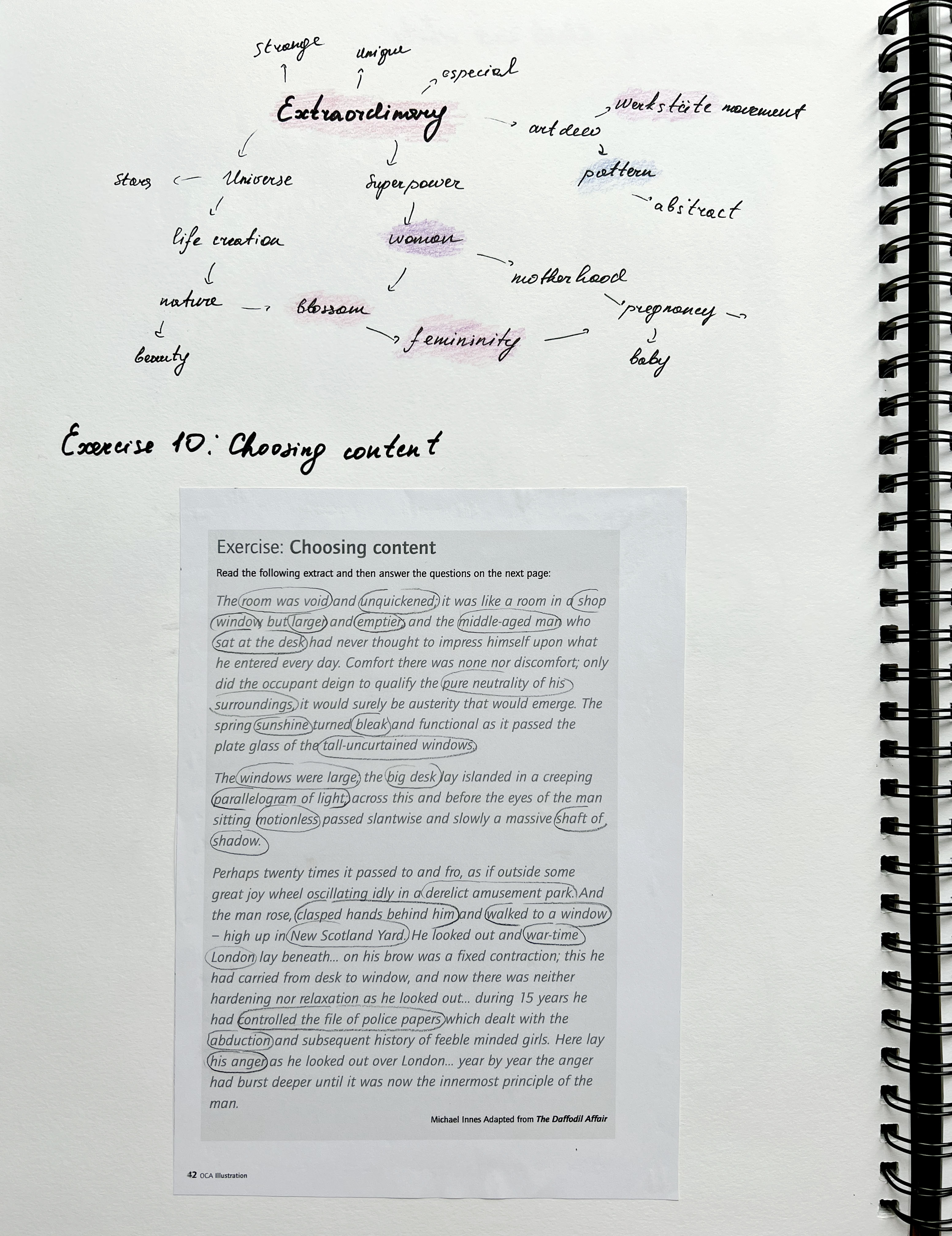
I carefully read the extract a few times, which helped me identify the main keywords from the story. This allowed me to visualise the potential illustrations I could create. Additionally, I created a mind map based on the highlighted words from the extract to guide my creative process. The words “void” and “bleak” stood out to me, and I envisioned that the wartime setting would have been a particularly gloomy period, especially for individuals in challenging professions such as the police department. I planned to incorporate these keywords into character descriptions, the office setting, the surroundings, and the overall atmosphere of the city.
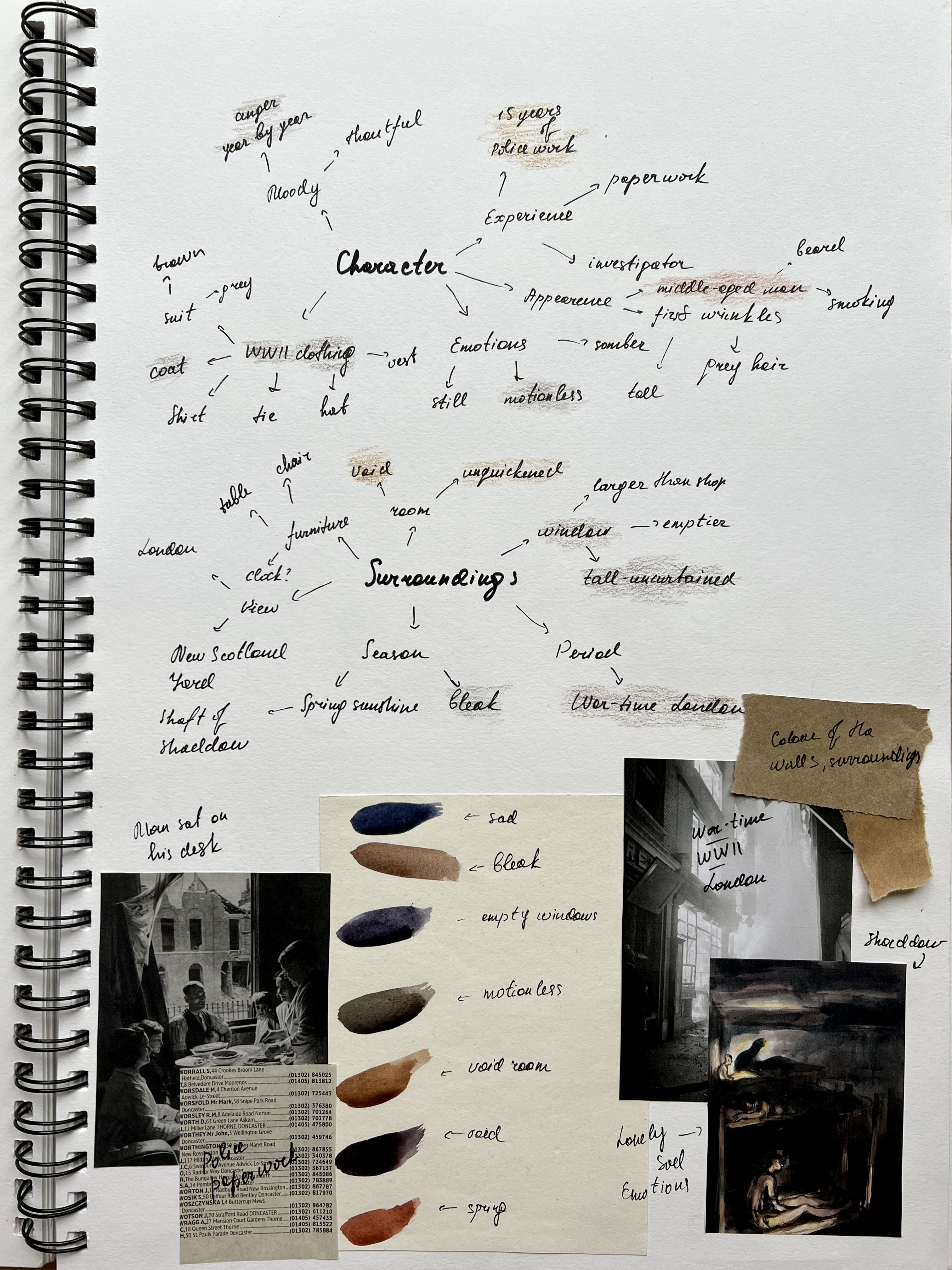
In addition, I created a mood board of materials I was going to work around, such as colours associated with keywords, the feel of the illustrations, the atmosphere and the surroundings.
Create a simple portrait (figure, or head and shoulders) of the character, using the reference you have gathered.
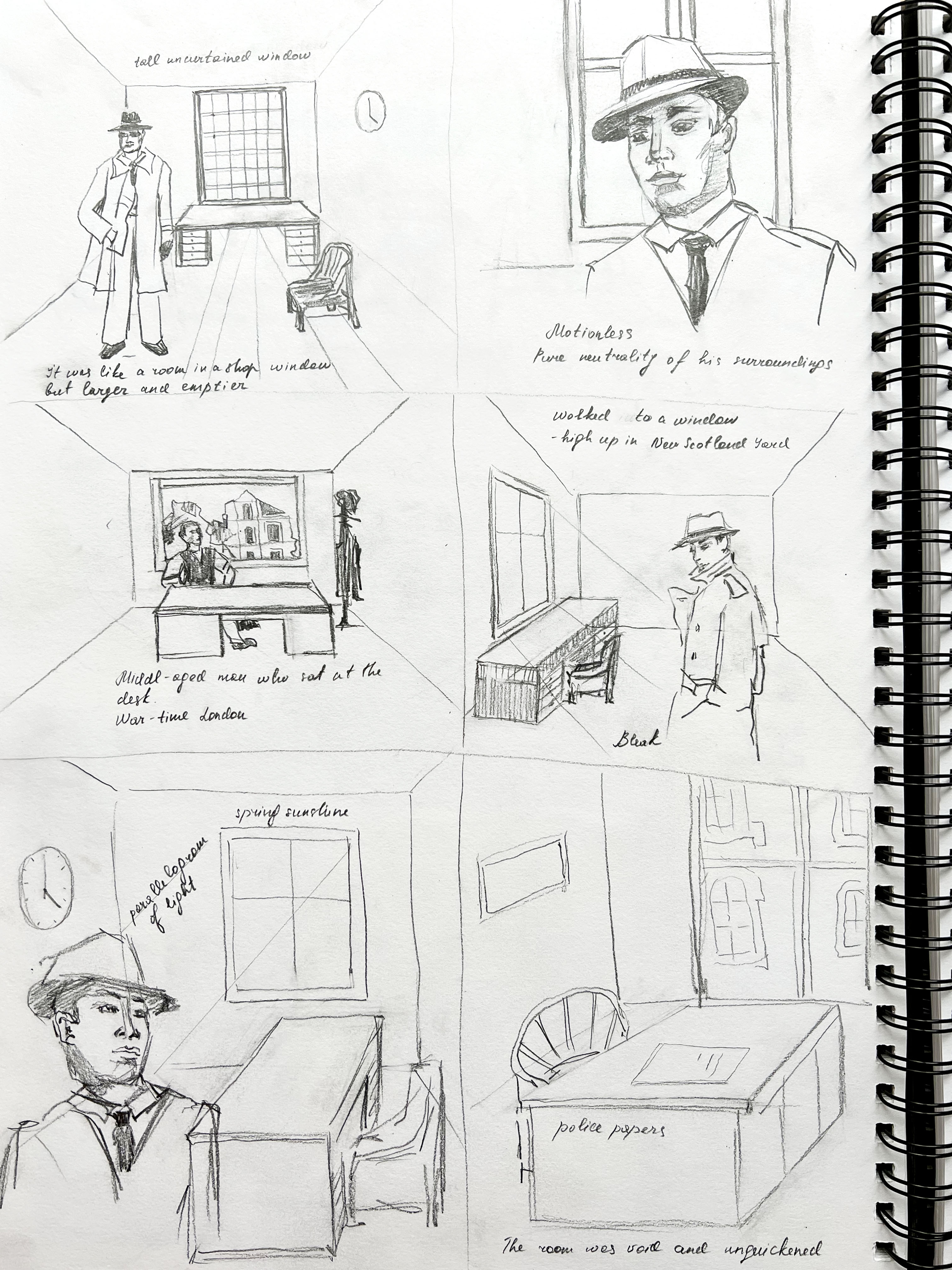
I began to envision scenes that would unfold around that extract. As part of the exercise, I collected sketches representing the film set, imagining they could resemble frames from a comic book. I considered different positions for the detective in the room, where he might sit or stand, his facial expressions, the interplay of spring light casting shadows, and the arrangement of furniture.
The main points I aimed to cover in my illustrations were:
- the dark and void atmosphere in the office;
- the thoughtful personality of the police worker;
- his clothes that would represent the wartime era;
- focus on the character’s facial expression;
- empty large window;
- visual of the destroyed part of London behind the window.
Illustrations
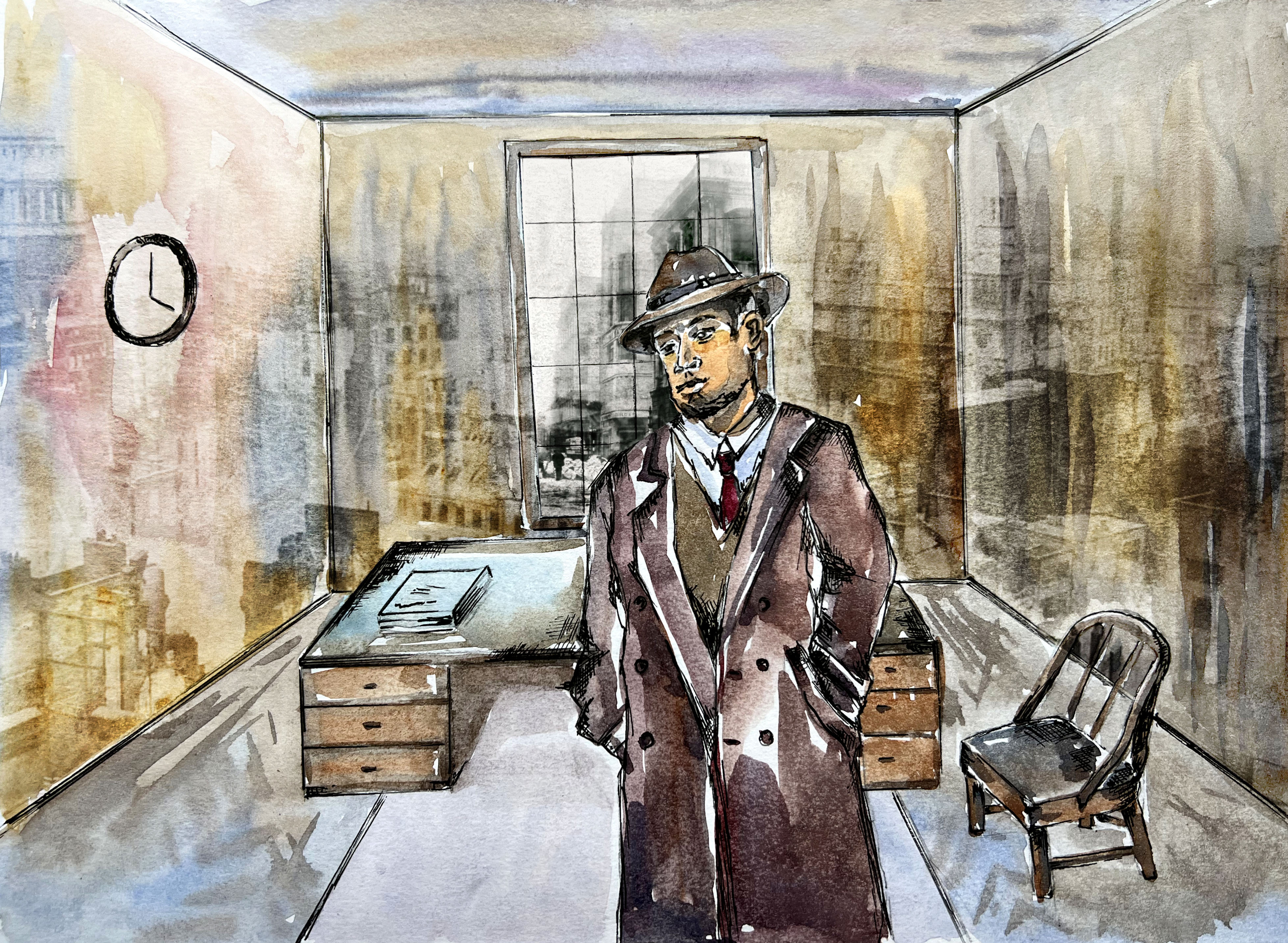
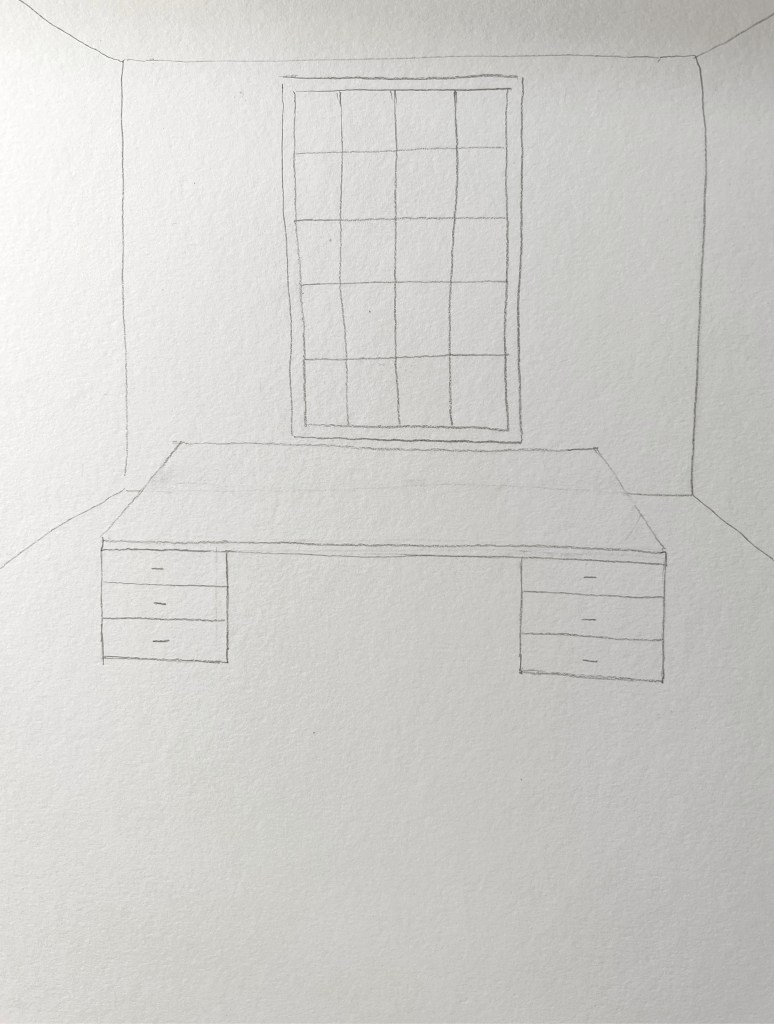
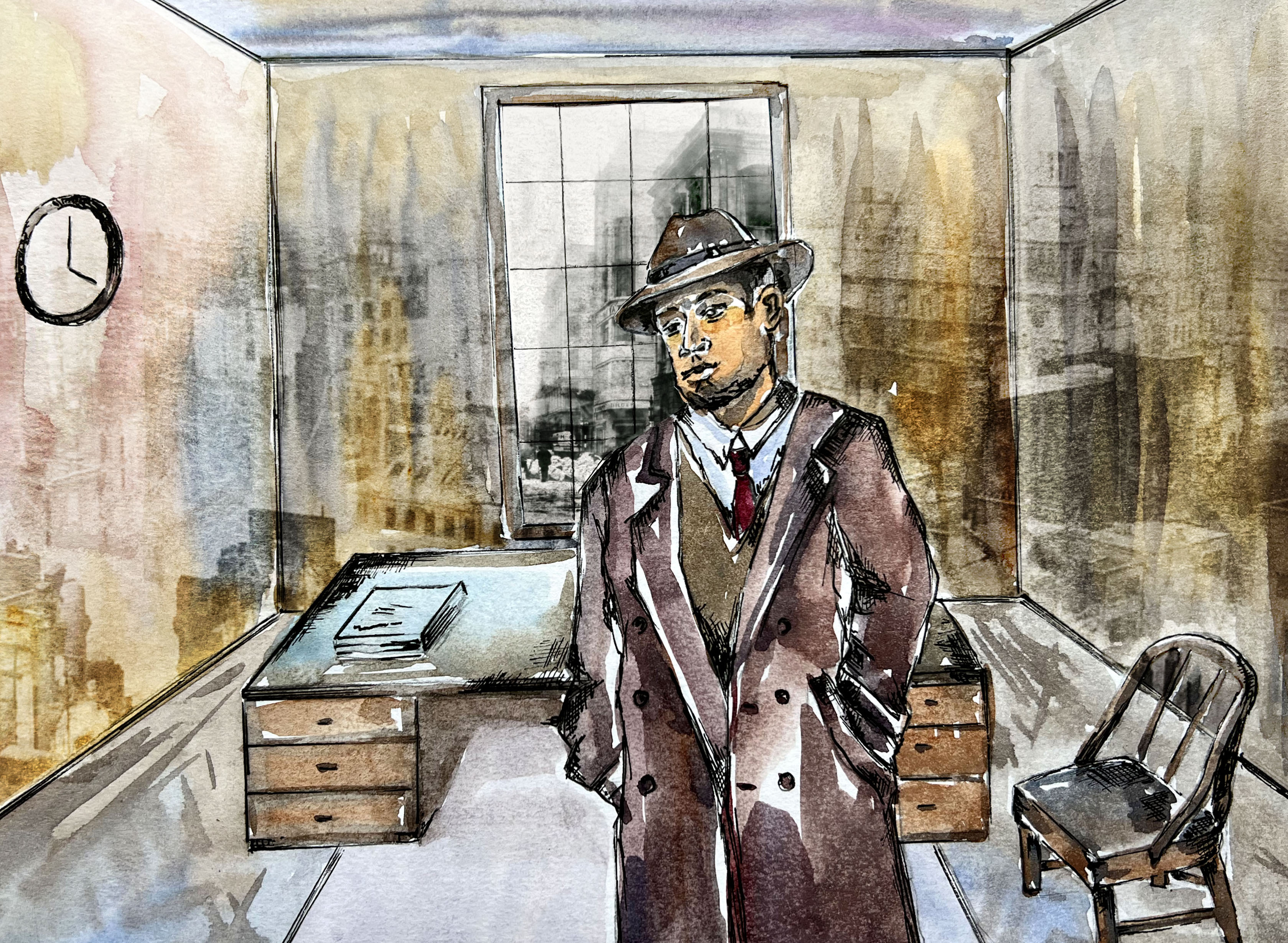
As mentioned earlier, my inspiration for this illustration was wartime artist Edward Bawden. I designed a perspective that provides a straight view into the room, with symmetrical walls and windows positioned at the centre. The main character is placed in the foreground, allowing the furniture and other details of the room to recede into the background. I wanted to emphasise the protagonist while also capturing the moody atmosphere of the space.
I created a sketch for my illustration and later infused it with a watercolour palette. I selected colours from my mood board, incorporating plum, brown, sepia, and dull shades of blue and pink to convey depth. The room’s walls reflect a sense of dampness, and the protagonist sports an unshaven beard that adds to the weariness in his eyes. Behind him is a large empty window, intended to be filled with imagery of wartime London.
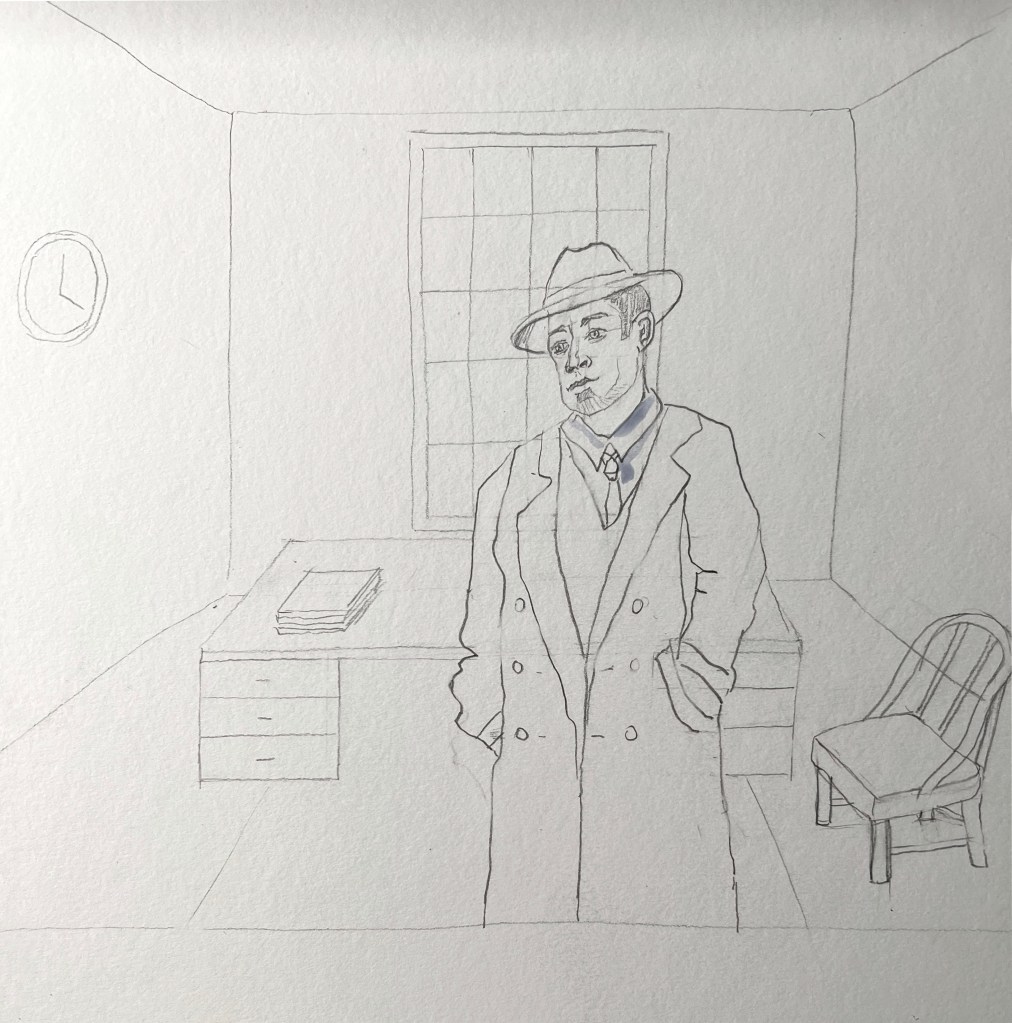
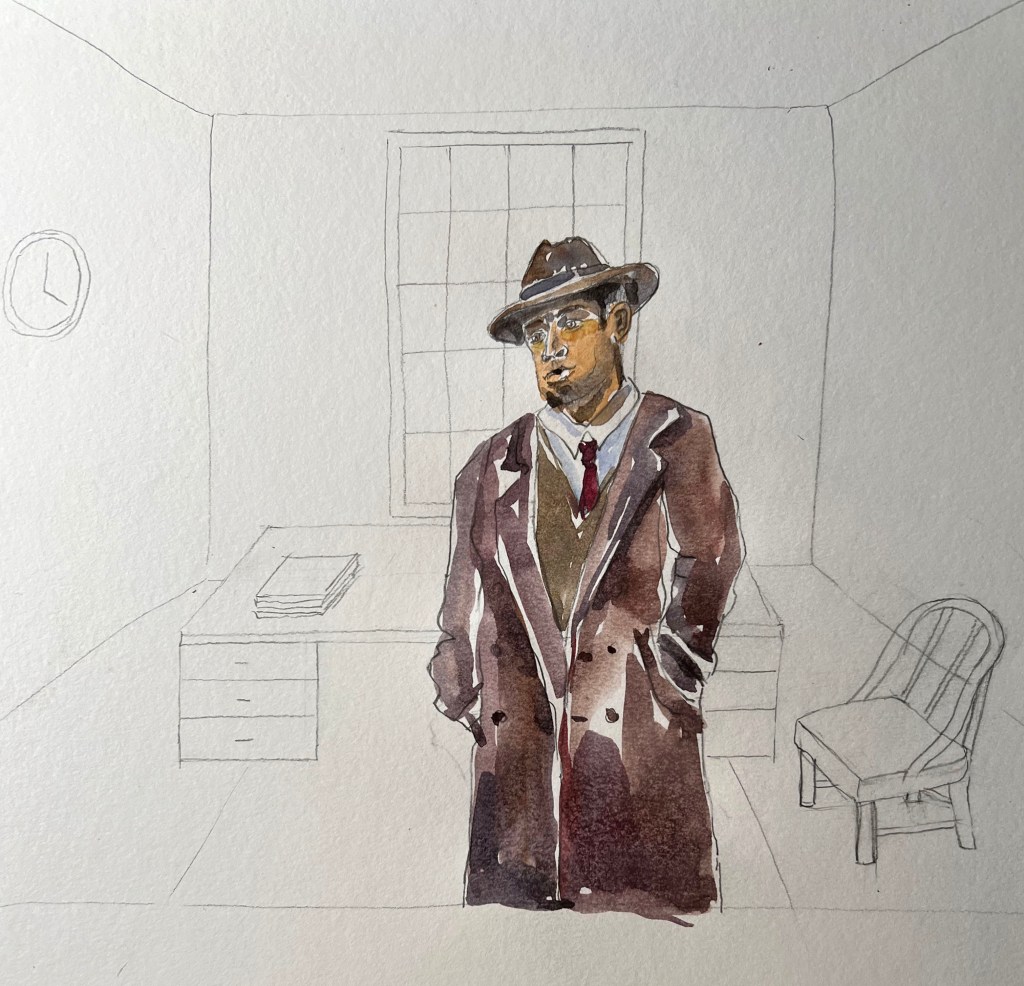
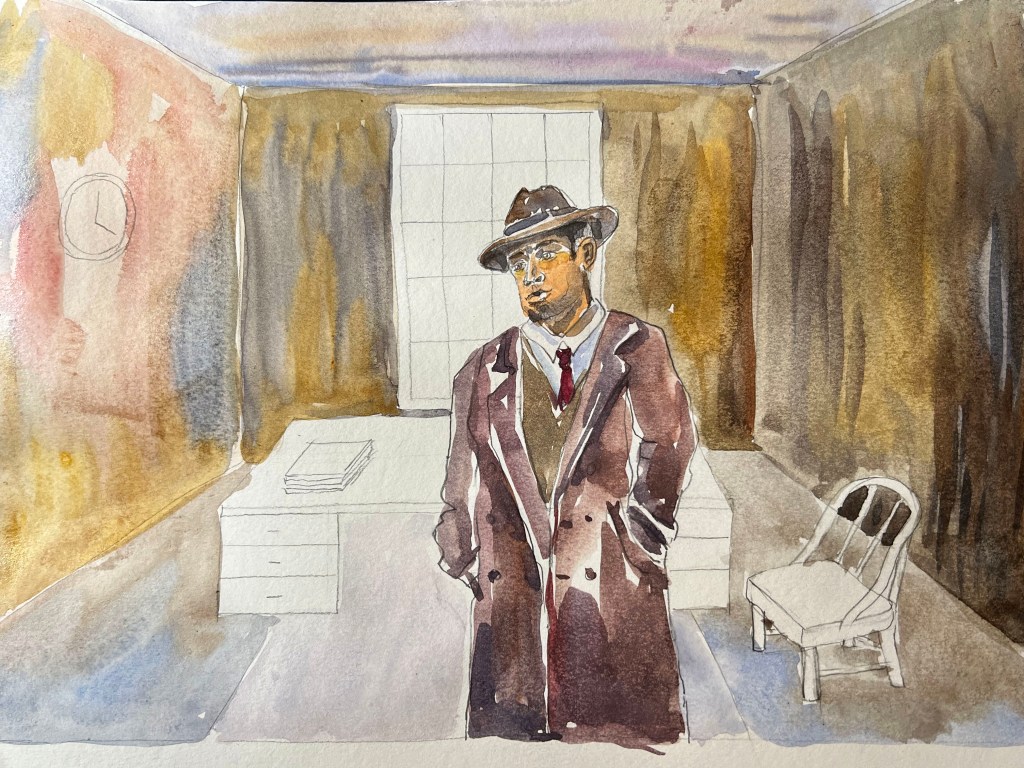
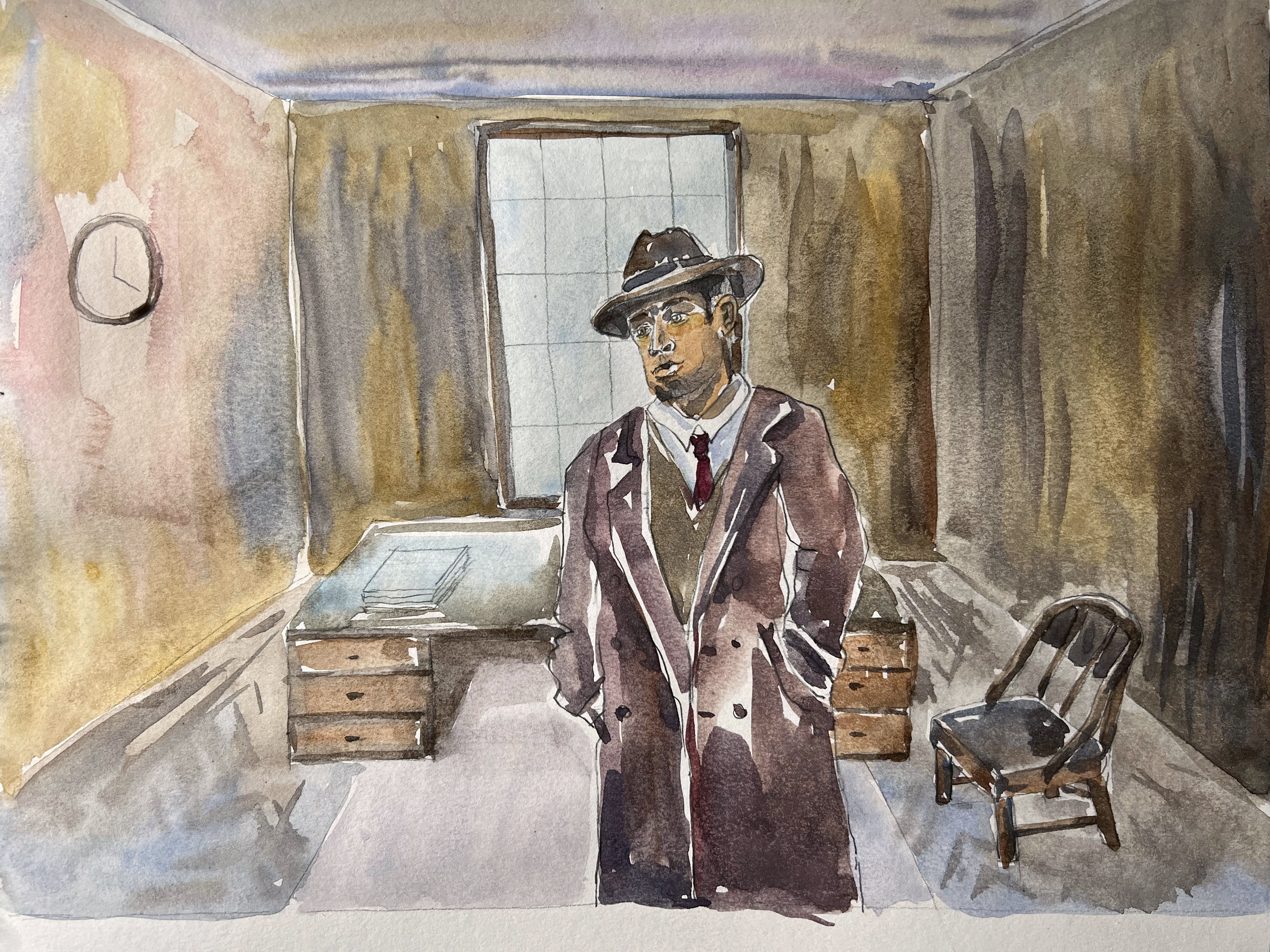
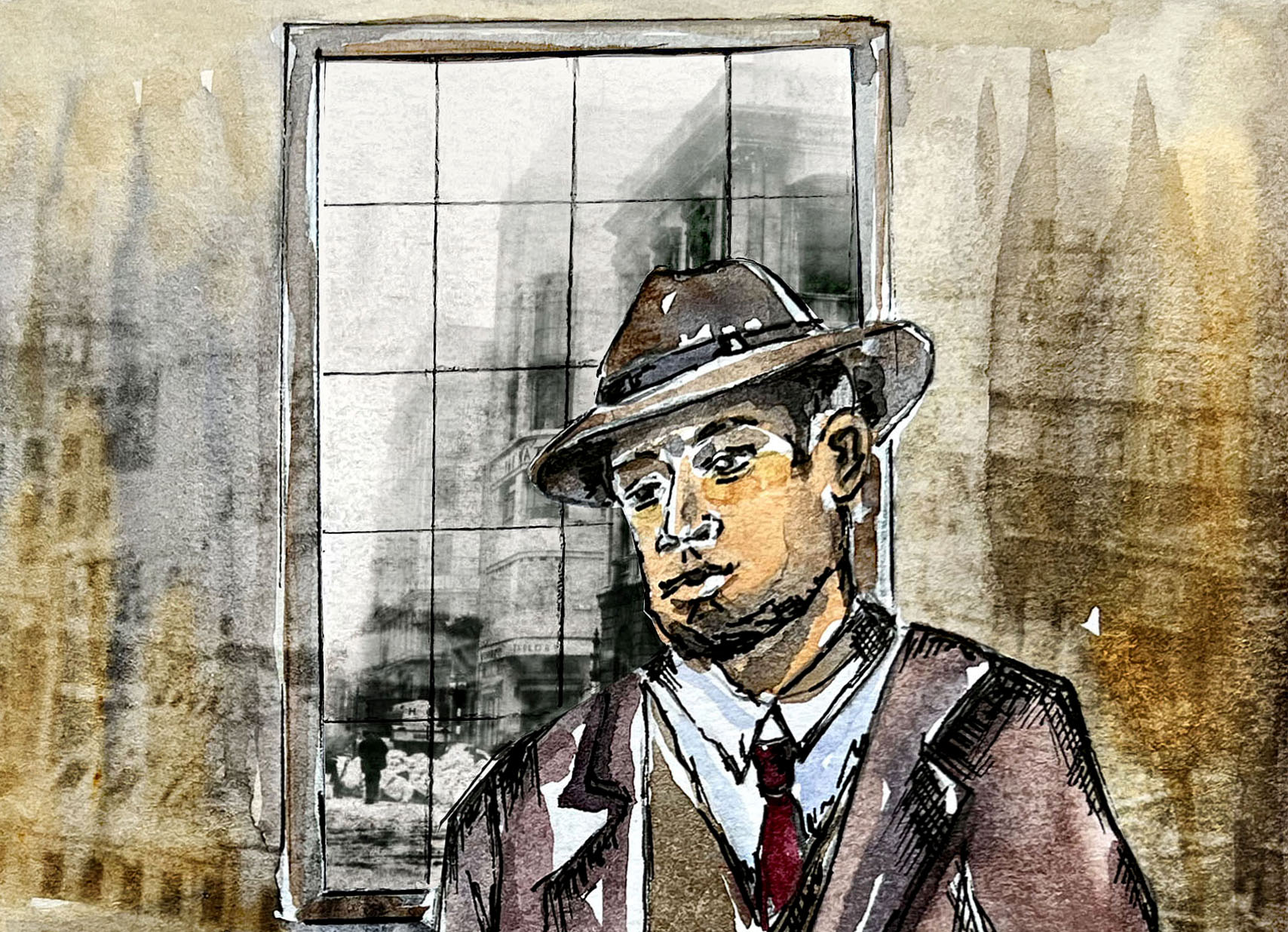
Bellow, I experimented with some techniques for the illustration, such as penstocks, transparent images of London on the walls, and a zoomed-in portrait of the protagonist. It was hard for me to decide what could be the final picture for the book, I think, I would go with the busy image with London on the walls and a full view of the room. It shows every point I wanted to cover in my brief, the only disadvantage, the main character slightly disappeared.
On the other hand, despite all that hard work, I invested in the drawing of the room and furniture – the zoomed-in portrait has valuable points. When the full room can be seen with the big picture of London, the composition becomes too busy and overloaded with details. But when the leading point is the facial impression of the character it creates better focus on the character. The protagonist is the central point in that cut, and the main character has a stronger presence in that close-up composition.
Looks like I was left with two versions at the end of this exercise, which is quite unusual for me. Even though that exercise was still an enjoyable process, I was quite pleased with the results I achieved in it.

 Eleonora's Art Blog