
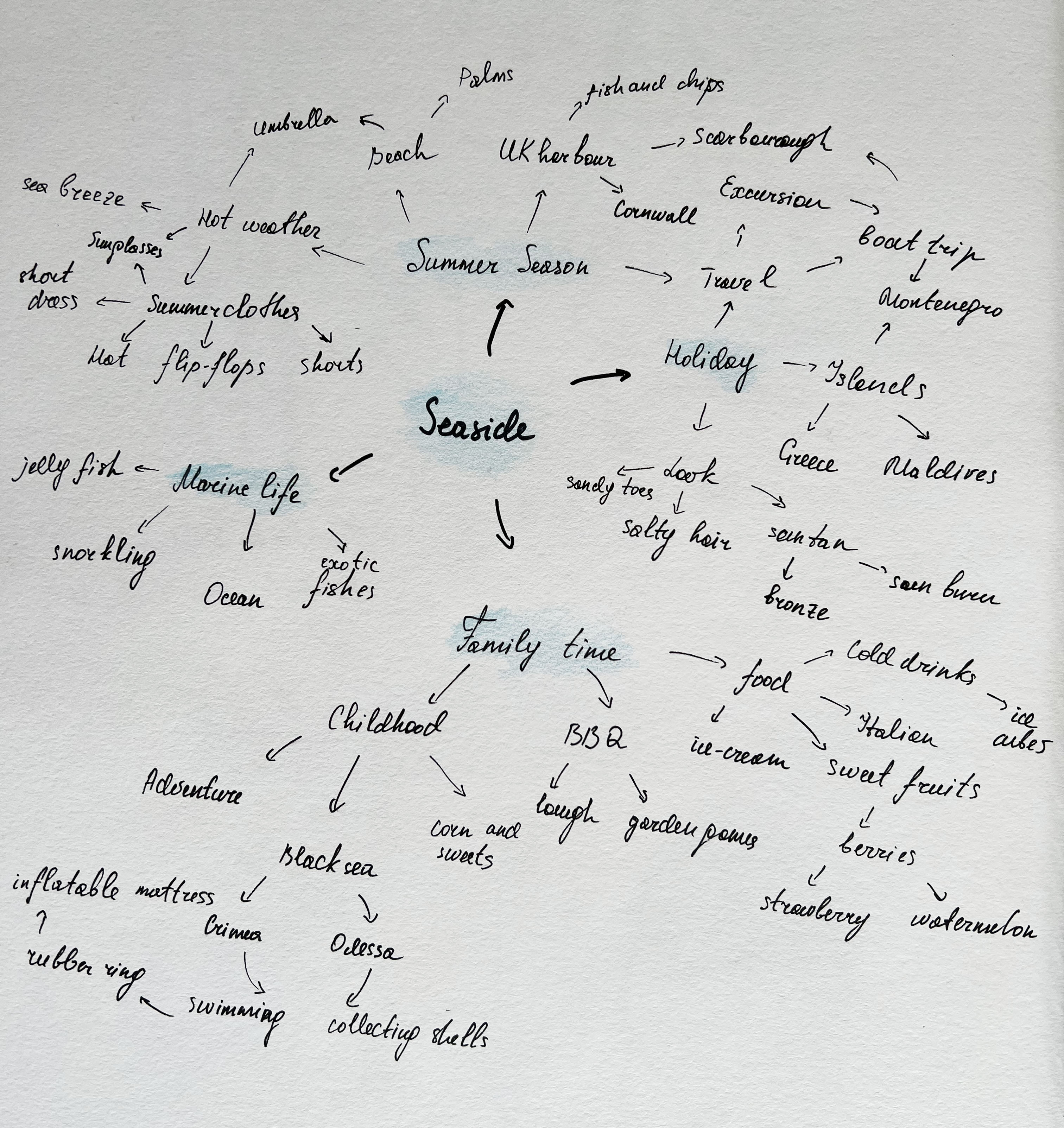
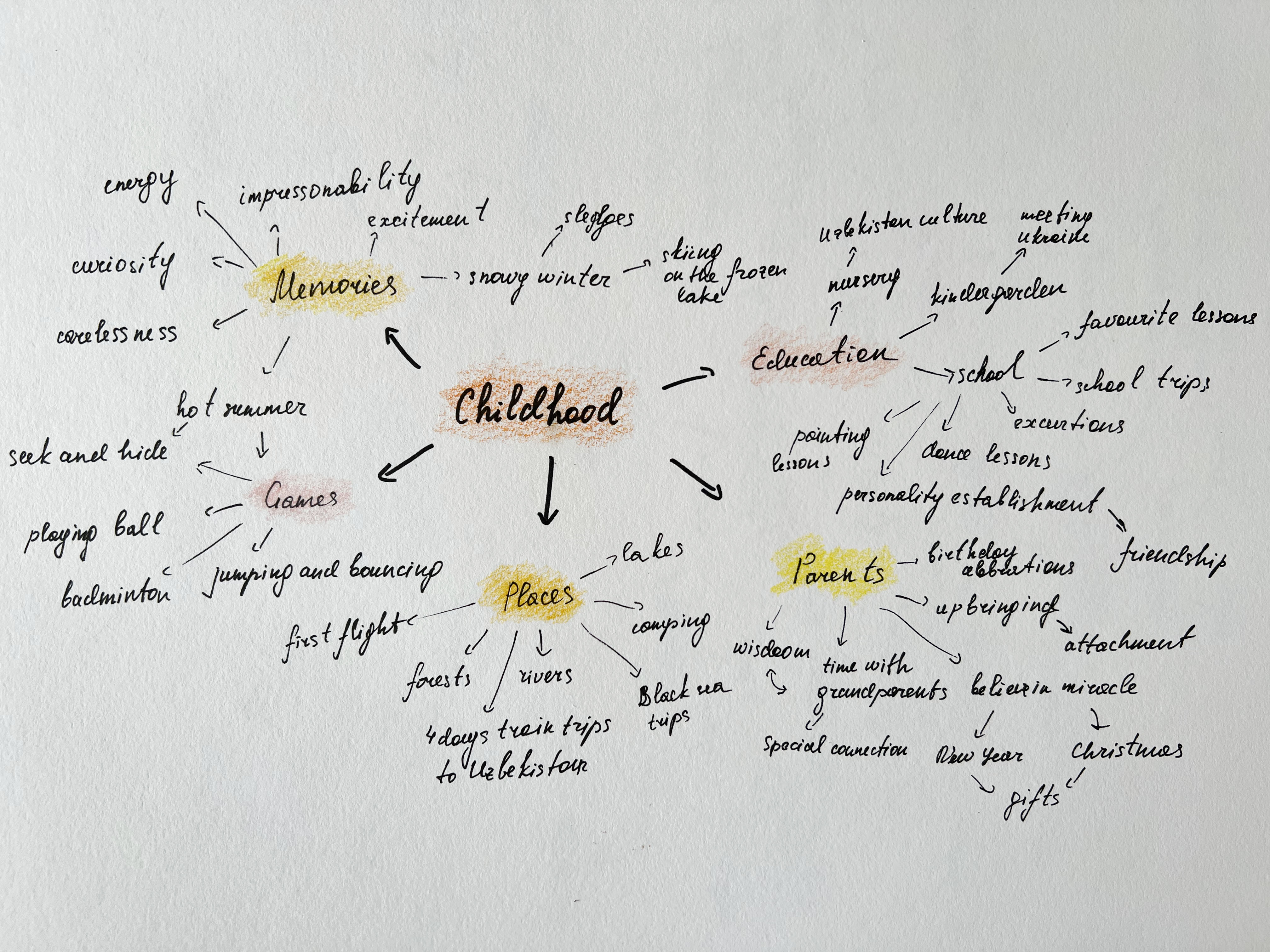
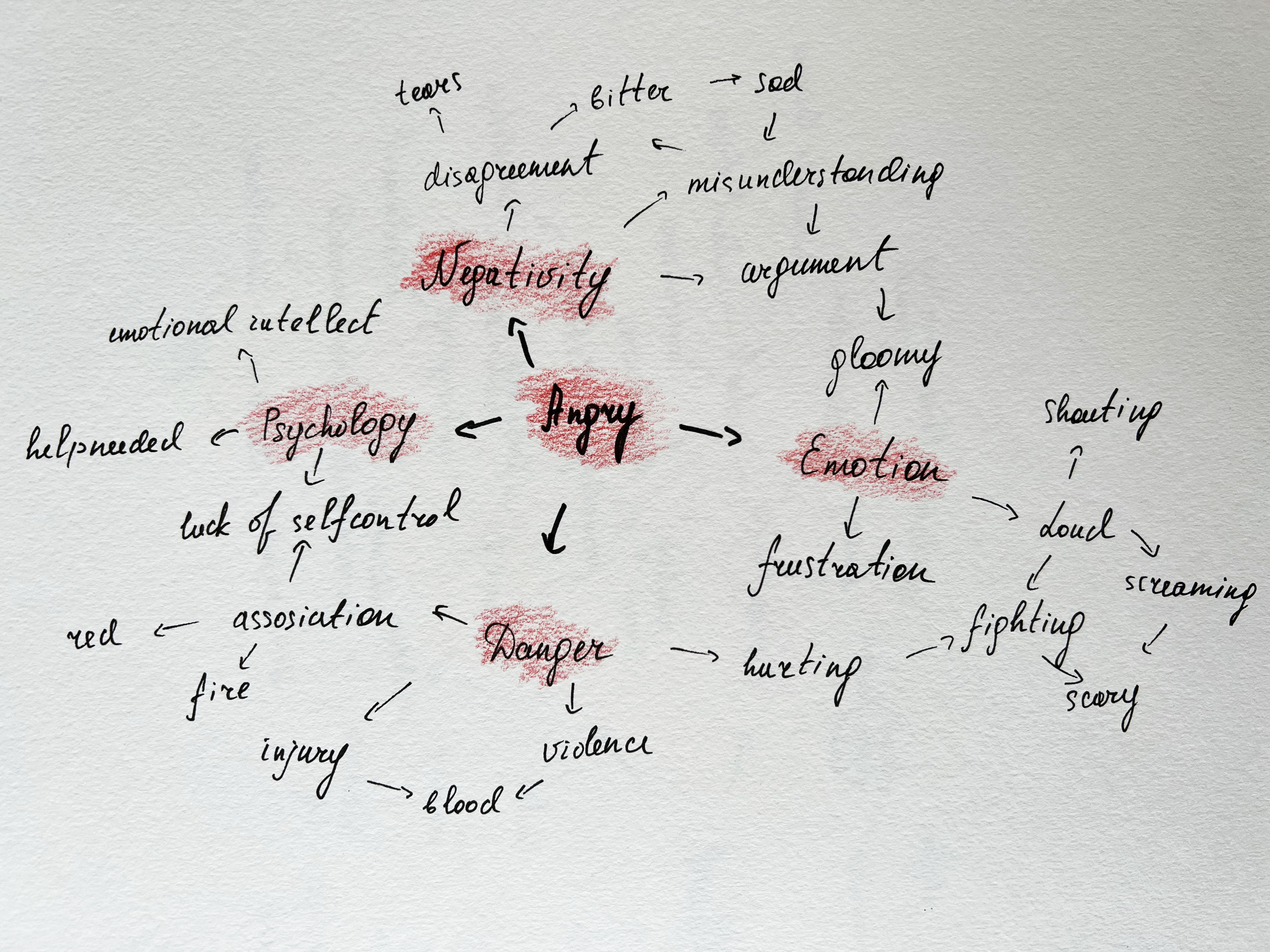
Create a spider diagram for each of these words: Seaside Childhood Angry Festival.
Try to remember your own experiences of these things even if you have only experienced them through TV, film or photos. Include a list of objects you associate with each word: list colours, use adjectives, textures, and subjects. If you get stuck use a dictionary or thesaurus to open up your word. If you do a Google images search you will find a vast collection of other people’s visual interpretations of the words. Take a note of anything that surprised you, or anything that was an unexpected addition to the list.
Test your spider diagram with at least one other person – use a different colour for each person you interrogate and tick words that were common and include any additional words. If the ‘joint’ brainstorm leads you to generate further words, add these as a separate colour.
In your learning log make a note of:
OCA Illustration
• Which word was most difficult for you to work with
• The strategies that suited you best to come up with more words.
This is classical exercise about mind mapping and generating ideas for the future projects. Personally, I discovered spider diagrams during Core Concepts unit, and they helped me to develop one of the vital parts of projects planning. Brief, mind maps, and key words, are those components that help to conclude designs into the sketches and then into designs. In the beginning of my Level 1 I found mind maps quite challenging, as I didn’t know the formula how they are created, but after 3 years of the coursework they started to appear naturally in my projects.
Brainstorming and spider diagrams (mind maps) are working in companionship. Brainstorming helps us to release many possible ideas that go through them again to estimate their usefulness. Spider diagrams are one way to think around an idea, or brainstorm, and it is a strategy successfully employed within many commercial, non-artistic situations to consider multiple approaches.
These spider diagrams for the given words to research were quite interesting to discover, as they were based not on a commercial project, but our experiences and memories from the past. Words such as seaside and childhood were the easiest to find several association words, and also they were purely based on my expression of the past and present. Those diagrams can go for an endless time, but at the same time need to make sure that we can control essential words from insignificant ones. The most challenging was word angry to work with, as that is first of all emotion, and also negative emotion, and it’s quite challenging to go into the negative space of words association. I was surprised that I couldn’t extend my research for the word festival, as that is quite a happy event, and it’s full of energy and versatility. With a bit of effort, it can be tens of times more significant, as the meaning of the festival is quite expansive.

 Eleonora's Art Blog