
Use one or more of the following book related sayings as a starting point to generate visual ideas and responses:
● Bookworms
● A closed/open book
● The oldest trick in the book
● You can’t judge a book by its cover
● In someone’s good/bad books
● By the book
During this early formative stage, aim to be as wide-ranging and imaginative as possible in your ideas. ALL ideas are valid at this point, so don’t censor; this is not the stage to decide what is a ‘good’ or ‘bad’ idea – at this point they are all just ‘ideas’ with equal merit. Let one idea flow fluidly, intuitively and organically into another to make unexpected links and associations. Record your thought processes and ideas using thumbnail sketches, spidergrams and annotations. Thumbnail sketches are a way of recording ideas through quick pen or pencil line drawings. The quality of the drawing is not important; a drawing of a person does not need to be anatomically accurate, for example. The drawing serves as a visual reminder to you of a fleeting idea. Aim to make thumbnail drawings in the same quick way that you make short written annotations – keeping up with the flow of your ideas. Draw a range of visual and conceptual possibilities using the book sayings as your starting point. Aim to spend 45 minutes working on this, generating as much content, potential ideas, thumbnails, visual metaphors or imagined books as possible.
Thumbnails can give an indication of composition and art direction. For example, how does the subject sit in the frame? How is the subject lit? What particular attributes does that subject have? Thumbnail sketches, along with annotations, are a good starting point to begin exploring these aspects.
Researches
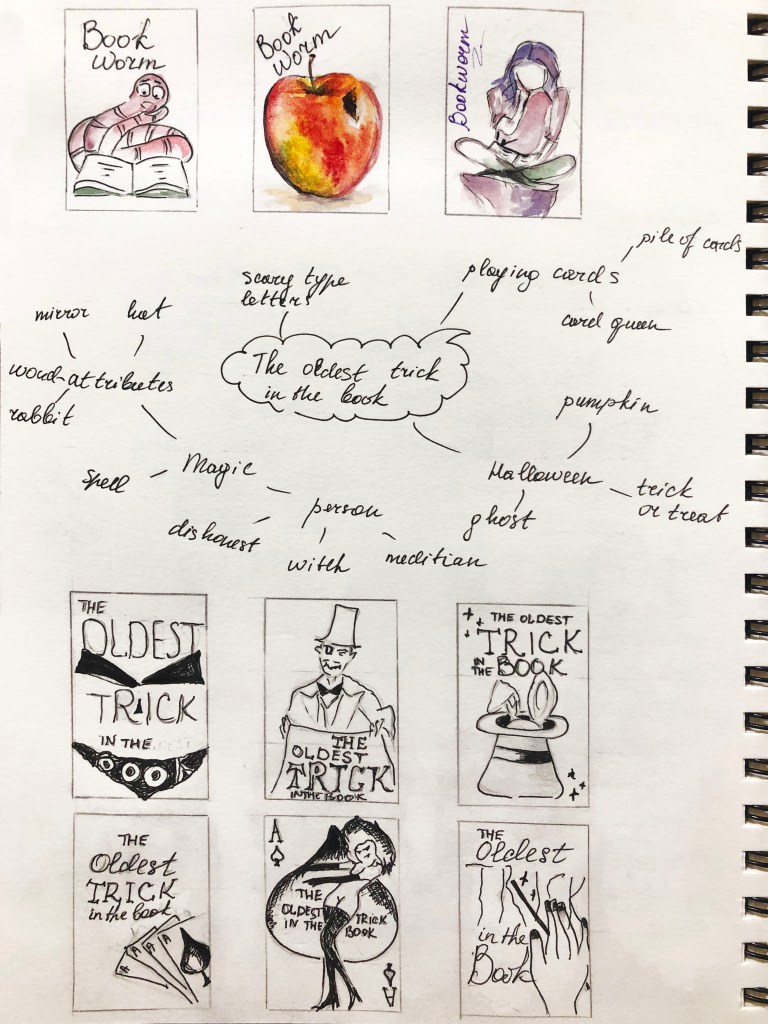
For this exercise, I decided to go with two choices for sketches ‘Bookworms’ and ‘The Oldest Trick in the Book’. I’ve heard some of those book-related sayings before, but for some of them, I had to do some researches. For example, the term bookworm was quite familiar to me, or open or closed book, as in the Ukrainian language we have identical meaning for it, for the rest, I discovered some new British idioms about books.
Sketches ‘Bookworms’
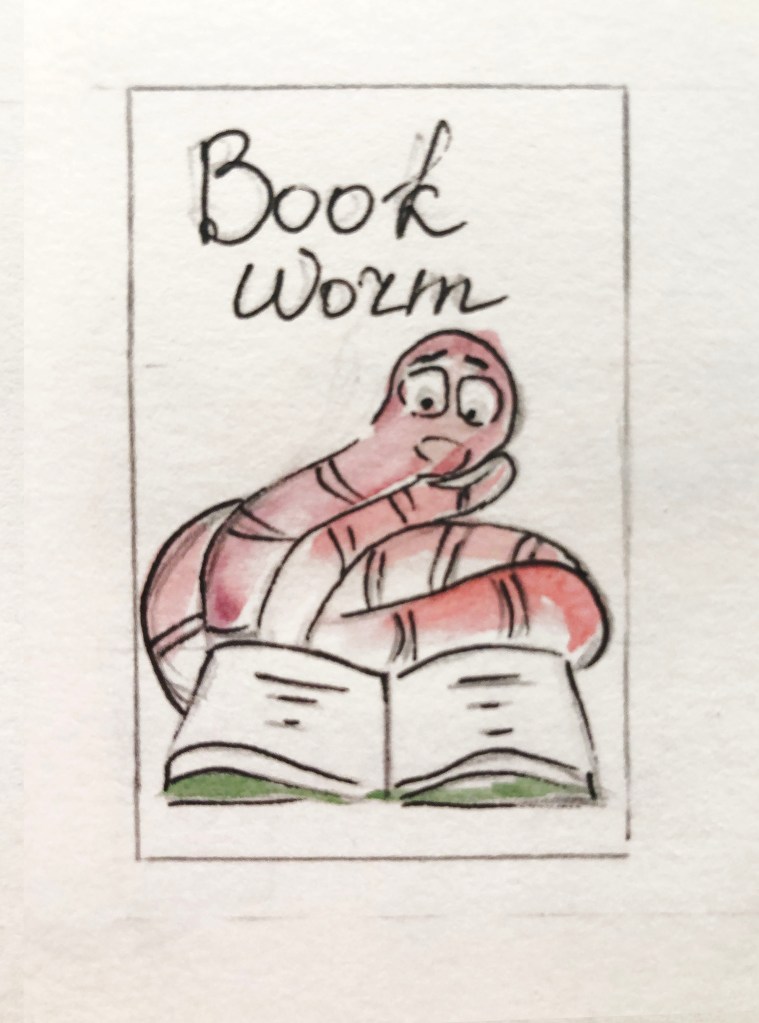
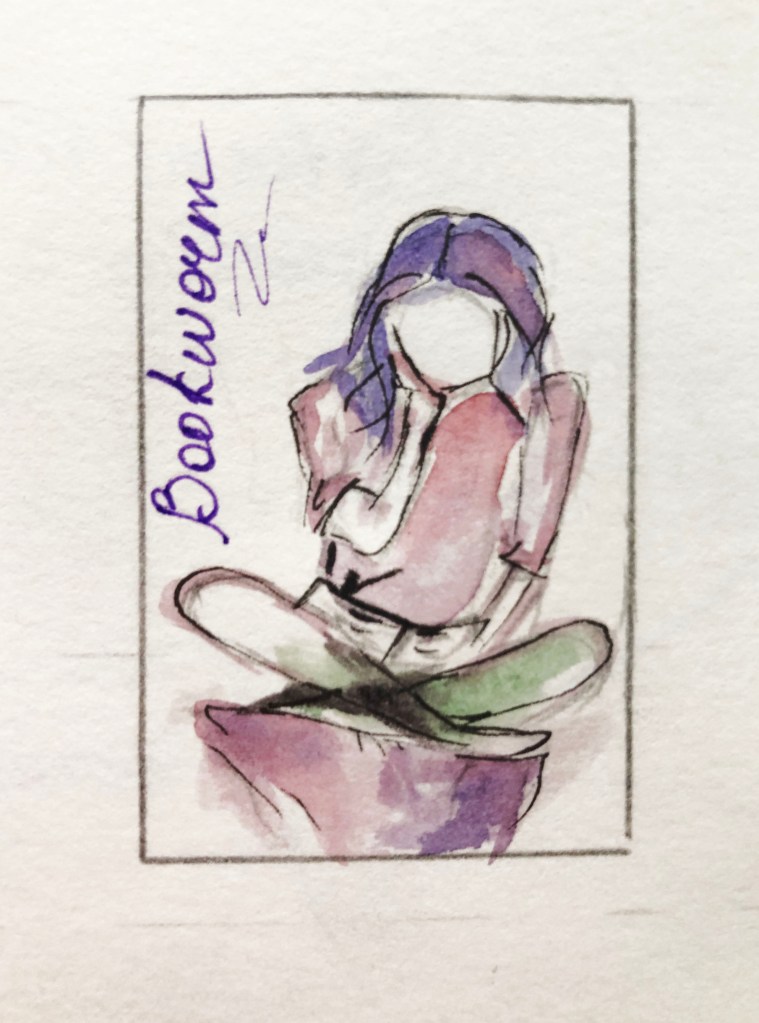
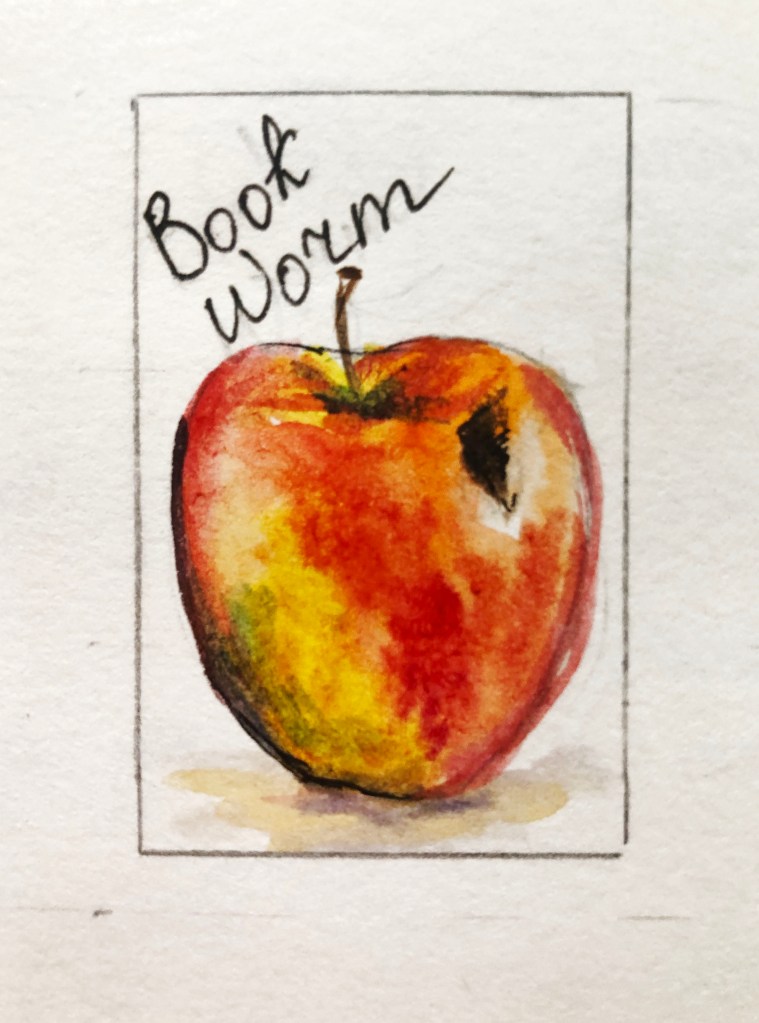
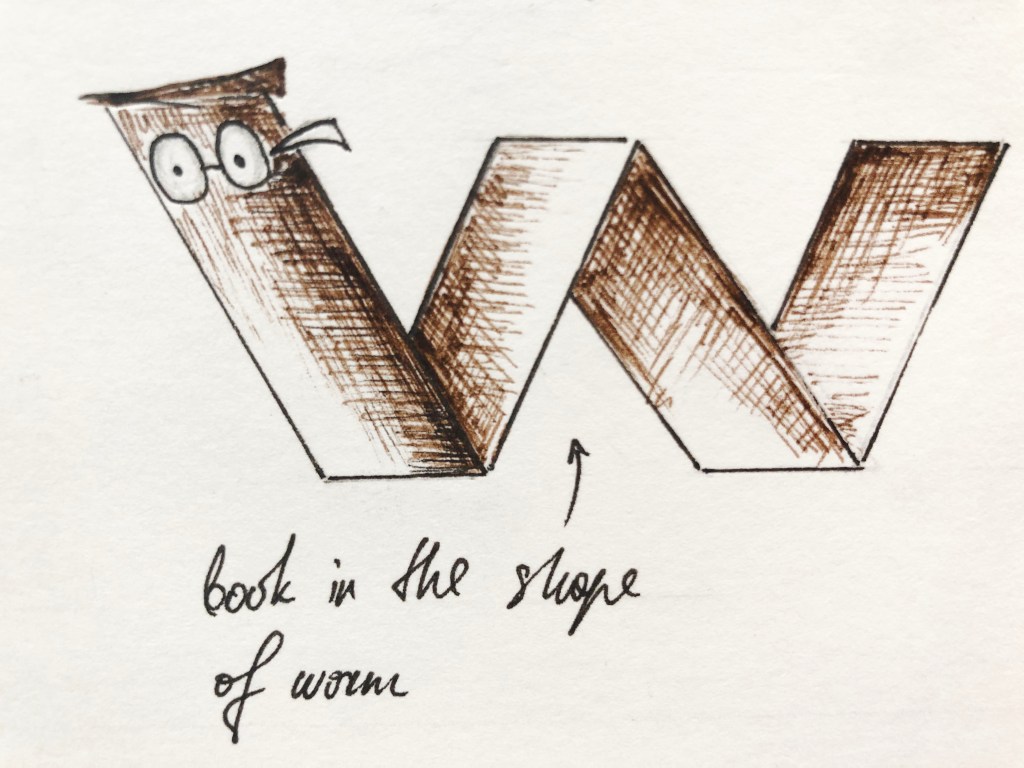
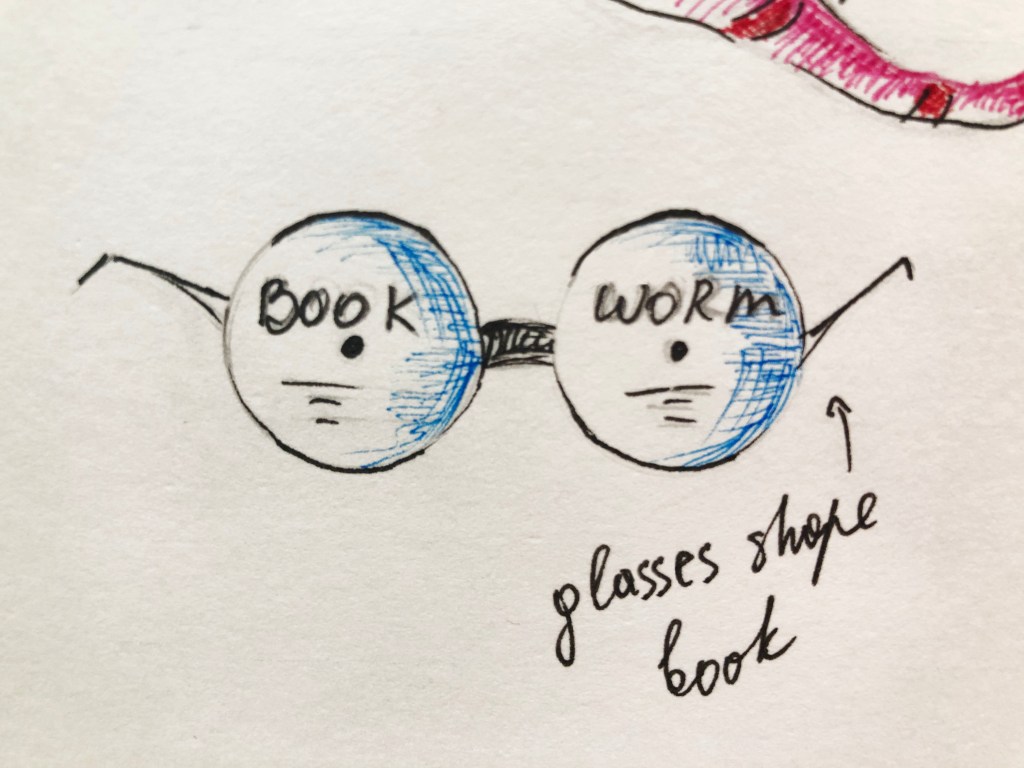
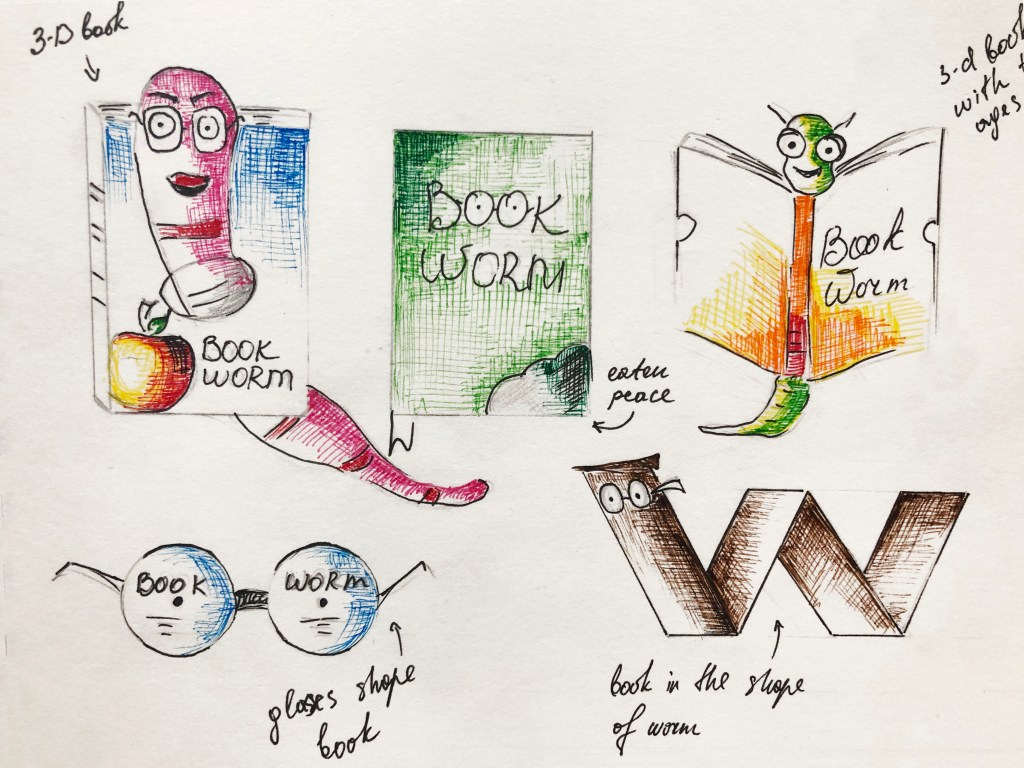
For the bookworms sketches, I thought it should be something cartoony with little friendly worms, the option as a 3-D book could work quite well, or eaten book. Also, I wanted to sketch something more serious, maybe like a thoughtful girl, who is a very attentive reader. I was thinking about designs made in the shape of the worm, it was more like a booklet look maybe, but that could work too. Some of my drawings didn’t look like quick sketches. I love the attention to details, so for some of them, I applied colours. The bitten apple, with a little sign of the worm, I painted in watercolour. I thought for the next book I could create more sketchy like designs.

Sketches ‘The Oldest Trick in the Book’
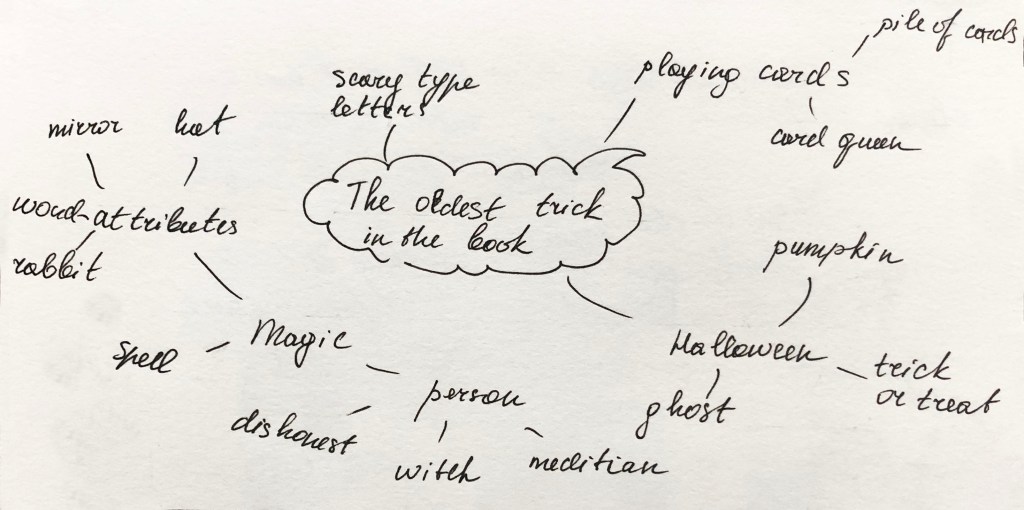
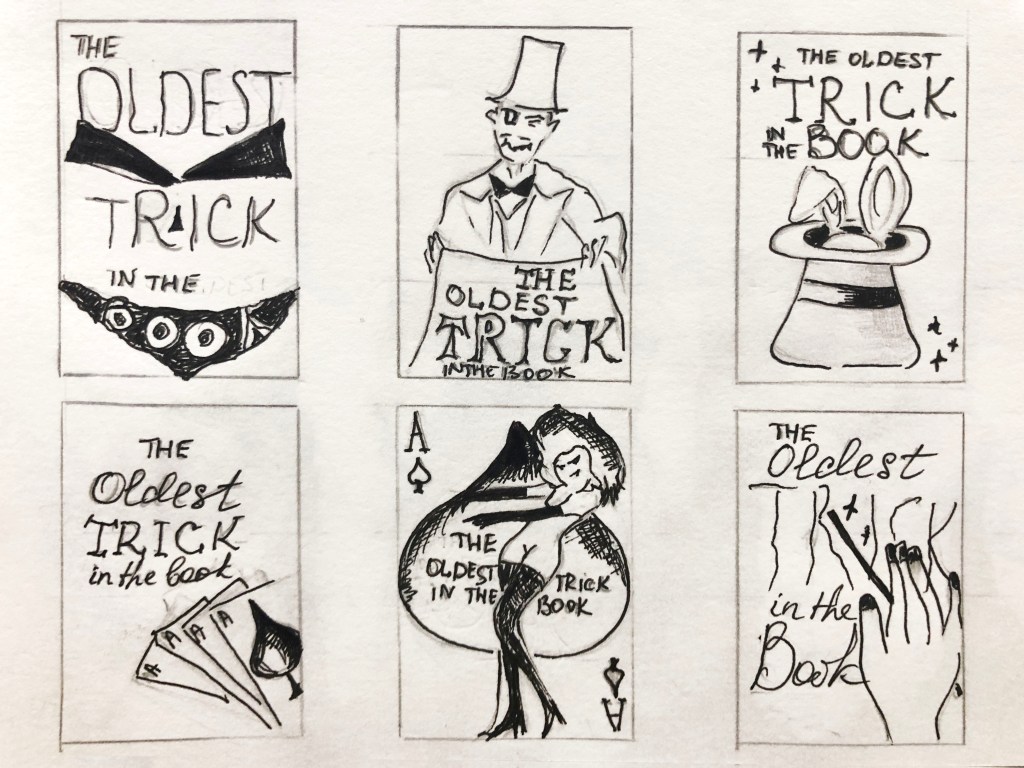
Here I experimented with different ideas for the term ‘The Oldest Trick in the Book’. I thought it all could be related to the magic, tricks, miracle, or playing cards, where wizards are tricking you. I tried to play with fonts, maybe make them all different look fonts, with some spooky details. I noticed, that we had that similar exercise with book covers, one I made as collage, and another one just font usage, probably I could apply similar principle here too. Anyway, they are just sketches, a first step to producing actual designs.
Conclusion
This one of those type of exercises I’m always trying to get better. Sketches and quick drawings are part of generating ideas skills, and they can help with the final design. Here I have a challenge of playing word and association’s task and cover them all into images. I like seeing the result because it gives me confidence that I can do more, and if I look deeper into each phrase, I can discover numerous different meanings and images. I love detailed sketches when they have colour and shape on them, but those 45 minutes sketches that is something I need to improve, as they are not as complicated tasks. I hope those sketches I produced will be useful in my first assignment.
 Eleonora's Art Blog