

Browse the American based Smithsonian Libraries’ Artist Book archive to identify
books that you find interesting or questions the notion of the book in some way.
https://library.si.edu/collection/artists-books
Explore fanzines in more depth by reading Teal Trigg’s chapter Definitions and
early days (pages 6–43) from her book Fanzines: A do-it-yourself revolution (2010).
This chapter is available as a course resource on the student site.
Document visual examples of work you find interesting with annotations in your
learning log. You’ll be using some of this research in your first assignment.
Researches
In this research exercise, my task is to analyse non-standard designs for books and fanzines. As a term, I had never heard the term fanzines before, so here was the opportunity to discover some information about them.
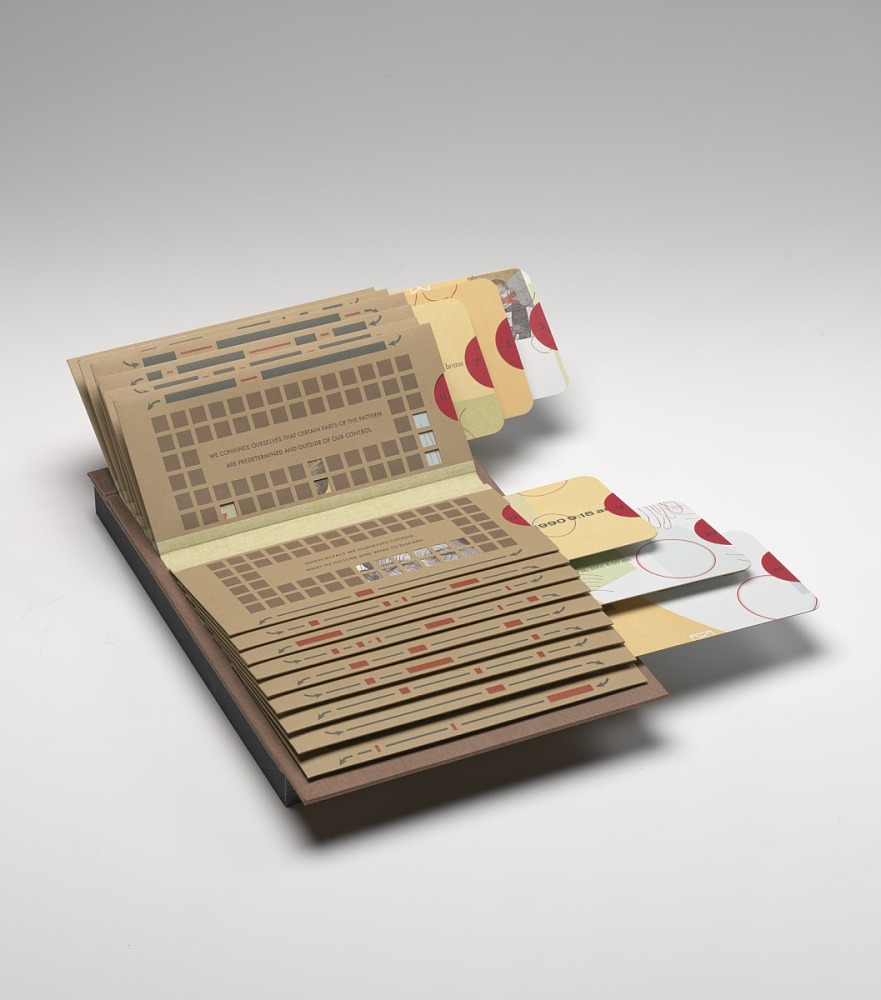
Glimpse by Barbara Tetenbaum & Julie Chen
At: https://library.si.edu/collection/artists-books
(Assessed 07/12/2020)
To begin with, I followed the link to the Smithsonian Libraries ’Artist Book, which contains all kinds of book design variations. Here I see an obvious example of how you can go beyond and create a real work of art from everyday things, this is something that does not occur in everyday life, and also helps to see new facets of art.
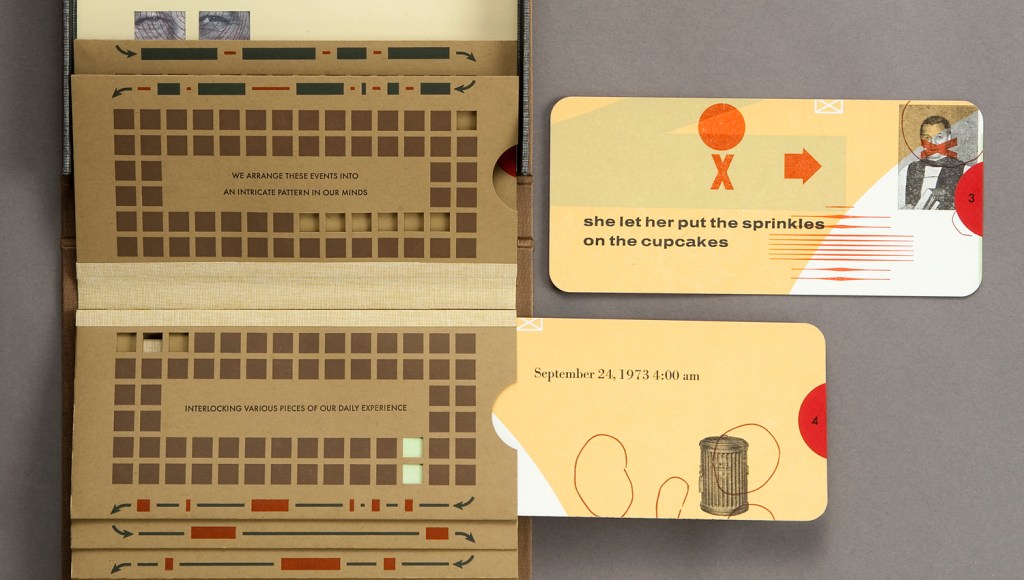
The first book I would like to highlight is Glimpse by two authors Barbara Tetenbaum & Julie Chen, who put their creativity into one project. In this project, the authors examine the idea of the creation of their biography. For the design of this book was used letterpress from hand-set type, wire, antique news cuts, dingbats and photopolymer plates. They gathered together their prominent events in some kind of photo album style book.
At: https://mcbaprize.org/barbara-tetenbaum-glimpse/
(Assessed 07/12/2020)
In this book, cards could be pulled out from each envelope. Cards contain some phrases, dates and collages. I like the sepia colours used for this book and vintage style of images. They gave a feeling that it could be a historical masterpiece. This is a unique example of seeing ordinary events in an original way. At the same time, ‘Glimpse’ is another example of how creative approach could make something unusual and artistic.
Gifts from our elders by Kerry McAleer-Keeler
Another book creation that paid my attention is the book Gifts from our elders by Kerry McAleer-Keeler. Visually it has a similar feel to the book described above, like vintage objects, similar colour pallet, but in this case book was folded into the box. It reminded me pop-up books I remembered from the childhood, which had 3-D objects inside of it, so I could read the information not through words, but through images.
I loved the key theme of this book, the celebration of femininity and the gift of life. Here, the author, through medical images of the heart and brain, reflected the favour of the intellect and love for art. I noticed that Kerry McAleer-Keeler has a whole series of similar works, where she combines her philosophical views and her attraction to beauty in the boxes.
“I’m an artist who wishes to tell you a visual story.”
K. McAleer-Keeler

(Assessed 07/12/2020)
I am impressed that the artist wants to take the viewer into a new imaginary world, and through symbolic elements creates a new perception of spirituality and life cycle, especially I like associations she created for objects and the way she folded it altogether.
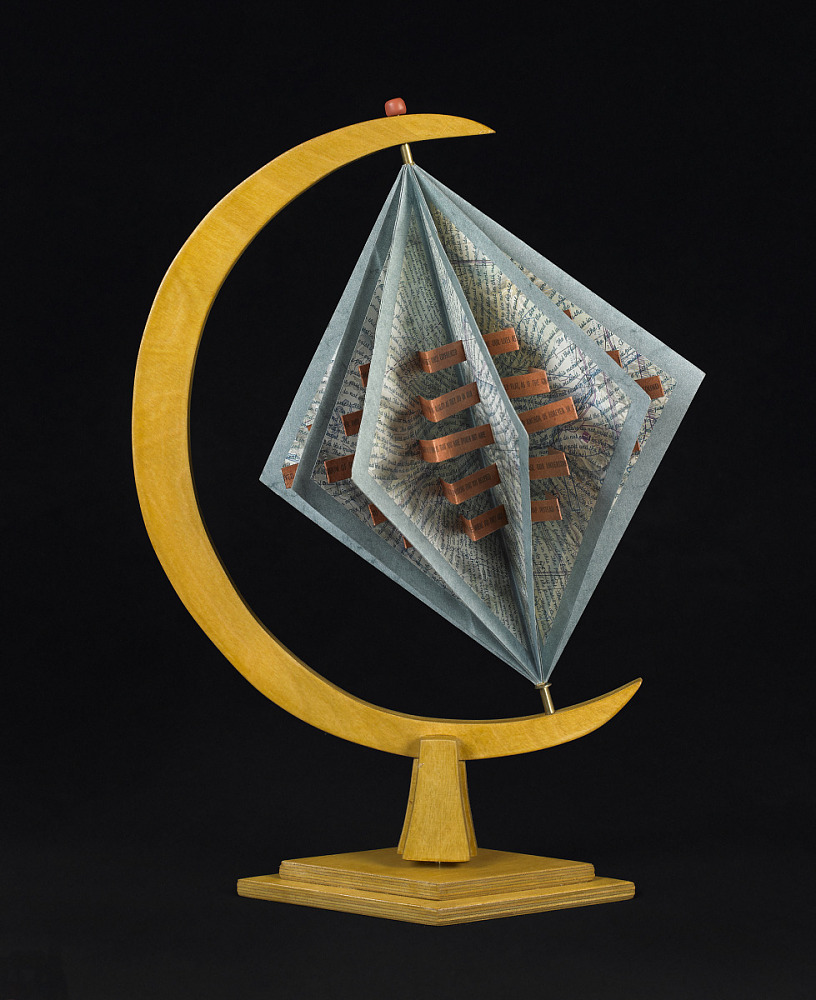
World without end / / by Julie Chen
Another example of artists’ book I would like to mention was designed by the same author of Glimpse, Julie Chen. I think this work stands out because of it’s unique and original shape. I really loved that concept of endless globe, but in the shape of rhombus and envelops. Overall I would like to mention that I loved to learn more about exploring the sculptural and interactive potential of the book form, and discover a notion of what a “book” can be.
At: https://siris-libraries.si.edu/ipac20/ipac.jsp?term=39088015314677&index=BC
(Assessed 07/12/2020)
Fanzines. The DIY revolution
After researches some of the shapes and forms of creative books I proceeded to the next part, discovering the history of Fanzines. Overall, I found this article quite impressive, as here i could see example how something invented in the general publics, amateur and non-professional, but with a lot of passion and creativity could become an official term and implemented into the world of professional fashion industry, music, books, cinematographs and other forms of art. All important notes I gathered together in my learning log. I tried to create some mind maps, and graphics, highlighting annotations and dates, as these researches will be useful for my first Assignment.
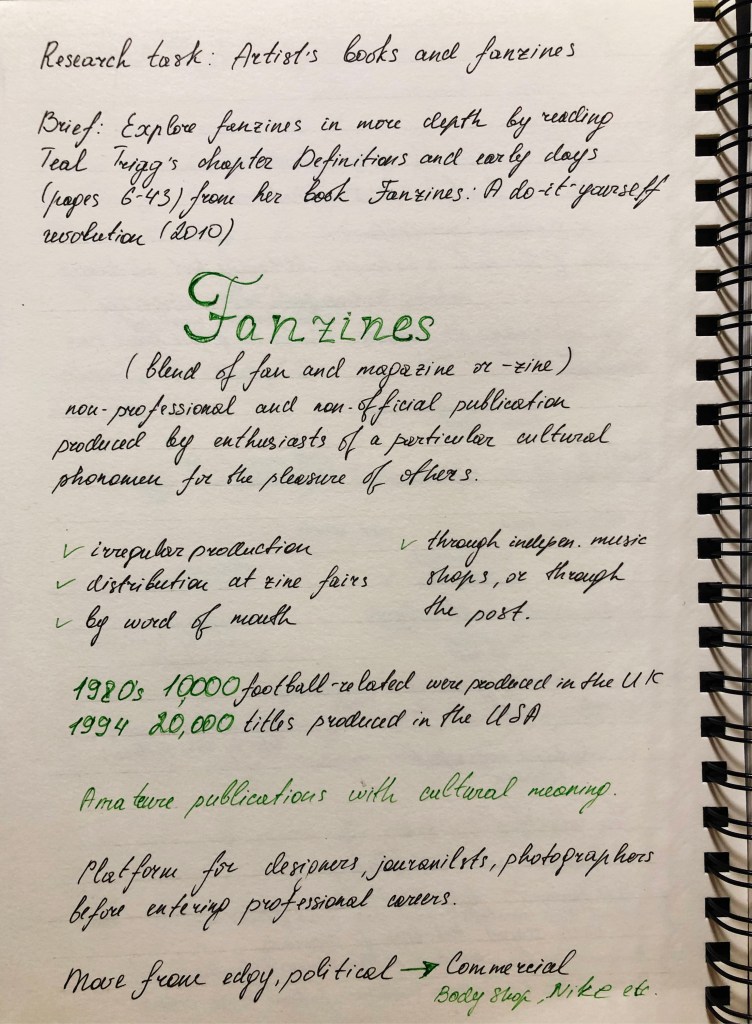
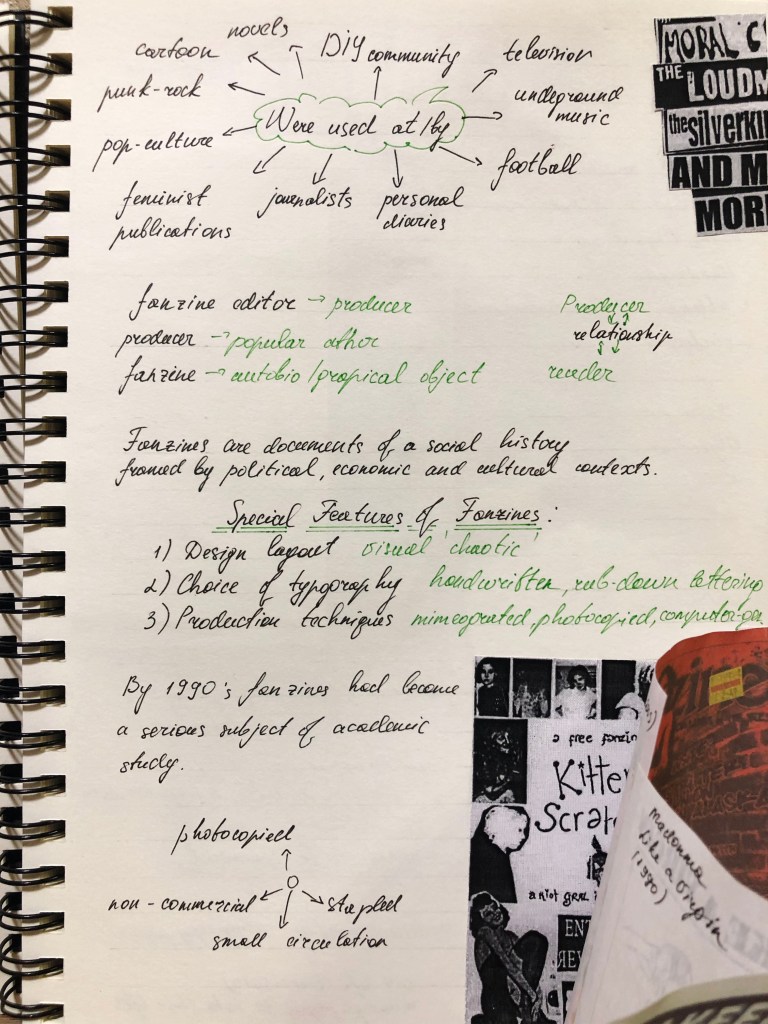
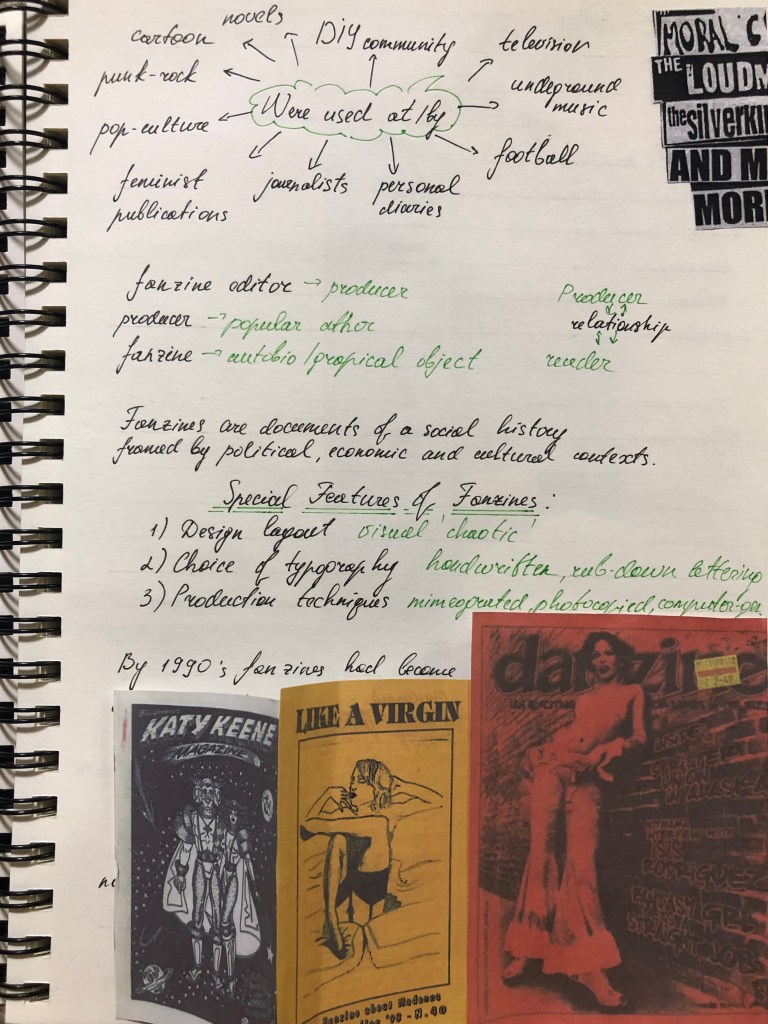
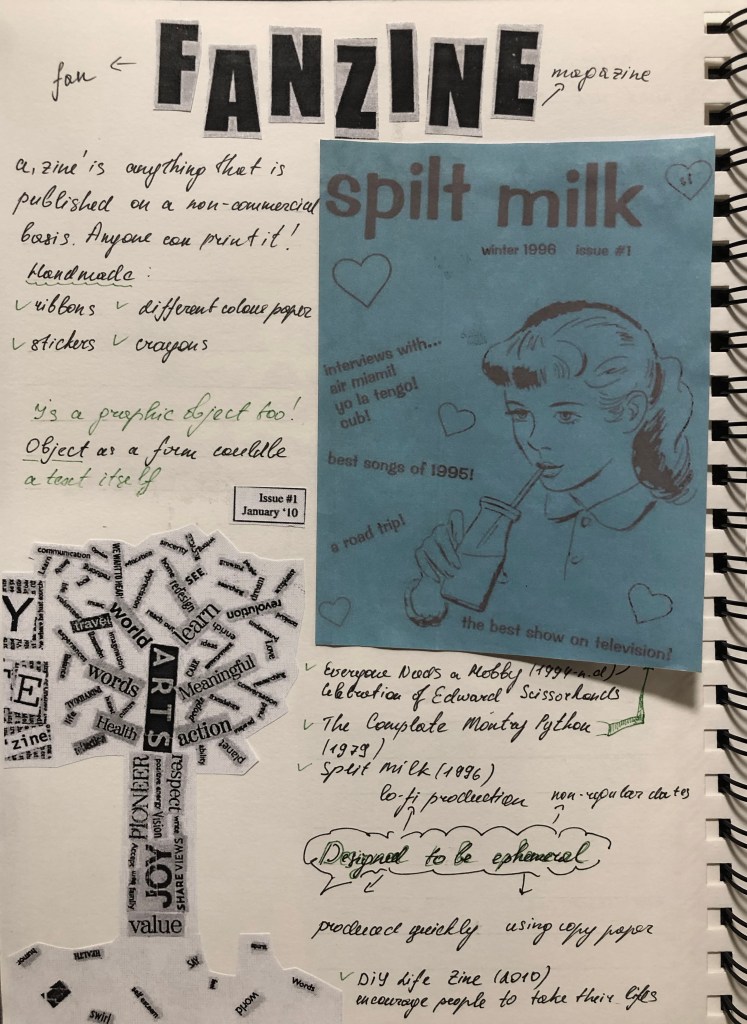
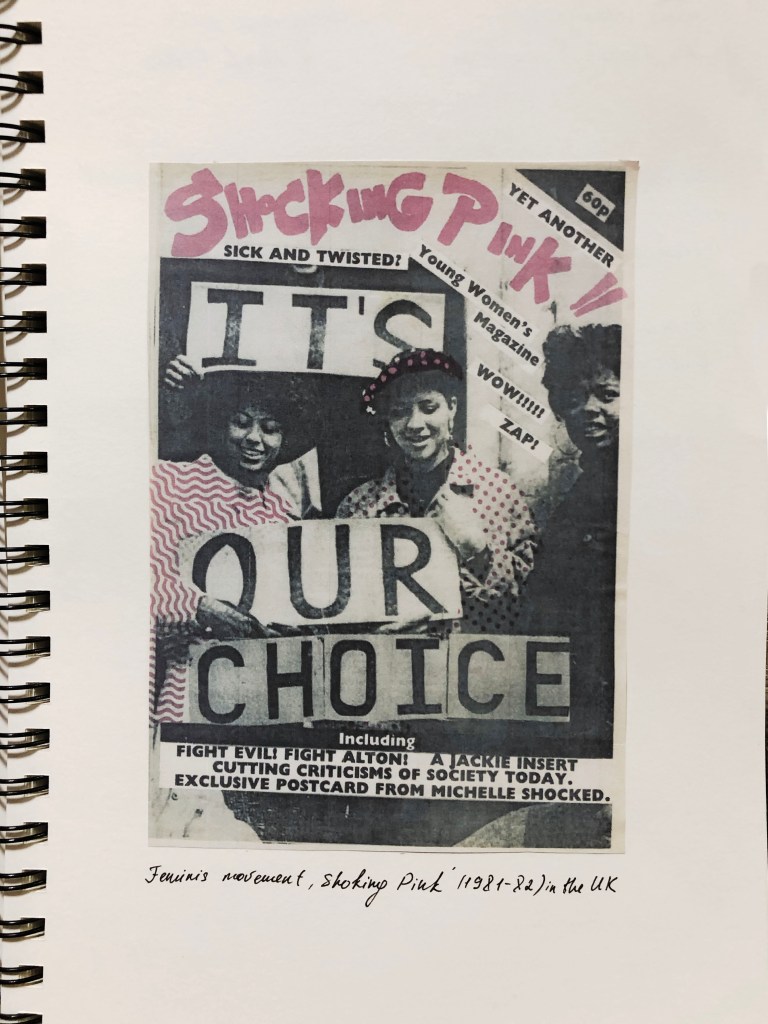
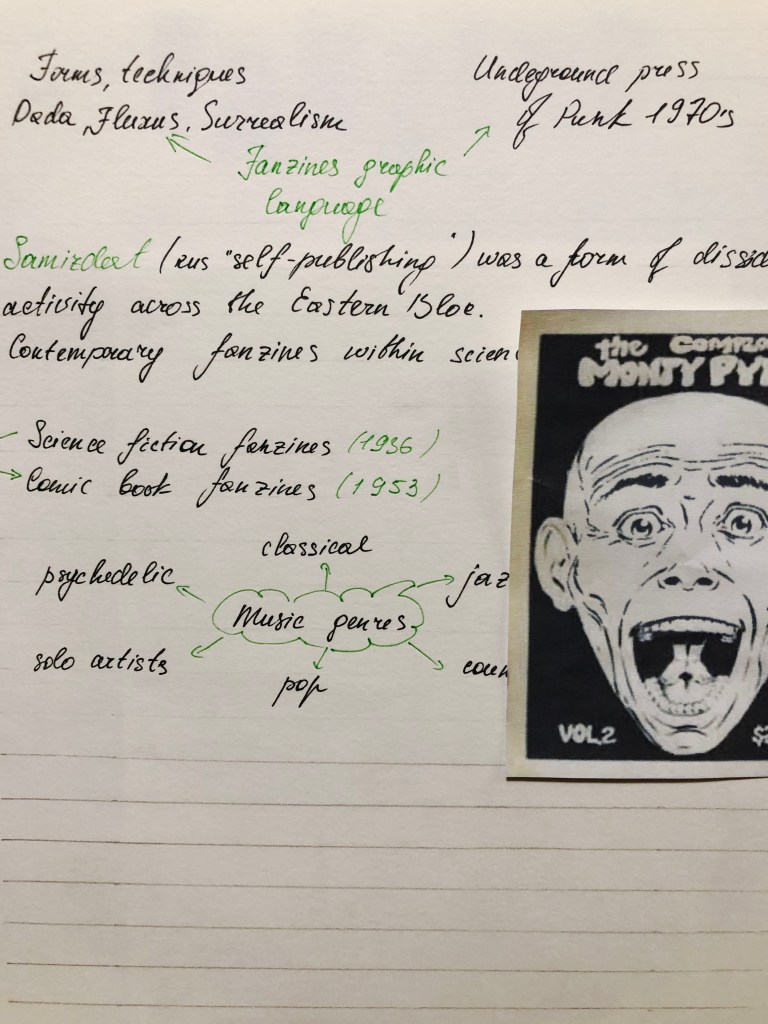
Also, I’ve placed some screenshots of different fanzines from the article, so I could go back to them as a point of inspiration for my later works.
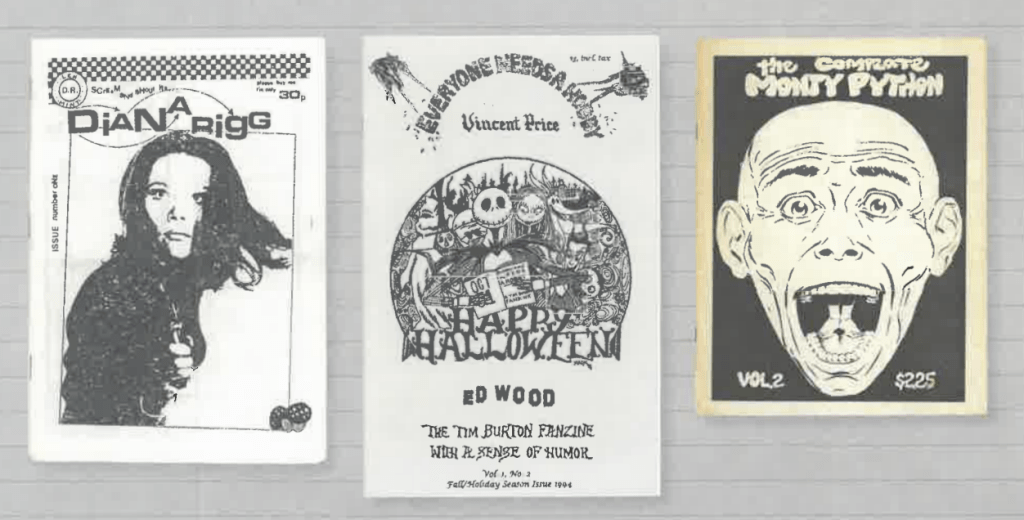
Diana Rigg (1986), Everyone Needs a Hobby (1994), The Complete Monty Python (1978)

Kitten Scratches (1999), DIY Life Zine (2010), Beer Can Fanzine (1999) 
Shocking Pink (1981-82)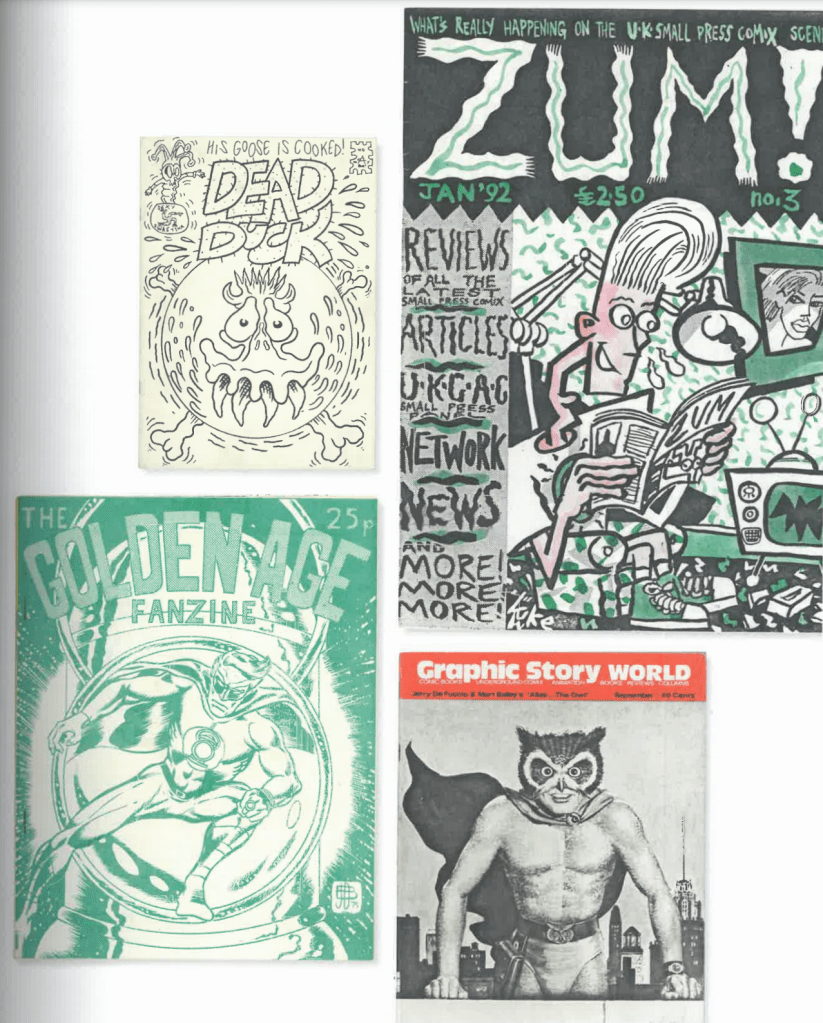
Dead Duck/Corpsment Comix 1991), Zum! (1991), Golden Age Fanzine (1970), Graphic Story World (1970)
That research task was quite entertaining for me, as I love analysing and learn something new about artists, art movements and influencers in the culture. I found useful that here I discovered some new terms not only in graphic design but in the art culture in general. The challenging part was not only to get myself familiar with this article briefly but to understand the purpose of it for my future designs.
 Eleonora's Art Blog