
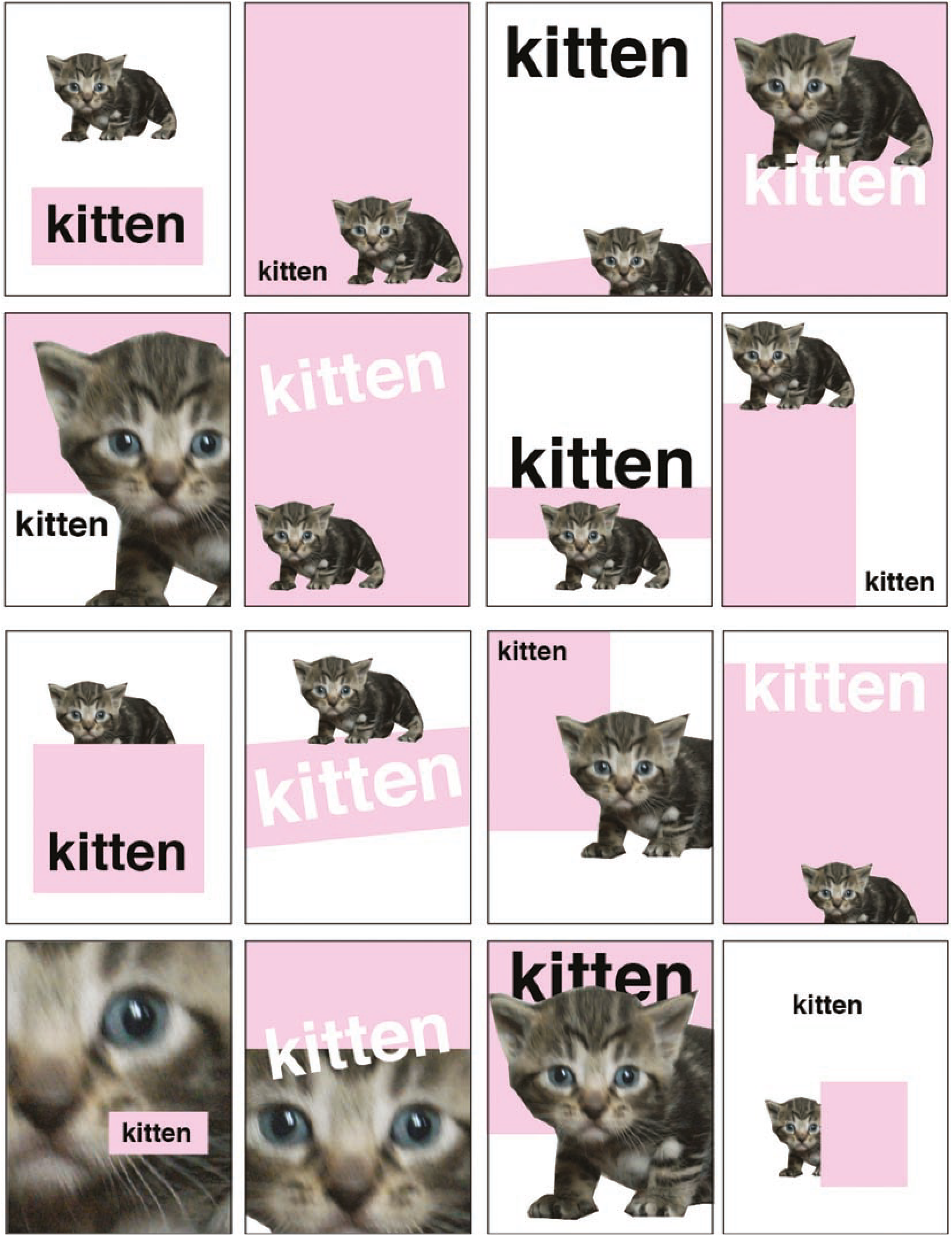
At the heart of visual dynamics is the idea of contrast; creating work that relies on dark and light, small and large, empty and full, to create the visual push and pull that makes it feel dynamic. Contrast can be created through the use of empty space as much as filling it with visual elements. It might be a contrast between colours, space or proportion.
Brief: Using only an image of a light bulb, the word ‘light bulb’ and a block of colour of your choice create different designs that explore visual dynamics – as the kitten designs shown in the previous project.
Think about your compositions, trying each element at a different sizes and cropping your photo. Your block of colour can be any size, so use it fully to create a sense of space in your composition. Think about layering your visual elements to create depth within your designs and think about contrasts.
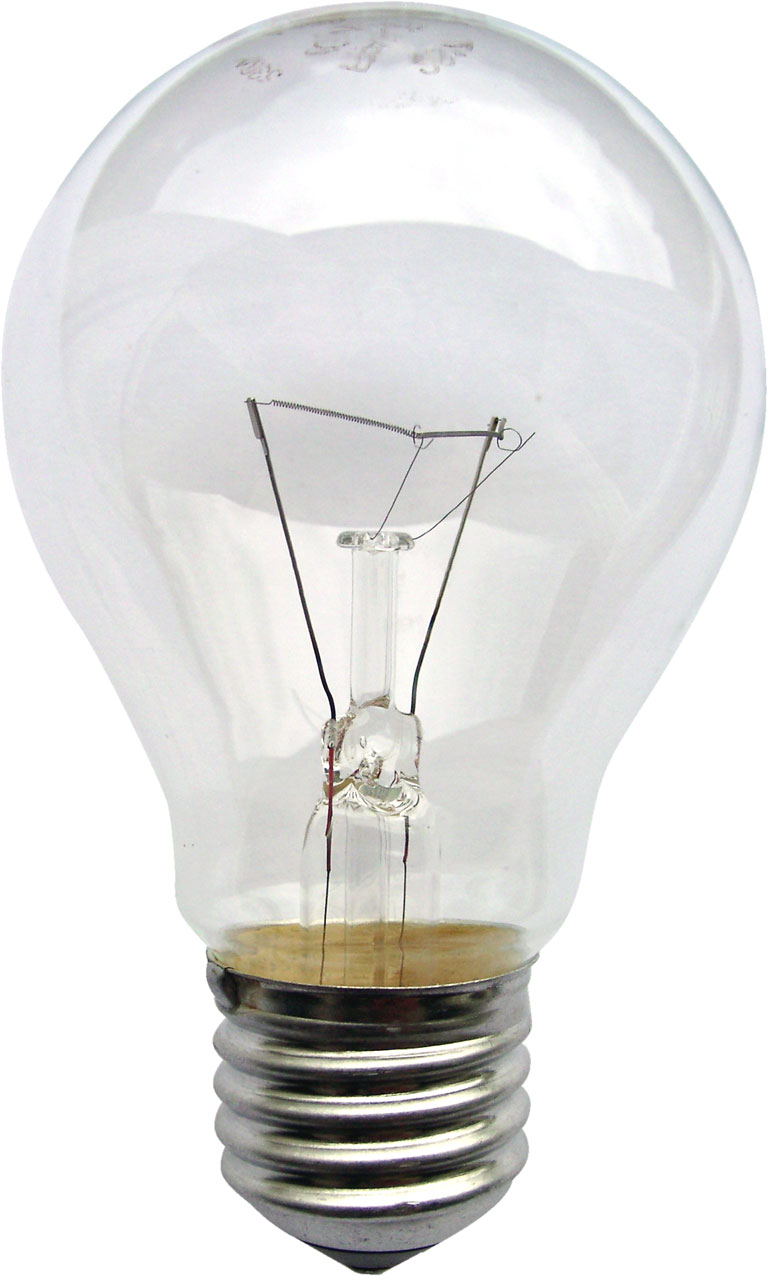
Be playful within the rules set, creating as many different designs as you can. Edit these
down to about 20 designs that you feel represent the breadth of different approaches
you have explored.
Primary Researches
Millennia ago, an unknown genius figured out that what would become known as the Golden Ratio was extraordinarily pleasing to the eye. That is, as long as the ratio of smaller elements to larger elements is maintained.
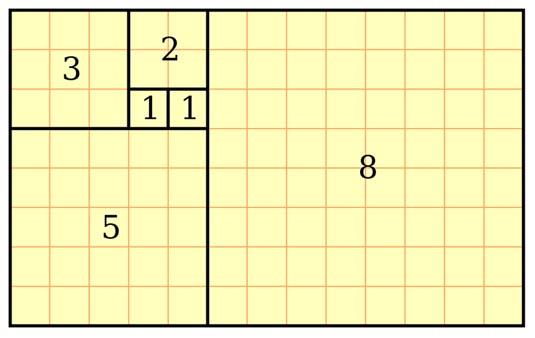
In the Fibonacci Sequence (0, 1, 1, 2, 3, 5, 8, 13, …) each term is the sum of the previous two, and the ratio becomes increasingly closer to the Golden Ratio. Generally speaking, the Golden Ratio describes the perfectly symmetrical relationship between two proportions.

The golden ratio is the ratio of approximately 1 to 1.618. These are extremely important numbers to mathematicians. But what do they mean to us artists?
Well there have been studies which suggest designs set out using the golden ratio are aethetically pleasing. We can use the golden ratio to help design our paintings and position our subjects.
In this painting by Georges Seurat, the golden ratio appears to have been used throughout the painting – to define the horizon, to place points of interest and to create balance in what would appear to be a very active scene.
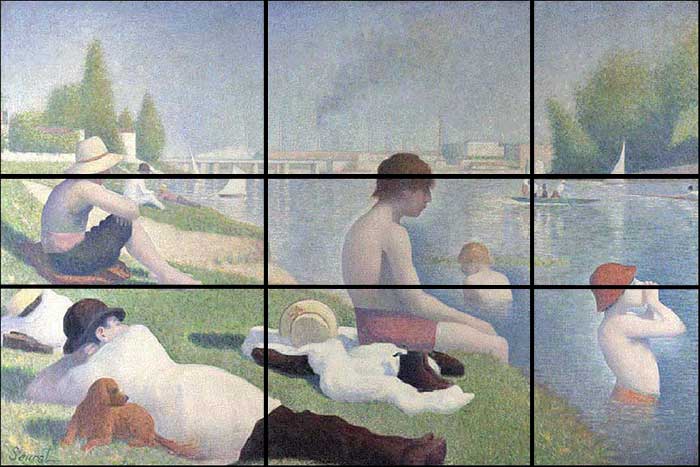
Georges Seurat, Bathers at Asnières, 1884.
This Golden spiral can be found throughout nature:

It is also important to remember that you do not need to understand the complexities of the golden ratio, but you can certainly use it to some to improve the design of your compositions.
Source https://drawpaintacademy.com/golden-ratio-in-art/
Secondary Researches
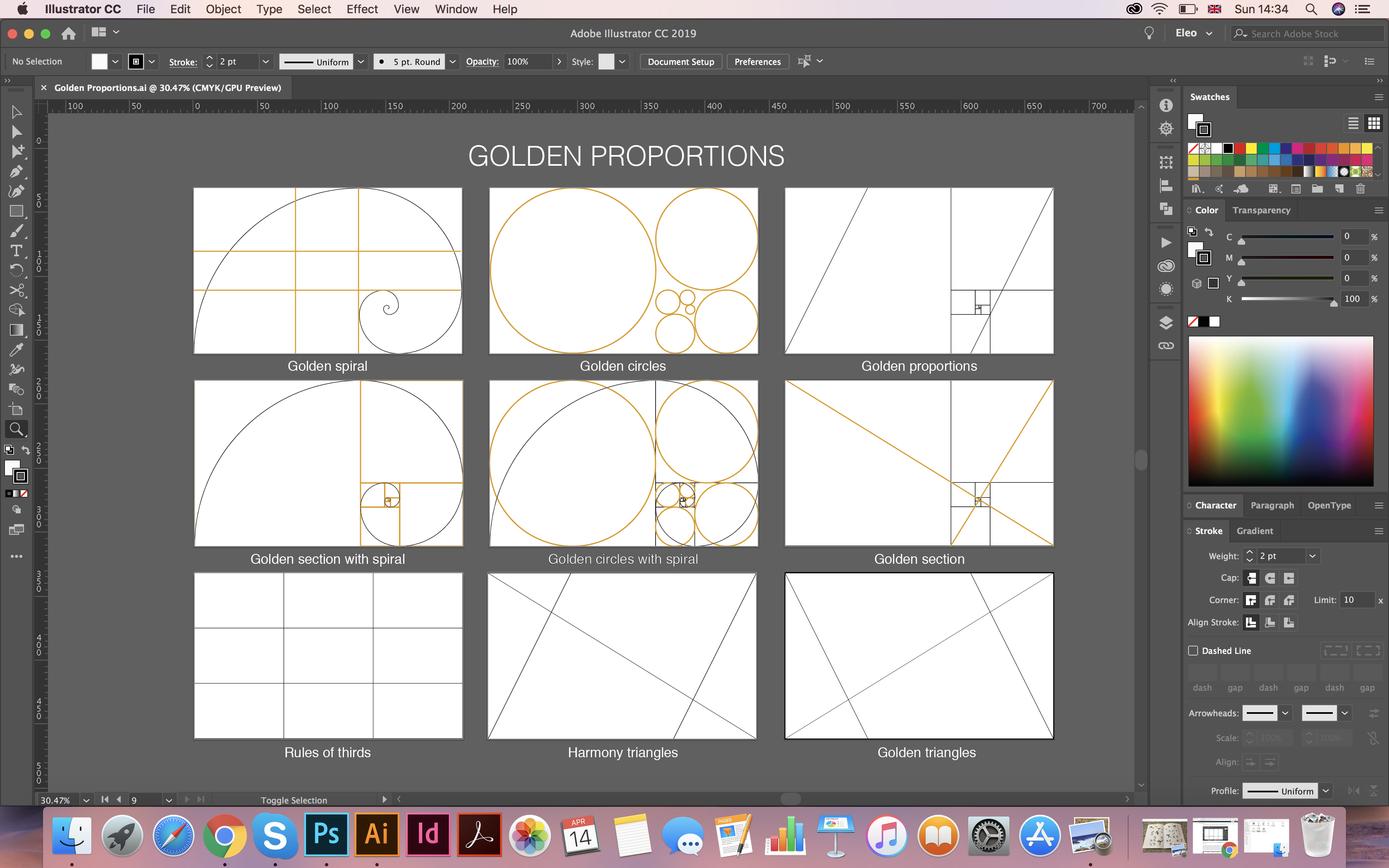
Before proceeding to the sketches I was interested in the topic of composition and the golden section. For myself, I wanted to check how the technique of the golden section can be applied in a design consisting of 3 elements. I decided to get acquainted with the golden proportions, and for this I created a grid of proportions in Adobe Illustrator.
Below are examples of the Golden Section such as:
- Golden spiral
- Golden circles
- Golden proportions
- Golden section with spiral
- Golden circles with spiral
- Golden section
- Rules of thirds
- Harmony triangles
- Golden triangles
Light Bulb Design
After reviewing the variations of the composition, I decided to apply them in the design with a light bulb. I decided to use the landscape format for positioning elements around. In my understanding, such a format could serve as the cover of an annual report or brand book. I also noticed that the grid itself, which I developed in Adobe Illustrator was a kind of sketch for further placement of a lamp and a rectangle, it was a kind of puzzle that was convenient and easy to fill with three elements. This lesson so fascinated me that I think there could be much more variations, adhering to the rules of the fundamentals of composition.
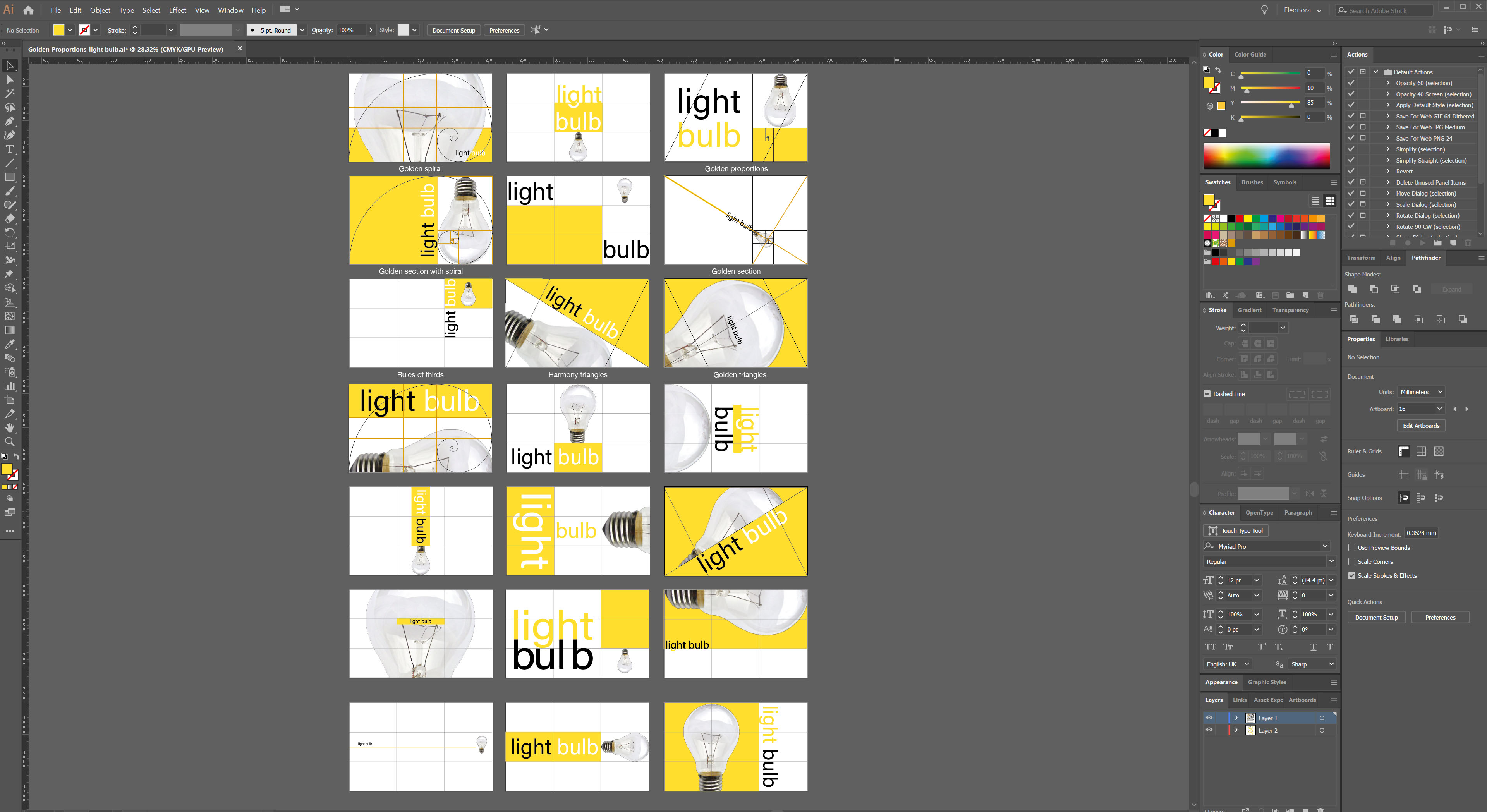
For the color decision, I chose warm yellow in combination with black, white font. In the first screenshot I decided to leave the grid itself, in the example below the designs themselves are presented.
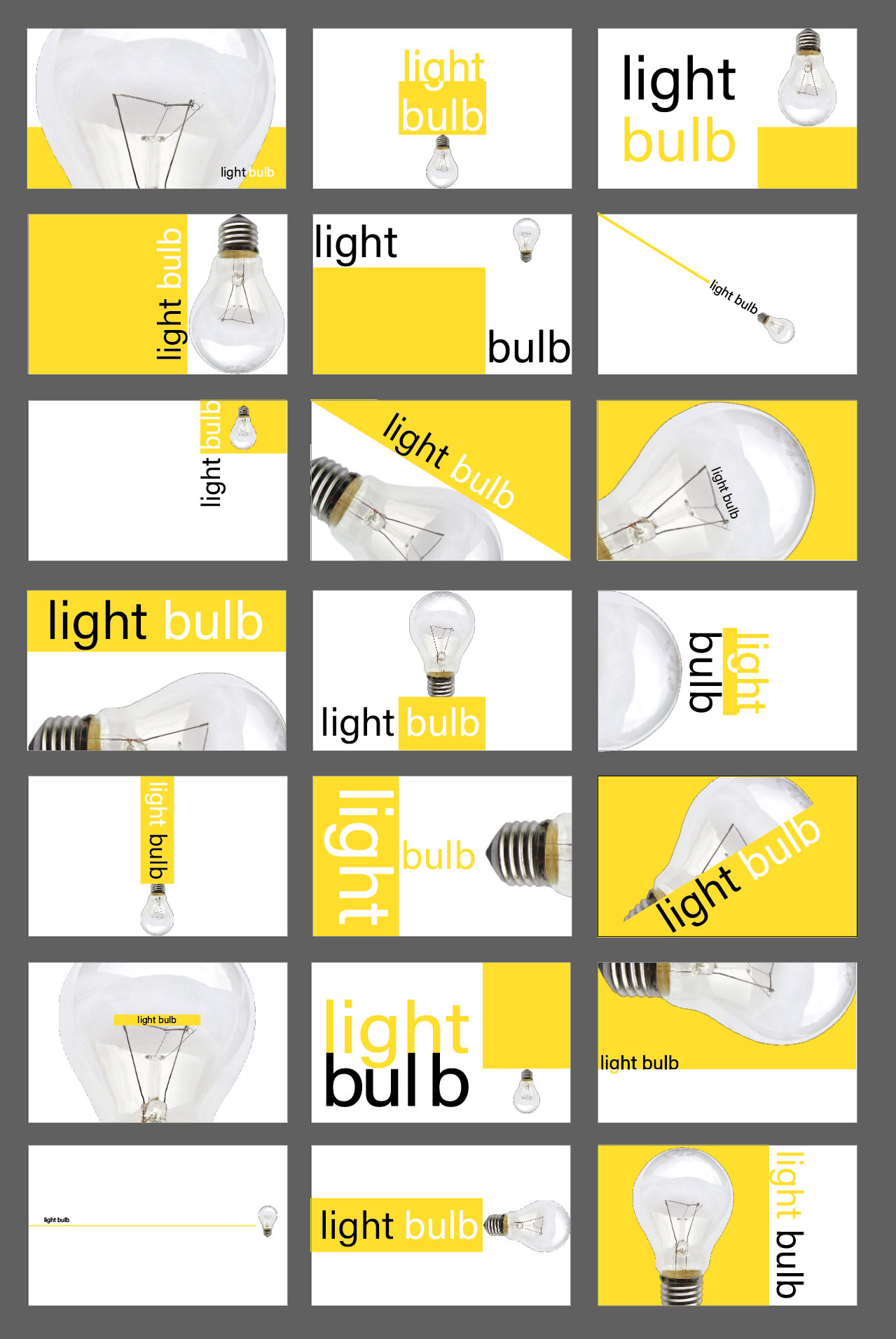
In conclusion, I would like to add that I enjoyed the work done. I liked the effect of the dominance of one of the three objects, and the number of variations of compositions could in fact be unlimited. It was also interesting for me to carry out a mastering performed by the basics of the composition of the golden section, where analogs with the outside world were held, everything that can be pleasing to the eye and easy to read.
 Eleonora's Art Blog